
Review · BRUSSELS
Brussels: Art Nouveau Private Walking Tour with Horta Museum
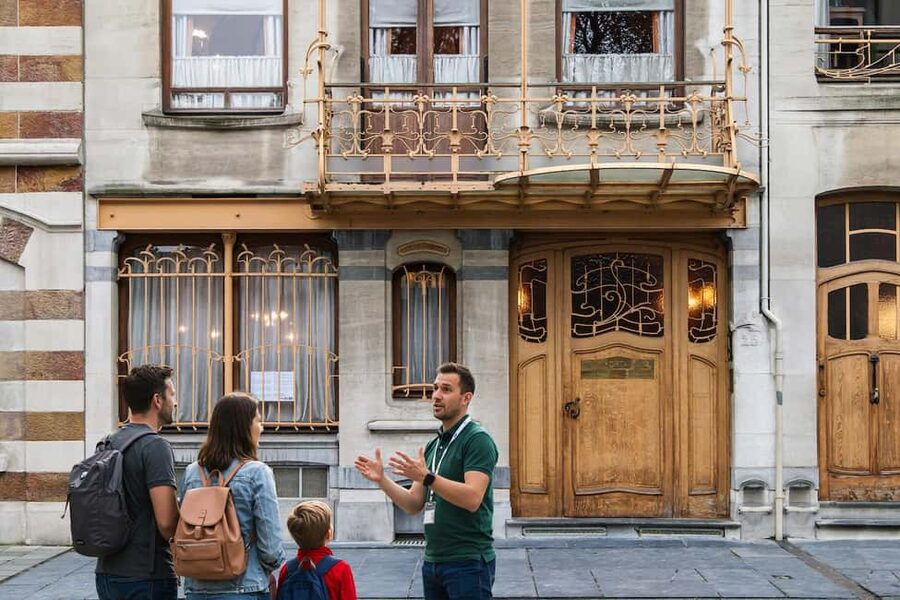
Brussels’ Art Nouveau story comes alive best on foot, and this private tour takes you from the early façades around Place Eugène Flagey to Victor Horta’s own house. Hotel Tassel, Maison Hankar, Hotel Solvay, and Maison Hannon give you a fine look at the movement’s bold curves, ironwork, and playful symbolism before you step inside the Horta Museum.
I like the private format, since you can ask why a doorway, window, or stair rail matters instead of simply snapping photos and moving on. I also like the clear finish at Horta’s home, with skip-the-line museum entry included. The main caution is value: at $150 per person, you are paying for the guide and private service, while nearly every building on the walking route is viewed from the street.
Key points to know before booking
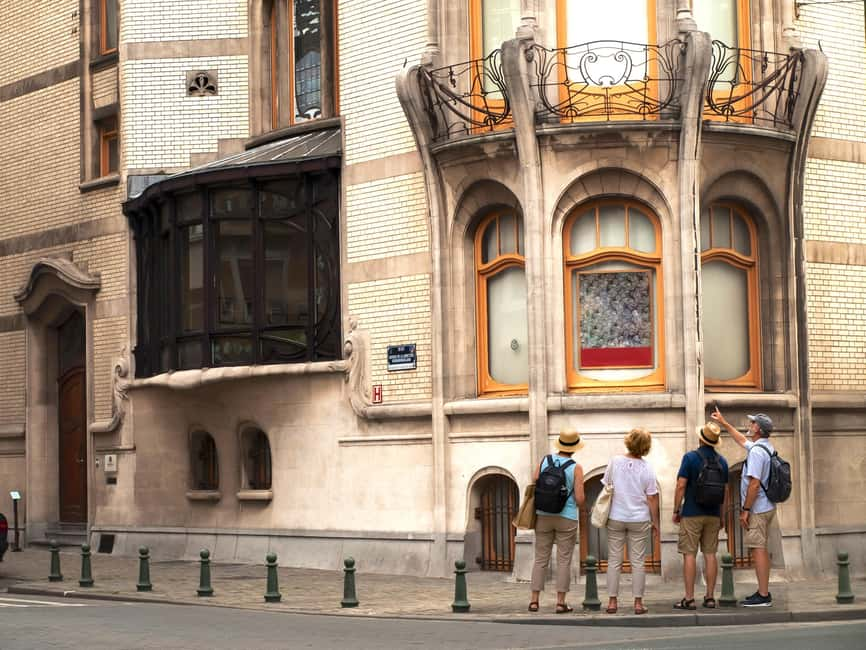
- Hotel Tassel is an exterior stop: You see the landmark associated with the birth of Art Nouveau, but you do not enter it.
- The Horta Museum is the tour’s indoor highlight: Your guide accompanies you inside for about 41 minutes with express entry.
- The route covers several architects: Horta, Paul Hankar, Ciamberlani, and other Brussels designers appear along the way.
- It begins at Café Belga: The meeting point is at the café entrance near Place Eugène Flagey.
- The group is private: You get a guide for your party rather than joining a large walking crowd.
- The price needs careful thought: At $150 per person, this makes the most sense for architecture fans who want explanation and private attention.
Why Brussels is the right place for an Art Nouveau walk
At the turn of the 20th century, Brussels became one of Europe’s key centers for new architecture. Designers began pushing away from stiff historic styles and used iron, glass, mosaic, stained glass, curved lines, and plant-like forms in their buildings.
This tour helps you see that change across several streets rather than in one isolated museum room. You begin with façades in the Delune area and around Flagey, then follow the architectural story toward Saint-Gilles and the Horta Museum.
I find that this approach works well because Art Nouveau can look like decoration when you view it quickly. A guide can point out how the structure, materials, staircases, windows, and ornaments work together. You are not just looking for a pretty door. You are learning to spot the design choices that made these houses so new in their day.
The private format also matters here. Brussels’ Art Nouveau houses are spread across different neighborhoods, and the buildings often sit among ordinary modern streets. A guide gives the walk a thread and helps you connect one façade to the next.
More Art Nouveau tours in the world:
- Walking Tour of Riga’s Beautiful Art Nouveau Architecture
★ 4.8 · 20 reviews - Riga’s Architecture: A self-guided audio tour of the city’s art nouveau history
★ 5.0 · 3 reviews - Mexico City origins and architecture: Art Nouveau, Deco,Eclectic
★ 3.0 · 2 reviews
Starting at Café Belga and Place Eugène Flagey
The tour begins at the entrance of Café Belga, a practical meeting point in the Flagey area. After introductions, you pass through Place Eugène Flagey, with about 20 minutes scheduled for this opening part of the route.
This first section sets the scene rather than delivering a single grand interior. You begin to notice how Brussels’ early 20th-century buildings fit into the wider city. The nearby Delune area includes Sterner’s Studio and other façades that show the period’s interest in decorative surfaces and unusual shapes.
Allow yourself time to look up. Art Nouveau details often sit above eye level, and a quick walk can cause you to miss balconies, window frames, and curved lines around upper floors. The guide’s explanation should help you understand what separates this work from ordinary historic decoration.
One practical point: the route is a walking tour through city streets, not a museum visit with long periods indoors. Comfortable shoes are sensible, and the three-hour length means you should be ready to stay on your feet for most of the morning or afternoon.
Hotel Solvay and the private-house ideal
Hotel Solvay is one of the most important exterior stops. Victor Horta designed it for Armand Solvay, and the building is known for its careful use of light, color, and craftsmanship.
You will view the hotel from outside rather than enter it. That distinction matters when you compare this tour with a broader Brussels architecture program. Hotel Solvay is famous partly because its interior is so carefully planned, but this experience gives you the street view and the guide’s interpretation only.
Even so, the façade can help you understand Horta’s approach. He did not treat the front of a building as a flat screen. The entrance, windows, metal details, and stonework work together as part of a larger design. Ask your guide to explain which details are structural and which are decorative.
The tour allots about 20 minutes here, which should be enough for an explanation and photographs without turning the stop into a long pause. If Hotel Solvay is your main reason for coming, remember that the Horta Museum is the one place on this route where you get a full indoor experience.
Hotel Tassel, the landmark seen from the street
Hotel Tassel receives a shorter stop of about 10 minutes, but its importance is much larger than that time suggests. It is often described as the world’s first true Art Nouveau house and is linked directly to Horta’s breakthrough work.
From the outside, look for the way the façade departs from conventional 19th-century house design. The building’s curves and metalwork hint at the freer forms developing inside. Your guide can place the house in the sequence of Brussels architecture and explain why it made such an impact.
You do not receive entry to Hotel Tassel. The same applies to the other private houses and hotels along the walk. This is not a complaint, but it is the key fact to keep in mind when weighing the $150 price.
More architecture walks in the world:
- Lecce: Baroque Architecture and Underground Walking Tour
★ 4.6 · 1,248 reviews - Chicago in a Day: Food, History & Architecture Walking Tour
★ 5.0 · 1,153 reviews - Ramblas, Old Town, Gothic and Gaudi Architecture Walking Tour
★ 5.0 · 723 reviews - Chicago’s Secret Interiors Architectural Walking Tour
★ 5.0 · 635 reviews
Roosenboom, Otlet, and Ciamberlani
The next group of façades gives you a useful range of Art Nouveau ideas. Maison Roosenboom is presented as a complete work of art, where architecture and decoration are closely joined. You see the exterior and hear the design story, but the interior is not part of the admission.
Hotel Otlet brings a more intellectual and restrained character to the route. Its design helps show that Art Nouveau was not one fixed look. Some buildings are highly curved and floral, while others use geometry, proportion, and fine materials in a quieter way.
Hotel Ciamberlani adds symbolic detail. Its façade is a good place to pay attention to ornament rather than simply the overall outline. The name Ciamberlani is closely linked to the artistic side of the movement, and the guide can help explain how images and patterns carried meaning.
These stops are short, usually around 10 minutes each. That keeps the tour moving, but it also means the quality of the explanation matters. A strong guide will use the façades as a connected lesson. A less effective guide may simply identify each building and move on.
Guide quality deserves a realistic note. One recent booking described a passionate guide who made the subject engaging. Another, involving a guide named Christophe, raised concerns about museum tickets not being reserved and about limited historical explanation. Since the experience depends heavily on the person leading your private group, confirm the museum entry arrangements at the start and make clear that you want context, not just building names.
Maison Hankar and the shift toward modern design
Maison Hankar marks an important point in the route. Paul Hankar was one of the designers who helped move Brussels away from historic imitation and toward a new architectural language.
The house is viewed from outside. Its place in the tour is valuable because it lets you compare Hankar with Horta. Both helped shape Brussels Art Nouveau, but their buildings do not look identical. The guide can point out where older influences remain and where the design begins to feel more modern.
This is one of the better stops for anyone interested in architectural development. You see that Art Nouveau did not appear fully formed overnight. It grew through experiments with façade composition, ironwork, windows, and the relationship between inside and outside.
Chaussée de Charleroi and Rue Defacqz
The walk along Chaussée de Charleroi and Rue Defacqz gives the tour a broader urban setting. These streets help trace the shift from neoclassical forms toward the more personal designs of the Art Nouveau period.
The route is not simply a parade of famous addresses. It shows how new ideas appeared within a working city of apartments, shops, and ordinary traffic. You can compare more formal façades with buildings that use freer lines and richer decoration.
The schedule allows about 20 minutes for Chaussée de Charleroi. That is enough for a measured explanation, though the experience remains dependent on street conditions and the pace of your group. Since this is a private tour, you can ask to pause briefly when a detail catches your eye.
Maison Hannon in Saint-Gilles
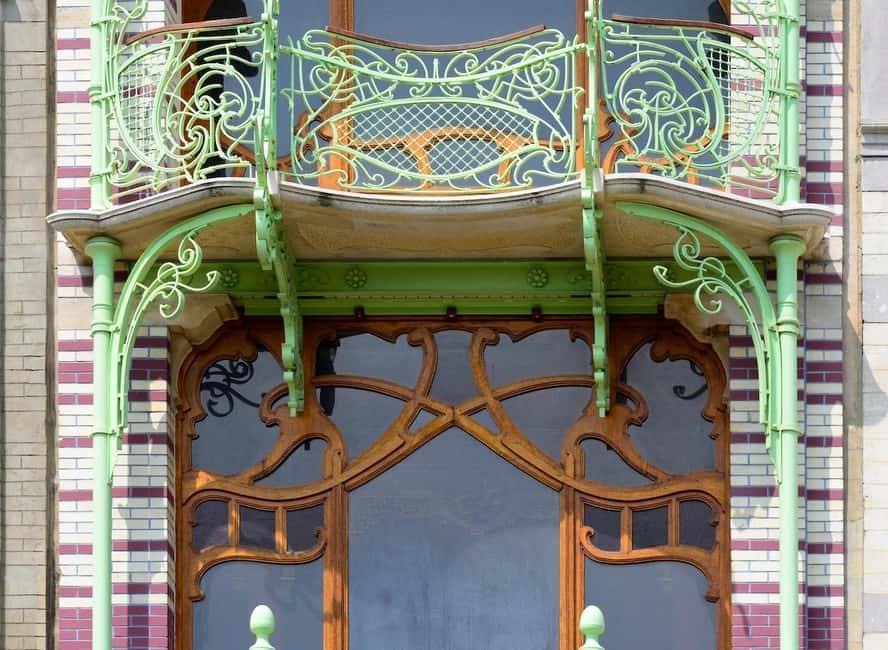
Maison Hannon brings you to Saint-Gilles and provides another view of Art Nouveau design. The building is associated with dreamlike decoration and refined workmanship, giving the walk a different mood from the more strictly architectural examples.
The exterior visit lets you appreciate the overall composition and the decorative details, but it does not include a ticketed interior tour. One booking specifically noted seeing Maison Hannon, so this stop appears to be a clear part of the planned route even if the building is closed or viewed only from the street.
By this stage, the walk has shown you several approaches to the movement. Some façades emphasize curves, others structure, symbolism, or carefully controlled decoration. That range is one of the tour’s strengths.
Inside the Horta Museum for the final 41 minutes
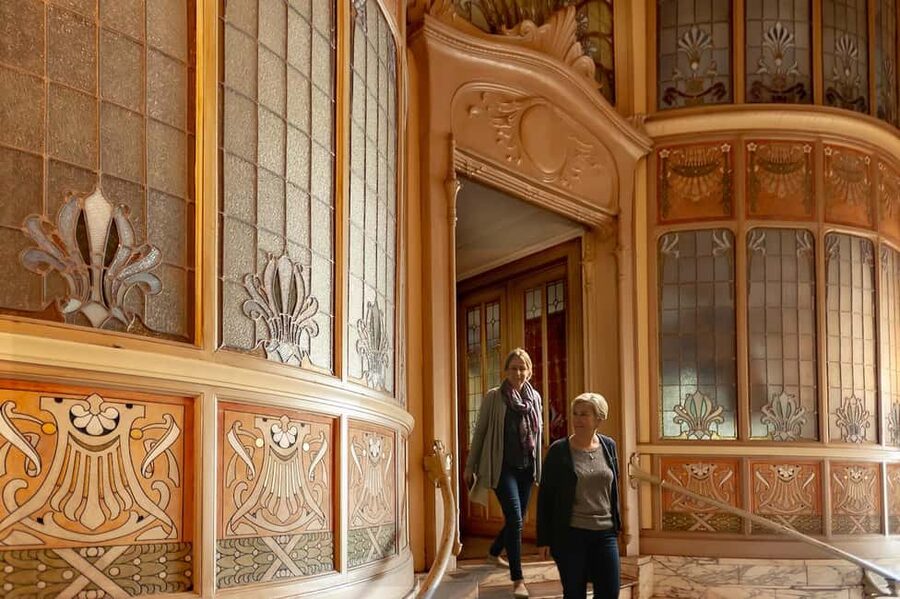
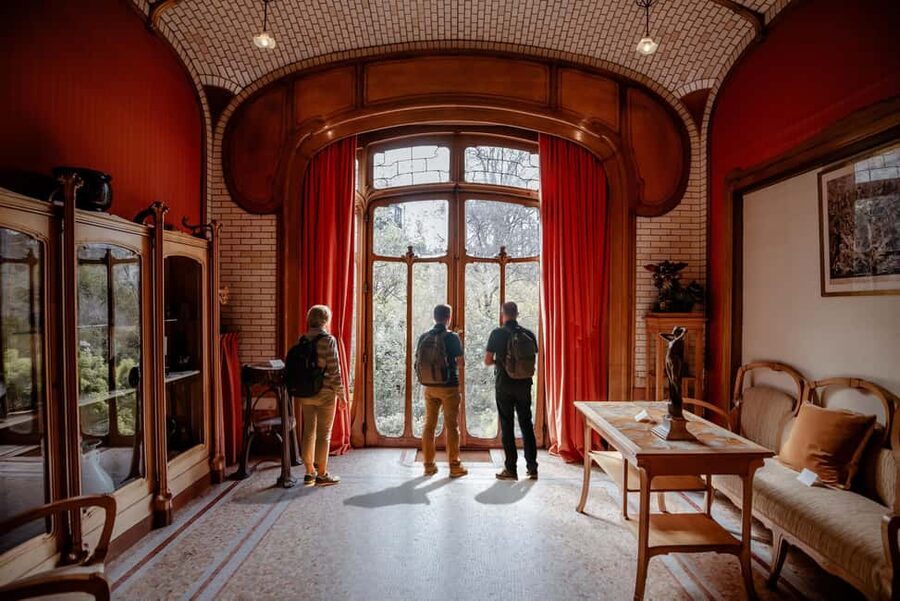
The Horta Museum is the payoff. The building was Victor Horta’s home and studio, and entering it gives you what the street stops cannot: a chance to see the design from the inside.
The visit lasts about 41 minutes and includes an expert guide plus skip-the-line tickets. You pass through Horta’s own architectural world, where rooms, stairs, light, color, and materials were planned as one complete environment.
This is where the earlier stops begin to make more sense. After seeing Horta’s façades, you can recognize how his ideas continue indoors. The staircase is especially important as a design feature, since it links levels while also shaping the character of the house. Look at how natural light, decorative lines, and practical movement work together.
The express entry is useful, though you should understand what it means here. It gives you access through the museum’s security and admission process without the standard wait, but it does not turn the 41-minute visit into a private opening. The private element is your guide, who accompanies your group inside.
The museum is also the strongest reason to choose this tour over a simple self-guided walk. You get a focused visit at the end rather than trying to fit the museum into your own schedule after walking across town.
Is $150 per person fair?
At $150 per person, this is a premium walking tour. The cost includes three hours with a private guide and skip-the-line entry to the Horta Museum. It does not include lunch or tickets for Hotel Tassel, Hotel Solvay, Maison Roosenboom, Hotel Otlet, Hotel Ciamberlani, Maison Hankar, or Maison Hannon.
I would judge the price by your priorities. If you are traveling with a small private group and want a guide who can answer detailed questions in English, French, or German, the cost may be reasonable. The personal attention can make a difference when you care about design and want more than a list of addresses.
If you mainly want to photograph façades, the price is harder to defend. Most of the route is public street viewing, and you can see the exteriors without paying for admission. The Horta Museum ticket and the guide are the parts that create added value.
The mixed satisfaction attached to this experience makes it wise to set expectations early. Confirm that your Horta entry is arranged, and tell the guide you want architectural and historical explanation. A passionate guide can turn the same route into a memorable lesson. A guide who gives only brief descriptions will make the price feel high.
Who will enjoy this private Brussels tour?
I would choose this experience if you are especially interested in architecture, design, decorative arts, or the history of Brussels. It also suits couples, families, or small groups who prefer a private conversation to a large scheduled walk.
The tour is less suitable if you want extensive indoor access to several Art Nouveau houses. The route offers many exteriors and one museum interior. It is also not built around food, shopping, or general sightseeing, so the subject stays tightly focused.
The activity is listed as wheelchair accessible, and the walking route ends at the Horta Museum. Since much of the experience takes place outdoors on city streets, confirm any specific mobility needs when booking.
Free cancellation is available up to 24 hours before the tour, and you can reserve now and pay later. Those terms help if your Brussels schedule is still changing, but they do not alter the central value question: you are paying for a private expert-led route and the Horta visit.
Should you book it?
Book this tour if you want Brussels’ Art Nouveau buildings explained in a clear sequence and you value private guiding. The Horta Museum, included entry, and range of exterior stops give you a solid three-hour introduction to Horta, Hankar, Ciamberlani, and their circle.
Skip it if your main goal is to enter several historic houses or keep costs low. You will see most buildings only from the pavement, and the $150 charge is significant.
My practical advice is to book it for the guide, not simply for the addresses. Confirm the museum tickets at the beginning, ask for historical context, and use the private format to shape the pace. With a strong guide, this is an intelligent way to understand why Brussels became such an important Art Nouveau city.
FAQ
How long is the Art Nouveau walking tour?
The tour lasts three hours, including the outdoor walking route and the guided visit inside the Horta Museum.
Where does the tour begin?
It begins at the entrance of Café Belga, near Place Eugène Flagey.
Where does the tour finish?
The tour finishes at the Horta Museum, also called the Horta House Museum.
Is the Horta Museum ticket included?
Yes. Skip-the-line tickets for the Horta Museum are included, along with a private guide inside the museum.
Do you enter Hotel Tassel and Hotel Solvay?
No. Hotel Tassel, Hotel Solvay, and the other listed houses and hotels are exterior viewing stops. Tickets for those buildings are not included.
Which languages are available?
The live guide service is available in English, French, and German.
Is this a private group tour?
Yes. The experience is organized for a private group rather than a shared public group.
Is the tour wheelchair accessible?
Yes, the activity is listed as wheelchair accessible.
Can you cancel the booking?
You can cancel up to 24 hours in advance for a full refund. The activity also allows you to reserve now and pay later.
More Museum and Gallery Visits in the world
- Private Edo-Tokyo Open Air Architectural Museum Tour
★ 4.8 · 15 reviews - Chelsea Galleries and High Line; Art, Architecture and History
★ 5.0 · 14 reviews - Castle to Capitol: Museums of the National Mall Architecture Tour
★ 4.5 · 9 reviews - Amsterdam: Architecture Museum Het Schip Entry Ticket & Tour
★ 3.7 · 8 reviews
Just added around the world
- Wilmington History and Architecture Tour★ 4.8 · 18 reviews
- Washington, DC: Georgetown Architecture Walking Tour★ 5.0 · 8 reviews
- New Orleans : Garden District Architecture Walking tour★ 4.8 · 5 reviews
- Washington DC: Dupont Circle & Embassy Row Architecture Tour★ 5.0 · 6 reviews
- Vicenza: discovering the city of Palladio by e-bike★ 5.0 · 4 reviews
- Vicenza: Palladian Architecture Private Walking Tour★ 3.3 · 3 reviews
- Walk & Discover KL’s Architectural and Heritage Gems★ 5.0 · 7 reviews
- Unveiling Brno: History, Culture & Architectural Delights★ 5.0 · 2 reviews
Art Nouveau Tours, compared.
Riga: Old Town Walking Tour with Art Nouveau Highlights
Read our review →
Riga: 2-Hour History of Art Nouveau Walking Tour
Read our review →
Brussels: Art Nouveau Pass – Entry to Three Locations
Read our review →
Small Group Tour in Ålesund: Art Nouveau, Sea Views & Insider Tips
Read our review →
Browse the lists this tour appears in