

Review · WASHINGTON DC
Castle to Capitol: Museums of the National Mall Architecture Tour
The most interesting part of this tour is its fresh way of reading Washington’s National Mall. Instead of rushing through museum galleries, you study the buildings themselves: a red-brick castle, a concrete spaceship, a wind-shaped museum, and the grand pairing of the National Gallery of Art.
I like the small-group format, capped at 20 people, and the way the walk links design with American history. I also like the route itself. You begin at the Smithsonian Castle and finish with a clear view of the Capitol, passing several famous buildings along the way.
The main drawback is simple: this is an outdoor walking tour, and the schedule gives you only a few minutes at most stops. You should book it for architecture, stories, and orientation, not for extended time inside the museums.
Key points to know before you book
- The route covers the east side of the National Mall, from the Smithsonian Castle to the west lawn of the US Capitol.
- The focus is architecture, not museum collection highlights or long indoor visits.
- Smithsonian Castle admission is included, with time at the building and garden near the start.
- Guides such as Carolyn, Sam, and Cathryn bring different strengths, including architectural training, historical images, humor, and close attention to questions.
- The two-hour route is easy to follow but tightly timed, with many stops lasting only five or ten minutes.
- The $48 price is strongest for curious first-time DC visitors, architecture fans, families, and anyone who wants a useful introduction to the Mall.
Reading the National Mall from Castle to Capitol
Washington’s National Mall can feel like one enormous open space lined with museums. This tour helps you see it as a planned sequence of buildings, gardens, monuments, and political symbols.
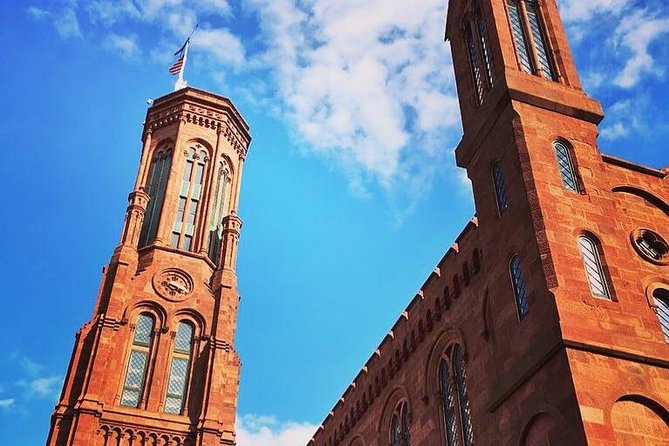
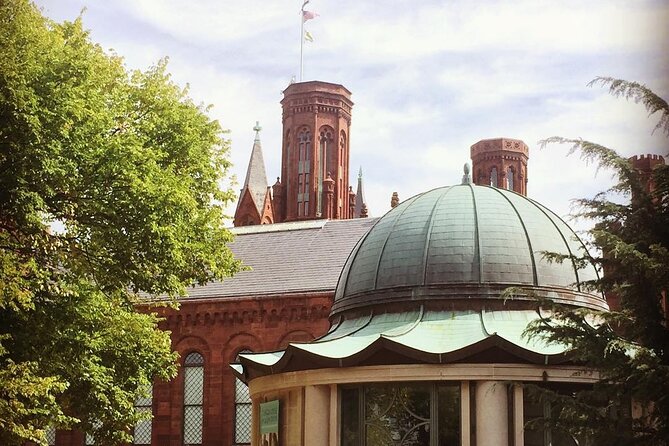
You start at the Smithsonian Institution Building, better known as the Smithsonian Castle. Its red sandstone walls and pointed towers look almost medieval beside the broad, formal spaces of the Mall. That contrast gives the tour a strong opening. You are not simply being told where the museums are. You are learning how the Smithsonian helped shape this part of Washington from its founding in 1847.
The Smithsonian now includes 19 museums and holds more than 140 million objects. You will not see that collection in two hours, of course. What you do get is a clear sense of how one institution grew into a major force on the Mall, with buildings from very different periods and design schools.
The route ends at Capitol Hill, where the view opens toward the US Capitol and the Mall. That ending matters. You begin with the Smithsonian’s unusual castle and finish at the seat of the federal government, with the city’s grand ceremonial axis between them.
A few more architecture tours around the USA worth a look
- Barcelona Food Tour: Market & Gothic Quarter with Expert Guide
★ 4.5 · 85 reviews - Guadalajara: Culture, Architecture, and Market Walking Tour
★ 5.0 · 81 reviews - Barcelona: Market, Tasty Tapas/Food and Gothic History Tour
★ 4.7 · 48 reviews
Starting at the Smithsonian Castle and Garden
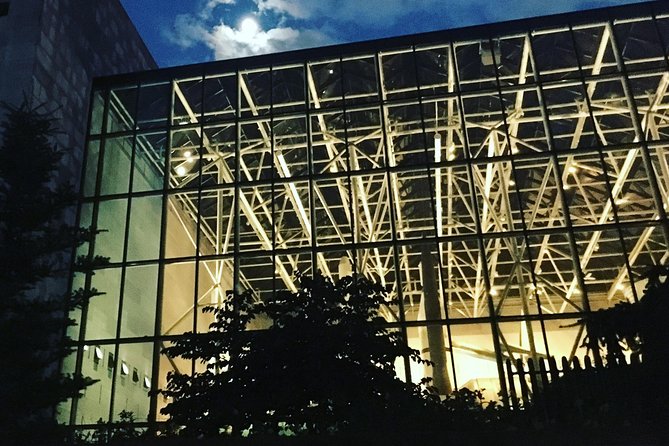
The meeting point is outside the Smithsonian Castle at 1000 Jefferson Drive SW. This is a practical place to begin because the building is easy to identify, and the route quickly puts you in the middle of the Mall’s major architectural story.
The Castle gets about 30 minutes, making it the longest single stop listed for the tour. You can expect discussion of its design, its role as the Smithsonian headquarters, and the way it relates to the surrounding garden.
Admission to the Castle is included. That is useful because you are not paying another entrance fee at the start, although the tour’s main purpose remains the building and its place in the Smithsonian system rather than a long museum visit.
This is also where the guide can set up the larger theme: Washington’s museum buildings are not random containers for art, science, and culture. Their shapes, materials, scale, and location all say something about the city.
Arts and Industries Building: a second Smithsonian home
The next stop is the Smithsonian Arts and Industries Building, just a short walk from the Castle. The stop is brief, about five minutes, so expect a focused look at its design rather than an extended interior visit.
The building is important because it served as another home for the Smithsonian. Its architectural character differs from the Castle, helping you see how the institution needed new spaces as its collections and public role grew.
This is a good example of the tour’s method. A normal walk across the Mall might leave you noticing only the building’s exterior. Here, the guide connects its appearance to the growth of the Smithsonian and to changing ideas about what a museum should be.
The Hirshhorn’s concrete spaceship
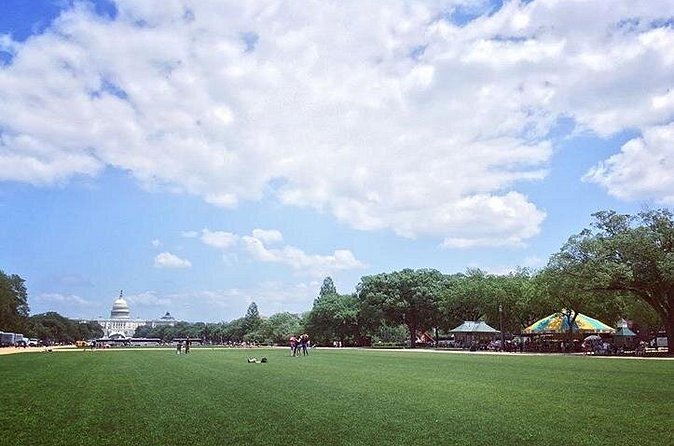
The Hirshhorn Museum and Sculpture Garden brings a sharp change of mood. Its round, elevated concrete form is one of the most unmistakable shapes on the Mall, and the tour gives it the nickname of a spaceship.
You get about five minutes here, enough to discuss the building’s bold modern design and its contrast with the older structures nearby. The Hirshhorn does not try to blend into the Mall’s neoclassical tradition. That disagreement is part of its appeal.
I find this stop useful because it shows that the Mall is not frozen in one architectural style. Modern buildings were added to the same ceremonial setting, and the result can feel jarring, playful, or daring depending on your taste.
If you want to visit the Hirshhorn’s exhibitions or sculpture garden at length, plan separate time before or after the tour. The walking route gives you context, not a full museum visit.
More museum and gallery visits in the USA:
- Chelsea Galleries and High Line; Art, Architecture and History
★ 5.0 · 14 reviews - South Beach Art Deco Highlights and The Wolfsonian Museum Tour
★ 5.0 · 5 reviews - Barcelona: Park Güell and Gaudí House Museum Entry Ticket
★ 4.5 · 6,326 reviews - Vienna: Tickets for Kunst Haus Wien: Museum Hundertwasser
★ 4.6 · 651 reviews
The National Gallery’s two very different faces
From the Mall, you examine the contrast between the National Gallery of Art’s West Building and East Building. The gallery is viewed from a distance, so this portion is about the exterior relationship between the two structures.
The West Building uses a grand neoclassical language. Its symmetry, stone facade, and formal scale fit Washington’s older public architecture. The East Building takes a more modern approach, with angular geometry and a very different visual energy.
That pairing makes a strong teaching point. You can see how a national cultural institution presents two eras of design side by side. The stop also gives you a useful preview if you plan to return to the gallery on your own.
Do not expect to enter the National Gallery as part of this tour. The value here is the comparison, especially if you have ever walked past both buildings without thinking about why they look so unlike each other.
The National Museum of the American Indian
The National Museum of the American Indian is designed to look shaped by wind and water. Its curved, irregular exterior breaks from the straight lines and classical order common elsewhere on the Mall.
The guide also addresses the building’s troubled and complicated background. That adds needed weight to what might otherwise be a quick discussion of an unusual facade. Architecture here is tied to questions of identity, representation, and the way a national museum presents Indigenous cultures.
The stop lasts about five minutes. That is enough for the main design idea and historical context, but not enough to explore the museum’s collections. If you want to go inside, treat this tour as a preview and return separately.
For many people, this is one of the most memorable exteriors on the route. It rewards a slower look, especially at the way its forms seem less engineered and more shaped by natural forces.
The Botanic Garden and Bartholdi Park
The US Botanic Garden is a welcome change from the large museum facades. The tour calls attention to it as a less obvious stop along the Mall, and the ten-minute visit gives it more time than several of the museums.
You will see how this institution fits into the larger Capitol Hill setting and why it is easy to pass without noticing when you are focused on the Capitol or the Mall’s monuments. It adds a softer, more garden-centered pause to a route otherwise dominated by stone, brick, glass, and concrete.
Nearby Bartholdi Park brings another short stop, about five minutes. The park includes a historic fountain associated with an unexpected sculptor, giving the guide a chance to tell a smaller story away from the Mall’s main axis.
This section is valuable because it keeps the tour from becoming a march between major museums. The side spaces, gardens, and smaller features help you understand how Washington’s public areas work at a human scale.
Finishing beneath the Capitol

The final portion takes you toward Capitol Hill and ends on the west lawn of the US Capitol. You get views back toward the National Mall and up toward the Capitol building.
The tour does not include a Capitol interior visit. Instead, the ending gives you a strong visual conclusion and a useful sense of how the Capitol anchors this end of the route.
The finish is also practical. You are left near one of Washington’s most important sights, with a better mental map of the buildings you passed. From here, you can continue exploring Capitol Hill or return to a museum with a clearer idea of what you are looking at.
Because the route ends at a different place from the start, pay attention to the meeting and ending points when planning the rest of your day. The tour begins at the Smithsonian Castle and ends near the Capitol, rather than returning you to the Castle.
How the guides shape the experience
The quality of a tour like this depends heavily on the guide. The strongest guide experiences here come from a mix of architectural knowledge, historical images, humor, and an ability to answer questions without turning the walk into a lecture.
Carolyn is described as friendly, prepared, engaging, and quick with information and humor. She has led both small public groups and private walks, including a two-hour National Mall visit in January. Sam has guided architecture-focused groups and used historical pictures on a phone to show how buildings and monuments changed over time.
Cathryn brings formal architectural training and a strong ability to respond to questions. That may appeal to you if you want more than dates and names. The guide’s background can shape the balance between design theory, history, and practical sightseeing.
The small-group limit of 20 helps. You should have a better chance of hearing the guide and asking a question than on a large bus tour. Still, the experience is not private unless you book it that way, so the pace and discussion will depend partly on the group.
Is $48 a fair price?
At $48 per person, this is not the cheapest way to see the National Mall. You can walk the route yourself for free, and most of the buildings are visible from public spaces.
The price makes more sense if you want the buildings interpreted for you. A good guide can point out contrasts that are easy to miss, explain the Smithsonian’s growth, show historical images, and connect architecture with national identity. You are paying for structure and context, not simply transportation or entry tickets.
Smithsonian Castle admission is included, but you should not treat that alone as the reason to book. The main value comes from the guided route and the focused subject. If architecture does not interest you, a general monument tour may give you more of what you want.
The tour is also a sensible choice for a first day in Washington. In two hours, you get a broad introduction to the Mall’s east side and finish with the Capitol in view. You can then choose which museums deserve your longer visits.
Timing, walking, and what to bring
The experience lasts about two hours and takes place on foot. Most of the route is outdoors, with brief stops at buildings and public spaces.
Wear comfortable shoes and check the weather before you go. The tour description does not provide a detailed accessibility assessment, but it says most people can participate, service animals are allowed, and the route is near public transportation.
The short stop times are worth keeping in mind. You may spend 30 minutes with the Smithsonian Castle, but several other locations receive only five minutes. That pace works well for orientation and architecture. It will feel too quick if you want to linger, take many photographs, or enter multiple museums.
Bring your mobile ticket and arrive at the Smithsonian Castle meeting point. The group can include up to 20 people, and the tour requires a minimum number to operate. If that minimum is not reached, an alternative date or a full refund is offered.
You can cancel for a full refund up to 24 hours before the start time. Changes or cancellations inside that window are not refunded.
Who should book Castle to Capitol?
I would recommend this tour to first-time Washington visitors, architecture fans, families who enjoy learning while walking, and anyone who has already seen the Mall but wants to understand its buildings better.
It also suits people with limited time. The route gives you a useful overview without asking you to commit half a day to one museum. The family-friendly subject helps too, since shapes, contrasts, and visual details can keep younger visitors interested better than a long string of dates.
I would be more cautious if you want museum interiors, art collections, or a Capitol tour. This is an exterior architecture walk with included Castle admission, not a museum crawl.
Should you book it?
Book Castle to Capitol if you want to look at Washington differently. The route turns a familiar walk into a study of red sandstone, neoclassical order, modern concrete, natural forms, gardens, and political space.
The strongest reasons to go are the well-chosen route, the small group, and the guides’ ability to mix architecture with history and humor. The main tradeoff is pace. You will see many places, but only a few receive more than a short explanation.
For $48, I think it offers good value when you want interpretation rather than a free stroll. Book it early if your dates are fixed, since it averages about eight days of advance booking and requires a minimum group size.
FAQ
Where does the tour begin?
The tour begins outside the Smithsonian Castle at 1000 Jefferson Drive SW, Washington, DC 20560.
Where does the tour end?
It ends on the west lawn of the US Capitol, near Capitol Hill, with views of the Capitol and the National Mall.
How long does the tour last?
The walking tour lasts approximately two hours.
Is admission to the Smithsonian Castle included?
Yes. Admission to the Smithsonian Castle is included in the experience.
Does the tour enter the other museums?
The tour focuses mainly on the exterior architecture of the museums and public buildings. The National Gallery of Art is viewed from a distance, and the information provided does not list interior admission to the other museums.
How many people can join the tour?
The tour has a maximum group size of 20 people.
Is the tour suitable for most people?
Yes. The activity information says most people can participate. Service animals are also allowed.
Is the tour near public transportation?
Yes. The meeting point and route are near public transportation.
Can I cancel for a full refund?
Yes. You can cancel at least 24 hours before the experience start time for a full refund. If the operator cancels because the minimum number of participants is not met, you will be offered another date or experience, or a full refund.
Just added around the USA
- Wilmington History and Architecture Tour★ 4.8 · 18 reviews
- Washington, DC: Georgetown Architecture Walking Tour★ 5.0 · 8 reviews
- New Orleans : Garden District Architecture Walking tour★ 4.8 · 5 reviews
- Washington DC: Dupont Circle & Embassy Row Architecture Tour★ 5.0 · 6 reviews
- Tulsa: Art Deco Walking Tour of Tulsa★ 5.0 · 8 reviews
- Private Colonial Williamsburg Architectural Tour★ 5.0 · 5 reviews
- Iconic Capitol Hill Architectural Walking Tour★ 5.0 · 21 reviews
- Monuments and Memorials Architectural Walking Tour★ 5.0 · 17 reviews
Shopping Tours, compared.

Barcelona Food Tour: Market & Gothic Quarter with Expert Guide
Read our review →
Guadalajara: Culture, Architecture, and Market Walking Tour
Read our review →
Barcelona: Market, Tasty Tapas/Food and Gothic History Tour
Read our review →
Castries: Guided City Architecture and Castries Market Tour
Read our review →
Riga Old Town, C Market & Art Nouveau Guided Walking Tour
Read our review →Riga Old Town, C Market & Art Nouveau Guided Walking Tour
Read our review →Browse the lists this tour appears in