
Review · PRAGUE
Prague Art Nouveau and Cubism Walking Tour
Prague’s early 20th-century architecture is far more than pretty façades. It records a city caught between imperial tradition, Czech national pride, new technology, and the sharp geometric ideas of Cubism. I love that this three-hour walk connects design with politics and daily life, rather than treating buildings as isolated works of art. I also like the maximum group size of eight, which gives the historian guide room to answer questions and adjust the pace.
The main consideration is price. At $126.71 per person, this is not a casual budget walk. You are paying for a small group and a specialist guide, not entrance tickets or refreshments. If you only want a quick look at Prague’s famous buildings, it may feel costly. If you want to understand what you are seeing, the added context makes a stronger case.
Key points before you book
- See Prague’s rare Cubist architecture: The House of the Black Madonna and Czechoslovak Legion Bank show how Prague turned Cubism into architecture.
- Look inside important buildings: The route includes interiors at places such as Café Imperial, Prague Main Station, Lucerna, and possibly other public buildings.
- Learn from a historian: Guides including Vadim, Vadim, Betty, Bonita, and Matouš bring architecture together with Czech politics, society, and national identity.
- Small group, flexible discussion: With no more than eight people, the guide can respond to questions and adjust parts of the walk to the group.
- Choose your timing: The experience is offered in the morning or afternoon, with the stated meeting time at 10:00 a.m.
- Finish near Café Louvre: The walk ends in central Prague, close to restaurants, public transport, and major sights.
Why Prague is such a good city for this walk
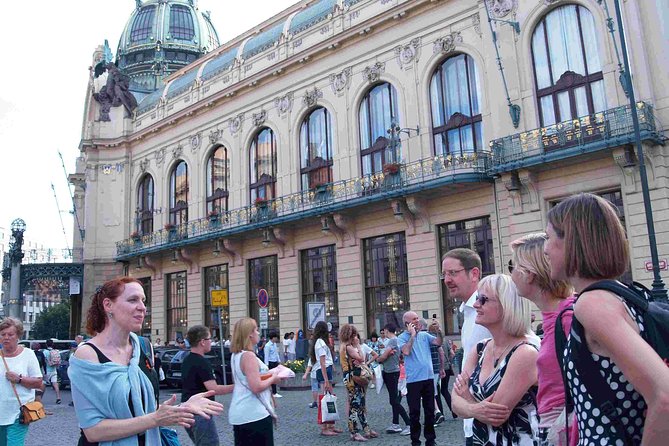
Prague is one of the best places in Europe to compare Art Nouveau and Cubism within a compact central area. Art Nouveau favors flowing lines, plants, flowers, curved lettering, stained glass, and elaborate decoration. Cubism breaks those soft forms into sharp angles, pyramids, crystals, and faceted surfaces.
The contrast is easy to miss if you simply walk from Old Town Square to Wenceslas Square. A guide can point out a gingko leaf on a façade, explain why a stairway was designed a certain way, or show how a building’s interior reflects the hopes of a new Czech society.
The period also matters. These styles developed during a time of new machines, urban growth, national movements, and political tension. Prague was part of the Austro-Hungarian Empire, yet many Czech artists and architects wanted to express a distinct local identity. Architecture became part of that argument.
This is why the walk works for people who are not already architecture fans. You are not asked to memorize names and dates. You learn how to read a building, then use that skill for the rest of your stay.
More Art Nouveau tours in Prague:
- Private Prague Art Nouveau and Cubism Walking Tour
★ 5.0 · 30 reviews - Prague Art Nouveau and Cubism Walking Tour
★ 5.0 · 29 reviews - Prague: Private Cubism & Art Nouveau Walking Tour
★ 5.0 · 15 reviews
The House of the Black Madonna: Cubism with a practical purpose
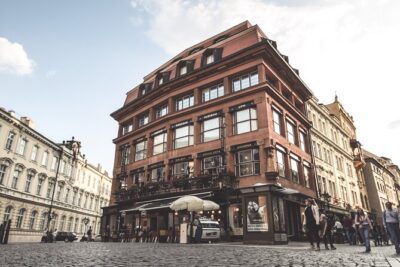
The walk begins near the House of the Black Madonna, one of Prague’s best-known Cubist buildings. Its angular exterior immediately sets the tone. Instead of the curling plant forms associated with Art Nouveau, you see hard edges and geometric shapes.
The building is especially useful as an introduction because Cubism here is not merely a painting style transferred onto a wall. The design affects the structure, windows, stairways, and interior details. The name refers to a small black Madonna statue connected with the original Baroque building on the site.
You usually spend about 10 minutes here, enough to study the exterior and discuss why this style appeared in Prague. The stop is free, but the short time means you should not expect an extended museum visit. The value comes from the explanation and from learning what to notice elsewhere.
Obecní Dům and the grand Art Nouveau ideal
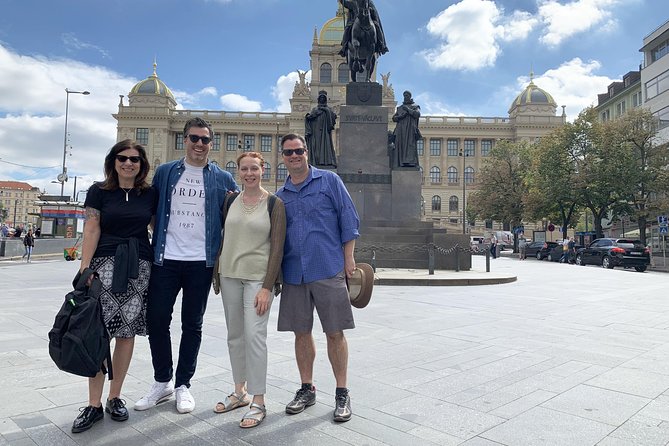
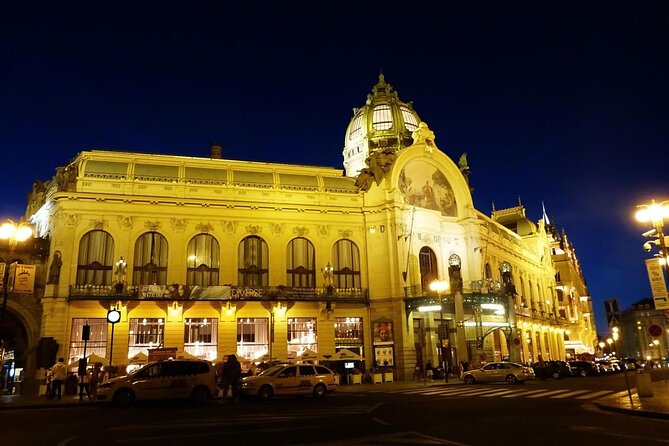
A short walk brings you to Obecní Dům, Prague’s grand civic Art Nouveau landmark. This is one of the tour’s essential stops. Its decoration is elaborate but not random. Curving lines, flowers, mosaics, metalwork, lamps, and sculptural details work together to create a carefully planned whole.
The building also helps explain the Czech National Revival, the movement that encouraged Czech language, culture, and public pride. It was designed as a major civic and cultural center, so its decoration carries a message about modern Czech life.
You have about 15 minutes here. That is enough for a focused exterior discussion, though you may want to return later for a longer look or a separate visit. The walk gives you the background to appreciate the building more fully if you come back.
K+K Hotel Central and Café Imperial
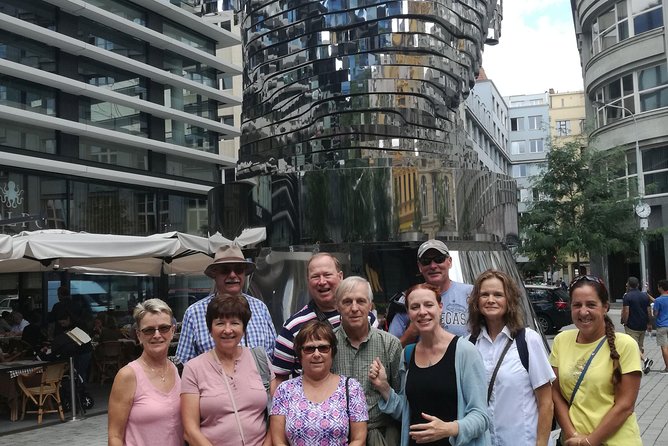
The K+K Hotel Central is described as Prague’s first Art Nouveau building, making it an important early example. This stop is useful because it shows that Art Nouveau was not limited to grand civic halls. Hotels and commercial buildings adopted the style to signal comfort, modernity, and status.
The tour allows about 10 minutes here. You may find the building particularly interesting if you are staying there, since one person used the walk to return to the hotel and look at it with new eyes.
Next comes Café Imperial, with only about five minutes allocated. Its interior provides a quick look at decorative Art Nouveau in a working café setting. The short stop is enough to explain the room’s character, but you should not assume there will be time for a meal. Food and drinks are not included.
If you want to sit down afterward, Café Imperial can be a useful place to revisit. The route is full of buildings that serve ordinary purposes today, which makes the architecture feel connected to present-day Prague rather than sealed away as museum material.
More architecture walks in Prague:
- Prague Renaissance & Baroque Gardens Walking Tour
★ 5.0 · 23 reviews - Private Prague Art Nouveau and Cubism Walking Tour
★ 5.0 · 8 reviews - Private Prague Renaissance & Baroque Gardens Walking Tour
★ 5.0 · 8 reviews - Prague Renaissance and Baroque Gardens Walking Tour
★ 5.0 · 5 reviews
Czechoslovak Legion Bank and Prague’s sharp-edged style
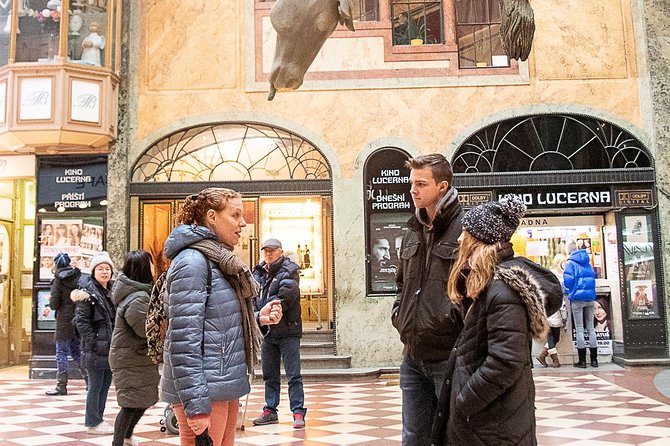
The Czechoslovak Legion Bank gives the tour a different tone. Its Cubist design is tied to the Czechoslovak Legion and the First World War, so the architecture carries a direct political and national meaning.
This is one of the places where the walk moves beyond style spotting. You are not just learning that the façade has angular forms. You are considering why a bank connected with national military memory would use such a forceful design.
The stop lasts around 10 minutes and includes discussion of the interior. Access to working buildings can vary, so the guide’s ability to show you what is available matters. The small group is helpful here. Eight people can gather without the awkwardness of a large crowd filling a lobby.
Prague Main Station and the technology of modern life
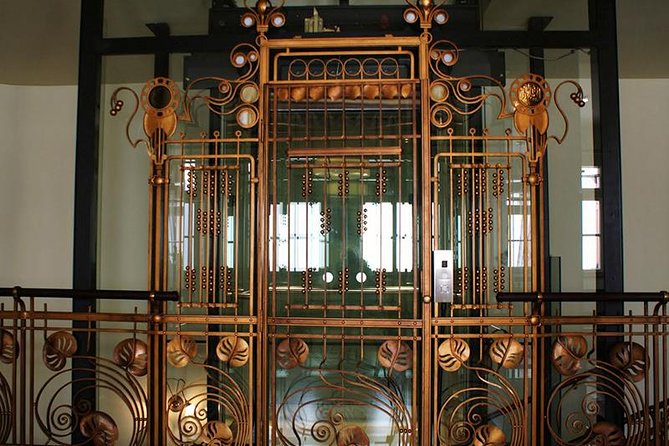
Prague’s main train station offers one of the route’s most useful interior stops. Its Art Nouveau dome gives you a grand example of how transport architecture could be designed as a civic statement.
The station also lets the guide discuss the practical technologies that shaped early modern Prague. Construction during this period could include central heating, ventilation, drinking water systems, hydraulic elevators, steam-powered laundry, and intercoms. These details matter because they show that Art Nouveau was not just decoration. It was connected with a new idea of urban comfort and efficient living.
A guide has also helped visitors find their way through the station, which is practical if you plan to use it later. You spend about 10 minutes here. That will not cover every corner, but it can save you from treating the station as merely a place to catch a train.
Wenceslas Square and the changing face of modern Prague
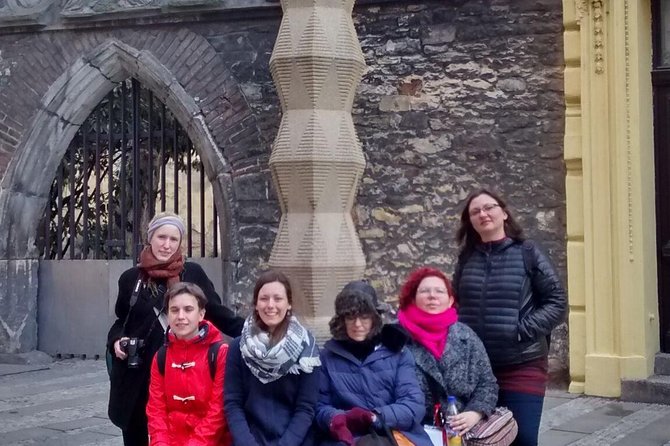
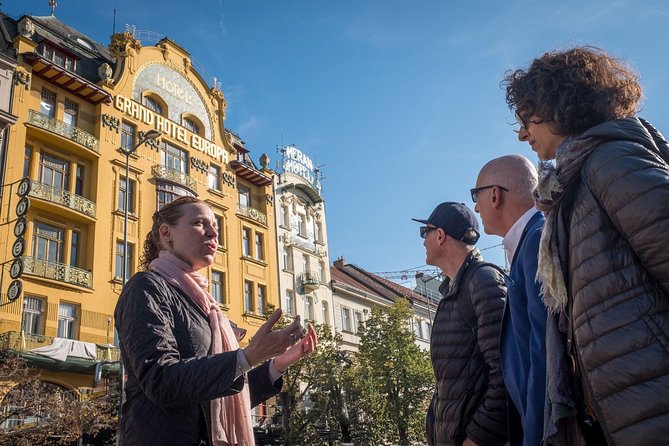
Wenceslas Square gives the walk a broad urban setting. Here the discussion includes Art Nouveau and Art Deco architecture, allowing you to compare two related but different periods.
Art Nouveau tends toward flowing decoration and natural forms. Art Deco is more streamlined and geometric, with a stronger sense of symmetry and machine-age style. Seeing both around the same square helps you understand that architectural styles do not change overnight. Buildings from different decades share the same public space.
The stop lasts about 15 minutes. It is also a useful point for connecting architecture with major events in Czech history. Wenceslas Square has long been a place for public gatherings and political change, so its buildings form the backdrop to a larger national story.
Lucerna: a glimpse of Czech optimism and satire
Lucerna Music Bar is one of the most atmospheric stops. You see the Art Nouveau interior of one of Prague’s notable arcades, a setting that combines shops, entertainment, decoration, and public life.
The tour also uses Lucerna to discuss turn-of-the-century Czech optimism and later avant-garde movements. That shift is important. Prague’s artists were not simply copying Paris or Vienna. They were experimenting with new forms while responding to local politics and culture.
Nearby, the upside-down statue of King Wenceslas riding a dead horse adds a jolt of modern satire. The sculpture is by David Černý and invites discussion of Czech history, the National Revival, and the way contemporary artists challenge national symbols.
The statue is a good final contrast to the earlier buildings. You begin with historical architecture and finish by considering how Prague still argues with its past through public art.
Café Louvre is a useful ending point
The stated end point is Café Louvre on Národní Street. Opened in 1902, the café retains the atmosphere of the grand café tradition associated with figures such as Franz Kafka, Albert Einstein, and T. G. Masaryk.
The tour does not include food or drinks, so plan to pay separately if you stay. Still, ending here is practical. You can sit down, continue discussing what you saw, or use the central location to reach another part of Prague.
The finish also suits the subject. After looking at civic buildings, banks, hotels, stations, arcades, and public sculpture, you end in a place where people have long gathered to talk and think.
What the guides add
The guide is the heart of this experience. The strongest descriptions point to Vadim, Vadim, Betty, Bonita, and Matouš as engaging guides who explain difficult material clearly and respond to individual interests.
A particularly useful feature is the ability to tailor the discussion. If your group cares most about Cubism and Art Deco, the guide can give those areas more attention. If you are interested in politics, public life, or technology, the buildings become evidence for those subjects.
The small format also encourages questions. You might ask why a façade uses a particular plant, how a building served its original purpose, or why Prague became such an important center for Cubist architecture. A good guide can turn those questions into a wider explanation without losing the thread of the walk.
Some groups have also been able to see interiors that they would not have entered alone, including public buildings with murals and decorative details. Access can depend on the day and the building, so treat this as a possibility rather than a guarantee.
Price, pace, and practical concerns
At $126.71, the price is high for a three-hour walking tour. No meals, admission tickets, or hotel transfers are included. You are paying mainly for the historian guide, small group, planning, and access to a more focused way of seeing central Prague.
For a group of eight or fewer, the cost is easier to justify than it would be for a large crowd. The guide can answer questions, adjust the route, and explain details that a general city walk may skip. The experience can also change how you see the rest of Prague, which adds value beyond the three scheduled hours.
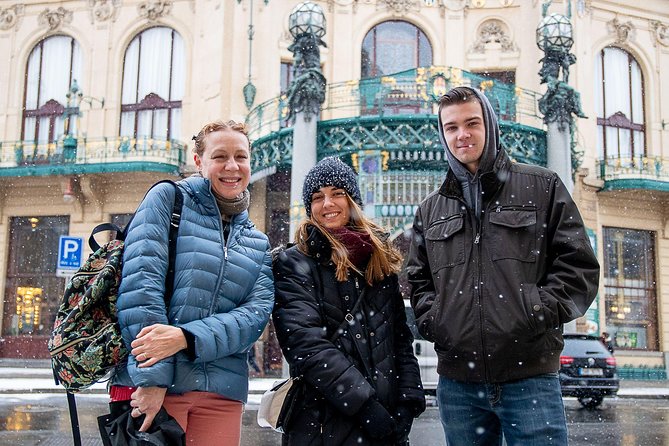
Wear comfortable shoes. The route covers several central areas, and the pace is built around walking between stops. The tour runs in rain, so a wet-weather plan is sensible. A guide has adapted the route for rain and even used a tram to reach a farther area when the group’s interests and walking ability made that worthwhile.
The experience is offered in English and is near public transportation. Most people can participate, but this remains a walking tour with multiple stops. Ask the provider directly if you need a specific accessibility arrangement.
Booking 69 days ahead on average suggests that you should not leave it until the last moment if your dates are fixed. Free cancellation is available until 24 hours before the start time. The stated morning meeting time is 10:00 a.m., with morning and afternoon departures offered.
Who should book this Prague walk?
I would choose this tour early in a Prague visit. The ideas carry over to the rest of the city, and you will start noticing curved lettering, plant patterns, faceted stone, geometric windows, and Art Deco details on your own.
It is especially suited to:
- People who like architecture but want historical context
- First-time visitors seeking a clear introduction to Prague
- Returning visitors looking beyond the castle and Old Town Square
- Families with older children or adults who enjoy discussion
- Small groups interested in Cubism, Art Nouveau, or Art Deco
- Anyone who prefers local explanation to a large sightseeing group
It may not suit you if you want to enter every building, spend a long time at each stop, or follow a purely chronological history lesson. The route moves steadily, and several stops last only 5 to 10 minutes.
Should you book the Art Nouveau and Cubism Walking Tour?
Book it if you want Prague’s buildings to make sense, not just look attractive. The combination of Obecní Dům, the House of the Black Madonna, Legion Bank, the main station, Lucerna, and Wenceslas Square gives you a strong range of styles and subjects.
I would hesitate only if $126.71 feels too high for a three-hour walk or if you prefer to explore without a guide. For everyone else, the small group and specialist historical focus make this a thoughtful way to begin a Prague stay. You leave with practical tools for reading the city, and that is worth more than a quick list of famous façades.
FAQ
How long is the Prague Art Nouveau and Cubism Walking Tour?
The tour lasts approximately three hours.
What language is the tour offered in?
The tour is offered in English.
How many people can join the tour?
The group has a maximum of eight participants.
What time does the tour start?
The stated start time is 10:00 a.m. Morning and afternoon departures are available.
Where does the tour begin?
The meeting point is Ovocný trh 19, Staré Město, Prague 1.
Where does the tour end?
The tour ends at Café Louvre, Národní 22, Prague 1.
Are food and drinks included?
No. Food and drinks are not included unless specifically stated.
Is hotel pickup included?
No. Hotel pickup and drop-off are not included.
Can I cancel for a full refund?
Yes. You can cancel at least 24 hours before the experience start time for a full refund. Changes or cancellations made less than 24 hours before the start time are not accepted for a refund.
Just added around Prague
- Private Prague Art Nouveau and Cubism Walking Tour★ 5.0 · 8 reviews
- Best of Prague Architecture – private tour with PERSONAL PRAGUE GUIDE★ 5.0 · 21 reviews
- Private Prague Renaissance & Baroque Gardens Walking Tour★ 5.0 · 8 reviews
- Prague Renaissance & Baroque Gardens Walking Tour★ 5.0 · 23 reviews
- Prague: Private Prague Art Nouveau and Cubism Tour★ 4.8 · 6 reviews
- Prague Renaissance and Baroque Gardens Walking Tour★ 5.0 · 5 reviews
- Prague: Private Cubism & Art Nouveau Walking Tour★ 5.0 · 15 reviews
- Prague: Modern Architecture and Design Guided Tour★ 3.9 · 20 reviews
Art Nouveau Tours, compared.
Riga: Old Town Walking Tour with Art Nouveau Highlights
Read our review →
Riga: 2-Hour History of Art Nouveau Walking Tour
Read our review →
Brussels: Art Nouveau Pass – Entry to Three Locations
Read our review →
Small Group Tour in Ålesund: Art Nouveau, Sea Views & Insider Tips
Read our review →
Browse the lists this tour appears in