
Review · CHICAGO
Chicago’s Secret Interiors Architectural Walking Tour
Chicago’s best architectural surprises often sit behind ordinary doors. This two-hour Loop walk takes you from Union Station through financial canyons and grand hotels to ornate lobbies, mosaics, domes, and the old Marshall Field building. You get the city’s famous skyline, but also the interiors most people pass without seeing.
I like the way the tour connects buildings to the people who paid for them and the architects who solved their hard engineering problems. I also like the balance of outdoor walking and indoor stops, which makes cold or wet weather easier to manage. The main catch is that the route can change: the Rookery is closed Sundays, and the final cultural stop may be either the Chicago Cultural Center or Monadnock Building.
Key points to know before you go
- The Rookery is the interior star: Frank Lloyd Wright redesigned its elegant lobby inside Burnham and Root’s 1888 building.
- The route ends at Marshall Field: You finish beneath a famous Tiffany glass mosaic dome, with the old Tea Room nearby.
- Indoor stops soften Chicago weather: Much of the walk moves in and out of lobbies, hotels, stations, and public buildings.
- Guides make the difference: Ethan, Grant, Ty, Matthew, Avery, and Matt have been praised for clear stories, humor, pacing, and group management.
- Sunday has one important change: The Rookery is closed, so it is left off that day’s route.
- You get strong value for $35: This is a guided look at several important interiors for less than many single-building attractions.
Why Chicago’s interiors tell the better story
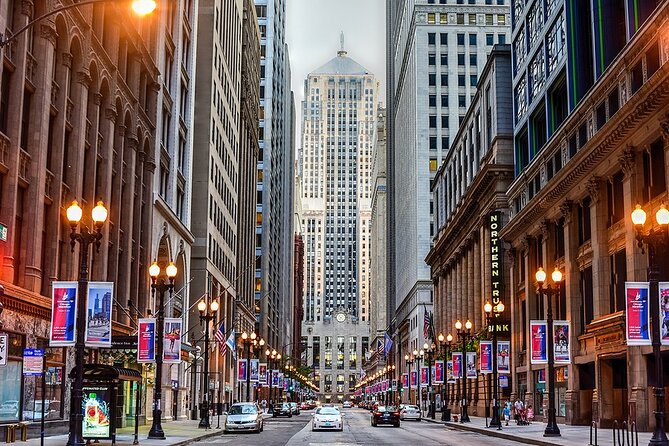
From the sidewalk, Chicago can look like a contest in height. The Willis Tower reaches upward, the Board of Trade closes La Salle Street with its grand Art Deco profile, and office towers form narrow urban canyons around you.
But the city’s architectural story becomes more human once you step inside. A lobby reveals how a company wanted clients to feel. A mosaic shows which explorers or industries a building wanted remembered. A hotel ceiling tells you how much money the city’s elite once spent on a first impression.
That is the real purpose of this walk. You are not simply checking off famous facades. You are learning how Chicago rebuilt after the Great Fire, how new steel-frame construction changed the skyline, and how commercial ambition produced some of the country’s most inventive buildings.
The advertised price is $35, which is fair for a small guided group and several interiors. You could walk past most of these places for free, but you would miss the explanation that makes their details matter. The guide also helps you find doors and public areas that are easy to overlook.
The tour receives a 4.9 rating from 635 ratings, with 98 percent recommending it. That high mark fits the strongest part of the experience: the guides. Ethan has been praised for his energy and clear explanations, while Grant is known for a calm pace and strong organization. Ty brings humor and a sharp point of view, and Matthew has been singled out for balancing professionalism with fun.
Those names do not guarantee who will lead your departure, but they give you a good idea of the guide style to expect: informed, friendly, and active rather than a dry lecture.
More hidden architecture gems in Chicago:
- Chicago: Secret Interiors Architecture Walking Tour
★ 4.9 · 498 reviews - Tokyo: Shibuya Highlights Walking Tour & Secret View Spot
★ 5.0 · 287 reviews - Delhi Hidden Gems: Mehrauli, Lodhi Art & Sunder Nursery
★ 5.0 · 108 reviews
Starting at Union Station and entering the Loop
The meeting point is outside Chicago Union Station at 225 South Canal Street. This is a practical starting place because the station itself gives you an immediate taste of Chicago’s grand public architecture.
Union Station was designed by Daniel Burnham and completed in 1925. Its Beaux-Arts exterior and huge Great Hall reflect the early twentieth century’s taste for scale, symmetry, and ceremony. The skylight makes the hall feel more like a civic monument than a place where people simply wait for trains.
You will spend about ten minutes here according to the planned schedule. That is enough for an introduction and a close look at the major features, but not enough for a full architectural study of the station. If Union Station interests you, arrive early and allow extra time before the group meets.
This first stop also helps you understand the tour’s larger theme. Chicago’s grand buildings were made for movement: trains bringing people into the city, elevators carrying workers upward, and broad streets handling commerce at a scale few American cities had seen.
Financial Canyon and the Loop’s working core
The walk then moves through downtown and the La Salle Street area, often called Chicago’s Financial Canyon. Tall buildings press close together here, creating a dramatic street-level view that differs from the open perspective of a river cruise.
You will hear about the Chicago Board of Trade, the Willis Tower, and the businesses that helped shape this district. The Board of Trade provides the Art Deco counterpoint to the newer vertical mass of Willis Tower. Together, the buildings show how Chicago kept adding height while preserving earlier ideas about ornament and civic grandeur.
The outdoor portions are brief on the planned schedule, about ten minutes in each listed area. That does not mean you are standing in one spot for the whole time. You move between buildings, listen on sidewalks, and pause for views that are easy to miss when you are hurrying to an appointment.
Your guide’s ability to keep the group together matters here. La Salle Street can be crowded, and the best viewpoint may be across a road or beside an active entrance. Guides such as Grant, Avery, and Ethan have been praised for setting a manageable pace and making sure people could hear while moving around the city.
The Rookery, Chicago’s great architectural conversation
The Rookery is likely to be the most memorable interior on the route. Burnham and Root designed the building in 1888, combining Romanesque and Moorish touches with innovative structural ideas. Its famous light court brought daylight into the center of the building, a useful response to the limits of early skyscraper design.
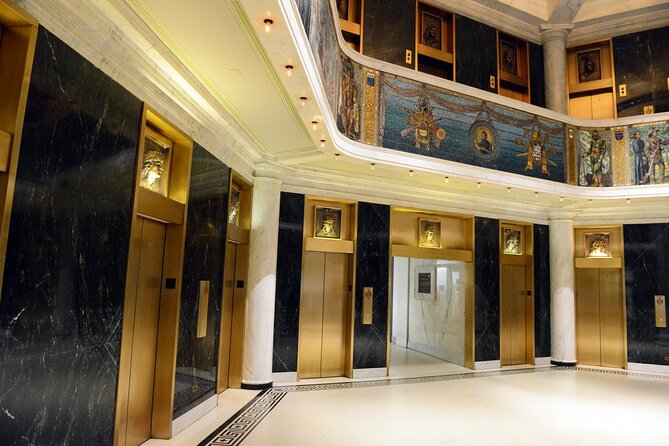
Inside, Frank Lloyd Wright later reworked the lobby. The result is a layered building, with one generation of architects creating the original structure and another reshaping its public face. Look for the ironwork, the light court, and the distinctive oriel staircase.
The Rookery is especially valuable because it lets you see architecture as a process rather than a single signature style. Chicago was testing new forms here. The building had to be impressive, practical, and safe, while still giving tenants and visitors a sense of luxury.
The important planning note is simple: the Rookery is closed on Sundays and is not included in the Sunday route. If this is the stop you most want to see, book another day and confirm the current route before setting out.
The planned stop is about ten minutes, so your guide will focus on the strongest features rather than cover every corner. That is a good reason to listen closely and avoid treating the stop as a rushed photo opportunity.
More architecture walks in Chicago:
- Chicago in a Day: Food, History & Architecture Walking Tour
★ 5.0 · 1,153 reviews - Chicago Walking Tour: Art Deco Skyscrapers Loop
★ 5.0 · 138 reviews - Chicago Architecture Walking Tour: Incredible Art Deco Interiors
★ 5.0 · 85 reviews - Chicago Walking Tour: Historic Skyscrapers
★ 5.0 · 67 reviews
Field Building and the polish of Art Deco
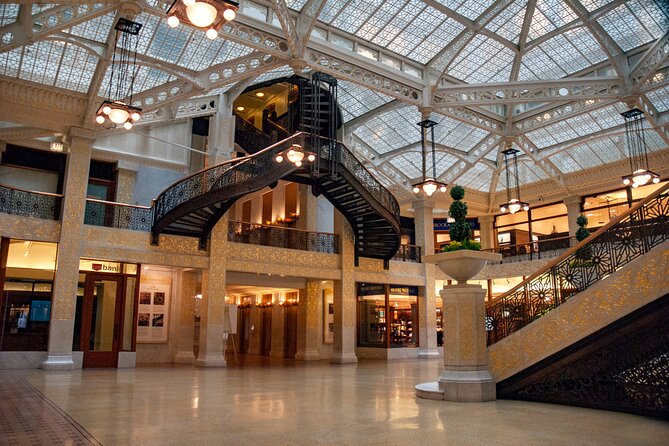
The Field Building brings you into the Art Deco era. Its design reflects a later phase of Chicago’s building boom, when towers used geometric decoration, polished surfaces, and strong vertical lines to project modern power.
This stop works well after the earlier Chicago School buildings because you can compare the changes in taste. Earlier structures often reveal their engineering through windows, columns, and light courts. Art Deco buildings make a more deliberate visual statement, using decoration to frame the modern office city.
The tour presents the Field Building as an interior and exterior experience rather than a quick look upward. You will get a sense of how details at the entrance and in shared spaces were used to shape the identity of the building.
Ten minutes is enough for the main points, but the short timing means you should not expect an extended visit to every public room. The value here comes from the guide’s explanation and from seeing the building in sequence with the Rookery and Marquette.
Marquette Building and its Illinois story
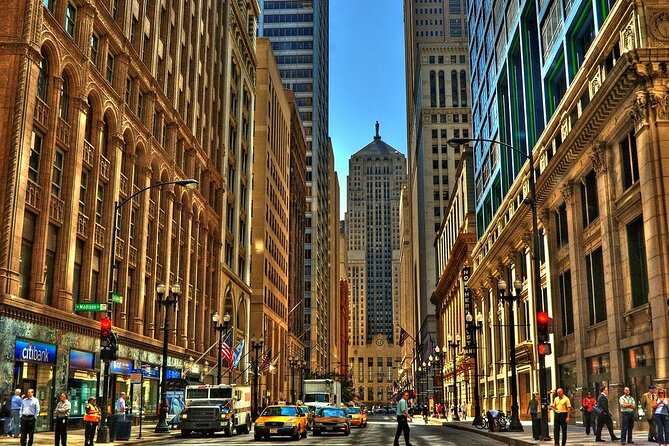
The Marquette Building is one of the clearest examples of Chicago School design on this walk. Its terra cotta exterior and use of Chicago windows show how architects combined larger panes of glass with structural frames to bring more light into office interiors.
The lobby is the main reward. Ornate mosaics tell the story of Jacques Marquette’s exploration of Illinois, turning a circulation space into a history lesson. You are looking at art, architecture, and civic storytelling in the same room.
I like this stop because it shows that commercial buildings were not designed only for efficiency. Their owners wanted visitors to see craftsmanship and local identity from the moment they entered. The lobby had to persuade clients that the building, and the businesses inside it, were serious.
Your guide can also help you compare the Marquette with the Rookery. One emphasizes a light court and layered architectural styles. The other uses windows, terra cotta, and mosaics to make technology and regional history part of the visitor’s experience.
Palmer House and the Gilded Age welcome
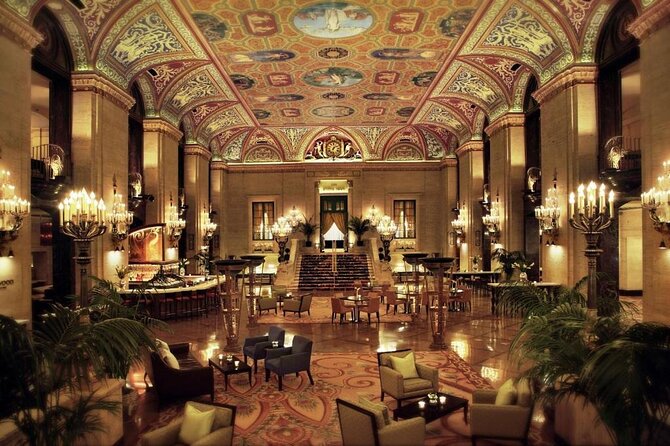
The Palmer House gives you a different kind of spectacle. This grand hotel was rebuilt after the Great Chicago Fire and became one of the city’s best-known addresses. Its Beaux-Arts interiors were made to impress guests before they ever reached a room.
Inside, look for the frescoed ceiling, mosaic floors, and bronze peacock doors. These details are not subtle, and that is the point. The Palmer House reflects the Gilded Age belief that a hotel should feel like a palace and that public spaces should display wealth at every turn.
The building also connects architecture with social history. Celebrities and dignitaries have passed through its doors, and the hotel’s reputation helped make it part of Chicago’s public life rather than just a place to sleep.
This stop is useful for anyone who finds office buildings too abstract. Here, you can see how architecture shaped an emotional experience: arrival, ceremony, luxury, and display. It is also one of the better indoor pauses on a cold day.
The Chicago Cultural Center or Monadnock Building
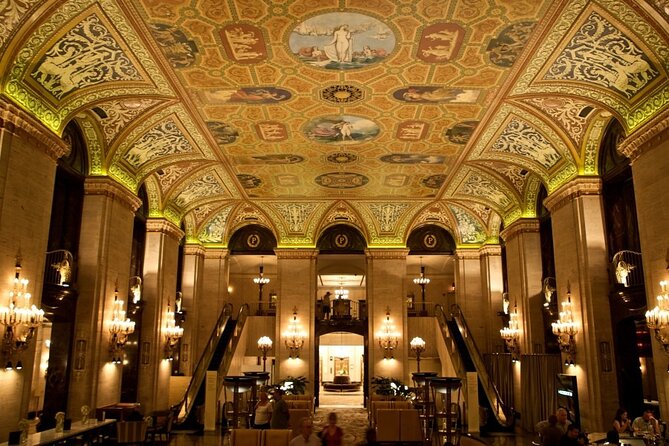
The route includes either the Chicago Cultural Center or the Monadnock Building. Since the choice can vary, you should treat this as a pleasant change rather than plan your whole day around one specific interior.
The Chicago Cultural Center is known for its architectural beauty and civic role. It gives the tour another look at public architecture, where the goal was not simply to house offices or sell goods but to create a shared cultural setting.
The Monadnock Building represents the commercial style of the late nineteenth century. Its importance comes from the way it shows Chicago’s transition into a city of tall office buildings. The building helps explain how architects worked with new construction methods while still giving the street a solid, formal face.
Both choices fit the tour’s main idea, but they offer different moods. The Cultural Center leans toward civic art and public gathering. Monadnock focuses more on commercial development and the practical growth of the early skyscraper.
Marshall Field and the grand finish
The walk ends at the former Marshall Field and Company Building, now home to Macy’s, at 111 North State Street. This is a fitting finish because department stores brought high design to ordinary shopping.
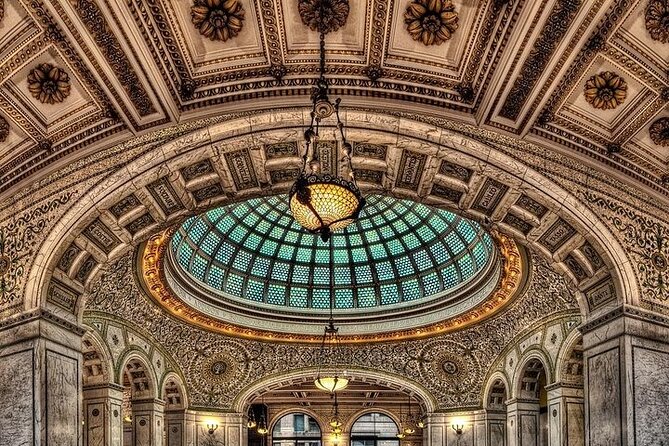
The interior’s famous Tiffany glass mosaic dome is the star feature. The building also includes an elegant walnut-paneled Tea Room, a reminder that shopping once included long pauses for food, conversation, and ceremony.
Marshall Field’s made retail into theater. The building was designed to make customers feel that buying something was part of a larger social occasion. Even if you are not shopping, the interior lets you see how commerce and architecture worked together.
The tour ends here rather than returning to Union Station, so plan your onward route from State Street. You are near public transportation, and the central location makes it easy to continue to another downtown sight, find lunch, or return to your hotel.
Timing, weather, and group size
The experience is sold as about two hours, with roughly ten minutes assigned to each listed stop. In practice, the pace can vary. One departure lasted around an hour and a half and included a fifteen-minute break, while other groups have taken closer to the advertised two hours.
That flexibility is helpful, but you should not book a tight connection immediately afterward. Allow extra time for street crossings, building access, questions, and the possibility of a longer stop.
The stated group maximum is 15 people. Some departures have reportedly been much larger, including a group of about 40. A small group should make it easier to hear and ask questions, while a larger one may feel less personal. If your guide is handling a bigger crowd, stay close and speak up if you cannot hear.
The tour requires good weather and may be canceled if conditions are poor. You will walk outdoors between buildings, even though many stops are indoors. Wear comfortable shoes and bring a coat or rain protection in uncertain weather. Cold conditions are manageable because you spend substantial time inside, but this is still a walking tour.
A mobile ticket is accepted, and the route is near public transportation. Service animals are allowed, and most people can take part. The information provided does not promise a fully step-free route or detail every building’s access arrangements, so ask before booking if you have specific mobility needs.
Is $35 a good value?
At $35, this is a strong choice if you want context rather than a quick photo walk. The price covers an expert guide and access to a sequence of important public interiors, several of which you might pass without realizing what is inside.
The tour is especially good value when you compare it with the cost of visiting several separate attractions. You get Union Station, the Rookery, Marquette Building, Palmer House, Marshall Field, and other Loop landmarks in one organized route.
The tradeoff is depth. Ten minutes per stop gives you an introduction, not a full building tour. If you are an architect or serious preservation enthusiast, you may want more time at the Rookery or Cultural Center. For most visitors, though, the range of styles is the strength.
I would also pair this with a Chicago architecture boat tour if your schedule allows. The boat gives you broad views of the riverfront towers. This walk gives you the doors, ceilings, mosaics, and stories at street level, so the two experiences cover different ground.
Who should book this walk?
I would choose it for first-time Chicago visitors who want more than an exterior sightseeing loop. It also works well for returning visitors, since the route reveals parts of downtown that are easy to ignore when you are focused on major attractions.
Architecture students, history fans, photographers, and curious shoppers will find plenty to enjoy. Families can take part too, provided everyone is comfortable walking and listening during several short talks.
It may not suit you if you want a slow, detailed study of one building, a fully indoor activity, or a tour with guaranteed access to every listed stop. Sunday visitors should also understand that the Rookery is omitted.
The strongest reason to book is the guide-led access to ordinary-looking entrances and public rooms. Ethan, Grant, Ty, Matthew, Avery, and Matt have all been praised for energy, humor, pacing, and city knowledge. Your guide will shape the experience, but the route gives that guide excellent material.
My booking advice
Book this tour if you want a well-priced introduction to Chicago’s architecture with real interiors, not just skyline views. Choose a weekday or Saturday if the Rookery matters most, and leave at least half an hour of breathing room after the scheduled finish.
I especially recommend it on a cold day, when the indoor stops make a walking tour far more comfortable than you might expect. Skip it only if you prefer to explore at your own pace or need guaranteed, detailed access arrangements at every building.
For $35, you get a practical, story-filled walk through the Loop’s finest public spaces. That is a good deal, and it may change the way you look at Chicago long after the tour ends.
FAQ
How long is the Chicago Secret Interiors Architectural Walking Tour?
The tour is advertised as approximately two hours. The actual length can vary, with some departures lasting around an hour and a half and including a fifteen-minute break.
Where does the tour begin and end?
It begins at Chicago Union Station, 225 South Canal Street. It ends at the Marshall Field and Company Building, 111 North State Street.
Is the Rookery included every day?
No. The Rookery is closed on Sundays, so it is not included on the Sunday route.
Which building is visited instead of the Chicago Cultural Center?
The route includes either the Chicago Cultural Center or the Monadnock Building. The provided information does not specify which one will be used for each departure.
What is included in the $35 price?
An expert tour guide is included. The tour uses a mobile ticket.
Can I cancel for a full refund?
Yes, if you cancel at least 24 hours before the experience begins. Cancellations within 24 hours are not refunded, and poor-weather cancellations offer either a different date or a full refund.
Just added around Chicago
- Private Chicago Architecture Tour★ 5.0 · 5 reviews
- Private Frank Lloyd Wright Architectural Tour by Luxury Vehicle★ 3.5 · 7 reviews
- Chicago Luxury Minibus City Tour and Architecture River Cruise★ 4.5 · 8 reviews
- Small Group History And Architecture Walking Tour of Chicago★ 4.5 · 8 reviews
- Private Chicago Architecture Walking Tour★ 5.0 · 6 reviews
- Chicago History and Architecture Walking Tour with Boat Cruise★ 4.5 · 10 reviews
- Chicago: Evolution of the Skyscraper Walking Tour★ 4.9 · 10 reviews
- Chicago’s Modern Skyscrapers Guided Walking Tour★ 5.0 · 6 reviews
Hidden Gems Architecture Tours, compared.
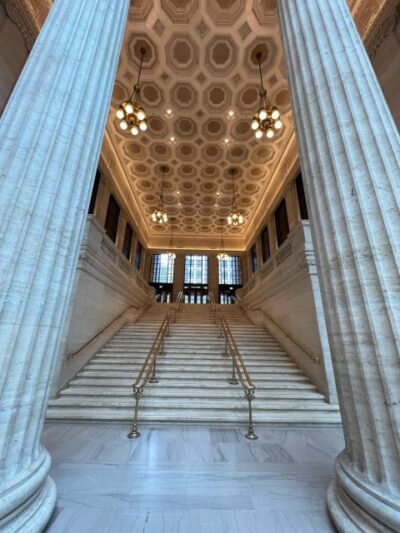
Chicago: Secret Interiors Architecture Walking Tour
Read our review →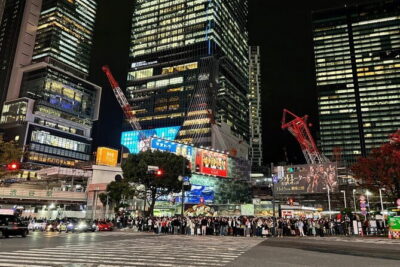
Tokyo: Shibuya Highlights Walking Tour & Secret View Spot
Read our review →
Delhi Hidden Gems: Mehrauli, Lodhi Art & Sunder Nursery
Read our review →
Miami Beach Art Deco & Hidden Gems Bike Tour with Local Historian
Read our review →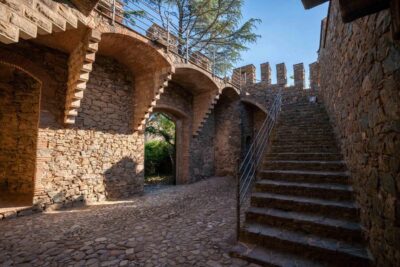
Barcelona: Exploring Gaudí’s Hidden Gem, Bellesguard Tower
Read our review →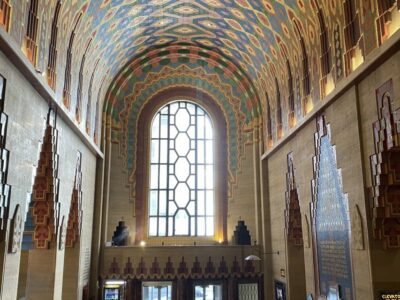
Detroit: Architectural Beauty and Hidden Gems Walking Tour
Read our review →
Secret Split: Socialist Architecture & brutalism – Urban Utopia
Read our review →
Barcelona Beyond Gaudí: Modernism, Rooftops, and Hidden Gems
Read our review →Browse the lists this tour appears in