
Review · LATVIA
Riga’s Architecture: A self-guided audio tour of the city’s art nouveau history
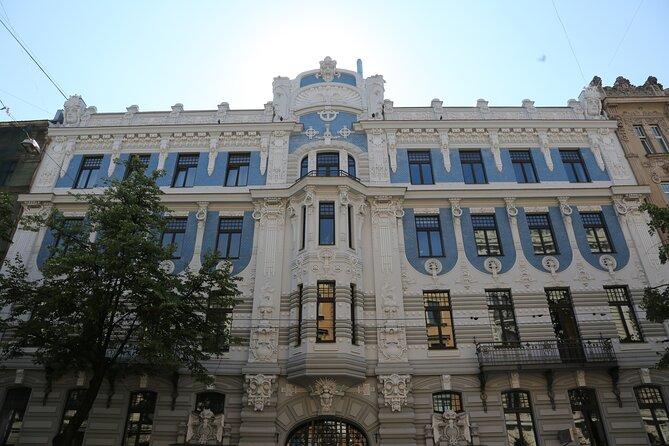
Riga has more than 800 Art Nouveau buildings, giving it one of Europe’s best city walks for decorative architecture. This 30 to 45 minute audio tour takes you from the Latvian National Museum of Art to Alberta iela, with stops at some of the city’s most striking facades.
I like the low $5.20 price and the freedom to pause, replay, or walk at your own speed. I also like the focus on how to recognize Art Nouveau, rather than simply pointing at pretty buildings. The tradeoff is simple: this is an app-based walk, not a live guide, so you need your own smartphone, headphones, and enough battery for the route.
Key points at a glance
- Riga’s Art Nouveau concentration: See a compact group of landmark buildings in a city with more than 800 examples of the style.
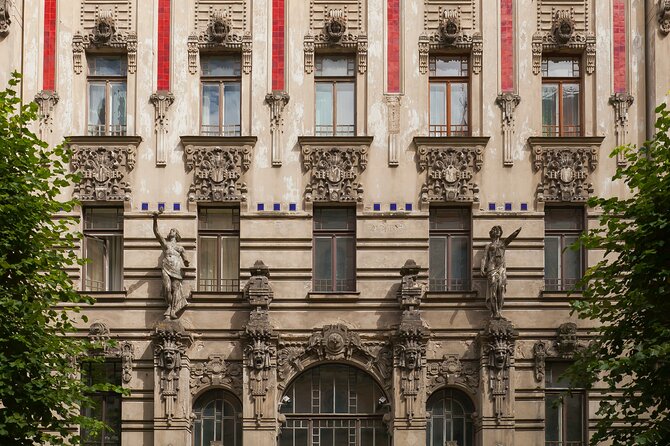
- Mikhail Eisenstein’s decoration: Learn how one architect used elaborate facades, bold ornament, and theatrical detail.
- A short central-Riga route: Walk from the Latvian National Museum of Art to Alberta iela 12 in about 30 to 45 minutes.
- National Romanticism explained: Discover how Latvian architects adapted Art Nouveau into a more local style.
- Offline access: Download the audio, map, and route data through the VoiceMap app before setting out.
- A flexible private experience: Only your own group takes part, with no fixed live-tour schedule.
Why Riga is ideal for an Art Nouveau walk
Riga is not a city with just one famous Art Nouveau building. Its central streets contain an unusually large collection, with more than 800 buildings in the style. That makes the city useful for learning the basics because you can compare several approaches within a short walk.
Art Nouveau is easier to appreciate once you know what to look for. The style can use flowing lines, plant forms, masks, geometric patterns, dramatic figures, and carefully arranged windows. Some buildings are restrained. Others seem determined to decorate every spare inch of wall.
This tour gives you that visual vocabulary as you walk. Instead of seeing each facade as a separate curiosity, you can begin to notice how architects handled entrances, balconies, columns, sculptures, and upper floors. That makes the walk more useful than a simple list of dates and building names.
The route also places Riga’s architecture in a wider setting. You hear about the architects behind the buildings, including Mikhail Eisenstein. His son, Sergei Eisenstein, later became a legendary Soviet filmmaker, an unusual family connection that adds a human thread to the architectural story.
More Art Nouveau tours in Riga:
- Riga: Old Town Walking Tour with Art Nouveau Highlights
★ 4.7 · 332 reviews - Riga: 2-Hour History of Art Nouveau Walking Tour
★ 4.8 · 118 reviews - Riga Art Nouveau walking tour
★ 4.0 · 27 reviews
Starting at the Latvian National Museum of Art
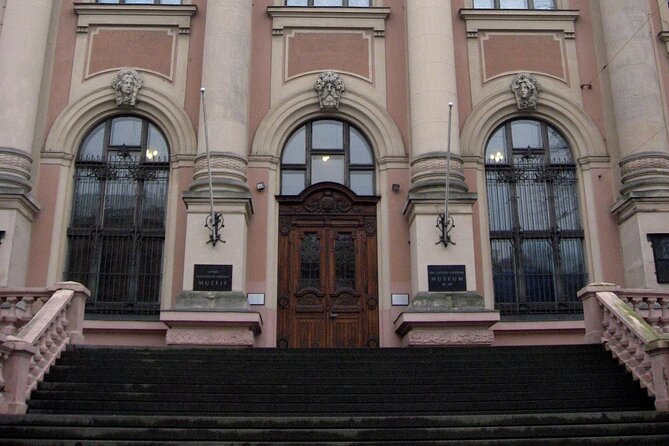
The walk begins at the Latvian National Museum of Art on Jaņa Rozentāla laukums. This is a sensible starting point because you are already in central Riga’s major cultural district, with public transportation nearby.
You do not need to enter the museum for this experience. The tour is an outdoor route, and museum admission is not included. That matters if you are planning a museum visit as part of the same morning or afternoon. You can pair the audio walk with the museum, but you will need to arrange and pay for any entrance separately.
At the opening point, the audio introduces the subject and helps you understand what to notice during the rest of the route. The first few minutes are important. Art Nouveau is not one fixed look, and the explanation gives you a way to separate broad style features from Riga’s own local variations.
Because the tour uses GPS and offline route data, download the material in advance through the VoiceMap app. The included offline access is especially useful if you do not want to depend on a mobile signal while walking. You still need your own smartphone and headphones.
Elizabetes 10b and the first close look at Riga’s facades
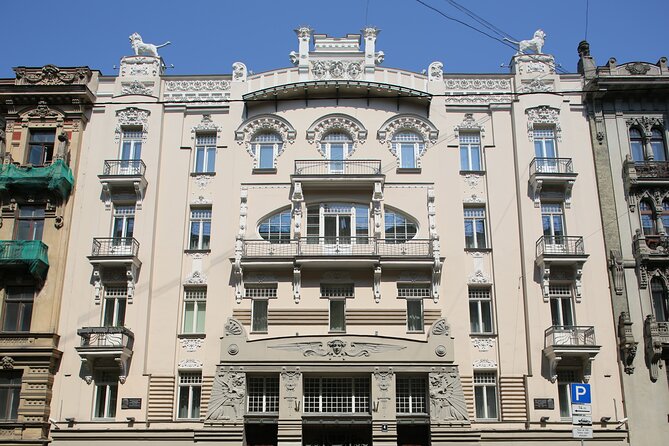
The first listed stop after the museum is Elizabetes 10b. The stop is brief, but it gives the route an early architectural highlight and begins the move into Riga’s famous Art Nouveau streets.
Here, pay attention to the facade as a complete composition rather than focusing only on one ornament. Art Nouveau architects often treated the front of a building almost like a stage set. Windows, balconies, lines of stonework, and sculptural details work together to create a distinct public face for the private apartments behind it.
The audio’s value is in directing your eyes. Without some guidance, you may notice that the building is elaborate but miss the smaller choices that make it Art Nouveau. The route is designed to keep the explanation moving, so you are not left with a long lecture at one address.
This is also where the short duration becomes useful. You can see an important example without committing to a full afternoon walking tour. If you are fitting Riga into a busy city break, the route gives you a concentrated introduction.
Alberta 2a and the work of Mikhail Eisenstein
The next stop is Alberta 2a, bringing you into one of Riga’s best-known Art Nouveau streets. The focus on Mikhail Eisenstein is one of the strongest reasons to choose this particular walk.
Eisenstein’s work is highly decorative and difficult to mistake for plain apartment architecture. The audio explains the visual choices instead of leaving you to stare at the facade and guess. Look for the way ornament is arranged across the building, how the decorative elements frame the windows, and how the street-facing surface creates drama.
The story of Eisenstein’s son, Sergei, adds an unexpected link between architecture and film. Sergei Eisenstein became a major Soviet filmmaker, so the family name connects Riga’s buildings with a later chapter in twentieth-century cultural history.
This stop should appeal to you if you like architecture with a personal story attached to it. It is easier to remember an architect when the account places him within a family and a city, rather than presenting only a name and construction date.
More history tours in Riga:
- Chicago in a Day: Food, History & Architecture Walking Tour
★ 5.0 · 1,153 reviews - Kuala Lumpur: Batu Caves & Historic Buildings Tour
★ 4.7 · 539 reviews - Charleston’s Best Highlights: History, Culture & Architecture
★ 5.0 · 422 reviews - Palm Springs Modernism Architecture & History Bike Tour
★ 5.0 · 359 reviews
Alberta 4 and the pleasure of comparison
Alberta 4 is another short stop, but its role is important because this route works by comparison. After seeing one heavily decorated building, you can start asking how the next facade differs.
Riga’s Art Nouveau is not just a parade of identical ornament. Architects used the style with different levels of restraint, different shapes, and different decorative themes. At Alberta 4, listen for the explanation of what makes this building worth placing beside the others.
You may find that your attention shifts from isolated sculptures to broader design questions. Does the facade feel balanced or crowded? Are the windows the main feature, or does the ornament around them take over? Does the building appear formal, playful, severe, or theatrical?
The audio format works well here because you can look while the explanation continues. You are not required to keep pace with a group or wait for everyone to gather at one point. If you need extra time with a detail, pause the tour and restart it when you are ready.
Alberta 11 and the move toward a Latvian style
At Alberta 11, the tour turns toward one of its most useful themes: National Romanticism. This style developed as architects in the region looked for a more local expression rather than copying outside models without change.
That distinction matters. Art Nouveau is an international style, but Riga’s architects did not all approach it in the same way. National Romanticism brought a stronger sense of local identity to the buildings, with an interest in regional materials, forms, and cultural references.
The audio helps you see this as a development rather than a separate subject. You begin with the broader Art Nouveau language, then notice how Latvian architects adapted it. For me, that kind of explanation gives the route more substance than a walk devoted only to the most extravagant facades.
The stop also gives you a reason to look beyond surface decoration. Architecture can communicate identity through texture, massing, shapes, and material as well as through statues and ornament. You might not identify every feature on your own, but the tour gives you a practical way to start looking.
Alberta 13 and the final sequence of facades
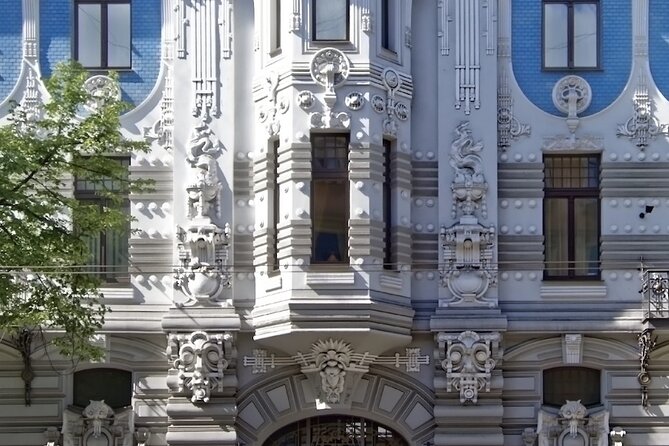
The stop at Alberta 13 continues the concentration of buildings around this celebrated street. By this point, you have enough background to make your own comparisons rather than simply receiving information.
That is the best feature of a self-guided audio walk. You can listen closely when a subject interests you and move along when you feel ready. A live guide may offer more opportunity for questions, but an app lets you control the rhythm.
The route is also private in the simplest sense: only your own group takes part. You will not be joining a larger walking party, and there is no need to adjust your pace for strangers. That can suit couples, families, or friends who prefer to explore quietly.
There is one practical limitation. Since the experience is not led by a person on the street, you cannot ask follow-up questions about a building that catches your eye. If you want conversation and spontaneous detail, a live walking tour may suit you better.
Alberta 12, the route’s finishing point
The walk ends at Alberta iela 12. Finishing here keeps the route compact and places you in the heart of Riga’s Art Nouveau district rather than sending you back across the city.
The final stop brings together the main ideas: how to identify the style, why Mikhail Eisenstein’s buildings attract attention, how Riga’s architects developed local variations, and why the city is such an important place for Art Nouveau architecture.
The end point is also practical. You can continue exploring the surrounding streets on your own, stop for food or a drink, or use public transportation from the central area. The tour does not include food, drinks, transportation, museum tickets, or other admission fees, so plan those separately.
Because the full walk lasts only about 30 to 45 minutes, you can place it before or after another central-Riga activity. The opening hours are listed as all day, every day, so you are not tied to a morning departure or a scheduled meeting time.
What the $5.20 price really gives you
At $5.20 per person, this is an inexpensive way to add structure to a city walk. The price includes lifetime access to the English-language tour, the VoiceMap app for Android and iOS, and offline access to the audio, map, and geographic route data.
The lifetime access has value if you want to stop and return later, or if you use the app for another self-guided route. Once the app is installed, other audio walks may also be available through it, though this price covers the Riga Art Nouveau experience described here.
The low cost does not include the things needed to use the tour. You must bring a smartphone and headphones. You also need to handle your own transportation, food, drinks, and any museum or attraction tickets.
I see the price as particularly good for a short visit. A 30 to 45 minute walk is not long enough to replace a full architectural tour, but it is long enough to give you a clear introduction and send you into the district with better eyes.
App setup, pace, and group size
You receive confirmation at booking, then use the VoiceMap app on an Android or iOS device. Download the audio, map, and geodata before you begin so you can use the route offline.
The audio is in English. The presentation is built for people who want a clear voice and a focused account of the city’s architecture, history, and politics without sitting through a long lecture. The pacing is intended to give you enough information to understand the buildings without making the walk feel like a classroom.
You can take part with your own group only, and most people can participate. The route is near public transportation, which makes the starting and finishing points easy to connect with the rest of a Riga visit.
The experience cannot be refunded or changed after booking. Since the policy is strict, check your dates, phone compatibility, headphones, and schedule before paying.
Who should choose this audio tour?
I would choose this walk if you want a short and affordable introduction to Riga’s architecture, especially if you are working around a tight schedule. It also suits independent visitors who dislike fixed departure times or large groups.
It is a good match for you if you enjoy:
- Architecture but want help knowing what to look for
- Short walks with a clear route
- App-based tours you can pause and replay
- Stories about architects and cultural figures
- Exploring with only your own group
- Offline access instead of depending on mobile data
I would think twice if you want a live guide, extensive time inside buildings, or a long historical tour with questions and discussion. This is an outdoor audio route, and no museum or attraction entry is included.
Should you book Riga’s Art Nouveau audio walk?
Book it if you want a focused look at Riga’s most famous architectural district for very little money. The combination of Mikhail Eisenstein, Sergei Eisenstein’s family connection, National Romanticism, and a compact route gives the walk more depth than a basic facade checklist.
Skip it if you already know Riga’s Art Nouveau streets well or prefer a personal guide who can answer questions. For everyone else, the $5.20 cost, offline access, flexible timing, and short route make this a practical first step into one of Riga’s defining subjects.
FAQ
Where does the tour start?
The tour starts at the Latvian National Museum of Art, at Jaņa Rozentāla laukums 1 in central Riga.
Where does the tour end?
The tour ends at Alberta iela 12 in central Riga.
How long does the tour take?
The approximate duration is 30 to 45 minutes.
What language is the audio tour in?
The tour includes lifetime access to the audio in English.
Which app do I need?
You need the VoiceMap app, available for Android and iOS devices.
Can I use the tour offline?
Yes. Offline access to the audio, maps, and geographic route data is included.
Are museum tickets included?
No. Tickets or entrance fees for museums and other attractions along the route are not included.
Can I cancel or change the booking?
No. The experience is non-refundable and cannot be changed for any reason.
More Audio-Guided Architecture Tours in Riga
- Florence: Cathedral & Brunelleschi’s Dome Ticket & Audio App
★ 4.4 · 148 reviews - Florence: Brunelleschi’s Dome Reserved Timed Ticket & Audio App
★ 4.0 · 49 reviews - Gaudi and La Sagrada Familia Exterior Self-Guided Audio Tour
★ 3.5 · 25 reviews - Sagrada Familia Skip The Queue With Audio Guide Tour
★ 4.5 · 20 reviews
More Self-Guided Architecture Routes in Riga
- Riga Art Nouveau Secrets: Self-Guided Puzzle Walk
★ 5.0 · 6 reviews - Barcelona: Sagrada Familia Entry Ticket with Audio Guide
★ 4.6 · 105,312 reviews - Florence: Cathedral & Brunelleschi’s Dome Ticket & Audio App
★ 4.4 · 6,973 reviews - Casa Batllo Admission Ticket with Intelligent Audio Guide
★ 4.5 · 3,168 reviews
Just added around Riga
- Riga Old Town, C Market & Art Nouveau Guided Walking Tour★ 5.0 · 2 reviews
- Ultimate Art Nouveau Experience in Riga – Private Tour★ 5.0 · 4 reviews
- Private Riga Art Nouveau Tour★ 5.0 · 5 reviews
- Explore Riga’s Art Nouveau district with a Local★ 3.0 · 2 reviews
- Riga Art Nouveau Secrets: Self-Guided Puzzle Walk★ 5.0 · 6 reviews
- Old Town And Art Nouveau Walking Tour Of Riga★ 4.0 · 15 reviews
- Riga’s Old Center and Art Nouveau Tour★ 4.9 · 11 reviews
- Riga: Art Nouveau Walking Tour with Welcome Drink★ 5.0 · 2 reviews
Art Nouveau Tours, compared.
Riga: Old Town Walking Tour with Art Nouveau Highlights
Read our review →
Riga: 2-Hour History of Art Nouveau Walking Tour
Read our review →
Brussels: Art Nouveau Pass – Entry to Three Locations
Read our review →
Small Group Tour in Ålesund: Art Nouveau, Sea Views & Insider Tips
Read our review →
Browse the lists this tour appears in