
Review · THE USA
Washington DC: Dupont Circle & Embassy Row Architecture Tour
Washington’s grandest homes are not gathered around the National Mall. They line the streets of Dupont Circle and Embassy Row, where embassies occupy former mansions and every block brings a new architectural surprise. This two-hour walking tour gives you the stories that turn handsome facades into places with ambition, money, politics, and scandal.
I like the small group limit of 10 people, which makes it easier to hear the guide and ask questions. I also like the mix of styles, from Neo-classical and Beaux-Arts to Queen Anne, rather than a walk focused on one period. The main thing to consider is the distance: you should be ready to walk 1 to 2 miles, and the tour runs outdoors in most weather.
Key points at a glance
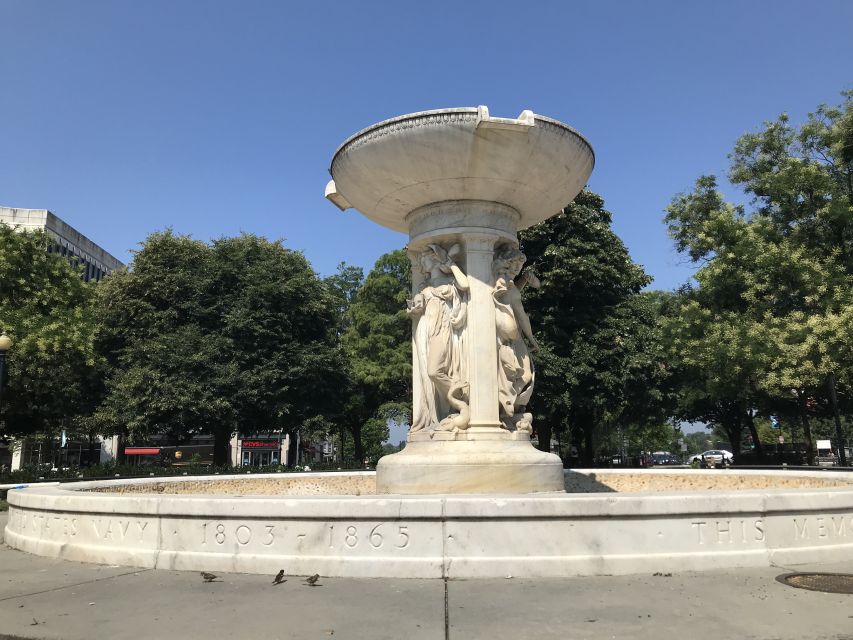
- Meet at Dupont Circle’s fountain: The tour starts in the center of the neighborhood, an easy landmark for finding your guide.
- See the Walsh-McLean House: The Indonesian Embassy occupies this grand former mansion, one of the area’s most impressive addresses.
- Compare several architectural styles: Neo-classical, Beaux-Arts, Queen Anne, and other designs appear along the route.
- Hear the personal stories: The guide connects the buildings to the people, ambition, scandals, and national events behind their doors.
- Keep the group small: A maximum of 10 people means a more personal walking experience.
- Plan for an outdoor morning: Tours are usually offered in the morning and take place in all weather unless conditions become dangerous.
Starting at the Dupont Circle fountain
The meeting point is the fountain at the center of Dupont Circle. That is a useful starting place because you do not have to search for a numbered doorway or a tucked-away office. Arrive ready to walk, with comfortable shoes, water, and clothing suited to the forecast.
The opening stretch gives your guide room to explain why this part of Washington became such a desirable place to live. You are not simply looking at expensive houses. You are reading the city through its homes, embassies, and former residents.
That difference matters. A mansion can look impressive for ten seconds, then fade into the background if nobody explains who built it, who lived there, or why its design was meant to make an impression. The tour’s focus is the story behind the facade.
The group is limited to 10 participants. That is a sensible size for a city walk. You can stay close enough to hear, and the guide can respond without turning every question into a public meeting. Guides named in the feedback include Carolyn and Natalie. Natalie was praised for her detailed knowledge of the people connected with Embassy Row, while Carolyn was singled out by name after her tour.
A few more architecture tours around the USA worth a look
- Chicago Architecture River Cruise
★ 5.0 · 15,756 reviews - Chicago River 90-Minute Architecture Tour
★ 4.5 · 9,629 reviews - Chicago River: 1.5-Hour Guided Architecture Cruise
★ 4.8 · 8,046 reviews
Walking Embassy Row, one facade at a time
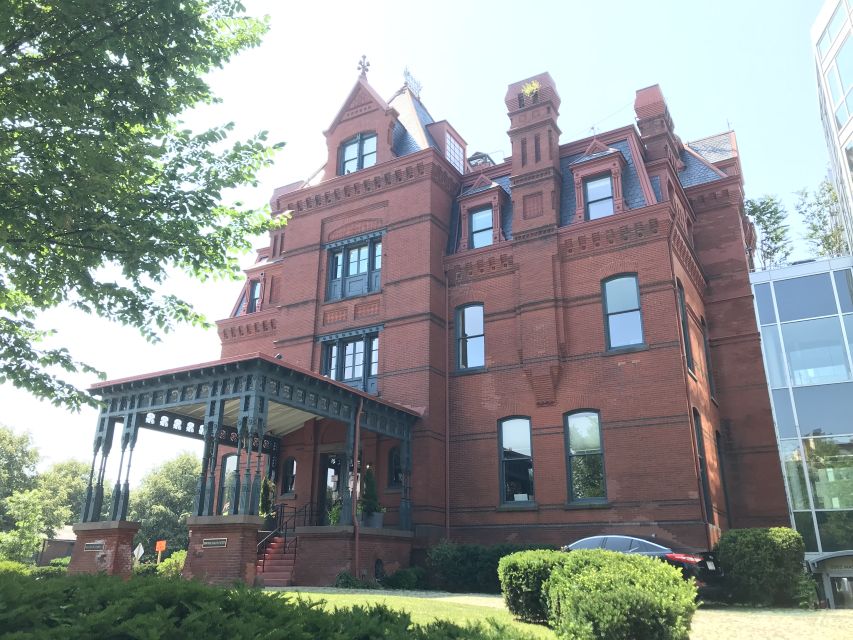
Embassy Row is the heart of the experience. The street is known for grand diplomatic buildings, but the visual appeal comes from the mix of old private mansions and international missions. A house built for one wealthy Washington family may now represent another country.
That change of purpose gives the route a useful layer of history. You see architecture designed to signal status, then learn how the same building entered the diplomatic life of the capital. The exteriors are the main attraction, so expect an architectural walk rather than regular interior access.
The route covers about 1 to 2 miles. In two hours, that leaves time to stop, look up, and hear a story without racing between addresses. It also means you should not treat this as a quick photo loop. The value comes from the commentary at each stop.
The guide covers the architectural range along these streets. Neo-classical buildings use familiar classical forms to suggest order and authority. Beaux-Arts design is more theatrical, with elaborate detail and a strong sense of ceremony. Queen Anne buildings bring a different mood, with more varied shapes and decorative character.
You do not need a background in architecture to enjoy the differences. A good guide points out what your eyes are already seeing, then gives it a name and a reason. That helps you notice why one building feels formal, another feels playful, and a third seems designed to overwhelm.
The Walsh-McLean House and the Indonesian Embassy
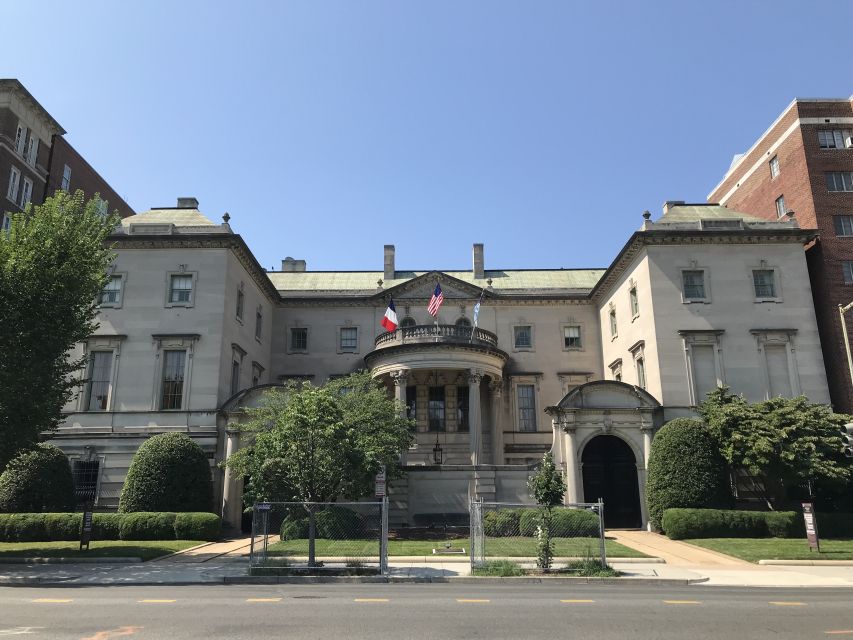
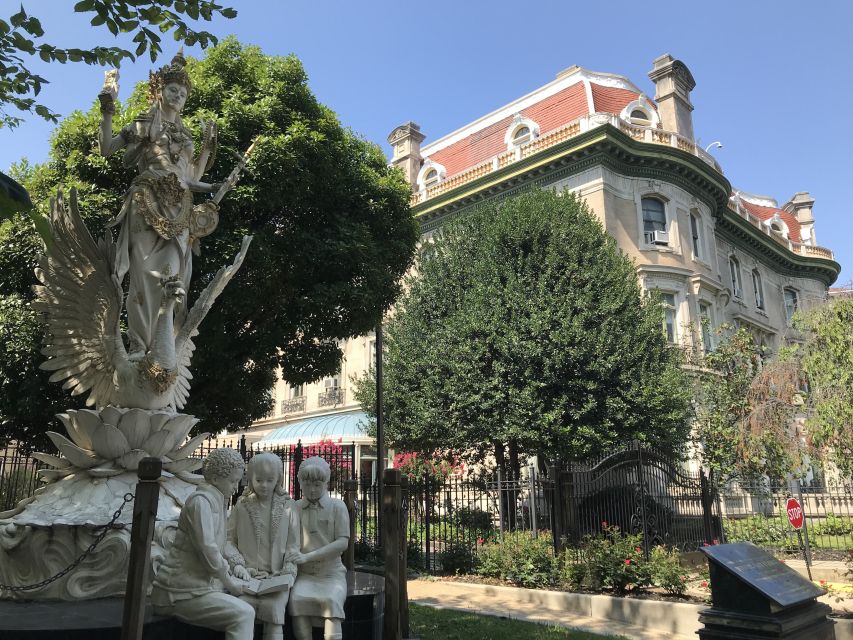
One of the named highlights is the Indonesian Embassy, also known as the Walsh-McLean House. Its former life as a mansion helps explain the character of Embassy Row. You are looking at a residence built to impress, now serving an international role.
The building is valuable on the tour not only because of its appearance, but also because it links Washington’s private wealth with its diplomatic identity. The address has moved from one kind of power to another. Your guide uses that shift to show how the neighborhood changed over time.
The exterior details are best appreciated slowly. Look at the overall mass first, then the entry, windows, ornament, and relationship between the house and the street. The guide’s explanation should help you see the building as a deliberate statement rather than an oversized home.
This is also where the tour’s outdoor format becomes clear. You will be viewing important properties from public streets. That is enough to appreciate the architecture, but anyone hoping to explore lavish interiors should set expectations accordingly.
Anderson Mansion and the people behind the doors
Anderson Mansion is another named stop. Like the Walsh-McLean House, it gives the guide a chance to connect design with personality. The larger lesson is that these were not anonymous structures. They belonged to people who wanted their homes to say something about their place in Washington society.
The tour includes stories about the people who built and lived in these houses. That human material is a major reason to choose this walk instead of wandering through the neighborhood alone. You may notice a grand staircase or ornate entrance on your own, but you will not know which personal ambition, rivalry, or scandal gave the building its larger meaning.
The stories also help avoid a dry parade of dates and styles. The best moments on a walk like this come when architecture and behavior line up. A huge residence can reveal social ambition. A diplomatic conversion can hint at Washington’s changing role. A controversial owner can make a quiet facade feel much less quiet.
The strong ratings for this experience fit its main strength. All six recorded ratings are five stars, and the praise centers on the guides’ personable delivery, humor, thorough explanations, and command of local stories. That is useful information because the architecture is already visible from the sidewalk. The guide is what turns the walk into an experience.
Same city, a completely different century:
- Chicago Architecture Center River Cruise aboard First Lady
★ 5.0 · 5,536 reviews - Chicago: Architecture River Cruise Skip-the-Ticket Line
★ 4.8 · 4,325 reviews - Chicago River 45-Minute Architecture Tour from Magnificent Mile
★ 4.5 · 2,924 reviews - Chicago Lake and River Architecture Tour
★ 4.5 · 2,308 reviews
Woodrow Wilson House and a more personal view of Washington
The Woodrow Wilson House adds a presidential connection to the route. Rather than seeing Washington only through monuments and government buildings, you get a sense of where a former president lived after his time in the White House.
That shift in setting is worthwhile. The National Mall presents public power in monumental form. Dupont Circle and Embassy Row show power through private residences, social connections, wealth, and diplomatic life. The Woodrow Wilson House helps bridge those two views of the capital.
The tour does not present these properties as isolated sights. It places them in a neighborhood where many grand homes sit close together. That makes the walk feel coherent. You are following a district with a shared character, not checking off unrelated buildings.
Your guide may also point out other architectural highlights beyond the three named properties. The supplied details do not promise a fixed list of every stop, so the exact sequence may vary. The clear focus remains the same: impressive homes, embassies, architectural styles, and the stories connected with them.
Why the stories and scandals matter
The phrase stories and scandals is not just decoration. It tells you what separates this tour from a basic architecture lesson. Washington’s grand homes were connected to people with money, influence, political ties, and strong opinions. Their private lives could affect the way the city understood them.
You will hear about the people behind the buildings and the events that shaped their reputations. That can make the neighborhood feel less polished and more human. Grand stone and careful landscaping are only half the picture. Ambition, rivalry, bad judgment, and social pressure also belong here.
A guide with a sense of humor can make this kind of material easier to follow. One guide was specifically praised for being personable and funny, while another was described as a source of thorough information about the mansion owners. Those details suggest a tour that aims to entertain as well as explain.
Still, your experience will depend partly on the guide assigned that day. Carolyn and Natalie are names connected with particularly positive feedback, but the booking details do not promise a specific guide. I would choose this tour for its subject and format, while treating the individual guide as a welcome variable.
What the two hours feel like
Two hours is a good length for this subject. A shorter walk could leave you with attractive photographs but little context. A much longer one might become tiring, especially since the route is entirely on foot and the buildings are viewed from outside.
Expect a steady rhythm: walk, stop, look, listen, then move on to the next property. You will need to stay attentive near streets and remain with the group as it moves between addresses. The tour is not designed as a free-roaming afternoon in which you can linger wherever you choose.
The morning timing may work well if you want to pair the tour with other sightseeing later in the day. The experience usually runs in the morning, though the exact departure time depends on the date you book. Since the meeting point is in Dupont Circle, the neighborhood can also serve as a useful beginning to a day in northwest Washington.
Weather deserves a practical note. The tour goes ahead in all weather unless conditions are dangerous. A light drizzle should not stop you, but it can make the sidewalks less comfortable and the architectural details harder to study. Bring a rain layer when needed, and do not count on indoor shelter during the walk.
Is $44 a fair price?
At $44 per person, this is not the cheapest way to spend two hours in Washington. You can walk Embassy Row on your own for free. The question is what you want from the outing.
If you already know Washington architecture and enjoy researching buildings yourself, the price may not feel necessary. A self-guided walk lets you set your own pace and stop for coffee or photos whenever you like.
For most visitors, the fee pays for interpretation. You get a professional English-speaking guide, a planned route, and the personal stories that are difficult to gather from the street alone. The small group limit adds value because you are not one face in a large crowd.
I see the price as reasonable for a focused neighborhood tour, especially if you care about architecture, presidential history, diplomacy, or the social world behind Washington’s mansions. It is less compelling if your main goal is to enter buildings, since the experience centers on exterior viewing.
There are also flexible booking terms. You can reserve now and pay later, and cancellation is free up to 24 hours before the tour for a full refund. Those terms are useful in a city where weather and changing plans can affect a walking day.
Who should book this architecture walk?
I would recommend it to anyone who has already seen the main monuments and wants a more local-scale look at Washington. It also suits repeat visitors who want to understand a neighborhood rather than move from one famous memorial to the next.
Architecture fans will appreciate the range of styles. History-minded visitors will enjoy the names and personal stories. People interested in diplomacy will find the former mansions now used as embassies especially revealing.
The tour can also work well for families with older children, provided they can manage the distance and stay engaged during the explanations. The stories of wealthy residents, political figures, and scandals may hold attention better than a purely technical architecture talk.
I would be cautious about booking it for someone who dislikes walking, outdoor sightseeing, or lengthy stops outside buildings. The tour is wheelchair accessible, but the route still covers 1 to 2 miles, so anyone with specific mobility needs should consider the distance and street conditions before booking.
Practical tips for getting the most from it
Wear shoes you can comfortably use for two hours. This sounds obvious, but Washington walking tours often feel easy at the start and tiring by the final block.
Bring water even in mild weather. The tour includes regular walking and outdoor stops, with no promise of an indoor break.
Look up as you walk. Many of the details that make these properties interesting are above eye level, including rooflines, windows, stonework, and decorative elements.
Keep your questions for the stops when possible. The guides are there to explain the buildings and their owners, and the small group format gives you a better chance to ask about a particular facade or story.
Do not plan around interior visits. The tour highlights the exterior architecture and the histories connected with the homes and embassies. If you want to enter a specific house, confirm separately whether it offers public access.
Should you book the Dupont Circle and Embassy Row tour?
Book it if you want Washington beyond the Mall, especially if you enjoy grand homes, diplomatic buildings, architecture, and stories about the people who made the city what it is. The best reasons are the small group, the strong guide feedback, and the way the route connects design with ambition and scandal.
Skip it if you want a transportation-based city overview, museum admission, or guaranteed access inside mansions. This is a sidewalk tour, and its success depends on your interest in looking closely and listening well.
For $44, I think it is a solid choice for a focused two-hour introduction to Dupont Circle and Embassy Row. Bring good shoes, accept the weather, and let the guide explain why these streets are much more than a collection of expensive-looking houses.
FAQ
Where does the tour meet?
The tour meets at the base of the fountain in the center of Dupont Circle.
How long does the tour last?
The walking tour lasts two hours.
How far will I walk?
You should be prepared to walk 1 to 2 miles during the tour.
What language is the tour offered in?
The live tour guide speaks English.
How many people are in the group?
The group is limited to 10 participants.
What buildings are included?
Named sights include the Indonesian Embassy, also known as the Walsh-McLean House, Anderson Mansion, and the Woodrow Wilson House. You will also see other notable homes and embassies along the route.
What architectural styles will I see?
The tour covers a range of styles, including Neo-classical, Beaux-Arts, and Queen Anne architecture.
Is the tour wheelchair accessible?
Yes, the tour is listed as wheelchair accessible.
What should I bring?
Bring comfortable shoes, water, and clothing suited to the weather.
Does the tour operate in bad weather?
The tour takes place in all weather unless conditions make it dangerous.
Is cancellation allowed?
Yes. You can cancel up to 24 hours in advance for a full refund.
Do I have to pay when I book?
No. The reserve-now, pay-later option lets you book without paying immediately.
Just added around the USA
- Wilmington History and Architecture Tour★ 4.8 · 18 reviews
- Washington, DC: Georgetown Architecture Walking Tour★ 5.0 · 8 reviews
- New Orleans : Garden District Architecture Walking tour★ 4.8 · 5 reviews
- Tulsa: Art Deco Walking Tour of Tulsa★ 5.0 · 8 reviews
- Castle to Capitol: Museums of the National Mall Architecture Tour★ 4.5 · 9 reviews
- Private Colonial Williamsburg Architectural Tour★ 5.0 · 5 reviews
- Monuments and Memorials Architectural Walking Tour★ 5.0 · 17 reviews
- Embassy Row: Architecture, Mansions & International Intrigue★ 4.5 · 27 reviews
the USA Architecture Tours, compared.
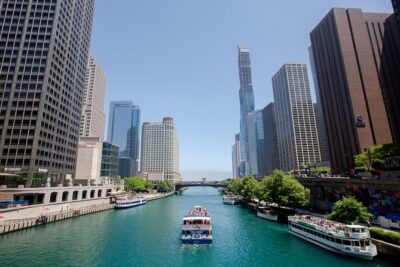
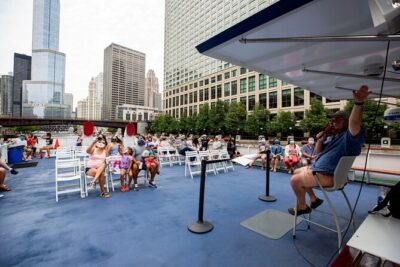
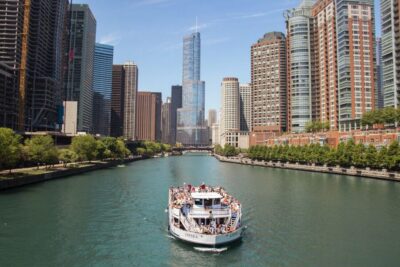
Chicago River: 1.5-Hour Guided Architecture Cruise
Read our review →
Chicago Architecture Center River Cruise aboard First Lady
Read our review →
Chicago: Architecture River Cruise Skip-the-Ticket Line
Read our review →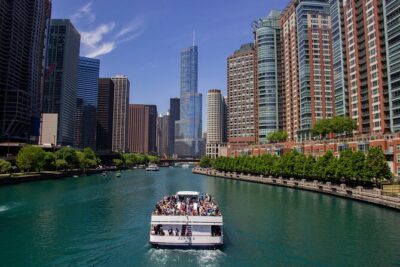
Chicago River 45-Minute Architecture Tour from Magnificent Mile
Read our review →
Chicago: 1.5-Hour Lake and River Architecture Cruise
Read our review →Browse the lists this tour appears in