
Review · NEW ORLEANS
New Orleans : Garden District Architecture Walking tour
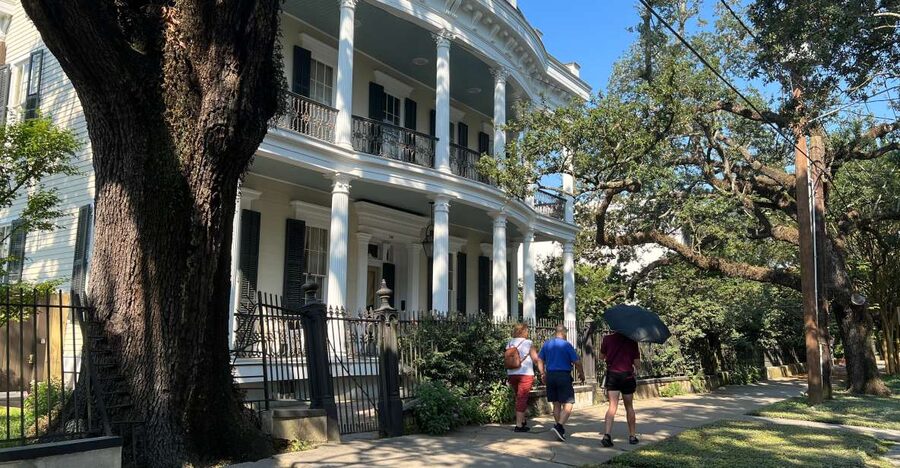
The Garden District gives you New Orleans at its most grand: blocks of lavish old homes built by wealthy planter families, each one carrying stories of ambition, social rank, slavery, war, and change. A local guide helps you read the streets instead of simply admiring pretty façades.
I like the two-hour length, which gives you time to focus without turning a walking tour into an all-day commitment. I also like the chance to connect the houses with people and stories, from the imagined world of Scarlett O’Hara to Anne Rice’s nearby Brevard House.
The main drawback is clear: Lafayette Cemetery is temporarily closed, so you will hear about its burial traditions from outside rather than enter. For $20, this remains a good-value introduction to the district, but cemetery access is not part of the experience right now.
Key points about the Garden District walk
- Grand 19th-century homes: See some of New Orleans’ most impressive colonial-style residences from the street.
- Stories behind the façades: Learn about planter families, social power, slavery, segregation, the Civil War, and abolition.
- Lafayette Cemetery context: Hear how above-ground burial developed in New Orleans, even though you cannot currently go inside.
- Guide Keynin Joiner: The tour is led in English, with a guide praised for clear stories, patience, and an easy way with teenagers.
- Simple two-hour format: Meet outside Still Perkin coffee shop and finish at the same point.
- Flexible booking: You can cancel up to 24 hours ahead for a full refund and reserve now without paying immediately.
Why the Garden District is worth your morning
New Orleans is famous for music, food, and French and Spanish influences, but the Garden District shows another side of the city. Here, the streets are lined with grand residences tied to the wealth of Louisiana’s plantation economy.
The appeal is not only architectural. The houses help you understand how powerful families presented themselves in the city. Their size and decoration reflect money made through plantation agriculture, along with the harsh system of slavery that supported that wealth.
That contrast gives the tour its real value. You are not simply looking at handsome homes and calling the area romantic. You are encouraged to place those homes within the story of the South, including segregation, the Civil War, and the end of slavery.
I like tours that let a place remain beautiful while still being honest about its past. This walk aims for that balance. The grand façades are part of the story, but so are the people whose labor made such displays possible.
The Garden District also has a strong literary and popular-culture connection. The tour refers to Scarlett O’Hara, the fictional plantation-world character, as a way to evoke the old Southern ideal of plantation life and seasonal city living. It also points toward Anne Rice, author of Interview with the Vampire, who lived nearby at Brevard House, 1239 1st Street.
These references give you familiar entry points, but the tour is not just a hunt for movie or author connections. The larger subject is how New Orleans’ upper class lived, built, and guarded its social world.
More architecture walks in the USA:
- The Official Art Deco Walking Tour by The Miami Design Preservation League
★ 5.0 · 1,580 reviews - Chicago in a Day: Food, History & Architecture Walking Tour
★ 5.0 · 1,153 reviews - Miami South Beach Art Deco Walking Tour
★ 5.0 · 1,039 reviews
Meeting outside Still Perkin coffee shop
The tour begins outside the coffee shop named Still Perkin. This is useful because a clear commercial landmark is easier to find than an anonymous street corner.
You should arrive ready to walk from the start. Transportation is not included, and the tour begins and ends at the same meeting point. That makes the experience easy to pair with other plans in the area, since you do not need to arrange a separate ride back from the final stop.
The stated duration is two hours. That is long enough for a proper introduction to the district, but short enough to fit into a morning or afternoon of sightseeing. Check the available starting times when booking, since the exact departure time is not fixed.
Wear comfortable shoes and clothes. The tour is built around walking and looking closely at buildings, so practical clothing matters more than dressing up for the elegant neighborhood.
The experience is listed as wheelchair accessible. If that is important for your plans, confirm the route and current conditions when you book, especially since the cemetery is temporarily closed and access arrangements can change.
Reading the Garden District mansions

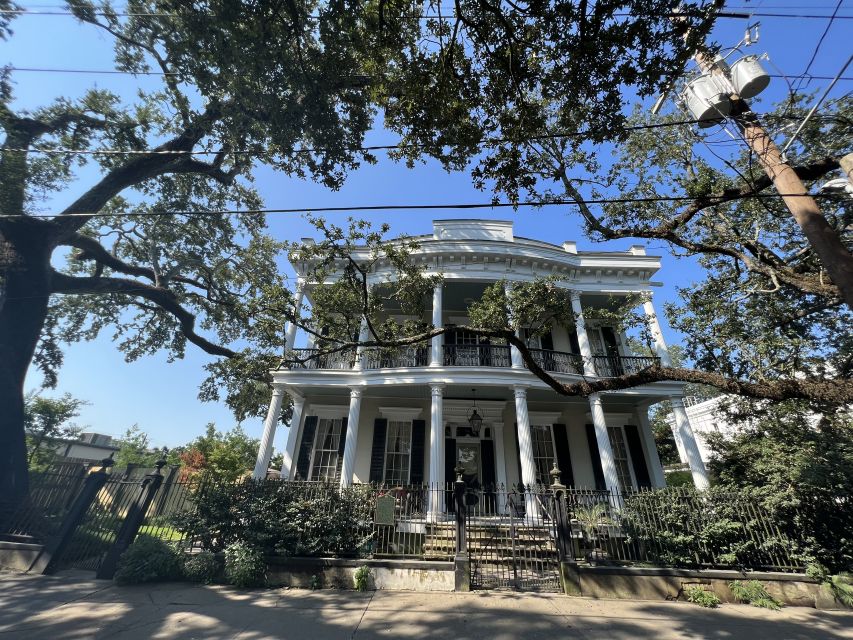
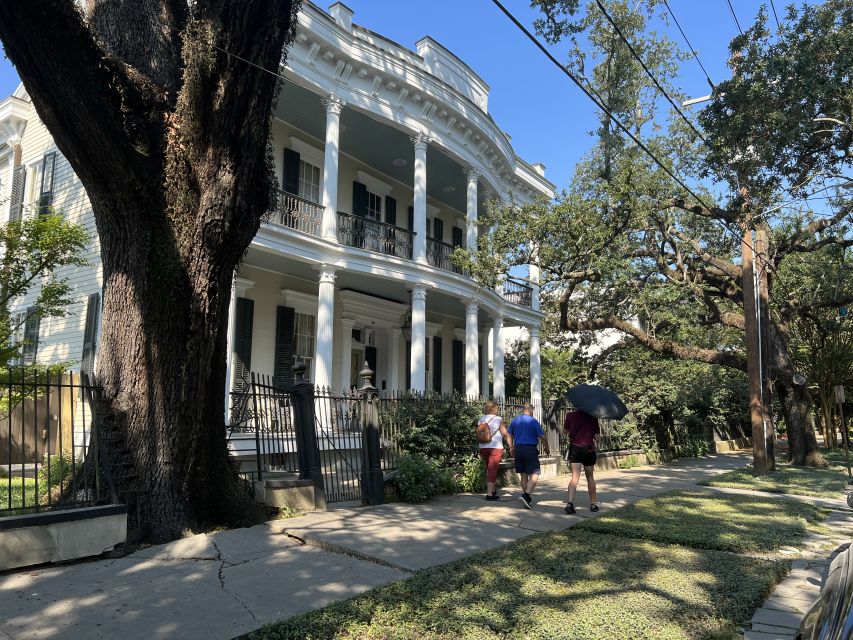
The central part of the walk focuses on the old mansions. You will see large colonial-style homes with the kind of scale and decoration that reveal their owners’ status before you know their names.
A guide adds the missing layer. Without context, a row of imposing houses can blur into one long parade of columns, balconies, and carefully maintained fronts. With stories about Louisiana’s planter families, you can start to see the district as a record of social ambition.
The homes are described as shining symbols of success. That phrase needs some care. Their beauty is real, but their wealth did not appear by magic. The tour connects the residences with the planter economy and the era of masters and slaves.
That makes the walk more useful than a purely decorative architecture tour. You can admire the design while asking what kind of society made those residences possible, who lived inside them, and who worked to sustain them.
The guide also helps create a sense of mystery around the houses. These are private residences with long lives, and you will not be touring their interiors. Much of the experience comes from looking at the exteriors and imagining the generations, conflicts, and social rituals attached to them.
Do not expect a house museum visit. The supplied details describe an outdoor walking tour, not entry into private buildings. The reward is the neighborhood itself and the stories connected to what you can see from the street.
From plantation wealth to the Civil War
The historical thread reaches beyond architecture. You will hear about the planter families who used the city as a seasonal home, with plantation life outside New Orleans and an urban residence for the colder or more socially active months.
This helps explain why the Garden District feels different from a simple collection of old houses. It was part of a larger network of wealth, land, labor, and status.
The tour also addresses segregation and the Civil War. Those subjects matter because the district’s polished appearance can make the past look softer than it was. A good guide gives you the harder facts along with the attractive façades.
The history of abolition is part of that discussion too. You should come prepared for a tour that treats the district as a place shaped by conflict and inequality, not just as a backdrop for photographs.
This balance is one of the strongest reasons to choose a guided walk instead of exploring alone. You can see the buildings by yourself, but you are less likely to understand how their owners fit into Louisiana’s social order without someone explaining the connections.
A few more architecture tours around the USA worth a look
- Chicago Architecture River Cruise
★ 5.0 · 15,756 reviews - Chicago River 90-Minute Architecture Tour
★ 4.5 · 9,629 reviews - Chicago River: 1.5-Hour Guided Architecture Cruise
★ 4.8 · 8,046 reviews - Chicago Architecture Center River Cruise aboard First Lady
★ 5.0 · 5,536 reviews
Anne Rice and the literary side of the district

The Anne Rice connection adds a different mood. Rice, known for Interview with the Vampire, lived nearby at Brevard House on 1239 1st Street.
That detail fits the atmosphere of the Garden District, where grand residences and old streets can inspire stories of secrecy, aristocracy, and supernatural drama. The tour uses that mood without losing sight of the actual history beneath it.
You can enjoy the literary association even if you have not read Rice’s novels. If you have read Interview with the Vampire, the connection gives the neighborhood an extra layer.
Still, this is not presented as a dedicated literary tour. The main subject remains architecture and the history of the families connected with the district. Anne Rice is one memorable thread rather than the whole focus.
Lafayette Cemetery and above-ground burial

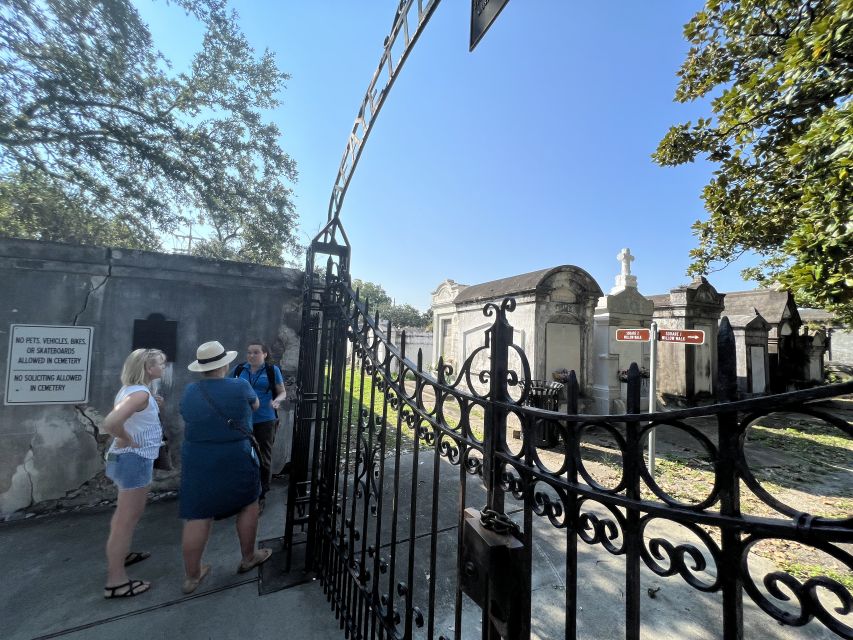
The tour includes a stop near Lafayette Cemetery, described as the oldest cemetery Lafayette. Its burial traditions are an important part of understanding New Orleans.
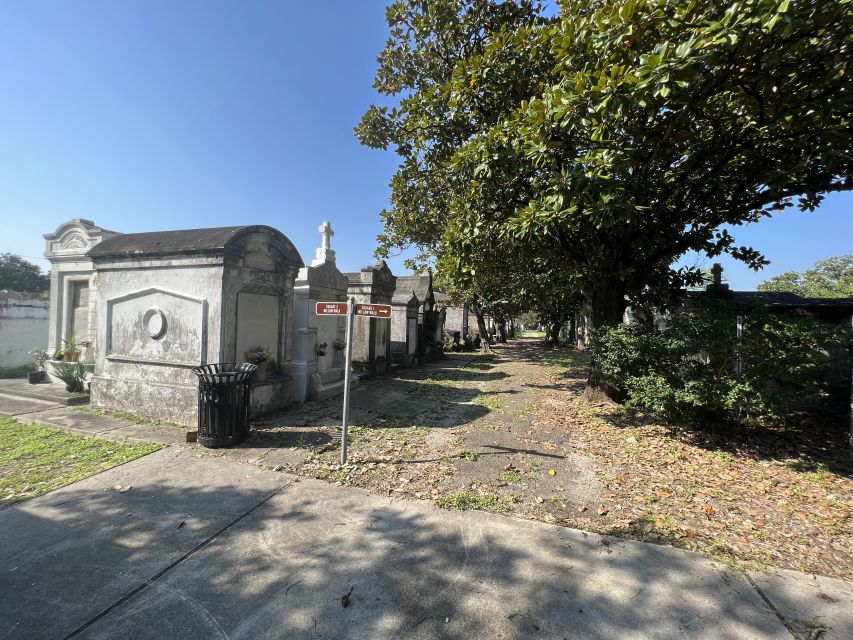
Above-ground burial is one of the city’s most recognizable customs. The tour explains the rites and practices connected with these tombs, giving you context for a type of cemetery that may look unfamiliar if you are used to ordinary ground burials.
There is an important limitation: the cemetery is temporarily closed, so you cannot enter. The guide will tell you its history and anecdotes from outside, but you should not book this expecting an interior cemetery visit.
That closure changes the experience, but it does not erase the value of the stop. Burial customs are closely tied to local culture, and hearing the explanation helps you understand what you are seeing in New Orleans cemeteries elsewhere.
Still, set your expectations correctly. If entering Lafayette Cemetery is your main reason for booking, wait until access is restored or choose another experience that confirms entry. If you mainly want a Garden District architecture walk with cemetery context, the current format should still work.
What the guide adds to the walk
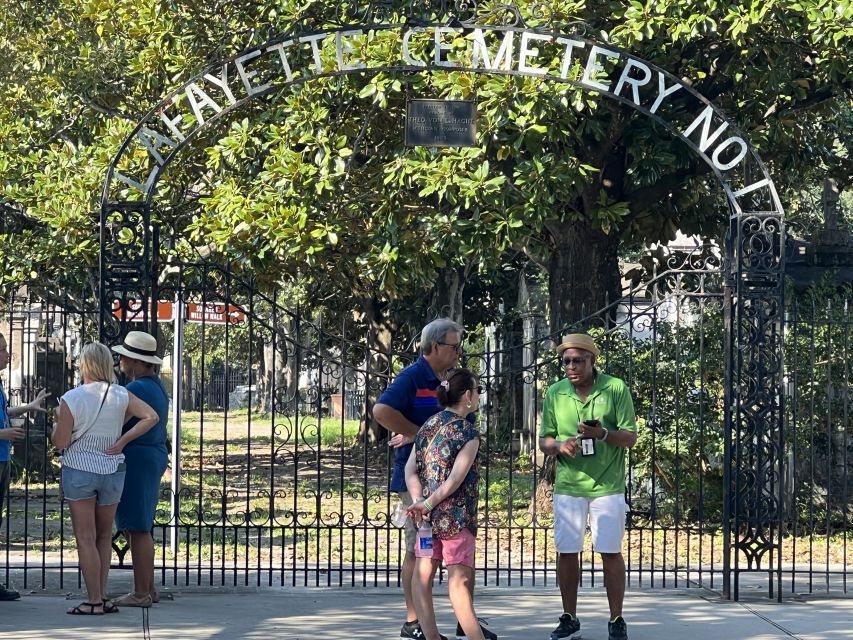
The strongest feedback centers on Keynin Joiner. He is described as professional, entertaining, considerate, informative, and patient. Those qualities matter on a walking tour because the guide has to hold your attention while moving between buildings and historical periods.
One especially useful detail is that he kept two teenage boys engaged for the full two hours. That suggests the storytelling is not limited to dry architectural terms or long lists of dates.
You should still remember that every tour depends on the guide assigned that day. Keynin Joiner is the named guide associated with the praise provided here, but the activity is sold as a guided tour rather than a private booking with a guaranteed guide.
The English-language format suits visitors who want a direct explanation without relying on a written guidebook. The information is delivered as you walk, so you can ask questions if the format allows and follow the guide’s connections from one house or historical subject to the next.
A good guide also knows when to let a building speak for itself. The Garden District has visual appeal before anyone says a word, but the stories keep the walk from becoming a series of disconnected photo stops.
Is $20 a fair price?
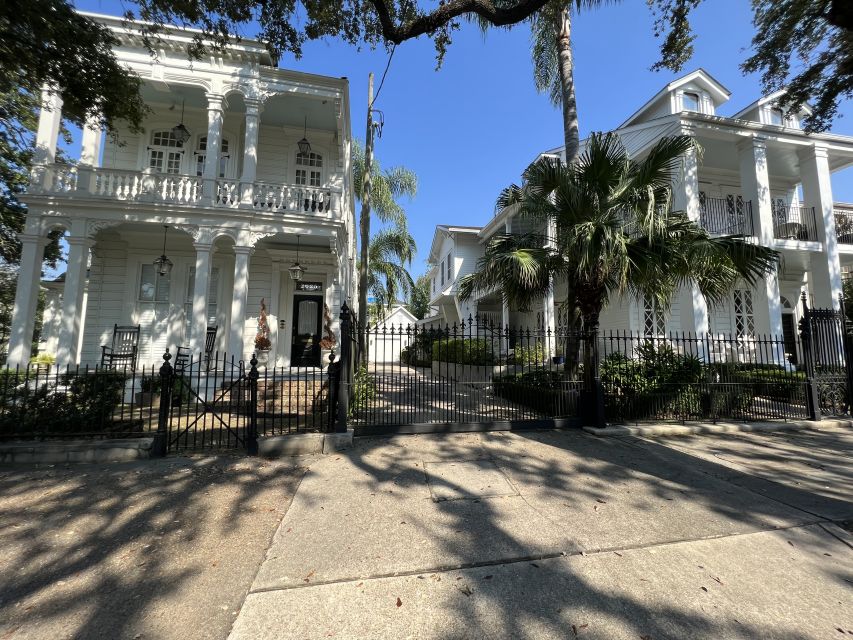
At $20 per person, this is a modestly priced way to get an organized introduction to one of New Orleans’ best-known historic neighborhoods.
The value comes from the interpretation. You can walk through the Garden District without paying anything, but you will not automatically know which families shaped the area, how the homes connect to plantation wealth, or why the cemetery traditions matter.
The price includes a licensed tour guide. Transportation, food, and entry to buildings are not included. Since the cemetery is temporarily closed, you are paying for the guided walk and the historical explanation, not for admission to a site.
That makes the tour a good fit for first-time visitors, architecture fans, and anyone who wants a focused activity between other New Orleans plans. It is less suitable if you want a long interior-house visit or a full cemetery tour.
The two-hour format also improves the value for many people. You get a concentrated look at the district without committing to half a day. Families may appreciate the shorter length, especially since the guide has been able to keep teenagers interested.
Who should book this experience?
I would choose this tour if you like historic homes but want more than architecture photographs. The discussion of planter families, slavery, segregation, the Civil War, and abolition gives the buildings needed context.
It also suits readers of Anne Rice who want to see the area connected with her life, although the tour is not devoted solely to the author or her books.
Families with older children and teenagers may find the storytelling a good match. The positive feedback about engaging 13- and 15-year-old boys is a useful sign that the tour can work for a mixed-age group.
You should also consider it if you prefer a gentle introduction before exploring New Orleans on your own. After two hours, you will have a better sense of what to look for in the district’s homes and cemeteries.
I would hesitate if your main goal is entering Lafayette Cemetery, seeing the interiors of mansions, or riding between several parts of the city. None of those are included in the current format.
Practical details before you go
The tour is conducted in English and lasts two hours. Meet outside Still Perkin coffee shop, then return to that same meeting point when the walk ends.
Bring:
- Comfortable walking shoes
- Comfortable clothes
- A face mask or protective covering
The activity is listed as wheelchair accessible. Transportation is not included, so plan your route to the meeting point separately.
You can cancel up to 24 hours before the activity for a full refund. The reserve-now, pay-later option also gives you some flexibility if your New Orleans schedule is still taking shape.
Should you book the Garden District walk?
Book it if you want a reasonably priced, two-hour introduction to New Orleans’ grand Garden District homes and the social history behind them. The strongest part is the blend of architecture, planter-family stories, literary connections, and above-ground burial customs.
The temporary cemetery closure is the one meaningful limitation. You will hear about Lafayette Cemetery but cannot enter, so keep that in mind before paying.
For most visitors, the tour makes sense early in a New Orleans stay. It gives you a useful framework for the neighborhood and helps you see more than attractive façades. If you want a focused walk led by an engaging English-speaking guide, $20 is a sensible price.
FAQ
How long does the Garden District architecture tour last?
The tour lasts two hours.
What is the price?
The activity costs $20 per person.
Where does the tour begin?
Meet your guide outside the Still Perkin coffee shop.
Where does the tour finish?
The tour ends back at the meeting point.
Can I enter Lafayette Cemetery?
No. Lafayette Cemetery is temporarily closed, so the guide will explain its history and above-ground burial traditions from outside.
What language is the tour conducted in?
The live tour guide speaks English.
Is the tour wheelchair accessible?
Yes, the activity is listed as wheelchair accessible.
Just added around the USA
- Wilmington History and Architecture Tour★ 4.8 · 18 reviews
- Washington, DC: Georgetown Architecture Walking Tour★ 5.0 · 8 reviews
- Washington DC: Dupont Circle & Embassy Row Architecture Tour★ 5.0 · 6 reviews
- Tulsa: Art Deco Walking Tour of Tulsa★ 5.0 · 8 reviews
- Castle to Capitol: Museums of the National Mall Architecture Tour★ 4.5 · 9 reviews
- Private Colonial Williamsburg Architectural Tour★ 5.0 · 5 reviews
- Iconic Capitol Hill Architectural Walking Tour★ 5.0 · 21 reviews
- Monuments and Memorials Architectural Walking Tour★ 5.0 · 17 reviews
Walking Tours, compared.

The Official Art Deco Walking Tour by The Miami Design Preservation League
Read our review →
Barcelona: Gothic Quarter Ghosts and Legends Walking Tour
Read our review →
Barcelona: Old Town and Gothic Quarter Walking Tour
Read our review →
Lecce: Baroque Architecture and Underground Walking Tour
Read our review →
Chicago in a Day: Food, History & Architecture Walking Tour
Read our review →

Ramblas, Old Town, Gothic and Gaudi Architecture Walking Tour
Read our review →
Chicago’s Secret Interiors Architectural Walking Tour
Read our review →Browse the lists this tour appears in