
Review · THE USA
Wilmington History and Architecture Tour
Wilmington’s story is packed into a compact downtown walk. In 90 minutes, you move from the city’s only colonial-era block through grand Victorian homes, notable churches, Civil War history, the painful events of 1898, and Wilmington’s later life as a film and television center.
I like the way architecture carries the history here. I also like the practical format: a small walking loop, an English-speaking guide, sunscreen and bug spray supplied, and a coffee shop and restroom at the meeting point. The main catch is the heat and the walking surface, so this is not a good fit for people with mobility impairments.
Key points to know before you book
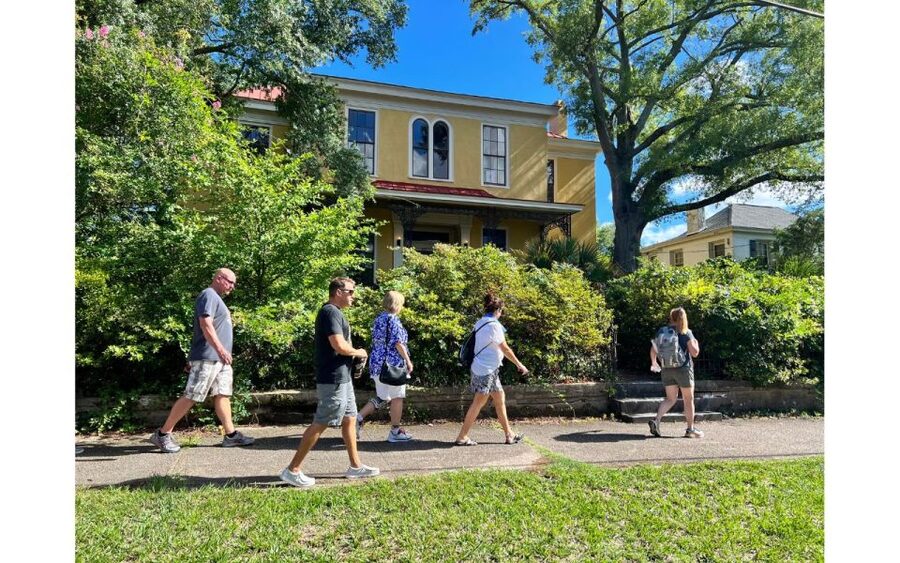
- One short walk covers several eras: The route moves from colonial Wilmington to the Victorian period and into the 20th century.
- Architecture is the main doorway into history: You see notable houses of worship and homes linked to mid-1800s industrial leaders.
- The story goes beyond handsome buildings: The tour covers the Revolutionary War, Civil War, Reconstruction, the racial events of 1898, and World War-era growth.
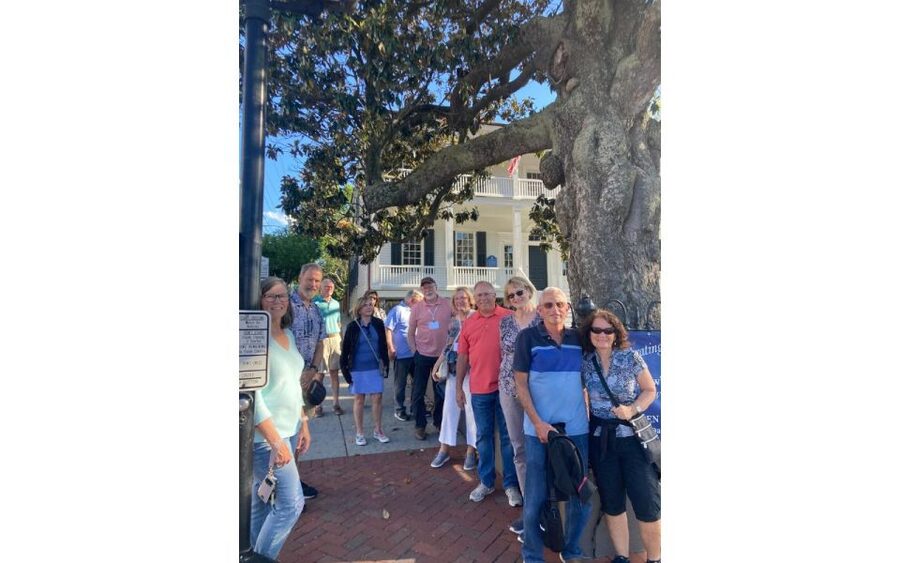
- Expect a compact group when possible: One recent outing had 12 people, a size that allowed a lively discussion without feeling crowded.
- Plan for sun and limited bathroom access: Shade may be used for discussion, but the only confirmed restroom is at the start.
- The $25 price is fair for a guided overview: It gives you a useful first look before exploring Wilmington on your own.
Starting at Front Street Inn
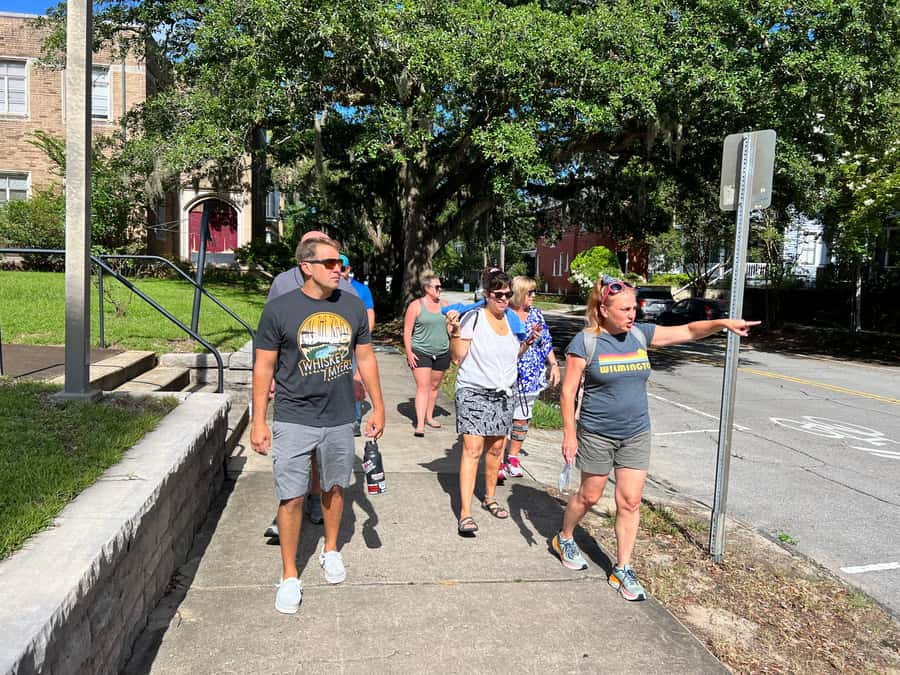
Your tour begins on the sidewalk outside the Front Street Inn at 34.2321414, -77.9480662. This is a handy starting point because you can arrive early for coffee and use the restroom before setting off.
That restroom matters. Once the walk begins, you should not count on another one along the route. I would arrive a little early, especially if you are traveling with children or prefer not to start a walking tour in a rush.
Metered parking is recommended. Take the advice about avoiding surface lots seriously, since they are described as expensive. The meeting point is central enough that parking costs can affect the real price of this otherwise modestly priced activity.
Bring water. It is not included, and Wilmington’s heat can make a 90-minute walk feel longer than the clock suggests. Sunscreen and bug spray are provided, but I would still wear light clothing, comfortable shoes, and a hat if the forecast is warm.
More history tours in the USA:
- Chicago in a Day: Food, History & Architecture Walking Tour
★ 5.0 · 1,153 reviews - Charleston’s Best Highlights: History, Culture & Architecture
★ 5.0 · 422 reviews - Palm Springs Modernism Architecture & History Bike Tour
★ 5.0 · 359 reviews
Wilmington’s only colonial-era block
The first part of the route sets up Wilmington’s earliest story. You pass through the city’s only colonial-era block, a useful reminder that the port town did not begin with its ornate Victorian houses.
This opening gives you a sense of scale. Wilmington’s past is not presented as one large historical event. Instead, the guide connects the town’s early development with its later growth as a port and railroad center.
That port-and-railroad theme is important. These were not just transport details. They helped Wilmington grow, move goods, attract business, and connect local events to wider national changes.
The tour also reaches back to the Revolutionary War. You will not get a full military course in 90 minutes, but you will hear how Wilmington fit into the political and military life of the period.
I like this beginning because it gives the rest of the walk a clear timeline. As you move toward later buildings, you can ask why Wilmington became more prosperous, which industries shaped it, and why some parts of its story remain difficult to discuss.
Victorian houses and Wilmington’s captains of industry
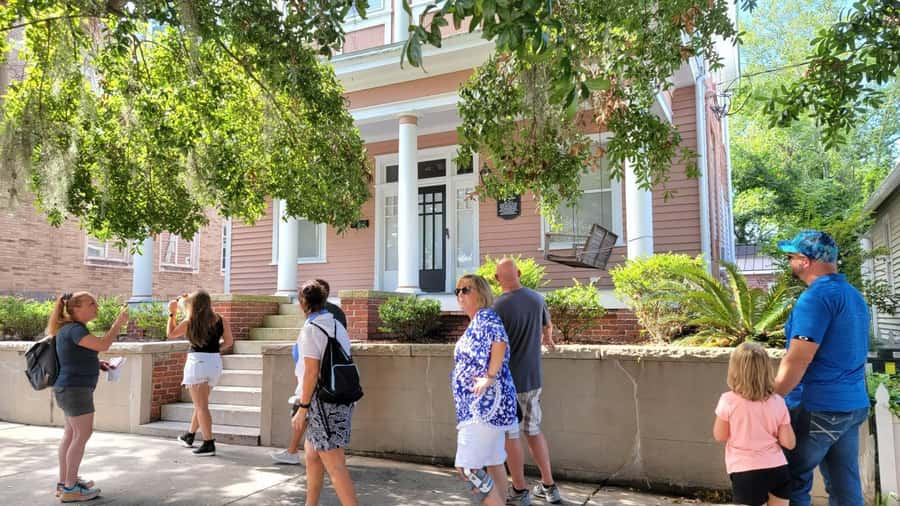
The Victorian portion is likely to be the visual high point. You see some of Wilmington’s best Victorian architecture, including homes attributed to local captains of industry from the mid-1800s.
The value here is not just looking at decorative façades. The buildings help explain who had money, influence, and a role in shaping the growing city. When a guide links a house to commerce and industry, the architecture becomes evidence of Wilmington’s economic rise.
You should expect an outdoor explanation of the homes rather than an interior house tour. The supplied details do not indicate that you enter private residences, so plan on viewing the exteriors from the street.
The walk is also a good choice if you enjoy building details but do not want a tour limited to architecture. The guide ties the houses to the period around them, including Wilmington’s changing economy and its place as a port and railroad town.
One attendee found the architecture especially interesting because it was connected to events in the region and across the United States. That is the right way to approach this tour. You get more from the buildings when you treat them as part of a national story, not just as pretty old homes.
Churches and houses of worship
The route includes some of Wilmington’s most notable houses of worship. These buildings add a second kind of architectural study, with religious institutions placed alongside private homes and commercial development.
The churches also broaden the social story. A town’s houses of worship can tell you about its communities, values, divisions, and growth, although the exact buildings and interior access are not specified here. You should expect the guide to discuss them from the walking route.
This is one of the tour’s useful contrasts. The grand houses show private wealth and business power. The churches point toward the wider population and the civic life of the city.
If you like photography, you will probably want to pause for architectural details. Just remember that a walking tour has a set pace. You can take quick photos, but it is best not to expect unlimited time at each building.
A few more architecture tours around the USA worth a look
- Chicago Architecture River Cruise
★ 5.0 · 15,756 reviews - Chicago River 90-Minute Architecture Tour
★ 4.5 · 9,629 reviews - Chicago River: 1.5-Hour Guided Architecture Cruise
★ 4.8 · 8,046 reviews - Chicago Architecture Center River Cruise aboard First Lady
★ 5.0 · 5,536 reviews
Civil War Wilmington and the Confederacy’s lifeline
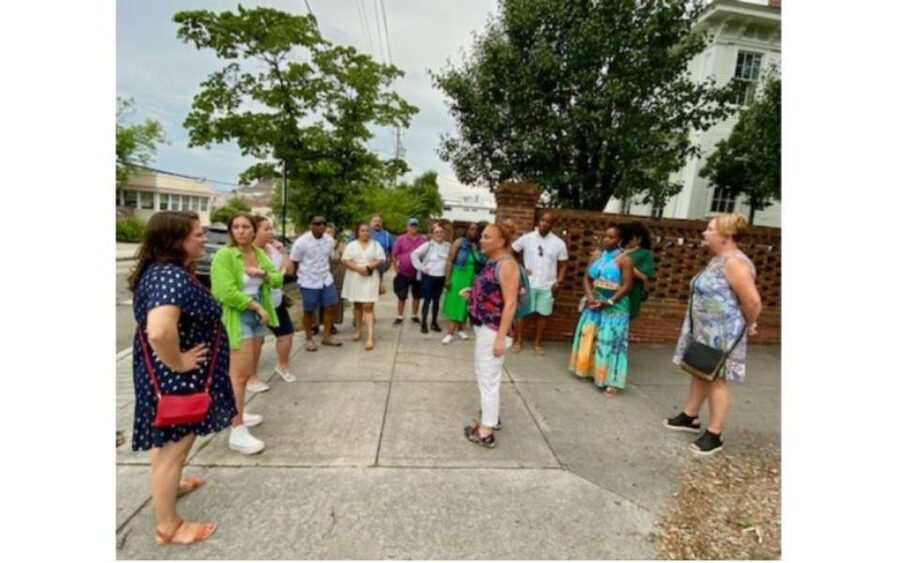
The Civil War section gives the tour more weight than a simple old-house stroll. Wilmington’s location and connections made it important to the Confederacy, and the tour explains the city as a lifeline during the war.
That phrase points to Wilmington’s role as a port and transport center. The city’s significance came from movement: ships, rail connections, supplies, and the broader struggle over access to the coast.
You will not spend the whole 90 minutes on battlefield details. Instead, the guide places Wilmington within the larger Civil War story, then shows how the city survived the conflict and moved into Reconstruction.
This transition is valuable. Many city tours stop when the war ends, but Wilmington’s next chapter was just as important. The end of the Civil War did not erase economic conflict, political tension, or racial injustice.
Reconstruction and the events of 1898
The tour addresses the racial events of 1898 and their aftermath. This is an essential part of Wilmington’s history, and it keeps the walk from becoming a polished tour of attractive buildings with the hard parts left out.
The information provided does not lay out every detail of the 1898 events, so you should think of this as a guided introduction rather than a full scholarly treatment. Still, including the subject in a short city walk gives you a better framework for understanding Wilmington’s political and social past.
I appreciate that the route connects architecture to these events. Buildings do not exist apart from the people who lived, worked, worshipped, governed, and suffered around them. The streets you walk through carry both civic pride and painful memory.
If this topic matters deeply to you, you may want to treat the tour as a starting point for further reading or a second, more focused history experience. For a general introduction, the inclusion of 1898 is a strong feature.
From commercial port to World War boomtown
The story then moves into commercial Wilmington and its growth during a World War boom. This part explains how the city’s economy changed after the Civil War and how wartime demand affected local business.
The exact war is not specified in the tour information, so the guide’s presentation will supply the needed context. The larger point is clear: Wilmington continued to adapt as trade, transportation, and industry changed.
This economic thread helps tie together the earlier homes and churches. Wealth did not appear by accident. It was linked to the industries, businesses, transport systems, and labor that made Wilmington important.
For you, this section may be less visually dramatic than the Victorian houses. It is still necessary. Without it, the tour would show buildings but fail to explain why the town grew and why its main industry later declined.
Wilmington’s changing industry and Hollywood East
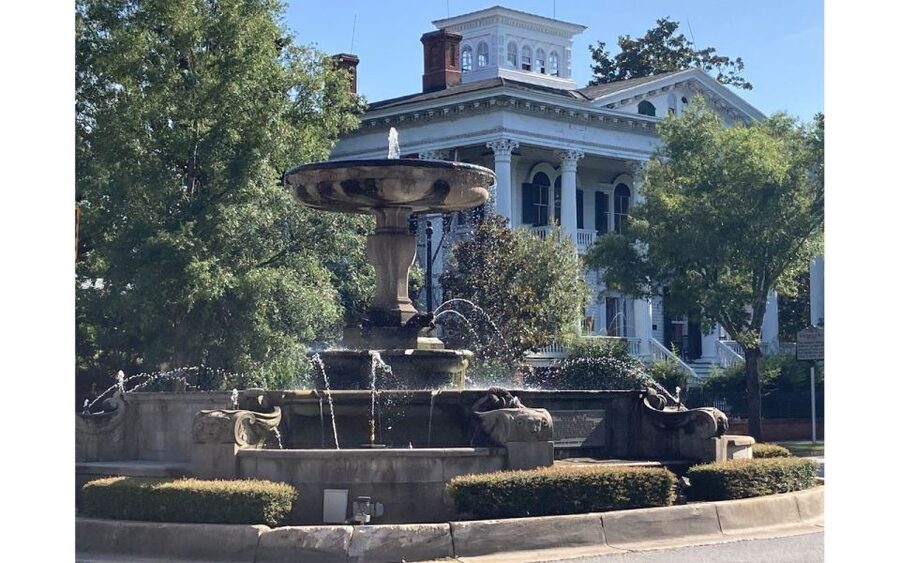
The final part brings the story into the modern era. You learn what happened to Wilmington’s largest industry and how the city later developed as a tourism and film and television community, often called Hollywood East.
This ending gives the walk a satisfying forward motion. Wilmington is not presented as a place frozen in the past. It changed from colonial settlement to port and railroad town, survived wartime disruption, adapted to commercial shifts, and found new attention through tourism and screen production.
The film connection also gives you a different way to see the city. Streets and buildings can serve both as local landmarks and as settings for film and television work. The information does not promise visits to filming locations or behind-the-scenes access, so do not book this expecting a production tour.
I like ending with this modern turn because it shows that preservation and economic change can exist together. The same older streets that tell Wilmington’s past can help support its present-day identity.
What the 90-minute pace feels like
The tour is listed as 90 minutes, while the route is also described as a 105-minute guided tour and a 1-hour-40-minute loop. Since these times do not match exactly, check the current start-time details when you book and allow roughly 90 to 105 minutes.
That difference may come from how the activity is timed, but you should not schedule a tight appointment immediately afterward. Give yourself extra time for the walk, questions, and any delay at the start.
The physical effort appears moderate. One recent participant described it as not a ton of walking, and the route is a loop that returns to Front Street Inn. Even so, this is still an outdoor walking tour, not a seated history talk.
Heat is the bigger concern. A recent group dealt with hot conditions, and the guide kept discussion in the shade when possible. That is helpful, but shade will not remove the need for water and sun protection.
Group size can affect the experience. One outing had 12 people, which is small enough for a discussion to feel personal. The tour details do not guarantee that exact number, but the format is better suited to questions than a large bus tour.
Is $25 a good value?
At $25 per person, this is a reasonable price for a guided introduction to Wilmington. You are paying for a live English-language guide, a carefully ordered city story, and access to local context that you would miss by simply walking past the houses and churches.
The best value comes if you are new to Wilmington. In one short outing, you get a map of the city’s major eras and a list of subjects to explore later. It can help you decide where to spend the rest of your time.
The value is lower if you want a long, specialized architecture lecture, an interior house visit, or an in-depth treatment of the Civil War or 1898. The tour covers a lot, so each subject receives an overview rather than a full investigation.
Sunscreen and bug spray are supplied, which is a thoughtful extra, but water is not. Do not let the low price encourage you to arrive unprepared. A bottle of water is the one practical item I would put at the top of your list.
You can cancel up to 24 hours before the activity for a full refund, and the reserve-now, pay-later option keeps your schedule flexible. Those policies are useful if your Wilmington plans may change, but the main decision should still come down to your interest in history, architecture, and walking outdoors.
Who should book this Wilmington walk?
I would choose this tour if you want a first look at Wilmington with several subjects folded together. It suits you if you enjoy historic buildings but also want the port, railroad, Civil War, Reconstruction, 1898, wartime industry, and film history explained in one connected story.
It is also a good fit for a short stay. You do not need a full day, and the loop returns to where you began. The coffee shop and restroom at the start make the meeting point convenient, especially if you arrive early.
You should think twice if heat is a problem for you, if you need frequent restroom stops, or if uneven walking conditions make a street tour difficult. The activity is specifically not suitable for people with mobility impairments.
Families and casual history fans may appreciate the manageable length. Serious architecture students or visitors focused only on the 1898 events may want a longer, more specialized experience, since this tour has to cover many periods in a short time.
Should you book it?
Book it if you want a clear Wilmington primer with real historical range. The strongest features are the mix of Victorian architecture and serious local history, the compact loop, the small-group feel when numbers are modest, and the way the route carries the city from colonial days to Hollywood East.
Skip it if you need an accessible route, indoor comfort, or a single-topic deep study. For most first-time visitors who can handle a warm outdoor walk, $25 buys a useful orientation and plenty of ideas for what to see next.
FAQ
How long does the Wilmington History and Architecture Tour last?
The activity is advertised as 90 minutes. Other details describe the guided loop as 105 minutes or 1 hour and 40 minutes, so allow roughly 90 to 105 minutes and check the current timing before booking.
Where does the tour meet?
Meet on the sidewalk outside the Front Street Inn in Wilmington, North Carolina. The coordinates are 34.2321414, -77.9480662.
Does the tour return to the starting point?
Yes. The route begins at the Front Street Inn and returns there after the walking loop.
Is water provided?
No. You should bring your own water. Sunscreen and bug spray are provided.
Is there a restroom available?
The Front Street Inn has a restroom at the start. You should not assume that another restroom will be available during the walk.
Is parking available near the meeting point?
Metered parking is recommended. Surface lots should be avoided because they are described as expensive.
Is the tour accessible for people with mobility impairments?
No. The activity is not suitable for people with mobility impairments.
Just added around the USA
- Washington, DC: Georgetown Architecture Walking Tour★ 5.0 · 8 reviews
- New Orleans : Garden District Architecture Walking tour★ 4.8 · 5 reviews
- Washington DC: Dupont Circle & Embassy Row Architecture Tour★ 5.0 · 6 reviews
- Tulsa: Art Deco Walking Tour of Tulsa★ 5.0 · 8 reviews
- Castle to Capitol: Museums of the National Mall Architecture Tour★ 4.5 · 9 reviews
- Private Colonial Williamsburg Architectural Tour★ 5.0 · 5 reviews
- Iconic Capitol Hill Architectural Walking Tour★ 5.0 · 21 reviews
- Monuments and Memorials Architectural Walking Tour★ 5.0 · 17 reviews
Historical Tours, compared.
Chicago in a Day: Food, History & Architecture Walking Tour
Read our review →
Kuala Lumpur: Batu Caves & Historic Buildings Tour
Read our review →
Charleston’s Best Highlights: History, Culture & Architecture
Read our review →
Palm Springs Modernism Architecture & History Bike Tour
Read our review →
Charleston: History and Architecture Guided Walking Tour
Read our review →
Historic Georgetown: History, Gossip, & Architecture Walking Tour
Read our review →
Charleston History, Homes, and Architecture Guided Walking Tour
Read our review →
Browse the lists this tour appears in