
Review · BUDAPEST
Private Art Nouveau Budapest Tour
Budapest’s Art Nouveau is a city of curving facades, colored roof tiles, stained glass, and playful detail, and this private four-hour walk gives you a focused way to see it. You begin with Ödön Lechner’s Museum of Applied Arts, then move through the center by foot and tram, ending around Liberty Square.
I like the chance to see buildings that are easy to miss from street level, especially the Hungarian State Treasury’s remarkable roof. I also like the café break at the House of Hungarian Art Nouveau, where the architecture lesson continues over coffee and cake. The main caution is reliability: one June 2024 booking recorded that the guide did not arrive, so confirm the meeting details before setting out.
Key points to know before booking
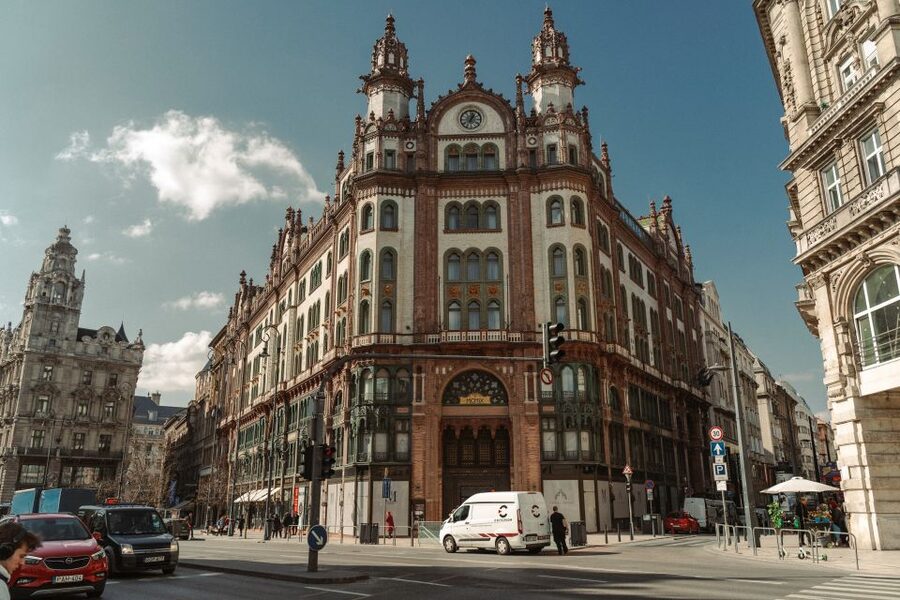
- Ödön Lechner’s Museum of Applied Arts gives the tour a strong opening, with one of Hungary’s great Art Nouveau buildings.
- Gresham Palace brings the period’s luxury into view beside the Danube and central Budapest.
- Liberty Square gathers several buildings from the same era in one walkable area.
- The Hungarian State Treasury roof is a special feature because it cannot be seen properly from street level.
- A private guide keeps the route flexible, and past guides such as Suzy, Peter Horvath, and Joel have been praised for lively explanations.
- The four-hour price is $377 per group, which can be good value for a large party but costly for one or two people.
Why Budapest’s Art Nouveau deserves a dedicated tour
Budapest is often introduced through its grand Parliament building, thermal baths, bridges, and imperial boulevards. Those sights matter, but Art Nouveau shows you a more playful side of the city.
The style took hold around the end of the 19th century and flourished for roughly two decades. Budapest absorbed several European strands, including Viennese Secession, German Jugendstil, and French and Belgian Art Nouveau. Hungarian architects then pushed the style in their own direction, creating what is often called Hungarian Art Nouveau.
That local style is the reason this tour is more than a walk past pretty buildings. You get to compare smooth stone with uneven surfaces, formal European ideas with Hungarian motifs, and restrained city facades with roofs covered in bright ceramic tiles.
A guide with art-history training can point out the details you might otherwise pass without noticing. The shapes are not always grand or obvious. Sometimes the important feature is a window, a roofline, a decorative panel, or the way a building turns a corner.
More Art Nouveau tours in the world:
- Walking Tour of Riga’s Beautiful Art Nouveau Architecture
★ 4.8 · 20 reviews - Riga’s Architecture: A self-guided audio tour of the city’s art nouveau history
★ 5.0 · 3 reviews - Mexico City origins and architecture: Art Nouveau, Deco,Eclectic
★ 3.0 · 2 reviews
Starting at the Museum of Applied Arts
The suggested starting point is the Museum of Applied Arts, one of Ödön Lechner’s major works. Lechner is often called the Hungarian Gaudí, though the comparison only goes so far. His buildings have their own Hungarian character, with strong color, inventive decoration, and forms that do not behave like standard historic architecture.
The museum is a useful first stop because it puts the Hungarian version of Art Nouveau right in front of you. Look for the building’s lively roof treatment and its rich surface decoration. The museum is not just a container for art. The building itself is the lesson.
Your guide meets you at your hotel, apartment, or another agreed location in Budapest. If you begin somewhere other than the Museum of Applied Arts, the route may change. That flexibility is helpful, but it also means the exact sequence is not fixed.
A short tram ride takes you back toward the city center after the opening walk. You should wear comfortable shoes, since the experience combines walking, outdoor viewing, and public transport. The supplied details do not specify whether an entry ticket to the museum or other interiors is included, so ask before booking if going inside a particular building matters to you.
Walking through central Budapest and Váci Street
The central section brings Art Nouveau into the everyday city. Around Váci Street, you see modern buildings influenced by the style alongside older commercial and civic architecture.
This part of the route helps you understand how Art Nouveau worked in practice. It was not limited to palaces or museums. The movement shaped apartment blocks, offices, shops, and public buildings. A good guide can help you read the street as a collection of choices: rounded windows instead of rigid rectangles, plant-like decoration instead of classical columns, and facades that seem to ripple rather than sit flat.
Because this is a private tour, you can ask questions as you go. That matters in a city where the best detail may be above eye level. Your guide can also adjust the pace, spend more time on a building that interests you, or move along if weather makes a long outdoor explanation unpleasant.
The route is not described as fully accessible, and it includes a tram ride and city walking. If mobility is a concern, discuss the route with the provider before reserving.
Gresham Palace and the luxury of the old city
Gresham Palace is one of the tour’s most recognizable stops. Its location near the Danube and central Budapest gives it an impressive setting, but the details are what make it useful for an Art Nouveau tour.
The building connects the style with wealth, commerce, and polished urban life. Its decorative work and luxurious atmosphere show how Art Nouveau could be elegant rather than merely eccentric. You may be able to step inside to see the interior atmosphere, though access can depend on the day and current arrangements.
That uncertainty is worth keeping in mind. The tour description includes Gresham Palace as a sight, but it does not promise a formal interior visit. A past guide was able to take a group inside several buildings, which suggests that access may sometimes be arranged, but you should not treat it as guaranteed.
This is also a good place to compare Budapest’s Art Nouveau with the movement’s Viennese relatives. The city was part of the same Central European cultural world, yet Hungarian architects were developing their own decorative language.
More private architecture tours in the world:
- Best of Chicago: Architecture & Highlights City Private Tour
★ 5.0 · 94 reviews - Private Harajuku Omotesando Architecture Walking Tour
★ 5.0 · 67 reviews - Private Santa Barbara History and Architecture Walking Tour
★ 5.0 · 56 reviews - Private Barcelona Modernism and Gaudí Walking Tour
★ 4.7 · 54 reviews
Coffee and cake at the House of Hungarian Art Nouveau
The café stop at the House of Hungarian Art Nouveau gives the tour a welcome pause. Your included drink can be a coffee or soft drink, and cake is part of the stop.
The setting matters as much as the refreshment. The house has a private collection connected with the period, so you can continue looking at Art Nouveau objects and decoration while sitting indoors. After several hours of studying facades, this break gives your eyes and feet a rest.
I consider this one of the better details of the experience. A café stop can easily become filler on a city tour, but here it fits the subject. You are not simply stopping for fuel. You are spending time in a setting shaped by the same artistic world you have been examining outside.
The stop may also help if you are traveling with someone who is less interested in architecture. Four hours of facades can be a lot for a mixed group. A comfortable café and a piece of cake make the pace easier.
Liberty Square and a cluster of period buildings
After the café, you explore Liberty Square. The square is especially effective because many of its buildings come from the same period. Instead of seeing isolated examples scattered across Budapest, you can compare several designs in one place.
This is where the guide’s role becomes especially useful. You can look at a group of buildings and begin to separate the different currents within Art Nouveau. One may feel closer to the Viennese Secession, another may use more distinctly Hungarian decoration, and another may favor a calmer commercial style.
The square also gives you a sense of how architecture shaped public space. Buildings from the same era frame the area and create a visual conversation. It is easier to understand the movement when you see how these facades work together, rather than studying photographs one at a time.
Past visitors have praised guides including Suzy, Peter Horvath, and Joel for bringing history and architecture to life. Peter Horvath was especially praised for stories, anecdotes, and passionate descriptions. Guide assignments can change, so you may not receive a particular person, but you can request a preferred guide when making arrangements.
The Hungarian State Treasury and its roof you cannot see from below
The Hungarian State Treasury is the tour’s final major architectural surprise. From street level, its most memorable feature is largely hidden. The roof is difficult to appreciate from below, so the tour aims to get you close enough to see its decorative surface.
This is exactly the sort of detail that justifies a specialist walk. You can pass a building many times without realizing that its most interesting feature sits above the normal sightline. The roof helps explain why Budapest Art Nouveau is so colorful and distinct. The decoration is not confined to doorways or windows. It continues upward, turning the whole structure into a work of art.
The supplied information does not guarantee a rooftop or interior entry. The point is that the route brings you close to a view that ordinary street walking usually misses. Ask your guide what access is possible on your date.
A private format with room for changes
The tour costs $377 per group of up to 25 people and lasts four hours. The price makes the most sense for a family, group of friends, or organized party that can share the cost. For 10 people, it works out to about $38 per person. For 25, it is about $15 per person. For one or two people, the cost is much harder to justify unless you place a high value on a private art-history lesson.
The group limit is generous, but a very large private group will not feel as intimate as a small one. It may also be harder for everyone to hear during outdoor explanations. The product is best suited to a small or medium-sized party, even though the booking limit is higher.
Hotel pickup is included, which removes one small planning task. The meeting point can be your hotel, apartment, or another agreed location in the city. Since the route can change with the pickup point, choose a starting place that does not force the tour to spend too much of its four hours crossing town.
The experience is offered in English, Spanish, French, Italian, and Portuguese. That range is useful for mixed-language groups, but confirm your preferred language at booking.
One past group paid for an all-day metro ticket and used public transport only once. The same account also noted that the guide’s advertised metro inclusion was unclear. Because transport arrangements can affect value, ask whether any transit ticket is included before purchasing one separately.
What the strongest guide experience looks like
The best version of this tour is not a fast checklist of buildings. It is a conversation while moving through Budapest.
A strong guide will connect a roof tile to a national style, a rounded window to the wider European movement, and a grand palace to the social world that commissioned it. The most praised guides have been described as passionate and flexible, with the ability to add stories, adjust for weather, and show places that are not obvious to independent sightseers.
One group’s four-hour visit became five and a half hours after the guide changed the start time to allow a visit connected with the Music Academy. That extra time was welcomed, but it also shows why you should keep your schedule loose. A private tour may shift as opportunities arise, especially if your guide finds an interesting building open to entry.
Do not assume a longer tour is guaranteed. Treat any extra time or special access as a bonus, not part of the promised four hours.
Who will get the most from this tour
I would choose this tour if you already know Budapest’s main sights and want a closer look at the city’s architecture. It also suits anyone who enjoys buildings more than a standard sightseeing route can provide.
It is a good match for:
- Art and architecture fans who want context, not just photographs
- Small groups that prefer a private guide
- Families or friends who can split the group price
- First-time visitors who want to see central Budapest through a specific theme
- People who appreciate a planned café break
- Anyone curious about the difference between European Art Nouveau and Hungarian Art Nouveau
It is less suitable if you want a museum-heavy tour with guaranteed interior entry. It is also not ideal if you dislike walking, public transport, or a route that may change according to the meeting point and access on the day.
Bring comfortable shoes. You should also allow a little flexibility around the four-hour schedule, especially if your guide offers an optional interior stop or adjusts the route.
Should you book the Private Art Nouveau Budapest Tour?
Book it if the architecture itself is one of your reasons for visiting Budapest. The Museum of Applied Arts, Gresham Palace, Liberty Square, the House of Hungarian Art Nouveau, and the Hungarian State Treasury create a strong four-hour sequence. The coffee and cake stop adds comfort without pulling you away from the theme.
The value depends on your group size. At $377, this is expensive for a couple but reasonable for a larger party that wants a private art historian. The excellent guide experiences described by past customers point to the tour’s potential, while the missed-guide incident from June 2024 is a real reason to confirm the meeting arrangements shortly before the tour.
If you book, request your preferred language, ask about interior access and transit costs, and consider naming Peter Horvath, Suzy, or Joel if availability allows. Choose this experience for thoughtful architecture and flexible guiding, not for a fixed promise of every building interior.
FAQ
Where does the Private Art Nouveau Budapest Tour begin?
Your private guide meets you at your hotel, apartment, or another agreed location in Budapest. The Museum of Applied Arts is suggested as the best starting point, but the route can vary according to the meeting place.
How long does the tour last?
The scheduled duration is four hours. One past tour lasted five and a half hours after the guide adjusted the start and added extra sightseeing, but additional time is not guaranteed.
What buildings are included?
The route can include the Museum of Applied Arts, Gresham Palace, Art Nouveau buildings around Váci Street, the House of Hungarian Art Nouveau, Liberty Square, and the Hungarian State Treasury.
Is food or drink included?
Yes. The tour includes a coffee or soft drink and a cake at a café with Art Nouveau scenery.
Which languages are available?
The tour is offered in Spanish, English, French, Italian, and Portuguese.
Is this a private group experience?
Yes. The booking is for a private group of up to 25 people.
What should I bring?
Bring comfortable shoes because the tour includes walking through central Budapest and a short tram ride.
Just added around the world
- Wilmington History and Architecture Tour★ 4.8 · 18 reviews
- Washington, DC: Georgetown Architecture Walking Tour★ 5.0 · 8 reviews
- New Orleans : Garden District Architecture Walking tour★ 4.8 · 5 reviews
- Washington DC: Dupont Circle & Embassy Row Architecture Tour★ 5.0 · 6 reviews
- Vicenza: discovering the city of Palladio by e-bike★ 5.0 · 4 reviews
- Vicenza: Palladian Architecture Private Walking Tour★ 3.3 · 3 reviews
- Walk & Discover KL’s Architectural and Heritage Gems★ 5.0 · 7 reviews
- Unveiling Brno: History, Culture & Architectural Delights★ 5.0 · 2 reviews
Art Nouveau Tours, compared.
Riga: Old Town Walking Tour with Art Nouveau Highlights
Read our review →
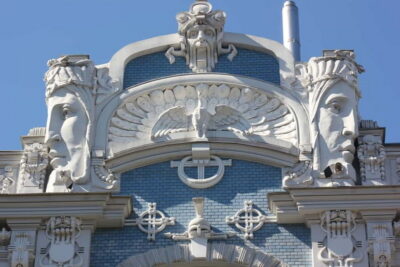
Riga: 2-Hour History of Art Nouveau Walking Tour
Read our review →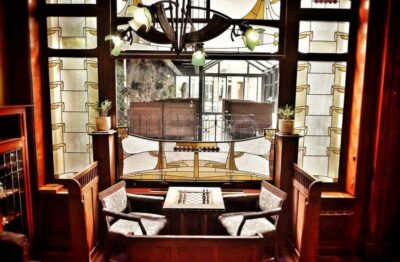
Brussels: Art Nouveau Pass – Entry to Three Locations
Read our review →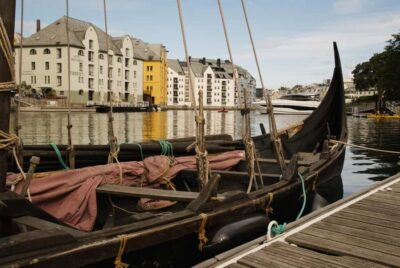
Small Group Tour in Ålesund: Art Nouveau, Sea Views & Insider Tips
Read our review →
Browse the lists this tour appears in