
Review · TOKYO
Private Harajuku Omotesando Architecture Walking Tour
Harajuku and Omotesando reveal Tokyo’s modern design story in a remarkably small area. On this private walk, you’ll move from the forested approach to Meiji Jingu to Kenzo Tange’s sweeping Yoyogi Gymnasium, then along a showcase of fashion-store architecture and lesser-known neighborhood buildings. The route treats buildings as part of Tokyo’s story, not just photo stops.
I like the personal format, especially the chance to ask questions and adjust the focus toward architecture, fashion, history, or local life. I also like the included cafe pause, which gives your feet a rest and lets the conversation continue away from the main shopping street. Guides such as Yoshi, Yoko, Aki, and Mari have received especially warm praise for preparation and clear explanations.
The main consideration is the pace and physical effort. Three and a half hours on foot can feel long in heat or rain, and one past guest found an English-language explanation difficult to follow. Ask for the guide to slow down or repeat points whenever needed.
Key points at a glance
- A private, adjustable route: Only your group takes part, so you can request more modern architecture, design, history, shopping streets, or back lanes.
- Kenzo Tange’s Yoyogi Gymnasium: You see this Olympic-era landmark from a distance before continuing into Harajuku.
- A remarkable shopfront collection: Prada, Dior, Louis Vuitton, Tod’s, The Iceberg, and Sunny Hills turn Omotesando into an open-air architecture exhibit.
- Backstreets beyond the boutiques: Side roads show a quieter, more varied side of the district.
- A useful cafe pause: Drinks are included during a short break along the route.
- A strong choice for design-minded visitors: The tour is best for people who want context, not just a list of famous addresses.
Why this Harajuku walk is different
Many first visits to Harajuku follow the same simple pattern: Meiji Jingu, Takeshita Street, a little shopping, then a train ride elsewhere. This tour takes a more thoughtful route. It connects the shrine, the Olympic buildings, international fashion houses, contemporary stores, private streets, and small architectural details that are easy to miss on your own.
The focus is not only on famous architects. You also get a look at how Harajuku and Omotesando changed from the 1960s to the present. That gives the walk a useful sense of time. The area is not one uniform shopping district. It shifts from sacred grounds to large public buildings, polished avenues, tiny side streets, and unusual residential or commercial structures.
I find the private format important here. The buildings are often best understood through questions: Why is this facade shaped this way? Why does one store sit below ground? How did a neighborhood become a center for fashion and design? With only your own group, you can stop when something catches your eye instead of keeping up with a large party.
The tour is priced at $132.14 per person. That is not a budget walk, particularly for a solo visitor, but the comparison changes for a couple or family sharing a private guide. You are paying for a customized route and a specialist who brings background material, photographs, and sometimes floor plans or images of the architects’ other projects. The value is strongest if architecture or design is a serious interest.
More architecture walks in Japan:
- Tokyo: Shibuya Highlights Walking Tour & Secret View Spot
★ 5.0 · 287 reviews - Private Ginza Architecture Walking Tour
★ 5.0 · 50 reviews - Tokyo Architecture and Contemporary Art Walking Tour with a local guide
★ 5.0 · 15 reviews
Starting at Meiji Jingu and the Olympic story
The meeting point is in front of Meiji Jingu near Harajuku Station. This is a practical start because the shrine is one of Tokyo’s major landmarks and easy to reach by public transportation. The tour does not charge an admission fee for this stop.
The shrine itself provides a calm opening, but the main architectural focus soon shifts toward the Olympic legacy of the district. From the Meiji Jingu area, you’ll admire Yoyogi Gymnasium by Kenzo Tange from a distance. Its dramatic suspended form makes it one of Tokyo’s most recognizable modern buildings.
The Olympic connection gives the walk more substance than a simple shopping tour. You learn how public buildings, international events, and urban change helped shape this part of the city. The exact amount of Olympic history can be adjusted, so tell your guide early if that subject matters to you.
The gymnasium is viewed from outside and from a distance rather than treated as an interior museum visit. That is worth knowing before booking. You come for the form, the setting, and the story, not for an extended indoor tour of the building.
Omotesando as an open-air design gallery
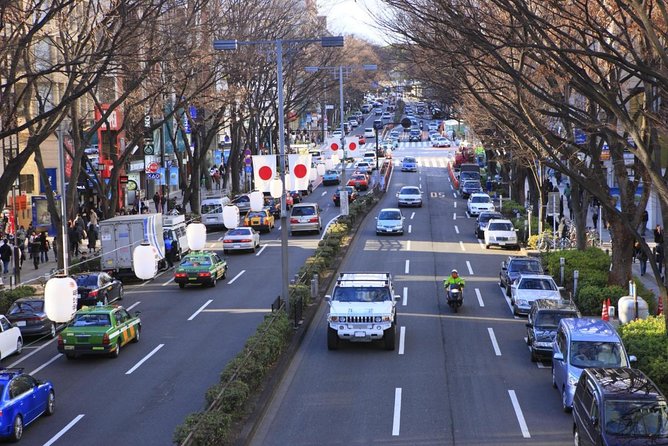
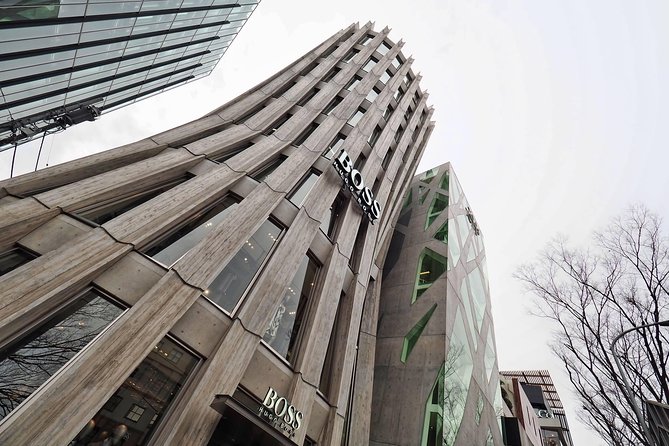
The walk then follows Omotesando, often compared with a high-end European shopping avenue. The stores here are not merely places to buy expensive goods. Many were designed as bold architectural statements, and the tour helps you read them.
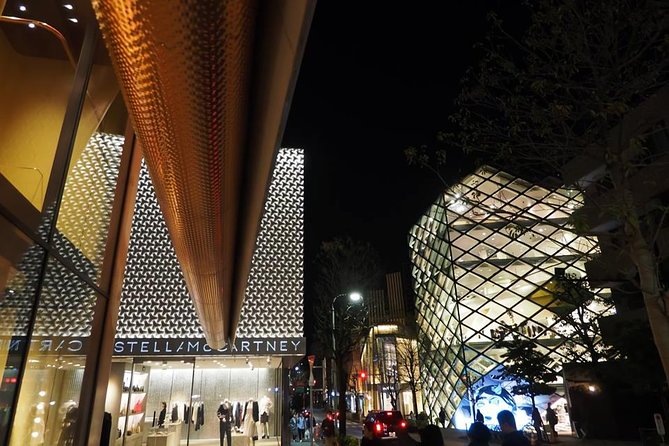
You may stop at The Iceberg, Dior, Louis Vuitton, Tod’s, Sunny Hills, and Prada. Each offers a different approach to glass, concrete, angles, texture, or structure. Looking at these buildings together helps you see how major brands use architecture to express a public identity.
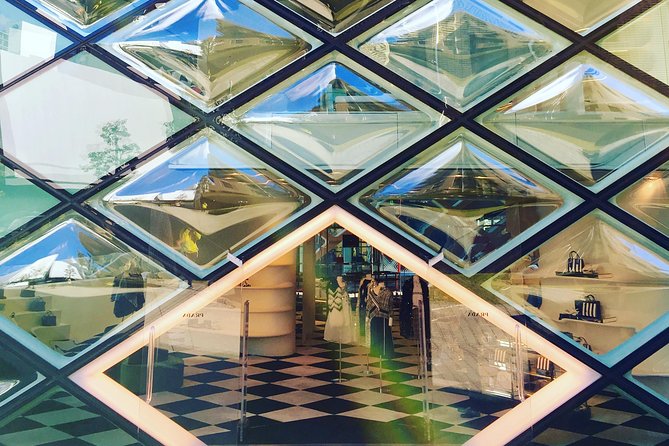
Prada is a particularly useful stop. The building by Jacques Herzog and Pierre de Meuron is known for its convex and concave glass surfaces. The shifting glass makes the exterior feel different as you walk past it, so the guide can point out where to stand for the best view.
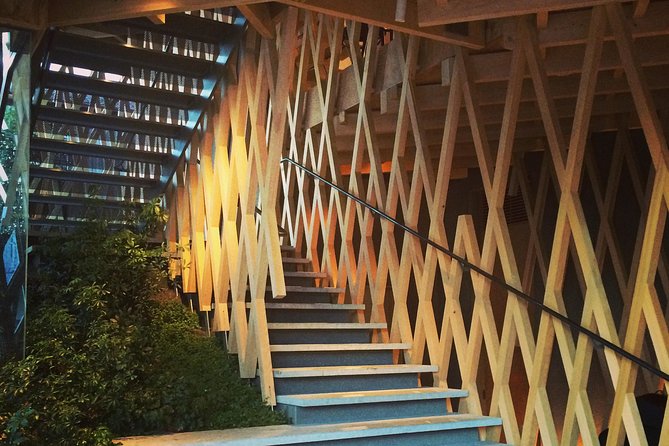
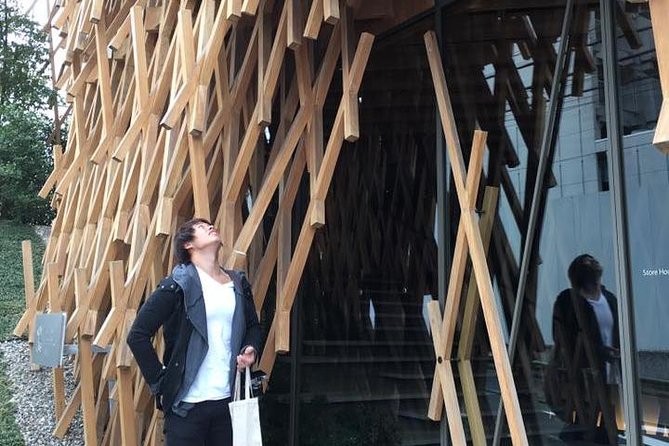
Sunny Hills offers another contrast. Its exterior has a strong geometric pattern that makes the small store easy to recognize. Rather than rushing past it with the rest of the shopping crowd, you can pause and consider how a compact retail space makes itself visible on one of Tokyo’s most expensive streets.
The tour can also include interiors when access allows. Several people who took the walk particularly valued going inside fascinating buildings, since an exterior photograph tells only part of the story. Still, interior access can depend on the day, the business, and what the guide is able to arrange. Treat it as a possible bonus, not a guarantee.
From luxury storefronts to quiet side streets
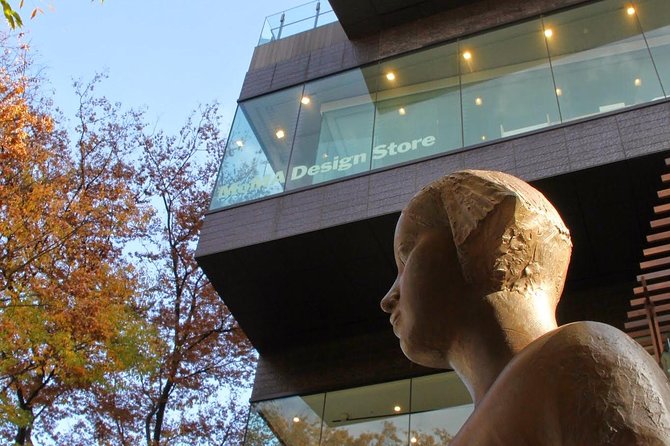
The best change of pace comes when the route leaves Omotesando’s main avenue. Harajuku and nearby Aoyama contain side streets that feel very different from the designer storefronts. Here, you may see smaller buildings, houses, studios, shops, and unusual uses of narrow urban plots.
This side trip is not filler. It shows how varied the district is. A visitor who only walks along Omotesando sees polished brand architecture. A visitor who turns into the back lanes gets a better sense of the neighborhood’s everyday scale.
I would pay attention here to the transitions between buildings. Tokyo often places a small structure beside a large one, or a quiet home near a major retail space. Your guide can explain how the area developed and why the architectural contrasts matter.
The private format is especially useful on these streets. You can ask to stop for a detail, a photograph, or a short explanation without worrying about holding up a large group. You can also tell the guide if you want fewer brand stores and more local streets.
More private architecture tours in Japan:
- Private Harajuku Omotesando Architecture Tour
★ 4.9 · 18 reviews - Private Edo-Tokyo Open Air Architectural Museum Tour
★ 4.8 · 15 reviews - Private Ueno Park Architecture Walking Tour
★ 5.0 · 8 reviews - Private Ueno Park Architecture Tour
★ 5.0 · 5 reviews
The cafe pause and the real rhythm of the walk
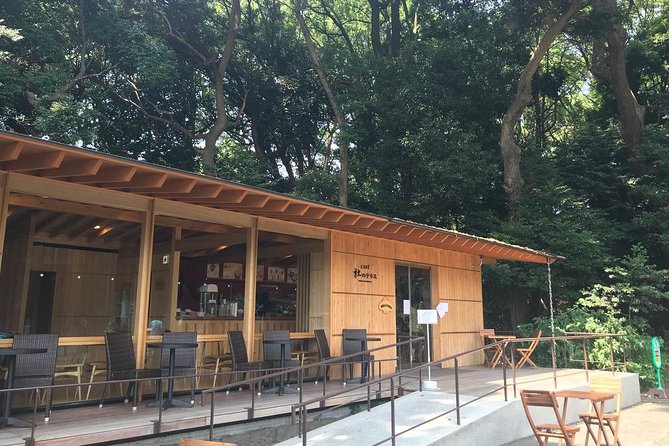
A short pause with drinks is included along the way. The cafe is described as being on an atmospheric backstreet rather than on the main avenue, which suits the character of the tour. It is a modest feature, but it matters during a three-and-a-half-hour walk.
Use this break to ask about buildings you have already seen. Guides have brought notebooks, tablets, and folders of photographs showing architects, earlier projects, floor plans, and construction details. The pause gives you time to look at those materials without trying to keep walking and listen at the same time.
The stop also breaks up the intellectual rhythm. Architecture tours can become a steady stream of names and dates. A drink and a seat make the experience more relaxed, especially if you are traveling with family members who are interested in design but do not want nonstop technical commentary.
The exact cafe and timing can vary with the customized route. You should still expect a walking tour, not a cafe tour. The drink is a welcome pause rather than the main attraction.
The guides make the private format worthwhile
The guide is the most important variable in a tour like this. The strongest accounts describe guides who arrive prepared with photographs, architect portraits, background material, and even suggestions for where to stand to take better pictures.
Yoshi is repeatedly praised for detailed preparation and a strong grasp of construction and design. One especially useful style of guiding associated with him involves showing photographs of the architects and their other projects, which helps place a building in a wider body of work.
Yoko has been described as strong on design and the way Harajuku changed from the 1960s onward. That historical angle will suit you if you want more than a technical discussion of surfaces and structures.
Aki is a good match for people who want a flexible, friendly walk. He has been praised for adjusting the route and for linking the buildings in Harajuku with places you may visit later in Japan. Mari and Eriko are also noted for clear English, energy, and an engaging manner.
Guide quality can still vary. One person found it hard to understand Yoshi at times, despite appreciating his passion and subject knowledge. This is a useful reminder to speak up if the pace or English is difficult. Since the tour is private, you can request shorter explanations, simpler terms, or a repeat.
Walking demands, timing, and meeting points
The experience lasts about three hours and 30 minutes, with roughly three hours listed for the main walking portion. Expect a moderate level of physical activity. You will be on your feet for much of the tour, moving between the shrine, public buildings, shops, side streets, and the final meeting area.
The route begins at Meiji Jingu near Harajuku Station, at 1 Yoyogikamizonocho, Shibuya. It ends at the Omotesando and Aoyama-dori intersection, in front of Mizuho Bank, at 5-chome-1-27 Minamiaoyama. Hotel pickup and drop-off are not included.
The end point is useful because it leaves you near public transportation and close to more shops, restaurants, and Aoyama streets. It also means you should not plan on returning to the starting point with the guide. Arrange your next stop from the Omotesando area.
The tour is often booked about 53 days ahead, which suggests that advance planning is sensible, especially if you want a particular date or guide. Confirmation is provided at booking, and a mobile ticket is available.
Weather matters. On a hot day, ask for more indoor stops or a slower pace. One guide adjusted the balance between outdoor and indoor time because of high heat, and the private format makes that sort of change possible. Bring comfortable shoes and allow enough time to walk without rushing.
Who should book it?
I would choose this tour if you enjoy modern architecture, fashion retail design, urban history, or photography. It also works well as an early Tokyo activity because the route helps you get your bearings in Harajuku and Aoyama while introducing local customs, history, and the city’s changing character.
Families can benefit from the private structure because the guide can adapt explanations to different ages and interests. Couples and small groups will get the best value from the per-person price, since the same guide serves only their party.
You should think twice if you want a quick highlights walk with little commentary. This experience is built around explanation and conversation. It also may not suit you if three hours on foot sounds tiring or if you are mainly interested in entering major attractions rather than studying buildings from the street.
The 99 percent recommendation rate and 4.9 rating from 67 ratings suggest a very strong overall experience, with preparation and guide enthusiasm receiving the most praise. Still, the language concern and the outdoor walking demands are real points to weigh.
Should you book this private architecture tour?
Book it if you want to understand why Harajuku and Omotesando look the way they do. The route gives you Kenzo Tange’s Olympic architecture, major contemporary stores, smaller backstreets, and a cafe pause, all tied together by a guide who can adjust the discussion to your interests.
I would book well ahead, request your preferred emphasis, and tell the provider if you want more interiors, more Olympic history, more fashion design, or more neighborhood streets. If architecture is only a minor interest, the price may feel high. If it is one of the reasons you came to Tokyo, this private walk offers a focused and unusually personal way to see the district.
FAQ
How long does the tour last?
The experience lasts approximately three hours and 30 minutes. The main walking portion is listed as three hours, with a short drink break included.
Where does the tour begin?
It begins in front of Meiji Jingu near Harajuku Station at 1 Yoyogikamizonocho, Shibuya, Tokyo.
Where does the tour end?
The tour ends at the Omotesando and Aoyama-dori intersection, in front of Mizuho Bank, at 5-chome-1-27 Minamiaoyama, Minato City.
Is this a private tour?
Yes. Only your group participates, which allows the route and explanations to be adjusted to your interests.
What buildings are included?
The route can include Yoyogi Gymnasium by Kenzo Tange, The Iceberg, Dior, Louis Vuitton, Tod’s, Sunny Hills, and Prada. It also includes backstreet architecture in Harajuku and Omotesando.
Is a cafe stop included?
Yes. A short pause with drinks is included during the walk.
Is hotel pickup provided?
No. Hotel pickup and drop-off are not included. You meet the guide at Meiji Jingu and finish near Omotesando and Aoyama-dori.
Can I cancel for a full refund?
Yes, if you cancel at least 24 hours before the experience starts. Cancellations made less than 24 hours before the start time are not refunded, and changes within that period are not accepted.
Just added around Japan
- Small-Group Architecture Tour in Ginza, Tokyo★ 5.0 · 6 reviews
- Japanese Garden & Western Architecture: Akasaka exploration tour★ 5.0 · 9 reviews
- Tokyo Architecture and Contemporary Art Walking Tour with a local guide★ 5.0 · 15 reviews
- Private Ueno Park Architecture Walking Tour★ 5.0 · 8 reviews
- [Aomori Prefecture] Tour the history and architecture in Towada City, the art city★ 5.0 · 6 reviews
- Private Ueno Park Architecture Tour★ 5.0 · 5 reviews
- Private Ginza Architecture Tour★ 5.0 · 3 reviews
- Kyoto: Nijo Castle & Gardens 2-Hour Guided Tour★ 4.5 · 2 reviews
Walking Tours, compared.
The Official Art Deco Walking Tour by The Miami Design Preservation League
Read our review →
Barcelona: Gothic Quarter Ghosts and Legends Walking Tour
Read our review →
Barcelona: Old Town and Gothic Quarter Walking Tour
Read our review →
Lecce: Baroque Architecture and Underground Walking Tour
Read our review →
Chicago in a Day: Food, History & Architecture Walking Tour
Read our review →
Ramblas, Old Town, Gothic and Gaudi Architecture Walking Tour
Read our review →
Chicago’s Secret Interiors Architectural Walking Tour
Read our review →Browse the lists this tour appears in