
Review · BUDAPEST
Art Nouveau Treasures of Budapest – Exclusive Private Tour
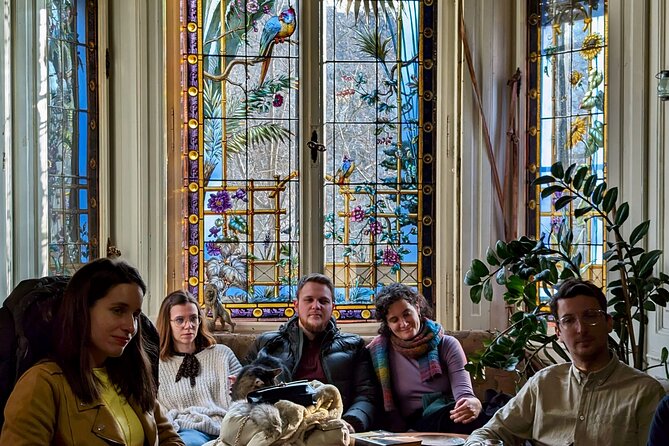
Budapest saves one of its best Art Nouveau surprises for the end of this tour: a visit to a century-old private apartment with an original stained-glass window by Miksa Róth. That personal finish gives the walk something many architecture tours lack, a glimpse inside a real home rather than only grand public façades.
I like the private format, which lets you ask questions and adjust the pace, and I like the way art historian Miklós connects buildings to design, city history, and Hungarian identity. The main consideration is that the tour uses public transportation and walking, and some art lovers may wish it spent the full three hours seeing more buildings instead of taking a refreshment break.
Key details at a glance
- Miksa Róth stained glass: Finish in a private apartment with an original work by one of Hungary’s finest stained-glass artists.
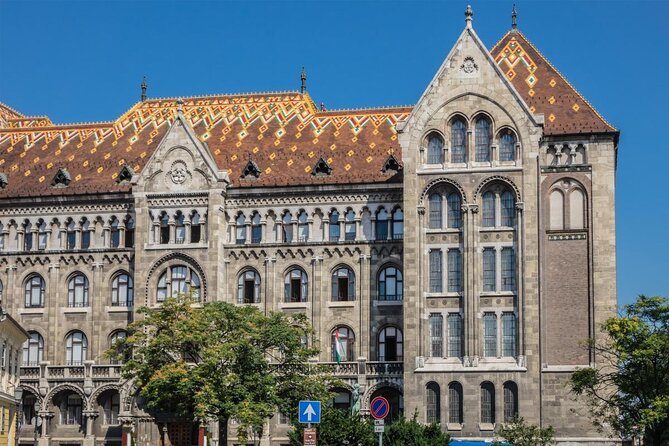
- Ödön Lechner’s tilework: See the Postal Savings Bank, a colorful Secession masterpiece covered with folk-inspired decoration.
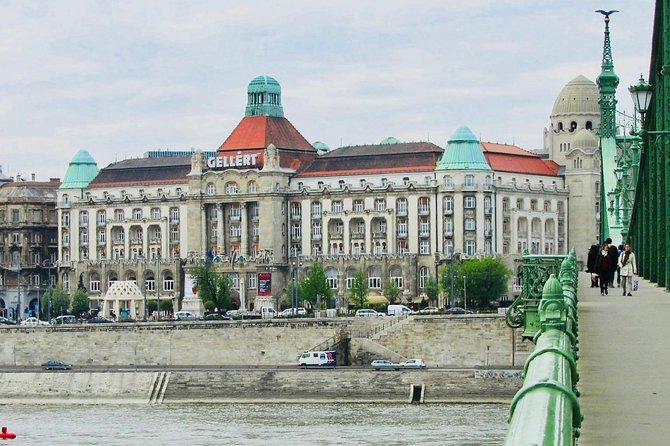
- Gellért Baths: Admire the Art Nouveau character of one of Budapest’s best-known thermal bath buildings.
- Personal guiding: Miklós, an art historian and passionate Budapest guide, leads the private experience.
- Flexible planning: Choose a custom start time and request hotel pickup in Budapest.
- Walking plus transit: Bring a public transportation ticket, since private transport is not included.
Why Budapest’s Art Nouveau deserves a dedicated tour
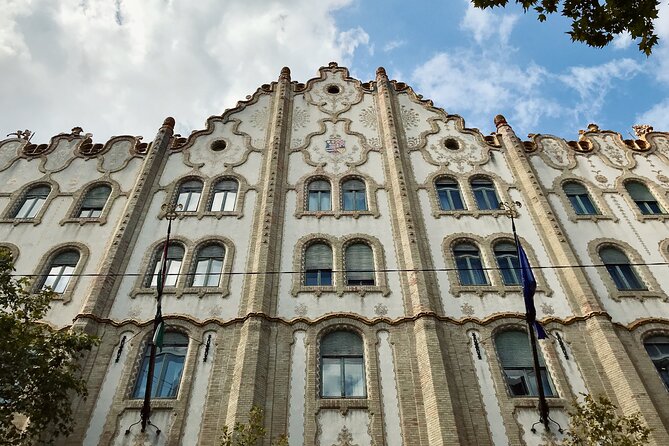
Budapest is often presented through the Parliament, Buda Castle, and the Danube panorama. Those sights matter, but they tell only part of the city’s story. Around the turn of the twentieth century, Hungarian architects created a distinctive version of Art Nouveau, known locally as Secession. It borrowed the flowing lines of European Art Nouveau but added Hungarian folk patterns, bright ceramics, plant forms, and national motifs.
That is why this tour is useful. You are not simply looking at pretty façades. You are learning to spot the details that make Budapest’s style different from the Art Nouveau of Brussels, Paris, or Barcelona.
I especially like the focus on Ödön Lechner and Miksa Róth. Lechner worked with colored tiles and unusual forms, while Róth brought light and color indoors through stained glass. Together, their work helps you understand how Budapest’s architecture moved beyond stone and plaster.
The private setting also changes the tone. With only your own group, you can stop to ask why a motif matters, how a building was designed, or what you are looking at in a window or façade. The listed maximum is five people, so this is a very different experience from following a large group through the city.
More Art Nouveau tours in the world:
- Walking Tour of Riga’s Beautiful Art Nouveau Architecture
★ 4.8 · 20 reviews - Riga’s Architecture: A self-guided audio tour of the city’s art nouveau history
★ 5.0 · 3 reviews - Mexico City origins and architecture: Art Nouveau, Deco,Eclectic
★ 3.0 · 2 reviews
Starting at Central Market Hall
The tour begins at Central Market Hall, with hotel pickup or a meeting point available by arrangement. The market itself is one of Budapest’s major landmarks, so it gives you a practical place to meet and begin orienting yourself.
The tour is built around walking, with public transportation used along the way. That matters because Budapest’s Art Nouveau sights are spread across more than one district. You will not be sitting in a private vehicle while the guide points out buildings from a window. You will move through the city at street level, cross a bridge, and see how the architecture fits into ordinary Budapest streets.
No admission ticket is included for Central Market Hall. The supplied timing lists about 20 minutes at this stop, so do not expect a long market visit or a food-focused outing. Food and drinks are not included unless specifically stated, and the main purpose here is architectural and geographic orientation.
Crossing the Danube toward Gellért Hill

One of the pleasant parts of the route is the walk across one of Budapest’s historic bridges toward the foot of Gellért Hill. From the bridge, you get scenic views toward the Danube and the grand Hungarian Royal Palace.
This section adds welcome variety. You are not spending three hours staring at façades from one narrow street. The river crossing gives you a chance to see the city’s two sides and understand how the bath district connects with the central neighborhoods.
The exact bridge or route can change. The tour description refers to Budapest’s first stone bridge, while another route note describes a walk across one of the city’s most beautiful bridges. Since the itinerary may be adjusted for weather, access, or your interests, it is sensible to treat the route as a carefully planned outline rather than a fixed script.
Gellért Baths: Art Nouveau with a working purpose
St. Gellért Thermal Bath and Swimming Pool is not merely an old building to admire from the pavement. It remains a functioning bath and hotel complex on the western bank of the Danube, and its architecture is part of the experience.
You can expect about 20 minutes here. Admission is listed as free for the tour stop, but that does not mean you are taking a full bathing visit. The tour focuses on the building and its Secessionist character, not on spending several hours in the pools.
I like this stop because it shows Art Nouveau serving a public purpose. The decoration is not confined to a private mansion or an exhibition hall. It belongs to a place built for rest, health, and social life.
If you are hoping to use the thermal baths, clarify that separately before booking. The tour does not advertise bathing time, and the short stop is designed for sightseeing.
More private architecture tours in the world:
- Best of Chicago: Architecture & Highlights City Private Tour
★ 5.0 · 94 reviews - Private Harajuku Omotesando Architecture Walking Tour
★ 5.0 · 67 reviews - Private Santa Barbara History and Architecture Walking Tour
★ 5.0 · 56 reviews - Private Barcelona Modernism and Gaudí Walking Tour
★ 4.7 · 54 reviews
Lechner’s Postal Savings Bank on Hold Street
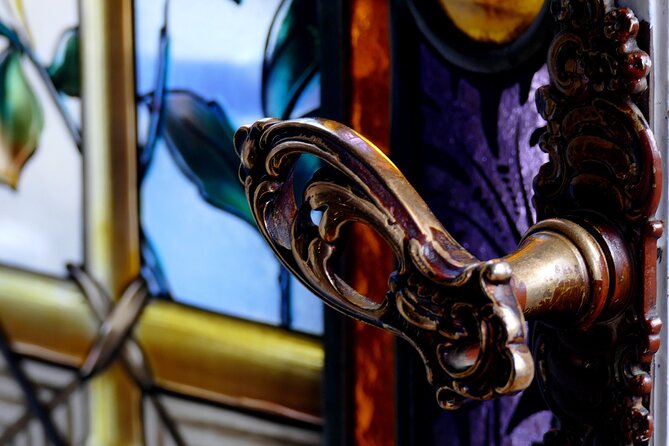
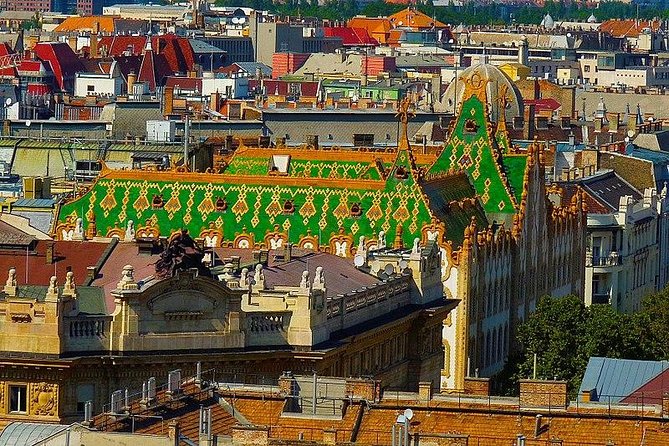
The Postal Savings Bank on Hold utca is one of the main reasons to book this experience. Designed by Ödön Lechner in 1901, the building is known for its colorful tiles and folk-inspired motifs.
Lechner is central to Budapest’s Secession movement. His work often feels playful and unmistakably Hungarian, rather than simply copying French or Belgian Art Nouveau. At the Postal Savings Bank, the roofline, ceramic decoration, and surface patterns reward a slow look. This is the sort of building that can seem eccentric at first and then make more sense once your guide explains its design language.
The tour lists about 20 minutes here, and admission is free. You will mainly view the exterior, so this stop suits anyone interested in architectural design more than people seeking a formal interior visit.
The supplied itinerary also lists a stop called Nemzeti Bank and then repeats the Postal Savings Bank description. That appears to reflect an itinerary labeling error or overlapping route information. The important point is that the tour includes Lechner’s Postal Savings Bank on Hold Street. Ask for the final route if seeing every listed stop matters to you.
Gutenberg Square and Miksa Róth’s world
Gutenberg Square brings the tour into the Palace District, where you can see a historic building with a striking stairway and leaded glass associated with Miksa Róth. The listed stop lasts about 15 minutes and is free.
This is a good contrast with Lechner’s exterior tilework. Róth’s art is more easily appreciated from close range, especially in an entryway or stairwell where changing light can affect the colors. You may find that the smallest details, such as glass panels and decorative motifs, carry as much character as a whole façade.
The wording describes the building as an Art Deco historic building, even though the tour centers on Art Nouveau and Secession. Styles often overlap around this period, and the guide’s explanation should help place the building in context rather than forcing it into one neat category.
Access to interiors is one of the tour’s useful features. Some lobbies, restaurants, and stairways require local knowledge or permission to enter. Miklós has highlighted interior spaces that an independent visitor could easily pass without noticing.
The private apartment and the Miksa Róth window
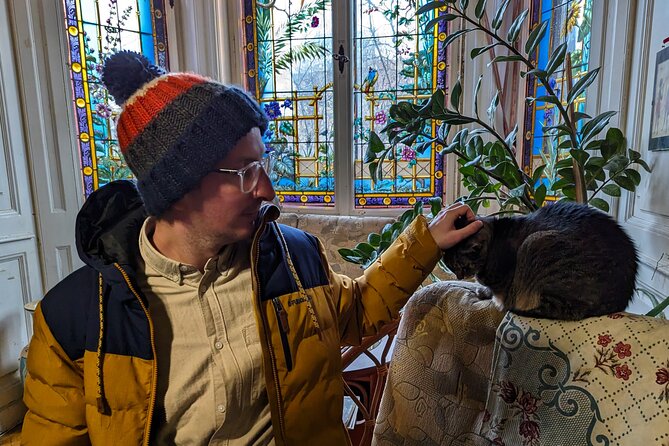
The tour finishes in a century-old private apartment, where you have the exclusive chance to see an original stained-glass window by Miksa Róth. This is the most unusual part of the experience.
Public buildings can be impressive, but a private apartment shows how Art Nouveau worked in daily life. You can see how decorative art was brought into a residential setting, not only displayed in a palace or civic building.
Róth is especially important because his work appears in major Budapest buildings, including the Parliament and other public sites that may not be open for casual interior viewing. Here, you get a more intimate example of his craft.
I would confirm the final apartment arrangements when booking, since it is a private residence and the meeting details may need coordination. The stated end point is in the Rákóczi tér area, although the detailed description identifies the apartment as the final stop. This is another reason to ask for the precise finish point if you are planning dinner or another timed activity afterward.
What the private guide adds
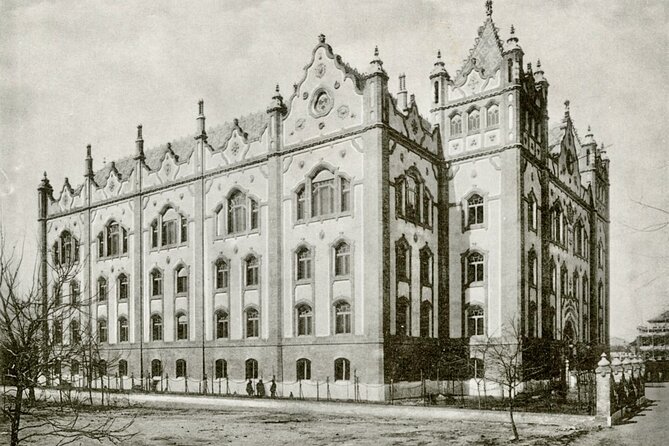
Miklós is identified as the professional art historian guiding the tour. His approach, based on the supplied tour details, combines architecture with broader Budapest history and a clear enthusiasm for the city.
That wider context can be helpful, especially if you know little about Hungarian history. One past participant wanted the tour to spend more time on design elements and less on general history. That is a fair point for a specialist audience, so tell Miklós at the start if your priority is ornament, materials, and architectural theory rather than city background.
The tour has also included a short refreshment break at an Art Nouveau furnished café. That may appeal to you if you enjoy the period atmosphere and need a pause during the walk. If you would rather use every minute to see more buildings, say so early. The itinerary can be personalized, and the guide has indicated that minor changes may be made to keep the route running smoothly.
Timing, walking, and public transportation
Allow between two and a half and three hours. The advertised stop times add up to a compact route, but walking, bridge crossings, conversation, and transit can extend the experience.
You should be comfortable walking through several parts of the city. Private transportation is not included, and a public transportation ticket is also your responsibility. Since pickup can be arranged from your Budapest hotel or a central meeting point, confirm whether you are meeting the guide at your hotel or at Central Market Hall.
The flexible start time is useful if you have a packed sightseeing day. You can request a time that fits your schedule, though final arrangements should be made in advance.
Most people can participate, and service animals are allowed. The tour is near public transportation. The information provided does not give detailed accessibility measurements for sidewalks, interiors, or stairways, so ask specifically if that affects your planning.
Is the $261.67 group price good value?
The price is $261.67 for a private group of up to five people. For one person, that is a steep price for a three-hour walking tour. For five people, it works out to about $52 per person, which is more reasonable for a private art-focused experience.
The value comes from access and interpretation, not from included admissions. Most listed stops are free, and food, drinks, and transit are not included. You are paying for Miklós’s time, the private format, route planning, and access to places that may not be obvious to an independent visitor, especially the private apartment and selected interiors.
For a couple or small family that cares about architecture, the cost may be worthwhile. If you are mainly looking for Budapest’s famous landmarks, a general city tour will likely cover more ground for less money. This experience earns its price when Art Nouveau and Hungarian Secession are central interests.
The tour is booked an average of 63 days ahead, so I would not leave it until the last minute if your Budapest dates are fixed. The provider offers free cancellation up to 24 hours before the start time. Changes or cancellations made inside that window are not refunded.
Who should book this Art Nouveau walk?
I would recommend it to you if you like architecture, decorative arts, stained glass, historic interiors, or the story of how national identity enters design. It is also a smart choice if you have already seen the Parliament and Buda Castle and want a more specialized view of Budapest.
The tour suits couples, families, and small groups who want a private pace. It also works well for returning visitors who want to see a side of the city that is easy to miss on a standard sightseeing route.
I would hesitate if you dislike walking, want a full thermal bath visit, or expect a museum-style tour with many indoor collections. The stop at Gellért Baths is architectural, not a bathing session, and the route depends partly on public transit and access to private or semi-private spaces.
Should you book it?
Book this tour if the words Lechner tiles and Miksa Róth stained glass make you curious. The private apartment finish gives the experience a rare personal touch, while Gellért Baths, the bridge crossing, Gutenberg Square, and the Postal Savings Bank create a well-rounded look at Budapest’s Secession style.
Before paying, ask for the exact route, confirm the private apartment finish, and tell Miklós whether you want more design analysis, more city history, or no refreshment break. If you do that, this can be a focused and memorable introduction to the Budapest most standard tours leave out.
FAQ
How long is the Art Nouveau Treasures of Budapest tour?
The tour lasts approximately two hours and 30 minutes to three hours.
How much does the tour cost?
The price is $261.67 per private group of up to five people.
Is the tour private?
Yes. Only your group participates, with a maximum group size of five people.
Is hotel pickup available?
Yes. You can arrange to meet at your Budapest hotel or at a central meeting point. The standard meeting point is Central Market Hall.
Where does the tour end?
The stated end point is in the Rákóczi tér area of Budapest. The detailed route says the tour finishes in a century-old private apartment with a Miksa Róth stained-glass window.
Is public transportation included?
No. The tour uses walking and public transportation, but you must provide your own public transportation ticket.
Are admission tickets included?
Admission is listed as free for the Gellért Baths, Postal Savings Bank, and Gutenberg Square stops. No admission ticket is included for Central Market Hall.
Is the tour available in English?
Yes. The tour is offered in English.
Can I cancel for a full refund?
Yes. You can cancel at least 24 hours before the local start time for a full refund. Cancellations or changes made less than 24 hours before the start time are not accepted for a refund.
Just added around the world
- Wilmington History and Architecture Tour★ 4.8 · 18 reviews
- Washington, DC: Georgetown Architecture Walking Tour★ 5.0 · 8 reviews
- New Orleans : Garden District Architecture Walking tour★ 4.8 · 5 reviews
- Washington DC: Dupont Circle & Embassy Row Architecture Tour★ 5.0 · 6 reviews
- Walk & Discover KL’s Architectural and Heritage Gems★ 5.0 · 7 reviews
- Vicenza: discovering the city of Palladio by e-bike★ 5.0 · 4 reviews
- Vicenza: Palladian Architecture Private Walking Tour★ 3.3 · 3 reviews
- Unveiling Brno: History, Culture & Architectural Delights★ 5.0 · 2 reviews
Art Nouveau Tours, compared.
Riga: Old Town Walking Tour with Art Nouveau Highlights
Read our review →
Riga: 2-Hour History of Art Nouveau Walking Tour
Read our review →
Brussels: Art Nouveau Pass – Entry to Three Locations
Read our review →
Small Group Tour in Ålesund: Art Nouveau, Sea Views & Insider Tips
Read our review →
Browse the lists this tour appears in