

Review · ARCHITECTURE TOURS
Subotica: The Queen of Art Nouveau stunning heritage
Subotica’s greatest surprise is how much Art Nouveau character fits into one compact Serbian city center. In 2.5 hours, you’ll enter the remarkable City Hall and Synagogue, then walk past colorful façades, decorative tilework, and ornate details that make this northern Serbian city feel unlike anywhere else in the country.
I like the fact that both major entrance tickets are included, and I like the personal feel of a licensed local guide who can explain the Hungarian and Central European influences behind the buildings. The recorded experience with guide Atila was especially warm and professional, with one visitor getting the City Hall almost entirely to themselves.
The main thing to consider is timing. This is a walking tour with several stops, so comfortable shoes matter. Also, City Hall is still a working government building, and an official function may close the grand hall during your visit.
Key details to know before booking
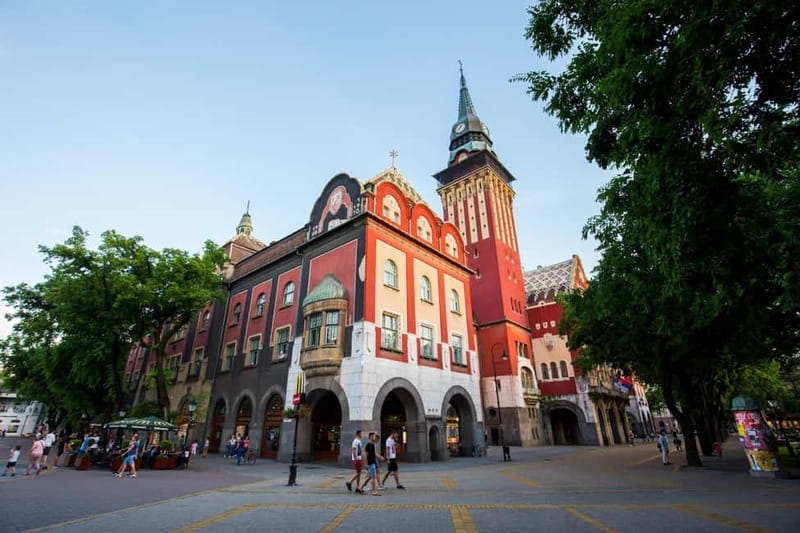
- City Hall begins the experience: Meet at the Alpha Travel souvenir shop beneath the building, then enter one of Subotica’s finest Art Nouveau landmarks.
- The Synagogue is a major highlight: Its restored interior includes colorful stained glass and bold structural design.
- You get more than two interiors: The route also covers Korzo, Raichle Palace, and the Franciscan Church.
- The price includes the important tickets: At $58 per person, entrance to City Hall and the Synagogue is already covered.
- Several languages are available: Guides lead in English, Serbian, or Hungarian, with personalized assistance throughout.
- The route stays central: You return to Trg Slobode 1, making this easy to fit into a day in Subotica.
Why Subotica is Serbia’s Art Nouveau capital
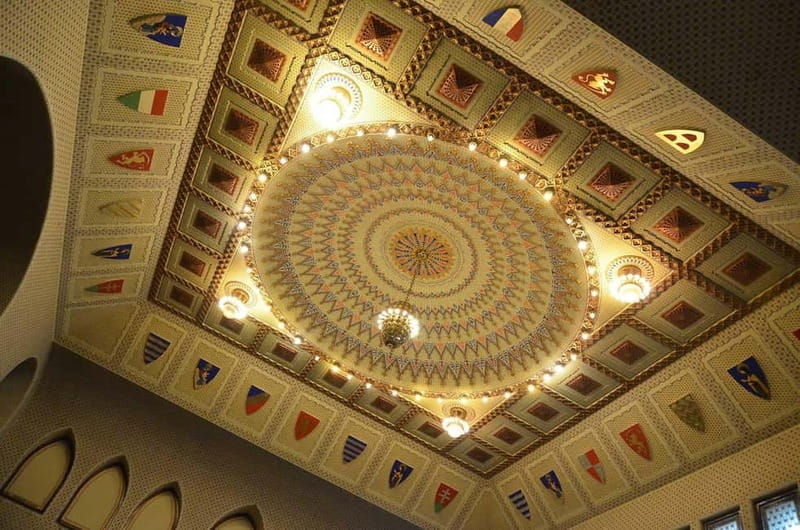
Subotica sits in Vojvodina, close to Serbia’s northern border and shaped by the former Austro-Hungarian world. That background shows in the city’s architecture, where Hungarian Secession, a local form of Art Nouveau, appears in curling lines, floral patterns, stained glass, glazed tiles, and bold colors.
You do not need to be an architecture specialist to enjoy this walk. A good guide helps you notice the details you would otherwise pass without a second glance. Look up at the façades, study the window frames, and compare the grand public buildings with the smaller structures along the pedestrian street.
I find Subotica especially rewarding because the decoration is not confined to one museum. The city itself becomes the exhibit. You move from a government building to a synagogue, then out into the street, where the same artistic ideas continue on shopfronts and residential façades.
The compact route also helps. You are not spending the afternoon being driven between sights. The main points are close enough to connect on foot, while each stop offers a different view of the city’s past and present.
More Art Nouveau tours in the world:
- Walking Tour of Riga’s Beautiful Art Nouveau Architecture
★ 4.8 · 20 reviews - Riga’s Architecture: A self-guided audio tour of the city’s art nouveau history
★ 5.0 · 3 reviews - Mexico City origins and architecture: Art Nouveau, Deco,Eclectic
★ 3.0 · 2 reviews
Meeting beneath City Hall at Alpha Travel
The meeting point is simple: find the Alpha Travel souvenir shop at Trg Slobode 1, directly beneath Subotica City Hall. Your guide waits there with an Alpha Travel sign and a badge showing the company logo and Serbian license.
That arrangement is useful if you are new to Subotica. The City Hall is hard to miss, and the shop gives you a clear landmark instead of an indistinct street corner. You also begin right beside the first major stop, so there is no wasted transfer time.
The tour lasts about 2.5 hours. Starting times vary, so check availability when booking. The experience is offered in English, Serbian, and Hungarian, which reflects Subotica’s cultural setting and gives you a better chance of finding a comfortable language.
Transportation to the meeting point is not included. You also pay separately for food, drinks, souvenirs, and any attraction beyond the City Hall and Synagogue. Bring water, since the route involves walking and outdoor time.
Inside Subotica City Hall
City Hall receives about 40 minutes, and that is a good opening. Designed by Marcell Komor and Dezső Jakab, the building is often described as one of the most beautiful public buildings from the former Kingdom of Hungary.
The grand hall is the first major payoff. Expect stained glass, detailed woodwork, and a formal interior that feels far more elaborate than a typical municipal building. The decoration tells you that this was designed to project civic pride, not merely to house offices.
A guide adds meaning to the ornament. Instead of simply pointing at a colorful window, the explanation can show how the building’s Hungarian Art Nouveau style differs from more restrained European examples. You get a better sense of why Subotica is often called the Queen of Art Nouveau.
The visit may also include the tower, where panoramic views over the city are available. This gives you a useful change of scale. After studying small decorative details indoors, you can look across the rooftops and see how the central city fits together.
There is one important limitation. City Hall remains a working building and is still used for city council meetings. If an official function takes place, the grand hall may be closed. In that case, the visit shifts to the tax office and entrance areas instead. The building itself remains worth seeing, but you should not assume every room will always be open.
The restored Subotica Synagogue
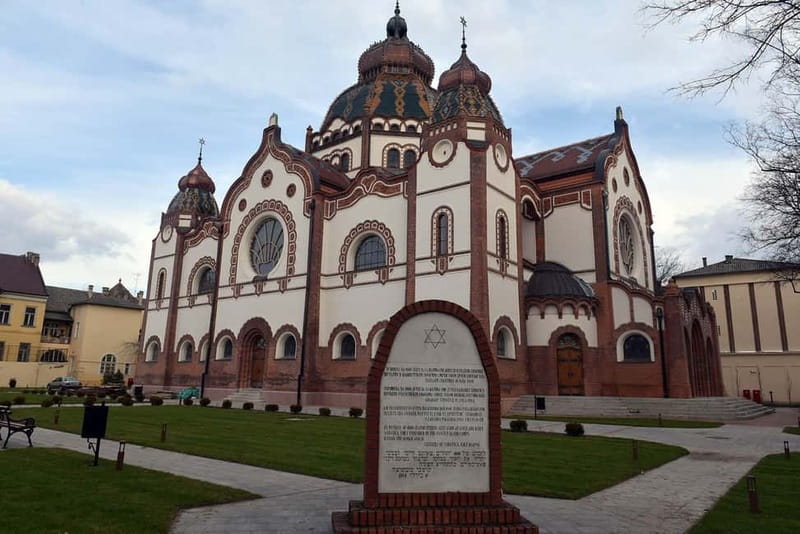
The Synagogue receives another 40 minutes and is likely to be the emotional center of the visit. It is one of the world’s largest synagogues and has undergone major restoration, allowing you to see its architecture with much of its original force.
The interior is not a quiet, plain prayer hall. It uses color, stained glass, patterned surfaces, and unusual structural solutions to create a strong visual effect. The design feels carefully planned from floor to ceiling, so give yourself time to look around rather than taking one quick photograph and moving on.
This stop also adds depth to the city’s story. Subotica was shaped by several religious and cultural communities, and the Synagogue reflects the Jewish presence that formed part of the city’s civic life. A guide can connect the building’s design to that wider setting without turning the visit into a dry lecture.
Photography is welcome as part of the practical advice for the tour, and you will want a camera here. Still, I would suggest putting it down for a few minutes. The stained glass and interior proportions are easier to appreciate when you are not viewing everything through a screen.
The included entrance ticket matters. A self-guided visit would let you see the building, but the explanation helps you understand why the structure is so important and how its design differs from the nearby City Hall.
More history tours in the world:
- Chicago in a Day: Food, History & Architecture Walking Tour
★ 5.0 · 1,153 reviews - Kuala Lumpur: Batu Caves & Historic Buildings Tour
★ 4.7 · 539 reviews - Charleston’s Best Highlights: History, Culture & Architecture
★ 5.0 · 422 reviews - Palm Springs Modernism Architecture & History Bike Tour
★ 5.0 · 359 reviews
Walking Korzo, Subotica’s main pedestrian street
After the two major interiors, the tour moves outside for about 30 minutes along Korzo, the city’s main pedestrian street. This is where Subotica feels like a living place rather than a collection of monuments.
Buildings along the route carry Art Nouveau details in a more everyday setting. You may notice decorated entrances, curved lines, patterned façades, and motifs that are easy to miss when you are focused only on the largest buildings. The guide points out the features that tie the street to the City Hall and Synagogue.
Korzo also gives you time to absorb the local atmosphere. There are shops and cafés along the way, so you can see how the historic center functions today. The tour does not include meals or drinks, but you can note places to return to after the walk.
This section is less formal than the interior visits. If your main goal is to photograph grand architecture, City Hall and the Synagogue will likely make the strongest impression. If you want to understand the city as a whole, Korzo is essential because it links the famous buildings with ordinary daily life.
Raichle Palace and the final architectural details
Raichle Palace is a 15-minute photo stop. It is an Art Nouveau masterpiece designed by architect Ferenc Raichle, and its unusual character makes it a fitting final architectural highlight.
The shorter stop means you should expect an exterior visit and time for photographs rather than a long interior tour. That is not a weakness, but it is worth knowing before booking. The value here comes from the building’s distinctive appearance and the guide’s explanation of its story and importance.
This is a good place to compare styles. City Hall is grand and civic, the Synagogue is religious and highly expressive, while Raichle Palace has a more personal and individual character. Seeing all three gives you a clearer picture of how Art Nouveau could serve different purposes.
I would keep your camera ready, but do not let the photo stop rush you. The guide can help you spot details in the façade that make the building more than a quick backdrop.
A quiet visit to the Franciscan Church
The Franciscan Church receives about 15 minutes. It provides a different mood from the colorful Art Nouveau buildings and adds a religious landmark to the route.
The available details describe this as a visit rather than a full guided interior session. That means you should expect a shorter stop, useful for seeing another part of Subotica’s religious and architectural character without adding much time to the tour.
The church also helps break up the visual focus on Art Nouveau. You get a broader view of the historic center, where different periods and building traditions sit close together. Afterward, the route returns to Trg Slobode 1, where the experience began.
Is $58 a fair price?
At $58 per person, this is not the cheapest way to walk around Subotica. But the calculation changes once you include the City Hall and Synagogue entrance tickets, a licensed guide, and personalized assistance.
The price makes the most sense if you want context rather than a checklist of buildings. A guide can explain the architects, point out details, and connect the city’s architecture to its Hungarian and Central European background. That is difficult to reproduce with a quick internet search while walking.
The tour also saves planning time. You do not need to work out the best order for the sights, find the entrance desks, or wonder if you have missed a notable building. The route begins and ends in the central square, and the main stops are grouped together.
For budget-conscious visitors, the tour may feel expensive if you only want exterior photographs. You could walk around the center independently and see much of the street architecture. The stronger value comes from entering both major buildings and having a local person explain what you are seeing.
Who will enjoy this walking tour?
I would recommend this experience to first-time visitors to Subotica, architecture fans, and anyone making a short stop in Vojvodina. It gives you a clear introduction without taking a full day.
It also suits visitors who prefer a personal guide to a large, impersonal group. The experience is built around direct assistance, and the recorded visit led by Atila was described as friendly and professional, with unusually personal access to City Hall.
Families and older visitors should note the walking element. Comfortable shoes and weather-appropriate clothing are essential. Bring a hat and sunscreen in warm weather, or a raincoat when showers are possible.
The tour is wheelchair accessible, which is useful, though City Hall access can still depend on official building functions. If you need specific access arrangements, confirm them when booking.
Free cancellation is available up to 24 hours before the start, and you can reserve now and pay later. That flexibility helps if your route through Serbia is still changing.
Should you book Subotica’s Art Nouveau tour?
Book it if you want the inside story of Subotica, not just a walk past attractive façades. The combination of City Hall, the Synagogue, Korzo, Raichle Palace, and the Franciscan Church gives you a well-paced introduction to the city’s architecture and culture.
I would be especially inclined to book if you have only one day in Subotica or if you want to see the two major interiors without sorting out tickets yourself. Just keep your expectations clear: City Hall’s grand hall may close for official business, Raichle Palace is mainly a photo stop, and food and transport are not included.
For a self-guided visitor who wants only outdoor photographs, $58 may be more than necessary. For you, if local explanation, included admission, and a simple central route matter, this is a strong way to spend 2.5 hours.
FAQ
Where does the Subotica Art Nouveau tour meet?
Meet at the Alpha Travel souvenir shop under Subotica City Hall at Trg Slobode 1. The guide carries an Alpha Travel sign and wears a badge with the company logo and Serbian license.
How long does the experience last?
The tour lasts 2.5 hours, including visits to City Hall, the Synagogue, Korzo, Raichle Palace, and the Franciscan Church.
What languages are available?
The live guide service is available in English, Serbian, and Hungarian.
Are City Hall and Synagogue entrance tickets included?
Yes. Admission to Subotica City Hall and the Subotica Synagogue is included in the price.
Is the tour wheelchair accessible?
Yes, the activity is listed as wheelchair accessible.
What happens if City Hall’s grand hall is closed?
City Hall is still used for official functions. If the grand hall is unavailable, the visit may include the tax office and entrance areas instead.
What should I bring?
Bring comfortable walking shoes, a camera, water, and weather-appropriate clothing. Meals, drinks, personal purchases, transportation to the meeting point, extra entrance fees, and gratuities are not included.
Just added around the world
- Wilmington History and Architecture Tour★ 4.8 · 18 reviews
- Washington, DC: Georgetown Architecture Walking Tour★ 5.0 · 8 reviews
- New Orleans : Garden District Architecture Walking tour★ 4.8 · 5 reviews
- Washington DC: Dupont Circle & Embassy Row Architecture Tour★ 5.0 · 6 reviews
- Vicenza: discovering the city of Palladio by e-bike★ 5.0 · 4 reviews
- Vicenza: Palladian Architecture Private Walking Tour★ 3.3 · 3 reviews
- Walk & Discover KL’s Architectural and Heritage Gems★ 5.0 · 7 reviews
- Unveiling Brno: History, Culture & Architectural Delights★ 5.0 · 2 reviews
Art Nouveau Tours, compared.
Riga: Old Town Walking Tour with Art Nouveau Highlights
Read our review →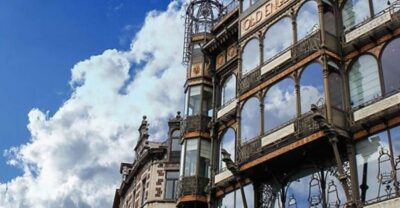
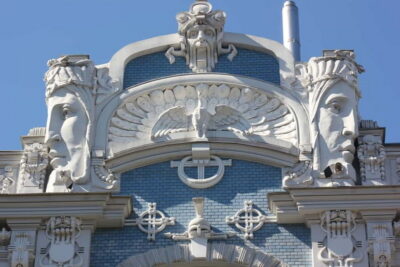
Riga: 2-Hour History of Art Nouveau Walking Tour
Read our review →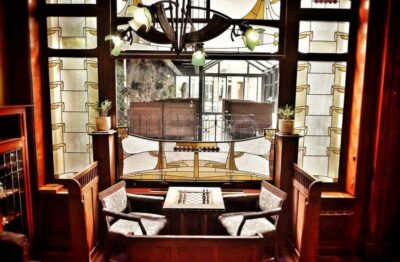
Brussels: Art Nouveau Pass – Entry to Three Locations
Read our review →
Small Group Tour in Ålesund: Art Nouveau, Sea Views & Insider Tips
Read our review →
Browse the lists this tour appears in