
Review · CHARLESTON
Charleston’s Best Highlights: History, Culture & Architecture
Charleston’s story comes alive when you connect its grand houses, churches, theaters, and waterfront to the people who shaped the city. This walking tour does that well, moving from the Old Exchange and Provost Dungeon to Rainbow Row, the Old Slave Mart, St. Michael’s Church, and the Battery.
I like the way the tour links Charleston to wider American history, from the Declaration of Independence and the Constitution to the opening shots of the Civil War. I also like the small group size, capped at 20, and the chance to learn from guides such as Brian and Fin, who bring years of teaching and guiding experience.
The main drawback is that the two-hour estimate can be misleading. Guides have often allowed extra time for questions, and some outings last two and a half to three hours. That is welcome if you enjoy history, but it may be a problem if you have a tight schedule or hot-weather limits.
Key points to know before you book
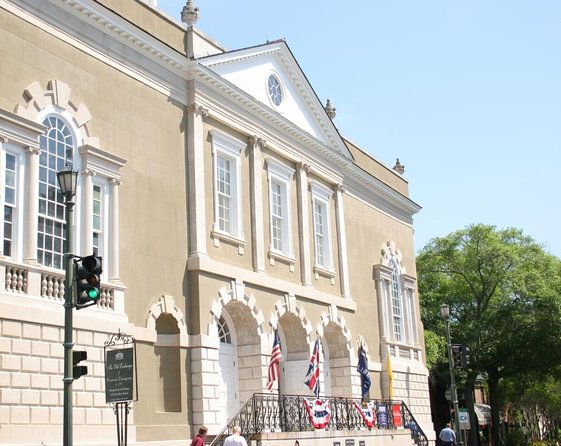
- The Old Exchange sets the tone: This 1771 building hosted major events in South Carolina’s colonial and national story.
- Charleston’s difficult past is included: You discuss the city’s role in the interstate slave trade at the Old Slave Mart, though you do not enter the museum.
- The route mixes famous sights and overlooked details: Churches, a theater, government buildings, row houses, and mansions all fit into one walk.
- Brian and Fin bring a teaching approach: Both guides are praised for clear storytelling, humor, answers to questions, and personal attention.
- The tour can run well over two hours: Plan extra time if you want the guide to follow questions and linger at key stops.
- Some admissions are separate: The Old Exchange, Nathaniel Russell House, and Edmondston-Alston House list admission as not included, while interior access at some other stops depends on availability.
Why this Charleston walk works as an introduction
Charleston is easy to admire and surprisingly easy to misunderstand. The pastel houses and church steeples make a fine first impression, but a good guide helps you see the conflicts behind the beauty: slavery and commerce, revolution and loyalty, wealth and forced labor, preservation and public memory.
This route gives you that framework without putting you on a bus or rushing you from one distant sight to another. You start at 122 East Bay Street and finish at the same place, making it practical for a first morning in town. I especially like taking a walk like this early in a Charleston visit, since it gives you useful context for later stops at museums, plantations, churches, and the waterfront.
The group limit of 20 matters. Charleston’s sidewalks can be narrow, and a smaller party makes it easier to hear the guide and keep moving safely around other pedestrians. Brian is noted for making sure the group stays safe and allows others to pass, while Fin is known for adapting to weather and questions. Those are small details, but they shape the day.
More history tours in the USA:
- Chicago in a Day: Food, History & Architecture Walking Tour
★ 5.0 · 1,153 reviews - Palm Springs Modernism Architecture & History Bike Tour
★ 5.0 · 359 reviews - Charleston: History and Architecture Guided Walking Tour
★ 4.8 · 349 reviews
The Old Exchange and Provost Dungeon sets the historical stage
The tour begins at one of South Carolina’s most important historic buildings, completed around 1771. The Old Exchange was not simply a handsome public building. The Declaration of Independence was read here in 1776, British forces used it as a prison for about two years during the American Revolution, and South Carolina’s ratification of the United States Constitution took place here in 1788.
George Washington was entertained at the building during his week-long visit in May 1791. Those details help you see Charleston as more than a regional port. It was tied closely to the political arguments and power struggles that shaped the new United States.
You spend about 15 minutes here, and admission is not included. The guide explains the building from outside, but you should check the current entry arrangements if seeing the interior matters to you. Even without going in, this is an effective starting point because the site gathers so many pieces of Charleston’s national story in one place.
Rainbow Row shows preservation in bright colors
A short walk brings you to Rainbow Row, the city’s best-known line of colorful attached houses. It is described as the longest row of attached Georgian row houses in the country. In the 18th and 19th centuries, these buildings served as mariners’ stores, placing them close to the working waterfront and the trade that fueled Charleston.
Their current appearance dates to preservation work in the 1930s, when the houses were restored in bright Caribbean colors. You get about five minutes here, with no admission charge.
This is a quick photo stop, but the guide gives it more meaning than a simple postcard view. Look past the paint and notice the narrow fronts and attached form. These were practical commercial buildings before they became one of Charleston’s most photographed streets.
The Old Slave Mart confronts Charleston’s role in slavery

The Old Slave Mart is one of the most important stops on the walk, and also one that requires a serious tone. Known as Ryan’s Slave Mart in the 1850s, the building was an auction site connected to the interstate slave trade. The city now operates a museum there.
You discuss Charleston’s role in the buying and selling of enslaved people, but you do not enter the building as part of this tour. Museum tours are available separately on site, and admission is not included.
That distinction is useful. The walking tour gives you historical context within a larger route, while the museum offers a more focused visit if you have the time and emotional space for it. I appreciate that the stop does not treat Charleston’s painful past as an optional footnote. It belongs in any honest account of the city.
The visit lasts about 10 minutes. If you want more time with the subject, plan a separate museum visit rather than expecting the walking tour to cover every detail.
A few more architecture tours around the USA worth a look
- Chicago Architecture River Cruise
★ 5.0 · 15,756 reviews - Chicago River 90-Minute Architecture Tour
★ 4.5 · 9,629 reviews - Chicago River: 1.5-Hour Guided Architecture Cruise
★ 4.8 · 8,046 reviews - Chicago Architecture Center River Cruise aboard First Lady
★ 5.0 · 5,536 reviews
French Huguenot Church adds a religious thread
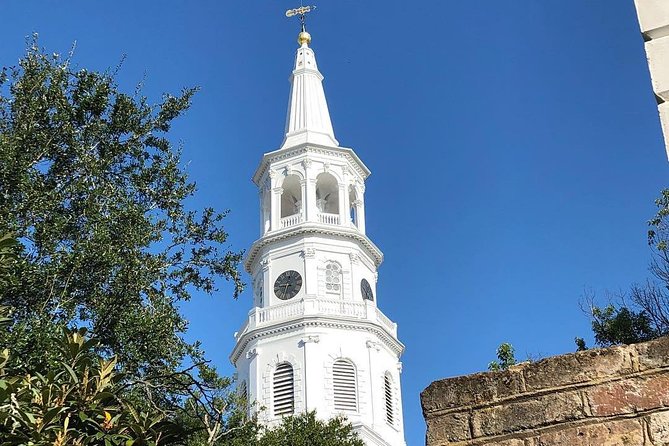
The French Huguenot Church is a brief stop, but it helps explain the city’s varied religious roots. The Gothic Revival building dates from 1845 and serves one of the only practicing Huguenot, or French Protestant, congregations in the country.
You spend about five minutes here, and the stop is free. The value is less about a long interior visit and more about seeing how Charleston was shaped by people arriving with different languages, faiths, and political traditions.
The church also breaks up the route nicely. After discussing commerce and slavery, you shift to immigration, worship, and the communities that gave Charleston its distinctive character.
Dock Street Theater connects performance and preservation
Dock Street Theater occupies the site of the first theater in the British colonies. The current building dates to about 1937, when it was restored from the former Planter’s Hotel, built around 1809.
The Charleston Stage company operates here as South Carolina’s largest professional theater company, with roughly 120 performances each year. Interior entry depends on availability, so do not book the walk expecting a guaranteed theater visit. The listed stop is about 10 minutes and admission is free when access is available.
This is a fine example of how Charleston preserves its past by giving old buildings new uses. A hotel became a theater, and a historic site continues to serve as a working cultural venue rather than a frozen display.
City Hall and the Four Corners of Law
Charleston City Hall sits at one of the city’s Four Corners of Law, a name associated with Robert Ripley of Ripley’s Believe It or Not. The building was constructed as a bank in 1801 and has served as City Hall since 1818.
The stop itself is short, about two minutes, but the building offers a useful look at Charleston’s civic life. During weekdays, you may enter the council chamber and see the collection at no charge. The wording here matters: weekday access is available, but the experience is not presented as guaranteed at every time.
This is one of those places you might pass without a second glance. With a guide, it becomes part of a larger picture about banks, municipal government, law, and the way Charleston’s historic core continues to function.
St. Michael’s Church preserves early Charleston
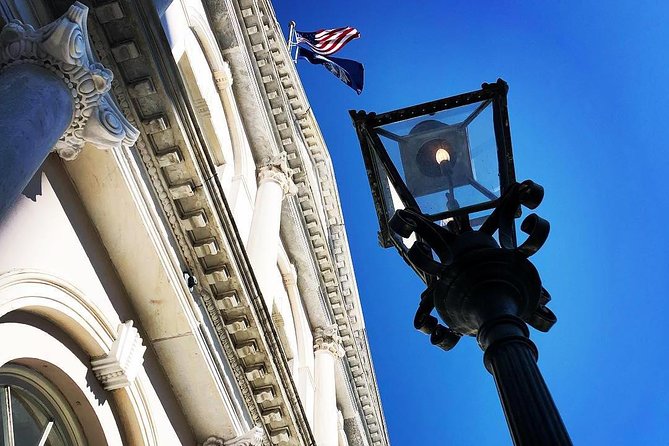
St. Michael’s Church dates from about 1761 and is described as the oldest house of worship in the city. The tour discusses Charleston’s religious history, past and present, and points out original woodwork and Tiffany stained-glass windows.
The churchyard also contains the graves of John Rutledge and Charles Cotesworth Pinckney, both signers of the United States Constitution. That makes the stop another bridge between local Charleston and national history.
Interior entry depends on availability, and the visit lasts about 15 minutes. The guide’s role is especially useful here because the church combines architecture, religious practice, political history, and burial customs. You get more from it if you pay attention to the connections instead of treating it as another pretty building.
Nathaniel Russell House reveals Federal-style elegance
At the Nathaniel Russell House, the tour enters the garden of an elegant Federal-style townhouse built in 1808. Nathaniel Russell came from Rhode Island and made his fortune as a merchant involved in shipping.
The garden visit lasts around 10 minutes, and admission is not included. That extra cost is worth considering if you care about Charleston interiors and domestic architecture, but the supplied tour time focuses on the garden rather than promising a full house visit.
This stop also gives the guide a chance to discuss the people who profited from Charleston’s commercial world. The city’s fine houses were not separate from its port economy. They were built through it, and the route helps you keep that connection in view.
The High Battery brings the route to the waterfront
Near the end, you walk along the High Battery wall to look at waterfront mansions and discuss the beginning of the Civil War. Fort Sumter is visible from here, giving the conversation a clear physical reference point.
The Edmondston-Alston House has remained in the same family since 1838. It was also a place where General Beauregard watched the bombardment of Fort Sumter with other onlookers. The stop lasts about 10 minutes, and admission is not included.
This is one of the route’s best visual moments. You get architecture, water, and a direct connection to the Civil War in one setting. The guide can point out how Charleston’s waterfront wealth and military position shaped what happened next.
The guides are a major part of the value
The route is strong, but the guide determines how much you take away. Brian is repeatedly described as a walking history book, with a knack for connecting Charleston and South Carolina to the other colonies and to the formation of the United States. He also adjusts the walk to the group’s interests, which is helpful if you care more about architecture, religion, military history, or slavery.
Fin brings a similar teaching style. His background includes 30 years teaching high school history and 15 years guiding in Charleston. That experience shows in the way he handles questions, explains complicated events, and adds humor without making the subject feel lightweight.
The tour can run longer than advertised when the group is engaged. Several outings have lasted well over two hours, with one extending to roughly three hours. I see that as a benefit for curious visitors, but you should not schedule a tight lunch reservation immediately afterward.
Timing, walking, and practical value
The advertised duration is about two hours, though you should allow extra time. The tour is conducted in English, uses a mobile ticket, and has a maximum of 20 people. It begins and ends at 122 East Bay Street.
Most people can take part, service animals are allowed, and the meeting area is near public transportation. The route is on foot, so good shoes and water make sense, though the supplied information does not give a total distance or a detailed accessibility assessment.
No tour price is provided here, so I cannot judge the exact dollar value. The practical way to assess it is to add the cost of any interiors you choose to visit. The Old Exchange, Nathaniel Russell House, and Edmondston-Alston House list admission as not included, while access to Dock Street Theater, St. Michael’s Church, and City Hall depends on availability or timing.
Free cancellation is available up to 24 hours before the start time. Within 24 hours, the payment is not refunded, and poor weather may lead to a new date or full refund. Since this is an outdoor walking route, Charleston’s heat and rain are worth considering before you book.
Who should book this Charleston tour?
You should book it if you want a strong first look at central Charleston and prefer a guide who teaches rather than simply points. It suits first-time visitors, returning visitors who want more context, families with older children, and anyone interested in the connections among architecture, politics, religion, commerce, slavery, and the Civil War.
I would especially choose it for the first day of a longer stay. The route gives you a mental map and helps you notice details later that you might otherwise walk past.
You may want another option if you need a strict 90-minute schedule, want guaranteed interior access, or prefer a tour focused on only one subject. This walk covers a lot of ground and depends on the guide’s storytelling. If you enjoy asking questions and following a historical thread, that flexibility is a strength. If you want a fixed script and guaranteed museum entry, it is less suitable.
FAQ
How long does the Charleston walking tour last?
The tour is advertised at about two hours, but it can run longer when the group asks questions or the guide spends extra time explaining a site. Some outings have lasted two and a half to three hours.
Where does the tour begin and end?
It begins at 122 East Bay Street in Charleston and ends back at the same meeting point.
Is the Old Slave Mart Museum included?
The route discusses Charleston’s role in the slave trade outside the building, but it does not enter the Old Slave Mart Museum. The City of Charleston operates the museum, and separate tours are available on site.
Are admission fees included?
Admission is not included at the Old Exchange and Provost Dungeon, Nathaniel Russell House, or Edmondston-Alston House. Entry to Dock Street Theater and St. Michael’s Church depends on availability, while weekday entry to the City Hall council chamber is complimentary when available.
Who leads the tour?
Guides include Brian and Fin. Fin has a background as a high school history teacher and has guided in Charleston for 15 years. Brian is known for adapting the walk to the group and connecting Charleston to wider American history.
How large is the group?
The maximum group size is 20 people.
What happens if the weather is poor?
The experience requires good weather. If it is canceled because of poor conditions, you can receive a different date or a full refund. You can also cancel for a full refund up to 24 hours before the start time.
Just added around the USA
- Wilmington History and Architecture Tour★ 4.8 · 18 reviews
- Washington, DC: Georgetown Architecture Walking Tour★ 5.0 · 8 reviews
- New Orleans : Garden District Architecture Walking tour★ 4.8 · 5 reviews
- Washington DC: Dupont Circle & Embassy Row Architecture Tour★ 5.0 · 6 reviews
- Tulsa: Art Deco Walking Tour of Tulsa★ 5.0 · 8 reviews
- Castle to Capitol: Museums of the National Mall Architecture Tour★ 4.5 · 9 reviews
- Private Colonial Williamsburg Architectural Tour★ 5.0 · 5 reviews
- Monuments and Memorials Architectural Walking Tour★ 5.0 · 17 reviews
Historical Tours, compared.

Chicago in a Day: Food, History & Architecture Walking Tour
Read our review →
Kuala Lumpur: Batu Caves & Historic Buildings Tour
Read our review →
Palm Springs Modernism Architecture & History Bike Tour
Read our review →
Charleston: History and Architecture Guided Walking Tour
Read our review →
Historic Georgetown: History, Gossip, & Architecture Walking Tour
Read our review →
Charleston History, Homes, and Architecture Guided Walking Tour
Read our review →

Historical and Architectural Chicago Fireboat River & Lake Cruise
Read our review →Browse the lists this tour appears in