
Review · ARCHITECTURE TOURS
Secret Split: Socialist Architecture & brutalism – Urban Utopia
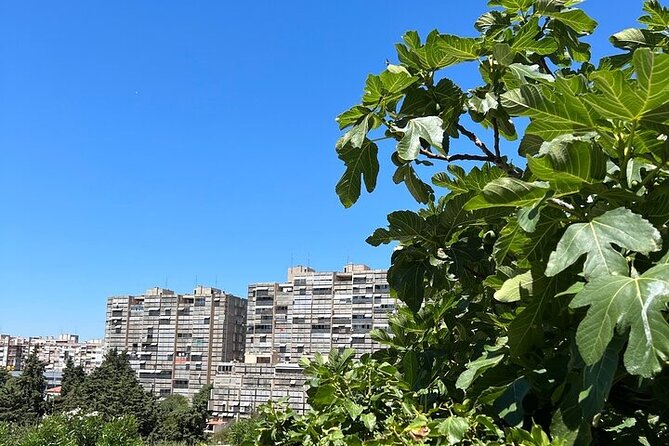
Split 3 is the part of Split most history walks skip: a huge postwar experiment in socialist urban planning. Built around people, children, walking, and shared space, it offers a sharp contrast to the Roman stones of the old center.
I like the chance to see a working residential district rather than another polished monument, and I like the link to the Museum of Modern Art’s 2018 exhibition on concrete utopias. The main drawback is simple: if raw concrete and urban theory do not interest you, the walk may feel more academic than scenic.
Key points
- Split 3 reached New York’s Museum of Modern Art: The project appeared in the 2018 exhibition Toward a Concrete Utopia.
- A city within a city: You walk through a mostly pedestrian residential zone designed for daily life and community.
- A private experience: Only your group takes part, which allows the guide to shape the discussion around your interests.
- Meet a guide with local passion: Mirjana leads the experience and brings a strong personal connection to Split.
- Architecture meets activism: The final part connects urban design with local art and critical communication.
- Plan for a flexible walk: The experience lasts roughly one to three hours, depending on the pace and discussion.
Why Split 3 is worth leaving the old center
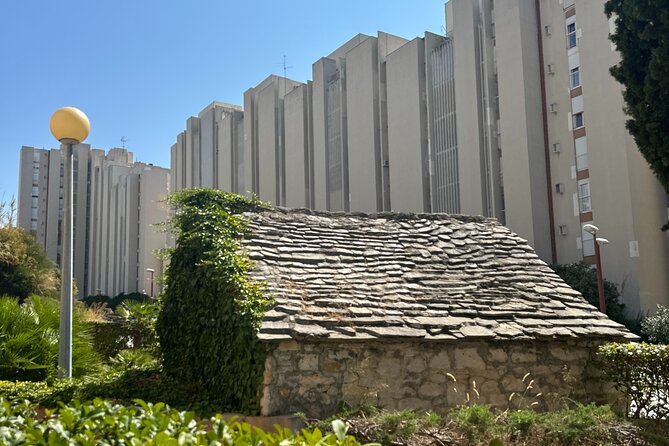
Split is famous for Diocletian’s Palace, Roman columns, and narrow stone lanes. This tour points you in another direction, toward the city’s postwar expansion and the social ideas built into its streets.
Split 3 was planned in the 1970s, during a period of fast population growth. The goal was not simply to add apartment blocks. The plan tried to create a complete urban district, with homes, open areas, pedestrian routes, and places for community life.
That makes the experience useful even if you are not an architecture specialist. You are not just looking at concrete shapes. You are asking practical questions: Where do children play? How do people reach their homes without crossing busy roads? How much open space does a neighborhood need? Can a housing project encourage people to meet?
The tour presents the district as a utopian experiment that was never fully completed. That unfinished quality matters. You see both the ambition of the plan and the limits of putting such a grand idea into practice.
I especially like that the experience does not treat socialist design as a simple success story or a failure. It looks at the beliefs behind the buildings, then lets you judge how well those beliefs survived in everyday Split.
More Bauhaus and Brutalist tours in the world:
- London: Brutalist Architecture & History Walking Tour
★ 4.8 · 42 reviews - Le Corbusier’s Chandigarh : A Complete Architecture Tour
★ 4.7 · 25 reviews - Architecture of New Belgrade – Brutalism Decoded
★ 4.5 · 24 reviews
Papandopulova ulica and the concrete utopia
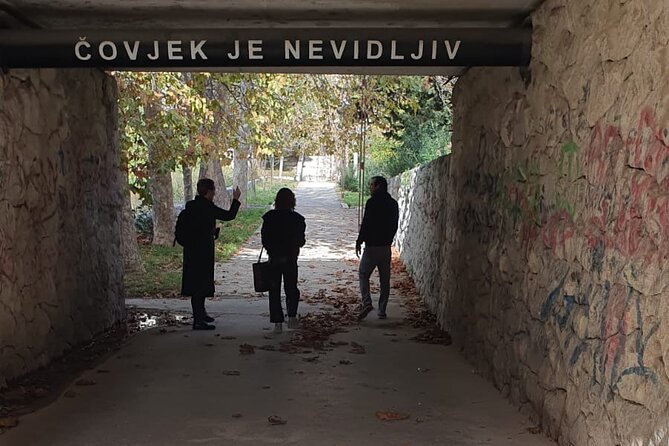
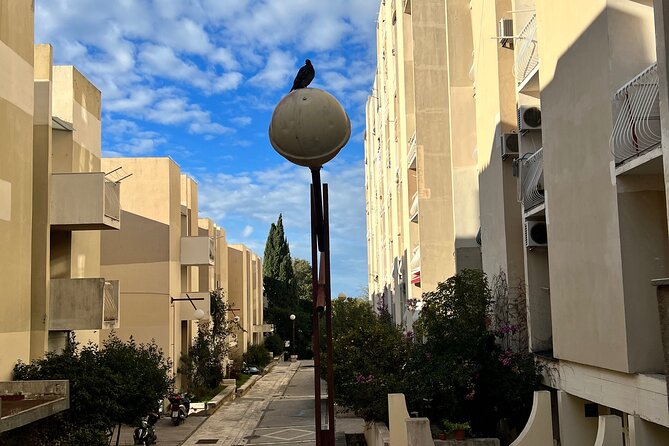
The walk begins at Ul. Šime Ljubića 3 and moves into the residential area of Split. One of the main stops is Papandopulova ulica, where you can examine the architecture associated with Split 3.
This is the point where the tour connects local streets to international architectural history. Split 3 was featured in Toward a Concrete Utopia, the Museum of Modern Art exhibition held in New York in 2018. That recognition gives the neighborhood an unusual place in 20th-century design.
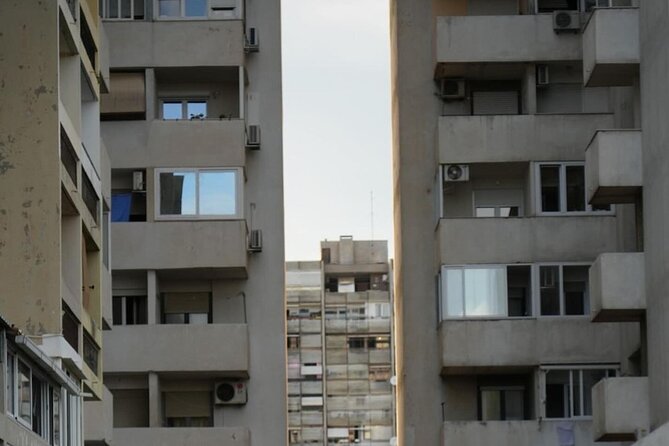
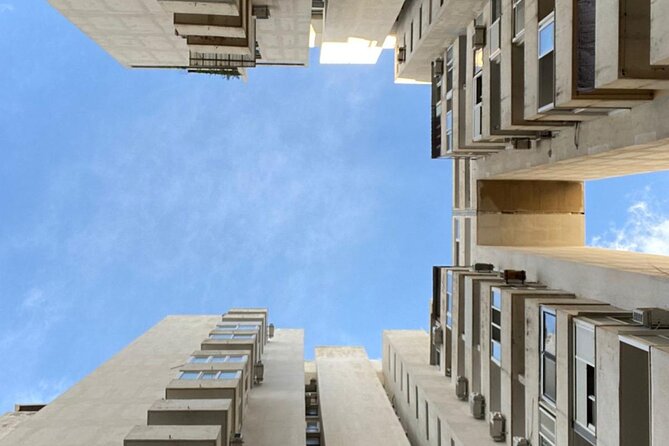
The buildings are not presented as isolated sculptures. Their value comes from how they fit into the wider plan. You look at geometry, scale, movement, and the relationship between housing and open space.
The guide can help you notice details that are easy to miss if you simply walk through the district on your own. A raw concrete wall may look severe at first. Then you start to see how entrances, paths, setbacks, and shared areas affect the feel of the neighborhood.
This is also where expectations matter. You should not book this hoping for a single famous building or a grand viewpoint. The appeal lies in the complete setting: the arrangement of homes, streets, and spaces intended for ordinary life.
The first section lasts about 38 minutes, and admission is included. Since this is a residential district, the experience is more about observation and explanation than entering a paid museum or monument.
A plan built for people, not just traffic
The next section focuses on Split-Dalmatia County and the wider Split 3 project. Here, the story moves from individual buildings to urban planning.
Rapid demographic growth created the need for new housing. Split 3 was the answer, but it was not a modest one. It proposed a new part of the city with its own identity and internal logic.
One of the most interesting claims behind the project is that it was intended as a city within a city. The pedestrian character is central. You can consider what it means to build a district where daily movement is not organized only around cars.
That idea feels especially useful for anyone interested in modern city life. The tour encourages you to compare the district with places you know at home. Are public spaces made for sitting, meeting, and play, or are they mainly leftover areas between buildings? Can a neighborhood work well if the homes are practical but the shared spaces are poor?
The plan was never fully realized. That gives the conversation a needed balance. The original vision may have been bold, but construction, politics, money, and changing needs all affect what a city becomes.
This part lasts about 25 minutes. It may be the most thought-provoking section for people interested in planning, housing, or the social side of architecture. If you prefer fast-moving sightseeing, it may feel slow. The tour asks you to stop, look, and think.
Why brutalism here is more than concrete
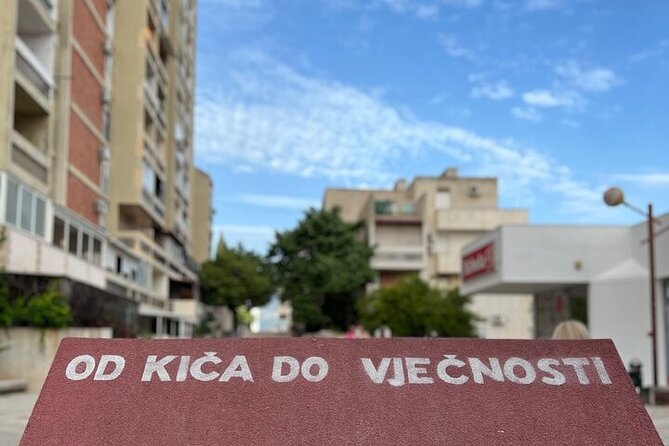
The word brutalism often brings to mind heavy buildings, bare surfaces, and dark interiors. This experience gives you a broader way to look at the style.
The concrete is important, but the social purpose matters just as much. The design was tied to ideas about care, access, shared space, and a better daily routine. The point was not simply to make buildings look strong. It was to create a setting where people could live together.
That does not mean every part of the project works perfectly. Raw materials can age unevenly, and large housing schemes can feel impersonal. The tour gives you room to notice those problems instead of covering them with easy nostalgia.
That is one of the strongest features of the experience. It is not a sentimental return to the socialist past. It is a close look at a real place, with real buildings and real results.
You may find that your opinion changes as the walk continues. At first, the architecture might seem plain or harsh. Once you understand the plan, the open spaces and pedestrian routes become easier to read. The buildings begin to look less like isolated blocks and more like parts of a social system.
More hidden architecture gems in the world:
- Chicago’s Secret Interiors Architectural Walking Tour
★ 5.0 · 635 reviews - Chicago: Secret Interiors Architecture Walking Tour
★ 4.9 · 498 reviews - Detroit: Architectural Beauty and Hidden Gems Walking Tour
★ 4.9 · 33 reviews - Private Secret La Jolla Art, Viewpoints and Architecture Tour
★ 5.0 · 2 reviews
Art activism and the final 35 minutes
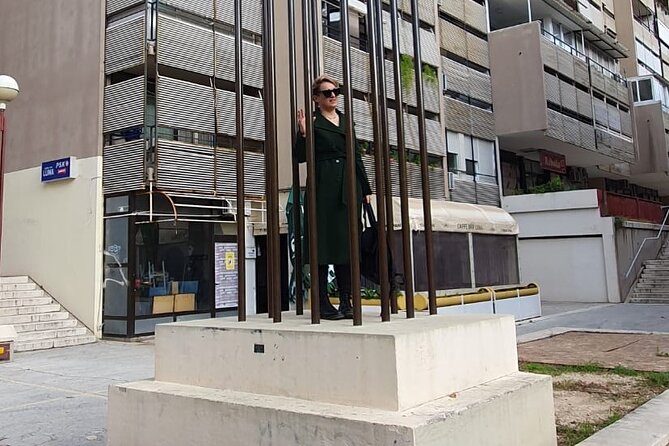
The final listed section turns toward art activism in Split. It focuses on the need for clear critical communication and includes meeting local artists or activists.
This gives the tour a useful present-day connection. You are not only studying what architects planned decades ago. You are also considering how people respond to, question, and communicate about the city around them.
The art and activism section lasts about 35 minutes. Its exact shape may depend on the people involved and the day of the tour, so you should see it as a conversation-based part of the experience rather than a fixed gallery visit.
For me, this is an important addition. Without it, the walk could remain a lesson in architectural history. With it, the neighborhood becomes part of an ongoing discussion about public space, identity, and how a city explains itself.
You should also know that this is not a conventional art tour. The subject is connected to Split’s urban setting and social questions. If you are looking for a long list of artworks, this may not be the right choice. If you like hearing how local creative work responds to its surroundings, it adds depth.
What the private format changes
Only your group takes part. That can make a real difference on a tour built around ideas rather than a simple list of sights.
With a private format, you can ask about the parts that catch your attention. You might focus on housing, concrete construction, socialist society, community design, or the way Split 3 has changed over time. The guide can spend more time on those subjects instead of following a large group’s fixed rhythm.
The experience includes a licensed tourist guide and certified heritage interpreter. Mirjana is identified as one of the guides, and her personal enthusiasm for Split is an important part of the walk.
You should not expect a silent photo stop followed by the next attraction. This is a discussion-led outing. The guide explains what you are seeing, and you have space to test the ideas against your own impressions.
The private setup also helps if your group has mixed interests. One person can ask about architecture, another about local life, and another about the history of modern Split. The tour is likely to work best when you arrive ready to participate.
Time, meeting point, and practical planning
The walk is listed at roughly one to three hours. That is a wide range, so allow room in your schedule rather than placing it between two tightly timed activities.
It begins and ends at Ul. Šime Ljubića 3, 21000 Split. The end point is the same as the meeting point, which makes planning simpler. The experience is near public transportation, and a mobile ticket is available.
The listed operating period runs from May 25, 2022, through September 7, 2026, with hours shown as Monday through Thursday from 8:00 a.m. to 7:00 p.m. Confirm the time you select when booking, since the walk needs to fit the guide’s schedule and the local operating calendar.
You can cancel for a full refund if you do so at least 24 hours before the start time. Changes or cancellations inside that window are not accepted for a refund.
Service animals are allowed, and most people can participate. Since the tour takes place in a residential district and includes walking, you should still consider your own comfort with an urban walk and outdoor discussion.
The experience is commonly booked about 12 days ahead. That is a useful planning clue, especially if you want a particular day or if your visit falls in the busier season.
Is $113.90 a fair price?
The listed price is $113.90 per person. That is a serious cost for a walk, so the value depends on what you want from Split.
If you only want a quick introduction to the city’s major sights, this is not the best use of your budget. The Roman center offers more obvious sightseeing for less money through a standard group walk or self-guided visit.
The value here comes from the specialist subject, the private format, the licensed guide, the heritage interpretation, and the chance to meet local artists or activists. You are paying for access to a particular way of reading Split, not for entry tickets.
Group discounts may improve the price for larger parties. Since only your group participates, the per-person cost can make more sense when shared among several people who genuinely care about architecture, urban planning, or modern Croatian history.
The strongest value is for a curious group that wants a focused conversation. If you are unsure about brutalism, the price is harder to justify. You may enjoy the intellectual side, but the experience is not built around famous monuments, panoramic views, or entertainment.
Who will enjoy this urban walk
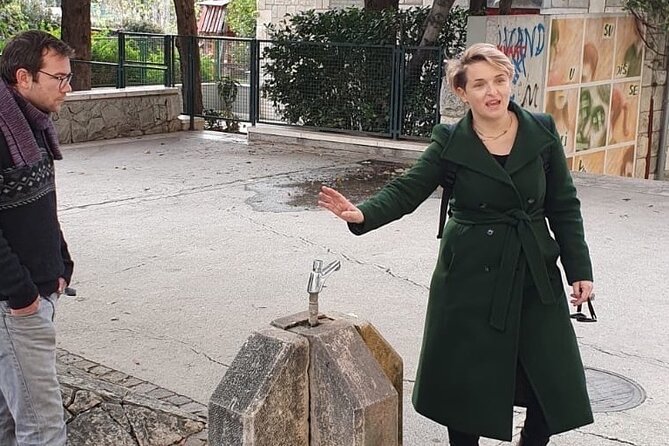
I would choose this for you if you have already seen, or plan to see, the usual old-center sights and want another side of Split. It is especially suitable if you enjoy:
- Brutalist and modern architecture
- Socialist-era history
- Housing and city planning
- Questions about public space and community
- Local art and activism
- Small-group or private tours
- Slow, discussion-based sightseeing
Families with older children may also find the idea of pedestrian planning and child-friendly public space interesting, though the supplied information does not specify a children’s program.
I would not make this your first or only Split experience if you have little time and want the city’s ancient landmarks. This walk works best as a second layer, after you understand that Split is more than its Roman core.
Should you book Secret Split?
Book it if you want to understand how modern Split works, not just photograph its oldest stones. The strongest reasons are the unusual Split 3 setting, the connection to the Museum of Modern Art, the private format, and Mirjana’s personal approach to the city.
Think twice if you want constant sightseeing action or a short list of famous buildings. The tour asks you to look carefully at ordinary residential spaces and consider why they were built that way.
For the right person, $113.90 buys a rare kind of local context. You leave with a better sense of how architecture can express social hopes, and how those hopes change when real people move in.
FAQ
Where does the tour start?
The tour starts at Ul. Šime Ljubića 3, 21000 Split, Croatia.
Where does the tour finish?
The experience ends back at the meeting point.
How long does the experience last?
The approximate duration is one to three hours.
Is this a private tour?
Yes. Only your group participates in the activity.
What is included in the price?
The experience includes a licensed tourist guide, a certified heritage interpreter, a visit to the residential area of Split, and a meeting with local artists or an activist.
Is admission to the stops included?
The listed stops have no admission ticket cost.
Does the tour focus on ancient Split?
The tour focuses on 20th-century Split, especially the Split 3 residential project and its socialist urban planning.
Is the tour offered every day?
The listed opening hours are Monday through Thursday, from 8:00 a.m. to 7:00 p.m., during the stated operating period.
Can I cancel for a full refund?
Yes. You can receive a full refund if you cancel at least 24 hours before the experience start time. Cancellations or changes made less than 24 hours before the start are not refunded.
Just added around the world
- Wilmington History and Architecture Tour★ 4.8 · 18 reviews
- Washington, DC: Georgetown Architecture Walking Tour★ 5.0 · 8 reviews
- New Orleans : Garden District Architecture Walking tour★ 4.8 · 5 reviews
- Washington DC: Dupont Circle & Embassy Row Architecture Tour★ 5.0 · 6 reviews
- Vicenza: discovering the city of Palladio by e-bike★ 5.0 · 4 reviews
- Vicenza: Palladian Architecture Private Walking Tour★ 3.3 · 3 reviews
- Walk & Discover KL’s Architectural and Heritage Gems★ 5.0 · 7 reviews
- Unveiling Brno: History, Culture & Architectural Delights★ 5.0 · 2 reviews
Bauhaus and Brutalist Architecture Tours, compared.
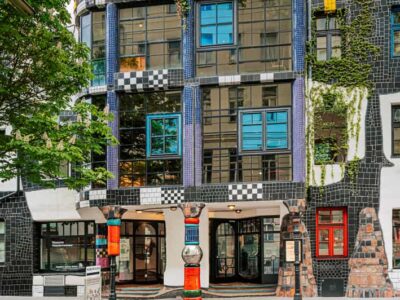
Vienna: Tickets for Kunst Haus Wien: Museum Hundertwasser
Read our review →
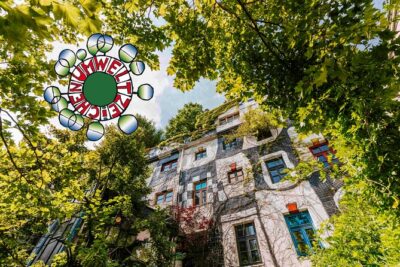
Entrance tickets for the KunstHausWien. Museum Hundertwasser
Read our review →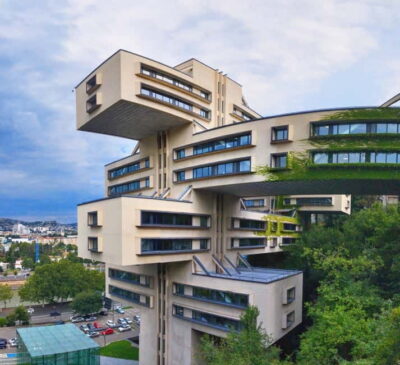
Brutalist Tbilisi: Urban exploration and untold stories
Read our review →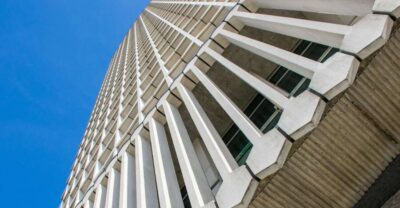
London: Brutalist Architecture & History Walking Tour
Read our review →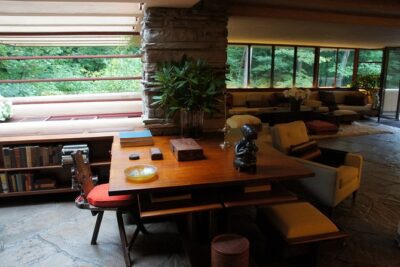
FALLINGWATER – America’s UNESCO World Heritage Masterpiece!
Read our review →
Le Corbusier’s Chandigarh : A Complete Architecture Tour
Read our review →Browse the lists this tour appears in