
Review · INDIA
Le Corbusier’s Chandigarh : A Complete Architecture Tour
Chandigarh is best understood from inside its buildings, not through a quick drive past concrete landmarks. This 5.5-hour tour with Rusty, a third-generation resident and former journalist, gives you that access, from Punjab University lecture halls to Pierre Jeanneret’s first Chandigarh house and Le Corbusier’s Capitol Complex.
I like the way the tour connects grand civic design with ordinary life, especially the rarely seen social housing by Jeanneret. I also like the practical setup: pickup, car transport, entry fees, parking, fuel, and bottled water are covered. The main catch is that access can change with political conditions, national holidays, or office schedules, so no itinerary is guaranteed in every detail.
Key points to know before booking
- See Chandigarh from the inside: Enter public buildings, university spaces, museums, and offices that are difficult to visit independently.
- Follow several architects: The tour covers Le Corbusier, Pierre Jeanneret, Maxwell Fry, and Jane Drew, not just the city’s most famous name.
- Expect personal storytelling: Rusty explains the city through local memory, journalism, and the changes he has seen as a third-generation resident.
- Get a full half-day of logistics included: Pickup, transport between sites, tickets, parking, fuel, and water are part of the $75 price.
- Plan for changing access: Gandhi Bhawan, AC Joshi Library, and parts of the Capitol Complex depend on local conditions.
- Bring sun protection and an ID: You’ll need comfortable shoes, a hat, sunscreen, and a passport or other ID card.
Why Chandigarh makes sense as an architecture tour
Chandigarh was built as a planned modern city after India’s independence. Le Corbusier supplied the boldest civic vision, but the work was shared with Pierre Jeanneret, Maxwell Fry, and Jane Drew. Their ideas appear in government buildings, university spaces, housing, roads, open areas, and the way sectors were organized.
That matters because Chandigarh is not a city where you simply tick off one famous building. The plan was meant to shape daily life. Streets, public institutions, housing, shade, greenery, and open space were part of the same project.
Rusty’s approach is useful here. He does not present the city as a frozen monument to European modernism. He explains how the original 1960s plan has changed, where the ideals still work, and where present-day needs have pushed the city in other directions. His style is described as funny, direct, and free of patriotic speeches, which should suit you if you want history with some personality.
The tour has a rating of 4.7 from 25 ratings, and the strongest praise centers on Rusty’s planning, clear English, flexibility, and ability to secure access to places that are not easy to enter alone. Japanese visitors also found his speech easy to follow, with translation apps used when helpful.
More Bauhaus and Brutalist tours in India:
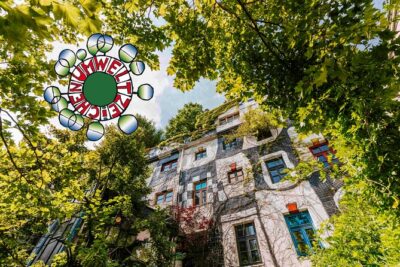
- Vienna: Tickets for Kunst Haus Wien: Museum Hundertwasser
★ 4.6 · 651 reviews - Frank Lloyd Wright’s Home & Studio Tour Ticket
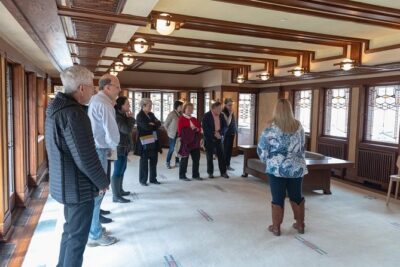
★ 4.5 · 133 reviews - Frank Lloyd Wright Robie House Admission
★ 4.0 · 130 reviews
Starting at Punjab University
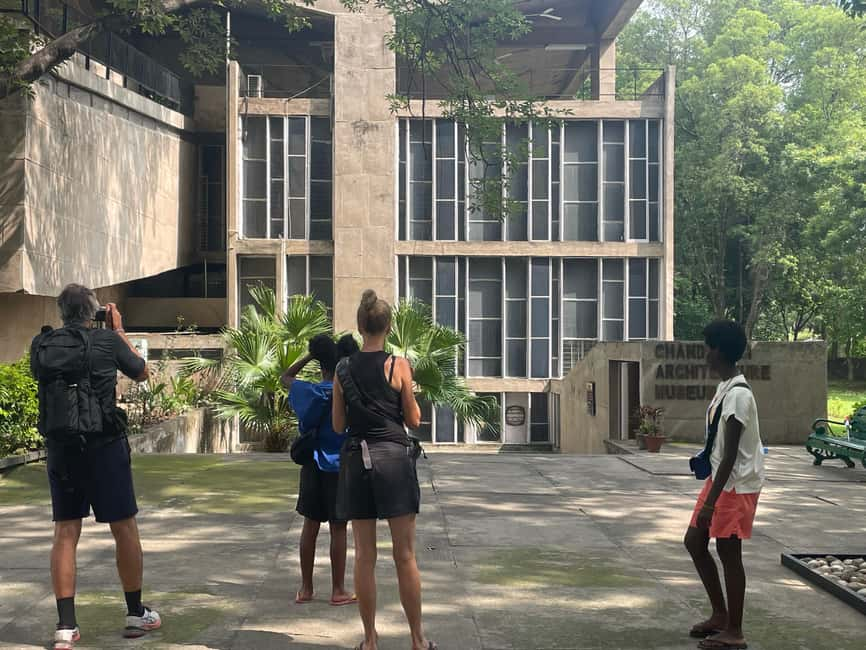
Punjab University is one of the most rewarding parts of the day because it shows how modernist ideas work at the scale of an active institution. You are not only looking at a façade. You can walk through the campus and visit places such as Gandhi Bhawan, the AC Joshi Library when conditions allow, departments, and lecture halls.
Gandhi Bhawan is especially important for anyone interested in the relationship between architecture and public ideals. The university buildings show how concrete, light, circulation, courtyards, and open space can create a sense of order without relying on historic decoration.
The campus visit also gives the tour a useful change of pace. The Capitol Complex is grand and symbolic. Punjab University feels more connected to everyday academic life. You can compare the way the architects handled civic power with the way they handled learning, gathering, and movement.
Access is not fixed. Some university areas may be unavailable because of local rules, holidays, or institutional activity. If a specific interior is closed, the tour includes other heritage buildings where possible. I would confirm the current plan with Rusty after booking rather than treating every listed room as guaranteed.
Maison Jeanneret and the domestic side of modernism
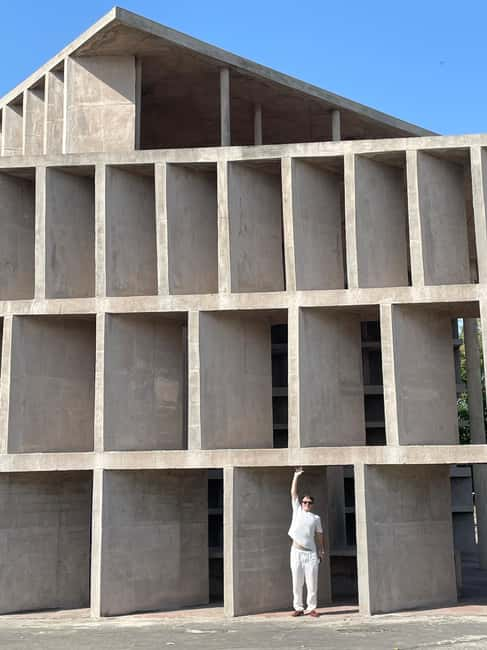
Maison Jeanneret is the first house Pierre Jeanneret built in Chandigarh. It later became a museum, and Le Corbusier also stayed there. That gives the building an intimate role in the story of a city usually presented through giant civic structures.
The house helps you see the architects as people dealing with rooms, furniture, shade, climate, and domestic routines. It is a useful counterpoint to the monumental concrete buildings. Jeanneret’s contribution becomes easier to grasp when you see how his work addressed daily living, not just government symbolism.
The tour also includes a guided look at socialistic housing associated with Jeanneret. This is one of its more unusual features. Such housing reveals how the new city tried to provide a modern setting for ordinary residents, not just officials and visiting dignitaries.
You should not expect a polished show-home experience. The value lies in seeing the practical side of Chandigarh’s early planning and asking how those ideals have held up. The distinction between original plans and present-day use is part of the point.
The Capitol Complex: Chandigarh’s symbolic heart
The Capitol Complex is the centerpiece of the tour. It includes the Palace of Assembly, Secretariat Building, High Court, also called the Palace of Justice, Open Hand Monument, Geometric Hill, Tower of Shadows, and Martyrs Monument.
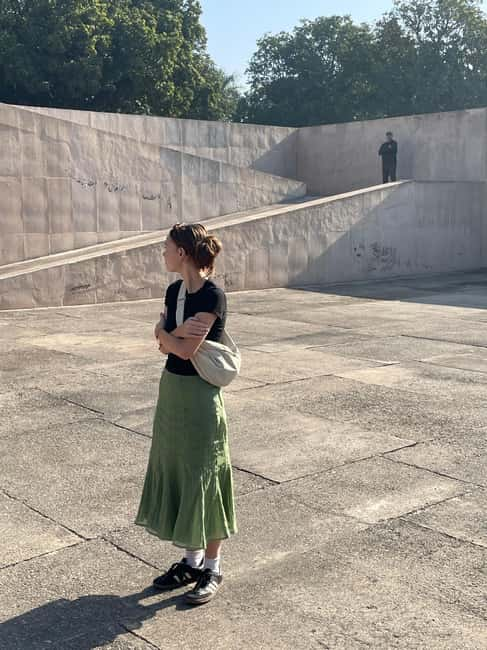
This is where Le Corbusier’s architecture becomes most theatrical. The buildings use heavy concrete, strong shadows, monumental ramps, deep openings, and large sculptural forms. The complex was designed to represent democratic government in a newly independent India, so the spaces carry political meaning as well as visual drama.
The Palace of Assembly and High Court show different ways of handling public authority. The Secretariat is more extended and workmanlike, while the Open Hand Monument offers a direct symbol of giving and receiving. The Tower of Shadows turns sunlight into an architectural subject, while Geometric Hill and the Martyrs Monument add symbolic layers to the open setting.
A guide is particularly useful here because the complex can look severe or confusing without context. Rusty explains the planning logic, the original ambitions, and the compromises that came with time. You can also consider the tension between open public ideals and the security controls that affect access today.
Capitol Complex entry depends on local political conditions. Some buildings or monuments may be closed on the day of your tour. That is not a small detail, especially if you are booking mainly for a particular interior. The tour operator provides alternative heritage architecture when needed, but you should keep your expectations flexible.
A few more architecture tours around India worth a look
- British Architecture Walk, an immersive walking tour in Chennai
★ 5.0 · 60 reviews - The Hipster Chandigarh Architecture History Tour
★ 5.0 · 54 reviews - Mumbai heritage walk- Story of Gothic and Art Deco buildings
★ 5.0 · 33 reviews - Jaipur City Heritage and Architecture Tour
★ 5.0 · 32 reviews
Le Corbusier Centre and the working story behind the city
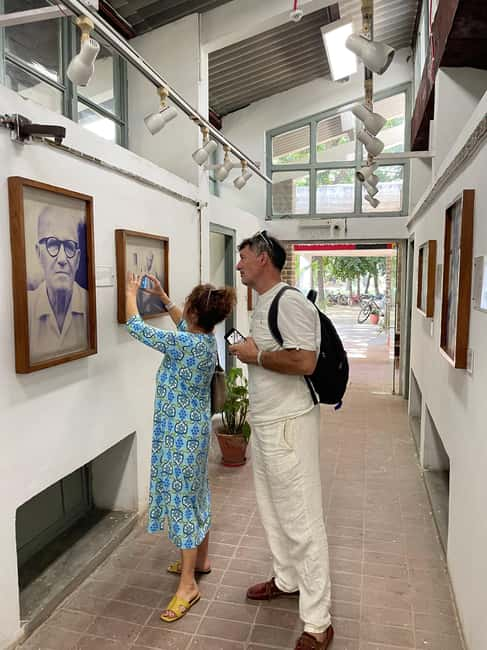
The old architect’s office is now the Le Corbusier Centre. It is an important stop because it shifts attention from finished monuments to the work behind them.
Here you can think about Chandigarh as a process of drawings, meetings, arguments, revisions, and practical decisions. The centre also presents the early use of sustainability and green architecture in India as part of Chandigarh’s development.
That claim needs context. Chandigarh’s planning used open space, vegetation, shade, and sector-based organization in ways that still affect how the city feels. The city was not built as a sealed collection of concrete objects. Its environmental ideas were tied to roads, trees, public space, and low-density planning.
For you, this stop can make the rest of the day easier to read. After seeing the major buildings, you get a place to connect their forms with the planning office that shaped them.
Original drawings at the architecture museum
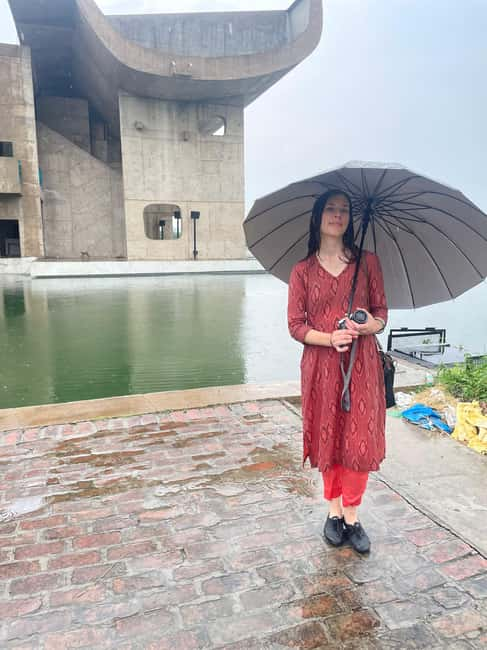
The architecture museum contains original letters, floor plans, sketches, and rare drawings linked to Corbusier and Chandigarh’s creation. This is the stop for close-looking.
Photographs often make modernist buildings seem simple. Plans and sketches show the choices behind that simplicity. You can see how architects tested proportions, circulation, massing, and relationships between buildings. Original correspondence also reminds you that the city was the result of collaboration, disagreement, and administration, not one person’s isolated vision.
This museum is valuable if you enjoy architecture on paper as much as architecture in concrete. It also gives you a quieter pause after the larger campus and Capitol Complex visits.
The exact amount of time at each stop will depend on access and conditions. Five and a half hours sounds generous, but the tour covers several parts of Chandigarh and includes driving between them. If you want long periods for sketching or photography, say so early and ask Rusty how the day can be balanced.
Pierre Jeanneret, Fry, and Drew beyond the famous name
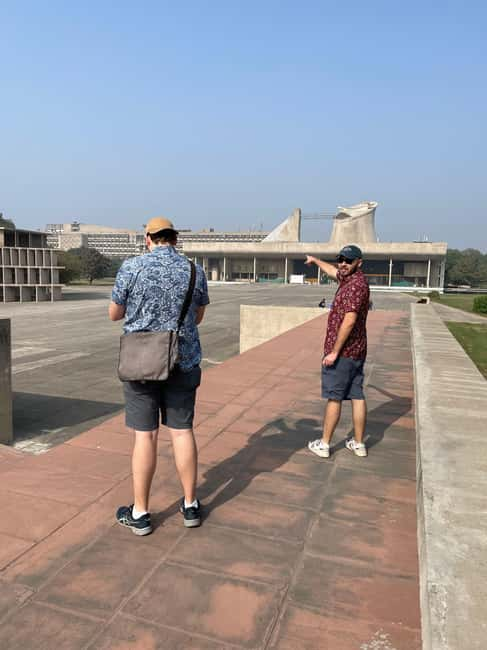
One strength of this tour is its wider view of Chandigarh’s design team. Le Corbusier receives most of the attention, but Pierre Jeanneret handled much of the city’s housing and daily architecture. Maxwell Fry and Jane Drew also helped develop the city’s buildings and planning approach.
That broader focus improves the experience. You begin to see Chandigarh not as a one-man experiment, but as a shared effort with different responses to climate, housing, public life, and administration.
Jeanneret’s housing is especially useful for this reason. The grand Capitol Complex can make Chandigarh seem like a city designed only for institutions. The housing shows a more grounded aim: creating a functioning modern city for people who needed homes, services, and practical spaces.
If you are an architect, student, planner, photographer, or design enthusiast, this wider coverage is likely the tour’s best feature. If your interest is limited to famous landmarks, you might find some of the housing and planning discussion more detailed than expected.
What the $75 price includes
At $75 per person, the tour costs more than a simple private car sightseeing loop. The value comes from the access and the amount of coordination involved.
The price includes pickup and drop-off within a reasonable distance in Chandigarh, transport between sites, entry tickets, parking, fuel, and bottled water. It also includes permission arrangements and, when possible, extended viewing hours.
That package matters in Chandigarh. The sites are spread across the city, and independent visits may involve separate transport, permissions, ticket arrangements, and uncertainty about which buildings you can enter. A car also helps in the heat, particularly during the brighter part of the day.
Food and drinks are extra. Rusty can suggest places ranging from vegetarian, vegan, and local specialties to meat dishes, kebabs, sweets, and snacks. You choose what suits you, and there are no forced restaurant recommendations. One useful detail from the feedback is that he can help identify cleaner places, milder food, and options suited to your preferences.
The price is easiest to justify if you value access and interpretation. If you only want exterior photographs, a cheaper city drive may be enough. If you want interiors, planning context, and a guide who can adjust the day, the package is stronger value.
Timing, transport, and practical comfort
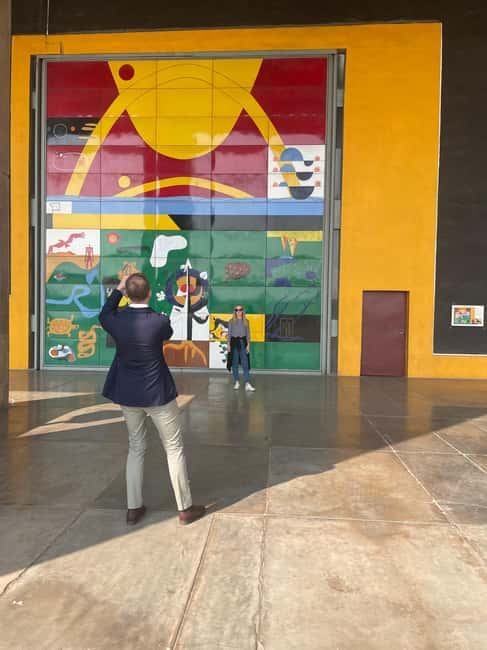
The tour lasts 5.5 hours. Pickup can be arranged from a hotel, railway station, bus stand, Airbnb, or airport within a reasonable distance in Chandigarh. One Japanese booking included airport pickup and advance handling of entry arrangements to save time in traffic, showing the sort of flexibility you can request.
Contact Rusty on WhatsApp after booking. This is important because daily group tours can change with national holidays, political conditions, and building closures.
Wear comfortable shoes. You will be walking through campuses, public sites, and outdoor monuments, with movement between several buildings. A hat and sunscreen are sensible, and bottled water is included.
There is a conflict in the supplied access information. The activity is described as wheelchair accessible in one place, but it is also marked as unsuitable for people with mobility impairments and wheelchair users. I would not assume full access. Contact Rusty before booking and ask about the exact buildings, walking distances, steps, and vehicle arrangements for your date.
English is the stated tour language. If English is not your first language, Rusty speaks in a way Japanese participants found easy to follow and has used a translation app to clarify explanations. That can help, but you should still allow extra time for questions if needed.
Who will get the most from this tour
This is a strong choice for you if you want to understand why Chandigarh looks the way it does. It suits architects, students, urban planners, photographers, design fans, and curious visitors who prefer civic history to a standard sightseeing circuit.
It also works well for a short stay. If you have only two days in Chandigarh, this tour gives you an efficient framework for the city and helps you decide which buildings deserve another look.
The tour may be less suitable if you dislike walking, need guaranteed access to every listed interior, or prefer to explore at your own pace without a guide. It is also not the right pick for anyone seeking a food tour, since food is optional and secondary to the architecture.
Should you book Le Corbusier’s Chandigarh?
Book it if you want more than exterior views and famous names. The combination of Punjab University, Maison Jeanneret, social housing, the Capitol Complex, Le Corbusier Centre, and the architecture museum gives you a broad view of Chandigarh’s design story.
I would book early in a short visit and message Rusty at once with your arrival point, interests, mobility needs, and must-see buildings. Keep one thought in mind: local conditions can change access. If you accept that flexibility, the $75 fee buys transport, tickets, rare entry, and a personal explanation of a city that is much easier to appreciate when someone shows you how its parts fit together.
FAQ
How long does the Chandigarh architecture tour last?
The tour lasts 5.5 hours.
What language is the tour conducted in?
The live tour is conducted in English.
Who leads the tour?
Rusty leads the tour. He has more than 11 years of journalism experience and is a third-generation Chandigarh resident.
Is pickup included?
Yes. Pickup and drop-off are included within a reasonable distance in Chandigarh. Pickup can be arranged from a hotel, railway station, bus stand, Airbnb, or airport.
What does the $75 price include?
The price includes transport between sites, entry tickets, parking, fuel, permissions, bottled water, and pickup and drop-off.
Is food included?
No. Food and drinks are extra. Rusty can provide local food suggestions based on your preferences.
Which major sites are included?
The itinerary includes Punjab University, Maison Jeanneret, the Capitol Complex, Le Corbusier Centre, and the architecture museum.
Can I enter the Capitol Complex buildings?
Access is included when local political conditions permit. Specific buildings may close, and alternative heritage buildings may be offered.
What should I bring?
Bring a passport or ID card, comfortable shoes, a hat, and sunscreen.
Can I cancel the booking?
You can cancel up to 24 hours in advance for a full refund. You can also reserve now and pay later.
Just added around India
- Victorian Gothic Heritage Quarter and Art Deco Walking Tour★ 4.9 · 14 reviews
- New Delhi: Mughal’s architecture tour with transfers★ 4.0 · 7 reviews
- Victorian Gothic Heritage Quarter and Art Deco Walking Tour★ 4.5 · 13 reviews
- 2 day tour from Mumbai to architectural wonder of Mandu★ 5.0 · 2 reviews
- Goa Walking tour: History, Culture, Art and architecture★ 4.5 · 2 reviews
- British Architecture Walk in Chennai by Wonder tours★ 5.0 · 10 reviews
- South India Tour- Temple Architecture and Backwaters★ 5.0 · 7 reviews
- Day trip from Bangalore to Lepakshi for Temple architecture & paintings★ 5.0 · 15 reviews
Bauhaus and Brutalist Architecture Tours, compared.
Vienna: Tickets for Kunst Haus Wien: Museum Hundertwasser
Read our review →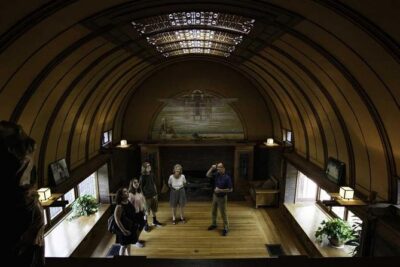
Entrance tickets for the KunstHausWien. Museum Hundertwasser
Read our review →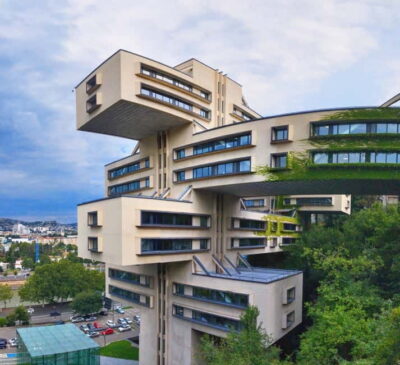
Brutalist Tbilisi: Urban exploration and untold stories
Read our review →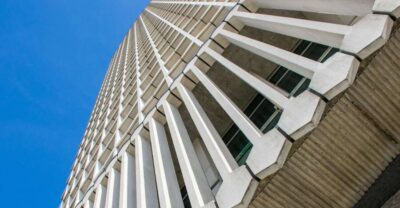
London: Brutalist Architecture & History Walking Tour
Read our review →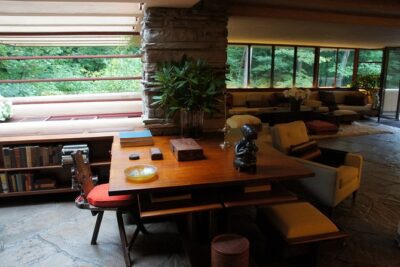
FALLINGWATER – America’s UNESCO World Heritage Masterpiece!
Read our review →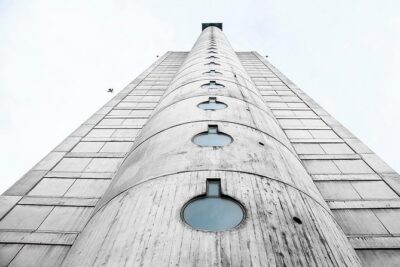
Architecture of New Belgrade – Brutalism Decoded
Read our review →Browse the lists this tour appears in