
Review · BRUSSELS
Brussels: 3h Art Nouveau Private Tour with a Local Guide
Brussels hides some of Europe’s finest Art Nouveau buildings behind ordinary streets, and this private walk puts those details in focus. You’ll see Victor Horta’s famous work, grand Belle Époque homes, and smaller designs that are easy to miss without someone pointing them out.
I like the private format, which lets Eric adjust the pace and follow your interests. I also like the route’s range: it moves from the historic center to Square Ambiorix, Ixelles, and Saint-Gilles, so you see more than the usual central sights. The main drawback is that most buildings are viewed from the street, and the tour requires walking plus public transport.
Key points to know before booking
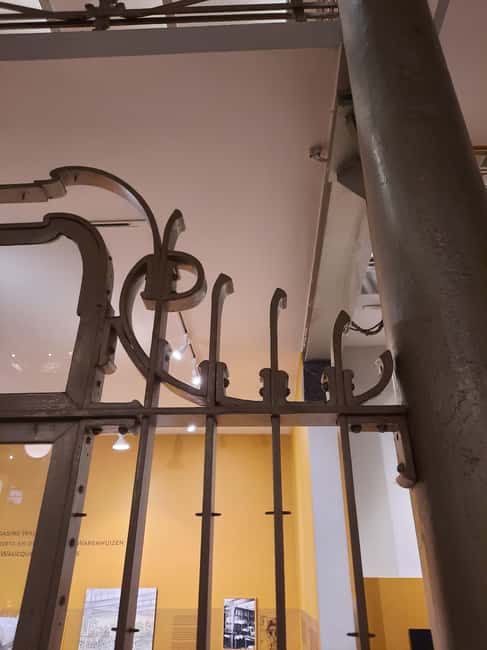
- Eric specializes in Art Nouveau, not general city commentary, and explains how the style developed and spread across Europe.
- The route covers 10 to 12 buildings, including Horta houses connected with Brussels’ UNESCO-listed Art Nouveau heritage.
- You travel beyond the center, with stops in Square Ambiorix, Ixelles, and Saint-Gilles.
- The group is private, so you can ask questions, request certain buildings, or adapt the walk to your interests.
- Public transport is part of the route but not included, so budget for two tickets or a STIB/MIVB Brupass 1 day.
- Interior access is not standard, although you can ask about adding places such as Hôtel Van Eetvelde.
Why Brussels is the right place for an Art Nouveau walk
Art Nouveau in Brussels was not just a decorative fashion. It changed the way architects thought about houses, light, ironwork, windows, staircases, and the relationship between a building and the street.
The style appeared during the Belle Époque, a short period when new materials and growing wealth gave architects room to experiment. In Brussels, that experiment became wonderfully personal. A townhouse could have a curling iron balcony, a stained-glass entryway, a stone facade shaped like a plant, and a staircase arranged around natural light.
That is why a guide adds real value here. A casual walk can show you pretty buildings. A specialist can help you notice the details that explain why one facade feels restrained, another theatrical, and another almost alive.
Eric focuses on Art Nouveau rather than delivering a broad survey of Brussels. He explains the movement’s beginnings, its spread beyond Belgium, and the difference between Art Nouveau and Art Deco. You will also see examples of both styles, which makes the comparison easier than reading a definition in a guidebook.
More Art Nouveau tours in the world:
- Walking Tour of Riga’s Beautiful Art Nouveau Architecture
★ 4.8 · 20 reviews - Riga’s Architecture: A self-guided audio tour of the city’s art nouveau history
★ 5.0 · 3 reviews - Mexico City origins and architecture: Art Nouveau, Deco,Eclectic
★ 3.0 · 2 reviews
Meeting at Hilton Brussels Grand Place
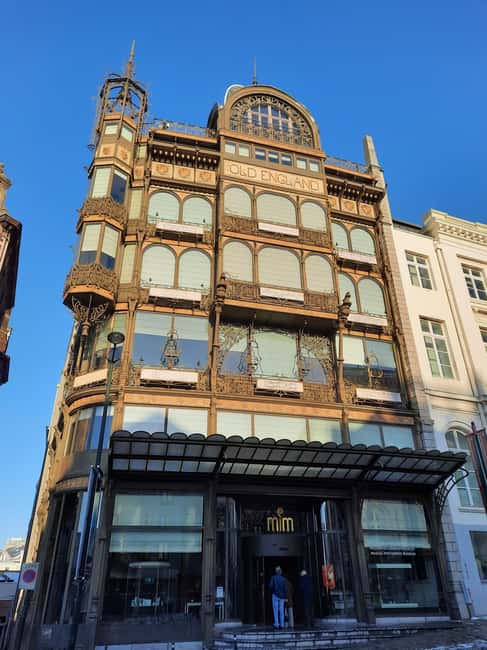
The tour begins outside the revolving door of the Hilton Brussels Grand Place, directly opposite Brussels Central Station. This is a practical meeting point if you are arriving by train or staying in the historic center.
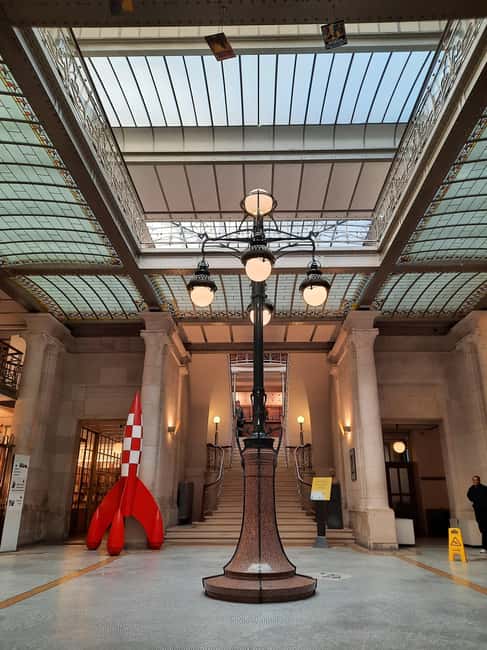
The opening section takes place around central Brussels, including the Comics Art Museum. The museum stop is listed as a 20-minute guided visit, although the wider experience is built around exterior architecture rather than a full museum program. That makes the first section a useful introduction before the route shifts toward residential districts.
You should arrive ready to walk. Wear shoes that can handle several neighborhoods, and bring water. Belgian weather can change quickly, so a rain layer is sensible even when the forecast looks mild.
Comics Art Museum and the first architectural clues
The Comics Art Museum provides an early stop in central Brussels, a city closely associated with drawing, illustration, and bold visual design. The tour is not presented as a comics-focused experience, but the stop adds a different angle to Brussels’ creative identity.
The key benefit here is orientation. You begin in the familiar center, then move toward districts where the architecture is less obvious to first-time visitors. Eric’s role is to connect what you see in the center with the architectural movement you will encounter later.
The stop is short, so do not expect a long museum visit. If your main goal is to study Horta interiors or residential facades, the most important part of the tour comes afterward.
Public transport to Square Ambiorix
The route uses public transport to reach Square Ambiorix. One transfer is listed at about 15 minutes, and a later transfer takes about 25 minutes. These movements matter because Brussels’ Art Nouveau architecture is spread across the city rather than gathered in one compact zone.
Transport also means the tour feels more like an introduction to Brussels’ neighborhoods than a single sightseeing loop. You move from the historic center into areas where houses were built as part of expanding residential districts.
Tickets are not included. You need two public transport tickets, or a STIB/MIVB Brupass 1 day. Keep this small extra cost in mind when comparing the price with a standard walking tour.
A few more architecture tours around the world worth a look
- Munich 3-Hour Segway Tour: Nazi Munich & Royal Architecture
★ 4.9 · 194 reviews - 3 Hour Midtown Manhattan Architectural Tour
★ 5.0 · 81 reviews - Prague 3-Hour Architectural Tour
★ 4.7 · 18 reviews - Porto Tour: Street Art & Architecture Experience 3h
★ 5.0 · 4 reviews
Square Ambiorix and the grand Belle Époque view
Square Ambiorix receives about 40 minutes of guided attention. This is one of the strongest parts of the route for seeing how Art Nouveau worked on a larger residential scale.
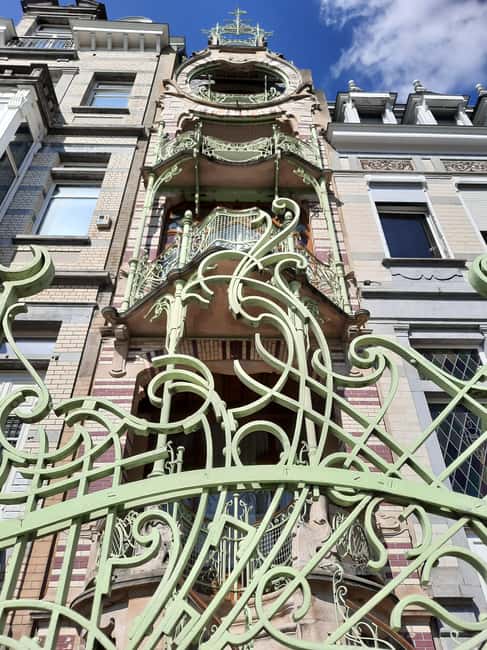
Here, you can expect a group of striking homes rather than one isolated monument. The square and its surrounding streets show how architects used curves, varied materials, windows, balconies, and decorative lines to give each house its own character.
This is where Eric’s specialist focus should help most. A general city guide may identify a famous architect and move on. Eric can explain the different approaches used by Horta and by architects whose names are less familiar but whose work is still highly inventive.
The area also helps you understand that Art Nouveau was not limited to monumental public buildings. It shaped private homes for prosperous residents, giving ordinary streets a theatrical edge. Some buildings remain close to their original appearance, while others show restoration work or the soft wear of more than a century.
That variety is part of the appeal. Perfect restoration can make a building look fresh, but an older facade with a gentle patina can reveal the passage of time more clearly.
Hôtel Solvay and the Horta connection
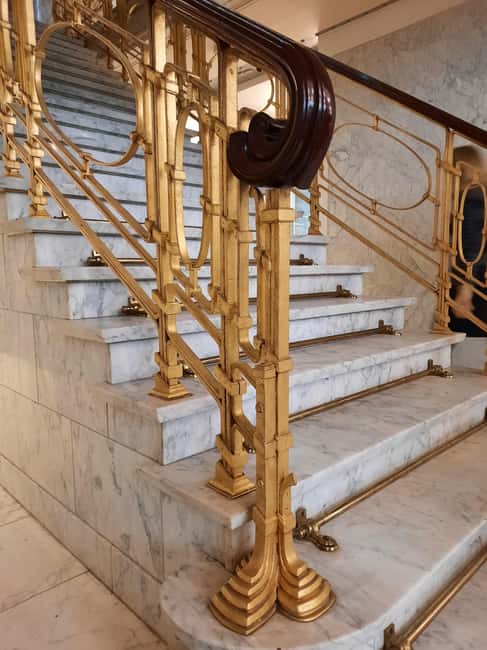
The route then continues toward Hôtel Solvay, with around 20 minutes of guided commentary. This is one of Victor Horta’s major Brussels creations and one of the tour’s most important names.
Horta pushed Art Nouveau beyond surface decoration. His work combined structure, light, furniture, materials, and ornament into one design. At Hôtel Solvay, look for the way the building’s parts work together rather than treating the facade as a separate display.
Several Horta houses in Brussels have UNESCO World Heritage status, and the route includes houses connected with that group. That gives you a chance to see why Horta matters beyond his reputation. The point is not simply that he designed attractive buildings. His work helped change expectations about what a modern urban home could be.
The standard experience centers on exterior viewing. If seeing interiors is important to you, ask Eric before the tour if any additional access can be arranged. An interior visit is not included as a general promise, although one participant was able to enter Hôtel Van Eetvelde with him.
Ixelles and the residential side of Art Nouveau
The Ixelles section receives about 40 minutes and adds a more neighborhood-based feel to the tour. Here, you move through streets lined with both grand houses and smaller Art Nouveau details.
Ixelles is useful because it shows how the style spread through daily urban life. You are not only looking at one celebrated architect’s masterpiece. You are comparing different facades, proportions, materials, and decorative habits across a residential district.
Eric can tailor the walk to your interests. If you are drawn to ironwork, he can focus your attention there. If windows, doors, or the differences between Art Nouveau and Art Deco interest you more, the private format gives you room to ask.
The route finishes at Rue Defacqz 48 in Brussels. That ending point places you in a district well suited to continuing an architectural walk on your own, though the tour itself concludes there rather than returning to the starting point.
Saint-Gilles and the lesser-known houses
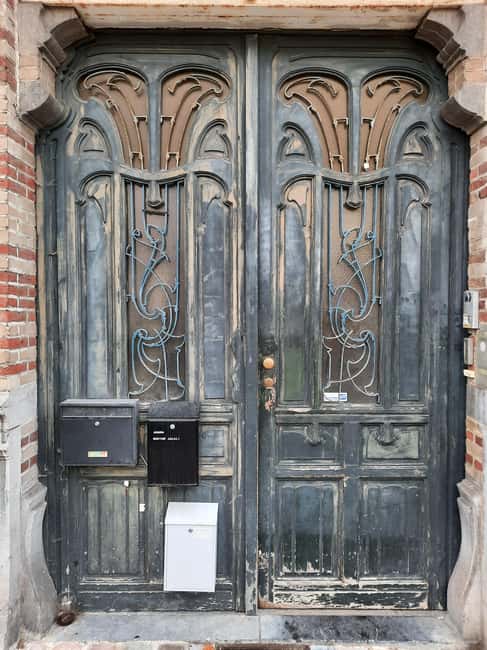
The wider route includes Saint-Gilles, another district where Brussels’ Art Nouveau character is easier to appreciate away from the most famous landmarks. The appeal here is not a single blockbuster sight. It is the steady sequence of houses, details, and street views.
This is also where the tour earns its claim to be more than a Horta highlights walk. Lesser-known architects receive attention, and that matters if you want a fuller picture of the movement. Art Nouveau did not come from one person alone.
Some houses may look untouched, others carefully restored, and others weathered by age. That range gives you a more honest view of the city. You see not just polished heritage sites, but old buildings still functioning as part of Brussels.
Because the route covers several districts, you should not expect every stop to be a long visit. The reward comes from comparison. One doorway may be modest, another flamboyant. One house may use flowing botanical lines, while another relies on a sharper geometric style that points toward Art Deco.
What the private guide format changes
A private tour is most useful when you have specific interests. You can ask Eric to spend more time on Horta, focus on lesser-known architects, discuss Art Deco, or request additional buildings and areas if they fit the timing.
The format also helps if your group has a mixed level of interest. Someone who knows little about architecture can get a clear introduction, while an Art Nouveau enthusiast can ask more detailed questions.
Several participants specifically valued Eric’s flexibility, preparation, and personal attention. One person said the tour was adapted to personal circumstances, while another appreciated that Eric adjusted it to specific interests. That fits the design of the experience: this is not a fixed script delivered to a large crowd.
The private setup does cost more. At $129 per person, it is not the cheapest way to see Brussels’ architecture, especially for a solo visitor. For a couple, family, or small group sharing the experience, the price becomes easier to justify because you are paying for a specialist’s time and a route shaped around your questions.
Is $129 a fair price?
The value depends on what you want from the afternoon. If you only want to photograph a few famous facades, you can find them independently and spend much less. The city’s public architecture can be viewed without paying for a guide.
The price makes more sense if you want context, access to districts beyond the center, and an expert who can help you separate Horta’s work from the many other styles found in Brussels. You also avoid spending time planning your own route between central Brussels, Square Ambiorix, Ixelles, and Saint-Gilles.
Remember to add public transport costs. Meals, drinks, museum admission, and other entrance fees are not included. The tour may conclude with a meal at an authentic Art Nouveau restaurant, but that meal is optional and paid separately.
For a group that cares about architecture, the private format offers good value. For someone who prefers a broad overview of Brussels, a general city tour may cover more subjects for less money.
Practical points that affect your day
The walk lasts three hours, with both walking and public transport. The listed stops include roughly 20 minutes at the Comics Art Museum, 40 minutes at Square Ambiorix, 20 minutes at Hôtel Solvay, and 40 minutes in Ixelles, plus travel time. The pace should feel active rather than rushed, but you will want comfortable shoes.
The tour is offered in Dutch, English, French, and Spanish. It is a private group, and Eric is the named guide associated with the experience.
The route is not well suited to wheelchair users because Brussels streets are not fully adapted for wheelchairs. Ask before booking if mobility is a concern, since the information provided does not promise an accessible route.
Free cancellation is available up to 24 hours before the start time, and you can reserve now and pay later. Those policies are useful if your Brussels plans may shift, but the main booking decision is still the walking distance and the outdoor format.
Who should book this Art Nouveau tour?
You should consider it if you enjoy buildings more when you understand the people, ideas, and techniques behind them. It is especially suited to visitors who already know they want Horta, Belle Époque architecture, or a closer look at Brussels’ residential districts.
It also works well for couples, families with older children, and small groups who want a flexible guide rather than a fixed public tour. The multilingual option helps if your group prefers English, French, Dutch, or Spanish.
You may want to skip it if you dislike walking, need guaranteed interior access, or want a tour built mainly around museums. Most of the architecture is viewed from outside, and the route involves public transport.
Should you book it?
Book this tour if you want Brussels to make more sense architecturally, not just look attractive in photographs. Eric’s specialist knowledge, the private format, and the route through Square Ambiorix, Ixelles, and Saint-Gilles make it a strong choice for Art Nouveau fans.
Before booking, decide if exterior viewing is enough for you. If interiors matter, contact Eric in advance about options such as Hôtel Van Eetvelde or an Art Nouveau Pass. With that point settled, $129 per person is a reasonable investment for a tailored three-hour introduction to one of Brussels’ most distinctive sides.
FAQ
Where does the Art Nouveau tour begin?
It begins outside the revolving door of the Hilton Brussels Grand Place, opposite Brussels Central Station.
Where does the tour finish?
The tour finishes at Rue Defacqz 48, 1000 Brussels, Belgium.
How long does the tour last?
The experience lasts three hours.
How many buildings will I see?
The tour is designed to show you 10 to 12 Art Nouveau architectural masterpieces.
Is the tour private?
Yes. It is offered as a private group experience.
Which languages are available?
The guide can lead the tour in Dutch, English, French, or Spanish.
Is public transport included?
No. You need two public transport tickets, or a STIB/MIVB Brupass 1 day.
Are meals or drinks included?
No. Meals and drinks are not included. The walk may finish at an authentic Art Nouveau restaurant if you choose, but the meal is paid separately.
Is the tour wheelchair accessible?
The provided information warns that Brussels streets are not well adapted for wheelchairs. Ask about your specific needs before booking.
Just added around the world
- Wilmington History and Architecture Tour★ 4.8 · 18 reviews
- Washington, DC: Georgetown Architecture Walking Tour★ 5.0 · 8 reviews
- New Orleans : Garden District Architecture Walking tour★ 4.8 · 5 reviews
- Washington DC: Dupont Circle & Embassy Row Architecture Tour★ 5.0 · 6 reviews
- Vicenza: discovering the city of Palladio by e-bike★ 5.0 · 4 reviews
- Vicenza: Palladian Architecture Private Walking Tour★ 3.3 · 3 reviews
- Walk & Discover KL’s Architectural and Heritage Gems★ 5.0 · 7 reviews
- Unveiling Brno: History, Culture & Architectural Delights★ 5.0 · 2 reviews
Art Nouveau Tours, compared.
Riga: Old Town Walking Tour with Art Nouveau Highlights
Read our review →
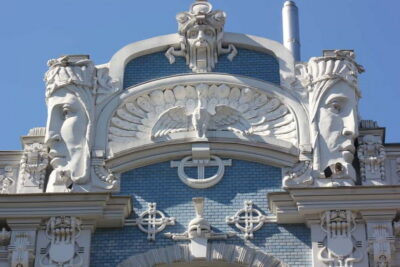
Riga: 2-Hour History of Art Nouveau Walking Tour
Read our review →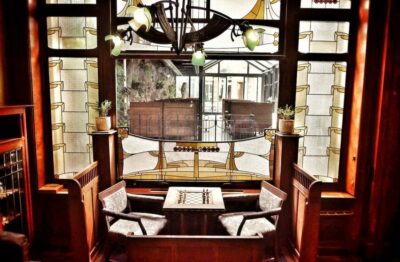
Brussels: Art Nouveau Pass – Entry to Three Locations
Read our review →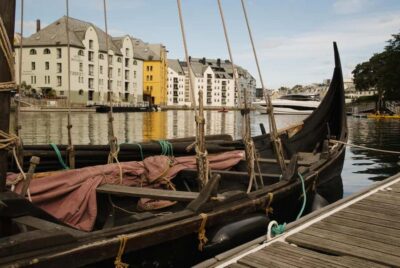
Small Group Tour in Ålesund: Art Nouveau, Sea Views & Insider Tips
Read our review →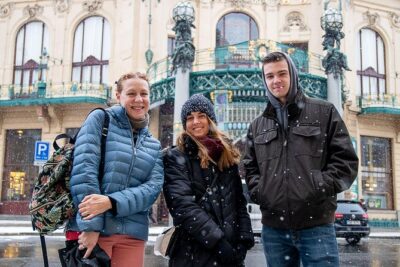
Browse the lists this tour appears in