
Review · NEW YORK CITY
3 Hour Midtown Manhattan Architectural Tour
Midtown Manhattan can feel like a wall of stone, glass, and traffic until someone points out the story behind each facade. This three-hour walk links grand hotels, Art Deco towers, Rockefeller Center, the Empire State Building, and Grand Central Terminal into one readable lesson about how New York grew upward.
I like the small group of no more than eight, which gives Annabel room to adjust the conversation to your interests. I also like the chance to see historic interiors, including hotel and office lobbies, when access allows. The main drawback is that this is a walking tour with plenty of street noise, and the $85 price does not include admission to the Empire State Building observation decks.
Key things to know before you book
- Annabel makes the tour personal: She links architecture to the people, businesses, and social changes behind Midtown’s famous buildings.
- The route covers 20-plus architectural sights: The named stops include The Plaza, Rockefeller Center, the Seagram Building, the Empire State Building, the Chrysler Building, and Grand Central Terminal.
- Historic interiors may be part of the experience: You may enter selected hotels, lobbies, stores, or other public spaces when access is available.
- The tour moves through several design eras: Expect French chateau-inspired luxury, early skyscraper design, Art Deco decoration, corporate modernism, and later city planning.
- You finish at Grand Central Terminal: The route begins at The Plaza at 9:00 a.m. and ends near 42nd Street.
- Plan for a real city walk: You need moderate physical fitness, and traffic noise can make some explanations harder to hear.
Why Midtown makes such a good architecture walk
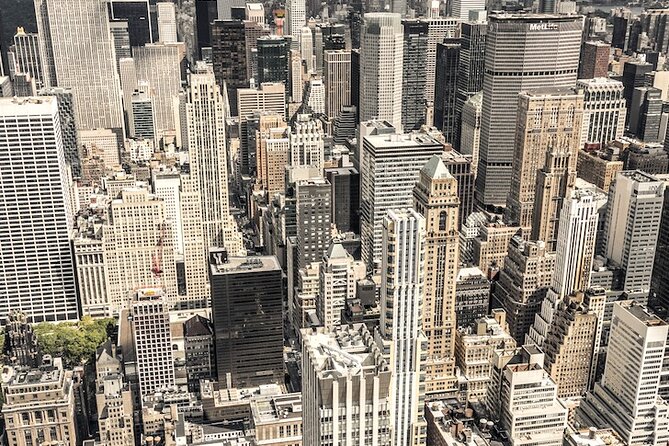
This tour works because Midtown is not just a collection of famous buildings. It is a compact record of changing ideas about wealth, transport, business, technology, and public life.
You begin around Fifth Avenue, where luxury hotels and private residences helped shape New York’s old social order. As the walk continues, office towers take over the story. By the time you reach Grand Central, you have seen how New York moved from exclusive Millionaires’ Row to a dense business district filled with towers and transit.
I find that useful because architecture can otherwise become a blur of names and dates. Annabel’s approach connects a building’s look with the people who paid for it, the companies that used it, and the city changes that made it possible.
The tour is listed at about three hours, with roughly 15 minutes associated with each major stop. In practice, the pace can change. Small groups may spend extra time on questions, and private or semi-private outings can run longer, especially when the group wants more detail.
A few more architecture tours around New York City worth a look
- Brussels 3-Hour Guided Art Nouveau Tour
★ 4.0 · 282 reviews - Munich 3-Hour Segway Tour: Nazi Munich & Royal Architecture
★ 4.9 · 194 reviews - Barcelona: 3-Hour Discover Gaudí GoCar Tour
★ 4.5 · 123 reviews
The Plaza and Fifth Avenue’s grand hotel era
The Plaza is an ideal starting point. Designed with the pomp of a French chateau, it was built to project luxury before you even enter the lobby. Its grand exterior also has a strong connection to New York popular culture, having appeared in many films.
From here, the tour moves to The Sherry-Netherland, whose lobby was modeled after the Vatican Library. That detail alone gives you a reason to look beyond the facade. The building was also noted as the tallest residential hotel in New York when it opened, combining the services of a hotel with the status of an upscale apartment.
The St. Regis New York adds another chapter. John Jacob Astor IV, one of the wealthiest Americans of his time, built the hotel. Its arrival marked a wider shift on Fifth Avenue, from a street of private mansions to a fashionable commercial thoroughfare.
These first stops are especially good for you if you enjoy architecture tied to social history. You are not only studying columns, stonework, and interiors. You are seeing how wealthy New Yorkers lived, entertained, and displayed status.
The Seagram Building and the clean lines of corporate modernism
The Seagram Building changes the visual mood. Its design became a model for office towers around the world and is one of the best-known examples of corporate modernism.
After the ornate hotels and historic decorations, the Seagram’s disciplined form can feel almost spare. That contrast is the point. The building shows how corporate architecture moved toward order, repetition, open space, and a more controlled visual language.
I would pay close attention here to the way the building presents itself from the street. This is not just an office block to check off your list. It represents a major change in how architects thought about the relationship between a tower and the public space around it.
The 15-minute format gives you a useful introduction, though serious architecture students may want more time than this tour can provide. The strength here is comparison. You see how quickly Midtown’s style shifts from hotel ornament to modern office design.
The General Electric Building and its radio-wave crown
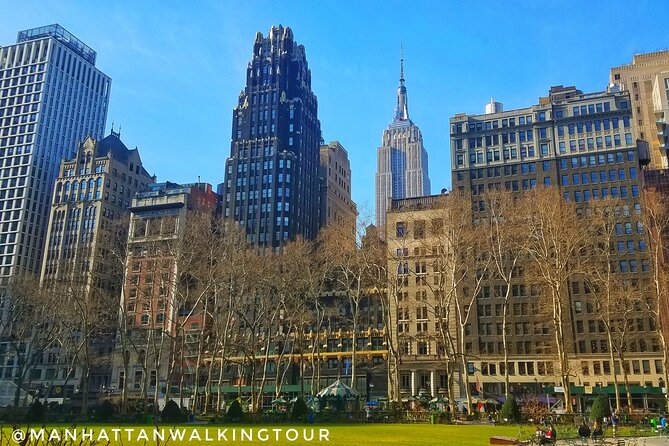
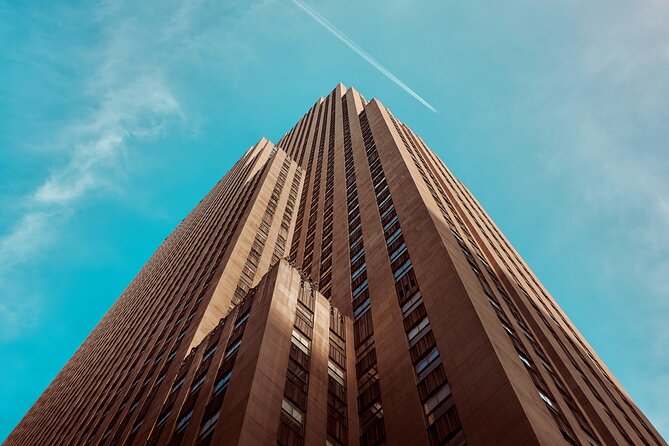
The General Electric Building, originally the RCA Building, brings you back to decorative detail. Its chrome and marble lobby and radio-wave crown reflect the era’s faith in broadcasting, technology, and industrial power.
This is one of the stops where an interior visit can add a lot. A building may look impressive from the sidewalk, but polished materials, lobby decoration, and small design choices often reveal its purpose more clearly. Access can vary, so you should treat interior visits as a possible benefit rather than a guarantee.
The building also fits neatly into the larger Midtown story. It was not simply designed to house offices. Its decoration communicated the importance of radio and the reach of a major corporation.
Same city, a completely different century:
- Manhattan Architecture Yacht Cruise
★ 5.0 · 1,395 reviews - NYC: Around Manhattan Official NYC Architecture Cruise
★ 4.8 · 402 reviews - Art Deco and Architecture Midtown Landmarks Tour
★ 5.0 · 142 reviews - Tribeca Architecture And History Walking Tour
★ 5.0 · 141 reviews
Waldorf Astoria and Rockefeller Center
The Waldorf Astoria New York brings the tour back to hotel history, but on a much larger scale. It was designed by the firm associated with several prominent luxury hotels, including The Sherry-Netherland, The Pierre, and the Hotel Lexington.
The hotel has hosted presidents, world leaders, celebrities, and foreign dignitaries. That makes it a useful place to discuss the role of hotels as political and social stages, not just places to sleep.
Rockefeller Center is the route’s biggest urban project. The complex covers 22 acres and includes 19 commercial buildings, more than 100 artworks, and a network of spaces that work together as one planned district.
Its construction also carried major economic weight. It was the largest and most expensive development project of its time, creating 60,000 jobs at the height of the Great Depression.
I especially like this section because Rockefeller Center rewards both casual sightseers and architecture fans. You can look at the buildings, public art, and open spaces as individual elements, or you can understand the whole complex as one carefully organized project.
Annabel can also help explain the meaning and purpose of the artwork, which makes the center easier to read. Without that context, you may see only a famous plaza and a popular photo stop. With context, the complex becomes a statement about commerce, industry, culture, and optimism during a difficult period.
The Empire State Building without the observation deck ticket
The Empire State Building is the route’s most obvious landmark, but the tour treats it as an exterior architectural stop. It was the world’s tallest building for 40 years and was completed in 410 days, under budget.
Its name comes from Empire State, New York’s nickname. That small fact helps connect the building to the civic pride of its era. The tower was not just another commercial project. It was a symbol of speed, ambition, and New York’s place in the world.
The important practical point is that admission is not included. The tour does not automatically take you to the observation decks, so you should not book it as a substitute for an Empire State Building visit.
That is not a flaw if your goal is architecture and city history. In fact, seeing the building from street level lets you consider its proportions and setting without spending additional time waiting for an observation experience. If you specifically want the view from the top, plan that separately.
The New York Public Library and a lesson in civic ambition
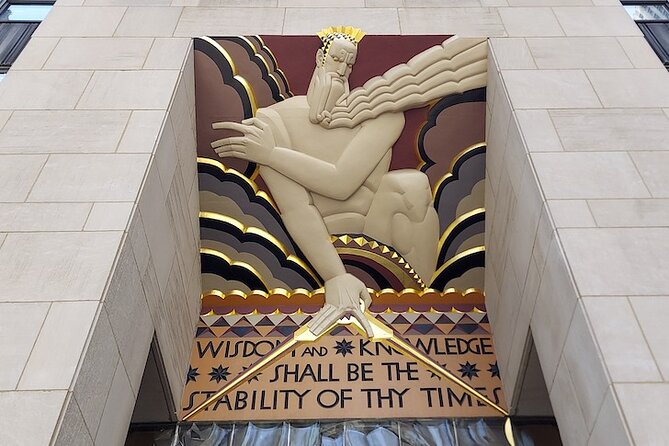
The Stephen A. Schwarzman Building of the New York Public Library offers a quieter change of pace. The library system was formed in 1895 by combining the Tilden Trust, Astor, and Lenox libraries. When the building opened in 1911, the collection held 350,000 volumes.
Today, the library system holds more than 55 million books and other items across seven floors. Those numbers help explain why the building matters beyond its impressive exterior. It represents the idea that a major city should provide serious public access to knowledge and culture.
This stop can be rewarding even if you are not focused on architecture. The library adds a civic dimension to a route otherwise filled with luxury hotels, corporate offices, and monuments to private wealth.
The Chrysler Building and Art Deco at full volume
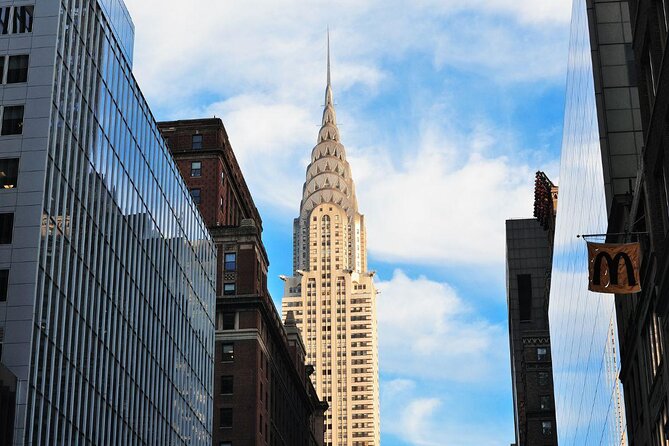
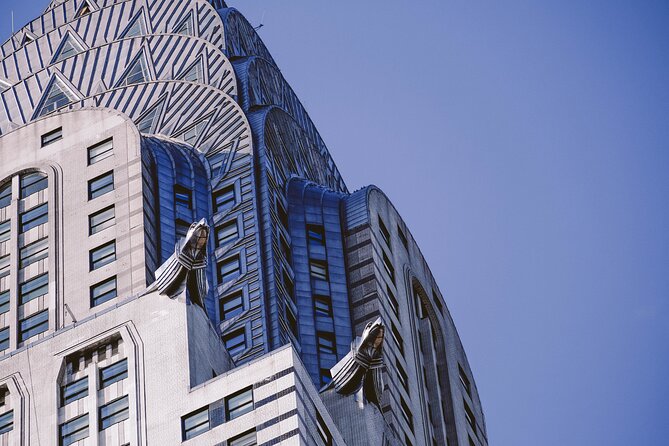
The Chrysler Building is the tour’s clearest Art Deco showpiece. It was a personal symbol of automobile executive Walter Chrysler and the strength of his corporation.
Its crown, metal decoration, and references to the automobile age make it easy to understand why the building is so often cited as a classic example of Art Deco. The design turns corporate identity into ornament, using architecture to suggest speed, machinery, and modern life.
This is a good place to compare the Chrysler Building with the Empire State Building. Both are linked to the race for height, yet they project different personalities. The Empire State Building feels direct and powerful. The Chrysler Building is more decorative and theatrical.
The tour’s historical angle is particularly useful here. You learn not only what the building looks like, but also how business leaders used architecture to shape public images.
Grand Central Terminal and the finish at 42nd Street
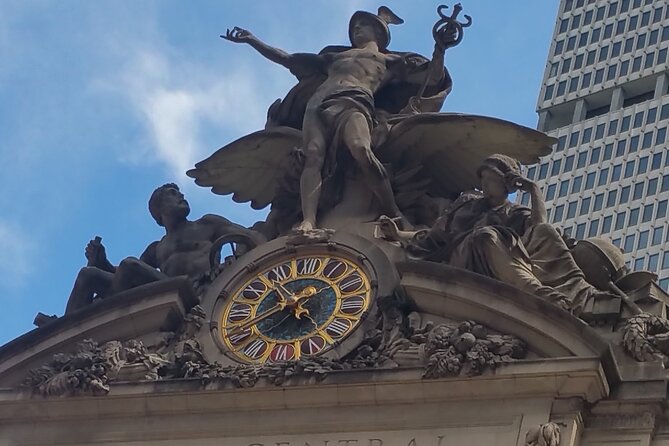
Grand Central Terminal is a strong ending because it gathers many of the tour’s themes in one place. It is a transportation hub and a world-famous landmark, with 44 platforms and 67 tracks.
Its importance reaches beyond trains. The terminal introduced ideas that influenced American planning, architecture, engineering, and culture for decades. It shows how transportation can shape an entire district and make large-scale urban growth possible.
Ending here also gives you a chance to review the route in your head. You have moved from luxury hotels to corporate towers, from private wealth to public institutions, and from decorative architecture to the engineering demands of mass transport.
The finish is at Grand Central Terminal, 89 East 42nd Street. If you have plans afterward, the location is practical for continuing around Midtown, though you should allow a little flexibility if your group spends extra time with Annabel.
How Annabel’s guiding style changes the experience
The strongest part of this tour is the guide. Annabel brings a long New York perspective and connects dates, design styles, business figures, and daily city life.
Her approach is conversational rather than a nonstop speech. She can adjust the route discussion to the group’s interests, which matters in a small group. An architecture enthusiast may want details about design phases, while a family may respond better to stories about the people and events tied to each building.
The tour can also work well for mixed ages. A 13-year-old interested in architecture and a grandmother were both able to follow a personalized outing, with stories ranging from Rockefeller Center to Leona Helmsley. That suggests Annabel is comfortable moving between technical detail and human stories.
Several outings have included entrances into public and private spaces, stores, hotels, and lobbies. Her relationships with employees at some buildings can provide access or details you would not get by simply walking past. Still, access is never something I would treat as guaranteed, since buildings can change their rules.
One practical tip: Midtown traffic can be loud. If you have trouble hearing in busy streets, stay close to the guide and ask her to repeat key points. A quiet introduction at the beginning would help some people absorb the large amount of information, but the small group makes questions easier once the walk is underway.
Is $85 a fair price?
At $85 per person, this is not the cheapest way to walk around Midtown. You can pass many of these buildings on your own for free.
The value comes from the connections. Annabel turns a collection of famous facades into a sequence about New York’s changing architecture, powerful families, corporate ambition, public institutions, and transportation. You are also paying for access to a local guide who can answer questions and adjust the focus to your group.
The price makes the most sense if you care about architecture, design, New York history, or the stories behind familiar sights. It is less appealing if you only want quick photo stops or if you plan to spend most of the morning inside attractions.
The group limit of eight helps. A large tour may be cheaper, but it usually offers less room for conversation and fewer chances to ask about details that catch your eye.
The tour includes a mobile ticket and is offered in English. Service animals are allowed, and the route is near public transportation. You need moderate physical fitness, and the three-hour duration means you should wear comfortable shoes and expect to remain on your feet for much of the morning.
Free cancellation is available until 24 hours before the start time. Changes or cancellations made less than 24 hours before the tour do not qualify for a refund.
Who should book this Midtown architecture tour?
I would choose this walk if you have visited New York before and want to see Midtown differently. It is also a smart first-day activity for someone who wants a clear framework before exploring the city alone.
It suits:
- Architecture and Art Deco fans
- People who enjoy history told through individuals and buildings
- Families with older children interested in design or New York
- Repeat visitors who have already seen the major landmarks
- Small groups that prefer conversation over a scripted lecture
- Anyone curious about hotel lobbies, office towers, and public interiors
I would be more cautious if you want a slow museum-style experience with long stops inside each building. This is a city walk, not an admission-based tour. You will see many places from outside, and interior access depends on what is open and permitted that morning.
FAQ
How long is the Midtown Manhattan architectural tour?
The tour lasts approximately three hours.
Where does the tour begin?
It begins at The Plaza, 768 Fifth Avenue, New York, at 9:00 a.m.
Where does the tour end?
The tour ends at Grand Central Terminal, 89 East 42nd Street.
Which major buildings are included?
The route includes The Plaza, The Sherry-Netherland, The St. Regis New York, the Seagram Building, the General Electric Building, the Waldorf Astoria New York, Rockefeller Center, the Empire State Building, the New York Public Library, the Chrysler Building, and Grand Central Terminal.
Is admission to the Empire State Building included?
No. The Empire State Building is an exterior stop, and admission is not included.
How many people can join the tour?
The maximum group size is eight people.
Is the tour suitable for people with limited mobility?
The tour requires a moderate level of physical fitness. The supplied details do not specify wheelchair access or the exact amount of walking.
What language is the tour offered in?
The tour is offered in English.
Can I cancel for a full refund?
Yes, if you cancel at least 24 hours before the experience begins. Cancellations or changes made less than 24 hours before the start time are not refunded or accepted.
Should you book it?
Book this tour if you want Midtown to make sense, not just look impressive. Annabel’s personal, flexible style is the main reason to choose it, especially if you value stories about the people and decisions behind the buildings.
Skip it if you want observation-deck admission, long interior visits, or a purely self-guided photo walk. For everyone else, the combination of small-group attention, major landmarks, possible lobby access, and a clear story of New York’s architectural growth makes $85 a reasonable price for a focused morning.
Just added around New York City
- Race to the Sky: NYC Architecture Tour With SUMMIT One Ticket★ 5.0 · 3 reviews
- New York Upper West Side Art and Architecture Tour★ 5.0 · 4 reviews
- Private Flatiron Food, History and Architecture Tour★ 5.0 · 8 reviews
- New York Upper East Side Art and Architecture Tour★ 5.0 · 3 reviews
- Custom Private New York Architecture, Art and City Tour★ 5.0 · 3 reviews
- Chelsea and the High Line NYC Architecture Walking Tour★ 5.0 · 6 reviews
- Midtown North NYC Architecture Walking Tour★ 5.0 · 28 reviews
- New York Midtown South Art and Architecture Tour★ 5.0 · 2 reviews
3-Hour Experiences, compared.

Munich 3-Hour Segway Tour: Nazi Munich & Royal Architecture
Read our review →



3-Hour Shanghai Bund Swift Tour with River Cruise or Skyscraper
Read our review →
Barcelona 3-hour Bike or E-Bike Tour: Gaudí By Bike
Read our review →Browse the lists this tour appears in