
Review · FRANCE
Art Nouveau visit to Nancy
Nancy’s Art Nouveau story is best understood on foot, where ornamental façades, glass, ironwork, and sculpture turn an ordinary city walk into an open-air art lesson. This 90-minute route begins at grand Place Stanislas and ends at Brasserie L’Excelsior, with the city’s Belle Époque buildings providing the backdrop.
I like the focused subject and the historian guide, Léopold Fousnaquer, whose explanations are designed to give the buildings some meaning rather than simply point them out. I also like the small-group limit of 25 people, a sensible size for a city walk where you need to hear the guide and look closely at details.
The main consideration is language: the tour is conducted in French. The route also depends on good weather, and the $17.45 price is a fair buy for a short guided walk, but less compelling if you want extended interior access or a museum visit.
Key points about Nancy’s Art Nouveau walk
- Place Stanislas starting point: Begin in one of Nancy’s grandest public spaces before moving into the city center.
- École de Nancy focus: Learn how local artists worked across architecture, cabinetry, ironwork, painting, and glass.
- Several forms of Art Nouveau: Look for façades, a glass roof, brasserie decoration, and sculpture.
- Historian-led explanations: Léopold Fousnaquer guides the walk in French with detailed, well-documented commentary.
- Short city-center route: The experience lasts about 1 hour 30 minutes and makes a small loop through Nancy’s Ville-Neuve area.
- Easy booking terms: Mobile tickets are accepted, and cancellation is free up to 24 hours before the start time.
Why Nancy is a fine place to study Art Nouveau
At the end of the 19th century, Nancy was the center of a prosperous Lorraine region. Its location and economic strength helped create a city confident enough to support new artistic ideas. The result was the École de Nancy, a movement that made the city known far beyond eastern France.
Art Nouveau was not limited to one craft. It affected the way people designed houses, cafés, furniture, metalwork, glass, and decorative objects. That broad reach is what makes this walk useful. You are not just looking at pretty buildings. You are seeing how an entire period tried to connect daily life with art.
The movement also benefited from new technology and materials. Architects and craftsmen could experiment with forms that had previously been difficult or expensive to make. Curving lines, plant-inspired decoration, iron structures, large glass surfaces, and sculptural details became more practical.
You may already know Art Nouveau from Paris, Brussels, Barcelona, or Prague. Nancy offers a different angle. Here, the style is tied directly to a local artistic school and to the prosperous Belle Époque years. The walk gives you a way to read that story through the city center instead of treating it as a list of isolated buildings.
More Art Nouveau tours in France:
- Guided Tour of Nancy, French Capital of Art Nouveau
★ 5.0 · 18 reviews - Private Art Nouveau and Art Deco tour near Opera
★ 5.0 · 15 reviews - Paris – Private Guided Tour with Art nouveau Theme
★ 4.9 · 13 reviews
Starting at Place Stanislas
The meeting point is Place Stanislas, Nancy’s best-known public square. It gives the tour a dramatic beginning, even though the main focus is the city’s Art Nouveau work rather than the square itself.
Starting here is practical. The location is central, near public transportation, and easy to recognize. If you arrive early, the square gives you space to get organized before the walk begins. Your mobile ticket is useful for check-in, and you do not need to collect a paper ticket.
From Place Stanislas, the route moves into the city center and the Ville-Neuve area. The exact order of buildings may vary, but the purpose is consistent: connect Nancy’s Belle Époque prosperity with the designs that appeared on its streets.
This opening also helps place the Art Nouveau movement in context. Nancy was not an isolated artistic outpost. It was a major regional center, and its public spaces and commercial streets reflect that confidence. A historian guide can point out how the city’s grand civic image differs from the more expressive decoration found on later buildings.
Reading Nancy’s Art Nouveau façades
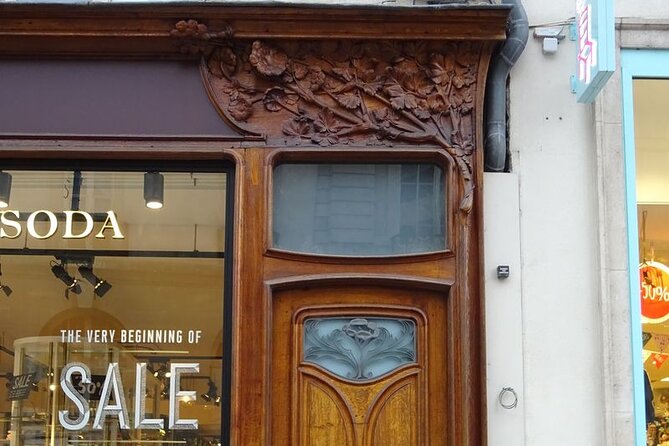
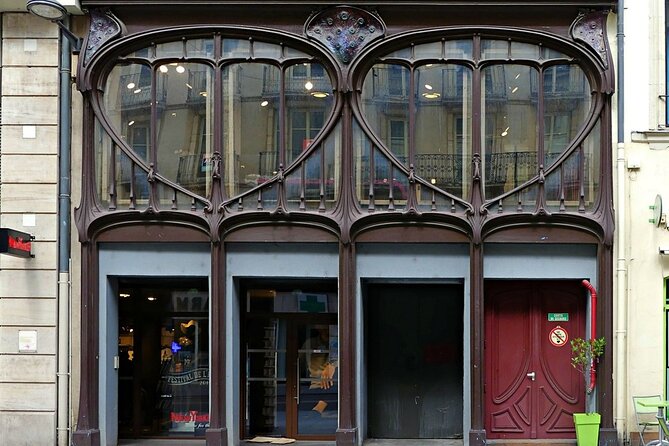
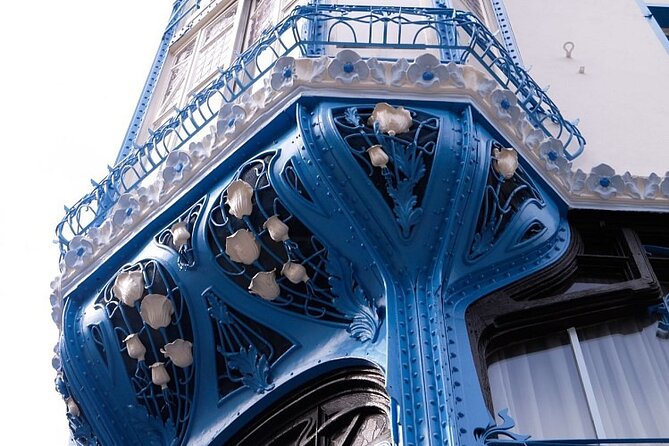
The first thing you will notice on an architecture walk is usually the façade. That is also where a guide earns the ticket price. Without explanation, you may see curved lines, floral motifs, and unusual windows. With explanation, you begin to understand how the architect used those details to change the character of the building.
The tour covers Art Nouveau façades in different forms. Some may be bold and decorative, while others may use subtler touches. The value of stopping rather than simply passing by is that you have time to look upward and study the relationship between the structure and its decoration.
Nancy’s artists were interested in bringing natural forms into design. Plant shapes, flowing lines, and organic curves could appear in stone, metal, wood, or glass. The guide’s job is to help you notice those connections without turning the walk into a technical lecture.
I would bring a camera, but I would also keep it in your pocket for part of the time. A façade often looks attractive in a quick photograph, yet the best reward is learning what to inspect: the line of a balcony, the shape of a doorway, or the way decoration fits into the building rather than sitting on top of it.
The city-center setting keeps the experience grounded in ordinary urban life. You are not viewing Art Nouveau behind glass. You are seeing it where people lived, worked, ate, and moved around the city.
Glass, ironwork, and the technology of the Belle Époque
One of the tour’s strongest features is its range. The route does not stop with painted façades. It also includes a glass roof, ironwork, sculpture, and a brasserie. These examples show how the École de Nancy brought together several trades.
Glass is especially important because it changed the feeling of interior spaces. A glass roof could let in natural light while also becoming a decorative feature. Rather than hiding the structure, designers could make the roof part of the artistic experience.
Ironwork tells another part of the story. New materials and improved technology allowed architects to create lighter, more expressive shapes. Railings, entrances, and structural elements could have a practical use while also carrying the curving forms associated with Art Nouveau.
You may find the guide’s explanations most helpful at these stops. Material choices are not always obvious from the street. A historian can explain why a feature mattered at the time and how technological progress gave artists more freedom.
The route also includes sculpture. That adds a three-dimensional element to the walk and helps show that the movement was not just a style for buildings. Art Nouveau reached into decorative arts and public design, with artists working across several disciplines.
This variety keeps the 90 minutes from feeling repetitive. You move between architecture, design, and commercial interiors rather than seeing one façade after another. If you have a special interest in glass or furniture, you should still keep your expectations measured. The experience is a walking tour, not a workshop or a full museum collection.
Same city, a completely different century:
- Train Exp. through the Alps (Royal Baroque Route from Nice)
★ 5.0 · 682 reviews - Paris: Splendors of the Baroque at the Jacquemart-André Museum – Entry Ticket
★ 4.5 · 99 reviews - Reims Art Deco guided tour
★ 4.5 · 26 reviews - Bastille’s Architecture & Artisans Self-Guided Walking Tour
★ 4.5 · 18 reviews
Finishing at Brasserie L’Excelsior
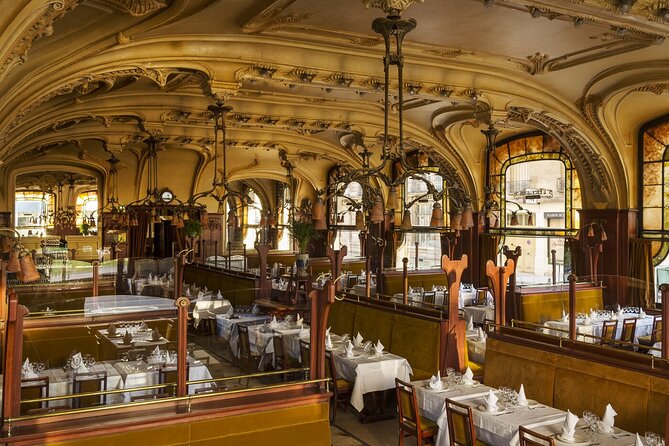
The walk ends at Brasserie L’Excelsior on Rue Henri-Poincaré. This is a fitting final stop because the brasserie represents the way Art Nouveau entered public life. A restaurant or café could use decoration to create a distinctive setting for an everyday meal.
The end point also gives the tour a clear shape. You begin at a major square, make a small loop through the central streets, and finish at a recognizable Belle Époque interior. That is easier to remember than a route that simply ends wherever the final building happens to be.
If you plan to eat at L’Excelsior afterward, treat that as a separate choice. The tour ends there, but the supplied details do not include a meal or reservation. You should not assume that a table is part of the experience, especially during busy periods.
Even without dining, the brasserie stop matters. It shows how Art Nouveau could shape a commercial space, not only a private home or civic building. The movement was meant to be seen and used, and a brasserie makes that idea easy to grasp.
How the guide affects the experience
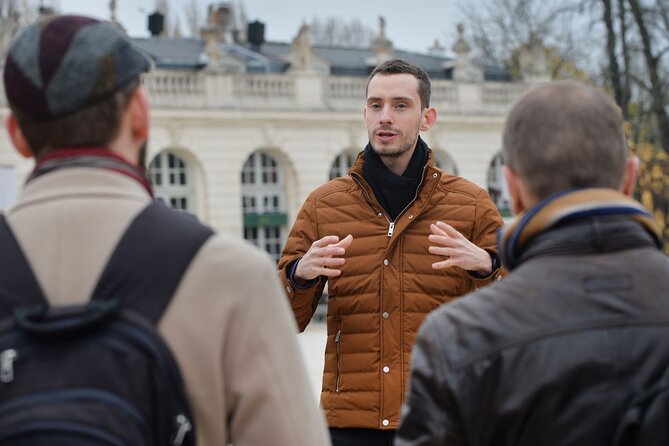
This tour is conducted in French and is led by a historian guide. Léopold Fousnaquer is identified with the experience, and the style of the walk centers on complete, well-documented explanations at several stops.
That detail matters more than the simple label guided tour. A short architecture walk can easily become a fast procession of addresses. Here, the format includes pauses for explanation, so you have a chance to connect the buildings to Nancy’s Belle Époque economy and the École de Nancy’s wide range of work.
You should choose this experience only if you can follow French comfortably enough to understand a historical explanation. The tour information does not promise translation or bilingual commentary. If you speak little French, the buildings may still be enjoyable, but you would miss much of what makes the walk different from a self-guided stroll.
The maximum group size is 25 people. That is not a private tour, but it is small enough to keep the guide within speaking range in most city-center settings. If you have difficulty hearing in a group, arrive ready to stay near the guide.
The tour lasts about 90 minutes. That length works well for a first introduction. You get a clear theme without giving up most of your day, and you can fit it between other visits in Nancy.
Is $17.45 a good value?
At $17.45 per person, the price is reasonable for a historian-led city walk of this length. You are paying for the guide’s interpretation, not for admission to a museum or a special monument. The attraction is the city itself and the chance to understand details you might otherwise pass without noticing.
The value is strongest if you are curious about architecture, design, or Nancy’s Belle Époque period. A self-guided route would cost less, but you would need to research the École de Nancy first and decide which buildings matter. The tour saves that preparation time and gives you a route with a clear artistic theme.
The value is weaker if you prefer to enter buildings, browse collections, or spend a long time at each site. The itinerary describes exterior and city-center discoveries, with the brasserie and glass roof as part of the walk. It does not include a museum admission or a lengthy interior tour.
I see it as a good first look at Nancy’s Art Nouveau. Afterward, you can decide which buildings or museums deserve a longer visit. The tour gives you a framework, and that framework can make later independent sightseeing more rewarding.
Who should book this walk?
I would recommend it to anyone spending time in Nancy who wants more than the main square. It suits people who enjoy architecture, decorative arts, urban history, and short guided experiences with a strong local focus.
It is also useful for visitors with limited time. Ninety minutes is long enough to introduce the movement but short enough to fit into a morning or afternoon. Since the start and end points are both central, the route should be easy to combine with other plans.
The experience is less suitable for anyone who wants a relaxed café crawl, a museum visit, or a tour in English. The French-language format is the biggest practical filter. You should also be comfortable walking outdoors for the full duration and being exposed to the weather.
The group limit of 25 makes it a reasonable choice for solo visitors and couples who want some structure without booking a private guide. Families may also find the length manageable, though the appeal depends on how interested children are in buildings and decorative details.
Service animals are allowed, and most people can participate. The activity is near public transportation, which makes the starting point convenient for visitors staying elsewhere in Nancy.
Weather, cancellation, and booking details
The experience requires good weather because it is a walking tour. If poor weather forces cancellation, you are offered another date or a full refund. The same type of alternative or refund applies if the minimum number of participants is not reached.
You can cancel for a full refund up to 24 hours before the start time. Changes or cancellations made less than 24 hours before the start time are not accepted for a refund, and the cut-off follows Nancy local time.
The tour is commonly booked about 13 days ahead. That does not guarantee that every date fills, but it is a useful planning guide. If your schedule is fixed, booking in advance is sensible, especially if you need a particular day.
Tips are not included. You can decide what to give based on the quality of the guide’s work and your own custom. No fixed gratuity is listed.
Should you book Art Nouveau visit to Nancy?
Book it if you want a compact, French-language introduction to the buildings and decorative arts of Nancy’s Belle Époque. The combination of façades, glass, ironwork, sculpture, and a brasserie gives the walk more range than a simple street survey, while the historian-led commentary adds the context that photographs cannot.
Skip it if you need English commentary, guaranteed indoor access, or a longer museum-style experience. You will get the most from this tour if you can follow French, enjoy looking closely at buildings, and have good weather for a 90-minute walk.
For the price, I consider it a sensible choice for first-time visitors who want to understand why Nancy became associated with Art Nouveau. The route begins at Place Stanislas, ends at L’Excelsior, and gives you a practical introduction to the city’s artistic identity without taking over your day.
FAQ
Where does the Art Nouveau tour begin?
The tour begins at Place Stanislas in Nancy, France.
Where does the tour end?
The walk ends at Brasserie L’Excelsior, 50 Rue Henri-Poincaré, Nancy.
How long does the tour last?
The experience lasts approximately 1 hour 30 minutes.
Is the tour conducted in English?
No. The tour is conducted in French.
What does the tour include?
It includes a guided walking tour with a historian guide. Admission tickets are listed as free, and tips are not included.
Can I cancel for a refund?
Yes. You can cancel at least 24 hours before the start time for a full refund. Poor weather or failure to meet the minimum number of participants may also result in an alternative date or a full refund.
Just added around France
- Architectural Strasbourg: Private Tour with a Local Expert★ 5.0 · 2 reviews
- Neoclassical Paris Architecture 2-Hour Private Walking Tour★ 5.0 · 7 reviews
- Gothic Paris – Castles & Cathedrals (Marais History Walk-Small Group Tour)★ 5.0 · 3 reviews
- Architectural Bourgeois Paris 19th Century★ 4.0 · 4 reviews
- Architectural Paris: Private Tour with a Local Expert★ 5.0 · 2 reviews
- Paris Art Nouveau Private Tour★ 5.0 · 7 reviews
- Dijon Signature Walk: Gothic Landmarks & Ducal Grandeur★ 4.5 · 9 reviews
- Strasbourg : Neustadt Architecture Walking Tour★ 5.0 · 14 reviews
Art Nouveau Tours, compared.
Riga: Old Town Walking Tour with Art Nouveau Highlights
Read our review →
Riga: 2-Hour History of Art Nouveau Walking Tour
Read our review →
Brussels: Art Nouveau Pass – Entry to Three Locations
Read our review →
Small Group Tour in Ålesund: Art Nouveau, Sea Views & Insider Tips
Read our review →
Browse the lists this tour appears in