
Review · PARIS
Paris – Private Guided Tour with Art nouveau Theme
Parisian Art Nouveau is more than pretty decoration. On this private walk, you’ll learn how flowing ironwork, ceramic tiles, plant forms, mythology, and new ideas about society changed the city around the turn of the 20th century. The surprising link between Art Nouveau and the Eiffel Tower gives the tour a useful starting point.
I like two things here. First, the route focuses on real façades rather than a long museum lecture, so you can match each idea with something in front of you. Second, a private format lets your guide adjust the talk to your interests. Boris, one of the named guides, is especially strong at answering questions and explaining how Art Nouveau grew from earlier Gothic ideas.
The main limitation is time. Two hours is enough for a focused introduction around the Eiffel Tower area, but not enough to cover every major Art Nouveau building in Paris. The $176 per-person price also makes the most sense for a small private group that wants an expert-led walk, not for a solo visitor seeking a cheap orientation tour.
Key points to know before you book
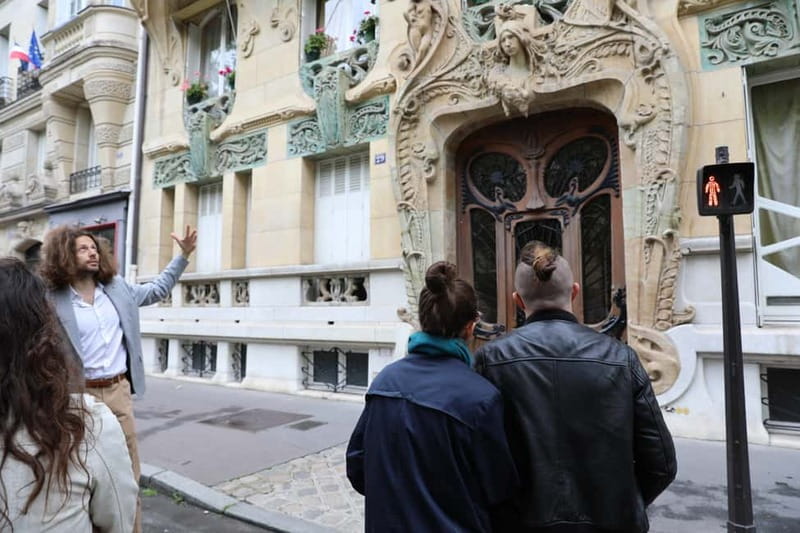
- The route begins near the Eiffel Tower: Meet at the Franprix store at the corner of rue de l’Université and avenue de la Bourdonnais, then look for the red canvas tote bag.
- The Ceramic Hotel is a major highlight: Its decorated façade shows how Art Nouveau turned an ordinary city building into a piece of visual theater.
- Avenue Rapp brings Jules Lavirotte into focus: His houses are among the boldest architectural stops on the walk.
- The Eiffel Tower gets a new role: The tour connects the famous monument with the technology, optimism, and design debates of the Belle Époque.
- The walk goes beyond architecture: You’ll hear about symbolism, philosophy, social change, Picasso’s favorite drinking places, and the difference between Art Nouveau and Art Deco.
- It is a true private tour: English and French are available, and you can ask questions without competing with a large group.
Why Parisian Art Nouveau is worth two focused hours
Paris is often sold through its grand boulevards, Gothic churches, and famous museums. Art Nouveau offers a different way to read the city. Instead of asking only how old a building is, you begin asking how it moves, what it suggests, and why its decoration looks so alive.
The style reached its height around the turn of the 19th and 20th centuries. It favored curved lines, flowers, insects, women’s faces, unusual lettering, ceramic decoration, and metalwork that seemed to grow rather than be assembled. Wealthy clients embraced it because it offered something new and expensive-looking, but it also reflected a wider desire to break from stale historic styles.
Your guide starts with the roots of the movement, then follows it into its mature period. That order matters. You are not simply shown a succession of ornate buildings. You are given a way to understand how new Gothic ideas, industrial materials, older artistic traditions, philosophy, and social questions fed into the style.
This makes the walk a good choice if you have ever looked at a Paris façade and thought it was beautiful but had no idea why. The guide gives you a vocabulary for what you see without turning the outing into a formal classroom.
More Art Nouveau tours in France:
- Guided Tour of Nancy, French Capital of Art Nouveau
★ 5.0 · 18 reviews - Private Art Nouveau and Art Deco tour near Opera
★ 5.0 · 15 reviews - Art Nouveau visit to Nancy
★ 5.0 · 13 reviews
Meeting near the Eiffel Tower and getting oriented
The meeting point is in front of the Franprix store at the corner of rue de l’Université and avenue de la Bourdonnais. You should look for the guide carrying a red canvas tote bag. This is a practical detail worth noting because the meeting point is a street corner rather than a major monument entrance.
The route stays around the Eiffel Tower area, which gives the tour a clear visual anchor. You are not being driven between scattered neighborhoods. Instead, the walk builds a story through buildings that can be examined on foot.
The pace is described in the feedback as comfortable rather than strenuous. Still, this is a walking tour, so wear shoes you can use on Paris sidewalks for two hours. Food and drinks are not included, so bring water if you like to walk with it, and plan any café stop for before or after the tour.
Because the group is private, you can ask for clarification as soon as a detail catches your eye. That is valuable on an architecture walk. A public group often has to move on when one person wants to ask about a doorway or a symbol. Here, the conversation can remain focused on your interests.
The Ceramic Hotel and the drama of the façade
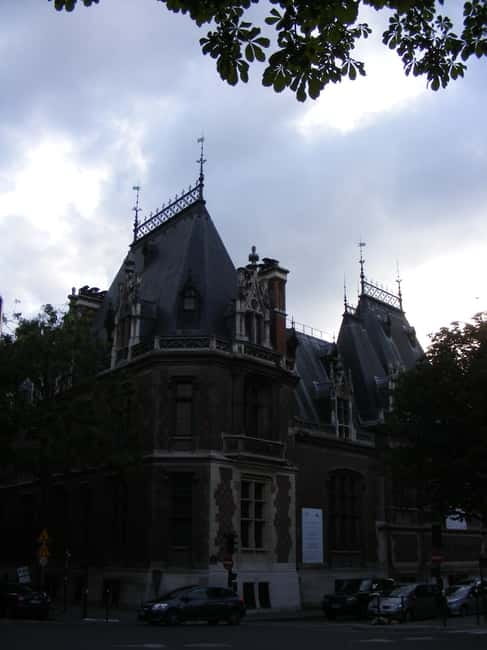
The Ceramic Hotel is one of the visual high points of the route. Its façade shows why Art Nouveau can be easy to miss if you only look at a building’s overall shape. The important details are often above eye level, around windows, doorways, balconies, and bands of ceramic decoration.
Your guide can help you separate the structure from the ornament. That distinction is useful. Art Nouveau was not simply a decision to add more decoration. It aimed to bring architecture, furniture, lettering, ironwork, and decorative art into one design language.
At the Ceramic Hotel, look closely at how the exterior catches your eye before you know exactly why. The surface is meant to be read as a whole, but the smaller elements reward a slower look. The building also shows the role of ceramics in Parisian Art Nouveau, especially at a time when new production methods made elaborate façades possible.
This stop is best for people who enjoy visual detail. If you prefer grand interiors or lengthy museum visits, the exterior focus may feel brief. The tradeoff is that the tour lets you see architecture in its original urban setting, where it has to work alongside ordinary streets and neighboring buildings.
Avenue Rapp and Jules Lavirotte’s theatrical houses
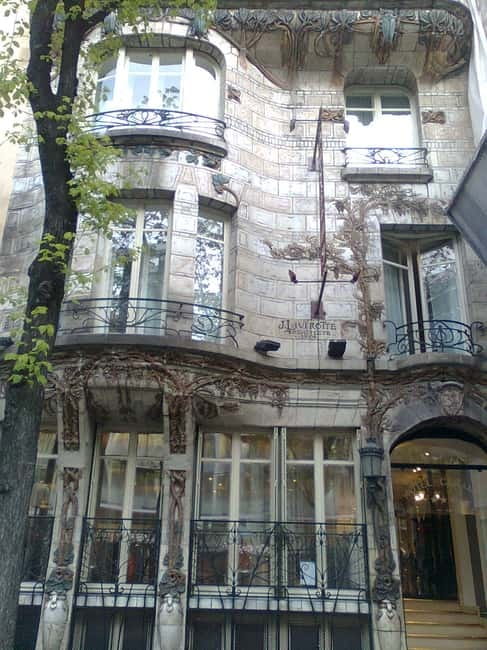
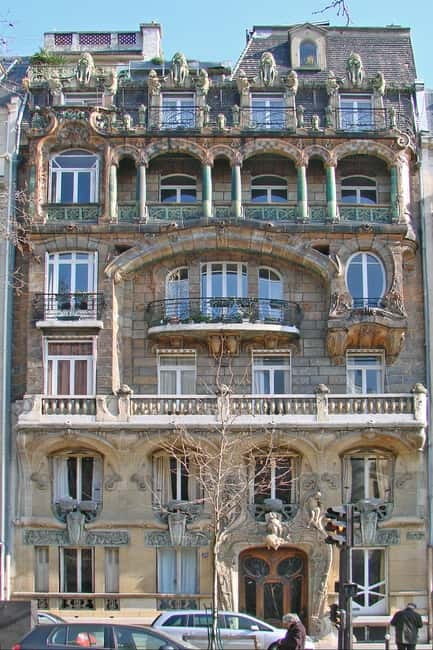
Avenue Rapp brings the work of architect Jules Lavirotte into the story. His houses are flamboyant, highly decorated, and far from the restrained stone façades many people associate with Paris.
This is where the tour’s theme becomes especially clear. Lavirotte treated the façade as a place for fantasy, movement, and surprise. You will see how ornament can guide the eye around a building, rather than merely fill empty space.
Your guide also puts these buildings into a wider cultural setting. Art Nouveau was tied to the Belle Époque, a period of confidence in new technology, new materials, and new forms of expression. At the same time, the style was connected to wealth and status. A remarkable façade could signal that the owner was modern, sophisticated, and willing to pay for something no neighbor had.
That tension makes the houses more interesting. They are not just pretty oddities. They raise questions about who could afford this kind of design and why novelty became such a powerful selling point.
The avenue is also a strong place to practice looking. You might start by spotting the curves and tiles, then notice how windows, balconies, and entrances work together. Once you learn what to look for, other Parisian buildings may begin to reveal similar details later in your trip.
More private architecture tours in France:
- Neoclassical Paris Architecture 2-Hour Private Walking Tour
★ 5.0 · 7 reviews - Paris Art Nouveau Private Tour
★ 5.0 · 7 reviews - Architectural Strasbourg: Private Tour with a Local Expert
★ 5.0 · 2 reviews - Architectural Paris: Private Tour with a Local Expert
★ 5.0 · 2 reviews
The Theosophical Society building and Art Nouveau symbolism
The Theosophical Society of Paris building adds an unexpected philosophical layer. Art Nouveau often borrowed from nature, but its symbols were not limited to simple flowers and leaves. Designers also drew on ideas about spirituality, mythology, the human body, and hidden forces.
This stop helps explain why the movement can feel both decorative and mysterious. Some façades invite you to admire their craftsmanship. Others seem to suggest that the building has a personality or an inner life.
The guide’s role is important here. Without explanation, a symbolic detail can look like random ornament. With context, it becomes part of a larger effort to unite art, architecture, philosophy, and daily life.
This is also one of the reasons the private format has real value. The subject can move quickly from architecture to cultural history. You may want to ask about a symbol, a design source, or the relationship between Art Nouveau and other artistic movements. A private guide can spend time on that instead of keeping to a fixed script.
The Eiffel Tower and the modern spirit of the Belle Époque
The Eiffel Tower may seem like a separate subject from decorative apartment buildings, but the tour makes the connection clear. Both belong to a period fascinated by modern materials, engineering, invention, and the possibility of a new visual language.
The tower is not an Art Nouveau building in the same sense as the Ceramic Hotel or Lavirotte’s houses. Its link to the movement is more about the era’s willingness to use new technology and reject old expectations about what architecture should look like.
That distinction is useful. It keeps the tour from treating every unusual Paris landmark as the same style. You learn to compare the tower’s exposed iron structure with Art Nouveau’s use of metal, glass, ceramics, and sweeping lines.
The Eiffel Tower also gives you a landmark that most people already know. The guide can use it as a bridge between familiar Paris and less familiar architecture. You may leave with a better understanding of why the tower caused such strong reactions when it appeared, and why the same era produced such daring decorative buildings.
This part should appeal even if you are not an architecture specialist. The tower helps make the historical setting concrete, while the nearby façades show how the period’s ideas appeared at street level.
From Gothic revival to Art Nouveau and later Art Deco
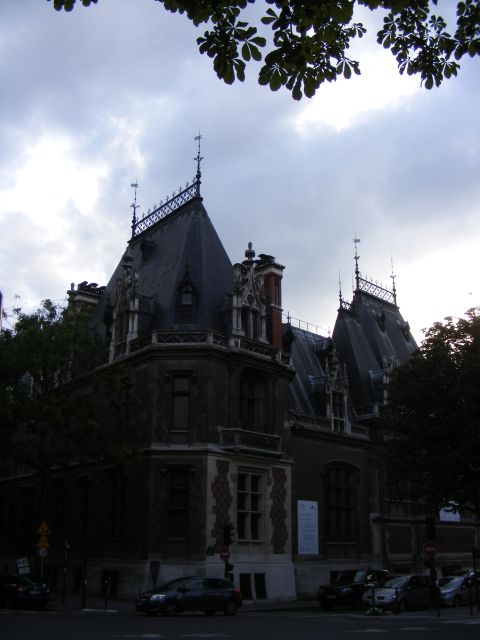
One of the strongest parts of the experience is the explanation of how Art Nouveau developed from earlier styles and later influenced other design. The movement did not appear from nowhere. Earlier Gothic revival ideas helped encourage a fresh look at structure, craftsmanship, and historical form.
At the same time, Art Nouveau is often confused with Art Deco. A past participant specifically valued the visual explanation that made the difference clearer. That is a practical benefit because the two styles can blur together when you encounter them quickly in a city.
Art Nouveau generally favors organic curves, flowing decoration, and forms inspired by nature. Art Deco, which came later, is more often linked with geometry, symmetry, and a sharper machine-age look. The tour gives you examples on actual Paris streets, so the distinction is easier to remember than it would be from definitions alone.
The guide also connects architecture to surrounding social issues. That wider view keeps the walk from becoming a hunt for attractive façades. Buildings reflect money, taste, technology, and the social priorities of their time.
Picasso’s drinking places and the human side of the route
The experience is not limited to architectural theory. You will also hear about the drinking places favored by Picasso and other artists. This gives the walk a more human scale.
Art movements do not happen only inside studios or architects’ offices. Artists, writers, builders, patrons, and visitors met in cafés and bars, where ideas crossed from one field to another. The reference to Picasso helps place the buildings within the broader creative life of Paris.
This portion may appeal to you if you like cultural connections more than technical detail. It also breaks up the architectural discussion and adds a sense of daily life to the Belle Époque setting.
Do not expect a food tour. Food and drinks are not included, and the focus remains on history, art, and buildings. Think of the café references as cultural context, not as scheduled tastings or stops for a drink.
What the guide adds to the experience
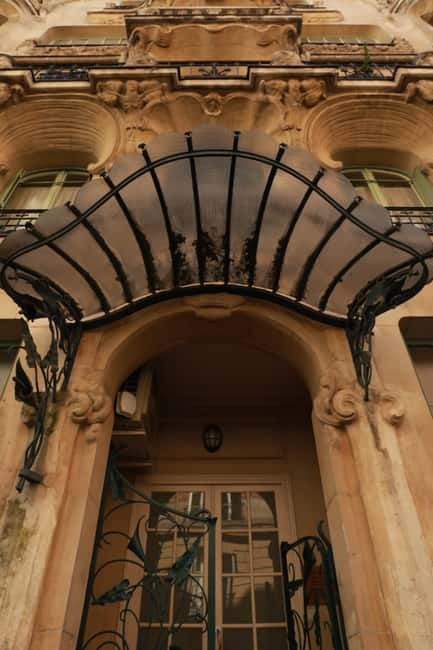
The guide is central to the value of this tour. The named guide Boris is praised for explaining French Art Nouveau, answering questions, discussing architectural styles, and linking the buildings to broader cultural and philosophical ideas.
The strongest feedback points to three qualities: clear explanations, genuine enthusiasm, and the ability to handle questions. Those qualities matter because Art Nouveau can become a list of designers and dates if it is not presented well.
The guide can also help you avoid a common mistake: judging the style only by whether you like its decoration. The better question is what the building was trying to communicate, what materials made it possible, and how it fit the period’s ideas about modern life.
English and French are offered. Since the tour is private, you can keep the conversation at a pace that suits your group. A family group with teenagers and adults, for example, can ask different kinds of questions without worrying about slowing down a large party.
Is $176 per person a fair price?
At $176 per person, this is not a budget walk. The value depends heavily on your group size and interest in architecture.
For one or two people, the cost is a serious splurge for two hours. You are paying for a private guide rather than a general city walk, and the subject is narrow. If you only want to see the Eiffel Tower and take a few photos, this is not the best use of your money.
For a private group, the price becomes easier to justify. You receive focused attention, a specialist theme, and the chance to ask questions throughout the route. The tour also saves you from trying to identify Art Nouveau buildings on your own, where you might walk past important details without understanding them.
The provider has also received recognition among small European tour operators, which adds some reassurance about its place in the specialist tour market. It is not a substitute for judging the specific route, but it supports the idea that this is a serious small-group operation rather than a generic sightseeing product.
I would consider booking it for a group that already has the main Paris sights covered and wants a more unusual subject. It is especially worthwhile for architecture students, design fans, art lovers, and repeat visitors.
Practical details for choosing your day
The tour lasts two hours, with starting times based on availability. That length works well as a focused morning or afternoon activity. It leaves room to pair the walk with another attraction, though you should allow extra time around the meeting point and end of the route if you have a strict reservation afterward.
Free cancellation is available up to 24 hours in advance, and you can reserve now and pay later. These terms help if your Paris schedule is still shifting.
The tour is offered in English or French and is limited to a private group. The guide is the only included service. Food and drinks are not included.
The walk was described as not strenuous, but you should still expect to remain on your feet for the full two hours. The route includes outdoor viewing of buildings, so weather and street conditions can affect comfort. No special interior access is listed, so book this for façades, context, and conversation rather than for a series of indoor visits.
Who should book this Art Nouveau tour?
Book it if you want to see Paris through design, history, and symbolism rather than only through famous monuments. It is a good match for anyone who has already visited the Louvre or Eiffel Tower and wants a more focused look at the city.
It also suits mixed-age groups. The visual buildings can hold the attention of younger people, while the history, philosophy, and art connections give adults plenty to discuss. The private format is helpful when your group has different levels of interest.
You may want to skip it if you have only one short day in Paris and need a broad introduction to the city. You should also think twice if your main goal is shopping, food, or entering major sights. This is a specialist architecture walk, and its value comes from paying attention to façades that many people pass without a second glance.
Should you book it?
I would book this tour if Art Nouveau interests you, or if you want the Eiffel Tower area to reveal something beyond the usual postcard view. The Ceramic Hotel, Jules Lavirotte’s houses on Avenue Rapp, the Theosophical Society building, and the Eiffel Tower create a strong two-hour route with a clear theme.
The best reason to choose it is the guide-led interpretation. Boris and the other guides are expected to do more than identify buildings. They explain how style, technology, philosophy, wealth, and Parisian social life connect.
The main caution is price. At $176 per person, this works best as a planned splurge for a private group. If that fits your interests and budget, it offers a focused, thoughtful way to see a less obvious side of Paris.
FAQ
How long is the Art Nouveau tour?
The tour lasts two hours.
Is the tour private?
Yes. It is offered for a private group.
Which languages are available?
The tour is available in English and French.
Where is the meeting point?
Meet in front of the Franprix store at the corner of rue de l’Université and avenue de la Bourdonnais. Look for the guide with the red canvas tote bag.
What buildings are included?
The route includes the Ceramic Hotel, houses by Jules Lavirotte on Avenue Rapp, the Theosophical Society of Paris building, and the Eiffel Tower.
Is food or drink included?
No. Food and drinks are not included.
Can I cancel for a full refund?
Yes. You can cancel up to 24 hours in advance for a full refund.
Just added around France
- Architectural Strasbourg: Private Tour with a Local Expert★ 5.0 · 2 reviews
- Neoclassical Paris Architecture 2-Hour Private Walking Tour★ 5.0 · 7 reviews
- Gothic Paris – Castles & Cathedrals (Marais History Walk-Small Group Tour)★ 5.0 · 3 reviews
- Architectural Bourgeois Paris 19th Century★ 4.0 · 4 reviews
- Architectural Paris: Private Tour with a Local Expert★ 5.0 · 2 reviews
- Paris Art Nouveau Private Tour★ 5.0 · 7 reviews
- Art Nouveau visit to Nancy★ 5.0 · 13 reviews
- Dijon Signature Walk: Gothic Landmarks & Ducal Grandeur★ 4.5 · 9 reviews
Art Nouveau Tours, compared.
Riga: Old Town Walking Tour with Art Nouveau Highlights
Read our review →
Riga: 2-Hour History of Art Nouveau Walking Tour
Read our review →
Brussels: Art Nouveau Pass – Entry to Three Locations
Read our review →
Small Group Tour in Ålesund: Art Nouveau, Sea Views & Insider Tips
Read our review →
Browse the lists this tour appears in