
Review · LONDON
London: Brutalist & High-tech Architecture Walking Tour
London’s modern face makes far more sense when you connect its concrete terraces, exposed services, glass towers, and financial power. This three-hour walking tour begins at the Barbican and follows the City’s architectural story through post-war rebuilding, deregulation, digital design, and the Great Fire’s lasting influence.
I like the way the route joins architecture to politics rather than treating buildings as isolated objects. I also like having an actual architect, Poi, explain why these places look and work as they do. The main drawback is the amount of walking, with no building interiors included, so comfortable shoes and reasonable mobility are essential.
Key points to know before you go
- Start with post-war idealism: The Barbican shows how concrete housing and cultural facilities were tied to the Welfare State.
- See services turned into sculpture: Lloyd’s Building makes lifts, pipes, stairs, and ventilation part of its public identity.
- Follow London’s financial rise: The City’s newer towers reflect late 20th-century deregulation and global finance.
- Compare several generations of towers: The Gherkin, 22 Bishopsgate, and the Walkie Talkie each use technology differently.
- Finish with a 2,000-year city story: The Monument to the Great Fire links today’s streets to London’s 1666 planning legacy.
- Plan for a serious walk: The route is not suitable for wheelchair users, people with mobility impairments, or those over 80.
Why this walk makes modern London easier to read
Many people pass through the City of London seeing only office towers and busy streets. This tour gives you a set of questions to ask instead. Why is one building made of raw concrete? Why are another building’s pipes displayed outside? Why do newer towers twist, taper, or curve?
The guide connects those choices to the events around them. The Barbican belongs to the era of post-war reconstruction and public housing. Lloyd’s belongs to a period when engineering systems became part of architectural expression. The Gherkin, 22 Bishopsgate, and 20 Fenchurch Street belong to a London shaped by financial growth, environmental calculations, and computer-assisted design.
That larger story is the tour’s real value. You are not simply collecting photographs of famous buildings. You are learning how London’s priorities changed from social reconstruction to commercial expansion.
Poi leads the walk in English or Chinese and brings professional architectural training to the explanations. That matters here. The buildings can be visually striking, but their most interesting features are often the ones you would miss alone: structural systems, circulation, services, public space, and the relationship between the building and the street.
More Bauhaus and Brutalist tours in the world:
- London: Brutalist Architecture & History Walking Tour
★ 4.8 · 42 reviews - Le Corbusier’s Chandigarh : A Complete Architecture Tour
★ 4.7 · 25 reviews - Architecture of New Belgrade – Brutalism Decoded
★ 4.5 · 24 reviews
St Giles Cripplegate and the approach to the Barbican
The meeting point is outside St Giles Cripplegate church. From there, the route moves into the Barbican Estate, one of the clearest places in London to consider post-war urban planning.
The contrast is immediate. A historic church sits beside a vast concrete complex created in the decades after wartime destruction. The setting helps frame the Barbican as more than a collection of bold buildings. It was part of a deliberate attempt to rebuild city life through housing, public amenities, pedestrian routes, and cultural facilities.
Allow about 50 minutes for the Barbican portion. That is enough time for the guide to explain the estate’s design rather than simply point out its concrete surfaces. You will look at Brutalism as a social and political project, including the ambitions of the Welfare State.
The word Brutalist often brings to mind heaviness and severity. Here, you can consider another side of the style: the idea that strong materials, shared spaces, and planned communities could support a better urban life. The architecture can feel powerful, imposing, and at times difficult to navigate, but that tension is part of the discussion.
I particularly like starting here because it gives the rest of the walk a useful counterpoint. Later buildings are tied to banking, investment, and corporate identity. The Barbican asks what a city owes its residents.
The route is not designed for people who need step-free access or short walking distances. Take that seriously. You will spend much of the tour on foot, and the Barbican’s scale makes comfortable footwear especially important.
From public housing to the City’s financial towers
After the Barbican, the group walks for about 15 minutes toward the City of London. This is where the tour changes tone. The route moves from post-war social ambition to the commercial power that reshaped London during the late 20th century.
The discussion covers economic deregulation and the expansion of global finance. That context helps explain why the City acquired such a concentration of large, technically ambitious office buildings. These towers were not only workplaces. They became corporate symbols and public markers of London’s new economic role.
You will not enter the buildings. Instead, the guide reads them from the streets and public spaces around them. For an architecture tour, that has one benefit: you see how the buildings affect the city at eye level, not just how they look from an interior lobby.
22 Bishopsgate and the scale of the modern City
The first major City stop is 22 Bishopsgate, with about 10 minutes of guided explanation. Its size gives you a useful way to think about the changing scale of office development.
This stop is brief, so expect a focused interpretation rather than a long architectural lecture. The building helps set up a comparison between earlier High-tech experiments and the much larger commercial towers that followed.
Pay attention to how the guide explains the building in relation to its surroundings. In this part of London, towers compete for attention from every direction. Their height, footprint, and street-level presence all affect how the City feels as a place to work and move through.
More architecture walks in the world:
- Lecce: Baroque Architecture and Underground Walking Tour
★ 4.6 · 1,248 reviews - Chicago in a Day: Food, History & Architecture Walking Tour
★ 5.0 · 1,153 reviews - Ramblas, Old Town, Gothic and Gaudi Architecture Walking Tour
★ 5.0 · 723 reviews - Chicago’s Secret Interiors Architectural Walking Tour
★ 5.0 · 635 reviews
Lloyd’s Building and the machinery of architecture
Lloyd’s Building receives one of the longer stops, about 25 minutes, and for good reason. It is one of the clearest examples of High-tech architecture, a style that turns structure and building services into visible design features.
Lifts, pipes, stairways, and other working parts are placed on the exterior rather than hidden behind a conventional facade. That approach changes the way you read the building. Instead of seeing a smooth shell, you see a building presenting its mechanical life to the street.
Poi’s architectural background is especially useful here. A quick look can leave you thinking only about unusual shapes and metallic surfaces. A proper explanation helps you consider why those components were displayed, how the building’s systems relate to its form, and what this said about technology at the time.
This is also an important political and economic stop. High-tech architecture arrived during a period when business culture and financial markets were changing quickly. The style’s focus on flexibility, engineering, and visible performance fits that setting.
The building is included as an exterior stop. No entry is part of the tour, so you should book this for interpretation and city views, not for an indoor visit.
The Leadenhall Building and the exposed frame
The Leadenhall Building receives around 10 minutes. Its sharply angled form creates a strong visual contrast with Lloyd’s, even though both belong to the City’s tradition of making structure and engineering part of the architectural message.
Here, the guide can help you look past the silhouette. The building’s frame, tapering profile, and open relationship with the public area below all affect how it meets the street. The stop also shows how High-tech ideas continued into a newer generation of office towers.
This is a good place to compare architectural intentions. Lloyd’s makes its services highly visible. The Leadenhall Building presents a more ordered and contemporary expression of structure. Both depend on advanced engineering, but they communicate it in different ways.
Since the stop is short, stay close to the guide and listen for the comparison with the buildings you have already seen. The experience works best as a connected story, not as a series of unrelated photo stops.
The Gherkin and the role of environmental engineering
At 30 St Mary Axe, commonly called the Gherkin, you spend about 15 minutes discussing one of London’s most recognizable towers. Its rounded, tapering form is easy to remember, but the useful part of the stop is understanding how environmental engineering helped shape the design.
The building’s form is not simply a decorative flourish. The tour connects its shape and systems to ideas about energy, airflow, and the use of digital design tools. You will consider how newer architecture tries to respond to environmental pressures while also creating a distinctive corporate image.
The Gherkin is a good example of how London’s skyline moved beyond the hard-edged office block. Its curved profile changes views along the surrounding streets and creates a different relationship between tower and sky.
You may find this one of the easiest buildings to appreciate visually, even if you know little about architecture. The guide adds the missing explanation: how form, technology, finance, and public identity come together in one tower.
Leadenhall Market and the Walkie Talkie
The route continues to Leadenhall Market for about 10 minutes. This stop adds a welcome change of pace. Instead of another tower, you get a historic market setting within the same financial district.
The market helps you see how old and new layers share a small area of London. After studying large modern buildings, you can consider how contemporary construction sits beside older urban spaces and established routes.
The tour then passes 20 Fenchurch Street, known as the Walkie Talkie, for about five minutes. The stop is mainly from the outside, with scenic views along the way. Its broad upper section gives you another example of how digital design and structural engineering have changed the possible shape of a tower.
This is a quick look rather than a full explanation, so do not expect the same detail offered at the Barbican or Lloyd’s. Still, it earns its place in the route because it lets you compare several modern responses to the same basic challenge: how to build high in a dense historic center.
The Monument and London’s long planning memory
The walk ends at the Monument to the Great Fire of London, with roughly 15 minutes of guided discussion. It is a fitting finish because the tour’s story began with destruction and rebuilding at the Barbican, then followed London’s growth into a global financial center.
The Great Fire of 1666 left a long planning legacy. The Monument gives the guide a place to connect that event to the way London remembers disaster, rebuilds, and manages change over time.
By this point, the City’s towers should look less like random intrusions and more like the latest chapter in an ongoing argument about land, money, technology, public space, and identity. The finish also makes the route feel complete. You begin with the social goals of post-war reconstruction and end with the commercial energy of a modern capital, while the Great Fire links both periods to the city’s older past.
The tour ends at the Monument, rather than returning to the Barbican. That is useful if you plan to continue around the City, but remember to check your onward route before booking another activity.
What the $47 price really buys you
At $47 per person, this is not a cheap orientation walk. It is priced as a specialist tour led by an architect, and the value depends on how much you want explanation rather than simple sightseeing.
You are paying for three hours of connected interpretation across several major buildings. The route includes the Barbican, 22 Bishopsgate, Lloyd’s Building, the Leadenhall Building, the Gherkin, Leadenhall Market, the Walkie Talkie, and the Monument. Entry to buildings, food, and drinks are not included.
I consider the price fair for an architecture enthusiast, design student, urban planner, photographer, or repeat visitor who has already seen the City and wants to understand it better. It is less convincing if you mainly want interior access or a general introduction to London’s famous sights.
The small-group format is another part of the value. It allows for clearer explanations and questions, and one particularly strong feature of the experience is the guide’s ability to connect technical details to social and economic history. If you have ever walked past these buildings without knowing what you were seeing, that perspective can change the way you read the entire district.
Who should book, and who should skip it
Book this tour if you enjoy architecture, city planning, modern history, or the story behind familiar landmarks. It also suits repeat visitors who want a focused half-day in the City rather than another general sightseeing circuit.
It is a strong choice if you want instruction in English or Chinese and appreciate a guide with professional architectural experience. Poi’s clear, energetic approach is best suited to people who like asking questions and looking closely.
Skip it if you dislike long walks, need wheelchair access, have significant mobility limitations, or are looking for indoor visits. The tour is not suitable for hearing-impaired participants, and video and audio recording are not allowed.
The practical preparation is simple: wear comfortable shoes, arrive outside St Giles Cripplegate church, and leave room in your schedule for three hours on foot. Bring your own water or snack if needed, since food and drinks are not supplied.
FAQ
Where does the architecture tour begin?
It begins outside St Giles Cripplegate church.
Where does the tour finish?
The tour finishes at the Monument to the Great Fire of London.
How long does the walking tour last?
The tour lasts three hours.
Which languages are available?
The live guide can conduct the tour in English or Chinese.
Does the tour include entry into the buildings?
No. The tour includes guided exterior visits and explanations, but entry into the buildings is not included.
What should I wear?
Wear comfortable shoes because the tour covers significant walking distances.
Who is the tour not suitable for?
It is not suitable for people with mobility impairments, wheelchair users, people over 80 years old, or hearing-impaired people. Video and audio recording are also not allowed.
Should you book this London architecture walk?
Book it if you want to understand why London looks the way it does, not just photograph its tallest buildings. The combination of the Barbican’s social ideals, Lloyd’s exposed machinery, the Gherkin’s environmental design, and the Monument’s fire story gives you a clear, well-paced way to read the City.
At $47, the tour makes the most sense for someone who values a specialist guide and detailed interpretation. If that sounds like your kind of sightseeing, this is a smart use of three hours. If you need a gentle walk, interior access, or a broad introduction to London, choose something else.
Just added around the world
- Wilmington History and Architecture Tour★ 4.8 · 18 reviews
- Washington, DC: Georgetown Architecture Walking Tour★ 5.0 · 8 reviews
- New Orleans : Garden District Architecture Walking tour★ 4.8 · 5 reviews
- Washington DC: Dupont Circle & Embassy Row Architecture Tour★ 5.0 · 6 reviews
- Walk & Discover KL’s Architectural and Heritage Gems★ 5.0 · 7 reviews
- Vicenza: discovering the city of Palladio by e-bike★ 5.0 · 4 reviews
- Vicenza: Palladian Architecture Private Walking Tour★ 3.3 · 3 reviews
- Unveiling Brno: History, Culture & Architectural Delights★ 5.0 · 2 reviews
Bauhaus and Brutalist Architecture Tours, compared.
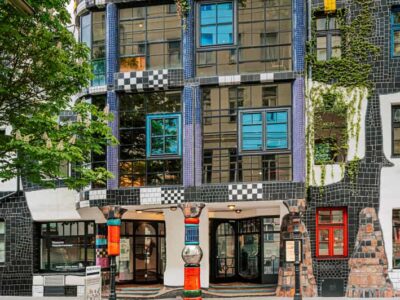
Vienna: Tickets for Kunst Haus Wien: Museum Hundertwasser
Read our review →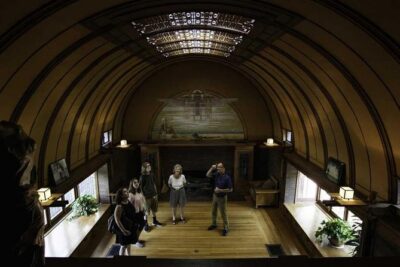
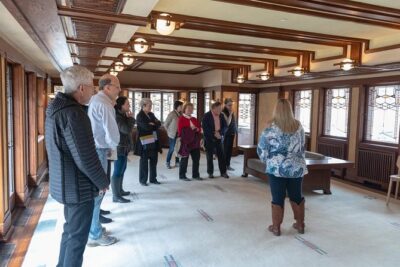
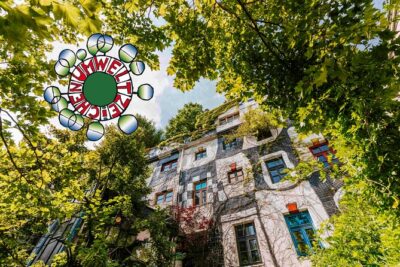
Entrance tickets for the KunstHausWien. Museum Hundertwasser
Read our review →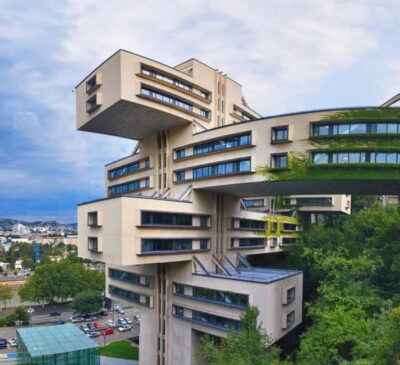
Brutalist Tbilisi: Urban exploration and untold stories
Read our review →
London: Brutalist Architecture & History Walking Tour
Read our review →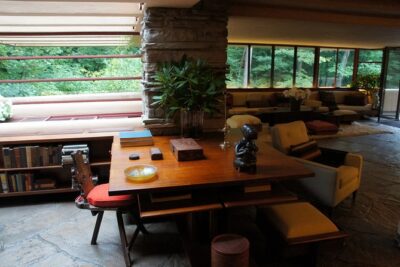
FALLINGWATER – America’s UNESCO World Heritage Masterpiece!
Read our review →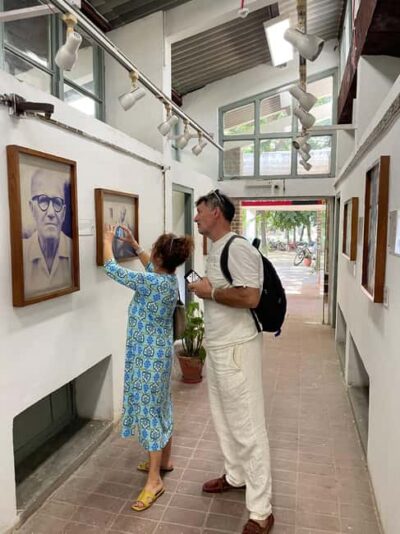
Le Corbusier’s Chandigarh : A Complete Architecture Tour
Read our review →Browse the lists this tour appears in