
Review · BRUSSELS
Brussels: 2-hours “Art Nouveau” Walking Tour
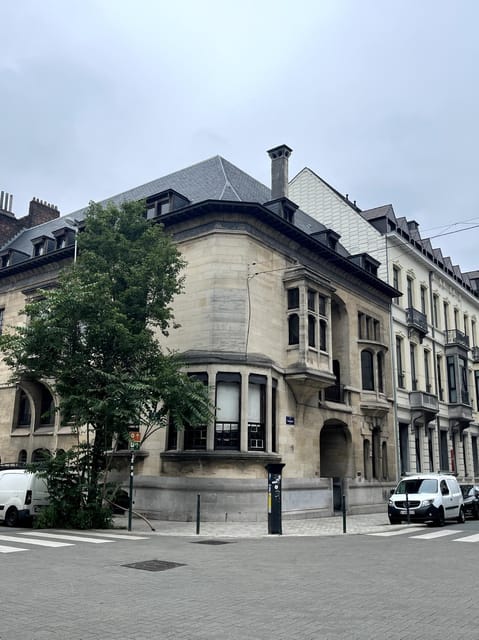
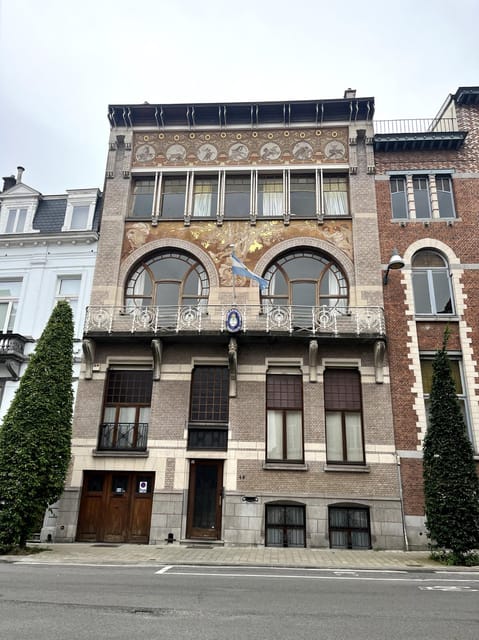
Brussels is the city where Art Nouveau became a serious architectural language, and this private tour gives you a fast, focused look at why. In two hours, you move from the Cinquantenaire area toward Saint-Gilles, seeing work by Victor Horta and other major Belgian architects.
I like the private format, which lets the guide adjust explanations to your interest, and I like the way the route connects famous buildings with less familiar addresses such as Maison Roosenboom and Maison Van Dyck. Guides including Davit, David, Eric, and Yves have received strong praise for their enthusiasm and clear explanations.
The main caution is practical: the experience is sold as a walking tour, but one recent booking became a car tour instead. The meeting instructions have also caused confusion for at least one person, so check the exact location and transport plan before setting off.
Key points to know before you book
- Start at Merode: Meet in front of Brasserie Carpe Diem, opposite the Merode Metro Station entrance.
- Private English tour: You receive a guide for your own group rather than joining a large public walk.
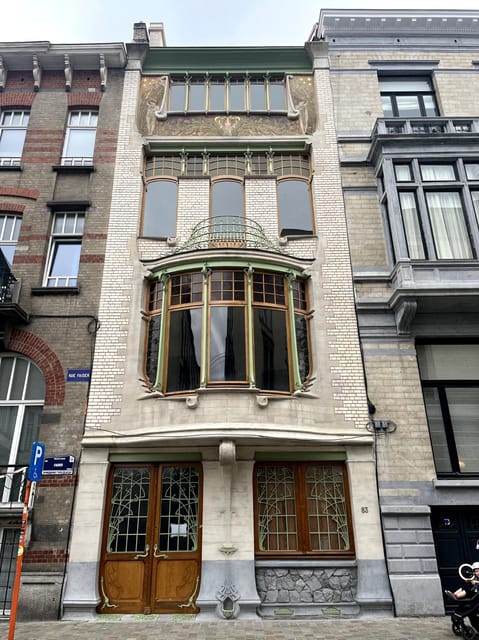
- Horta takes center stage: The route includes Hôtel van Eetvelde, Hôtel Tassel, Maison and Atelier Horta, and other major works.
- Art Nouveau has several faces: Your guide explains the different trends, not just the familiar curling lines and floral decoration.
- The route crosses Brussels: The tour begins near Cinquantenaire and finishes on Avenue de la Jonction in Saint-Gilles.
- Transport may matter: A ticket is not included, and the actual format can change depending on availability.
Why Brussels is the right place to study Art Nouveau
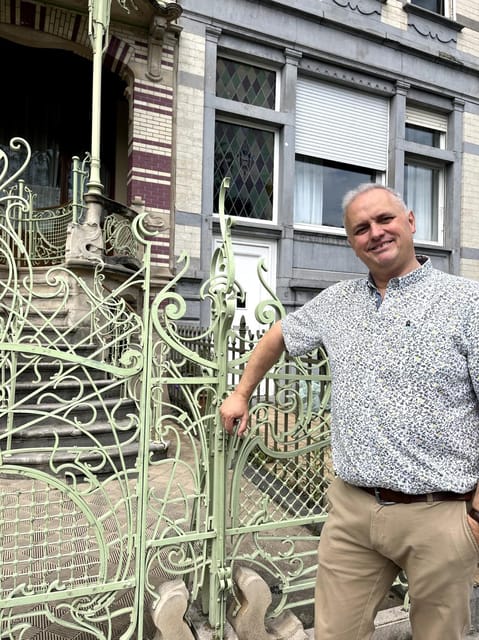
Art Nouveau was not simply a taste for curved balconies and plant-like decoration. It was a new way of thinking about buildings, interiors, furniture, and daily life. Brussels played a central role in that change, especially through architects such as Victor Horta and Paul Hankar.
Your guide begins with this basic story at the Cinquantenaire area. You learn why the style seemed so modern when it appeared, then get a short introduction to its main traits and different forms. That opening matters because it gives you a way to read the façades yourself.
Look for the details that separate a serious Art Nouveau building from a later imitation: flowing lines, carefully planned ornament, connections between the exterior and interior, and decoration that belongs to the structure rather than being pasted on afterward. The tour is most useful when your guide points out these choices in place.
I would not book this simply as a general Brussels sightseeing walk. The value comes from learning how to look. After two hours, you should be better prepared to recognize Art Nouveau elsewhere in the city and to appreciate a visit to the Horta Museum with more context.
More Art Nouveau tours in the world:
- Walking Tour of Riga’s Beautiful Art Nouveau Architecture
★ 4.8 · 20 reviews - Riga’s Architecture: A self-guided audio tour of the city’s art nouveau history
★ 5.0 · 3 reviews - Mexico City origins and architecture: Art Nouveau, Deco,Eclectic
★ 3.0 · 2 reviews
Meeting at Merode and starting beside Cinquantenaire
The meeting point is in front of Brasserie Carpe Diem, opposite the Merode Metro Station. Merode has three exits, so the instruction is worth taking seriously. Use the entrance shown in the booking information rather than assuming any station exit will put you in the right spot.
The first scheduled stop is Cinquantenaire, with about 15 minutes of guided explanation. This is a sensible place to begin because it gives the tour a clear starting point before you move through residential streets and individual houses.
You should arrive early enough to identify the brasserie and confirm your guide. One booking lost time because the meeting information was unclear. That is an avoidable nuisance on a two-hour tour, where every minute counts.
The group is private, but the exact guide can vary. Davit, David, Eric, and Yves have led recent departures. One important detail is that the photograph on the booking page may show an older man, while your actual guide could be much younger. Do not use the photograph as your identification method.
The long middle section: façades across Brussels
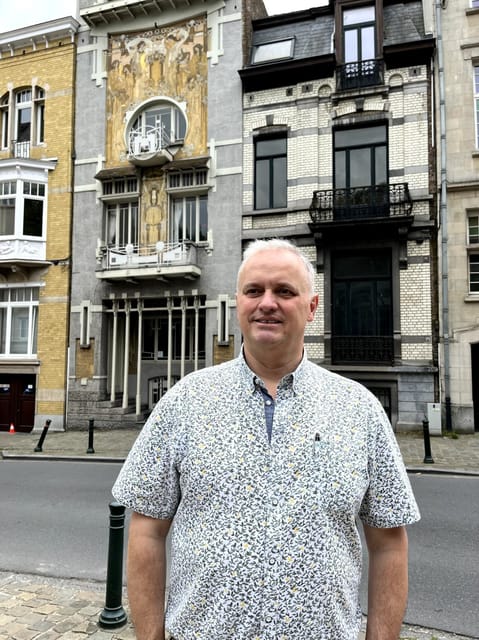
Most of the experience takes place during a roughly 90-minute guided section. This is where the tour earns its keep. The Art Nouveau buildings are spread across different parts of Brussels, so finding them on your own would take planning, map work, and a good deal of patience.
The route includes several named houses and town residences:
- Maison Cauchie
- Palais Stoclet
- Maison Saint Cyr
- Maison Van Dyck
- Hôtel van Eetvelde by Horta
- Hôtel Tassel by Horta
- Maison Roosenboom
- Hôtel Ciamberlani
- Maison Hankar
- Maison Hannon
- Maison and Atelier Horta
- A house associated with Horta’s brother
The exact order can change, and not every stop is guaranteed on every departure. The program is subject to availability, so treat the list as a guide to the architectural material rather than a fixed checklist.
That flexibility can work in your favor. A private guide can spend more time on the buildings that interest you most, at least when timing and access allow. If you are especially keen on Horta, tell the guide at the start. If you prefer variety, ask for comparisons between Horta, Hankar, Cauchie, Saint Cyr, and the other architects represented along the route.
Reading Horta through Hôtel van Eetvelde and Hôtel Tassel
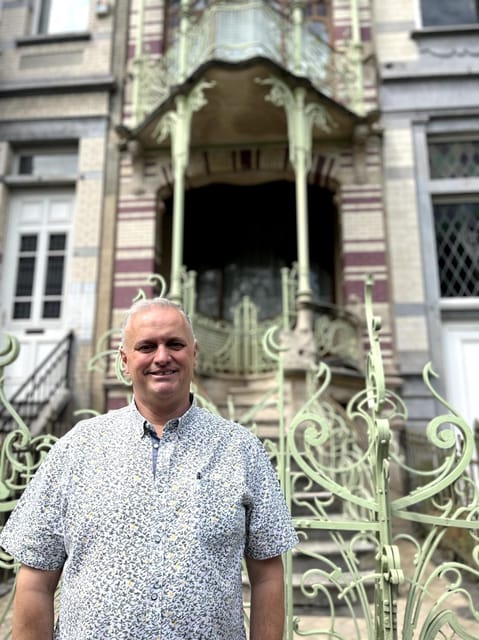
Victor Horta is the central name on this tour. His work helped define Brussels Art Nouveau, and the route includes several of his most important addresses.
Hôtel Tassel is especially useful for understanding how the movement entered the private townhouse. Hôtel van Eetvelde adds another example of Horta’s approach, while Maison and Atelier Horta links the architect’s professional work with the setting in which he lived and worked.
Your guide’s job here is not just to point and name. You want an explanation of what makes Horta’s buildings different: how the parts relate to one another, how decoration supports the design, and how the style challenged older architectural habits.
The tour does not state that you enter every building. Plan on viewing the exteriors unless your guide confirms otherwise. That is normal for a city architecture walk, but it affects expectations. The experience is about locating, comparing, and understanding the buildings rather than receiving a guaranteed series of interior visits.
More architecture walks in the world:
- Lecce: Baroque Architecture and Underground Walking Tour
★ 4.6 · 1,248 reviews - Chicago in a Day: Food, History & Architecture Walking Tour
★ 5.0 · 1,153 reviews - Ramblas, Old Town, Gothic and Gaudi Architecture Walking Tour
★ 5.0 · 723 reviews - Chicago’s Secret Interiors Architectural Walking Tour
★ 5.0 · 635 reviews
Maison Cauchie, Maison Roosenboom, and the smaller addresses
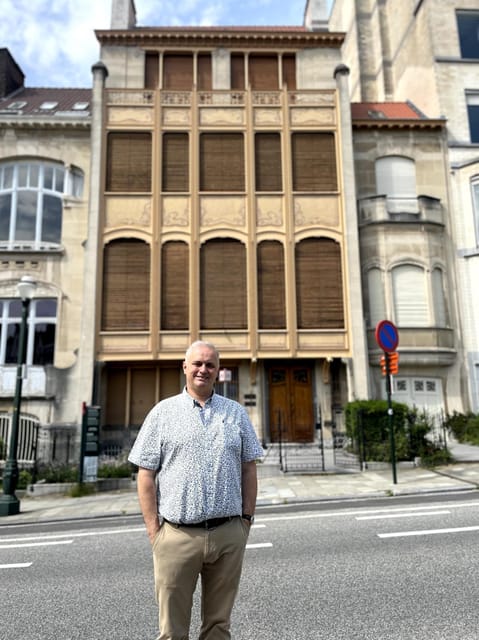
The well-known names attract attention, but I like the inclusion of houses such as Maison Cauchie and Maison Roosenboom. They help show that Brussels Art Nouveau was not limited to one architect or one visual formula.
Maison Cauchie is included as one of the principal sights, along with Maison Saint Cyr and Maison Van Dyck. The route also names Maison Hankar and Maison Hannon. Together, these stops give you a broader view of the movement than a tour focused only on Horta.
This variety is valuable because Art Nouveau can look very different from one building to the next. Some façades may feel restrained, others highly decorative. Some use strong linear forms, while others lean toward plant-like curves and ornamental detail. Your guide introduces these different trends early, then gives you real buildings in which to spot them.
The houses are also scattered. That is the reason a local guide helps. A map can show you where a building is, but it cannot always tell you which detail matters or why a particular address belongs in the story of Brussels architecture.
Palais Stoclet and the question of style
Palais Stoclet is another major stop on the route. Its inclusion broadens the tour beyond the best-known Horta addresses and gives you a chance to compare another important Brussels example.
The tour promises an explanation of the movement’s characteristics and different trends, so this is where you should ask questions about what fits comfortably under the Art Nouveau label and what begins to move toward a more geometric or restrained approach.
Do not expect the tour description to provide a complete architectural lecture on every building. Two hours is short, especially when the buildings are spread across the city. The strength is breadth combined with a guide’s interpretation. The tradeoff is that each stop may receive only a short explanation.
If you already have a strong background in architecture, ask specific questions. One person found a guide less informed than expected, while others praised guides such as Davit, David, and Eric for being articulate and passionate. The quality can therefore depend heavily on the individual guide assigned to your booking.
The final stop at Hôtel Ciamberlani
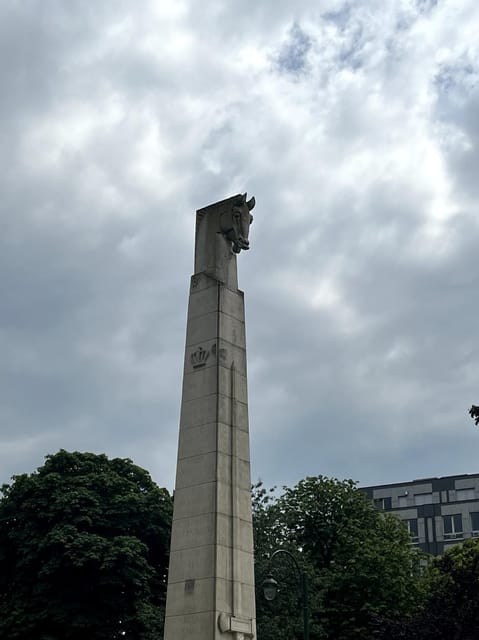
The listed route includes about 15 minutes at Hôtel Ciamberlani before finishing on Avenue de la Jonction in Saint-Gilles. Ending there makes sense geographically, since the tour begins near Cinquantenaire and moves through several districts rather than returning to Merode.
Saint-Gilles is important to your planning. You do not finish at the starting point, and the tour does not include a transport ticket. Check your onward route before you begin. If you need to return to central Brussels, ask the guide where the nearest practical transport connection is.
The advertised duration is two hours, so keep your schedule reasonably open around it. A delayed start, a longer explanation, or a change from walking to driving could alter the timing. A private tour offers flexibility, but it does not remove the need to allow some spare time.
Walking tour or car tour?
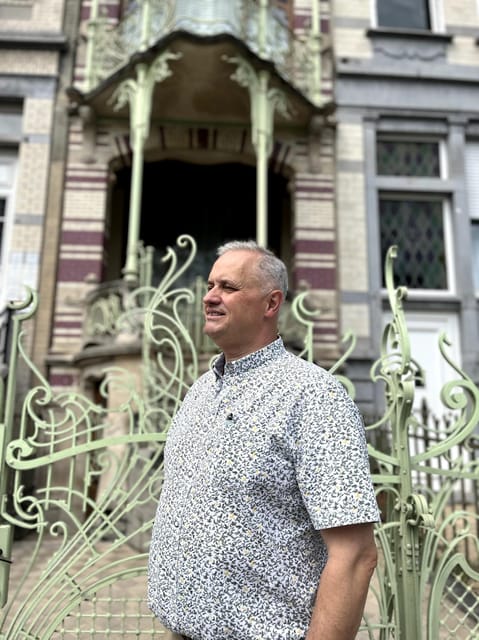
This is the biggest point to clarify before booking. The experience is described as a walking tour, but one recent departure was conducted by car. Another person appreciated that Yves drove them and said they saw more than expected.
A car can cover more ground, which is useful when the buildings are spread across several neighborhoods. It may also explain how the full list of addresses can fit into two hours. On the other hand, a vehicle changes the experience. You may spend less time standing in front of each façade, and the tour may feel more like a city circuit than a slow architectural walk.
If walking is important to you, contact the provider before the day of the tour and ask which format is planned. If seeing as many buildings as possible matters more, a car could be an advantage. The key is to know what you are buying.
The tour is not suitable for wheelchair users, according to the activity information. Smoking is not allowed. These points are brief but important, especially because the route crosses multiple streets and districts.
What the $136 price means
At $136 per person, this is not a budget walk. The price needs to be judged against the private format, the specialist subject, and the amount of ground covered.
For a group with a serious interest in architecture, the cost may make sense. You are not paying for a standard introduction to Brussels. You are paying for a focused route through buildings that would be difficult to locate and interpret efficiently on your own.
The value is weaker if you only want a casual stroll or a general city orientation. Many of the buildings are viewed from outside, transport may not be included, and the tour lasts only two hours. You should also be comfortable with the possibility that the final format differs from the advertised walking plan.
The strongest value comes when you pair the tour with a visit to the Horta Museum. One person specifically found that the tour made the museum visit more meaningful. That combination gives you both a citywide look at Horta’s work and a closer understanding of his own architectural world.
The guides make the difference
Several guides have been praised for passion and clear delivery. Davit led one particularly enjoyable tour across the city, while David was described as informed and articulate. Eric also made a strong impression by bringing the subject to life, and Yves went out of his way to drive a group farther than expected.
That range matters. A good Art Nouveau guide should do more than memorize names and dates. You want someone who can explain why the buildings matter, compare different architects, and help you notice design choices without drowning you in technical terms.
There was also a poor experience involving an incorrect meeting location, a car tour that did not match expectations, and a guide whose architecture knowledge fell short. That single account does not cancel the many positive experiences, but it is a reason to confirm the meeting place and format in advance.
Because this is a private group, ask questions early. Tell the guide whether you care most about Horta, the broader movement, photography, façades, or the history of Brussels neighborhoods. You will get more from the two hours if the guide knows what you want.
Who should book this Art Nouveau tour?
I would recommend it to you if you already enjoy architecture, plan to visit the Horta Museum, or want to see more than the central Brussels sights. It is also a good choice for a small private group that prefers a specialist subject over a general walking tour.
You should be ready for a fast pace and a route that crosses several areas. The tour may involve walking, transport, or a mixture depending on availability. It is not the right pick if you need a fully accessible route, want guaranteed interiors, or expect to finish where you started.
Book it if the buildings themselves are your main reason for visiting Brussels. Skip it if you are mainly looking for chocolate, beer, medieval streets, or a broad first-day introduction to the city.
Should you book it?
Book this tour if you want a compact, guide-led introduction to Brussels Art Nouveau and are willing to confirm the practical details first. The strongest reasons are the private format, the long list of significant buildings, and the chance to connect Horta’s famous work with less familiar houses.
Before paying, verify the Merode meeting point, ask whether the departure will be on foot or by car, and confirm which guide is assigned if that matters to you. With those points clear, the tour can be a smart way to see a scattered architectural story in a short time.
FAQ
Where does the tour begin?
It begins in front of Brasserie Carpe Diem, opposite the Merode Metro Station entrance.
Which Merode Metro exit should I use?
Merode has three exits. Use the meeting-point photo and instructions provided with the booking to identify the correct one.
Where does the tour finish?
The listed finish is on Avenue de la Jonction in Saint-Gilles, Belgium.
How long does the experience last?
The tour lasts two hours.
What language is the tour conducted in?
The live tour guide speaks English.
Is this a private tour?
Yes. The group type is private.
Is transportation included?
No transport ticket is included. The tour can also change format depending on availability, and one recent departure was conducted by car.
Which Art Nouveau architects and buildings are included?
The route includes works connected with Victor Horta, including Hôtel van Eetvelde, Hôtel Tassel, and Maison and Atelier Horta. It also includes Maison Cauchie, Palais Stoclet, Maison Saint Cyr, Maison Van Dyck, Maison Roosenboom, Hôtel Ciamberlani, Maison Hankar, and Maison Hannon.
Is the tour suitable for wheelchair users?
No. The activity is listed as not suitable for wheelchair users.
Can I cancel for a full refund?
Yes. You can cancel up to 24 hours in advance for a full refund.
Just added around the world
- Wilmington History and Architecture Tour★ 4.8 · 18 reviews
- Washington, DC: Georgetown Architecture Walking Tour★ 5.0 · 8 reviews
- New Orleans : Garden District Architecture Walking tour★ 4.8 · 5 reviews
- Washington DC: Dupont Circle & Embassy Row Architecture Tour★ 5.0 · 6 reviews
- Vicenza: discovering the city of Palladio by e-bike★ 5.0 · 4 reviews
- Vicenza: Palladian Architecture Private Walking Tour★ 3.3 · 3 reviews
- Walk & Discover KL’s Architectural and Heritage Gems★ 5.0 · 7 reviews
- Unveiling Brno: History, Culture & Architectural Delights★ 5.0 · 2 reviews
Art Nouveau Tours, compared.
Riga: Old Town Walking Tour with Art Nouveau Highlights
Read our review →
Riga: 2-Hour History of Art Nouveau Walking Tour
Read our review →
Brussels: Art Nouveau Pass – Entry to Three Locations
Read our review →
Small Group Tour in Ålesund: Art Nouveau, Sea Views & Insider Tips
Read our review →
Browse the lists this tour appears in