
Review · BUDAPEST
Budapest Art Nouveau Walking Tour
Budapest’s Art Nouveau is not just a collection of pretty façades. It is a bold local style of curved forms, bright tiles, folk-inspired patterns, and playful details. This walking tour brings that style into focus, from the grand entrance of Gresham Palace to the remarkable roofline of the Royal Postal Savings Bank.
I like the route for two clear reasons: you get an historian guide rather than a guide who simply points at buildings, and the small group makes it easier to ask questions. I also like the range of stops, which includes a luxury palace, a working architectural landmark, a tiled apartment building, and an ornate synagogue.
The main drawback is value. At $126.16 per person, this costs more than a basic city walk, while public transport and possible synagogue admission are extra. You should book it for the specialist architectural focus, not as a general introduction to Budapest.
Key points to know before you book
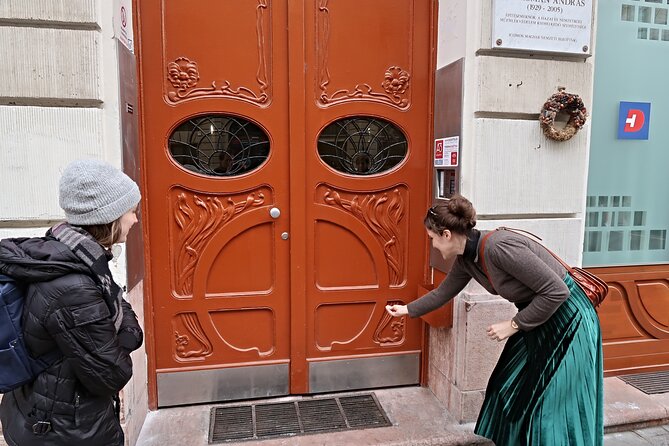
- Four distinctive Art Nouveau stops: The route includes Gresham Palace, the Royal Postal Savings Bank, Thonet House, and Kazinczy Street Synagogue.
- Ödön Lechner takes center stage: You learn about Hungary’s best-known Art Nouveau architect and his unusual mix of modern design and Hungarian motifs.
- Small-group format: The tour is limited to a maximum of eight people, with the experience described as a small-group walk.
- Some public transport is involved: You pay for any transport passes yourself, so have a valid pass or budget for tickets.
- The synagogue interior is not guaranteed: It is visited except on Saturdays, and admission is not included if the site is open on your tour day.
- Allow three hours and wear good shoes: The route involves a moderate amount of walking.
Why Budapest’s Art Nouveau deserves a dedicated walk
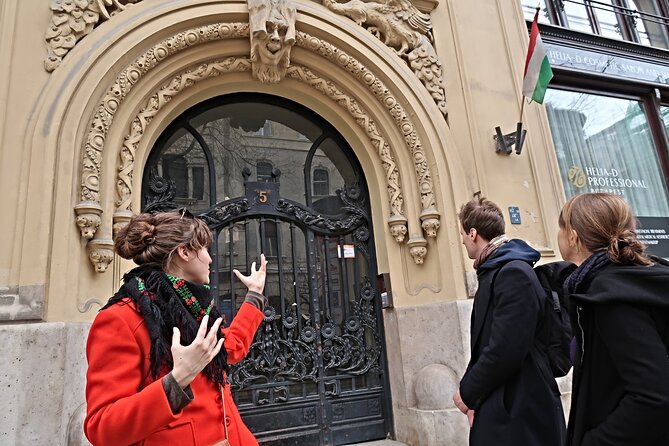
Budapest can feel like a grand city of imperial avenues, cafés, bridges, and monumental public buildings. Art Nouveau adds a different note. Instead of relying only on classical columns and strict symmetry, its architects used flowing lines, colored ceramics, plants, animals, and local decorative ideas.
That is what makes this tour useful. You are not simply shown four attractive buildings. You are given a way to read them. Look for the shape of a doorway, the treatment of a roof, the colors on a ceramic panel, or the difference between a façade meant to impress wealthy clients and one designed for a public institution.
The Hungarian version of Art Nouveau is especially interesting because it often reaches beyond Western European models. Ödön Lechner, the country’s best-known Art Nouveau architect, looked to Hungarian folk art and eastern influences while working with modern materials. His buildings can feel whimsical, but they were also carefully designed statements about national identity.
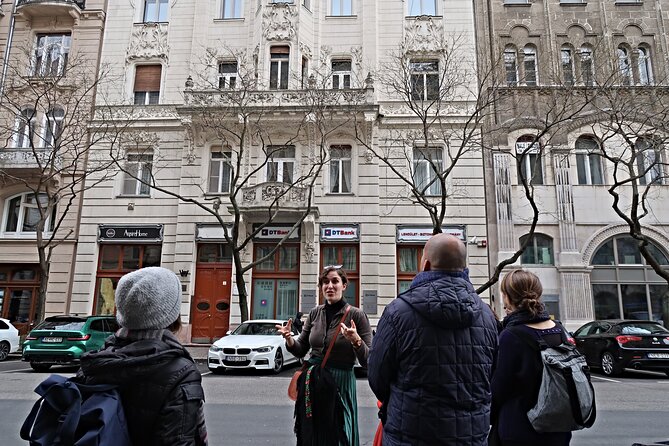
A guide with a background in history can explain those choices as you walk. That matters because much of the best detail is above eye level. Without help, you may notice a colorful roof but miss the reason it is there, or admire a curved doorway without understanding how it fits the period.
More Art Nouveau tours in the world:
- Walking Tour of Riga’s Beautiful Art Nouveau Architecture
★ 4.8 · 20 reviews - Riga’s Architecture: A self-guided audio tour of the city’s art nouveau history
★ 5.0 · 3 reviews - Mexico City origins and architecture: Art Nouveau, Deco,Eclectic
★ 3.0 · 2 reviews
Meeting at Madal Cafe and getting started
The tour begins at Madal CafeBudapest on Alkotmány u. 4. This is a practical central meeting point, but it can be busy. One useful tip is to arrive early and pay close attention to the meeting instructions so you do not miss the guide in the crowd.
The walk is offered in English, with a choice of morning or afternoon departure. A morning start may suit you if you want to spend the rest of the day visiting museums or exploring the city independently. An afternoon departure may work better if you prefer a slower start.
The group size is capped at eight people. That is small enough for questions and conversation, though the tour information also refers to a group of up to six in its description. I would plan for the stated maximum of eight rather than assume an especially tiny group.
Expect some use of public transport between parts of the route. Transport passes are not included, so you should arrange your own pass or carry money for the required fare. This is a minor extra, but it is worth knowing before you arrive.
Gresham Palace and Budapest’s grand entrance
The first stop is Gresham Palace, where you spend about 20 minutes looking at the exterior and interior design. The building began as office space and luxury apartments and is now Budapest’s most luxurious hotel.
This is a strong opening because Gresham Palace shows the polished, high-end side of the city’s architecture. You can expect a façade with elaborate decoration and interior details that help explain how Art Nouveau entered wealthy urban life. The focus is not only on ornament. It is also on the building’s original purpose and the kind of people it was designed to serve.
The free admission listed for this stop means you are not paying a separate entrance charge. Still, access to hotel interiors can depend on current conditions, so the guide’s explanation is an important part of the stop. Give yourself time to look closely rather than treating it as a quick photo pause.
I particularly like this first stop for comparison. Later buildings on the route use Art Nouveau in more unexpected ways. Starting with a luxury palace gives you a clear reference point for the movement’s decorative side.
Ödön Lechner at the Royal Postal Savings Bank
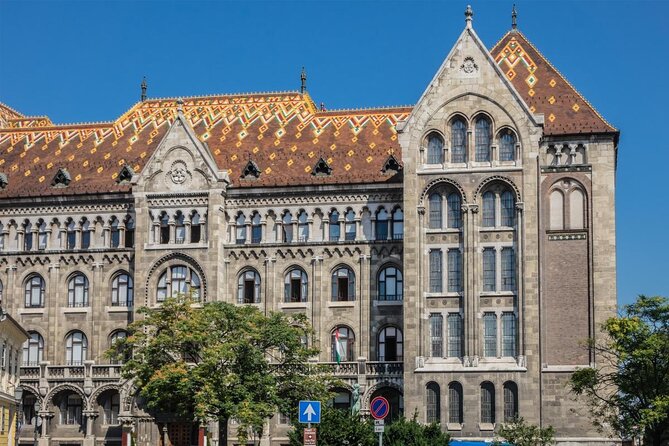
The Royal Postal Savings Bank, also called Postatakarek Bank, is the architectural centerpiece of the walk. It was designed by Ödön Lechner, often nicknamed the Gaudi of Hungary, and the stop lasts about 20 minutes.
Lechner’s work is valuable here because it shows how Hungarian Art Nouveau developed its own voice. You will discuss the entrance hall and the building’s interior design elements, while also looking at the flamboyant exterior. The bank was a public institution, not a private mansion, so its decoration makes a strong point about how ambitious design could be used for civic architecture.
This is where the guide’s historical training pays off. You can ask how Lechner’s ideas differed from more restrained European Art Nouveau, and how Hungarian patterns or materials shaped his buildings. The tour is designed to explain the style’s origins, elements, and designs, not just identify the architect.
The building may be one of the most rewarding stops for anyone who likes architecture but does not have technical training. You do not need to know architectural terms in advance. A good explanation can turn roof tiles, curved forms, and decorative surfaces into clues you can recognize elsewhere in Budapest.
More architecture walks in the world:
- Lecce: Baroque Architecture and Underground Walking Tour
★ 4.6 · 1,248 reviews - Chicago in a Day: Food, History & Architecture Walking Tour
★ 5.0 · 1,153 reviews - Ramblas, Old Town, Gothic and Gaudi Architecture Walking Tour
★ 5.0 · 723 reviews - Chicago’s Secret Interiors Architectural Walking Tour
★ 5.0 · 635 reviews
Thonet House and the color of Zsolnay tiles
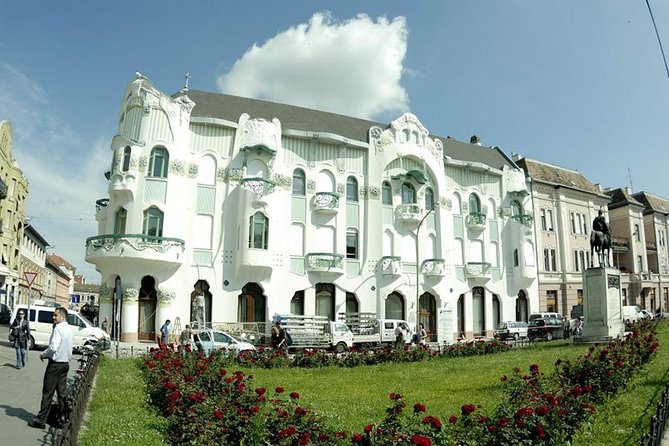
At Thonet House, the focus shifts to tiles. The stop lasts about 20 minutes and explains why Hungarian Art Nouveau became famous for ceramic-clad façades.
The connection to the Zsolnay factory in Pécs is central. Zsolnay was known for porcelain and ceramic innovations, and those materials allowed architects to add color and pattern to city buildings in ways that ordinary stone could not. Tiles were also practical for façades, since they could handle weather while making a building more expressive.
This is a good stop for slowing down and looking at surfaces. You may find that the most interesting detail is not the overall outline of the building, but the small repeated pattern or the way the tiles catch the light. The guide can help you notice those details instead of walking past them as decoration.
Thonet House also broadens the story. If Gresham Palace suggests luxury and the Postal Savings Bank suggests civic ambition, this building shows how Art Nouveau could become part of everyday urban architecture. It helps you see the style as something that shaped streets, not just a few famous monuments.
Kazinczy Street Synagogue and the final interior
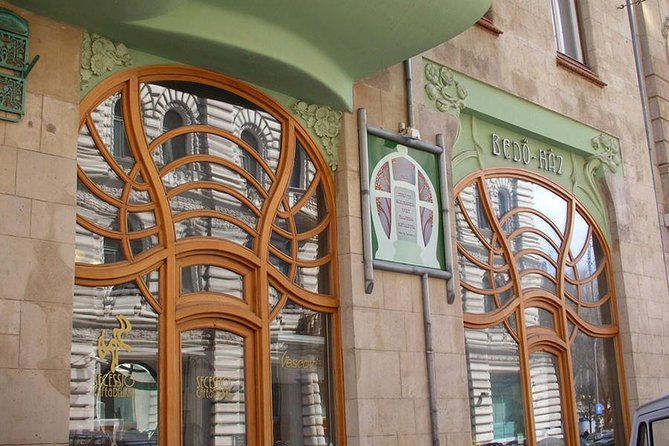
The tour concludes at the Orthodox Kazinczy Street Synagogue at Kazinczy u. 29 to 31. The stop lasts about 25 minutes, making it the longest scheduled visit.
The synagogue is especially interesting because its Art Nouveau decoration serves a religious building. That gives you a different setting for the style’s curved lines, patterns, and ornamental design. It also gives the walking tour a more varied ending than another grand secular building would.
Except on Saturdays, the group visits the interior. Admission is not included, and there may be an additional cost if the site is open on the day of your tour. You should treat the interior visit as a possible extra rather than a guaranteed part of the price.
The Saturday restriction matters when choosing your date. If seeing the synagogue inside is a priority, avoid Saturday and confirm the current admission arrangement when booking. If you are visiting on another day, keep some flexibility in your schedule because opening conditions can affect access.
The final location is convenient for continuing your time in the Jewish Quarter, but the tour itself ends at the synagogue. You will need to make your own plans afterward.
What the three-hour format feels like
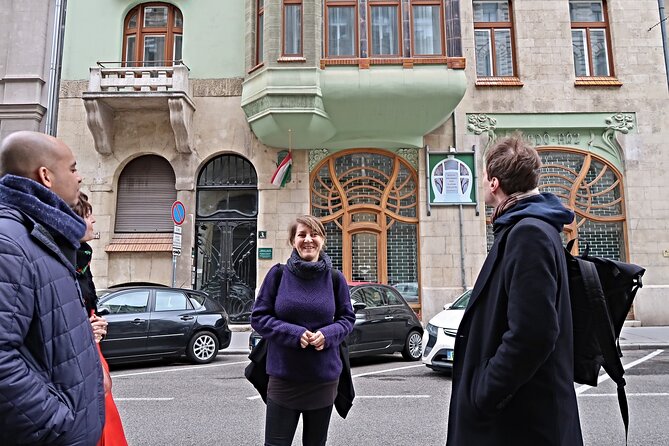
Three hours is enough time to develop a clear understanding of Budapest Art Nouveau without turning the day into a marathon. Each listed stop takes roughly 20 to 25 minutes, with walking and possible public transport between them.
This is still an active outing. You should wear comfortable shoes and expect a moderate amount of walking. The route is not described as physically difficult, and most travelers can take part, but anyone who prefers frequent seated breaks should consider the pace before booking.
A major benefit of the format is concentration. A general city tour may mention Art Nouveau for a few minutes before moving on to another subject. Here, every stop connects to the same architectural movement. That makes it easier to remember the details and notice similar buildings later.
The tradeoff is that the tour does not try to cover Budapest’s full story. You will not receive a broad survey of castles, cafés, political landmarks, or the city’s many other neighborhoods. This is a specialist walk, and it works best when you want one subject explored carefully.
Is $126.16 good value?
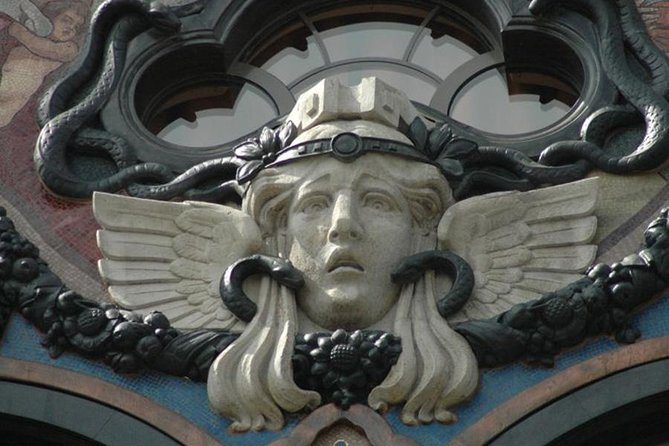
The price is $126.16 per person, with group discounts available. That is a significant cost for a three-hour walking tour, especially since transport passes, food, drinks, and possible synagogue admission are extra.
I would judge the value by asking what kind of tour you want. If you only want to see attractive buildings and take photographs, the price may feel high. You could walk through central Budapest on your own and view many façades from the street.
If you want the buildings explained by a historian, the calculation changes. The value lies in the connections: Lechner’s design ideas, Zsolnay ceramics, the role of public buildings, and the way Art Nouveau was adapted for a synagogue. A private architectural guide could cost more, while a large general tour would likely offer less time for questions.
The small group helps justify the price. With no more than eight people, you should have a better chance to hear the guide and ask about details that catch your eye. That said, the tour information does not name the individual guide, so you cannot choose a particular historian in advance.
The perfect audience is someone with a real interest in architecture, design, or Budapest’s built environment. If your budget is tight, I would compare this with a broader walking tour and decide how much specialist instruction you need.
Who will enjoy this walk most?
I would recommend this tour to you if you enjoy looking at buildings slowly and asking why they were designed a certain way. It also suits repeat visitors who have already seen the main Budapest sights and want a more focused subject.
It is a good match for:
- Architecture and design enthusiasts
- Visitors interested in Ödön Lechner and Hungarian Art Nouveau
- People who prefer small groups to large guided walks
- Anyone who wants historical context for Budapest’s façades
- Couples or friends willing to pay more for a specialist experience
It may be less suitable if you want a broad first-day introduction to the city, dislike moderate walking, or expect every admission and transport cost to be covered. The route also requires attention at the starting café, since the meeting area can be busy.
The tour is offered in English, and confirmation is received at booking. Most people can participate, but comfortable footwear is a sensible choice.
Booking timing and cancellation
This experience is booked an average of 36 days ahead, so you should reserve early if your Budapest dates are fixed. The morning and afternoon departure choices give you some flexibility, but specialist small-group tours can have fewer open spaces than standard city walks.
Free cancellation is available if you cancel at least 24 hours before the start time. Changes or cancellations made inside that window are not accepted for a refund, and cut-off times follow local Budapest time.
Should you book the Budapest Art Nouveau Walking Tour?
Book it if you want Budapest explained through its architecture rather than covered as a list of major sights. The route gives you four very different examples, and the combination of Lechner, Zsolnay ceramics, Gresham Palace, and the Kazinczy synagogue creates a useful picture of the style.
I would especially choose it for a second or third day in Budapest, when you have time to focus on details. Confirm the synagogue plan if you are visiting on Saturday, budget for transport and possible admission, and arrive early at Madal Cafe so you can find the guide.
Skip it if $126.16 feels too high for three hours or if you want a general city orientation. For anyone who values architecture, a small group, and thoughtful historical explanation, this is a focused and worthwhile way to see a side of Budapest that is easy to miss.
FAQ
How long is the Budapest Art Nouveau Walking Tour?
The tour lasts approximately three hours.
What buildings are visited?
The route includes Gresham Palace, the Royal Postal Savings Bank, Thonet House, and the Orthodox Kazinczy Street Synagogue.
Is the tour offered in English?
Yes. The tour is offered in English.
What is the maximum group size?
The activity has a maximum of eight travelers. Its description also presents it as a small-group experience.
Are public transport costs included?
No. You pay for any public transportation passes or tickets used during the tour.
Is admission to the Kazinczy Street Synagogue included?
No. Additional admission may be required if the synagogue is open on the day of your tour. The interior visit takes place except on Saturdays.
Just added around the world
- Wilmington History and Architecture Tour★ 4.8 · 18 reviews
- Washington, DC: Georgetown Architecture Walking Tour★ 5.0 · 8 reviews
- New Orleans : Garden District Architecture Walking tour★ 4.8 · 5 reviews
- Washington DC: Dupont Circle & Embassy Row Architecture Tour★ 5.0 · 6 reviews
- Vicenza: discovering the city of Palladio by e-bike★ 5.0 · 4 reviews
- Vicenza: Palladian Architecture Private Walking Tour★ 3.3 · 3 reviews
- Walk & Discover KL’s Architectural and Heritage Gems★ 5.0 · 7 reviews
- Unveiling Brno: History, Culture & Architectural Delights★ 5.0 · 2 reviews
Art Nouveau Tours, compared.
Riga: Old Town Walking Tour with Art Nouveau Highlights
Read our review →
Riga: 2-Hour History of Art Nouveau Walking Tour
Read our review →
Brussels: Art Nouveau Pass – Entry to Three Locations
Read our review →
Small Group Tour in Ålesund: Art Nouveau, Sea Views & Insider Tips
Read our review →
Browse the lists this tour appears in