
Review · INDIA
British Architecture Walk in Chennai by Wonder tours
Chennai’s colonial story is written in stone, and this walk brings you close to the city’s finest examples. In about three hours, you’ll move from the grand Central Railway Station to Fort St. George, a church, a colonial museum, Napier Bridge, and the Senate House of the University of Madras.
I like the variety of architecture, from Gothic Revival to Indo-Saracenic designs. I also like the chance to explore these buildings on foot with guides such as Rajesh and Nanda, who are praised for clear historical explanations and a friendly manner. The main drawback is the heat and traffic of central Chennai, so you’ll want light clothing, water, and comfortable walking shoes.
Key points to know before you book
- Seven major stops in three hours: The route covers Chennai Central, Ripon Building, Southern Railway Headquarters, Victory War Memorial, Fort St. George, Napier Bridge, and the University of Madras.
- Architecture with Indian and British influences: You’ll see Gothic Revival, Indo-Saracenic, and colonial-era designs rather than one single building style.
- Private experience for your group: Only your party participates, which allows for a more personal pace and questions along the way.
- Rajesh and Nanda are named guides: Both receive praise for friendly service and strong explanations of Chennai’s colonial past.
- A snack and tea or coffee are included: This gives the walk a small but welcome local touch.
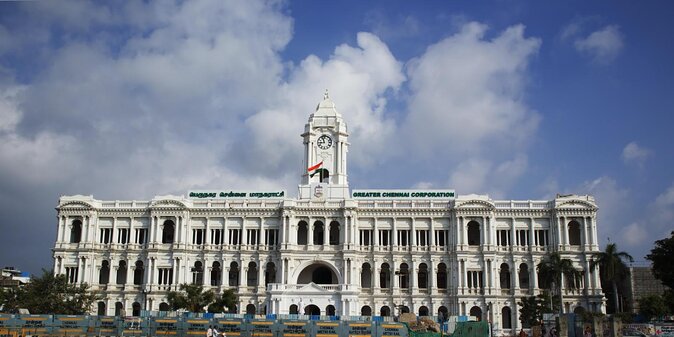
- The tour begins and ends at the same point: The stated meeting point is near Chennai Central, at the Greater Chennai Corporation Office on Raja Muthiah Road.
Chennai’s British past, told through its buildings
Chennai was once known as Madras and served as the capital of Southern British India. The British period left behind railway offices, government buildings, military grounds, churches, bridges, and university halls. This walk links several of those places in one compact route.
The value here is not simply seeing old façades. A good guide can show you how British planning and Indian building traditions met in the same structure. The result is often more interesting than a purely European colonial style, since domes, arches, courtyards, porticos, and local construction methods appear together.
You are not being driven from one isolated sight to another. You walk between central landmarks, which helps you understand how the older civic center fits together. That also means you experience the city at street level, with its traffic, public buildings, railway activity, and changing urban life around the monuments.
The experience costs $49 per person. For a private three-hour tour, that can be fair value if you care about architecture and want a guide to explain what you are seeing. It is less compelling if you only want quick photographs, since several stops are viewed in a relatively short time and the tour is built around interpretation.
More architecture walks in India:
- British Architecture Walk, an immersive walking tour in Chennai
★ 5.0 · 60 reviews - Mumbai heritage walk- Story of Gothic and Art Deco buildings
★ 5.0 · 33 reviews - Victorian Gothic Heritage Quarter and Art Deco Walking Tour
★ 4.9 · 14 reviews
Ripon Building, Chennai Central, and the opening stretch
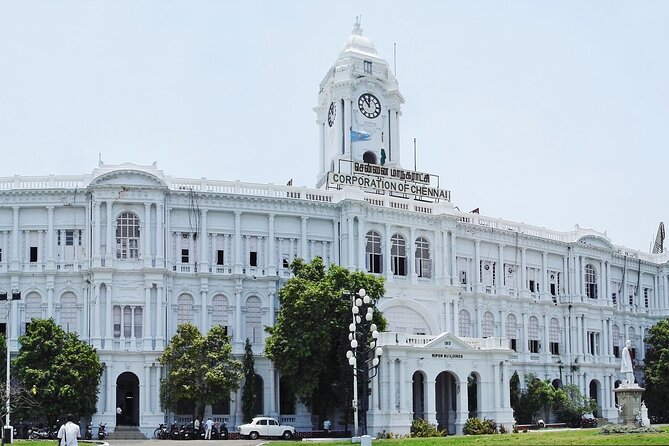
The walk includes Ripon Building, named for Lord Ripon, a Governor-General of British India associated with local self-government. The building was designed by G. S. T. Harris and built by Loganatha Mudaliar.
You have about 15 minutes here. That is enough for an introduction and exterior views, but not a long architectural study. Ripon Building gives you an early example of the civic grandeur used for public administration during the colonial period.
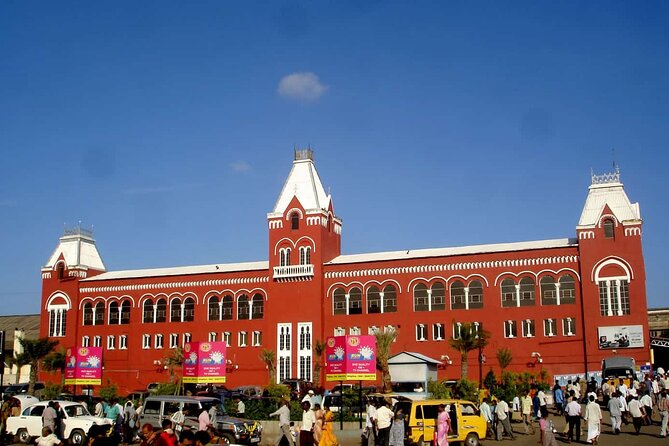
The next stop is Chennai Central Railway Station, where the tour allows about 30 minutes. The station was built in 1873 in Gothic Revival style by British architect George Harding, then modified by Robert Chisholm. Its scale makes sense when you learn that the station now handles more than 350,000 passengers each day.
This is one of the most useful stops for understanding how colonial infrastructure still serves modern Chennai. A railway station is not a frozen monument. It remains part of daily life, and the contrast between its historic design and present-day use gives the building real energy.
The listed meeting point is the Greater Chennai Corporation Office at 53 Raja Muthiah Road, near public transportation. The route description begins at Central Railway Station, so confirm the exact meeting instructions with Wonder tours before setting out. That small check can prevent confusion at the start.
Southern Railway Headquarters and the Indo-Saracenic style
The Southern Railway Headquarters takes about 15 minutes. Designed by N. Grayson and built by Samynada Pillai, the building was completed in 1921.
Its Indo-Saracenic style is an important change from the Gothic Revival appearance of Chennai Central. Indo-Saracenic architecture often combines European planning with forms drawn from Indian and Islamic traditions. On this walk, the shift in style helps you compare the buildings instead of treating every colonial structure as part of one broad category.
Fifteen minutes is brief, so you should expect an explanation and a look at the building rather than a long interior visit. The stop is still worthwhile because railway offices were central to the British administration and economic system. Here, architecture connects directly with the practical machinery of empire.
If architecture is your main interest, pay close attention to how the guide compares the railway station and headquarters. That comparison is one of the strongest reasons to take this tour with a guide rather than walk the same streets alone.
Victory War Memorial and the colonial military story
The Victory War Memorial, formerly called Cupid’s Bow, commemorates the victory of the Allied Armies in World War I from 1914 to 1918. The visit lasts about 30 minutes.
This stop adds a military and political layer to the walk. The memorial is not only an attractive structure. It also raises questions about how India was connected to global conflicts during British rule and how public monuments were used to honor imperial victories.
The longer stop gives your guide room to explain the memorial’s name and purpose. You may find this part of the walk more reflective than the railway buildings, since a monument carries a different kind of message from a station or office.
The route is not limited to architecture in the narrow sense. It also deals with the ideas and institutions behind the buildings. That makes the walk more useful for you if you want a basic understanding of Chennai’s colonial civic life, rather than a series of disconnected photo stops.
A few more architecture tours around India worth a look
- The Hipster Chandigarh Architecture History Tour
★ 5.0 · 54 reviews - Jaipur City Heritage and Architecture Tour
★ 5.0 · 32 reviews - Le Corbusier’s Chandigarh : A Complete Architecture Tour
★ 4.7 · 25 reviews - Day trip from Bangalore to Lepakshi for Temple architecture & paintings
★ 5.0 · 15 reviews
Fort St. George, St. Mary’s Church, and the museum
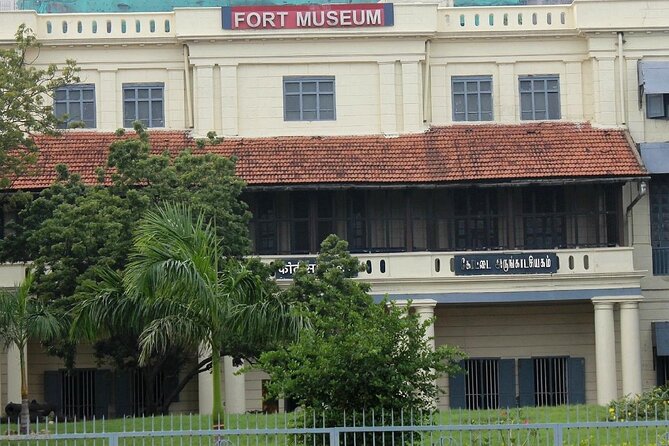
Fort St. George is the centerpiece of the experience. The visit includes St. Mary’s Church, described as the oldest Anglican church in India, along with a museum containing colonial-era relics. You have about 30 minutes at the fort.
This is where the walk’s subject becomes most tangible. Fort St. George links military power, administration, religion, and trade in one historic setting. St. Mary’s Church shows the religious side of British rule, while the museum gives you objects and relics tied to the colonial period.
The fort is especially valuable because it offers more than an exterior view. You get a church and museum visit within the same stop, giving the tour some indoor variety after a series of outdoor buildings. Still, 30 minutes is not a great deal of time for a complex historic site, so you should expect a focused introduction rather than an exhaustive museum visit.
Admission tickets are included for the listed stops, but camera and video camera fees are not included. If you plan to take more than casual phone photographs, ask your guide or the operator about current photography rules before using a dedicated camera.
Napier Bridge and Chennai’s familiar city image
Napier Bridge receives about 15 minutes. The original narrow bridge was widened and converted into a concrete structure, opening to the public in July 1943.
The bridge is often used by media to represent Chennai, so this stop gives you a familiar city image in context. It also shows how colonial-era infrastructure changed over time rather than remaining in its original form.
This is a short stop, and you should not expect a long bridge walk or a major sightseeing session. Its value is visual and connective. After the fort, the bridge helps shift the tour back toward the wider city and prepares you for the University of Madras.
For photographs, the bridge may be one of the easiest places to capture a recognizable Chennai scene. Keep in mind that traffic and road conditions are part of the setting, so follow your guide closely and do not treat the stop like a quiet park visit.
The University of Madras and the Senate House
The final major sight is the University of Madras, including the Senate House. The building was constructed between April 1874 and 1879 and includes a convocation hall, porticos, a parapet, meeting halls, and a library.
The tour allows about 30 minutes here. After railway buildings, a memorial, a fort, and a bridge, the university offers a more academic side of colonial Chennai. Its purpose was civic and educational, but its design was also meant to project authority and permanence.
This is a strong final stop because it brings together many of the architectural ideas seen earlier. Porticos and formal halls create a grand public setting, while the Indo-Saracenic influence links the building to Chennai’s blended architectural tradition.
The route ends back at the meeting point. Since the experience begins and ends in the same general area, it can fit neatly into a day of sightseeing near central Chennai. The published duration is approximately three hours, though the actual pace may depend on walking conditions, access, and how many questions you ask.
What the private format means for you
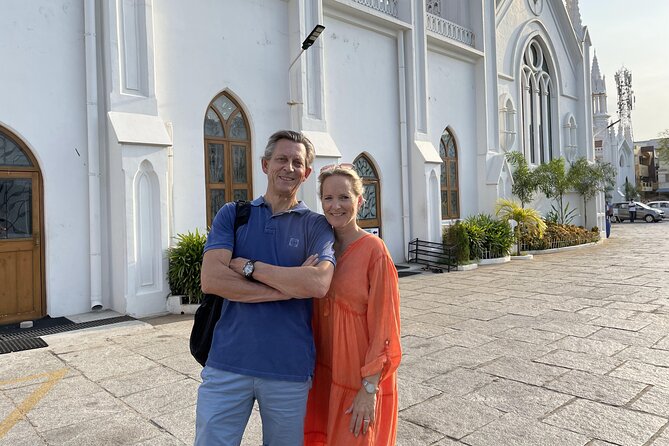
This is a private tour, so only your group participates. That matters if you want to ask about details that interest you, such as railway architecture, British administration, local building styles, or the history of Fort St. George.
A private format can also make the walk easier for mixed groups. You are not tied to the questions or pace of a large public group. At the same time, private tours often offer less value for a solo visitor than for a small group sharing the $49 per-person cost, especially since group discounts are available.
The guides named in the experience are Rajesh and Nanda. Rajesh is praised for friendly service and clear historical explanations, while Nanda is described as professional, friendly, and good at explaining heritage buildings. Guide assignments can change, so treat those names as examples rather than a guarantee.
A local snack and tea or coffee are included. It is a modest feature, but it gives the tour a break and adds a small taste of local hospitality. Hotel pickup and drop-off are not included, and porterage and tips are extra.
Walking conditions and practical planning
You’ll be outdoors for much of the experience, with several short walks between stops. Chennai’s climate can make a three-hour walk feel demanding, so choose breathable clothes and shoes that can handle pavement and uneven areas.
The tour is near public transportation, and most people can participate. The information provided does not promise wheelchair access or specify the exact walking distance, so contact Wonder tours if mobility is a concern.
Bring water, sun protection, and a phone or camera if you want pictures. Remember that camera and video camera fees are excluded. Since the tour covers active city streets and public areas, keep valuables secure and stay with your guide near traffic.
The tour is non-refundable and cannot be changed for any reason. That is the main booking limitation, so choose your date carefully before paying.
Who will get the most from this Chennai walk
I would choose this experience if you want a short introduction to Chennai’s colonial architecture and prefer explanations to sightseeing alone. It suits first-time visitors, architecture fans, history students, and anyone with a free morning or afternoon near central Chennai.
It also works well for a small private group that wants flexibility. The combination of civic buildings, railway architecture, a war memorial, a fort, a church, a museum, and a university gives you a wider picture than a tour focused only on Fort St. George.
I would think twice if you dislike walking in traffic, hot weather, or quick visits. The tour covers a lot of ground in three hours, and some buildings receive only 15 minutes. It is an overview, not a slow architectural study.
Should you book the British Architecture Walk in Chennai?
Book it if you want to understand how British and Indian design traditions shaped Chennai’s public buildings. The strongest parts are the range of architectural styles, the visit to Fort St. George and St. Mary’s Church, and the chance to ask questions in a private setting.
At $49 per person, the value is best for a small group sharing the cost and for people who want a guide rather than just directions. Confirm the starting instructions, prepare for outdoor walking, and check photography rules if you carry a camera.
If that sounds like your kind of sightseeing, this is a focused way to see Chennai’s colonial core without spending a full day on one historic district.
FAQ
How long does the British Architecture Walk in Chennai last?
The walk lasts approximately three hours.
How much does the tour cost?
The listed price is $49 per person. Group discounts are available.
Is this a private tour?
Yes. Only your group participates in the activity.
Where does the tour start?
The stated meeting point is the Greater Chennai Corporation Office at 53 Raja Muthiah Road, Periamet, Kannappar Thidal, Poongavanapuram, Chennai, Tamil Nadu 600003, India.
Where does the tour end?
The activity ends back at the meeting point.
What is included in the price?
A local guide, a local snack, tea or coffee, and all taxes, fees, and handling charges are included.
Are hotel transfers included?
No. Hotel pickup and drop-off are not included.
Can I cancel or change the booking?
No. The experience is non-refundable and cannot be changed for any reason.
Just added around India
- Victorian Gothic Heritage Quarter and Art Deco Walking Tour★ 4.9 · 14 reviews
- New Delhi: Mughal’s architecture tour with transfers★ 4.0 · 7 reviews
- Victorian Gothic Heritage Quarter and Art Deco Walking Tour★ 4.5 · 13 reviews
- 2 day tour from Mumbai to architectural wonder of Mandu★ 5.0 · 2 reviews
- Goa Walking tour: History, Culture, Art and architecture★ 4.5 · 2 reviews
- South India Tour- Temple Architecture and Backwaters★ 5.0 · 7 reviews
- Day trip from Bangalore to Lepakshi for Temple architecture & paintings★ 5.0 · 15 reviews
- Old & New Delhi Culture & Architecture City Private Tour★ 4.9 · 9 reviews
Walking Tours, compared.

The Official Art Deco Walking Tour by The Miami Design Preservation League
Read our review →
Barcelona: Gothic Quarter Ghosts and Legends Walking Tour
Read our review →
Barcelona: Old Town and Gothic Quarter Walking Tour
Read our review →
Lecce: Baroque Architecture and Underground Walking Tour
Read our review →
Chicago in a Day: Food, History & Architecture Walking Tour
Read our review →

Ramblas, Old Town, Gothic and Gaudi Architecture Walking Tour
Read our review →
Chicago’s Secret Interiors Architectural Walking Tour
Read our review →Browse the lists this tour appears in