

Review · INDIA
Victorian Gothic Heritage Quarter and Art Deco Walking Tour
Mumbai’s best architectural story is told outdoors, block by block. On this walk, Victorian Gothic towers meet Art Deco façades, colonial-era civic buildings, cricket grounds, church spires, and the sea-facing Gateway of India. It gives you a useful first look at South Mumbai without asking you to spend a day inside museums.
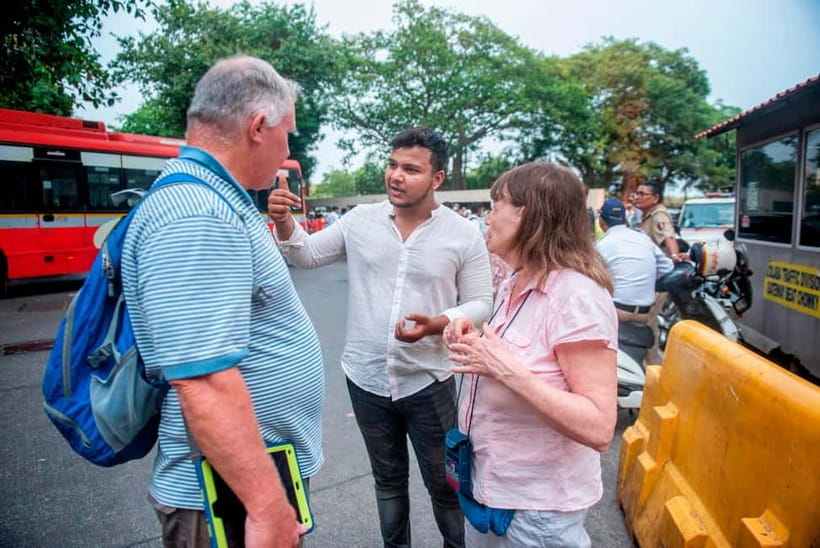
I like the clear route from Regal Cinema to Churchgate, and I like the human touch from guides such as Abhi, Abhishek, Ravi, and Yash. Several guides are praised for friendly storytelling, local facts, and good English. The price, $18.88, is also fair for a small-group introduction. The main caution is that the experience can depend on your guide. One booking received poor marks for weak architectural and historical explanation, so expectations should stay sensible.
Key points to know before you book
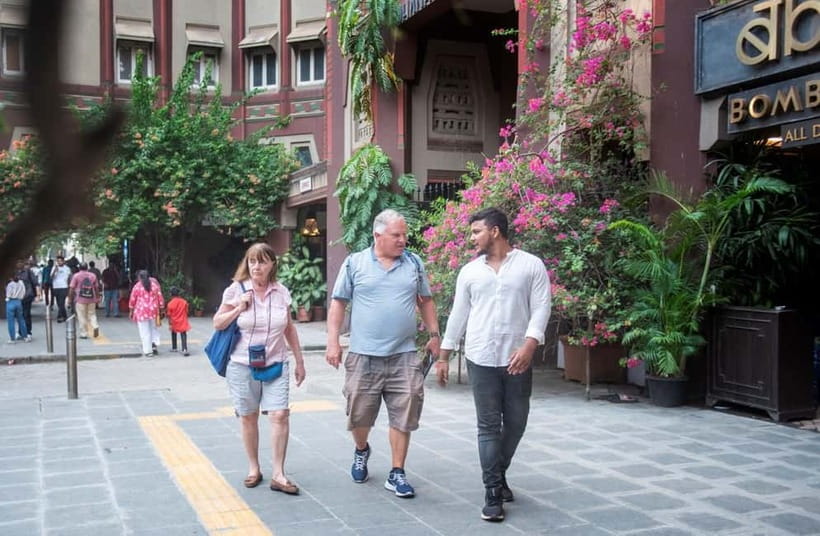
- Gothic architecture in one concentrated walk: See the Bombay High Court, Rajabai Clock Tower, University buildings, St. Thomas Cathedral, and the GPO.
- A useful city orientation: The route connects Regal Cinema, Kala Ghoda, the Gateway of India, and Churchgate Station.
- Small-group format: The maximum group size is 15, which gives you a better chance to hear the guide and ask questions.
- Local guides shape the experience: Abhi, Abhishek, Ravi, and Yash are named among the guides who have led this walk.
- Good value at $18.88: Bottled water is included, admission is free at the listed stops, and you avoid paying for private transport.
- Allow flexibility: The advertised duration is about two hours, though an outing with extra stops has lasted three hours.
Why this South Mumbai walk works
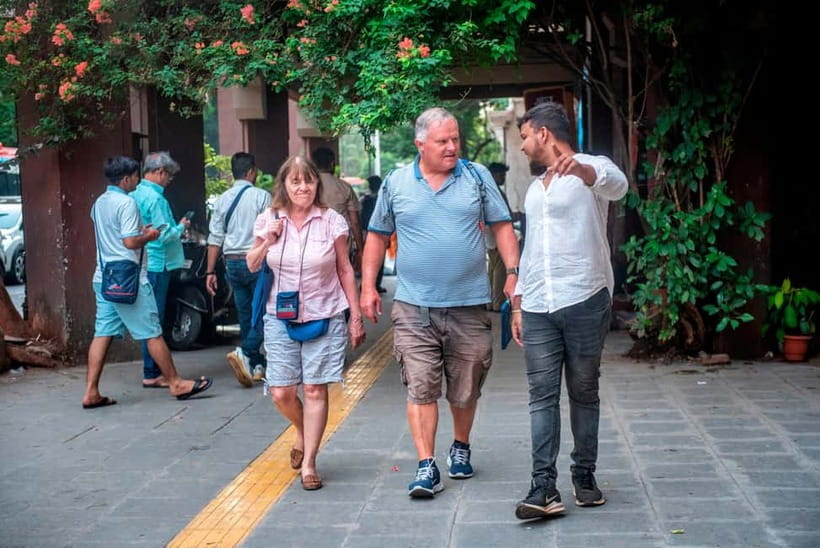
The clever part of this tour is its range. You are not looking at one isolated monument and then moving on. You are following the changing face of Mumbai, from the formal British-era buildings around the Fort district to the Art Deco style near Oval Maidan, then toward Colaba’s famous waterfront sights.
That mix matters. Gothic Revival buildings can feel grand and official, with pointed arches, towers, and elaborate stonework. Art Deco is cleaner and more modern, with curved corners and streamlined shapes. Seeing both styles in one walk helps you understand how Mumbai grew and changed.
The tour is also practical for a first morning in the city. You begin at Regal Cinema in Apollo Bandar, close to the Colaba area, and finish near Churchgate Station. You get a sense of how the southern districts fit together instead of seeing each landmark as a disconnected photo stop.
At $18.88 per person, the walk is priced below many private sightseeing outings. Since the listed stops do not charge admission and private transport is not included, most of what you are paying for is the guide’s time, explanation, and route planning. That makes the guide especially important.
More Gothic quarter walks in India:
- Mumbai heritage walk- Story of Gothic and Art Deco buildings
★ 5.0 · 33 reviews - Victorian Gothic Heritage Quarter and Art Deco Walking Tour
★ 4.9 · 14 reviews - Barcelona all included: Sagrada, Park Güell, Montjuic & Gothic
★ 5.0 · 2,169 reviews
Regal Cinema to the Mumbai General Post Office
Regal Cinema is a fitting starting point. It places you in the Apollo Bandar and Colaba area, where grand public buildings, hotels, and historic streets sit close together. From here, the walk moves toward the General Post Office, or Mumbai GPO.
The GPO was built in 1913 and designed by John Begg. Its Indo-Saracenic style gives you an early example of how Indian forms and European architectural planning were combined in major public buildings. The stop lasts about 15 minutes, enough for an outside explanation and a look at the building’s large scale.
This is not a tour where you spend long periods inside each site. The admission is listed as free, but the experience is primarily an exterior walking tour. If you want detailed access to every interior, this will feel too brief. If you want a broad introduction with several landmarks, the pace makes sense.
Town Hall and the Asiatic Society Library
The next stop is Town Hall, home to the Asiatic Society Library. Founded in 1804, the institution is associated with rare manuscripts, ancient texts, and valuable artifacts. The building’s neoclassical design gives the route a different architectural note from the Gothic structures that come later.
I like this contrast. Instead of seeing only pointed arches and decorative stonework, you get a formal building based on classical proportions. Your guide can help connect the structure to Mumbai’s intellectual and civic life, though the quality of that explanation will depend on who leads your group.
The planned stop is about 15 minutes. That is enough to understand why the building matters, but not enough for a serious visit to the library’s collections. Think of this as a streetside history lesson, not a library tour.
Horniman Circle’s garden and civic buildings
Horniman Circle Garden offers a pause from the stone façades and city traffic. Built in 1860, the circular garden is surrounded by colonial-era buildings and named after Benjamin Horniman, a British editor.
The garden is useful because it lets you see the district as a planned urban space. You can look outward from the open center and take in the surrounding architecture rather than examining one building at a time. The stop is scheduled for 15 minutes.
Sunday can bring an extra local touch here or near the open grounds. One account describes stopping in a park while cricket matches were underway, a good reminder that these spaces are not only historic settings. They are also part of everyday city life.
More Art Deco tours in India:
- The Official Art Deco Walking Tour by The Miami Design Preservation League
★ 5.0 · 1,580 reviews - Miami South Beach Art Deco Walking Tour
★ 5.0 · 1,039 reviews - Miami Beach Food and Art Deco Walking Tour
★ 4.5 · 245 reviews - Guided 10am Morning Art Deco Walk From Napier Art Deco Trust
★ 4.5 · 167 reviews
St. Thomas Cathedral and Mumbai’s early colonial story

St. Thomas Cathedral is Mumbai’s oldest Anglican church, consecrated in 1718. Its age gives the route a different feel from the later civic buildings. The cathedral represents an earlier stage of British presence in the city, before the grand Gothic building program became so prominent.
The stop lasts about 15 minutes. You can expect the guide to explain the church’s place in Mumbai’s religious and colonial past and point out its British architectural details.
As with the other stops, the short visit is both a strength and a limitation. It keeps the walk moving, but it leaves little room for a long interior examination or quiet reflection. If church interiors are your main interest, you may want extra time on your own.
Bombay High Court and Rajabai Clock Tower
The Bombay High Court is one of the route’s most memorable buildings. Inaugurated in 1879, it is a major Gothic Revival structure with the serious, imposing character you expect from a court. The stop gives your guide a chance to explain how architecture was used to project authority in the colonial city.
Next comes Rajabai Clock Tower, completed in 1878 at the University of Mumbai. Sir George Gilbert Scott designed it, and Premchand Roychand provided funding. Its tower is one of the most recognizable Gothic features in this part of Mumbai.
These two stops work well together. The High Court shows the legal power of the city, while Rajabai Clock Tower reflects education, finance, and civic ambition. You get more from them when your guide explains the people and institutions behind the buildings, rather than simply naming the architects.
The schedule allows 15 minutes at each location. That is a good amount of time for photographs and a short explanation. It is not a full architectural study, so bring questions if you want more detail.
Oval Maidan and the meeting of two styles
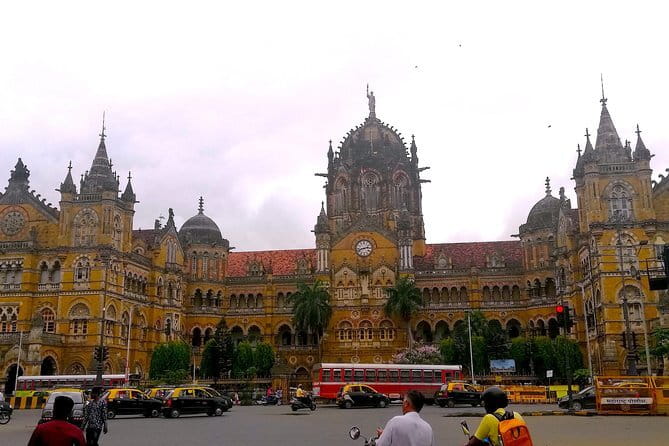
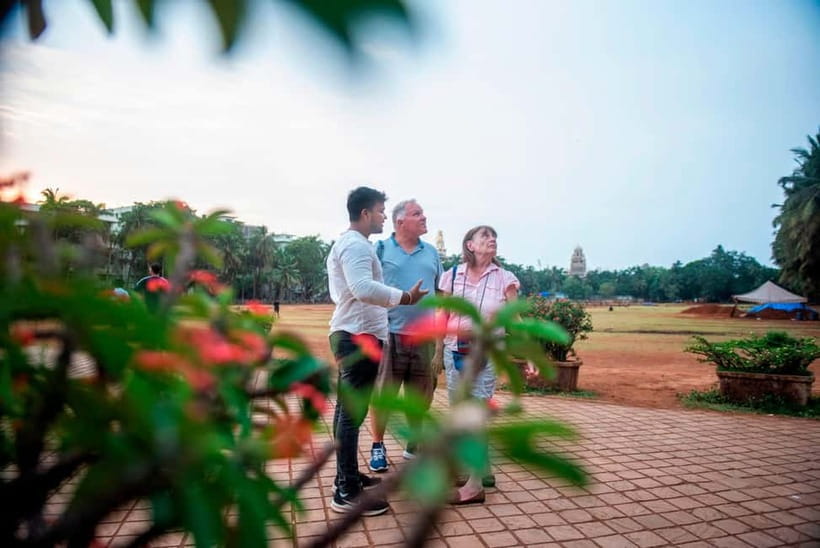
Oval Maidan is where the tour’s Gothic and Art Deco theme becomes easiest to understand. Established as a recreational ground in the 19th century, it is flanked by Victorian Gothic buildings on one side and Art Deco structures on the other.
This is the visual heart of the walk. From the open ground, you can take in the difference between the two styles without squeezing into a narrow street. Gothic buildings rise with vertical drama and ornate detail. Art Deco buildings look more restrained and modern.
The planned stop is about 10 minutes. That may seem short, but the open view makes the time useful. If you are taking photographs, this is one of the places where the guide’s timing matters. A good explanation can turn a collection of façades into a clear story about Mumbai’s growth.
Kala Ghoda, street culture, and a change of pace

Kala Ghoda is a lively cultural area known for galleries, museums, street art, and the annual Kala Ghoda Arts Festival. The name comes from the former statue of King Edward VII, which gives the district its familiar title, Black Horse.
Only five minutes are scheduled here, so do not expect a full neighborhood tour. Instead, this is a quick link between the formal heritage quarter and the better-known Colaba sights.
Some guides add less obvious stops and local details. Past outings have included vintage Bollywood record stalls, Cat Chowk, and a house connected in local stories with black magic. These additions are not guaranteed, but they show how the tour can become more personal when the guide has room to adjust the route.
That flexibility is one of the better features of the experience. A guide such as Abhi or Yash may add an anecdote, answer questions, or take photographs. At the same time, flexibility can make the timing less predictable.
The Gateway of India and the Taj Mahal Palace
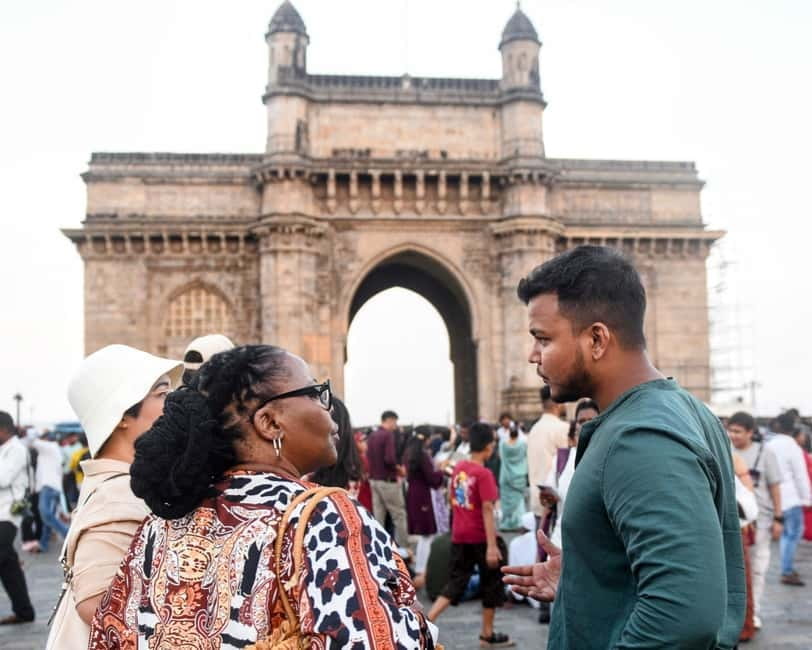
The Gateway of India is the tour’s grandest landmark. Built in 1924, the arch commemorated the visit of King George V and Queen Mary to India. Its waterfront setting makes it one of Mumbai’s most recognizable sights.
The stop is scheduled for 10 minutes. That is enough to hear the main story, see the monument, and take photographs, but the area can be busy. Keep your belongings secure and stay aware of your group while the guide is speaking.
The Taj Mahal Palace comes next, with about five minutes allotted. Built in 1903, this luxury hotel has become a symbol of Mumbai and overlooks the Arabian Sea. Even a short stop lets you connect the hotel with the Gateway and see how the waterfront combines imperial ceremony, luxury, and modern city life.
The final two stops are more about orientation and atmosphere than detailed study. If you want time inside the hotel or a longer visit at the Gateway, plan to return later on your own.
Churchgate finish and the practical pace
The listed endpoint is Churchgate Station on Maharshi Karve Road. This is useful for continuing your sightseeing, finding local transport, or heading onward without retracing the route.
The official duration is about two hours. That is a compact pace for ten stops, especially since several visits are only five to 15 minutes. One longer outing lasted three hours and included unscheduled stops, eventually ending at Mumbai Railway Terminus. That suggests the route can stretch when the guide adds material or the group asks for more.
I would plan on two hours for the standard experience, then keep extra time available if you want a slower walk. Wear comfortable shoes, bring sun protection, and carry water even though a bottle is included. The route is on foot, and private transportation is not part of the package.
How much value do you get for $18.88?
The price is reasonable if you want context rather than transport. You are paying for a local guide to connect ten major sights, not for entry to paid attractions or a private car.
The small maximum group of 15 helps. It is large enough to keep the price down but not so large that the guide must shout across a crowd. You should still expect a shared experience, not a private tour tailored entirely to your interests.
The strongest value comes when the guide is prepared and engaging. Abhi is described as friendly, clear, and willing to share unusual facts. Abhishek has led a longer version with extra stops. Ravi is associated with careful explanations of city architecture and history, while Yash has been praised for storytelling, lesser-known facts, and taking good photographs.
There is also a clear limitation. One outing received a poor assessment because the guide’s history and architecture explanations were weak. That does not make the whole tour a bad buy, but it means the operator’s guide assignment can affect your experience. If you are an architecture specialist, you may want a more focused private guide. If you are new to Mumbai, the tour offers a helpful first layer.
Who should book this walking tour?
I would choose this walk if you are visiting Mumbai for the first time, want to understand South Mumbai quickly, or enjoy architecture but do not want a full-day lecture. It also suits repeat visitors who want a different way to read familiar streets.
It is a good fit for people who like questions, stories, and local details. The guide-led format gives you more than a self-guided photo list, and the small group keeps the route manageable.
I would be more cautious if you need guaranteed specialist commentary, long interior visits, or a tightly fixed two-hour schedule. The route covers a lot, and the short stops favor breadth over depth.
Free cancellation is available up to 24 hours before the start time for a full refund. Confirmation arrives when you book, and the tour is near public transportation. Most people can participate, but remember that this is a walking experience with no private vehicle included.
Should you book it?
Book this tour if you want a low-cost architectural orientation with a local guide and a clear route through Mumbai’s most important southern districts. The mix of High Court Gothic, Rajabai Clock Tower, Oval Maidan’s two architectural styles, Kala Ghoda, the Gateway, and the Taj Palace gives you plenty to see for $18.88.
Go in expecting a brisk overview, not a specialist seminar. If your guide is Abhi, Abhishek, Ravi, or Yash, you may get extra stories and photographs along the way, but the experience can vary. For a first morning in Mumbai, the balance of price, scale, and coverage makes this a sensible choice.
FAQ
How long is the Victorian Gothic Heritage Quarter and Art Deco Walking Tour?
The advertised duration is approximately two hours. A longer outing with added stops lasted three hours, so the exact timing can vary.
Where does the tour begin?
The tour begins at Regal Cinema in Apollo Bandar, Colaba, Mumbai.
Where does the tour end?
The listed endpoint is Churchgate Station on Maharshi Karve Road, Mumbai.
How much does the tour cost?
The price provided is $18.88 per person.
What is the maximum group size?
The tour accepts a maximum of 15 travelers.
Is bottled water included?
Yes. Bottled water is included.
Is private transportation included?
No. Private transportation is not included, and the experience is designed as a walking tour.
Which landmarks are included?
The route includes the Mumbai General Post Office, Town Hall and the Asiatic Society Library, Horniman Circle Garden, St. Thomas Cathedral, the Bombay High Court, Rajabai Clock Tower, Oval Maidan, Kala Ghoda, the Gateway of India, and the Taj Mahal Palace.
Can most people participate?
The tour information says most travelers can participate. It is a walking experience, so you should be prepared to spend the tour on foot.
What is the cancellation policy?
You can cancel up to 24 hours before the experience starts for a full refund. Cancellations or changes made less than 24 hours before the start time are not accepted for a refund.
More History Tours in India
- The Hipster Chandigarh Architecture History Tour
★ 5.0 · 54 reviews - Jaipur City Heritage and Architecture Tour
★ 5.0 · 32 reviews - Chicago in a Day: Food, History & Architecture Walking Tour
★ 5.0 · 1,153 reviews - Kuala Lumpur: Batu Caves & Historic Buildings Tour
★ 4.7 · 539 reviews
More Architecture Walks in India
- British Architecture Walk, an immersive walking tour in Chennai
★ 5.0 · 60 reviews - British Architecture Walk in Chennai by Wonder tours
★ 5.0 · 10 reviews - Goa Walking tour: History, Culture, Art and architecture
★ 4.5 · 2 reviews - Barcelona: Gothic Quarter Ghosts and Legends Walking Tour
★ 4.7 · 1,443 reviews
Just added around India
- Victorian Gothic Heritage Quarter and Art Deco Walking Tour★ 4.9 · 14 reviews
- New Delhi: Mughal’s architecture tour with transfers★ 4.0 · 7 reviews
- 2 day tour from Mumbai to architectural wonder of Mandu★ 5.0 · 2 reviews
- Goa Walking tour: History, Culture, Art and architecture★ 4.5 · 2 reviews
- British Architecture Walk in Chennai by Wonder tours★ 5.0 · 10 reviews
- South India Tour- Temple Architecture and Backwaters★ 5.0 · 7 reviews
- Day trip from Bangalore to Lepakshi for Temple architecture & paintings★ 5.0 · 15 reviews
- Old & New Delhi Culture & Architecture City Private Tour★ 4.9 · 9 reviews
Gothic Quarter Tours, compared.
Barcelona all included: Sagrada, Park Güell, Montjuic & Gothic
Read our review →
Barcelona Gothic Quarter Tapas & Taverns Food & Wine Tour
Read our review →
Barcelona: Gothic Quarter Ghosts and Legends Walking Tour
Read our review →
Barcelona: Old Town and Gothic Quarter Walking Tour
Read our review →
Barcelona Old Town & Gothic Quarter Small Group Tour
Read our review →
Ramblas, Old Town, Gothic and Gaudi Architecture Walking Tour
Read our review →
Barcelona: El Born and Gothic Quarter Wine & Tapas Bar Tour
Read our review →
Kids and Family Gothic Quarter Walking Tour in Barcelona
Read our review →Browse the lists this tour appears in