
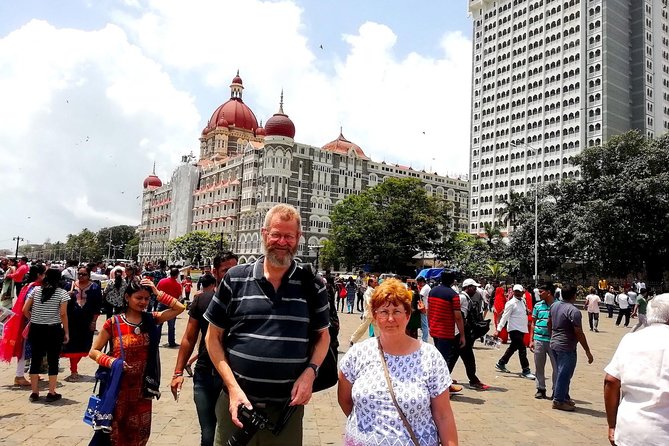
Review · INDIA
Mumbai heritage walk- Story of Gothic and Art Deco buildings
Mumbai’s architectural story unfolds in sharp contrasts on this three-hour walk. You move from the ornate Victorian Gothic Chhatrapati Shivaji Terminus to the clean curves and stepped form of Art Deco Eros Cinema, then through the Fort district’s grand civic buildings and old institutions.
I like the way the walk connects buildings to Mumbai’s rise as a trading center, rather than treating architecture as a parade of pretty façades. I also like the small group limit of 15 and the chance to hear guide Pankaj explain local history through stories, with snacks included. The main limitation is that most buildings are viewed from outside, so this suits you best if you enjoy architectural detail and historical context more than interior visits.
Key points to know before you book
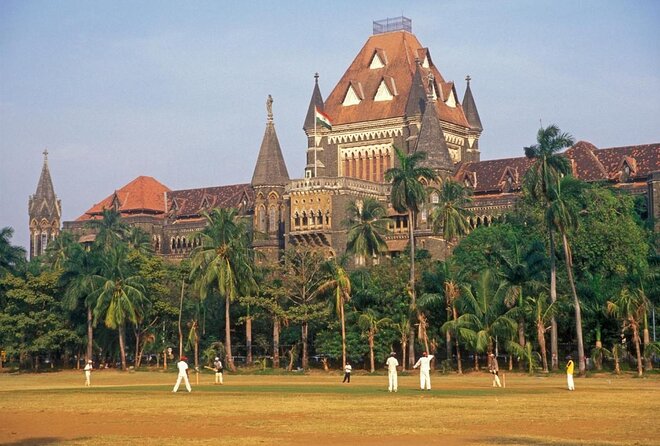
- CST opens the walk with a major UNESCO landmark: Its Victorian Gothic design blends European forms with Indian decorative ideas.
- Art Deco gets equal billing: Eros Cinema and Empress Court show how modern style became linked with wealth and social status in Mumbai.
- Pankaj brings the history to life: His talks cover architecture, commerce, institutions, and the people behind the buildings.
- Most stops are exterior views: You see the High Court, Rajabai Clock Tower, Elphinstone College, and the Prince of Wales Museum from outside, while the David Sassoon Library is viewed from its lobby.
- The group stays small: A maximum of 15 people makes it easier to follow the guide and ask questions.
- The walk ends near a major museum: The route starts at CST and finishes at Chhatrapati Shivaji Maharaj Vastu Sangrahalaya in Fort.
Why Mumbai’s buildings tell the city’s story
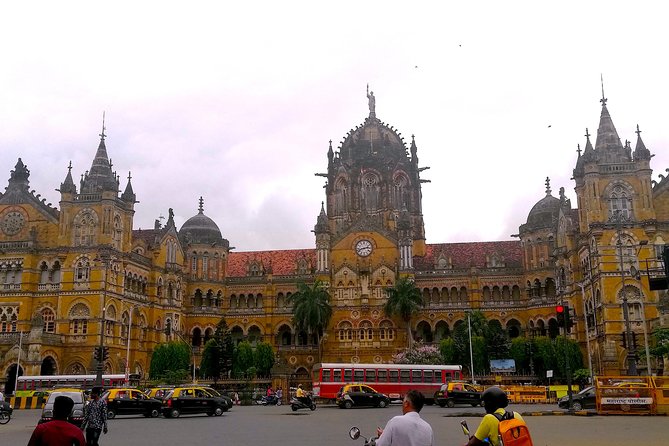
This is not simply a walk past old buildings. It is a lesson in how Mumbai changed from a port city into a major center of trade, administration, education, and culture.
The Gothic buildings reflect the British colonial period, when railway stations, courts, libraries, colleges, and public institutions were built to project civic importance. The Art Deco buildings belong to a later period, when Mumbai looked toward modern urban life, cinema, apartment living, and new forms of status.
I find that contrast especially useful. Gothic architecture can feel grand and formal, with pointed arches, towers, carved decoration, and heavy stonework. Art Deco is more streamlined, geometric, and optimistic. Seeing both styles on one route helps you understand that Mumbai was not built in a single era or under one influence.
The tour also gives you a chance to look beyond famous names. You will hear about the people who financed buildings, the institutions that used them, and the social ambitions attached to them. That extra layer is what turns a sightseeing walk into a more useful introduction to South Mumbai.
More Gothic quarter walks in India:
- Victorian Gothic Heritage Quarter and Art Deco Walking Tour
★ 4.9 · 14 reviews - Victorian Gothic Heritage Quarter and Art Deco Walking Tour
★ 4.5 · 13 reviews - Barcelona all included: Sagrada, Park Güell, Montjuic & Gothic
★ 5.0 · 2,169 reviews
Starting at Chhatrapati Shivaji Terminus
The walk begins at Chhatrapati Shivaji Terminus, usually called CST. The station is one of India’s best examples of Victorian Gothic Revival design and is recognized as a UNESCO World Heritage building.
You will spend about 30 minutes here, with admission included. Look closely at the way Gothic forms are mixed with Indian design themes. The building was not copied straight from Europe. Its arches, towers, carvings, and decorative details were adapted to an Indian setting, giving it a character that feels distinctly Mumbai.
CST also makes a strong starting point because it connects architecture with movement and commerce. A railway station is not just a grand public building. It represents the flow of people, goods, workers, and ideas that helped Mumbai grow.
Give yourself a few minutes before the official start to find the meeting point at the CST area in Fort. The station is near public transportation, but the area can be busy, so arriving with enough time to orient yourself is sensible.
Eros Cinema and the Art Deco turn

From Gothic grandeur, the walk shifts to Eros Cinema, seen from outside. The building is a fine example of Mumbai Art Deco, with a shape often compared to a wedding cake because it rises in tiers and finishes with a semicircular tower.
You will spend about 30 minutes here. That is enough time to examine the façade and hear how the style fits into Mumbai’s development. Art Deco brought a new visual language to the city. Instead of pointed arches and elaborate medieval references, it favored smooth surfaces, strong lines, geometric decoration, and a sense of modern speed.
Eros is a good place to see how cinema became part of the city’s public life. The building was designed to attract attention, but its appeal comes from controlled shape and proportion rather than heavy ornament.
Admission is not included, and the cinema is viewed from outside. That is not a serious problem if your interest is the building itself, but you should not book this expecting a film screening or an interior tour.
Empress Court and the status of Art Deco living

The next stop is Empress Court, an impressive residential Art Deco building viewed from outside. The focus here shifts from public entertainment to private life.
You will spend around 15 minutes discussing how apartments in Art Deco buildings became linked with wealth and social status. This is an important point because Art Deco in Mumbai was not only a design movement. It also reflected changing ideas about modern city living.
A residential building tells a different story from a railway station or courthouse. Its design shows how people wanted to live, how apartment life gained prestige, and how the city made room for new forms of urban identity.
Because this is a short exterior stop, you will not see the inside of the building. Still, it adds balance to the route. Eros shows Art Deco as a public attraction, while Empress Court shows the style as a marker of private success.
More Art Deco tours in India:
- The Official Art Deco Walking Tour by The Miami Design Preservation League
★ 5.0 · 1,580 reviews - Miami South Beach Art Deco Walking Tour
★ 5.0 · 1,039 reviews - Miami Beach Food and Art Deco Walking Tour
★ 4.5 · 245 reviews - Guided 10am Morning Art Deco Walk From Napier Art Deco Trust
★ 4.5 · 167 reviews
Bombay High Court and the symbols above the roof
The High Court of Mumbai brings the walk back to Gothic architecture. You will see the building from outside for about 30 minutes.
The guide draws attention to the statues of Justice and Mercy above the building. These figures provide a useful way to read the architecture. The structure is not only meant to look imposing. Its decoration communicates the ideals associated with law and public authority.
This stop is especially worthwhile if you like buildings that carry symbolic meaning. Gothic architecture often uses height, shadow, pointed forms, and sculpture to create a serious mood. Here, the design supports the building’s purpose as a court.
Since the visit is exterior, you will not tour the courtrooms. The value comes from understanding the building’s façade and hearing how its visual language relates to justice, governance, and the city’s colonial past.
Rajabai Clock Tower, Mumbai’s Big Ben
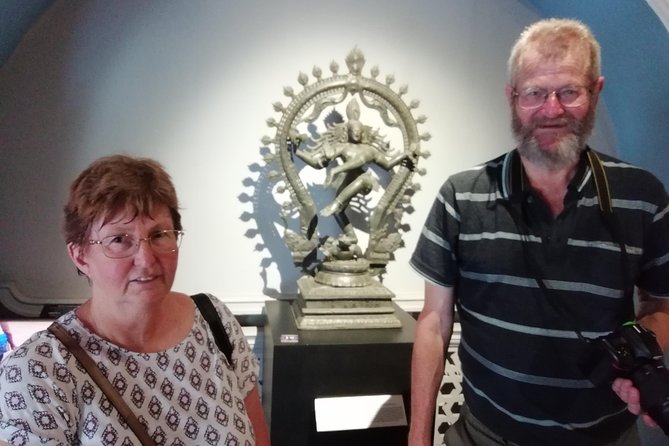
The Rajabai Clock Tower is one of the most memorable stops on the route. You will spend about 30 minutes hearing why it was financed and how its chimes were connected to the donor’s visually challenged mother, who used them to keep her fasts punctually.
That detail gives the tower a human story. A clock tower can easily become just another impressive skyline feature, but its purpose becomes more personal when you learn why the chimes mattered to the family that helped fund it.
The tower is often called the Big Ben of Mumbai, though the comparison is best understood as a nickname rather than a claim that the buildings are identical. Its importance comes from its place in the city’s institutional center and from the story attached to its financing.
You will see the tower from outside, and admission is not included. This is a stop where listening matters as much as looking, since the account of its patron and purpose gives the building much of its appeal.
David Sassoon Library and a Jewish banker’s legacy
The route then reaches the David Sassoon Library and Reading Room, a Gothic structure built by Jewish banker David Sassoon. The building is viewed from the lobby because only members may enter farther inside.
You will spend around 20 minutes here. The library is a useful reminder that Mumbai’s architecture was shaped by many communities, not only by British officials. David Sassoon’s role connects the building to the city’s commercial life and to the wider network of Jewish merchants who contributed to Mumbai’s growth.
The restriction on entry is worth noting before you book. This is not a full library visit or a chance to sit in the reading room. Even so, the lobby and exterior allow you to appreciate the building’s Gothic character and hear the story behind its construction.
I like this stop because it adds a personal and community-based angle to the tour. A building can tell you about a city’s economy, but it can also tell you who had the means and desire to support public education and reading.
Elphinstone College and Mumbai’s educational tradition
Elphinstone College is another Gothic landmark, viewed from outside for about 15 minutes. The building’s design fits the formal style of the Fort district, but its real interest comes from the institution’s alumni.
The college is linked with figures such as Bal Gangadhar Tilak, Dr. B. R. Ambedkar, and Jamshedji Tata. That list gives the stop more weight than a quick architectural photo opportunity. It points to the role of education in the intellectual, political, and industrial development of Mumbai and India.
You will not tour the college interior, and the stop is fairly short. Think of it as a focused explanation of the building and its place in the city’s educational story.
Ending at the Prince of Wales Museum
The walk finishes at Chhatrapati Shivaji Maharaj Vastu Sangrahalaya, formerly known as the Prince of Wales Museum. The building is viewed from outside for about 10 minutes.
Its heritage design provides a final change of pace after the Gothic and Art Deco stops. The museum building was also used earlier as a military hospital for the Children’s Welfare Exhibition, adding another layer to its story.
The ending point is practical. You finish on Mahatma Gandhi Road in the Fort area, rather than returning to CST. If you want to continue sightseeing, the location gives you a natural next stop, though this tour itself does not include museum admission.
What the three-hour format feels like
The advertised duration is about three hours, and the listed stops add up to roughly that amount. You should expect a steady walking route with repeated pauses for explanations, photographs, and exterior details.
The group limit of 15 matters here. A large group can make a city walk feel like a lecture delivered to the backs of other people’s heads. With a smaller group, you have a better chance of hearing Pankaj clearly and asking about details that catch your eye.
Snacks are provided during the walk. They are a welcome touch on a three-hour outing, though the available information does not specify what the snacks include. You should still plan your day sensibly rather than treating the walk as a full meal.
The tour requires good weather. If poor weather causes cancellation, you are offered another date or a full refund. You can cancel for a full refund up to 24 hours before the start time, but changes or cancellations inside that window are not accepted.
Is $35 a fair price?
At $35 per person, this is not the cheapest way to see Mumbai’s Fort district, since you can view many façades without joining a paid tour. The value comes from the interpretation: the route links architecture with trade, education, law, cinema, religion, and social status.
You also receive a small-group experience, snacks, and admission to CST. Most other stops are exterior, so the price makes the most sense if you want a guide to explain what you are seeing rather than simply collect photographs.
Group discounts may improve the value for people booking together. The walk is usually reserved about 14 days ahead, so you may want to plan early if your Mumbai dates are fixed.
Who will enjoy this walk most?
I would recommend it first to people who like architecture, urban history, and stories about how cities change. It is also a good choice if you want an introduction to South Mumbai that goes beyond the usual list of attractions.
History buffs should appreciate the connections between buildings and people. Architecture fans will have plenty to examine, from CST’s Gothic and Indian details to the curved Art Deco form of Eros Cinema.
You may want a different activity if you need extensive interior access, dislike walking, or want a tour focused mainly on food, shopping, or photography. Most of the route is about looking carefully at buildings from the street.
Should you book the Mumbai Gothic and Art Deco walk?
Book it if you want to understand why Mumbai looks the way it does. The strongest feature is the combination of clear architectural contrasts and human stories, especially the account behind Rajabai Clock Tower and the background of David Sassoon Library.
Pankaj’s friendly, enthusiastic approach is a major part of the experience, and the small group keeps the walk personal. Just set the right expectations: this is an architecture and history walk, not a series of full interior tours.
At $35, I consider it good value for a three-hour introduction to Fort, particularly if you are new to Mumbai or want more context after seeing the city’s major sights on your own.
FAQ
How long does the Mumbai heritage walk last?
The walk lasts approximately three hours.
Where does the tour begin?
It begins at Chhatrapati Shivaji Terminus in the CST area of Fort, Mumbai.
Where does the tour finish?
It ends at Chhatrapati Shivaji Maharaj Vastu Sangrahalaya, also known as the Prince of Wales Museum, at 159-161 Mahatma Gandhi Road in Fort.
What is the price of the tour?
The listed price is $35 per person.
What is the maximum group size?
The tour accepts a maximum of 15 travelers.
Is admission included?
Admission is included for Chhatrapati Shivaji Terminus. The other listed stops do not include admission, and most are viewed from outside.
Can I enter the David Sassoon Library?
You can see the David Sassoon Library from the lobby. Only members are allowed farther inside.
Will I see the interiors of the Art Deco buildings?
Eros Cinema and Empress Court are viewed from outside.
Is the tour near public transportation?
Yes. The tour is near public transportation, and it begins at Chhatrapati Shivaji Terminus.
What happens if bad weather cancels the walk?
If poor weather causes cancellation, you are offered a different date or a full refund. You can also cancel up to 24 hours before the start time for a full refund.
More History Tours in India
- The Hipster Chandigarh Architecture History Tour
★ 5.0 · 54 reviews - Jaipur City Heritage and Architecture Tour
★ 5.0 · 32 reviews - Chicago in a Day: Food, History & Architecture Walking Tour
★ 5.0 · 1,153 reviews - Kuala Lumpur: Batu Caves & Historic Buildings Tour
★ 4.7 · 539 reviews
More Architecture Walks in India
- British Architecture Walk, an immersive walking tour in Chennai
★ 5.0 · 60 reviews - British Architecture Walk in Chennai by Wonder tours
★ 5.0 · 10 reviews - Goa Walking tour: History, Culture, Art and architecture
★ 4.5 · 2 reviews - Barcelona: Gothic Quarter Ghosts and Legends Walking Tour
★ 4.7 · 1,443 reviews
Just added around India
- Victorian Gothic Heritage Quarter and Art Deco Walking Tour★ 4.9 · 14 reviews
- New Delhi: Mughal’s architecture tour with transfers★ 4.0 · 7 reviews
- Victorian Gothic Heritage Quarter and Art Deco Walking Tour★ 4.5 · 13 reviews
- 2 day tour from Mumbai to architectural wonder of Mandu★ 5.0 · 2 reviews
- Goa Walking tour: History, Culture, Art and architecture★ 4.5 · 2 reviews
- British Architecture Walk in Chennai by Wonder tours★ 5.0 · 10 reviews
- South India Tour- Temple Architecture and Backwaters★ 5.0 · 7 reviews
- Day trip from Bangalore to Lepakshi for Temple architecture & paintings★ 5.0 · 15 reviews
Gothic Quarter Tours, compared.

Barcelona all included: Sagrada, Park Güell, Montjuic & Gothic
Read our review →
Barcelona Gothic Quarter Tapas & Taverns Food & Wine Tour
Read our review →
Barcelona: Gothic Quarter Ghosts and Legends Walking Tour
Read our review →
Barcelona: Old Town and Gothic Quarter Walking Tour
Read our review →
Barcelona Old Town & Gothic Quarter Small Group Tour
Read our review →
Ramblas, Old Town, Gothic and Gaudi Architecture Walking Tour
Read our review →
Barcelona: El Born and Gothic Quarter Wine & Tapas Bar Tour
Read our review →
Kids and Family Gothic Quarter Walking Tour in Barcelona
Read our review →Browse the lists this tour appears in