
Review · BRUSSELS
Architecture Tour of Brussels
Brussels reveals itself best through its buildings, and this two-hour architecture walk links the city’s grandest squares, churches, theaters, and viewpoints. You begin at Grand Place, then follow a mostly central route through the old city to Mont des Arts, with an architect guide explaining how commerce, politics, religion, and defense shaped Brussels.
I like the sharp focus on facades and urban design, rather than a quick march past famous sights. I also like the small maximum group of 18, plus the flexible guiding style reported for Gamaal, who adjusted the discussion to suit his group. The main consideration is timing: a 8:00 pm start means less daylight for some architectural details, although the old city can have a fine evening mood.
Key points to know before you book
- Grand Place sets the architectural stage: You begin with the city’s most famous square and its shift from wooden market buildings to Gothic and Baroque facades.
- The route covers ten central landmarks: It includes Galeries Royales Saint-Hubert, La Monnaie, the Bourse, Manneken Pis, Sablon, BOZAR, and Mont des Arts.
- An architect guide changes the way you look: You will study facades, building purpose, city planning, and the link between architecture and political events.
- The group is capped at 18 people: That is small enough for questions without promising a private tour.
- Mont des Arts provides the closing view: You finish with a classic panorama toward Brussels City Hall and the Royal Palace.
- Transport and paid admissions are not included: The listed stops are visited from outside, and the route ends back at the meeting point.
Why this Brussels walk works for architecture fans
Many city walks collect landmarks like stamps. This one has a clearer idea behind it: read Brussels through its buildings.
That matters because Brussels can feel visually mixed at first. Medieval traces sit beside Gothic revival work, royal institutions, shopping arcades, theaters, churches, and newer cultural buildings. An architect guide can point out how these pieces fit together, rather than leaving you with a list of names.
The route also connects design with events. A theater is not just a handsome facade. A square is not just a place for photographs. The guide links buildings to markets, waterways, revolution, trade, religion, and famous residents.
The advertised price is $30.10 per person. For roughly two hours with a professional local guide, that is a fair price if you want a structured introduction to central Brussels. You are paying mainly for interpretation, not admission tickets, since the tour visits public exterior spaces and does not list entry to paid attractions.
The maximum of 18 people gives the walk a more personal feel than a large coach-style outing. It is not guaranteed to be private, but one group was treated to a private-style experience when numbers were low, and Gamaal was able to shape the discussion around its interests.
A few more architecture tours around the world worth a look
- Chicago Architecture River Cruise
★ 5.0 · 15,756 reviews - Chicago River 90-Minute Architecture Tour
★ 4.5 · 9,629 reviews - Chicago River: 1.5-Hour Guided Architecture Cruise
★ 4.8 · 8,046 reviews
Grand Place, from market square to showpiece
The tour starts at Godiva Grand Place, at Grand Place 21/22, at 8:00 pm. Arrive with the meeting point clear, since Grand Place has several busy corners and plenty of distractions.
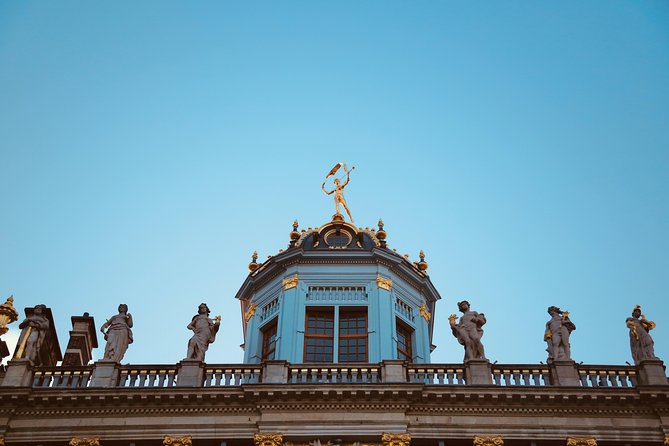
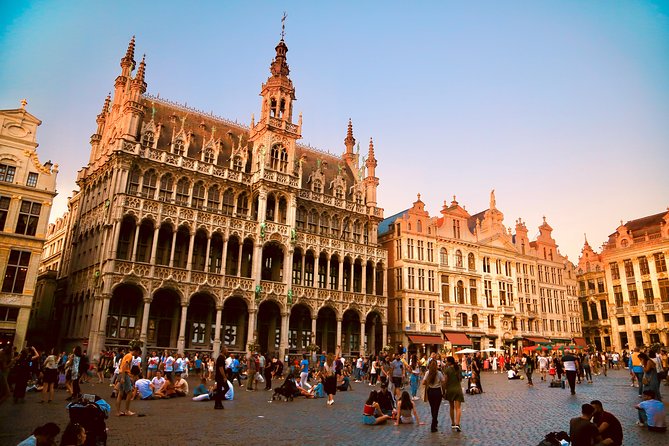
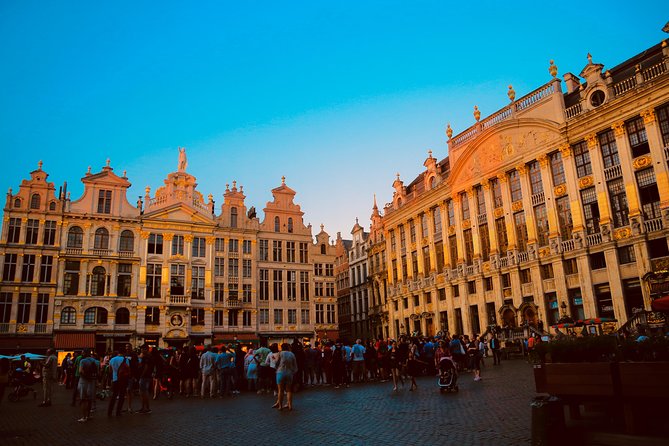
This square is the right place to begin. It was once a market surrounded by wooden houses. Over time, the buildings took on the Gothic and Baroque forms that make the square one of Belgium’s most famous city spaces and a UNESCO heritage site.
You will spend about 20 minutes studying the facades. That is enough time to notice the different styles and hear why the buildings look as they do, though it is not enough for an architectural lecture on every structure.
The guide also covers notable people connected with the square. This gives the buildings a human side. Instead of seeing only stone, ornament, and symmetry, you get a sense of the square as a place where public life unfolded.
An evening start may affect your photographs, depending on the season and weather. Still, the timing places the opening of the tour in a social part of the day, and the square’s illuminated buildings can make a strong first impression.
Galeries Royales Saint-Hubert and Brussels cafe culture
The next stop, about 20 minutes, is the Galeries Royales Saint-Hubert. It is presented as the first shopping mall in the world and dates from the same period as Belgium itself.
The guide focuses on the architect’s ambition and the hard work, contacts, and persistence needed to bring the building into being. That is a useful angle. Grand arcades can look effortless once finished, but their creation depends on money, planning, engineering, and political support.
You will also pass cafes associated with famous authors. The stop blends architecture with literary life, showing how a building can become more than a commercial passage. It can turn into a meeting place for writers, shoppers, and city residents.
This is one of the strongest parts of the route for visitors who enjoy interiors and public spaces, even if you are mainly viewing the arcade as part of a walking tour. The guide’s explanation helps you notice scale, repetition, and the way the arcade directs movement.
La Monnaie and Place De Brouckere
La Monnaie receives about 10 minutes. This royal theater has a long story, and the guide also points out the nearby shopping street and the role of the area in revolution.
That combination is important. The theater is not treated as an isolated cultural building. Its location connects performance, commerce, and political change. You get a short look at how a major public building can become part of a larger city district.
Next comes Place De Brouckere, also for around 10 minutes. Here the discussion turns to the De Brouckere palace and the old river route through Brussels.
Water once helped shape the town’s defense. That point adds useful context to the street plan. Modern Brussels may hide much of its former water system, but the old route helps explain why the city developed where it did and how defense influenced urban form.
These two stops are brief, so you should expect a clear explanation rather than a detailed interior visit. Their value comes from linking separate subjects: theater, shopping, revolution, waterways, and defense.
Same city, a completely different century:
- Chicago Architecture Center River Cruise aboard First Lady
★ 5.0 · 5,536 reviews - Chicago: Architecture River Cruise Skip-the-Ticket Line
★ 4.8 · 4,325 reviews - Chicago River 45-Minute Architecture Tour from Magnificent Mile
★ 4.5 · 2,924 reviews - Barcelona: Sant Pau Recinte Modernista Entry Ticket
★ 4.6 · 2,567 reviews
The Bourse and the changing role of a city square
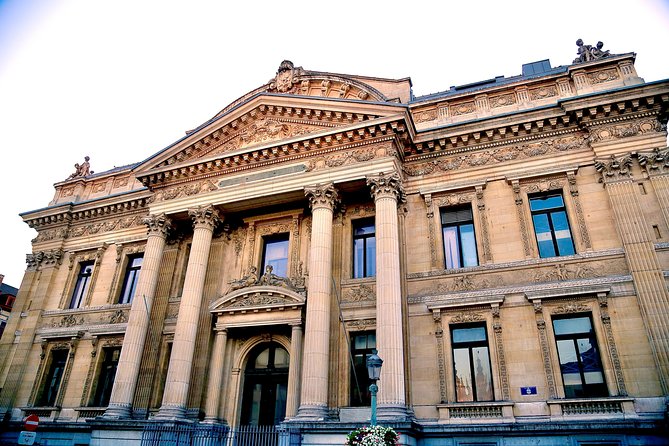
La Bourse de Bruxelles gets another 10 minutes. The guide traces the development of the bourse from Bruges to Grand Place and then to its current square in Brussels.
That movement tells a story about commerce and urban power. Exchanges and financial institutions need a place in the city, and their location reflects the changing importance of different commercial centers.
The building itself has taken on a new role as part of Brussels’ art scene. That makes this stop useful for understanding how older civic buildings can be reused. Architecture is not frozen in the moment it was built. Its meaning changes as the city changes around it.
The short stop should suit you if you want the main idea and a chance to look closely at the exterior. If financial history is your main interest, you may want more time than the schedule allows.
Manneken Pis, a small statue with a large wardrobe
Manneken Pis gets about 15 minutes, and the guide does not pretend the statue is physically grand. It is described as the greatest disappointment in Brussels, a joke that acknowledges the gap between its fame and its size.
The real subject is the collection of more than 1,200 uniforms and the several stories attached to the boy. The guide covers four well-known tales, then climbs the hill toward the wardrobe museum.
This is a good example of how the walk handles popular attractions. You get the landmark, but also a little skepticism and local humor. The statue is not presented as a monumental work of architecture. Instead, it becomes a window into Brussels’ playful civic identity.
The uphill section matters. It is short within the overall route, but you should be ready for some walking and a change in elevation. The itinerary does not include a museum admission ticket, so treat the wardrobe museum mention as part of the surrounding discussion unless the guide states otherwise.
Jacques Brel and Notre Dame du Sablon
The Jacques Brel statue is a brief five-minute stop. The guide asks why a sculpture of Brel belongs here, inviting you to connect the singer with Brussels and its cultural identity.
It is a small pause, but a worthwhile one. The route is not only about famous stone buildings. It also recognizes the people who helped shape the city’s public image.
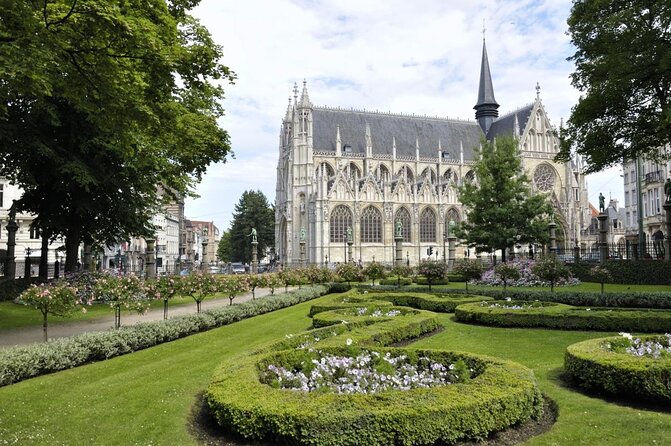
At Notre Dame des Victoires au Sablon, the tour spends about 15 minutes on chocolate and the church. The pairing makes sense in Brussels, where food and architecture are both part of the city’s appeal.
The church gives the guide another chance to discuss style and detail, while chocolate brings the conversation back to everyday pleasure. This is one of the stops where the route feels less like a formal architecture class and more like a city introduction with buildings at its center.
The Sablon section may be especially useful if you want practical ideas after the walk. One guide, Jimmy, was praised for offering restaurant tips along with architectural and historical explanations.
BOZAR and the final view from Mont des Arts
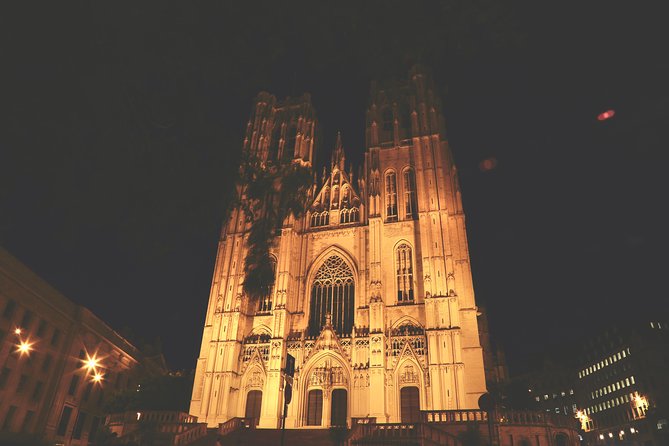
BOZAR, the Centre for Fine Arts, receives only about five minutes. The guide invites you to consider what lies behind its large walls, making this more of a visual introduction than a full museum visit.
Do not expect time to explore exhibitions. Admission is not listed, and the activity is a walking tour rather than a cultural-center visit. The stop works best as a prompt to return later if BOZAR interests you.
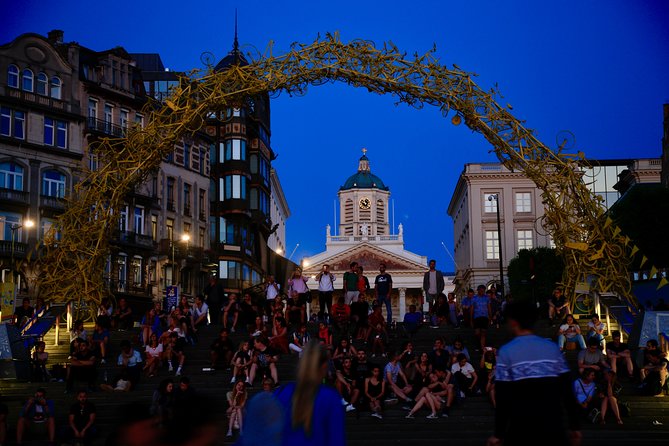
The final stop is Mont des Arts, with about 20 minutes for the view. This is a strong finish because it lets you step back from individual buildings and see how the old city fits together.
The panorama includes the old city and its former walls. Brussels City Hall is the main focus for photographs, with the Royal Palace at the other end of the view.
This is the point where the route’s earlier explanations come together. You have looked at a market square, an arcade, a theater, a former water route, a financial building, a church, and a cultural center. From Mont des Arts, you can consider how those pieces occupy one city.
The evening timing may work well here, though the exact light will depend on the date. You should bring a phone or camera if photographs matter to you. A mobile ticket is provided, but the tour does not include transport.
What the guiding style adds
The guide is the most important part of this activity. The supplied details name Gamaal and Jimmy among the guides connected with the experience.
Gamaal’s approach appears especially adaptable. He asked what the group wanted to learn and then shaped the discussion around its interests, including detailed explanations of individual buildings. That is useful on an architecture tour because different people notice different things. One person may care about churches, another about city planning, and another about famous residents.
Jimmy is noted for humor, site knowledge, recommendations, and flexibility in difficult wind. That suggests a relaxed style rather than a stiff lecture, though your exact guide and experience can vary.
The strongest praise centers on three things:
- Clear explanations of architecture and history
- Funny, engaging storytelling
- Personal attention and useful local suggestions
One account describes the walk lasting slightly more than two hours. The official duration is approximately two hours, so allow a little flexibility if you have a dinner reservation or another timed activity afterward.
The experience is offered in English. Most people can participate, and the group limit is 18. The route includes walking between ten stops and a climb up a hill near Manneken Pis, so comfortable shoes are sensible even though no formal difficulty rating is given.
Who should book this walk
I would choose this tour if you are new to Brussels and want a strong first look at the central city without spending half a day inside museums. It also suits anyone who likes to understand why buildings look the way they do.
It is a good fit for:
- First-time visitors who want a city overview
- Architecture and urban-history fans
- Couples and small groups who enjoy evening walks
- People who prefer explanations over a simple photo stop
- Visitors who want a guide able to answer questions and adjust the talk
You may want something else if you need extensive interior access, a museum-focused visit, or a full-day architectural study. Several stops last only five or ten minutes, and the tour does not include transport or paid admissions.
Families can likely manage the format if children are comfortable walking and listening. Manneken Pis, the statue stories, and the chocolate connection at Sablon may help hold younger attention, but the architecture sections require some patience.
Booking, meeting point, and cancellation details
The tour begins at 8:00 pm at Godiva Grand Place, Grand Place 21/22, 1000 Bruxelles. It finishes back at the meeting point.
Confirmation is sent within 48 hours of booking, subject to availability. The activity is near public transportation, but transport itself is not included.
Free cancellation is available up to 24 hours before the start time for a full refund. Changes or cancellations made less than 24 hours before the start time are not accepted for a refund. The tour also requires a minimum number of participants, so a cancellation for that reason brings an alternative date or experience, or a full refund.
The tour is often booked well ahead, with an average booking lead time of 45 days. That does not guarantee a sellout, but it is a useful reason to reserve early if your Brussels dates are fixed.
Should you book the Architecture Tour of Brussels?
Book it if you want a reasonably priced, tightly planned introduction to Brussels architecture with a guide who can add humor, history, and local context. The route covers a lot in two hours, and the view from Mont des Arts gives the walk a satisfying finish.
The main tradeoff is depth. You will see ten places, but most stops are short and the tour does not include interiors or transport. If that matches your aim, $30.10 is good value for a guided orientation. If you want a specialist study of one building or extensive museum time, choose a slower, more focused activity.
FAQ
How much does the Architecture Tour of Brussels cost?
The price is $30.10 per person.
How long does the tour last?
The tour lasts approximately two hours. It may run slightly longer depending on the guide and the group.
What time does the tour start?
The scheduled start time is 8:00 pm.
Where does the tour meet?
Meet at Godiva Grand Place, Grand Place 21/22, 1000 Bruxelles, Belgium.
Where does the tour finish?
The activity ends back at the meeting point.
What language is the tour offered in?
The tour is offered in English.
How many people can join the group?
The maximum group size is 18 people.
Is transportation included?
No. Transport is not included.
Are admission tickets included?
The tour lists free admission for the stops and includes a professional local guide. It does not list paid museum or attraction admission.
Can I cancel for a full refund?
Yes. You can cancel at least 24 hours before the local start time for a full refund. Cancellations or changes made less than 24 hours before the start time are not accepted for a refund.
Just added around the world
- Wilmington History and Architecture Tour★ 4.8 · 18 reviews
- Washington, DC: Georgetown Architecture Walking Tour★ 5.0 · 8 reviews
- New Orleans : Garden District Architecture Walking tour★ 4.8 · 5 reviews
- Washington DC: Dupont Circle & Embassy Row Architecture Tour★ 5.0 · 6 reviews
- Walk & Discover KL’s Architectural and Heritage Gems★ 5.0 · 7 reviews
- Vicenza: discovering the city of Palladio by e-bike★ 5.0 · 4 reviews
- Vicenza: Palladian Architecture Private Walking Tour★ 3.3 · 3 reviews
- Unveiling Brno: History, Culture & Architectural Delights★ 5.0 · 2 reviews
Brussels Architecture Tours, compared.
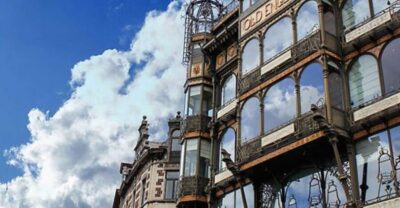
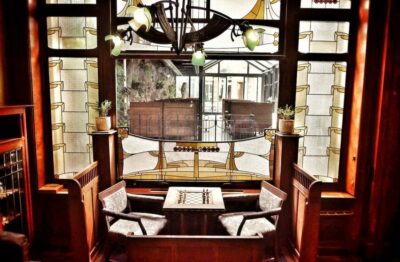
Brussels: Art Nouveau Pass – Entry to Three Locations
Read our review →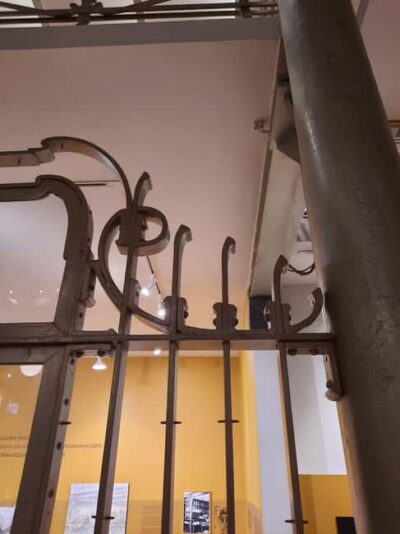
Brussels: 3h Art Nouveau Private Tour with a Local Guide
Read our review →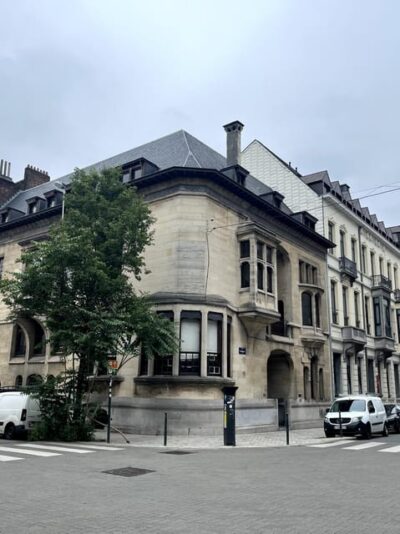
Brussels: Art Nouveau Private Walking Tour with Horta Museum
Read our review →Browse the lists this tour appears in