
Review · MEXICO
Mexico City origins and architecture: Art Nouveau, Deco,Eclectic
Mexico City reveals its past in layers, and this tour gives you the broadest possible first look. You move from the ruins of Mexico Tenochtitlan to Diego Rivera’s political murals, then finish with a slow walk through Roma’s Art Nouveau, Art Deco, and Eclectic buildings.
I like the private format, since your group can ask questions and move at its own pace. I also like the unusual focus on Roma’s architectural details, including Romita, Cibeles, Casa Lamm, and the Sagrada Familia church. The main drawback is the ambitious schedule: six to eight hours is a long stretch, and museum admission, lunch, and parking are not included.
The published rating is 3 from two reviews, so the booking record is limited. One account describes a cancellation after a missed WhatsApp reply, while another praises Daniel Mendívil Olvera’s friendly manner and his willingness to answer questions. Confirm your meeting time and messages carefully before the tour.
Key points to know before booking
- A full city story in one day: You see Aztec remains, colonial-era government art, national archaeology, major monuments, and early 20th-century neighborhoods.
- Three hours on foot in Roma: The final section is not a quick photo stop. It is a walking lesson in Art Nouveau, Art Deco, and Eclectic design.
- Private transport is included: This helps connect central sites that would otherwise take more planning by taxi or public transport.
- Museum tickets cost extra: Admission is not included at Templo Mayor, Palacio Nacional, or the National Anthropology Museum.
- Airport pickup is available: This can be useful if you are arranging a first-day introduction to Mexico City.
- The schedule favors coverage over leisure: Expect about seven hours when the listed stop times are added together, plus travel between sites.
Mexico City in one carefully packed day
This experience is best understood as two tours joined together. The first half follows Mexico City’s major cultural markers: the Templo Mayor ruins, Palacio Nacional, the National Anthropology Museum, and Paseo de la Reforma.
The second half changes pace. You leave the headline monuments behind and spend three hours walking through Roma, looking closely at façades, decorative details, churches, squares, and newer buildings. That shift is the most interesting part of the plan. You are not only checking off famous places. You are also learning how a city’s hopes and conflicts appear in its streets.
The private vehicle matters here. The route covers several parts of the city, and private transportation saves you from arranging separate rides between the historic center, Chapultepec area, and Roma. Still, Mexico City traffic can affect timing, so treat the six to eight hours as an estimate rather than a strict timetable.
More Art Nouveau tours in the world:
- Walking Tour of Riga’s Beautiful Art Nouveau Architecture
★ 4.8 · 20 reviews - Riga’s Architecture: A self-guided audio tour of the city’s art nouveau history
★ 5.0 · 3 reviews - Riga: Old Town Walking Tour with Art Nouveau Highlights
★ 4.7 · 332 reviews
Templo Mayor and the remains of Mexico Tenochtitlan
Your first stop is Museo del Templo Mayor, where the ruins of the main Aztec city, Mexico Tenochtitlan, occupy a place in the middle of the modern capital. This is an important opening because it shows that Mexico City did not begin with its Spanish colonial buildings or modern avenues.
Plan on about one hour here. That is enough for a focused introduction, but not enough for an exhaustive museum visit. If you care deeply about Aztec archaeology, you may want to ask Daniel how much time is available for the museum portion before the day begins.
Admission is not included. You should budget separately for the ticket, and remember that this is only the first of three paid museum or site visits. The tour gives you the transport and interpretation, but the entrance costs remain yours.
The value of this stop comes from its setting and subject. You are looking at archaeological remains found in the center of a living city, not at an isolated historical site. The contrast helps you understand why Mexico City can feel like several centuries occupy the same block.
Palacio Nacional and Diego Rivera’s political walls
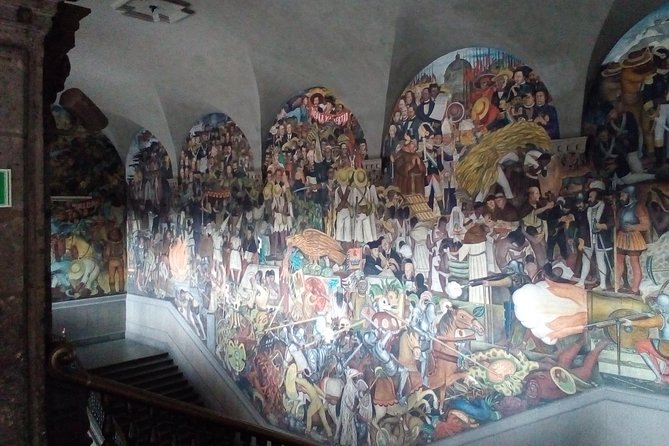
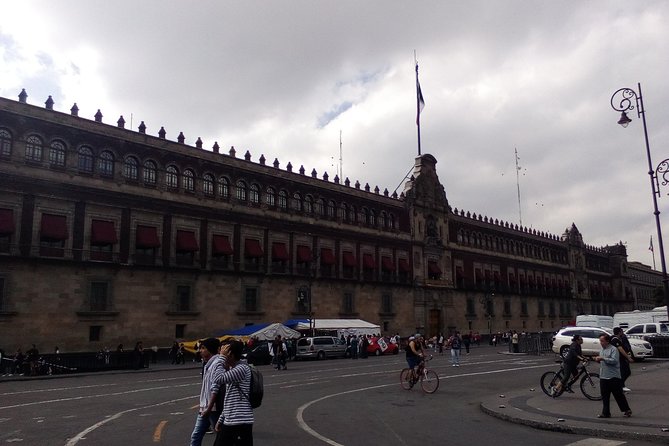
The next stop is Palacio Nacional de Mexico, scheduled for about 45 minutes. Its main draw here is Diego Rivera’s mural cycle, which covers practically all the walls on the building’s second story.
That short visit works if your aim is to see the murals and understand their broad message. It is less suitable if you want a slow examination of every panel. Rivera’s work is dense with figures, symbols, workers, rulers, and scenes from Mexican history, so a guide’s explanation can make a fast visit more useful.
Admission is not included. Confirm the day’s access arrangements with Daniel, especially since the tour’s schedule is fairly tight and the building is an active public site.
I like the way this stop follows Templo Mayor. First, you see the physical remains of the city’s Aztec foundation. Then you encounter a 20th-century artist using a government building to tell a sweeping story about Mexico. The pairing gives the day an idea to follow: power leaves its mark in stone, walls, and public space.
Two hours with Mexico’s archaeology at the National Anthropology Museum
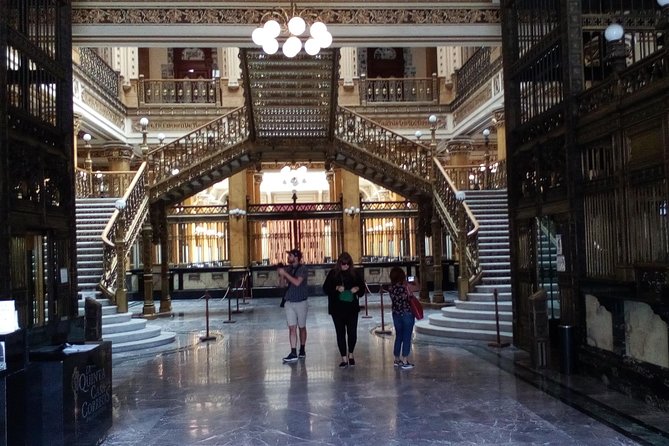
The National Anthropology Museum receives the longest museum visit, about two hours. Its collection includes archaeological pieces found during years of excavation in Mexico City’s center, along with material representing the country’s wider cultural past.
Two hours lets you go beyond a quick walk through the entrance galleries, but you will still need to choose what matters most to you. The museum is large, and trying to see everything could turn this stop into a tiring race. Ask for a clear plan at the start: a general survey, a focus on Mexico City, or a closer look at particular archaeological cultures.
The museum admission is extra. Lunch is also not included, so plan to bring money for a meal or ask how the day’s timing will handle food. Since the schedule moves from one major stop to another, you should not assume an extended restaurant break is built in.
This is the day’s best stop for adding context to the ruins at Templo Mayor. At the first site, you see where the Aztec capital once stood. Here, you can place those remains within a wider archaeological story. The visit also gives you a quieter museum setting after the public scale of Palacio Nacional.
More Art Deco tours in the world:
- Art Deco and Architecture Midtown Landmarks Tour
★ 5.0 · 142 reviews - Chicago Architecture Walking Tour: Incredible Art Deco Interiors
★ 5.0 · 85 reviews - Tulsa Art Deco and Architecture with Expert Guide Walking Tour
★ 5.0 · 77 reviews - New York City: Art Deco and Architecture Landmarks Tour
★ 5.0 · 76 reviews
Paseo de la Reforma in a 30-minute sweep
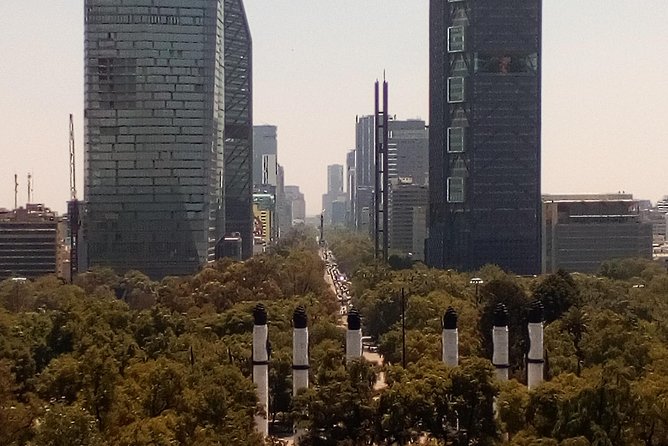
Paseo de la Reforma is a shorter stop, about 30 minutes, with no admission charge. The route takes in the Independence Column, government buildings, Chapultepec Park, and other monuments.
Think of this as a moving introduction rather than a full walking tour. Thirty minutes is enough to pause, take photographs, and hear why the avenue matters. It is not enough to explore every monument or spend much time inside Chapultepec Park.
This stop breaks up the museum schedule and puts Mexico City’s public image on display. You will see how government, national symbols, monuments, and open parkland shape the capital’s grand avenues.
The practical advantage is simple: you do not need to arrange separate transport to see these sights. The practical limit is just as simple: the time is brief. If Reforma is a major priority for you, ask whether the route allows a little more time here by shortening another section.
Three hours in Roma, from Romita to Casa Lamm
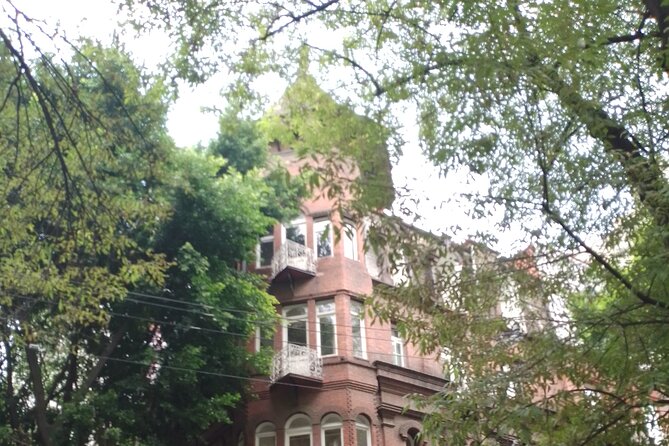
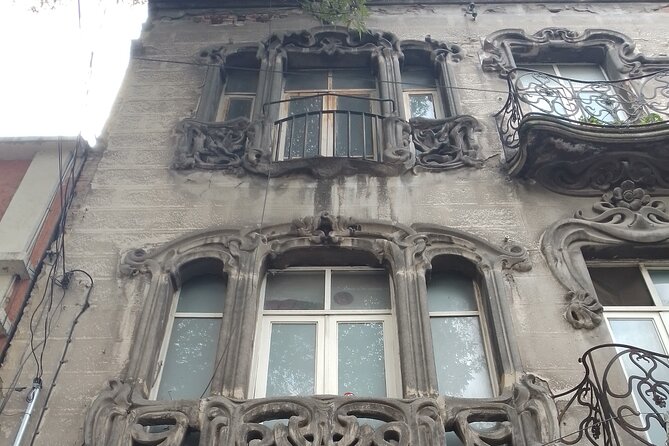
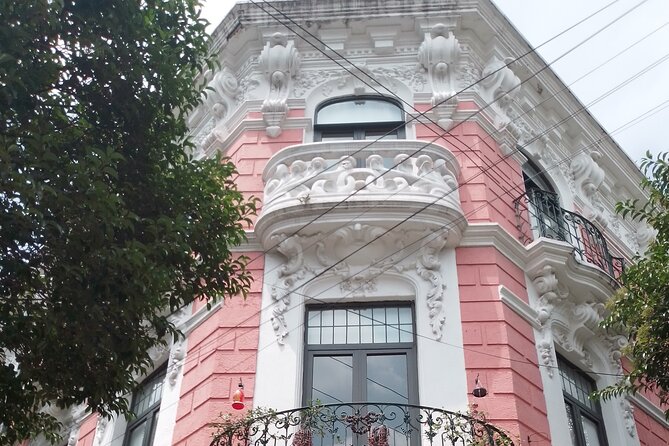
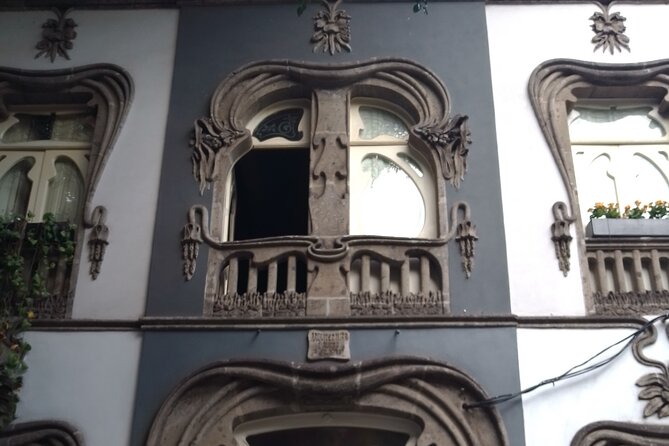
The Roma walk is the most distinctive part of the experience. It lasts three hours and begins around Romita Town Church before circling through the neighborhood. The focus is architectural rather than purely scenic, with attention to Art Nouveau, Art Deco, and Eclectic design.
You will compare original buildings with modern designs and look at how their architectural and ornamental features differ. That makes this more useful than a general neighborhood stroll. The guide is expected to point out what creates each style, not simply identify attractive façades.
The route includes Ajusco, Roma, and Cibeles squares. These stops give the walk a sense of structure and help connect individual buildings to the neighborhood around them. You will also hear about figures associated with Roma, including Clement Jacques, AldonConti, Antonio Caso, high-ranking politicians, and artists such as Leonora Carrington and Alfaro Siqueiros.
Some of the names and historical references may matter more to you than others. That is where a private tour has an advantage. Ask questions when a person, building, or square catches your attention rather than waiting for a fixed group lecture to move on.
The walk also addresses the religious and political conflict between the state and the church at the Sagrada Familia Neo-Romanic Cathedral. This is a valuable addition because it connects architecture to events and institutions, rather than treating style as decoration alone.
Casa Lamm Centro de Cultura is part of this Roma section. The setting helps frame the neighborhood’s artistic and architectural character, while the walk around it gives you a chance to compare past and present design.
Wear comfortable shoes and allow for the fact that three hours on foot comes after several museums. The supplied details do not specify rest breaks or the exact walking distance, so ask Daniel about the walking pace if anyone in your group has limited stamina.
What the architecture lesson adds
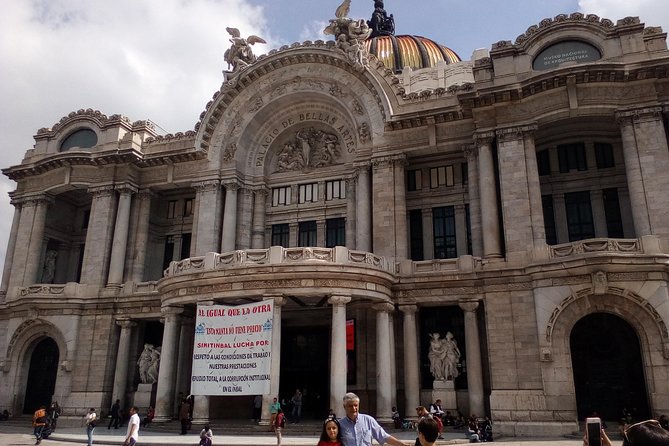
The Roma section gives the tour its clearest point of view. Art Nouveau, Art Deco, and Eclectic architecture can blur together when you only take photographs. A guide who stresses each style’s specific features helps you look more carefully at lines, ornament, façades, and the relationship between old and new.
The theme is also tied to an unrealized civic dream: a city hoping to thrive and project a modern identity. That idea gives the walk a human scale. You are not only seeing buildings. You are considering what their owners, designers, politicians, and artists wanted Mexico City to become.
This section may appeal most to people who enjoy city walks, design, art, and local stories. It may appeal less to anyone who wants a relaxed afternoon with plenty of free time. The three-hour walk is a serious part of the tour, not an optional add-on in spirit.
Price, transport, and the real value of a private group
The price is $98.33 per group of up to 10 people. That is a group price, not a per-person price, so it can be strong value when shared by several people. For a full group of 10, the transport and guide service work out to less than $10 per person before museum tickets, lunch, and parking.
For a small group, the value is less automatic. You are paying for private transportation, a private guide, and a long route through several parts of Mexico City. You are not paying for entrance tickets, food, or parking, so add those costs before comparing it with other options.
Airport pickup from Mexico City International Airport is available. That can make this useful as an orientation day, but you should confirm how the pickup fits with your arrival schedule. The tour is offered in English and uses a mobile ticket.
The private format is a practical benefit. Your group is the only group participating, and the published details say most people can take part. You can ask Daniel Mendívil Olvera to explain a mural, adjust the emphasis between museums and architecture, or clarify a point that interests you.
Communication deserves care. One booking account records a disagreement over a changed start time and a missed WhatsApp response, ending in a cancellation the night before. You can reduce that risk by confirming the pickup time, replying promptly to messages, and making sure any time change is clearly acknowledged.
Who should book this Mexico City experience
I would recommend this tour to a first-time visitor who wants a strong overview in one day and prefers private transport. It also suits a group of friends or family members who want to share the cost and ask questions without a large coach group.
It is a good match for you if you enjoy:
- Archaeology and Mexico’s pre-Hispanic past
- Diego Rivera and public art
- National monuments and city planning
- Architecture and decorative details
- Neighborhood walks with historical explanation
- A day built around major sights rather than free time
It may not suit you if you want to linger at each museum, eat a long leisurely lunch, or explore Roma at your own pace. The schedule is full, and the Roma walk alone takes three hours.
Daniel’s strongest documented quality is his friendly, responsive approach during the tour, with help answering questions and explaining the city from a different angle. Since the public rating is based on only two reviews and includes one serious communication complaint, I would book only after confirming the details directly.
Final call: a broad, useful introduction with a demanding finish
Book this experience if you want Mexico City’s main historical threads tied together: Tenochtitlan, Rivera’s murals, national archaeology, Reforma’s monuments, and Roma’s design history. The combination is unusual, and the private format makes the $98.33 group price attractive for a larger party.
Skip it if you dislike long days, museum admission add-ons, or extended walking. Before paying, confirm the start time, airport pickup if needed, museum plans, lunch arrangements, and WhatsApp communication. With those details settled, this can give you a thoughtful first reading of Mexico City, from buried foundations to hopeful modern façades.
FAQ
How long does the tour last?
The experience lasts approximately six to eight hours. The listed stops total about seven hours and 15 minutes before allowing for travel between locations.
Is the tour private?
Yes. Only your group participates, with a maximum group size of 10 people.
Is transportation included?
Yes. Private transportation is included.
Is airport pickup available?
Yes. Pickup from Mexico City International Airport is available.
Is the tour offered in English?
Yes. The tour is offered in English.
Are museum admission fees included?
No. Admission to Museo del Templo Mayor, Palacio Nacional de Mexico, and Museo Nacional de Antropologia is not included.
Is admission to Paseo de la Reforma included?
Yes. The Paseo de la Reforma stop is listed as free.
Is admission to the Roma architecture walk included?
Yes. The Casa Lamm and Roma neighborhood walking section is listed as free.
Is lunch included?
No. Lunch is not included in the price.
Who provides the experience?
The experience provider is Daniel Mendívil Olvera.
Can most people participate?
Yes. The additional information says most people can participate.
What is the cancellation policy?
You can cancel up to 24 hours before the experience for a full refund.
Just added around the world
- Wilmington History and Architecture Tour★ 4.8 · 18 reviews
- Washington, DC: Georgetown Architecture Walking Tour★ 5.0 · 8 reviews
- New Orleans : Garden District Architecture Walking tour★ 4.8 · 5 reviews
- Washington DC: Dupont Circle & Embassy Row Architecture Tour★ 5.0 · 6 reviews
- Vicenza: discovering the city of Palladio by e-bike★ 5.0 · 4 reviews
- Vicenza: Palladian Architecture Private Walking Tour★ 3.3 · 3 reviews
- Walk & Discover KL’s Architectural and Heritage Gems★ 5.0 · 7 reviews
- Unveiling Brno: History, Culture & Architectural Delights★ 5.0 · 2 reviews
Art Deco Tours, compared.
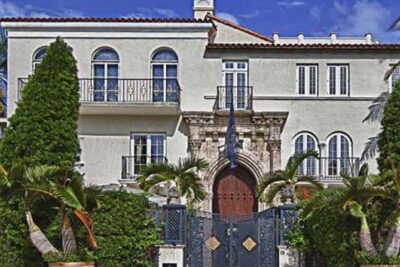
The Official Art Deco Walking Tour by The Miami Design Preservation League
Read our review →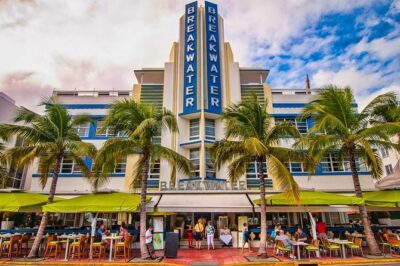
Guided 10am Morning Art Deco Walk From Napier Art Deco Trust
Read our review →


Award-winning Art Deco & Neon Lights Walking Tour in Miami Beach
Read our review →
Browse the lists this tour appears in