
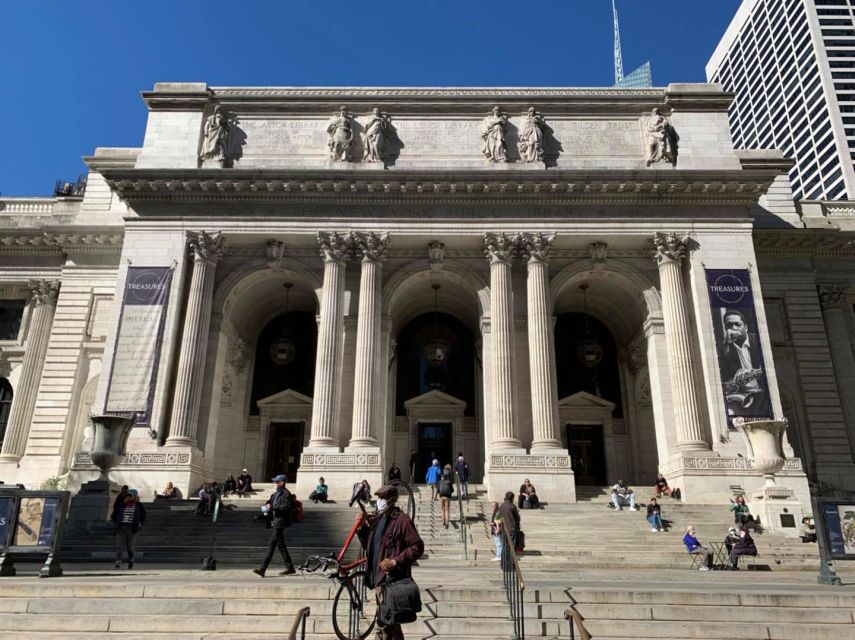
Review · NEW YORK CITY
New York City: Art Deco and Architecture Landmarks Tour
Midtown Manhattan can look like a wall of glass and stone until someone shows you where to look. This 150-minute walk turns that wall into a story, from Chrysler Building ornament to quiet lobby details and the long fight to protect New York’s older buildings.
I especially like the use of historic photos, which lets you compare today’s streets with the city that came before. I also like the small-group format and the chance to see interiors that are easy to miss on your own. The main caution is pace: one earlier participant found the guide walked too fast, so comfortable shoes and a willingness to keep moving matter.
Key points to know before you book
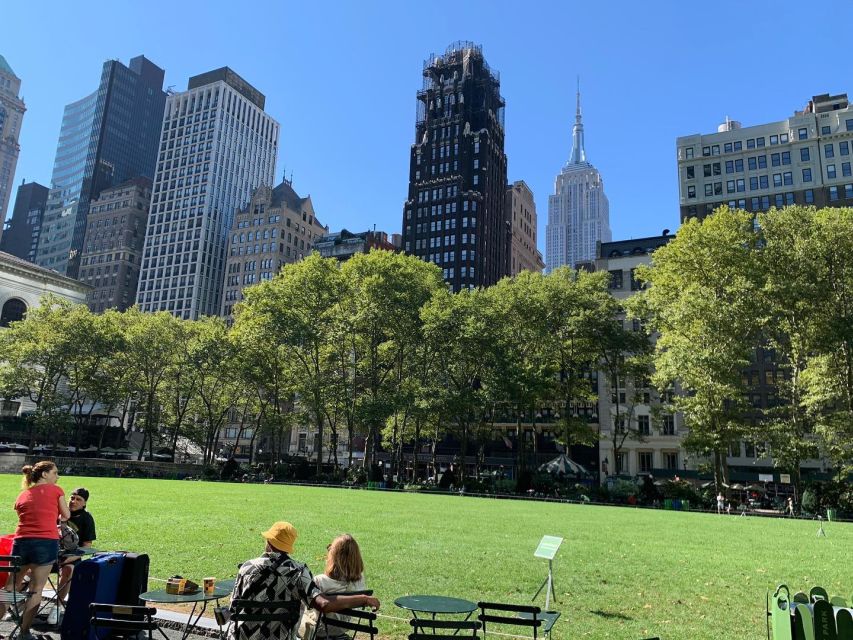
- Bryant Park is the starting point, with the meeting point in front of Whole Foods on Sixth Avenue.
- The route covers major Midtown icons, including the Empire State Building, Chrysler Building, Grand Central Terminal, and Rockefeller Center.
- Preserved interiors add real value, especially for anyone who wants more than exterior photo stops.
- Historic photos give the buildings context, showing how Midtown has changed over time.
- Jeremy and Robin are praised by name, with Jeremy noted for his detail, humor, and ability to answer questions.
- The walk costs $40 and lasts 150 minutes, a fair rate for a focused architecture tour in central Manhattan.
Why this Midtown walk works so well
Many New York sightseeing walks collect famous facades like stamps. This one tries to explain them. You hear why Art Deco took hold, how Beaux-Arts ideas shaped earlier buildings, and why New York eventually created laws to protect important structures.
That difference matters. Instead of simply being told that the Chrysler Building is beautiful, you are encouraged to inspect its patterns, metalwork, shape, and references to the machine age. You begin to notice how buildings announce their purpose through decoration.
The guide also asks you to look above street level. That is practical advice in Midtown, where signs, traffic, and crowds can pull your eyes down. The upper floors often contain the details that make a building special.
The tour is conducted in English and includes a live guide. It is wheelchair accessible, though the route is an active city walk and the group may keep a steady pace. The walk runs in rain unless severe weather forces a cancellation, so check the forecast and dress for the day.
More Art Deco tours in New York City:
- Art Deco and Architecture Midtown Landmarks Tour
★ 5.0 · 142 reviews - The Official Art Deco Walking Tour by The Miami Design Preservation League
★ 5.0 · 1,580 reviews - Miami South Beach Art Deco Walking Tour
★ 5.0 · 1,039 reviews
Starting at Bryant Park
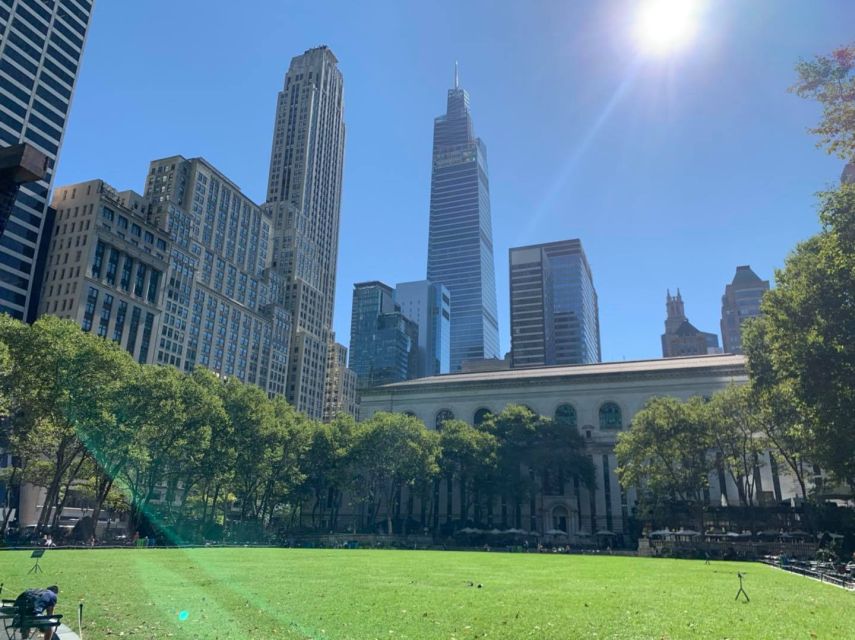
Meet in front of the Whole Foods store on Sixth Avenue, near the Renaissance Reinsurance building. From there, the route moves into Midtown and Bryant Park, a pleasant place to begin because it gives you a clear sense of the district’s scale.
Bryant Park is not just a green break between office towers. It helps frame the central question of the tour: how did New York become a city of monumental buildings, and what happens when newer construction threatens older ones?
Here the guide begins setting out the story of Midtown’s architecture and the origins of New York’s preservation laws. That civic angle gives the walk more weight. You are not only looking at decorative stone and steel. You are also learning why some buildings survived and why preservation became a public issue.
The park portion is listed at about 15 minutes, but the wider Midtown introduction continues as the route moves along. Expect stops for photographs, short explanations, and views on the way rather than one long talk in a single spot.
Seeing the Empire State Building differently
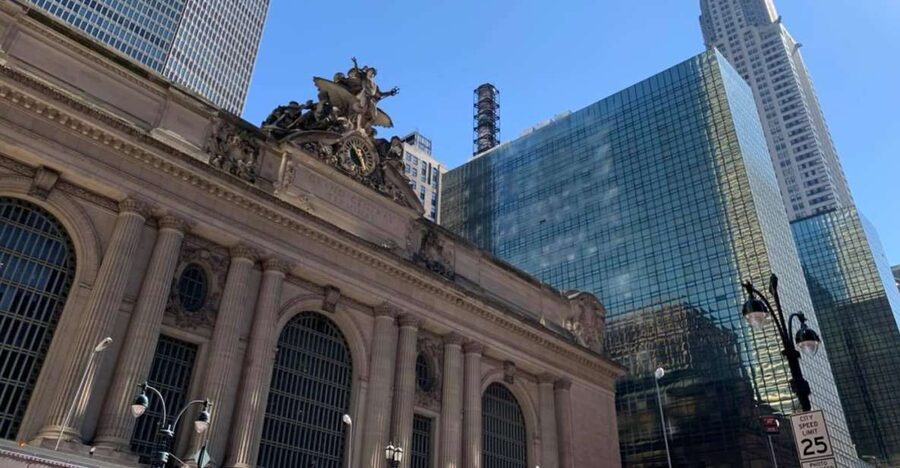
The Empire State Building receives a fresh look early in the walk. You may already know its outline, but the guide uses it to discuss Midtown’s architectural character and the ideas behind Art Deco skyscrapers.
This is one of the tour’s useful promises: you get a different perspective on a familiar building. The point is not just to repeat its height or fame. It is to place the Empire State Building among the other towers around it and explain how its design fits the period.
Historic photos help here. A photograph can reveal how much open space once surrounded a tower, how street life changed, or how the skyline looked before later buildings filled in the view. You will want to keep your phone or camera ready, but the best reward is learning which details deserve a second look later.
The Midtown section lasts roughly 30 minutes, with walking, sightseeing, and photo stops. This is a good early test of the pace. If you prefer leisurely strolling with long pauses, you may find the route brisk. If you want to cover a lot of ground in one morning or afternoon, the steady movement works in your favor.
Walking historic 42nd Street
The route then heads up 42nd Street, one of Midtown’s most useful corridors for understanding New York architecture. This portion takes about 30 minutes and gives the tour room to show several buildings rather than focusing on only one famous tower.
The guide points out both major structures and lesser-known examples. That mix is important. Famous buildings are easy to find in a guidebook, but smaller details often explain how an architectural style spread through the city.
Look for decorative patterns, sculpted figures, geometric shapes, and designs connected to transportation or industry. The Art Deco period liked speed, machinery, modern materials, and strong vertical lines. You may also see how older Beaux-Arts ideas remain in the arrangement and scale of certain buildings.
This is where the historic photographs earn their keep. A picture from an earlier period can show a demolished entrance, a changed street corner, or an original use that is no longer obvious. The guide’s role is to connect those pieces without making the walk feel like a lecture.
You also get a useful lesson in how to read a facade. Ask questions if you are curious about a symbol or a pattern. Jeremy, one of the guides, is especially praised for responding to questions and adjusting the conversation to the group’s interests.
A few more architecture tours around New York City worth a look
- Manhattan Architecture Yacht Cruise
★ 5.0 · 1,395 reviews - NYC: Around Manhattan Official NYC Architecture Cruise
★ 4.8 · 402 reviews - Tribeca Architecture And History Walking Tour
★ 5.0 · 141 reviews - 3 Hour Midtown Manhattan Architectural Tour
★ 5.0 · 81 reviews
The Chrysler Building and its machine-age details
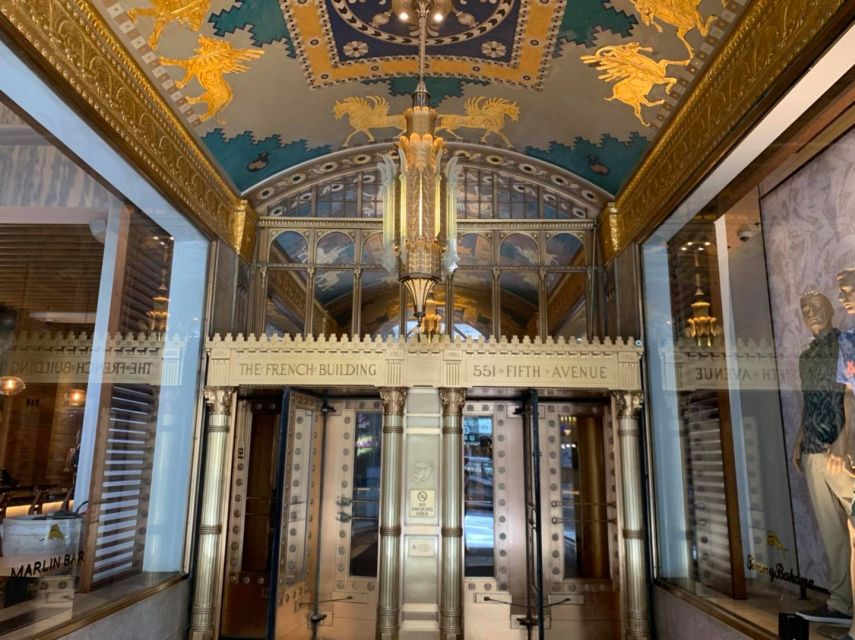
The Chrysler Building is the route’s clearest Art Deco star. The visit and photo stop last about 15 minutes, though you will see related buildings before and after it.
From the street, look upward. The tower’s crown is the obvious attraction, but the smaller details matter just as much. The tour draws attention to the building’s decorative language and even to the car designs associated with Chrysler, including the Chrysler bulldog detail noted by one participant.
That kind of observation is the reason to take a specialist architecture walk. On your own, you might photograph the crown and move on. With a guide, you are prompted to notice how the building ties its decoration to cars, industry, speed, and the optimism of its era.
The exterior is only part of the appeal. The tour includes access to several beautifully preserved lobbies along the route, and the Chrysler Building is discussed alongside other interior spaces. Conditions can vary, so you should not assume that every listed building offers the same amount of interior access. Still, the opportunity to enter preserved lobbies adds something an ordinary skyline walk cannot provide.
Grand Central Terminal beyond the clock
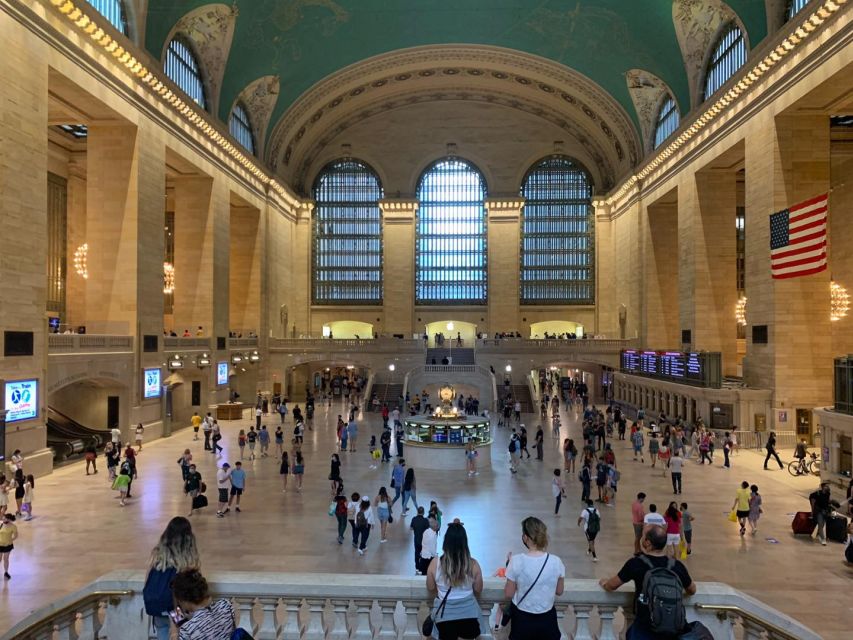
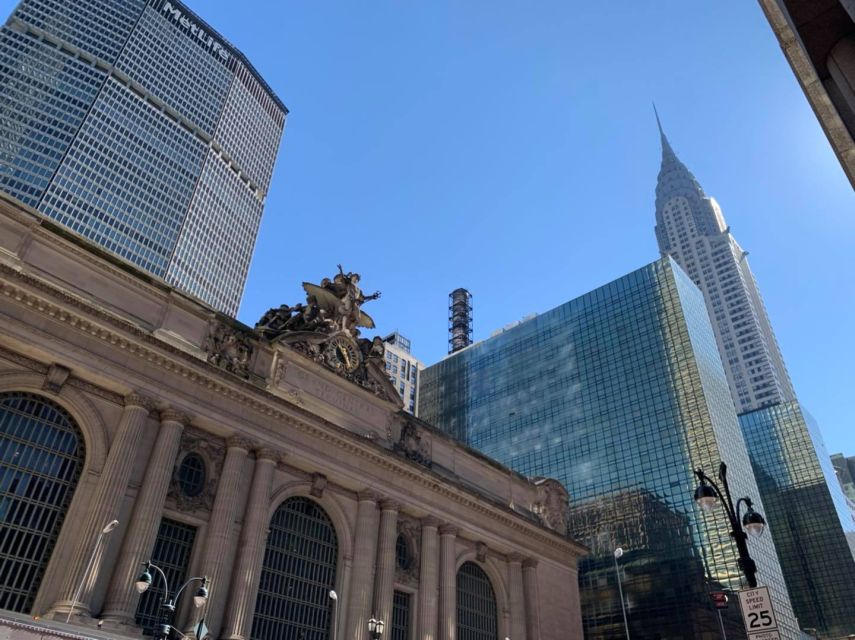
Grand Central Terminal receives a 15-minute visit, but its importance to the walk goes beyond a quick photograph. It is one of New York’s grandest interior spaces and the largest train terminal in the world.
This is a place where architecture and daily use meet. You can watch people crossing the main hall while the guide explains the building’s design, decoration, and place in New York’s development. The room works as a transportation hub, yet it also feels ceremonial. That contrast makes it one of the strongest stops on the route.
A short visit cannot cover every corner of Grand Central. You should think of this stop as a focused introduction rather than a full terminal tour. If you have extra time, you can return later and explore at your own pace. The guided visit gives you a better starting point, especially if you want to understand why the interior is considered so important.
The terminal is also a practical mid-route landmark. It breaks up the outdoor walking and gives you a chance to look closely at an interior rather than another facade. On a wet day, that change of setting is welcome, even though the tour continues in rain.
Fifth Avenue and a quieter Art Deco surprise
After Grand Central, the walk moves toward Fifth Avenue. Here the guide points out a favorite Art Deco treasure that does not receive the same attention as the Chrysler Building or Empire State Building.
This may be the part you remember best. The great icons are satisfying, but a less famous building can sharpen your eye. You see how Art Deco ideas appear in places that are easy to pass without noticing. The guide’s personal enthusiasm also helps. Jeremy has been described as particularly good at showing overlooked details and explaining the stories behind them.
The tour’s balance between famous and lesser-known buildings is one of its strongest features. You get the major names you came to see, then learn that Midtown’s character does not depend on those names alone.
If you enjoy taking photographs, this section rewards patience. Decorative work can be high above the sidewalk or tucked into an entrance. Take a moment to look up before crossing to the next stop. The guide repeatedly brings attention to details that street-level habits can hide.
Finishing at Rockefeller Center
The walk ends at Rockefeller Plaza, at Rockefeller Center. This is a sensible finish because the complex brings together art, architecture, public space, and commercial ambition in one place.
By this point, you have seen several styles and periods, considered the preservation movement, and practiced reading architectural details. Rockefeller Center gives you a final chance to apply that new way of looking. Rather than seeing it simply as a famous Manhattan address, you can consider how its buildings, plaza, decoration, and public role work together.
The tour does not include admission to an observation deck. However, one useful follow-up is to visit Top of the Rock afterward if you have already planned to do so. From above, you can look back at the buildings discussed during the walk and understand their position within Midtown.
That makes the ending flexible. You can continue sightseeing at Rockefeller Center, take photographs, or use the nearby subway connections to reach another part of Manhattan. The tour finishes in a central spot rather than returning you to Bryant Park, so plan your next activity accordingly.
What the guide adds
The guide is the main reason this experience feels different from a self-guided architecture walk. Jeremy is repeatedly praised for his clear explanations, humor, historic perspective, and willingness to answer questions. Robin has also led the walk, with a small group of three still receiving a full and lively experience.
The strongest guiding skill here is selection. Midtown contains far more buildings than anyone can study in 150 minutes. A good guide has to choose what matters, point out what you would miss, and keep the route moving.
You should expect a conversational tour rather than an audio guide. The group is small, and there is room for questions. If you have a particular interest in Art Deco interiors, preservation, skyscraper design, or New York history, bring it up early.
The one caution is pace. One person found that the walk continued quickly even after asking the guide to slow down. This does not appear to be a common concern, but it is worth considering if you have mobility limitations or prefer long pauses. The tour is wheelchair accessible, yet accessibility in a dense city route can still depend on the exact path and street conditions.
Is $40 a fair price?
At $40 per person, this is a solid value if you care about buildings and want expert context. You receive a 150-minute small-group tour with a guide, a broad route, several major landmarks, historic photographs, and some preserved interiors.
The value comes from the density of the experience. In two and a half hours, you cover Bryant Park, 42nd Street, the Chrysler Building, Grand Central Terminal, Fifth Avenue, and Rockefeller Center, while also seeing the Empire State Building and other Midtown structures.
A casual visitor could walk through much of this district for free. That is the fair comparison. The fee pays for the guide’s research, route planning, access to selected interiors, and the ability to identify details that are easy to overlook.
You will not receive food, drinks, hotel pickup, or drop-off. Those omissions keep the tour focused and the price reasonable. Budget for your own refreshments and wear shoes that can handle steady city walking.
Who should take this tour?
I would choose this walk if you enjoy Art Deco, skyscrapers, historic photographs, or New York’s preservation story. It also suits a first visit because it covers many central sights without requiring you to organize several separate stops.
It is a particularly good fit for:
- Architecture students and design fans
- Visitors who want more than standard sightseeing facts
- People curious about building interiors and lobby decoration
- Photographers who enjoy details above street level
- Repeat New York visitors looking for overlooked Midtown sites
- Anyone planning to visit Top of the Rock afterward
I would be less likely to recommend it if you want a slow, unstructured walk or dislike city walking. The route covers a lot of ground, and the guide’s detailed commentary works best when you are ready to pay attention.
Bring comfortable shoes. The tour runs rain or shine except in severe weather, so a light rain layer can be useful. Since the guide speaks English, you should also be comfortable following a detailed spoken explanation in that language.
Should you book the Art Deco and Architecture Landmarks Tour?
Book it if you want to understand why Midtown looks the way it does, not just photograph its tallest buildings. The famous stops are here, but the better reason to go is the way the guide connects them to smaller details, preserved lobbies, historic photographs, and New York’s preservation efforts.
The tour is strongest for curious walkers who ask questions and look up. At $40, it offers good value for a compact, focused introduction to central Manhattan architecture. Skip it only if you want a very slow pace, a food stop, or a tour built around one building rather than a broad route.
FAQ
Where does the tour meet?
Meet your guide in front of the Whole Foods store on Sixth Avenue, near the Renaissance Reinsurance building.
How long does the tour last?
The tour lasts 150 minutes, or two and a half hours.
Where does the tour end?
The walk ends at Rockefeller Plaza at Rockefeller Center.
Which major buildings are included?
The route includes views and visits connected with the Empire State Building, Chrysler Building, Grand Central Terminal, and Rockefeller Center. It also covers Bryant Park, 42nd Street, Fifth Avenue, and other Midtown buildings.
Is the tour wheelchair accessible?
Yes, the activity is listed as wheelchair accessible.
What happens if it rains?
The tour takes place rain or shine, but it can be cancelled in severe weather. Comfortable shoes are recommended.
Just added around New York City
- Race to the Sky: NYC Architecture Tour With SUMMIT One Ticket★ 5.0 · 3 reviews
- New York Upper West Side Art and Architecture Tour★ 5.0 · 4 reviews
- Private Flatiron Food, History and Architecture Tour★ 5.0 · 8 reviews
- New York Upper East Side Art and Architecture Tour★ 5.0 · 3 reviews
- Custom Private New York Architecture, Art and City Tour★ 5.0 · 3 reviews
- Chelsea and the High Line NYC Architecture Walking Tour★ 5.0 · 6 reviews
- New York Midtown South Art and Architecture Tour★ 5.0 · 2 reviews
- New York Soho and the Village Art and Architecture Tour★ 5.0 · 4 reviews
Art Deco Tours, compared.

The Official Art Deco Walking Tour by The Miami Design Preservation League
Read our review →

Guided 10am Morning Art Deco Walk From Napier Art Deco Trust
Read our review →

Award-winning Art Deco & Neon Lights Walking Tour in Miami Beach
Read our review →
Browse the lists this tour appears in