
Review · LONDON
London: Architecture Tour of Benjamin Franklin House
Benjamin Franklin’s only surviving home is a slim five-storey townhouse on Craven Street, where the American statesman lived for 16 years. This one-hour architecture tour links the building’s Georgian rooms to Franklin’s London life, political work, experiments, and unusual circle of friends.
I like the chance to see Franklin’s actual rented rooms, and I like that the visit reaches beyond famous names to include Margaret Stevenson, surgeon Hewson, and the story of the Craven Street bones. Guides Ron and Brian have been singled out for clear, enthusiastic explanations.
The main drawback is the building itself: stairs connect every floor, and the levels are uneven and sloping. The house has handrails and seating, but no wheelchair access or accessible restroom.
Key points to know before visiting
- Franklin’s London home: See the only remaining house where Benjamin Franklin lived, including the floor he rented for 16 years.
- Architecture with a human story: Explore original Georgian and Victorian features while learning how the townhouse changed over time.
- The Craven Street bones: Hear about surgeon Hewson’s anatomy school and the unsettling discovery linked to the house.
- Franklin’s working life: Learn about his experiments, political beliefs, London contacts, and relationship with the Stevenson family.
- A hands-on finale: Try playing a tune on the glass armonica, Franklin’s unusual musical invention.
- Important access note: The five-storey house has uneven floors, sloping stairs, and no wheelchair access.
Why Benjamin Franklin lived on Craven Street
Many people know Benjamin Franklin as an American founding father, printer, inventor, and signer of the Declaration of Independence. Fewer know that he spent 16 years in London, living at 36 Craven Street from 1757 until 1776.
That long stay is the reason this house feels different from a standard historic room display. Franklin was not simply passing through. London was his working base during a major part of his life, and the rooms help explain how his American and British worlds overlapped.
Franklin came to London for political and practical reasons connected with the American colonies. From this townhouse, he followed current affairs, met influential people, worked through political matters, and continued his experiments. The tour uses the house to put those activities in physical context.
I find that useful because Franklin’s public image can become too neat and polished. Here, you see a man living in rented rooms, eating, arguing, experimenting, hosting discussions, and maintaining close links with the Stevenson family. The building gives his life a more ordinary scale.
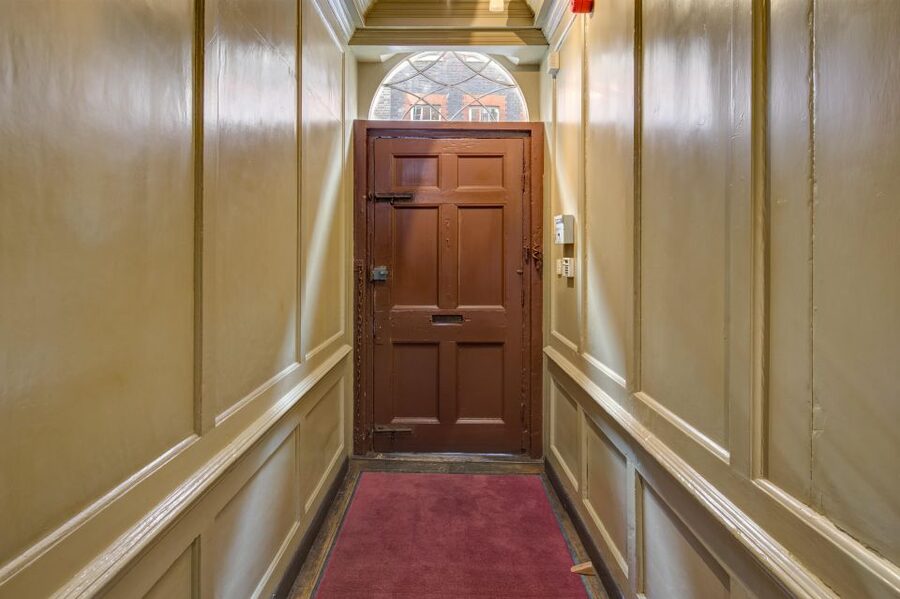
The house is Grade I listed, a designation that reflects its national architectural importance. It retains notable Georgian and Victorian features, although it has also passed through later changes and a major conservation project before opening to the public in 2006.
A few more architecture tours around the world worth a look
- Chicago Architecture River Cruise
★ 5.0 · 15,756 reviews - Chicago River 90-Minute Architecture Tour
★ 4.5 · 9,629 reviews - Chicago River: 1.5-Hour Guided Architecture Cruise
★ 4.8 · 8,046 reviews
Starting at 36 Craven Street
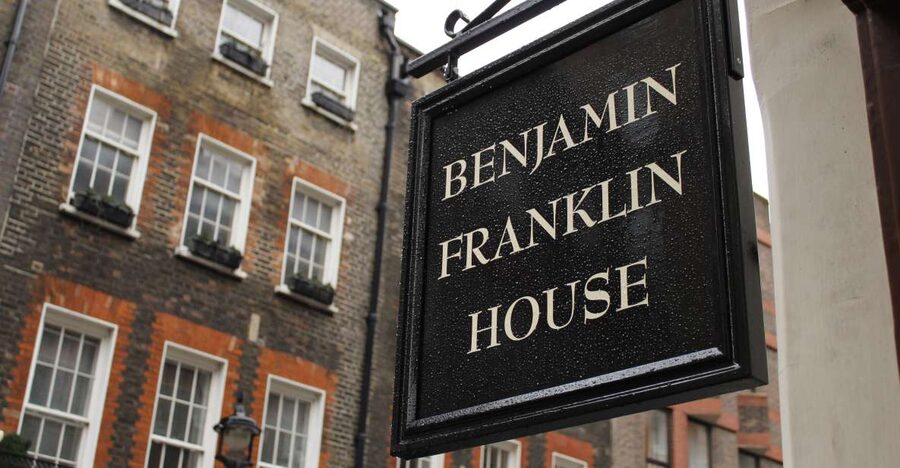
You enter by knocking at the door of 36 Craven Street, below the Benjamin Franklin House sign. This detail matters because the building is a historic townhouse rather than a large museum with a grand public entrance. Look for the sign and allow a little extra time to get oriented before the tour begins.
The visit is led in English. Recent guide names include Ron and Brian, and both have been praised for adding extra detail to the history of Franklin and the house. Ron has also been described as particularly enthusiastic and well informed about the building.
The visit lasts about an hour. That is long enough to move through the principal rooms without turning the experience into a half-day commitment. You are encouraged to ask questions, and there is an opportunity for questions at the end.
One practical point is worth knowing before you arrive: people entering or leaving can interrupt the start of the tour. The entrance arrangement is part of the charm of a real historic home, but it is less polished than the entry system at a large museum.
The Georgian kitchen and London food
The tour begins by connecting the house’s architecture with daily life. In the kitchen, you learn about Georgian food and Franklin’s thoughts on the London diet.
This is one of the more useful parts of the visit because architecture becomes easier to understand when you consider how people used each room. A kitchen was not just a period backdrop. It was part of the household’s working machinery, tied to food, servants, storage, heat, and the practical limits of life in an old townhouse.
Franklin’s comments on food also add personality. Instead of meeting him only through political achievements or scientific experiments, you get a sense of his everyday opinions. The tour’s strongest moments come when a large historical subject is brought down to this level: what people ate, where they talked, and how a rented room functioned.
The kitchen is also a reminder that the house tells two stories at once. One is Franklin’s biography. The other is the story of the building itself, from its eighteenth-century origins through later changes and the conservation work that prepared it for visitors.
Margaret Stevenson’s parlour and Franklin’s London circle
As you go upstairs, the tour turns to Margaret Stevenson, the wealthy widow from whom Franklin rented rooms. Her parlour helps explain the social world around him.
Franklin’s connection with the Stevenson family was important. He did not live in total isolation, and the house was not simply a private office. The tour considers his relationship with Margaret Stevenson, her family, and his own family, giving you a fuller view of his personal life.
The parlour also becomes a setting for discussions of the people Franklin met and the current affairs they discussed. This is where the house’s location and layout begin to feel meaningful. A room used for conversation tells you something about Franklin’s role in London, as does the fact that political and intellectual life took place in domestic interiors.
I like this section because it avoids treating Franklin as a lone genius. His work and ideas developed within a network of family ties, political contacts, and social relationships. You also hear about his influence and activities without losing sight of the house’s domestic character.
Same city, a completely different century:
- Chicago Architecture Center River Cruise aboard First Lady
★ 5.0 · 5,536 reviews - Chicago: Architecture River Cruise Skip-the-Ticket Line
★ 4.8 · 4,325 reviews - Chicago River 45-Minute Architecture Tour from Magnificent Mile
★ 4.5 · 2,924 reviews - Barcelona: Sant Pau Recinte Modernista Entry Ticket
★ 4.6 · 2,567 reviews
Franklin’s parlour and 16 years of experiments
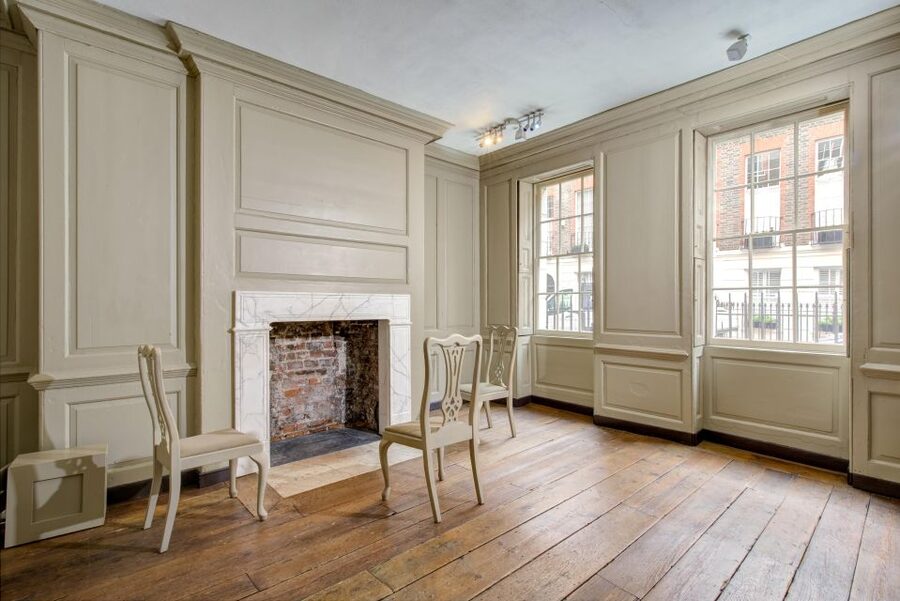
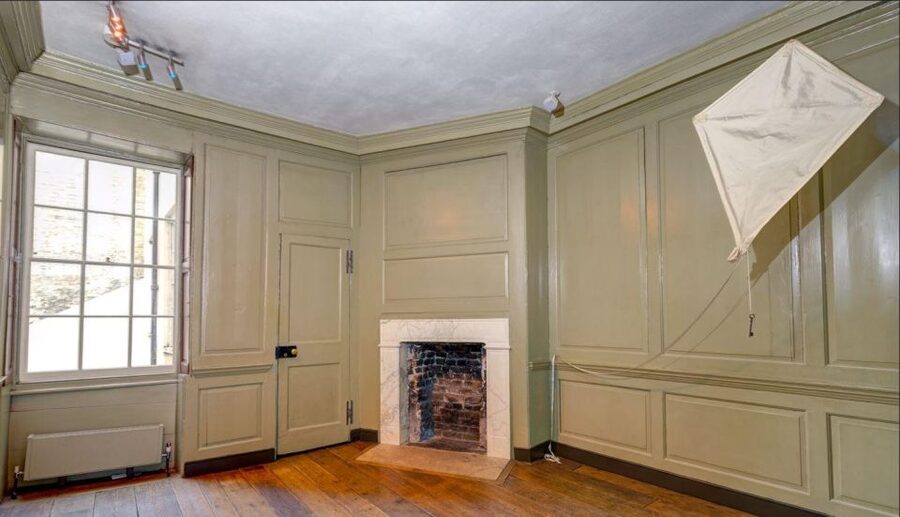
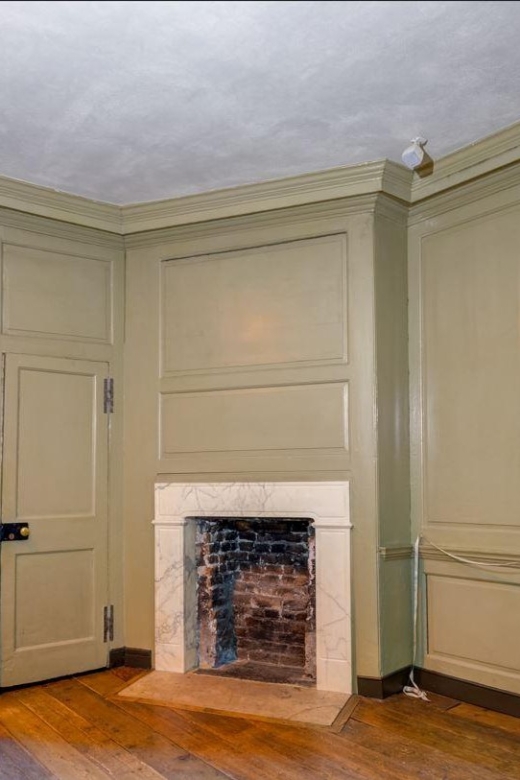
The most important stop is Franklin’s parlour, the floor he rented for 16 years. This is the room most closely tied to his own daily life in London.
Here, the guide discusses Franklin’s experiments, political beliefs, and actions. You also hear about his eccentric personality, which helps keep the presentation from becoming too formal. Franklin was a serious political figure, but he was also an inventive and unusual man, and the tour makes room for both sides.
The value of this room lies in its direct connection to time. Franklin did not spend a single night here before moving on. Sixteen years is a large part of an adult life. He left the house and the Stevenson family in 1776, when he returned to America to sign the Declaration of Independence. He never returned to London.
That departure gives the room a strong closing point. The house is tied to the years before a major turning point in American history, yet the experience remains focused on Franklin’s life in London rather than trying to cover everything he ever did.
If you are mainly interested in architecture, this room shows how the building supported a working life. If you are mainly interested in Franklin, it gives you the clearest sense of where his London years unfolded.
The Craven Street bones and surgeon Hewson
The Craven Street bones add a darker and more surprising layer to the house. You learn about surgeon Hewson and the anatomy school connected with the building.
This part may appeal especially to visitors who like historic sites with complicated stories. The house was not only a place for political discussion and domestic life. Its history also includes medical study and the unsettling evidence associated with anatomy teaching.
The story helps explain why preservation is not always about celebrating one famous person. A historic building can hold several pasts at once, including stories that are awkward, grim, or unexpected. The Craven Street bones give the tour a change of tone and show that the address had a life beyond Franklin.
The guide connects this material to the building rather than presenting it as a detached mystery. That approach makes the detail useful: you learn something about the house, the people who used it, and the medical practices of the period.
Trying Franklin’s glass armonica
The final stop is the Glass Armonica Room, where you can try to play a tune on Franklin’s instrument.
This is a fine ending because it turns Franklin’s interest in science and invention into a physical experience. You do not only hear that he created or worked with unusual devices. You have the chance to test the instrument yourself.
The glass armonica is also a reminder that Franklin’s interests crossed several fields. The tour presents him as a political actor and experimenter, but also as someone curious about sound and design. Allow a little patience here. Playing an unfamiliar instrument is unlikely to produce a concert on your first try, which is part of the fun.
Photography is allowed, but flash photography is not. Audio recording is also not allowed, so plan to listen closely and take notes afterward if you want to remember the finer points.
What the $16 admission gives you
At $16 per person, the cost is modest for central London, especially since it includes entry to the house and a live, hour-long tour. Children under 12 enter free, which can make this a sensible short outing for families with children who are interested in inventions, American history, or old houses.
The value depends on what you want from a historic site. You are not paying for a large museum with many galleries or a full day of activities. You are paying for access to a rare surviving home, a guided explanation of its architecture, and a focused look at Franklin’s London life.
I think the price works best for visitors who want context rather than a quick photo outside. The guide supplies the links between rooms, people, and events. Without that explanation, the townhouse could be easy to pass through in a few minutes.
The booking terms also give you some flexibility. You can reserve and pay later, and cancellation is free up to 24 hours before the visit. The ticket is valid for one day, with available starting times shown during booking.
Access, stairs, and house rules
This is a five-storey townhouse, so you should expect stairs between each floor. The floors and stairs are uneven and sloping, although handrails are provided on all staircases and seating is available in each historic room.
There is no wheelchair access because of the Grade I listed building and its different levels. The restroom is downstairs in the basement and is not accessible. Carers enter free, and visitors with disabilities qualify for concessionary tickets.
Guide dogs and hearing dogs are allowed throughout the house. Other pets are not permitted. Smoking, vaping, drinks, alcohol, drugs, bare feet, and audio recording are not allowed indoors.
These rules are straightforward, but the access limits are important. If stairs are difficult for you, contact the provider before booking rather than assuming the short duration makes the visit easy.
Who will enjoy this Craven Street visit
I would choose this tour if you like historic houses, political history, architecture, or the less familiar parts of famous lives. It suits a visitor who wants one focused hour rather than a packed attraction with crowds and many rooms to cover.
Families may also find it manageable because the visit is short and children under 12 enter free. The glass armonica offers a hands-on ending, while the Craven Street bones add a memorable detail for older children and adults.
It is less suitable if you want a fully accessible attraction, a self-guided visit in another language, or a large collection of objects. The tour is conducted in English, and the five-storey layout demands steady movement on old stairs.
I would also keep expectations realistic. This is a small historic townhouse, not a grand palace. Its appeal comes from the connection to Franklin and from the guide’s storytelling, not from size.
Should you book Benjamin Franklin House?
Book it if you want to understand Benjamin Franklin through the place where he actually lived in London. The strongest reasons are the original rooms, the 16-year connection, the Stevenson family story, the Craven Street bones, and the chance to try the glass armonica.
The $16 price is fair for a guided hour in a rare Grade I listed home. Guides such as Ron and Brian add useful detail, and the format leaves room for questions rather than rushing you from one display to the next.
Skip it if stairs are a serious problem or if you prefer a large museum with independent browsing. For everyone else, this is a compact, specific, and unusual London stop that reveals a side of Franklin many visitors miss.
FAQ
How long does the Benjamin Franklin House architecture tour last?
The tour lasts about one hour, with an opportunity to ask questions at the end.
What does the $16 price include?
The price includes entry to Benjamin Franklin House and the hour-long guided tour.
Do children under 12 pay for admission?
No. Children under the age of 12 enter free.
What language is the tour conducted in?
The live tour guide speaks English.
Where do I meet the tour?
Knock on the door of 36 Craven Street, below the Benjamin Franklin House sign.
Can I cancel the booking for a refund?
Yes. You can cancel up to 24 hours in advance for a full refund.
Is the house wheelchair accessible?
No. The building has five storeys, uneven and sloping floors, and stairs between each floor. Handrails and seating are available, but there is no wheelchair access or accessible restroom.
Can I take photographs inside?
Photography is allowed, but flash photography is not. Audio recording is also not allowed.
Just added around the world
- Wilmington History and Architecture Tour★ 4.8 · 18 reviews
- Washington, DC: Georgetown Architecture Walking Tour★ 5.0 · 8 reviews
- New Orleans : Garden District Architecture Walking tour★ 4.8 · 5 reviews
- Washington DC: Dupont Circle & Embassy Row Architecture Tour★ 5.0 · 6 reviews
- Vicenza: discovering the city of Palladio by e-bike★ 5.0 · 4 reviews
- Vicenza: Palladian Architecture Private Walking Tour★ 3.3 · 3 reviews
- Walk & Discover KL’s Architectural and Heritage Gems★ 5.0 · 7 reviews
- Unveiling Brno: History, Culture & Architectural Delights★ 5.0 · 2 reviews
London Architecture Tours, compared.
London: Brutalist Architecture & History Walking Tour
Read our review →
Private Tour of Hampton Court Palace with Award-Winning Architectural Historian
Read our review →
London: Modern Architecture & Building Guided Walking Tour
Read our review →London: Brutalist & High-tech Architecture Walking Tour
Read our review →
London: Official Natural History Museum Tour – Architecture
Read our review →Browse the lists this tour appears in