
Review · COPENHAGEN
Copenhagen: Harbor Architecture Private Walking Tour
Copenhagen’s waterfront is a lesson in how a city can make room for people, bicycles, culture, and striking buildings. This private two-hour walk links colorful Nyhavn with bold newer landmarks such as the Black Diamond, Circle Bridge, and the Opera House, giving you a quick visual tour of the city’s changing harbor.
I like the private format, since your group can ask questions and set the pace without waiting for strangers. I also like the route’s range, from old warehouses and canal houses to clever bridges and modern cultural buildings. The main drawback is time: eight stops in about two hours means most places are viewing points, not extended visits.
Key points before you book
- Private access for up to two people: The price is $405.53 per group, not per person, so it makes the most sense for a couple or a small party that values personal attention.
- A strong first look at Copenhagen: The walk covers Nyhavn, the harbor, Christianshavn connections, the Opera House, and several major design landmarks.
- Martin Thomsen and Damian Sanfilippo have led the route: Both are described as witty, friendly, and able to handle questions beyond the planned architecture theme.
- Eight stops, but no indoor admissions built in: You see the exteriors and settings of the buildings, while entry to the Danish Architecture Center is not included.
- A useful city walk with a clear finish: The route ends at DAC, close to City Hall Square, making it easy to continue sightseeing afterward.
- Mostly free sights and outdoor viewing: Bring comfortable shoes and be ready for changing weather along the harbor.
Copenhagen’s harbor, explained through architecture
The best feature of this walk is its simple idea: instead of treating architecture as a list of isolated buildings, it follows the water and shows how Copenhagen’s harbor works as public space.
You begin near Ofelia Plads, close to Nyhavn, and finish at the Danish Architecture Center. Along the way, you cross or view bridges, pass former industrial land, see major cultural buildings, and walk through areas where historic forms meet modern construction.
That makes the tour useful even if you are not an architecture specialist. Your guide can point out how Denmark often favors practical design, public access, sustainability, and human comfort. You are not just looking at unusual shapes. You are looking at how buildings and bridges affect daily life.
The route is also a good orientation walk. It introduces several central waterfront districts in a short period, though you should not expect long visits inside each attraction. The listed stops generally receive between 10 and 15 minutes, so the experience is built around explanation, photography, and discussion.
More architecture walks in the world:
- Lecce: Baroque Architecture and Underground Walking Tour
★ 4.6 · 1,248 reviews - Chicago in a Day: Food, History & Architecture Walking Tour
★ 5.0 · 1,153 reviews - Ramblas, Old Town, Gothic and Gaudi Architecture Walking Tour
★ 5.0 · 723 reviews
Ofelia Plads and the first view across the water
Ofelia Plads is the opening stop, with about 10 minutes set aside for the waterfront square. The space opened in 2016 and hosts free cultural events, including concerts and plays. It also gives you a clear view toward the Opera House.
This is a smart starting point because it puts modern Copenhagen in front of you right away. You are close to Nyhavn, but the view across the harbor shifts your attention from colorful historic buildings to large-scale cultural architecture.
I would arrive ready to walk rather than expecting a formal gathering space with indoor shelter. The square is open and exposed, so weather can affect your comfort. It is also worth asking your guide about the relationship between public events and the harbor, since the square is designed for more than sightseeing.
Nyhavn, beyond the postcard view
Nyhavn receives about 10 minutes, which is enough for a short stroll and an introduction to the canal district. The 17th-century waterfront is lined with colorful houses, restaurants, and the familiar view that appears on many Copenhagen postcards.
The value of seeing Nyhavn with a guide is the context. On your own, it is easy to photograph the facades and move on. A guide can explain the area’s past and help you read the canal as part of Copenhagen’s older working waterfront.
Do not expect a long restaurant stop here. Food and drinks are not included, and the tour continues on foot. If you want to sit by the canal afterward, save that for later rather than trying to fit a meal into the two-hour walk.
Nyhavn also provides a useful contrast with the rest of the route. Its colorful facades and traditional harbor character make the later modern buildings easier to appreciate. You see not one version of Copenhagen, but several eras sharing the same waterline.
Inderhavnsbroen and the connection to Christianshavn
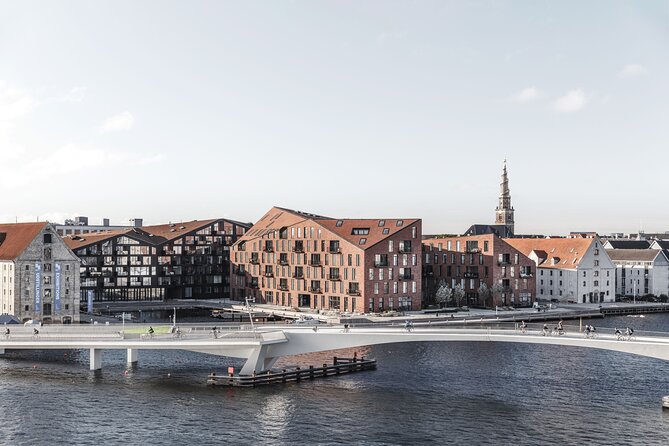
The route next takes you to Inderhavnsbroen, a bridge for pedestrians and cyclists. It connects Nyhavn with Christianshavn and offers another way to see the harbor from above the water.
This is one of the more practical parts of the tour. Copenhagen’s bridges are not merely monuments. They help people move around the city without cars, and they make the harbor feel connected rather than divided.
The crossing also changes your view. From the street, buildings can seem separate. From a bridge, you can compare shorelines, boat traffic, old facades, and newer development in one glance. The bridge forms part of the Copenhagen Harbour Circle route, giving you a sense of the wider walking and cycling network.
Because the tour is short, your guide will likely keep the bridge stop focused. If you want extra photographs, use the private format to ask for a brief pause, but remember that more time here means less time at another stop.
More private architecture tours in the world:
- Best of Chicago: Architecture & Highlights City Private Tour
★ 5.0 · 94 reviews - Private Harajuku Omotesando Architecture Walking Tour
★ 5.0 · 67 reviews - Private Santa Barbara History and Architecture Walking Tour
★ 5.0 · 56 reviews - Private Barcelona Modernism and Gaudí Walking Tour
★ 4.7 · 54 reviews
Papirøen, where old industry meets new development
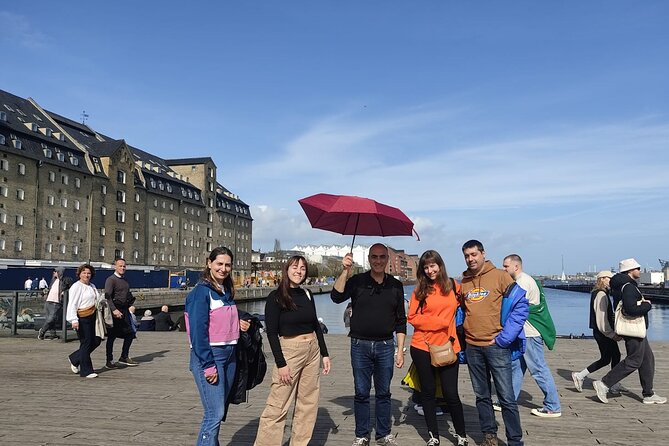
Papirøen, or Paper Island, is the next major change in scenery. The area was once used as a paper mill and has been transformed into a new neighborhood with distinctive buildings and harbor views.
This stop is especially useful for understanding how Copenhagen reuses former industrial areas. Rather than treating old working land as off-limits or forgotten, the city has turned it into a place for new construction and public activity.
You will have roughly 10 minutes here. That is enough to examine the architecture from outside and hear how the area changed, but not enough for a leisurely meal or extended exploration. Food and drinks are not part of the tour, so plan a separate visit if you want to spend more time in the district.
I like this part of the route because it keeps the discussion grounded. You are not only looking at polished cultural buildings. You are also seeing how an old harbor site can take on a new role.
The Opera House, viewed from the harbor
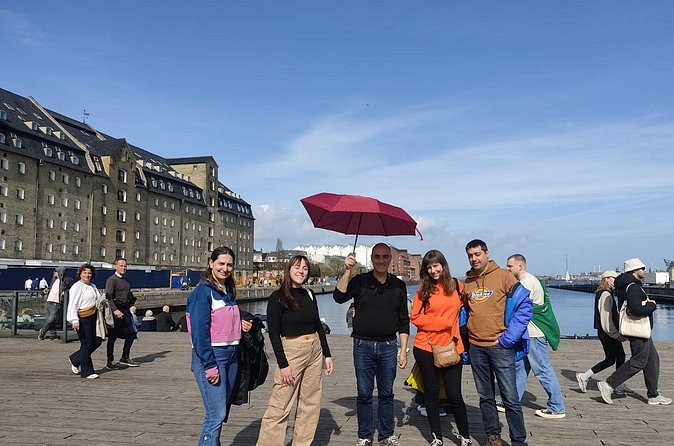
The Opera House, known locally as Operaen, is one of the route’s major visual moments. Completed in 2005, it occupies a prominent waterfront position and has become a key Copenhagen landmark.
The itinerary describes this stop as Operaen Christiania, but the focus is the Opera House and its setting across the harbor. The building’s large scale and distinctive design are easiest to understand from a distance, where you can see its relationship to the water and surrounding city.
You should not expect an interior performance venue visit. The tour provides an outdoor view, and the stop lasts about 10 minutes. That is enough for an architectural explanation and photographs, but not for a full building tour.
This is where a private guide can add real value. You can ask why the building was placed on the waterfront, how its design differs from older Copenhagen architecture, and how it fits the city’s preference for cultural buildings that address public space.
Krøyers Plads and warehouse-inspired design
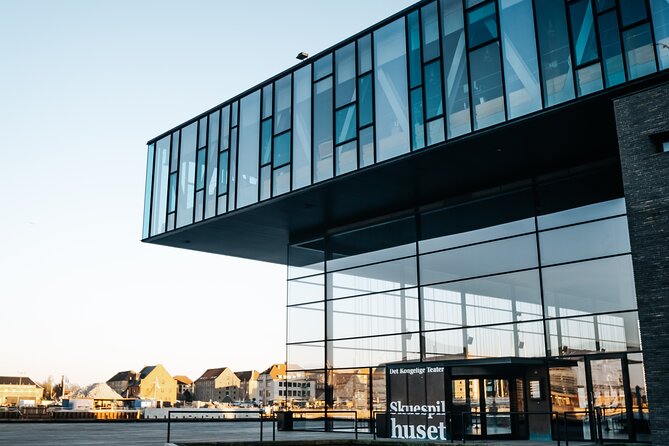
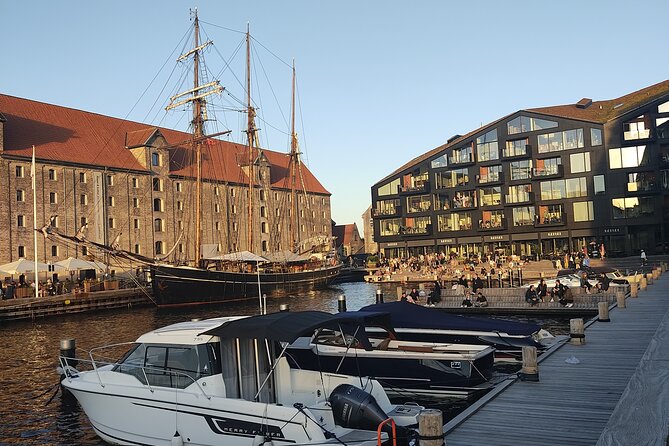
Krøyers Plads receives about 15 minutes, making it one of the longer stops. The neighborhood contains modern buildings inspired by historic warehouses, so it is a useful place to look at how newer architecture borrows from its surroundings without simply copying them.
The appeal here is the balance between old and new. Instead of placing a completely unrelated modern structure beside older harbor buildings, the designs refer to the area’s industrial past. Your guide can help you notice proportions, materials, roof shapes, and the way new facades respond to the water.
This stop may appeal most to people who enjoy design details. If your main goal is famous landmarks, Krøyers Plads may feel less immediately dramatic than Nyhavn or the Black Diamond. Give it time, though. It is one of the places where the tour’s broader theme becomes clearest.
The Black Diamond and a polished harbor facade
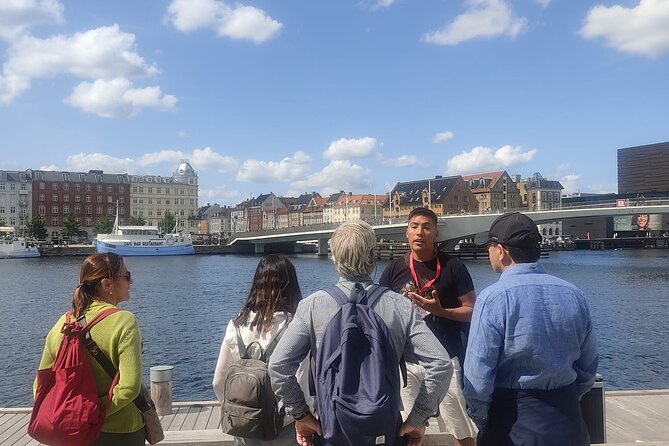
The Black Diamond is the Royal Danish Library’s modern waterfront extension. Its polished black granite exterior and bright atrium make it easy to recognize, while the building also offers harbor views, a cafe, and exhibition spaces.
The tour’s stop is about 10 minutes, so you should think of it as an exterior introduction rather than a library visit. The building’s reflective surface changes with the light and water, while the atrium gives the structure a more open interior character than its dark exterior first suggests.
This is a good place to ask about the contrast between heavy-looking materials and natural light. The Black Diamond is memorable not just because it is dark, but because the inside and outside create different impressions.
If you want to visit the cafe or exhibitions, you will need to return separately. The guide is included, but food, drinks, transportation, and admission costs are not.
Circle Bridge, a practical piece of art
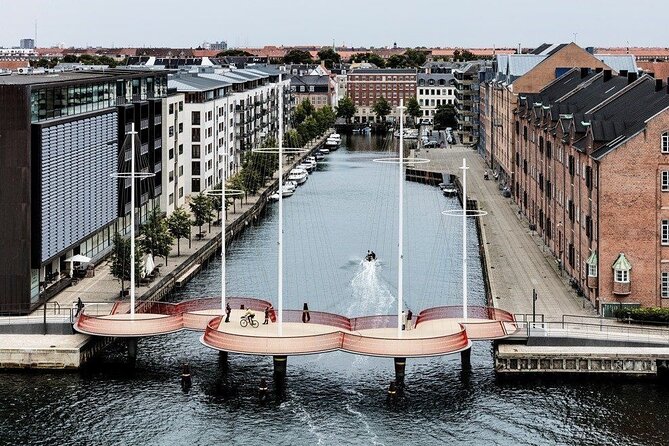
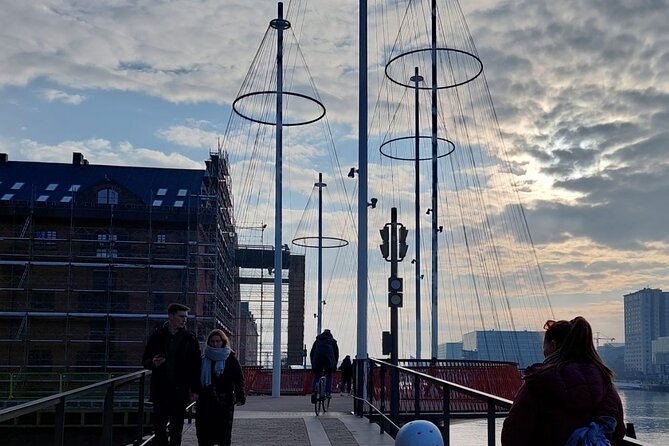
Circle Bridge is another highlight, with about 15 minutes devoted to its unusual design. The pedestrian bridge uses circular forms inspired by the circles of life and links both sides of the harbor.
This is a bridge you can experience at walking speed. Its design is not only something to view from a distance. You cross it, pause on it, and see how an everyday connection can also become a memorable architectural feature.
The private setting works well here because bridges often prompt questions. You might want to know how the shape affects movement, why a circular design was chosen, or how the bridge differs from Inderhavnsbroen.
Keep in mind that the experience remains a walking tour, not an engineering lecture. The guide will give the bridge a focused explanation before moving on. If you enjoy photography, this is one of the stops where a short pause can be worthwhile.
Finishing at the Danish Architecture Center
The tour ends at the Danish Architecture Center, usually called DAC, on Vester Voldgade 108. It is close to City Hall Square, which makes the finish convenient for continuing your day in central Copenhagen.
Admission to DAC is not included. The stated opening hours are Monday through Saturday from 10:00 a.m. to 4:00 p.m. for the listed operating period, so check the timing before you plan to enter after the walk.
Ending here gives the tour a logical final chapter. You have seen buildings and bridges outdoors, and DAC offers the chance to continue with exhibitions and more formal architectural displays if the subject has caught your interest.
The finish also helps you plan your next stop. You are not left at a distant harbor point with a long ride back. From near City Hall Square, you can continue sightseeing on foot or make your own transport arrangements.
What the guide adds to the walk
The guide is the main included feature, so the quality of the experience depends heavily on the person leading your group. Martin Thomsen is described as friendly, witty, and able to answer questions about Copenhagen and Denmark beyond the planned route.
Damian Sanfilippo has also led the tour and is described as well prepared, entertaining, and full of anecdotes. That matters because architecture can become dry when it is reduced to dates and building names. A guide who can connect design with local stories makes the two hours easier to follow.
You should feel free to ask questions. The private format means the walk can respond to your interests more easily than a large group tour. If you care about urban planning, ask about public space. If you prefer local history, ask how each area changed. If you are visiting for the first time, ask for advice on what to see next.
Price, pace, and practical value
The cost is $405.53 per group of up to two people. For one person, that is expensive. For two people sharing the price, it is still a premium walking tour, but the private guide and focused route explain part of the cost.
You are paying for personal attention rather than admissions, meals, or transportation. Since nearly every stop is free to view, the value rests on the guide’s interpretation and the efficiency of the route.
I would consider it a good fit if you want a private introduction to Copenhagen’s waterfront and prefer asking questions as you go. It is less suitable if you want long indoor visits, a relaxed cafe break, or a low-cost group walk.
The duration is approximately two hours. The stop schedule is brisk, with most places receiving 10 minutes and a few receiving 15. Wear comfortable shoes, bring water if needed, and allow for outdoor weather. There is no private transportation, and snacks, food, and drinks are not included.
The meeting point is Sankt Annæ Plads 31. The end point is DAC at Vester Voldgade 108. Confirmation is provided at booking, service animals are allowed, and the route is near public transportation. Most people can participate, though the tour’s walking format is worth considering if you have mobility concerns.
Free cancellation is available up to 24 hours before the start time for a full refund. Changes or cancellations made less than 24 hours before the start time are not accepted for a refund.
Who should book this Copenhagen walk?
I would recommend this tour to first-time visitors who want an efficient introduction to the central harbor. It also suits architecture fans, couples who prefer a private guide, and anyone who likes to combine city orientation with design.
The tour may be especially helpful at the beginning of a Copenhagen stay. After seeing Nyhavn, the bridges, Operaen, and DAC, you will have a better sense of which areas deserve a longer return visit.
I would hesitate to book it if your priority is entering the Opera House, visiting the Black Diamond’s exhibitions, or spending an afternoon at Papirøen. Those places receive brief outdoor coverage, and separate admission or return visits are needed.
Should you book it?
Book this private walk if you want a fast, thoughtful introduction to Copenhagen’s harbor architecture and value a guide who can handle questions. Martin Thomsen and Damian Sanfilippo bring the sort of humor, anecdotes, and broad city knowledge that can make a short route feel personal.
Skip it if $405.53 feels too high for a two-hour outdoor walk or if you prefer exploring at your own pace. For the right pair, though, the route offers a useful mix of old harbor character, modern design, bridge views, and practical city orientation.
FAQ
How long is the Copenhagen Harbor Architecture Private Walking Tour?
The tour lasts approximately two hours.
How many people can join the private tour?
The price covers a private group of up to two people.
Where does the tour begin?
The meeting point is Sankt Annæ Plads 31, 1250 København, Denmark.
Where does the tour end?
The tour ends at the Danish Architecture Center, at Vester Voldgade 108, 1552 København, Denmark.
Is admission to the Danish Architecture Center included?
No. Admission to DAC is not included.
Are transportation, food, and drinks included?
No. Private transportation, snacks, food, and drinks are not included.
Can I cancel for a full refund?
Yes. You can cancel at least 24 hours before the experience start time for a full refund. Changes or cancellations made less than 24 hours before the start time are not accepted for a refund.
Just added around the world
- Wilmington History and Architecture Tour★ 4.8 · 18 reviews
- Washington, DC: Georgetown Architecture Walking Tour★ 5.0 · 8 reviews
- New Orleans : Garden District Architecture Walking tour★ 4.8 · 5 reviews
- Washington DC: Dupont Circle & Embassy Row Architecture Tour★ 5.0 · 6 reviews
- Vicenza: discovering the city of Palladio by e-bike★ 5.0 · 4 reviews
- Vicenza: Palladian Architecture Private Walking Tour★ 3.3 · 3 reviews
- Walk & Discover KL’s Architectural and Heritage Gems★ 5.0 · 7 reviews
- Unveiling Brno: History, Culture & Architectural Delights★ 5.0 · 2 reviews
Walking Tours, compared.

The Official Art Deco Walking Tour by The Miami Design Preservation League
Read our review →
Barcelona: Gothic Quarter Ghosts and Legends Walking Tour
Read our review →
Barcelona: Old Town and Gothic Quarter Walking Tour
Read our review →
Lecce: Baroque Architecture and Underground Walking Tour
Read our review →
Chicago in a Day: Food, History & Architecture Walking Tour
Read our review →

Ramblas, Old Town, Gothic and Gaudi Architecture Walking Tour
Read our review →
Chicago’s Secret Interiors Architectural Walking Tour
Read our review →Browse the lists this tour appears in