
Review · THE USA
Downtown Austin Historical Architecture Walk
Austin’s best architectural stories are packed into a surprisingly small area. On this 1-hour-45-minute walking tour, you move from grand government buildings to Victorian homes, an Art Deco courthouse, a cathedral, and a theatrical old cinema. The buildings do the talking, but your guide supplies the connections.
I especially like the chance to go inside the Driskill, rather than simply view it from the sidewalk. I also like the Bremond Block stop, where Austin’s post-Civil War residential style feels more personal and less formal than the Capitol district.
The main thing to consider is the pace. You cover eight stops in less than two hours, and most are viewed from outside. That makes this a strong introduction, but not a substitute for a full interior tour of Austin’s major public buildings.
Key points at a glance
- The Driskill is the only interior visit, with about 20 minutes to hear about its unusual architectural story and past.
- Bremond Block brings Victorian Austin to life through a walk around a well-preserved group of homes.
- The Texas State Capitol is discussed from the south lawn, not toured inside.
- Emily leads the experience, answering questions and, when the group’s interests call for it, adding nearby sights.
- The route takes about 1 hour 45 minutes and returns to the starting point at 103 E 5th St.
- The $56 price buys a small-group history lesson, with a maximum of 25 people and an English-speaking guide.
Why this Austin walk is more than a list of old buildings
Many city walks collect famous facades like postcards. This one has a clearer idea: show how Austin changed as its needs and tastes changed.
You begin near the historic Capital Square, where government buildings from 1856 to 1933 reflect several architectural periods. Then the route shifts to private homes, where prosperous families favored ornate Victorian designs. From there, it moves into the commercial center, where theaters, hotels, and civic buildings brought a different kind of decoration.
That progression gives you a useful way to read the city. Austin is not presented as one tidy architectural style. Instead, you see layers of public power, private wealth, religion, business, and entertainment in a compact central area.
I would choose this tour early in an Austin visit. The guide can help you notice places you might otherwise pass without a second look. Emily, the guide identified for this experience, has also offered suggestions for local places to visit, which makes the walk useful beyond the scheduled stops.
More architecture walks in the USA:
- The Official Art Deco Walking Tour by The Miami Design Preservation League
★ 5.0 · 1,580 reviews - Chicago in a Day: Food, History & Architecture Walking Tour
★ 5.0 · 1,153 reviews - Miami South Beach Art Deco Walking Tour
★ 5.0 · 1,039 reviews
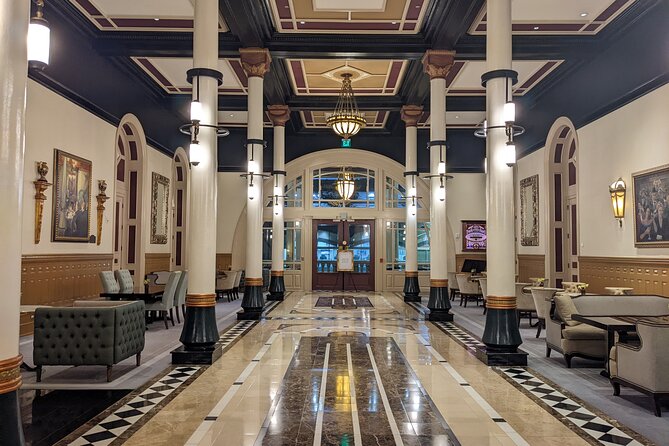
The Driskill sets the tone with 20 minutes indoors
The Driskill is the first stop and the only building you enter. That matters. Exterior architecture is easier to appreciate after you have seen how a building works from within, even if the visit is brief.
You will spend about 20 minutes here, learning what inspired the hotel’s architecture and how its story developed over time. The supplied description hints at a lively past, so expect this portion to have more personality than a simple list of dates and architects.
The Driskill also gives the tour a comfortable starting point. You are not immediately asked to decode a distant facade or follow a complicated civic timeline. You begin with a building that has a clear sense of place, then use it as a springboard for the rest of downtown.
One practical note: admission is included at no separate charge, but the tour does not promise access to every part of the hotel. Think of the stop as a guided architectural and historical visit, not a full building tour.
Bremond Block shows Austin’s domestic side
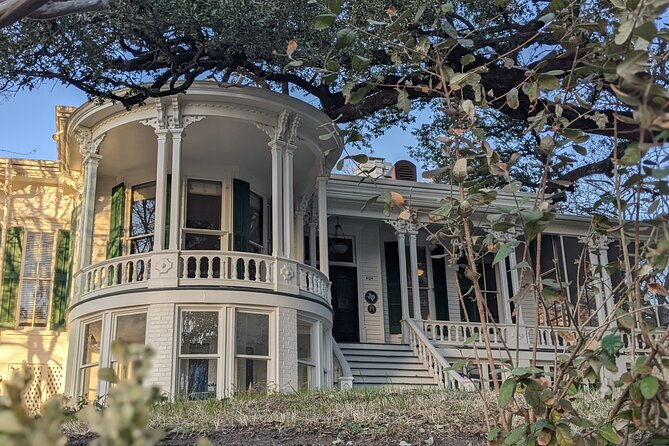
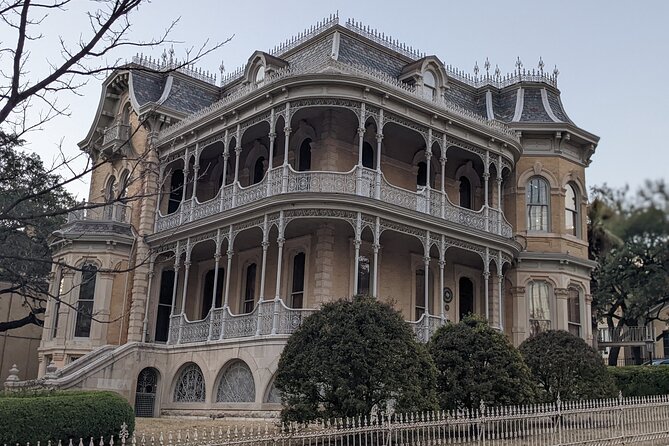
After the Driskill, the route turns toward the Bremond Block. Here, you stroll around a well-preserved block of Victorian homes and learn how their design changed over time.
This is one of the most useful stops for anyone who thinks architecture is mainly about large civic buildings. The houses show how taste, status, and daily life appeared at street level. Their ornament is more intimate than the Capitol’s grand scale, and the block lets you compare several homes without crossing half the city.
The Bremond Block was built after the Civil War, a detail that gives the houses a clear place in Austin’s growth. Your guide explains the architectural evolution rather than treating the homes as a row of pretty fronts. That makes the stop worthwhile even if you are not already an architecture enthusiast.
I would pay close attention here. The houses may be the easiest buildings on the tour to remember because they feel like places where people lived, not only places where government happened.
The courthouse brings in pre-Depression Art Deco
The Heman Marion Sweatt Travis County Courthouse is viewed from outside for about 10 minutes. Its design introduces a very different period from the Victorian homes.
The courthouse is described as pre-Depression Art Deco, so the conversation shifts from the ornate residential style of the Bremond Block to a more modern civic look. The name also opens a door to Austin’s social and civic story, though the available tour details do not specify how far that discussion goes.
Because this is a short exterior stop, you should expect an explanation of the building’s design and importance rather than an extended examination of the interior. That is a fair trade on a walking tour with eight stops, but it means you will need to stay close and listen while standing outdoors.
More history tours in the USA:
- Charleston’s Best Highlights: History, Culture & Architecture
★ 5.0 · 422 reviews - Palm Springs Modernism Architecture & History Bike Tour
★ 5.0 · 359 reviews - Charleston: History and Architecture Guided Walking Tour
★ 4.8 · 349 reviews - Historic Georgetown: History, Gossip, & Architecture Walking Tour
★ 5.0 · 321 reviews
The Governor’s Mansion explains a vanished neighborhood
The Texas Governor’s Mansion can seem like an odd neighbor among government offices and commercial buildings. The tour uses that contrast to explain how much the area has changed.
About a century ago, these blocks were covered with houses. Some were even larger than the Governor’s Mansion. That single comparison helps you picture an Austin that no longer exists, when the district had a far more residential feel.
This is a good example of the tour’s larger strength. You are not only told what a building is. You are shown how the surrounding city once worked. The mansion becomes a clue to the old neighborhood rather than an isolated landmark.
The stop lasts about 10 minutes and is viewed from outside. If you are hoping to tour the mansion’s rooms, this experience will not meet that aim. If you want to understand why it sits where it does, the stop earns its place.
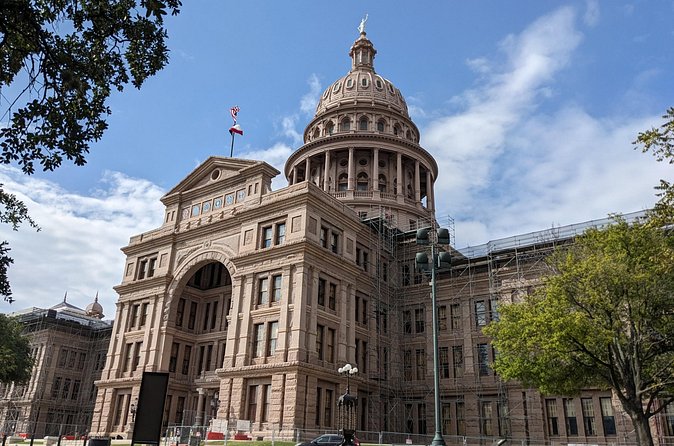
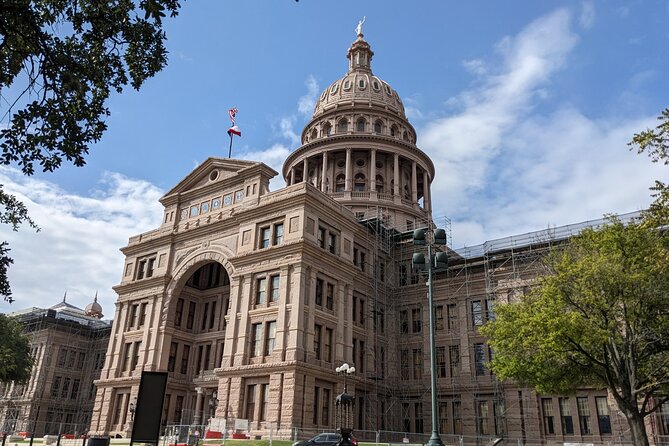
The Capitol gets grand treatment from the south lawn
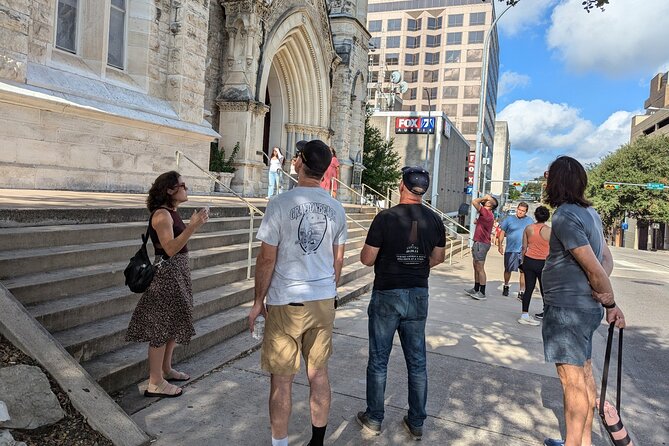
The Texas State Capitol is the largest state capitol building in the country, and even a short discussion can only cover part of its story. The tour spends about 10 minutes on the south lawn, looking at the building from outside.
That approach keeps the walk moving while still giving you a setting from which to take in the building’s scale. The guide points out architectural details and the stories connected to them. The description promises several unusual tales, which should appeal to anyone who likes facts with a little bite.
The limitation is clear: there is no scheduled interior Capitol visit. You will not get a full look at the legislative chambers, corridors, or exhibits through this experience. For some people, that will be the biggest gap. For others, the exterior discussion is enough, especially if the goal is to compare the Capitol with the other styles on the route.
I like the south lawn as a viewing point because it gives the building room to breathe. A giant civic structure needs distance. Standing too close can turn grand design into a collection of stone details.
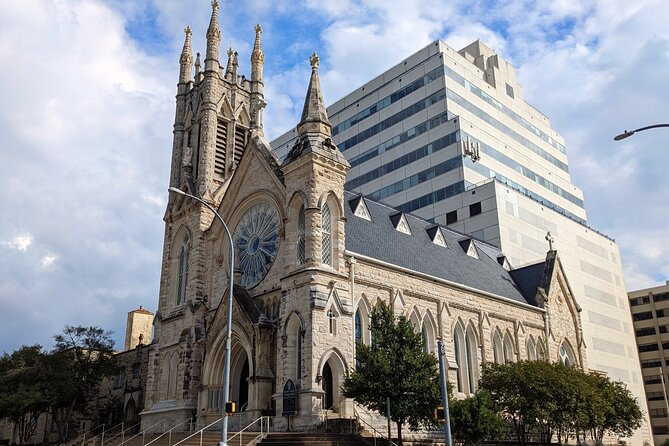
Saint Mary Cathedral adds a different kind of architecture
Saint Mary Cathedral provides a change in subject and mood. From outside, you learn about the cathedral’s history and its unusual construction.
The stop lasts about 10 minutes. That is enough time for a focused explanation, but not enough for a full religious or architectural study. You should expect the guide to point out what makes the building distinctive and explain how its construction fits into Austin’s architectural story.
This stop also helps keep the walk from becoming only a tour of government power. The route includes civic buildings, private houses, commercial landmarks, and a religious building. That variety gives you a broader picture of the city’s priorities and communities.
As with the courthouse and mansion, the cathedral is an exterior stop. If entering the building is important to you, check your expectations before booking.
The Capitol Complex Visitors Center is the odd neighbor
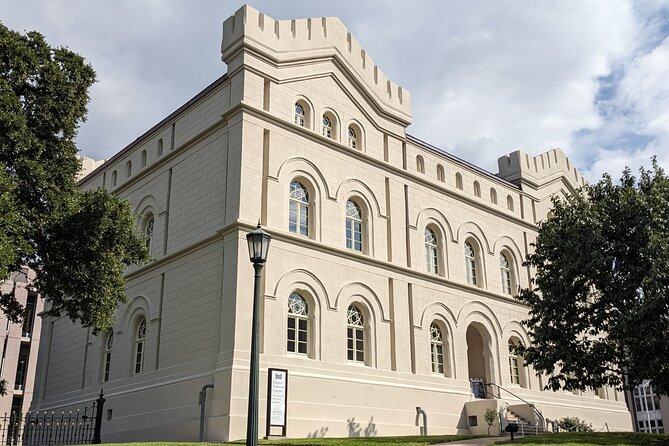
The Capitol Complex Visitors Center is discussed from outside for about 10 minutes. Its appearance does not fit neatly with the older buildings around it, and that contrast is part of the point.
The building is described as the oldest and possibly strangest state building still standing in Austin. That gives the guide a chance to talk about a less obvious piece of the city rather than returning only to the grandest landmarks.
I appreciate stops like this because they prevent a tour from becoming a parade of famous names. A building that looks out of place can tell you a great deal about changing public needs, construction periods, and shifting ideas about what a government building should look like.
The title may suggest an interior visitor center experience, but the scheduled stop is an outside discussion. Plan for a look and a story, not a visit through the building.
The Paramount Theatre closes with five minutes of ornament
The final stop is the Paramount Theatre, viewed from across the street. You get about five minutes to look at the theatrical ornamentation used in this 1915 building.
This is a short finish, but it makes sense. The theater brings the walk into the commercial and entertainment district, where decoration was meant to attract attention and create a sense of occasion. After the quieter residential homes and formal civic buildings, the Paramount’s ornament gives the route a lively final note.
Five minutes will not allow a detailed theater tour. You will mainly receive an exterior view and an explanation of the design. Still, it is a good closing image because it shows how architecture can sell an experience, not just house one.
The activity returns to the original meeting point, so you do not need to arrange a separate pickup at the end.
What $56 gets you in practical terms
The price is $56. That is not the cost of admission to a string of museums, since most stops are free exterior visits. You are paying for the guide’s time, interpretation, route planning, and the chance to connect buildings that you might otherwise see as unrelated.
That value depends on how you like to travel. If you already know downtown Austin’s architecture and prefer to explore alone, you may find the price harder to justify. If you want context, stories, and a sensible route through several periods, the cost is more reasonable.
The group can include up to 25 people. That is small enough for a personal guide-led walk in theory, though the experience may feel less intimate when the group is full. The guide has been described as willing to answer questions and add extra nearby places when the group has a special interest. That flexibility is especially useful for architecture fans, preservationists, and design professionals.
The tour runs in English and includes an English-speaking guide. It lasts about 1 hour 45 minutes, which makes it easy to fit into a morning without consuming an entire day.
Timing, walking, and weather notes
The start time is 9:45 am, at 103 E 5th St., Austin, Texas 78701. Since the tour covers eight stops, arrive ready to walk and listen from the first minute.
A moderate level of physical fitness is recommended. The details do not state the exact distance, number of steps, or surface conditions, so I would avoid assuming the route is effortless. You will spend time moving between buildings and standing outside at several stops.
Weather matters. The experience requires good weather, and poor conditions can lead to a different date or a full refund. That policy is helpful, but you should still plan your Austin schedule with some flexibility if rain is possible.
Service animals are allowed, and the meeting point is near public transportation. Those are useful advantages if you are building a car-free morning in central Austin.
You can cancel for a full refund up to 24 hours before the start time. Cancellations and changes made within 24 hours are not refunded or accepted, so do not leave the decision until the last morning.
Who will get the most from this walk
I would recommend this experience to you if you enjoy seeing how a city changes block by block. It suits first-time Austin visitors who want a quick orientation, as well as architecture fans who want a guide to point out details they might miss alone.
It is also a good match for preservation-minded visitors. The Bremond Block, the old civic buildings, and the contrast between historic structures and newer neighbors give you plenty to think about.
Families and mixed-interest groups may like the variety. You are not asked to spend two hours on one building or one period. The route changes subject often enough to keep the morning moving.
You may want something else if your priority is going inside the Capitol, touring the Governor’s Mansion, or spending a long time at the Driskill. This is an exterior-focused city walk with one interior visit, not a building-access tour.
Should you book the Downtown Austin Historical Architecture Walk?
Book it if you want a compact, guided introduction to central Austin’s buildings and the forces that shaped them. The best parts are the Driskill interior, the Bremond Block homes, and the guide’s ability to connect architecture with the city’s changing neighborhoods.
The strongest reason to choose it is the guide. Emily has earned praise for answering detailed questions and adding extra places when she knows the group will appreciate them. That kind of flexible, human explanation is what gives a walking tour its value.
Skip it if you need extensive indoor access or prefer a self-guided stroll. At $56, the price makes sense when you want interpretation, not just landmarks. For an early morning introduction to Austin’s historic core, it is a focused and useful choice.
FAQ
Where does the tour start?
The tour starts at 103 E 5th St., Austin, Texas 78701.
What time does the tour begin?
The scheduled start time is 9:45 am.
How long does the tour last?
The walk lasts approximately 1 hour and 45 minutes.
Where does the tour end?
The activity ends back at the meeting point.
Is the tour conducted in English?
Yes. An English-speaking tour guide is included.
Do you enter any buildings?
Yes. The Driskill is the building you enter. The other listed stops are viewed from outside.
Is admission included?
Admission tickets are listed as free for each stop. The tour price includes the English-speaking guide.
How many people can join the tour?
The maximum group size is 25 people.
Is the tour suitable for everyone physically?
A moderate level of physical fitness is recommended. The route involves walking between several downtown stops and standing outside.
What happens if the weather is poor?
The experience requires good weather. If it is canceled because of poor weather, you will be offered a different date or a full refund.
Can I cancel for a refund?
Yes. You can receive a full refund if you cancel at least 24 hours before the start time. Cancellations within 24 hours are not refunded.
Just added around the USA
- Wilmington History and Architecture Tour★ 4.8 · 18 reviews
- New Orleans : Garden District Architecture Walking tour★ 4.8 · 5 reviews
- Washington, DC: Georgetown Architecture Walking Tour★ 5.0 · 8 reviews
- Washington DC: Dupont Circle & Embassy Row Architecture Tour★ 5.0 · 6 reviews
- Tulsa: Art Deco Walking Tour of Tulsa★ 5.0 · 8 reviews
- Castle to Capitol: Museums of the National Mall Architecture Tour★ 4.5 · 9 reviews
- Private Colonial Williamsburg Architectural Tour★ 5.0 · 5 reviews
- Iconic Capitol Hill Architectural Walking Tour★ 5.0 · 21 reviews
Walking Tours, compared.
The Official Art Deco Walking Tour by The Miami Design Preservation League
Read our review →
Barcelona: Gothic Quarter Ghosts and Legends Walking Tour
Read our review →
Barcelona: Old Town and Gothic Quarter Walking Tour
Read our review →
Lecce: Baroque Architecture and Underground Walking Tour
Read our review →
Chicago in a Day: Food, History & Architecture Walking Tour
Read our review →

Ramblas, Old Town, Gothic and Gaudi Architecture Walking Tour
Read our review →
Chicago’s Secret Interiors Architectural Walking Tour
Read our review →Browse the lists this tour appears in