
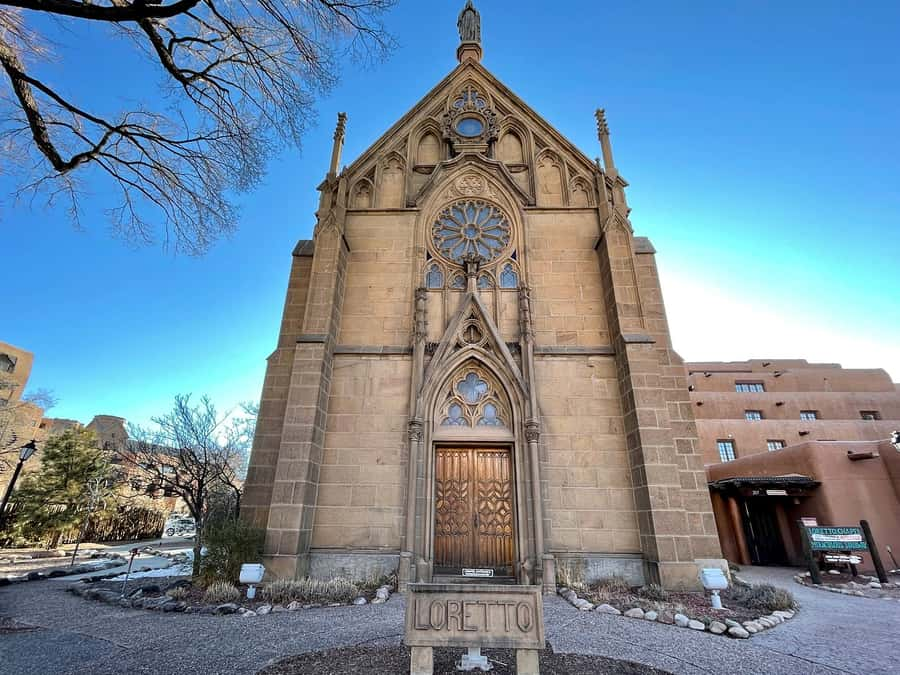
Review · THE USA
Santa Fe: Architectural Walking Tour & Wine Tasting
Santa Fe’s buildings tell its story in clay-colored walls, narrow roofs, winding lanes, and old water channels. This three-hour walk brings those details into focus, especially along Canyon Road’s gallery district, where homes and art spaces reveal several distinct New Mexican styles.
I like the close look at the acequia system, a working tradition rather than a museum piece, and the relaxed finish at the Gruet Tasting Room. I also like the small group limit of eight, which gives you a better chance to ask questions. The main consideration is that this is a walking tour, so it may feel slow if you want a quick overview or if wine tasting is your main goal.
Key points to know before you book
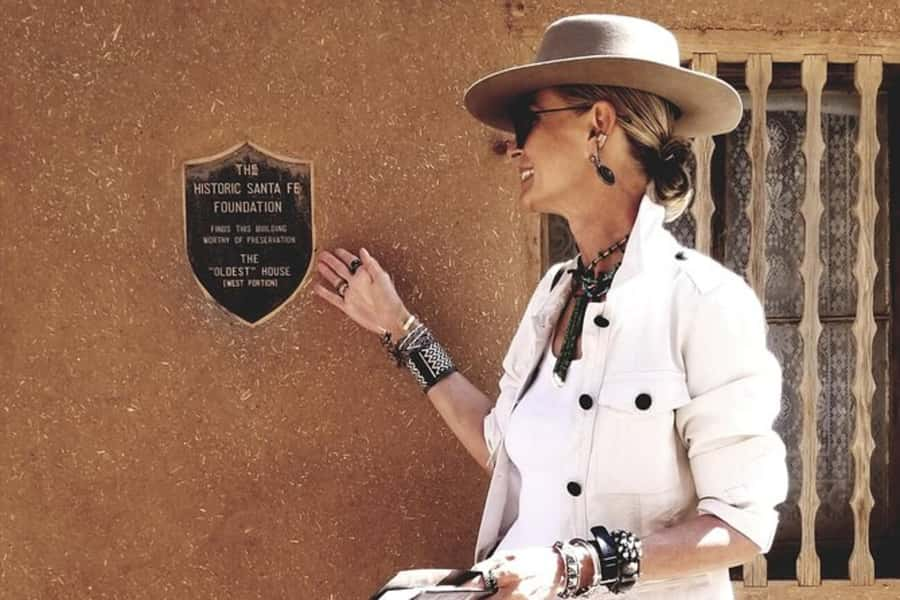
- Three architectural styles: Compare Pueblo, Spanish Territorial, and Northern New Mexico forms as you walk.
- Canyon Road setting: Explore small residential backroads beside Santa Fe’s well-known gallery district.
- Living acequia tradition: See how controlled water flow still helps irrigate private gardens.
- Local wine finish: Taste New Mexico wines at the Gruet Tasting Room.
- Small English-speaking group: The tour is limited to eight participants and led by a live guide.
- Flexible booking: You can cancel up to 24 hours before departure for a full refund and reserve without paying immediately.
Why Santa Fe’s buildings reward a close look
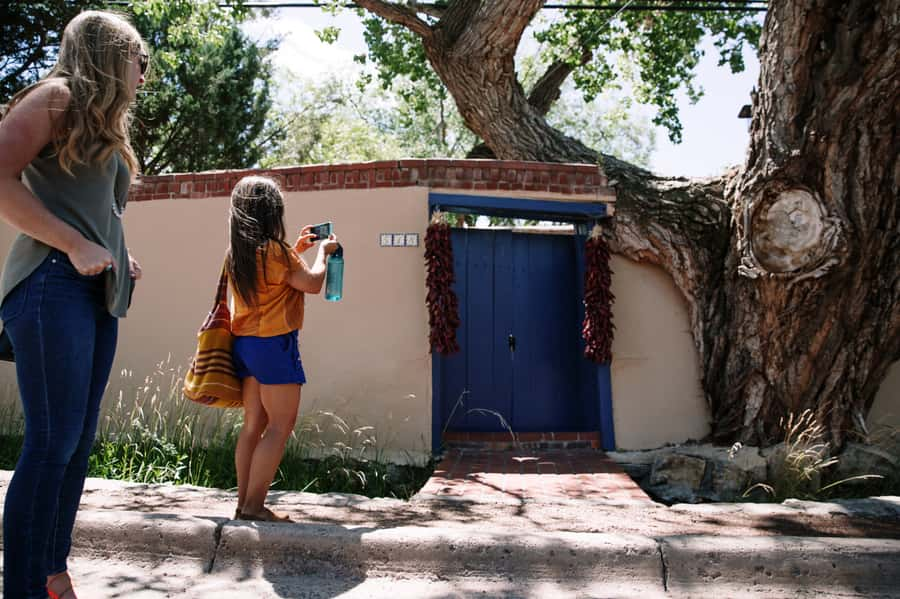
Santa Fe can seem visually simple at first. Many walls are earth-colored, rooflines are low, and newer buildings often follow old patterns. Walk a little farther, though, and the differences begin to show.
That is the strength of this tour. Instead of treating Santa Fe architecture as one broad style, your guide separates it into three forms: traditional New Mexican Pueblo, Spanish Territorial, and Northern New Mexico. You learn what to notice, then see those traits on actual homes and buildings.
I find that approach more useful than a list of dates. You are not simply told that Santa Fe has a long past. You are shown how social and cultural changes shaped the way people built, lived, and moved water through town.
The setting helps. The route winds through residential backroads near Canyon Road, an area known for its galleries. That gives you more than a standard central-city stroll. You get the art district’s creative atmosphere, but the focus stays on homes, streets, rooflines, walls, and the older systems that still affect daily life.
More architecture walks in the USA:
- The Official Art Deco Walking Tour by The Miami Design Preservation League
★ 5.0 · 1,580 reviews - Chicago in a Day: Food, History & Architecture Walking Tour
★ 5.0 · 1,153 reviews - Miami South Beach Art Deco Walking Tour
★ 5.0 · 1,039 reviews
Reading the Pueblo style along Canyon Road
The Pueblo style is the most immediately recognizable of the three. You can expect to look for rounded or softened wall shapes, earth-toned surfaces, and a grounded appearance that fits Santa Fe’s dry setting.
Your guide explains the traditional appeal rather than asking you to admire the buildings only as pretty scenery. The value is in learning how the form developed and why it became such a strong part of Santa Fe’s identity.
As you walk, pay attention to how buildings meet the street. The route uses small residential lanes, so you are looking at architecture in a lived-in setting rather than only at formal landmarks. That matters because Pueblo design is easier to understand when you see how it works as part of a neighborhood.
The route is not described as a visit inside private homes. Expect an exterior-focused walk, with explanation of what you are seeing. If you want a tour filled with interior rooms, museum displays, or furnished historic houses, this experience may not match your plans.
Still, the format has a clear advantage. You can compare several examples at a natural pace, with the guide pointing out details that are easy to miss when you walk through Santa Fe on your own.
Spanish Territorial details you might otherwise miss
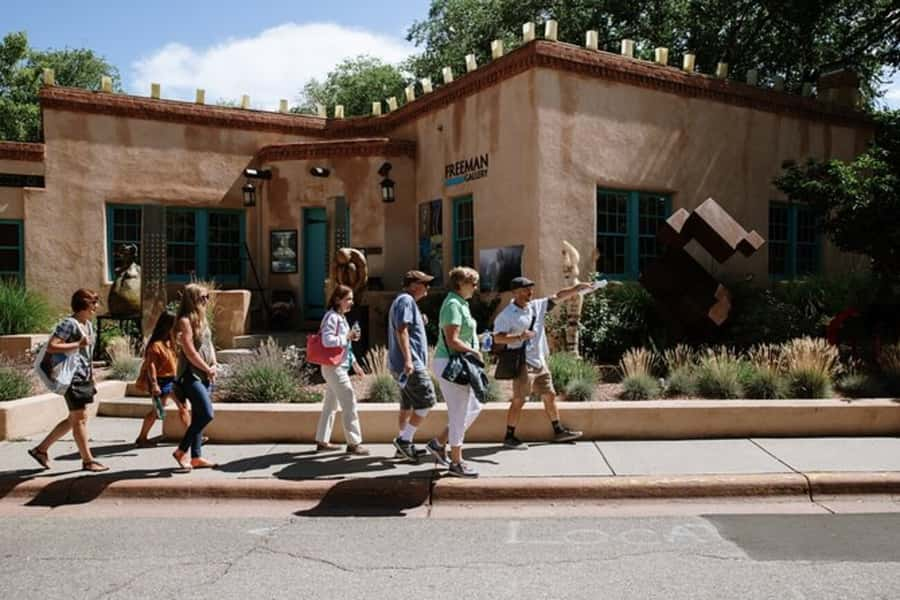
The Spanish Territorial style brings a different look to the walk. It is associated with a more formal, orderly appearance, and the tour presents it as a separate chapter in Santa Fe’s building story.
This comparison is one of the tour’s best features. A casual walk can leave you with the impression that all old Santa Fe buildings belong to the same category. Once you learn the distinctions, you can begin to sort what you see: one building may feel softer and more traditional, while another has a more restrained, classic character.
Your guide places these styles within the historical, social, and cultural movements that influenced them. That context keeps the tour from becoming a design vocabulary lesson with no connection to people. The buildings reflect changing tastes and changing communities.
I would pay close attention here if you enjoy photography, art, or historic districts. You will gain a set of visual clues to use during the rest of your time in Santa Fe. The tour does not just point out attractive façades. It gives you a way to understand why they look different.
Keep in mind that the exact sequence of stops and the amount of time spent at each style can vary. The published details identify the three styles but do not provide a fixed stop-by-stop schedule. That flexibility can be helpful in a small group, though anyone wanting a tightly timed architectural checklist should expect a looser walk.
Northern New Mexico roofs and regional character
The Northern New Mexico style adds another layer to the picture. The tour highlights its tall, narrow pitched roofs, a feature that contrasts with the lower, more rounded forms associated with Pueblo design.
This is where the walk becomes especially practical. You begin to look upward and across the street, not just at walls. Roof shape, proportions, and the way a building sits on its lot all become part of the reading.
The guide also connects the style to regional character. You are not studying isolated design rules. You are learning that northern New Mexico developed its own response to local history and building traditions.
A small group works well for this kind of discussion. With no more than eight participants, the guide can pause for questions without turning the walk into a lecture for a crowd. Sandy, one of the guides associated with this experience, is praised for being engaging, charming, and easy to connect with. She has also been singled out for explaining Santa Fe’s past in a clear and personal way.
Guide assignments can change, so Sandy may not lead every departure. Still, her strengths point to what this tour aims to provide: a conversation with someone who enjoys the subject and can relate it to the people standing in front of the buildings.
More wine stops in the USA:
- Barcelona Gothic Quarter Tapas & Taverns Food & Wine Tour
★ 5.0 · 1,470 reviews - Barcelona: El Born and Gothic Quarter Wine & Tapas Bar Tour
★ 4.8 · 674 reviews - Cooking Art Brunelleschi with Unlimited Wine
★ 5.0 · 448 reviews - Barcelona Gothic Quarter VIP Tapas & Wine Tour
★ 5.0 · 276 reviews
Following an acequia that still carries water
The acequia portion gives the tour a useful change of subject. You move from façades and rooflines to the practical system that helped shape settlement in this dry part of New Mexico.
An acequia is a watercourse used to carry and control water. On this route, the acequia parallels the walkway and continues to irrigate private residential gardens. That detail makes the subject feel current. You are not looking at a preserved remnant that has lost its purpose. You are seeing an old method that remains part of local life.
The guide explains the tradition of controlled water flow and its importance to the area. For me, this is one of the most valuable parts of the experience because it shows how architecture and water use belong in the same story. Buildings reflect cultural choices, while acequias show how people adapted to the local environment and organized a community resource.
Do not expect the acequia to be a grand landmark with a long viewing platform. It is part of the walking route, and the experience comes from understanding what it does. The channel may be easy to overlook if you walk alone. With an explanation, it becomes one of the most telling details in the neighborhood.
This section also helps keep the tour grounded. Santa Fe is often presented through its art and beautiful old buildings. The acequia reminds you that the town also depends on working systems and long-held community practices.
Ending with New Mexico wine at Gruet
The final stop is the Gruet Tasting Room, where the walking tour shifts into a local wine tasting. It is a sensible ending after several hours on foot, giving you time to sit, taste, and continue the conversation in a different setting.
The tasting is included, along with bottled water during the tour. The available details do not list the specific wines or the number of pours, so you should think of this as a guided introduction rather than a guaranteed full winery visit or meal.
Gruet is known here as the tasting-room setting, but the experience is not described as a trip to the vineyard or production facility. That distinction matters. If you want to see vines, tanks, or a full winemaking operation, this tour does not promise those elements. If you want a convenient local tasting after an architecture walk, the arrangement makes good sense.
The wine stop also gives you a chance to compare two sides of Santa Fe. The walk looks backward through buildings and water traditions, while the tasting presents a current local product. You get a more rounded sense of the area than you would from an architecture talk alone.
Wine is part of the tour, not the entire point. I would book it for the architecture and local context first, then treat the tasting as a pleasant finish. Anyone seeking an extensive wine-focused outing should choose a dedicated tasting tour instead.
Timing, group size, and meeting point
The experience lasts three hours, with departure times available according to the selected date. The meeting point is the Heritage Inspirations Travel Hub and E-Bike Shop, located at the Inn & Spa at Loretto.
Arrive ready to walk. The route includes residential backroads in the Canyon Road area, and the tour does not include transportation between stops. Bottled water is provided, but comfortable footwear and attention to the weather are sensible choices for any three-hour outdoor walk.
The group is limited to eight people. That is a meaningful advantage here, not just a marketing detail. Architecture tours depend on conversation and sight lines. A compact group can gather around a detail without blocking a large street corner, and you can ask why one roof or wall differs from another.
The tour is offered in English with a live guide. If you need a different language, the available information does not indicate that one is offered.
What the tour gives you for the time and money
No price is provided in the available details, so I cannot judge whether the exact fare is a bargain. I can assess what you receive: three hours of guided walking, a local guide, bottled water, and a wine tasting at Gruet.
The value is strongest if you would otherwise walk Canyon Road without knowing what you were seeing. The guide adds structure, historical context, and a clear way to compare three styles. The acequia lesson also gives the tour substance beyond architecture photos.
The value is weaker if you mainly want a short sightseeing loop, private transportation, or a large wine tasting. You are paying for interpretation and local context, not just access to a tasting room.
Flexible booking helps if your Santa Fe schedule is uncertain. You can reserve now and pay later, and cancellation is available up to 24 hours before the tour for a full refund. Check the departure time carefully, since the three-hour length can affect dinner plans or other bookings.
Who will enjoy this Santa Fe walk
I would recommend this experience to you if you like historic neighborhoods, design, local customs, and tours where the guide explains why a place looks the way it does. It suits first-time visitors who want a better framework for exploring Santa Fe afterward.
It is also a good fit for repeat visitors who have already seen the central sights and want a slower look at Canyon Road and nearby residential lanes. The small group makes it more personal than a large scheduled walk.
You may want something else if you have limited mobility, dislike extended walking, or prefer indoor museums. The route is described as a walking tour, and no accessibility details are provided. You may also find it less satisfying if your main interest is wine rather than buildings and local history.
Should you book the Architectural Walking Tour and Wine Tasting?
Book it if you want Santa Fe to make more sense after you leave. The three architectural styles give you a useful visual guide, the acequia adds a practical local story, and Gruet provides an easy finish with regional wine.
I would be especially inclined to choose it early in a Santa Fe visit. Afterward, you can spot Pueblo, Spanish Territorial, and Northern New Mexico features on your own, and you will notice the acequia tradition in a more informed way.
Skip it if you want a quick highlight reel, a serious winery excursion, or a fully indoor activity. For a curious walker who values an engaging guide and a small group, this is a focused three-hour introduction to the town’s built character.
FAQ
How long does the tour last?
The tour lasts three hours.
Where does the tour meet?
You meet at Heritage Inspirations Travel Hub and E-Bike Shop, located in the Inn & Spa at Loretto.
What architectural styles are covered?
The tour covers traditional New Mexican Pueblo, Spanish Territorial, and Northern New Mexico architecture.
Does the tour include Canyon Road?
Yes. The route includes small winding residential backroads in Canyon Road’s gallery district.
What is an acequia?
An acequia is a watercourse used for controlled water flow and irrigation. The acequia beside the route still helps water private residential gardens.
Is wine tasting included?
Yes. The tour includes a wine tasting at the Gruet Tasting Room.
What language is the tour offered in?
The live guided tour is offered in English.
How large is the group?
The group is limited to eight participants. You can cancel up to 24 hours in advance for a full refund, and you can reserve now and pay later.
More Food & Drink in the USA
- Miami Beach Food and Art Deco Walking Tour
★ 4.5 · 245 reviews - South Beach Food & Fun Art Deco Miami Food Tour
★ 5.0 · 138 reviews - Chicago: Food, History and Architecture Tour
★ 4.8 · 104 reviews - Chicago in a Day: Food and Architecture Private Walking Tour
★ 5.0 · 53 reviews
Just added around the USA
- Wilmington History and Architecture Tour★ 4.8 · 18 reviews
- Washington, DC: Georgetown Architecture Walking Tour★ 5.0 · 8 reviews
- New Orleans : Garden District Architecture Walking tour★ 4.8 · 5 reviews
- Washington DC: Dupont Circle & Embassy Row Architecture Tour★ 5.0 · 6 reviews
- Tulsa: Art Deco Walking Tour of Tulsa★ 5.0 · 8 reviews
- Castle to Capitol: Museums of the National Mall Architecture Tour★ 4.5 · 9 reviews
- Private Colonial Williamsburg Architectural Tour★ 5.0 · 5 reviews
- Iconic Capitol Hill Architectural Walking Tour★ 5.0 · 21 reviews
Walking Tours, compared.
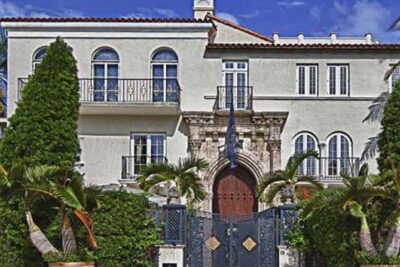
The Official Art Deco Walking Tour by The Miami Design Preservation League
Read our review →
Barcelona: Gothic Quarter Ghosts and Legends Walking Tour
Read our review →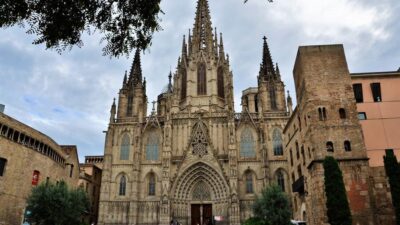
Barcelona: Old Town and Gothic Quarter Walking Tour
Read our review →
Lecce: Baroque Architecture and Underground Walking Tour
Read our review →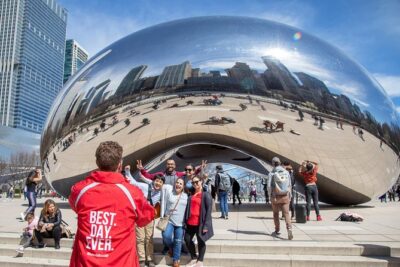
Chicago in a Day: Food, History & Architecture Walking Tour
Read our review →
Ramblas, Old Town, Gothic and Gaudi Architecture Walking Tour
Read our review →
Chicago’s Secret Interiors Architectural Walking Tour
Read our review →Browse the lists this tour appears in