
Review · PRAGUE
Prague: Private Prague Art Nouveau and Cubism Tour
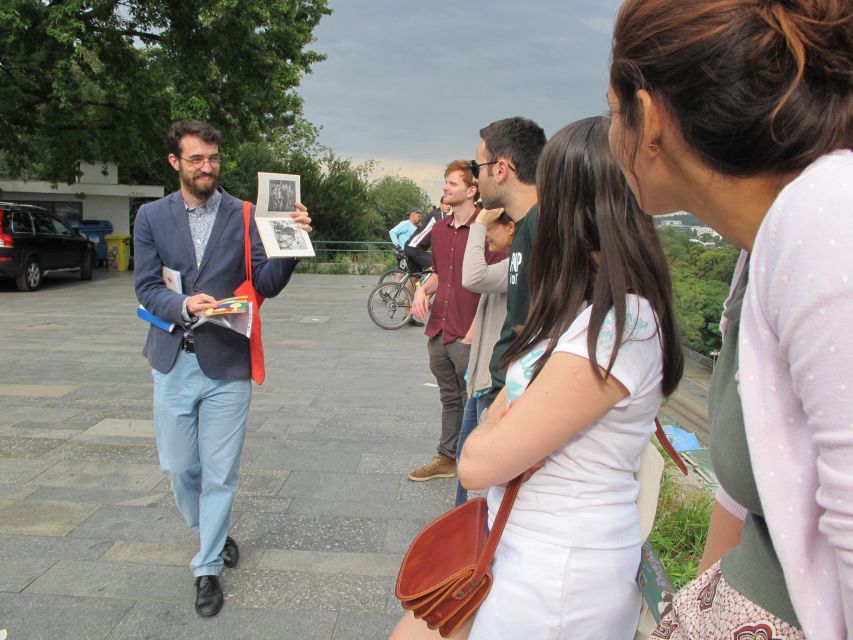
Prague’s Art Nouveau and Cubist buildings tell a surprisingly dramatic story. This private walking tour links the grand Belle Epoque center with bold Cubist houses below Vyšehrad, showing how artists first embraced decoration, then pushed back against it with sharp angles and new ideas. I especially like the unusual route and the way guides such as Max and Eva connect buildings to the political and cultural changes of the early 20th century.
I also like that public transport is included, so you can reach parts of Prague you might skip on foot. The main consideration is time: the route covers a lot of ground, and one participant found the final section too long. Wear good shoes and expect a serious architecture lesson, not a short photo stop.
Key points to know before booking
- Start on Platform 1 at Central Station: Meet by the UniCredit Bank cash machine in the middle of the platform, with your guide carrying a red folder.
- See two competing styles: Learn how Art Nouveau grew from 19th-century design, while Cubism reacted against its flowing decoration.
- Visit more than the usual center: The route reaches the area below Vyšehrad, where several daring Cubist buildings are found.
- Use Prague’s trams without extra cost: The transport tickets for the short rides are included.
- Choose a private group: You can ask questions and set the pace more easily than on a large group walk.
- Plan for several hours: The route is accessible, but it is not suitable for children under 12 and requires comfortable shoes.
Why this architecture walk feels different
Most first visits to Prague focus on medieval lanes, Baroque churches, the castle, and Charles Bridge. Those sights deserve their fame, but they can make the city seem frozen in an earlier age. This tour shifts your attention to the years around 1900, when Prague was changing fast and architects were searching for a modern identity.
The subject is not simply pretty facades. You learn how Art Nouveau broke from the heavy historic styles of the 19th century. Its curves, plant forms, decorative ironwork, and carefully designed interiors aimed to create a new look for modern life.
Then comes Cubism, a sharp turn away from Art Nouveau’s flowing lines. Czech Cubist architects translated the fractured shapes of avant-garde painting into buildings, furniture, and household objects. That makes Prague unusual: you can see Cubism not only in a museum but on ordinary city streets.
The tour also places these styles in the shadow of World War I. Art Nouveau and Cubism did not continue unchanged after the war, yet their short period left Prague with an extraordinary collection of buildings. I find that historical frame useful because it turns a walk through downtown into a story about confidence, rebellion, and sudden change.
More Art Nouveau tours in Prague:
- Prague Art Nouveau and Cubism Walking Tour
★ 5.0 · 77 reviews - Private Prague Art Nouveau and Cubism Walking Tour
★ 5.0 · 30 reviews - Prague Art Nouveau and Cubism Walking Tour
★ 5.0 · 29 reviews
Meeting at Prague Central Station’s 1909 entrance point
The tour begins at Prague’s Central Railway Station, specifically on Platform 1, near the UniCredit Bank cash machine. Your guide carries a red folder, which gives you a clear way to identify the right person in a busy transport hub.
The station was built in 1909, making it an appropriate first stop. You begin with a building tied to the same Belle Epoque period that shaped much of the route. The opening guided portion lasts about 15 minutes, enough to establish the architectural vocabulary before you move into the streets.
This meeting point is practical if you are arriving by train, but it can be less convenient if you are staying across town. Give yourself time to reach the middle of Platform 1 rather than waiting outside the station. That small detail matters in a large railway terminal.
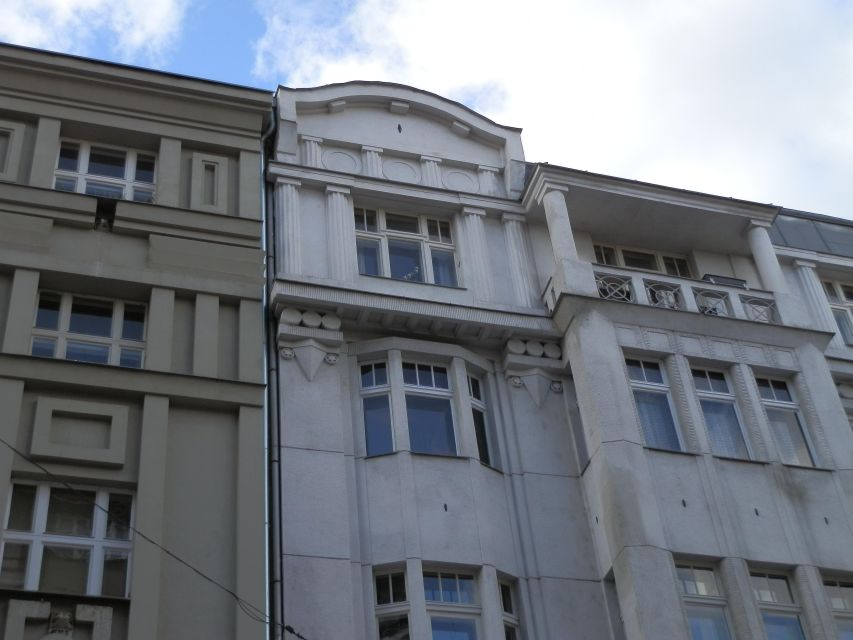
Jubilee Synagogue and the first design contrasts
From the station, you walk for about five minutes to the Jubilee Synagogue. The stop is brief, around five minutes, but it helps show how varied Prague’s modern-era architecture can be.
The synagogue is not treated as an isolated sight. Instead, it forms part of the wider discussion about how architects borrowed from, challenged, and reshaped older traditions. You will start looking for the details that a normal city walk might pass without notice.
That is one of the private tour’s strengths. Your guide can pause when you have a question, explain a decorative feature, and connect one building to the next. The short walking links also keep the route active rather than turning it into a long lecture in one place.
Municipal House and the high point of Art Nouveau
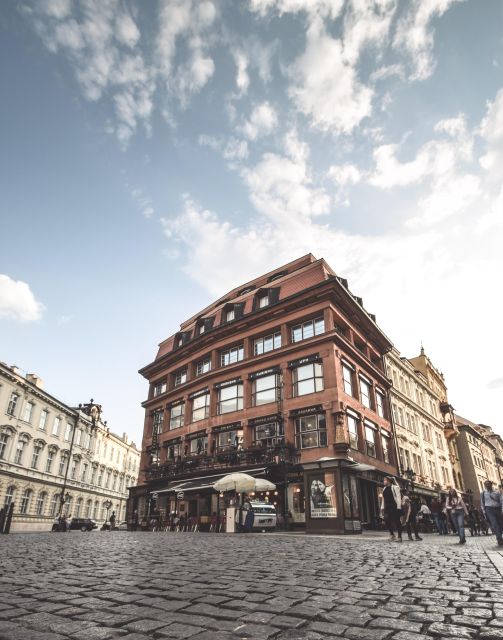
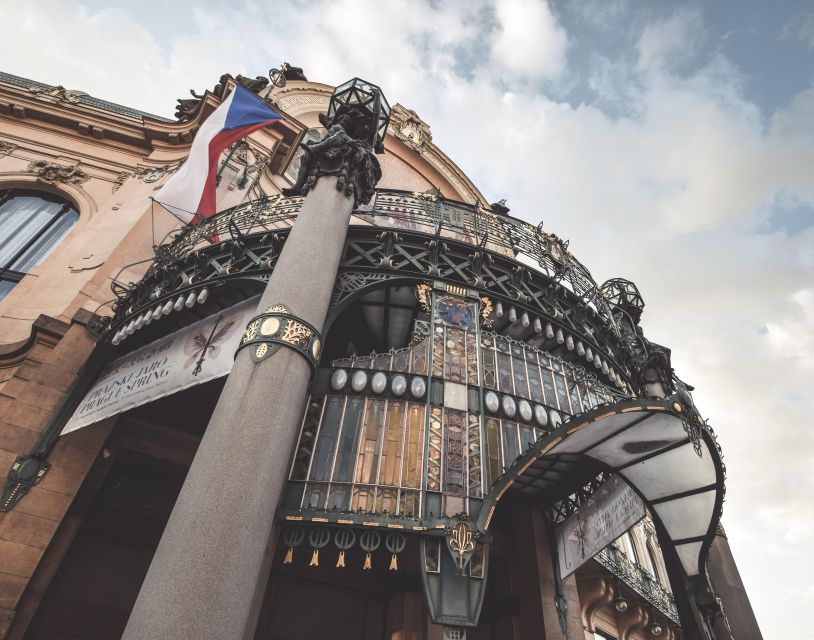
The Municipal House receives about 10 minutes, but its importance reaches beyond that short visit. It is one of Prague’s best-known Art Nouveau buildings, and it gives you a clear sense of the style at full scale.
Here, decoration is not a minor extra added after the structure. The design treats architecture, ornament, and public life as parts of one artistic project. Your guide explains how Art Nouveau developed out of earlier 19th-century forms and why its break from convention mattered.
I would pay close attention to the smaller elements rather than only taking the standard facade photograph. Art Nouveau often reveals itself in lines, patterns, metalwork, and the relationship between different parts of a building. A trained guide helps you notice what the eye tends to skip.
The stop also works well as a contrast with the Cubist buildings later in the route. At Municipal House, the style is graceful and decorative. Later, the shapes become harder, more fractured, and intentionally unsettling.
More private architecture tours in Prague:
- Beer & Baroque: A Private Highbrow Brew Tour
★ 5.0 · 33 reviews - Best of Prague Architecture – private tour with PERSONAL PRAGUE GUIDE
★ 5.0 · 21 reviews - Prague: Private Cubism & Art Nouveau Walking Tour
★ 5.0 · 15 reviews - Private Prague Art Nouveau and Cubism Walking Tour
★ 5.0 · 8 reviews
House of the Black Madonna, where Cubism gets practical
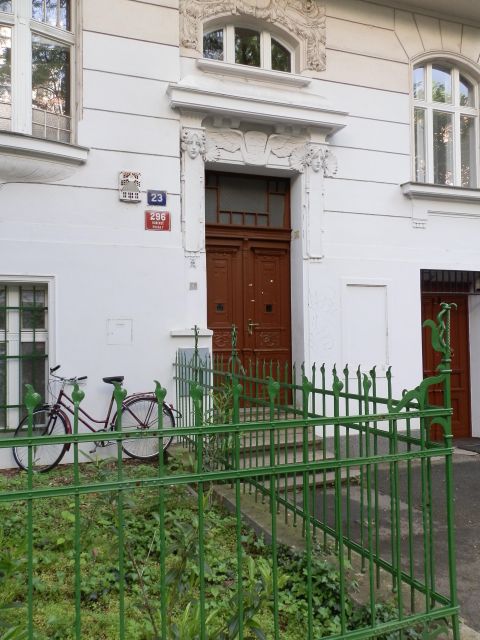
The House of the Black Madonna is one of the tour’s essential stops. The visit lasts about 10 minutes, giving you time to understand why Czech Cubism is more than a passing visual trend.
Cubism often brings paintings to mind, but Prague’s architects applied its angular logic to actual buildings. The result is not always easy to read at first glance. Facades can appear geometric, faceted, and slightly out of step with the surrounding streets.
This building is useful because it shows Cubism in a central, recognizable part of Prague. You do not need to travel far from the main sights to encounter something so different from the city’s Gothic and Baroque image.
The tour explains Cubism as a revolt against the popularity of Art Nouveau. That does not mean the two styles are unrelated. Both were attempts to make a new kind of modern art, but one favored flowing ornament while the other sought energy through fractured form and sharp geometry.
Wenceslas Square and the city in transition
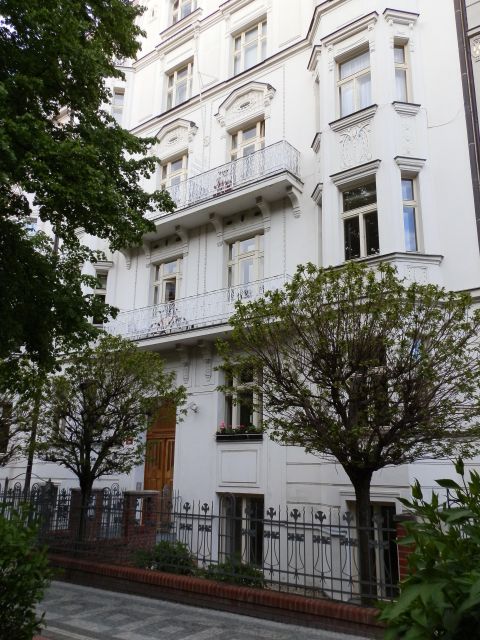
The route continues through several short stops before reaching Wenceslas Square, where you spend around 20 minutes. This is the longest scheduled sightseeing pause, and it gives the guide room to connect architecture with Prague’s wider 20th-century story.
Wenceslas Square is broad, urban, and busy compared with the smaller streets earlier in the walk. It helps you see how modern architecture had to work in a growing city, not just in isolated showcase buildings.
The square also provides a useful pause in the walking rhythm. You have already seen Art Nouveau and early Cubist examples, so you can begin comparing them rather than treating each stop as a separate fact.
I like this part because it keeps the tour from becoming a parade of facades. The guide’s job is to explain what these buildings meant in their own time, how modern architects worked beside older Prague, and why their efforts helped protect the city’s architectural character instead of erasing it.
Short tram rides to Prague’s less familiar side
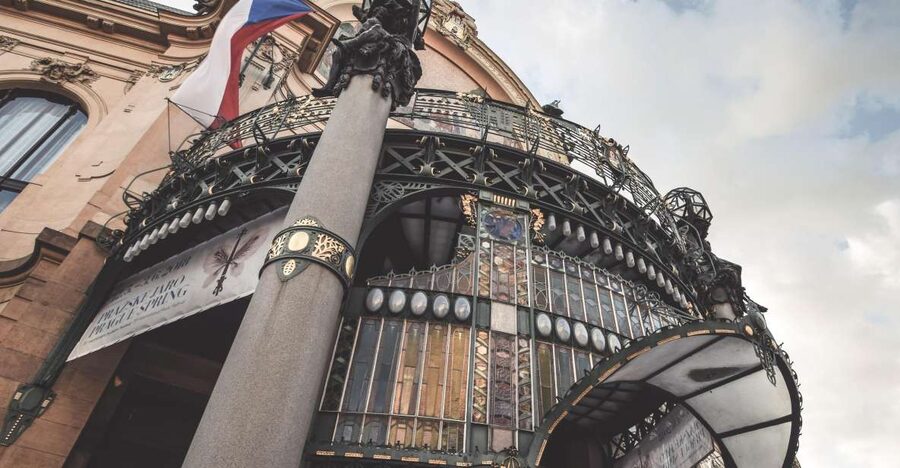
After the central portion, you take short tram rides. The rides are listed at about five minutes each, and the necessary public transport tickets are included in the $84 price.
This is a modest but useful benefit. You do not have to work out the ticket system during the tour, and the change of transport breaks up the walking. More important, the tram carries you away from the most familiar central streets toward the area beneath Vyšehrad fortress.
The route is wheelchair accessible, though you should still consider the practical demands of a multi-hour city tour with walking and public transport. Children under 12 are not accepted, so this is aimed at adults and older teenagers who can follow a sustained discussion of design and history.
The transition also gives the tour a sense of discovery without pretending that Prague’s architecture ends in the center. Some of the most daring examples come later, after the standard sightseeing circuit has faded away.
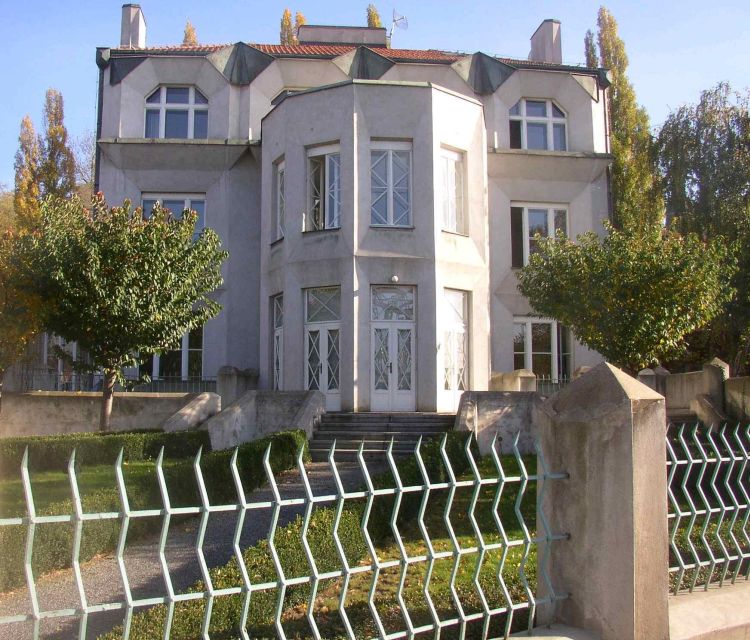
Three Cubist Houses below Vyšehrad
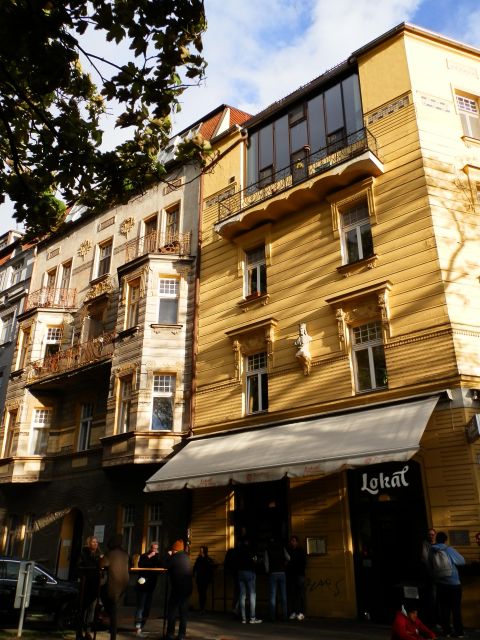
The Three Cubist Houses form one of the most distinctive parts of the route. You walk about five minutes from the tram and spend around five minutes seeing them.
The stop is short, but the buildings make an immediate visual point. Czech Cubism can be bold without being monumental. Its angular shapes appear in residential architecture, showing how experimental ideas entered everyday urban life.
This is where the tour earns its place for repeat visitors. You may have already seen Prague Castle, Old Town Square, and Charles Bridge, yet these houses offer a different way to understand the city. You are not simply collecting another landmark. You are seeing how architects tested new forms in a real neighborhood.
The private format is useful here because the buildings may need explanation. Their geometry can look unusual without revealing its purpose. A guide can point out the details and explain how they relate to the wider artistic movement.
Kovařovicova vila and Cubist house Vyšehrad č. p. 98
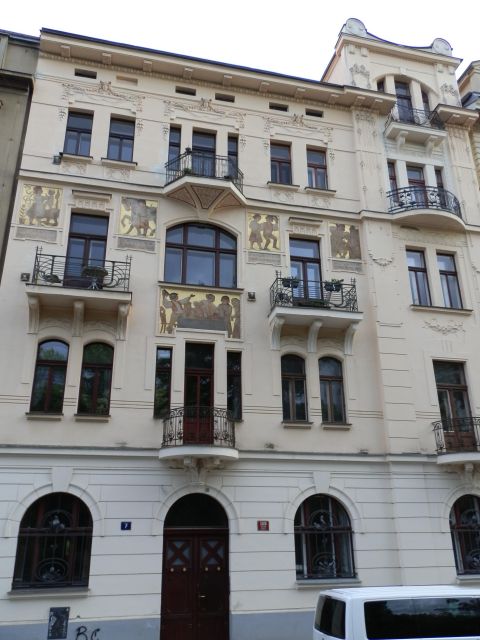
The final section includes Kovařovicova vila and Cubist house Vyšehrad č. p. 98. Each stop takes about five minutes, with short walks between them.
Kovařovicova vila gives you another chance to see Cubism applied to a private residence rather than a major public building. That distinction matters. It shows that the style was not only a grand theory for museums or city halls. It could shape the look of a home.
Cubist house Vyšehrad č. p. 98 completes the route with one more example in the same area. By this point, you have seen the progression from decorative Art Nouveau to more forceful Cubist forms, and the final buildings make a strong visual finish.
There is a fair warning here. The route has already covered much of central Prague, and these last stops require more time and effort. One person felt the ending could be shortened to roughly two and a half or three hours. If you tire easily, tell your guide early and ask how much time remains before the Vyšehrad section.
Still, I would not dismiss the final area automatically. It is exactly the part most likely to be missed on a standard Prague visit. If your goal is unusual architecture rather than a quick central walk, these final stops are the reason to continue.
What the guide adds to the experience
The strongest praise for this tour centers on the guides’ command of art history and their ability to explain it clearly. Max is specifically noted for presenting the rise and development of Art Nouveau in a compelling way, and he also guides in fluent German. Eva is praised for explaining Prague’s different architectural styles in an educational and easy-to-follow manner.
That matters because the buildings alone do not tell the whole story. Without context, a decorative facade is simply attractive, and an angular house may look strange. A good guide shows you how the pieces fit together.
You can also ask questions throughout the private walk. The experience is designed for a private group rather than a large shared crowd, so the discussion can respond to your interests. If you are especially interested in design, Jewish Prague, urban planning, or the years before World War I, this format should suit you well.
The tone is educational, but not necessarily dry. Max has been described as friendly and able to answer questions about locations well beyond the main tourist stops. That combination of detail and conversation is a major part of the tour’s value.
Is $84 a fair price?
At $84 per person, this is not the cheapest way to spend a few hours in Prague. The price makes more sense if you value a private guide, expert interpretation, and a route that includes public transport to less familiar areas.
You are paying for more than a list of buildings. The tour connects Art Nouveau and Cubism, explains how both responded to earlier design, and sets them against the upheaval of World War I. It also saves you the work of locating several scattered buildings on your own.
The included tram tickets help, though they are a small part of the total cost. The real value is the guide’s eye and the private format. If you would rather wander at your own pace and read about architecture later, you could spend less. If you want an informed explanation while standing in front of the buildings, the price is easier to justify.
For a private experience, the cost can be reasonable, especially for two or more adults who share the booking. Just remember that the official price is per person, and the route may feel long if your interest in architecture is casual.
Who should book this Prague Art Nouveau tour?
I would recommend it most strongly in three situations:
- You have already seen Prague’s major sights and want a different side of the city.
- You have several days in town and can give a half-day to modern architecture.
- You enjoy art, design, urban history, or the story of how old cities adapt to new ideas.
It can also work well early in a longer visit if you want a new way to read Prague’s streets. Once you know what Art Nouveau curves and Cubist angles look like, you may notice them elsewhere.
I would be cautious if you want a relaxed, short stroll with many long stops for coffee or photographs. The route keeps moving, includes public transport, and ends away from the central tourist core. Comfortable shoes are essential.
The tour is offered in English and German, and it is wheelchair accessible. It is not suitable for children under 12. You can cancel up to 24 hours ahead for a full refund, and the reserve-now, pay-later option helps if your schedule is still shifting.
My call: book it for the architecture, not just the sightseeing
Book this tour if you want Prague explained through its modern buildings rather than simply photographed. The central sights provide a strong start, but the walk earns its price through the connections between Art Nouveau, Cubism, changing politics, and the city’s older architectural identity.
The main question is stamina. The route may run longer than you expect, particularly if the final Vyšehrad section is included at full length. If that sounds tiring, ask about the timing at the start. If you are ready for a substantial walk and a serious look at Prague’s design history, this is one of the better ways to find the city beyond its standard postcard views.
FAQ
Where does the Prague Art Nouveau and Cubism tour meet?
Meet at Prague Central Railway Station, in the middle of Platform 1, by the UniCredit Bank cash machine. The guide carries a red folder.
How long does the tour last?
The activity is valid for one day, and the route includes several hours of walking, sightseeing, and short tram rides. One participant considered the full route about three and a half hours and felt the final section could be shortened.
Which languages are available?
The tour is offered in English and German. Guides include Max and Eva.
Are public transport tickets included?
Yes. Tickets for the tram rides there and back are included in the price.
Is the tour wheelchair accessible?
Yes, the activity is listed as wheelchair accessible.
Is the tour suitable for children?
No. Children under 12 are not accepted. Comfortable shoes are recommended for all participants.
Just added around Prague
- Private Prague Art Nouveau and Cubism Walking Tour★ 5.0 · 8 reviews
- Best of Prague Architecture – private tour with PERSONAL PRAGUE GUIDE★ 5.0 · 21 reviews
- Private Prague Renaissance & Baroque Gardens Walking Tour★ 5.0 · 8 reviews
- Prague Renaissance & Baroque Gardens Walking Tour★ 5.0 · 23 reviews
- Prague Renaissance and Baroque Gardens Walking Tour★ 5.0 · 5 reviews
- Prague: Private Cubism & Art Nouveau Walking Tour★ 5.0 · 15 reviews
- Prague Art Nouveau Tour★ 4.9 · 12 reviews
- Prague: Modern Architecture and Design Guided Tour★ 3.9 · 20 reviews
Art Nouveau Tours, compared.
Riga: Old Town Walking Tour with Art Nouveau Highlights
Read our review →
Riga: 2-Hour History of Art Nouveau Walking Tour
Read our review →
Brussels: Art Nouveau Pass – Entry to Three Locations
Read our review →
Small Group Tour in Ålesund: Art Nouveau, Sea Views & Insider Tips
Read our review →
Browse the lists this tour appears in