
Review · PRAGUE
Prague Art Nouveau and Cubism Walking Tour
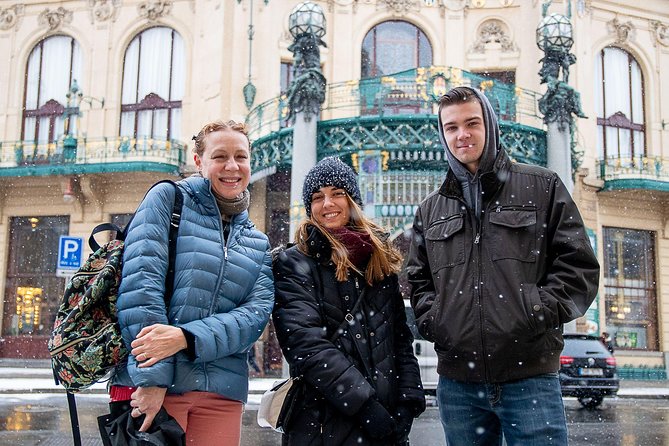
Prague’s Art Nouveau and Cubist buildings make more sense when you see them as signs of a city rushing into modern life. This three-hour walk links ornate façades, café culture, hotels, train stations, and Czech national pride, with stops at the Lucerna bar and Grand Hotel Europa.
I like the way the tour teaches you to read details, from ginkgo leaves to elaborate light fixtures. I also like its small-group spirit: guides such as Robert and Vadim bring academic backgrounds, humor, and an eye for interiors most people would pass without noticing.
The main consideration is pace. You keep moving rather than standing in one place for long, and photographers may want to ask for an extra moment at each stop. At $123 per person, this makes the most sense for visitors who care about architecture, design, and Prague’s social history, not for anyone seeking a broad sightseeing tour.
Key points to know before you book
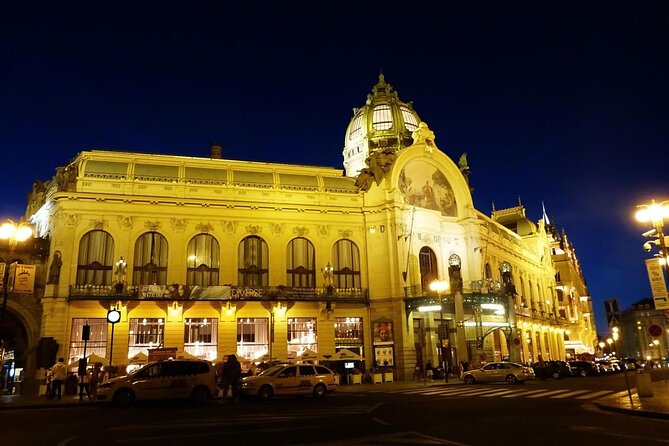
- Start at the House of the Black Madonna: Meet downstairs by the front doors of Grand Café Orient on Ovocný 19, Prague 1.
- See Art Nouveau in working social spaces: Lucerna bar and Grand Hotel Europa show why hotels, cafés, and restaurants mattered to the style.
- Compare Prague’s Cubist buildings: The House of the Black Madonna and Bank of the Legions reveal a sharper, more geometric side of early modern design.
- Expect an academic guide: Guides may be professors, doctoral students, historians, journalists, art critics, or published authors.
- Look beyond the main façades: The walk can include passages, halls, cafés, chapels, frescos, and other interiors, depending on the guide and access that day.
- Plan for a focused three hours: The tour is in English and available privately or in small groups.
Why Prague’s Art Nouveau needs a social setting
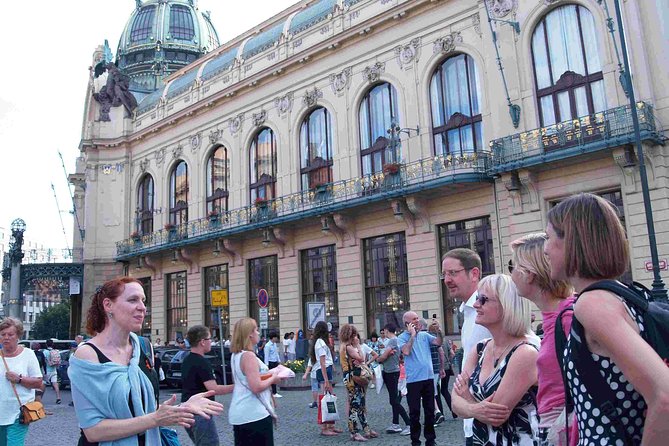
Art Nouveau was not just a way to decorate a doorway. In Prague, it appeared during a period of new wealth, new travel, and growing Czech confidence. The city was part of a wider European movement, but local architects and patrons gave the style a strong sense of place.
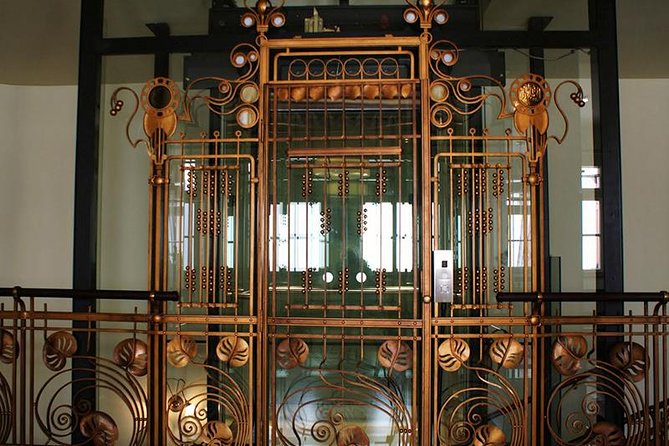
Your guide begins by showing you how to recognize the style. Look for plant forms, flowing lines, decorative lettering, stained glass, metalwork, and carefully designed lighting. Ginkgo biloba leaves are especially useful clues because their exotic appearance points to the period’s interest in Asian and other non-European influences.
The social setting matters just as much as the decoration. Many Art Nouveau buildings were hotels, cafés, restaurants, and railway stations because these were the places where modern city life took shape. Wealthy visitors, business people, artists, and the pre-war social elite met in these rooms, often enjoying the benefits of industrial growth before the First World War changed Europe.
I find that context more useful than a list of dates. It explains why a grand hotel might have an ornate entrance, why a café would receive such lavish decoration, and why a train station could be treated almost like a palace. The style was meant to make everyday public life feel new and sophisticated.
More Art Nouveau tours in Prague:
- Prague Art Nouveau and Cubism Walking Tour
★ 5.0 · 77 reviews - Private Prague Art Nouveau and Cubism Walking Tour
★ 5.0 · 30 reviews - Prague: Private Cubism & Art Nouveau Walking Tour
★ 5.0 · 15 reviews
Begin beneath the House of the Black Madonna
The meeting point is the House of the Black Madonna, at Grand Café Orient, downstairs by the front doors on Ovocný 19 in Prague 1. This is a practical starting point because the building introduces one of the tour’s key ideas right away: Prague’s architecture does not move in a straight line from old to new.
The House of the Black Madonna is associated with Czech Cubism, a style known for angular forms and strong geometric shapes. It offers a useful contrast with Art Nouveau’s curving plant motifs and flowing decoration.
The point is not to decide which style is better. You are learning to see how architects responded to modern life in different ways. Art Nouveau often suggests movement and organic growth, while Cubism breaks surfaces into sharper planes and more forceful shapes.
Grand Café Orient also fits the theme. Cafés were more than places to grab coffee. They were meeting rooms, social clubs, workplaces, and places where intellectual and political life could unfold. Starting here helps you understand that Prague’s design story is tied to how people used buildings, not just how buildings look in photographs.
Learn to read façades instead of simply admiring them
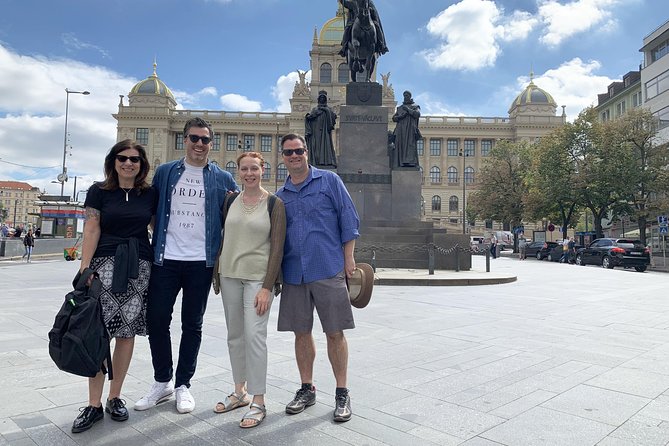
The guide’s main job is to train your eye. Once you know what to look for, a walk through central Prague becomes a series of small discoveries rather than a parade of famous façades.
You may be shown decorative leaves, curved lines, floral patterns, glass, metal, mosaics, and light fittings. Interior lighting is especially important. Art Nouveau designers wanted the whole room to belong to one visual idea, so lamps, ceilings, furniture, and wall decoration could all support the same mood.
This is where the tour gains value over a standard city walk. A quick photograph may show you that a building is pretty, but a guide can explain why the decoration looks the way it does and what it says about the people who commissioned it.
The walk also puts architecture into Prague’s wider story. You may hear how design became connected with a renewed Czech identity, particularly as local culture and language gained strength within the Austro-Hungarian Empire. Art Nouveau and Cubism could signal that Prague was modern, self-confident, and ready to express its own identity.
Guides have included Robert, Vadim Erent, and Bonita at different times. Robert is praised for explaining changes from Gothic architecture through Art Nouveau while keeping the group moving. Vadim is known for drawing connections between architecture, politics, and social life. Bonita has led visitors to examples they would not have found alone, including people who had already visited Prague before.
Lucerna bar and the world of pre-war Prague
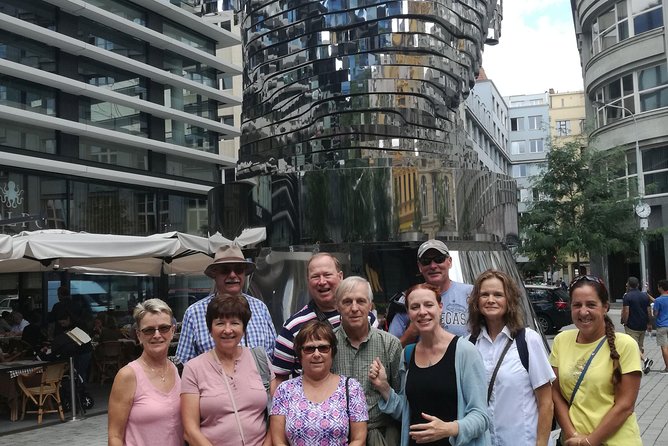
Lucerna is one of the tour’s most appealing stops because it brings the architecture indoors. The bar gives you a chance to see how Art Nouveau decoration worked as a complete interior rather than as a single feature on a street façade.
Pay attention to the atmosphere created by lighting, fixtures, surfaces, and ornament. The details are not random add-ons. They are part of a carefully arranged setting designed for conversation, dining, and display.
This is also where the guide can bring the pre-war social elite into view. Elegant bars and restaurants attracted people who had money, leisure, and a taste for the latest fashions. These places helped turn architecture into a social experience.
Lucerna is likely to appeal most to you if you enjoy interiors. If you are mainly interested in exterior photography, the stop may feel shorter than expected. It is worth carrying a camera, but the walk’s main benefit is learning how the room works as a whole.
Cold-weather visitors should appreciate the indoor stops. A winter walk can be uncomfortable, but several people have been able to warm up inside buildings during the tour. That does not mean every interior will always be open, so access can depend on the day.
More architecture walks in Prague:
- Prague Renaissance & Baroque Gardens Walking Tour
★ 5.0 · 23 reviews - Private Prague Art Nouveau and Cubism Walking Tour
★ 5.0 · 8 reviews - Private Prague Renaissance & Baroque Gardens Walking Tour
★ 5.0 · 8 reviews - Prague Renaissance and Baroque Gardens Walking Tour
★ 5.0 · 5 reviews
Grand Hotel Europa and the glamour of travel
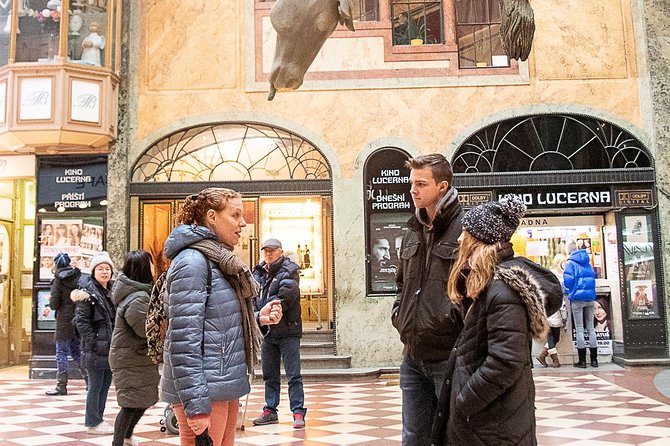
The elegant Grand Hotel Europa shows why Art Nouveau became so closely linked with hotels. At the beginning of the 20th century, international travel was becoming easier for people with money and free time. Hotels needed to signal comfort, fashion, and modern service from the moment guests entered.
Your guide can use the hotel to explain the first age of mass tourism, when railways and industrial production helped create a new class of mobile visitors. These early globetrotters wanted grand public rooms as part of the travel experience.
The building also helps explain why Art Nouveau can feel both practical and theatrical. A hotel had to function efficiently, but it also had to impress. Decorative glass, fixtures, signs, and furniture helped turn a stay into a status display.
You should not expect a hotel tour with access to every room. The experience focuses on architectural examples and the story they tell. Still, even a short look can help you notice how public buildings were designed to welcome and impress.
Cubism and Rondo-Cubism change the mood
After seeing softer Art Nouveau decoration, the Cubist examples sharpen the contrast. The House of the Black Madonna is the obvious anchor, but the walk also includes the Bank of the Legions and other examples of Prague’s Cubist and Rondo-Cubist architecture.
Cubism in Prague is especially interesting because it was not simply copied from painting. Architects used angular shapes, faceted surfaces, and unusual geometry in buildings, furniture, interiors, and decorative objects. The result can feel more intellectual and more demanding than Art Nouveau.
Rondo-Cubism adds rounded forms and stronger color effects to the geometric approach. It belongs to the years after the First World War, when Czech designers were developing styles that could express a new national identity.
The Bank of the Legions is useful in this comparison because a bank is a serious public building, not a café or hotel. Its design shows how modern architectural ideas could be applied to institutions linked with finance, public life, and the newly confident Czech state.
I like this part of the walk because it prevents Art Nouveau from becoming a decorative-only subject. You see a debate about what modern architecture should be: elegant and organic, sharp and analytical, or distinctly Czech.
Passages, halls, chapels, and less obvious stops
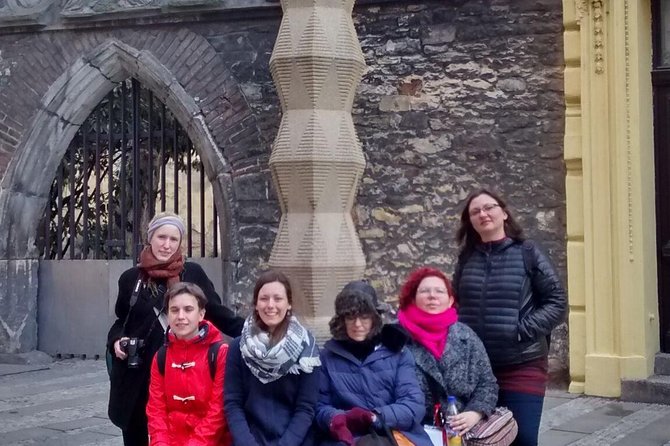
The route can go beyond the headline buildings. Depending on the guide and access, you may enter university spaces, underground chapels, back-yard cafés, city passages, or buildings with Roman remains and frescos.
These stops are not guaranteed as a fixed list, so you should think of them as possible additions rather than promised attractions. That flexibility is part of the tour’s personal character, but it also means two departures may not feel exactly alike.
The university grand hall and underground chapel are especially useful examples of how Prague hides different eras close together. A passage may connect busy streets while preserving older architectural details. A student café can show a more informal side of city life than a grand hotel.
Robert has also been praised for finding places that offer a warm-up and a quiet break when needed. Guides may stop for coffee or restrooms if the group needs it, though you should not treat these as scheduled café visits.
Photographers should speak up. The tour keeps moving, which helps prevent the three hours from becoming tiring, but you may want extra time for a careful interior shot. A quick photograph is usually possible, while a full tripod-style pause is not the point of the outing.
The guide makes the difference
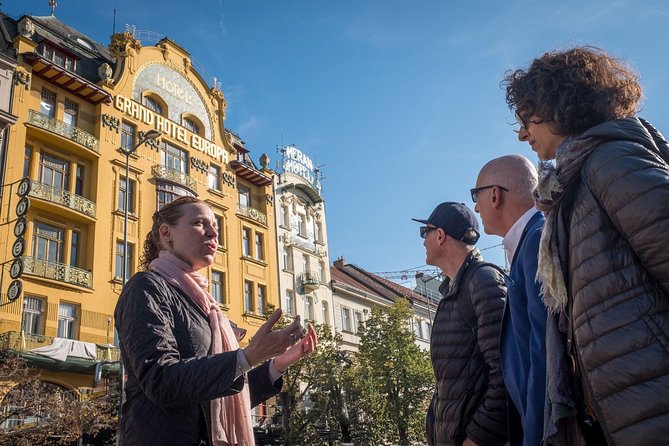
This is a guide-led architecture walk, not an audio tour with a fixed script. The provider uses professors, doctoral students, historians, journalists, art critics, and published authors, so the tone can be more like a seminar in the streets than a basic orientation walk.
Vadim Erent has led the tour and is associated with detailed explanations of Prague’s architecture and social past. Robert has guided groups through long changes in style, from Gothic buildings to Art Nouveau, with humor and room for questions. Bonita has brought a long-term local perspective to the city’s interiors and less obvious sites.
Those differences matter. If you want a brisk list of famous buildings, an academic guide may give you more background than you need. If you enjoy asking why a style appeared, who used a building, and how Prague changed over time, the format should suit you well.
The walk is conducted in English. Private and small-group formats are available, which should make it easier to ask questions and request a little more time at a particular stop. Confirm the group arrangement when booking if the size of the experience matters to you.
Is $123 a fair price?
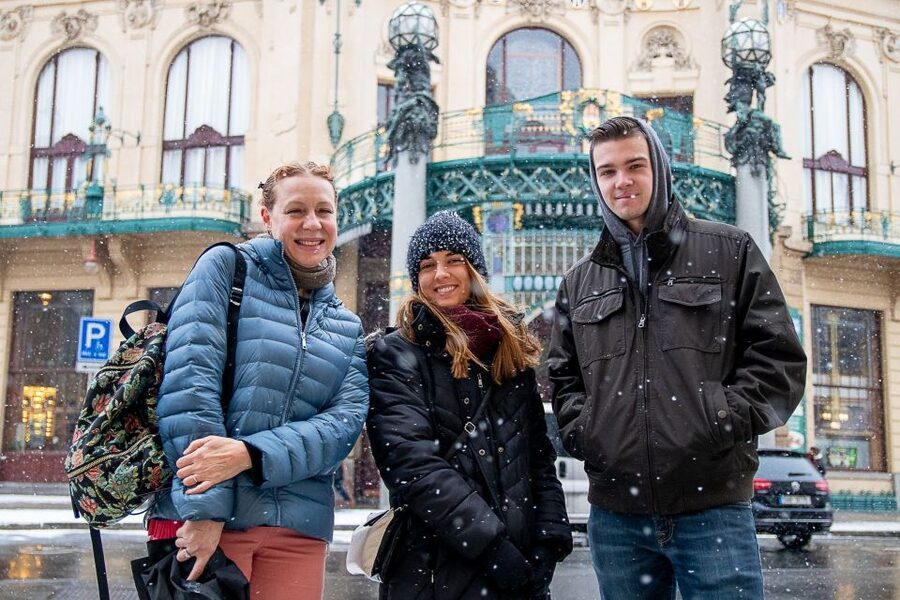
At $123 per person, this is not a bargain city stroll. The price is easier to justify if you are booking a private or small-group experience and want access to a specialist guide rather than a general introduction to Prague.
The value comes from interpretation. You are paying for someone to connect Art Nouveau, Cubism, café society, industrial travel, Czech identity, and the city’s older architectural layers. Those connections are difficult to get from a guidebook alone, especially when the route includes interiors and passages that you might overlook.
For a first visit, I would pair this tour with a broader Prague orientation walk. This experience focuses tightly on architecture and social context, so it will not cover every major sight in the city.
For design students, architecture fans, returning visitors, and curious first-time visitors, the cost can make sense. If your main goal is to see Prague Castle, Charles Bridge, or the Old Town’s headline sights, spend your money elsewhere first.
The booking terms are practical. You can reserve now and pay later, and cancellation is free up to 24 hours before the tour for a full refund. Starting times vary, so check availability before building the walk into a tight schedule.
Who should book this Prague architecture walk?
Book it if you enjoy looking closely at buildings and want the social story behind the decoration. It is especially good for people who notice cafés, hotels, banks, lighting, signs, and interiors rather than racing from one famous square to the next.
It also suits repeat visitors. Someone who has already seen central Prague may find more value in passages, lesser-known rooms, and comparisons between styles than in another basic city overview.
Families and mixed-interest groups should consider the pace and subject. The guide can answer questions and keep the walk lively, but three hours of architectural discussion will not suit every child or traveler.
Bring comfortable shoes and dress for the weather. The route is outdoors, though interior visits can offer short breaks from cold conditions. If photography matters to you, tell the guide early so you can get the best from each stop without slowing the whole group.
Should you book it?
I would book this tour if you want Prague to become easier to read. The strongest feature is not one building, but the way the guide connects ornate Art Nouveau rooms with Cubist geometry, café society, modern travel, and Czech national confidence.
I would skip it if you want a simple checklist of major sights or a slow photography tour. At $123, it asks for a focused interest in design and a willingness to keep moving.
For the right visitor, this is one of the more personal ways to understand central Prague. You leave with a better eye for ginkgo leaves, lamps, façades, passages, and the social life that made these buildings matter.
FAQ
How long is the Prague Art Nouveau and Cubism Walking Tour?
The tour lasts three hours.
What language is the tour conducted in?
The tour is conducted in English.
How much does the tour cost?
The listed price is $123 per person.
Where does the tour meet?
The meeting point is the House of the Black Madonna, downstairs at the front doors of Grand Café Orient on Ovocný 19, Prague 1.
Which buildings are included?
The experience includes the House of the Black Madonna, Lucerna bar, Grand Hotel Europa, and examples such as the Bank of the Legions. Other interiors may be included depending on the guide and access.
Does the tour cover both Art Nouveau and Cubism?
Yes. The walk explains Art Nouveau features and compares them with Cubist and Rondo-Cubist architecture in Prague.
Who leads the tour?
Guides may include professors, doctoral students, historians, journalists, art critics, and published authors. Guides who have led this experience include Robert, Vadim Erent, and Bonita.
Is the tour private or shared?
Private and small-group options are available.
Can I reserve now and pay later?
Yes. You can reserve your place and pay later, allowing more flexibility when arranging your Prague plans.
What is the cancellation policy?
You can cancel up to 24 hours in advance for a full refund.
Just added around Prague
- Private Prague Art Nouveau and Cubism Walking Tour★ 5.0 · 8 reviews
- Best of Prague Architecture – private tour with PERSONAL PRAGUE GUIDE★ 5.0 · 21 reviews
- Private Prague Renaissance & Baroque Gardens Walking Tour★ 5.0 · 8 reviews
- Prague Renaissance & Baroque Gardens Walking Tour★ 5.0 · 23 reviews
- Prague: Private Prague Art Nouveau and Cubism Tour★ 4.8 · 6 reviews
- Prague Renaissance and Baroque Gardens Walking Tour★ 5.0 · 5 reviews
- Prague: Private Cubism & Art Nouveau Walking Tour★ 5.0 · 15 reviews
- Prague Art Nouveau Tour★ 4.9 · 12 reviews
Art Nouveau Tours, compared.
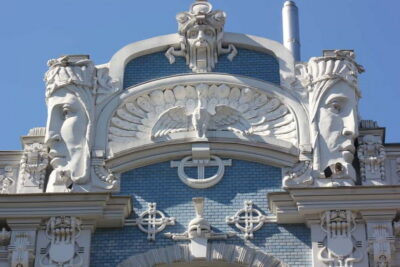
Riga: Old Town Walking Tour with Art Nouveau Highlights
Read our review →
Riga: 2-Hour History of Art Nouveau Walking Tour
Read our review →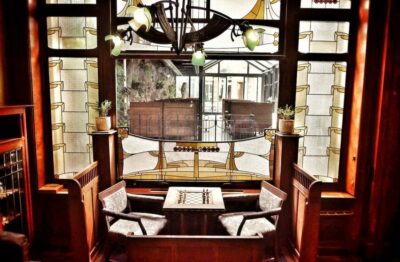
Brussels: Art Nouveau Pass – Entry to Three Locations
Read our review →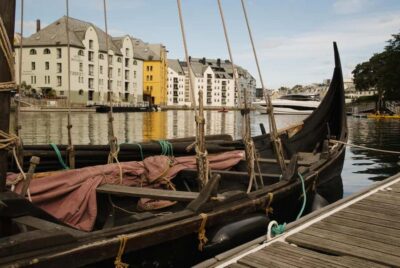
Small Group Tour in Ålesund: Art Nouveau, Sea Views & Insider Tips
Read our review →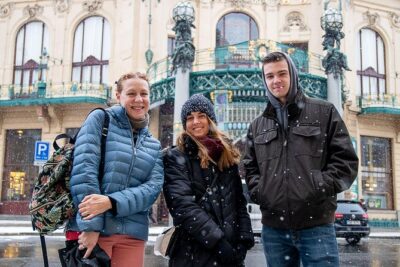
Browse the lists this tour appears in