
Review · PRAGUE
Private Prague Renaissance & Baroque Gardens Walking Tour
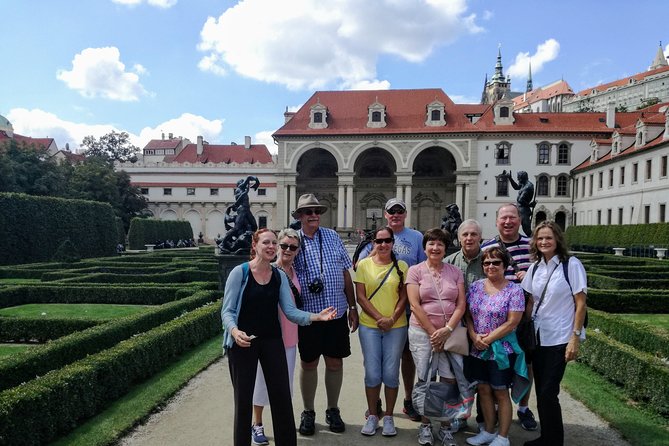
Prague’s grandest sights are not all churches and towers. This private garden walk takes you through royal courtyards, Renaissance buildings, terraced slopes, and tucked-away Baroque spaces where peacocks roam and fountains still make their music. You’ll hear the stories behind Ferdinand I’s summer palace, imported tulips, exotic fruit trees, and the palace gardens below Prague Castle.
I like two things right away: the scholar guide brings art, politics, gardening, and local history together, and the private format lets you set the pace. Bonita is singled out for giving especially sharp explanations and pointing out details you might miss alone. The main drawback is practical: some gardens charge admission, and Vrtba’s upper terrace requires steep stairs.
Key points at a glance
- Royal gardening with a royal backstory: See Queen Anne’s Summer Palace, the Fig House, Orangery, and the site of early exotic plant cultivation.
- A private group of up to 10: You get a more personal walk, with room for questions and possible adjustments to the route.
- A tram ride is part of the experience: After meeting in Malá Strana, you take tram 22 together toward the castle gardens.
- Wallenstein Garden has plenty to look at: Expect an aviary, albino peacocks, grottoes, mythological statues, and a fountain by Adrian de Vries.
- Vrtba Garden delivers the big finish: Its upper terrace gives some of the finest views toward Prague Castle and the city.
- Season matters: The gardens close from November through March, so this is a spring, summer, or early autumn outing.
Why Prague’s gardens are worth three hours
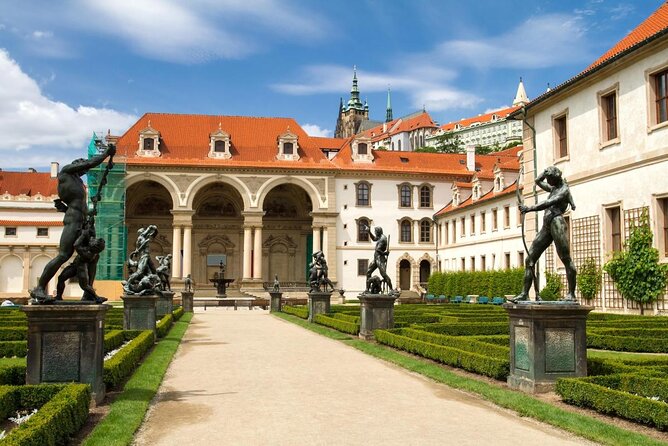
Prague’s gardens are not merely pleasant places to stroll. They explain how the city’s rulers wanted to live, what they imported from abroad, and how Renaissance taste slowly gave way to the more theatrical Baroque style.
This tour links several very different spaces. You’ll see formal palace grounds, working royal gardens, terraced slopes beneath the castle, and a private Baroque garden hidden behind walls. That variety gives the walk a clear purpose. You are not simply checking off green spaces. You are following the changing taste of Prague’s nobility and court.
The private format matters here. Gardens reward slow looking. A guide can point out a carved figure, explain the meaning of a fountain, or connect a building’s design to a ruler’s ambitions without holding up a large group. With a maximum of 10 people, you should have a better chance to ask questions and hear the answers clearly.
The tour lasts about three hours. That is enough time for a serious introduction without taking an entire day from your Prague plans. You can choose a morning or afternoon departure, and pickup from a central hotel or flat is offered if you provide the address. Otherwise, meet in front of Bagel Lounge Malostranská on Letenská in Malá Strana.
More Baroque architecture tours in Prague:
- Beer & Baroque: A Highbrow Brew Tour
★ 5.0 · 45 reviews - Beer & Baroque: A Private Highbrow Brew Tour
★ 5.0 · 33 reviews - Prague Renaissance & Baroque Gardens Walking Tour
★ 5.0 · 23 reviews
Starting in Malá Strana and riding tram 22
The meeting point is in Malá Strana, a useful base for this route. If you meet your guide at Bagel Lounge Malostranská, you will not be starting in a remote corner of the city. The guide gathers the group there before taking tram 22 together toward the castle gardens.
That ride is included in the tour plan, and it helps connect the lower part of Prague with the castle district. You are not expected to arrange your own transport between the meeting point and the gardens. If you request central hotel or flat pickup, the experience can begin closer to where you are staying.
The walk requires a moderate level of fitness. You will spend three hours on your feet, and the Vrtba section includes steep stairs to the upper terrace. If stairs are a concern, tell the guide ahead of time. The tour can be tailored for a private group, and you may wait below at Vrtba rather than climb.
Vrtba Garden and its Baroque view
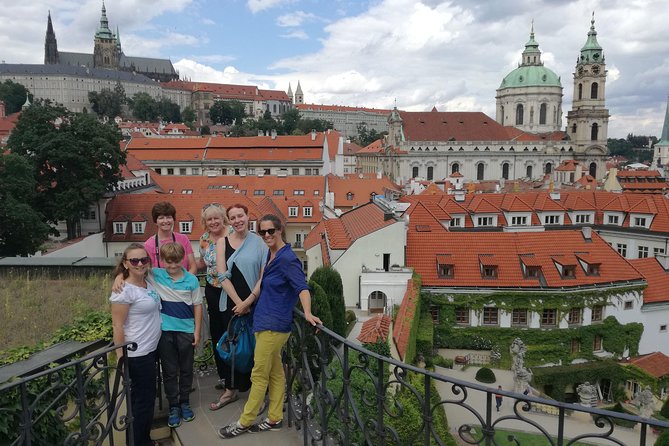
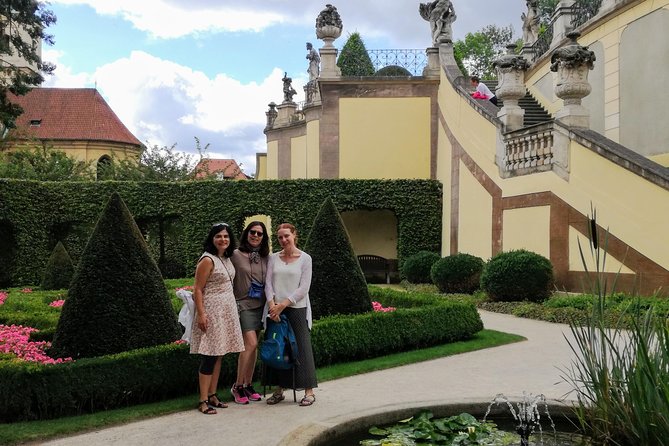
Vrtba Garden is one of the strongest reasons to choose this tour. It is a walled Baroque garden dating from 1720, with formal terraces rising up the slope. Its size is not the point. The pleasure comes from the careful design, the statuary, and the way the garden uses height to frame Prague.
At the upper courtyard, you get a broad view toward Prague Castle and across the city. This is the kind of place where a guide adds real value. The garden’s statues and decoration are not random ornaments. They belong to a visual language full of symbols, poses, and references that are easy to overlook if you simply walk through with a camera.
The garden is listed as having important cultural value, and its original early 18th-century sculpture remains a central feature. You should allow time to look closely rather than rushing straight to the viewpoint.
There are two practical points to keep in mind. The admission fee is not included, and the stairs are steep in places. The tour can still work for someone who prefers not to climb, but the upper view will not be available without reaching the terrace.
Wallenstein Garden, peacocks, and mythological statues
Wallenstein Garden offers a different mood. It was created in the 1600s in the Italian style and now serves as the public garden of the Czech Senate. Its formal layout is paired with theatrical details, including an artificial grotto and a sculptural gallery of mythological heroes.
Look for the fountain by Adrian de Vries, one of the garden’s most notable artistic features. The garden also includes an aviary and albino peacocks, which add an unexpected flash of life to an otherwise carefully ordered setting.
The grotto is particularly useful for understanding the period’s taste. Renaissance and early Baroque garden design often mixed geometry with artificial nature, creating spaces that felt playful, strange, and slightly dramatic. Wallenstein Garden lets you see that approach without needing to enter a museum.
Admission here is free. That helps balance the paid entry at Vrtba and the gardens beneath Prague Castle. Since the Senate uses the palace, access can sometimes depend on opening arrangements, so your guide’s local knowledge is useful for keeping the visit running smoothly.
More architecture walks in Prague:
- Prague Art Nouveau and Cubism Walking Tour
★ 5.0 · 77 reviews - Private Prague Art Nouveau and Cubism Walking Tour
★ 5.0 · 30 reviews - Prague Art Nouveau and Cubism Walking Tour
★ 5.0 · 29 reviews - Prague: Private Cubism & Art Nouveau Walking Tour
★ 5.0 · 15 reviews
The Royal Garden and Prague’s first exotic plants
The Royal Garden was established in the 1500s on land that had previously held medieval vineyards. It became known for rare plants and specimens brought from distant places. This is where the tour’s gardening story becomes especially interesting.
You hear how royal gardeners tried to grow exotic fruit trees in Central Europe. The Fig House and Orangery were not just decorative buildings. They were places where court gardeners tested methods for cultivating plants that did not naturally belong to Prague’s climate.
The story of the tulip adds another memorable detail. A gift from the Turkish Sultan to the royal gardeners helped spark a new fashion for tulips. It is a small story, but it shows how gardens were tied to diplomacy, trade, status, and curiosity.
The Royal Garden section is relatively short, listed at about 15 minutes. That is enough for an introduction and a look at the main features, but not a leisurely botanical study. If plants are your main interest, you may wish the tour spent longer here. If you want a broad look at Prague’s architecture and court culture, the shorter stop keeps the route moving.
Queen Anne’s Summer Palace and the Fig House
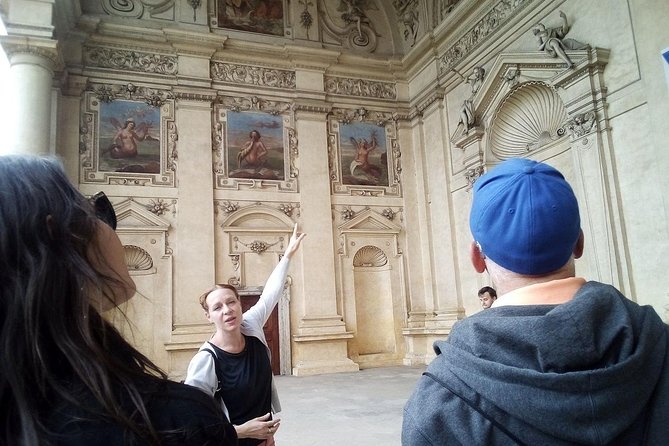
Queen Anne’s Summer Palace, also called the Belvedere, is one of the clearest Renaissance buildings in Prague. It was completed in the middle of the 16th century and is often described as the purest Renaissance structure outside Italy.
Its exterior deserves close attention. The building has arcades with decorated Tuscan capitals, an ornamental frieze, and reliefs showing mythology, hunting, and war. One detail links the palace to the garden story: Ferdinand I is shown presenting his wife, Queen Anna, with a fig tree blossom.
That image gives the building a personal touch. Instead of treating the palace as a shell for grand events, the tour connects it to a gift between husband and wife and to the royal effort to grow unusual plants.
The nearby Fig House and Orangery help explain how gardeners supported the court’s interest in exotic fruit. You will not simply hear that the palace was Renaissance. You will see how architecture, botany, royal display, and family symbolism worked together.
The palace stop is brief, about five minutes in the listed plan. That means you should expect an exterior-focused explanation rather than a long interior visit. Take a moment to study the reliefs before the group moves on.
The Ball Game Hall and the Royal Garden’s working past
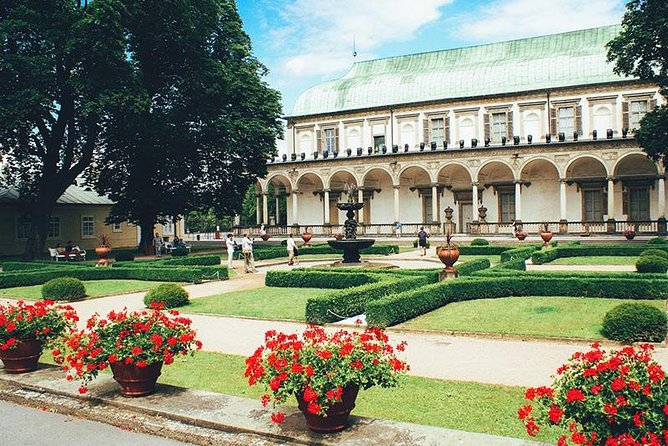
The Ball Game Hall sits on the south side of the Royal Garden, directly above the Stag Moat. It was built in the middle of the 16th century as a place for ball games, then later served as a riding school and stables.
This is a useful stop because it shows that royal gardens were working compounds, not just ornamental parks. Leisure, training, animals, storage, and court life all shared the same grounds.
The building is another example of Renaissance design within the castle area. The stop lasts about five minutes, so the guide’s explanation is the main reason to pause there. On your own, you might admire the facade and keep walking without understanding how its use changed over time.
Following the change from Renaissance to Baroque
One of the tour’s best ideas is its focus on change. The Royal Garden and Queen Anne’s Summer Palace show the Renaissance preference for order, proportion, classical references, and careful study of nature.
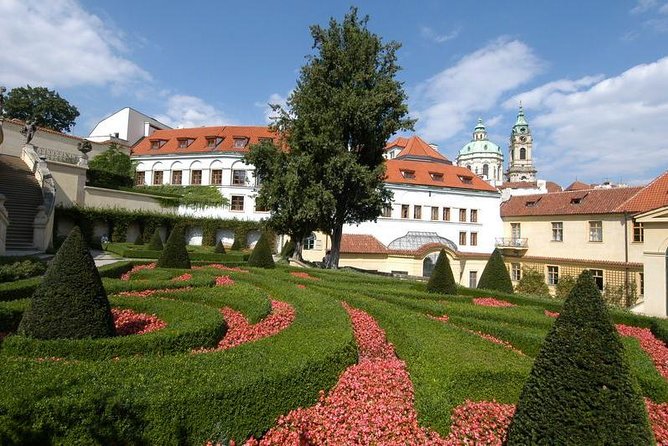
Wallenstein and Vrtba bring a more dramatic Baroque approach. Here, gardens rise in terraces, statues create a theatrical setting, grottoes imitate wild nature, and views are controlled from one level to the next.
You can see these styles as separate chapters, but the guide also helps connect them. The result is more useful than a list of dates. You begin to understand why the gardens look different and what their designers wanted you to feel as you moved through them.
That interpretive layer is where the private scholar-led format earns its price. A standard city walk may point out palace facades. This tour spends time on the relationship between architecture, planting, sculpture, power, and fashion.
How much value do you get for $397.36?
The listed price is $397.36 per group of up to 10, not per person. For a full group, that works out to roughly $40 per person before garden admission. For two people, it is a much more expensive outing per head.
That pricing makes the most sense for families, friends, or a small private group that wants a focused experience. You are paying for a private English-speaking guide, a three-hour route, hotel or flat pickup if arranged, and the convenience of moving between the meeting point and castle gardens together.
The value is less clear for a solo visitor or couple watching every expense. Prague has many public gardens that you can visit independently, and Wallenstein Garden is free. You should choose this tour because you want the explanations and the linked route, not because it is the cheapest way to see flowers and statues.
The admission fees for the gardens beneath Prague Castle and Vrtba Garden are extra. The exact amount is not supplied here, so budget separately rather than assuming all entries are covered. Confirmation arrives at booking, and free cancellation is available up to 24 hours before the start time.
Who will enjoy this garden walk most?
I would recommend it most strongly to visitors who have already seen Prague’s main squares and want a quieter, more thoughtful side of the city. It also suits anyone interested in architecture, royal life, garden design, sculpture, or the movement from Renaissance to Baroque taste.
Families can benefit from the private format because the guide can adjust the pace and explain the odd details that keep a long walk interesting. A group of friends can also get good value from the flat group price.
You should think twice if you dislike stairs, tire quickly on foot, or want a tour centered on interiors. The route is about gardens and exteriors. The palace and garden buildings are important, but this is not a substitute for a full Prague Castle interiors tour.
Season is another key factor. The gardens are closed from November through March. Plan this experience from spring into autumn, and confirm the opening arrangements when you book.
Should you book the Prague garden tour?
Book it if you want context, not just scenery. The tulip story, the Fig House, the royal greenhouse tradition, Wallenstein’s grottoes, and Vrtba’s terrace give you a side of Prague that is easy to miss between the castle and Charles Bridge.
The strongest case is for a private group that values an expert guide and can share the $397.36 cost. Bonita’s explanations are specifically praised, and the private setup gives you room to ask questions and adjust the pace.
Skip it if your main goal is a low-cost stroll or if steep stairs and three hours on foot sound tiring. For everyone else, this is a smart way to see Prague’s royal gardens while learning why they were built, how they changed, and what their designers wanted you to notice.
FAQ
How long is the Prague Renaissance and Baroque Gardens Walking Tour?
The tour lasts approximately three hours.
Is this a private tour?
Yes. Only your group participates, with a maximum group size of 10 people.
What language is the tour offered in?
The tour is offered in English.
Where does the tour start?
The standard meeting point is in front of Bagel Lounge Malostranská at Letenská 118/1 in Malá Strana. Pickup from a central hotel or flat is also offered if you provide the address.
How does the group reach the castle gardens?
After meeting, the group takes tram 22 together to reach the castle gardens.
Are garden admission fees included?
No. Admission to the gardens beneath Prague Castle and Vrtba Garden is not included. Wallenstein Garden is listed as free.
Is the tour suitable for people who have difficulty climbing stairs?
The tour requires a moderate level of fitness, and Vrtba Garden has steep stairs to its upper terrace. You may wait below, or the private tour can be tailored to your group.
Just added around Prague
- Private Prague Art Nouveau and Cubism Walking Tour★ 5.0 · 8 reviews
- Best of Prague Architecture – private tour with PERSONAL PRAGUE GUIDE★ 5.0 · 21 reviews
- Prague Renaissance & Baroque Gardens Walking Tour★ 5.0 · 23 reviews
- Prague: Private Prague Art Nouveau and Cubism Tour★ 4.8 · 6 reviews
- Prague Renaissance and Baroque Gardens Walking Tour★ 5.0 · 5 reviews
- Prague: Private Cubism & Art Nouveau Walking Tour★ 5.0 · 15 reviews
- Prague Art Nouveau Tour★ 4.9 · 12 reviews
- Prague: Modern Architecture and Design Guided Tour★ 3.9 · 20 reviews
Baroque Architecture Tours, compared.
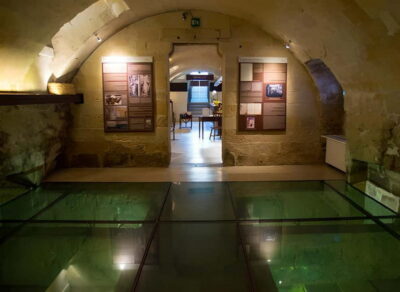
Lecce: Baroque Architecture and Underground Walking Tour
Read our review →
Train Exp. through the Alps (Royal Baroque Route from Nice)
Read our review →
Dresden: Tour of the Baroque Quarter with a Night Watchman
Read our review →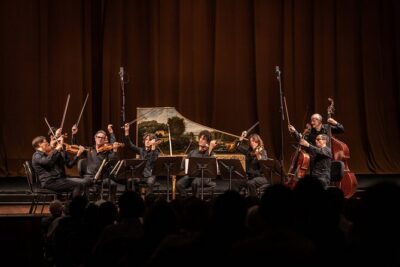
Interpreti Veneziani Ensemble Baroque Concert in Venice Ticket
Read our review →
Borghese Gallery Max 6 People Tour: Baroque & Renaissance in Rome
Read our review →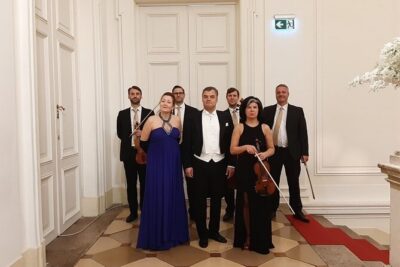
Concert at the Palais Schönborn-Batthyány by the Vienna Baroque Orchestra
Read our review →
Guided Walking Tour of Rome: Top Sights & Baroque Treasures
Read our review →
Noto, Modica and Ragusa: The Baroque Tour from Catania
Read our review →Browse the lists this tour appears in