
Review · FRANCE
Marseille Belvedere: The city through architecture
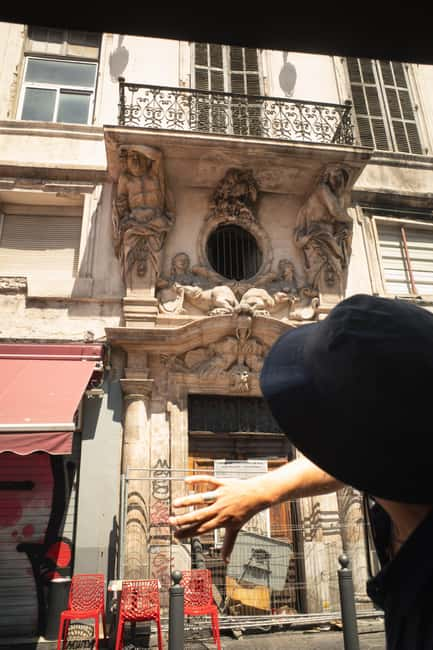
Marseille reveals itself through its built details: a church wall, a shifting street line, a harbor edge, or an old postcard held beside the present-day view. I like that Louis Leroy uses architecture and old images to help you read the city, rather than simply naming monuments. I also like the stops for short texts by writers, historians, sociologists, and researchers, which give the walk a thoughtful human angle.
The main consideration is pace. Three hours on foot with many stops means this is not a quick checklist of Marseille sights. You will get more from it if you enjoy looking closely, asking questions, and discussing how a city changes. The route also covers several areas, so comfortable shoes are a sensible choice.
Key points to know
- An architect leads the walk: Louis Leroy explains Marseille through its buildings, street plans, topography, and changing public spaces.
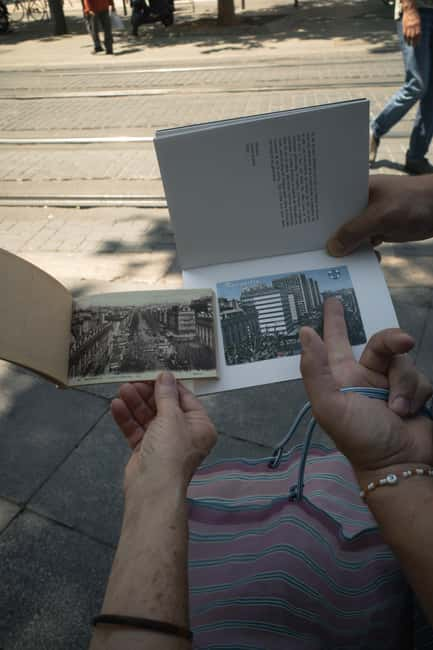
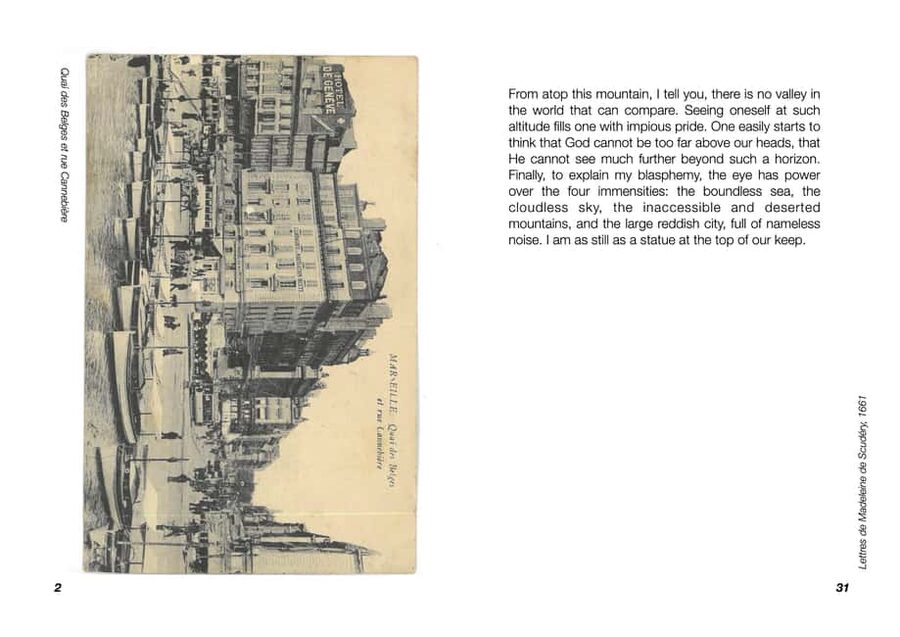
- Old images meet present-day streets: A booklet, postcards, photographs, and selected texts help you compare different periods of the city.
- Eight people maximum: The small group suits visitors who want to ask questions and follow a more personal discussion.
- A central Marseille route: The walk links the Old Port, City Hall, Fort Saint-Jean, Marseille Cathedral, Le Panier, Rue de la République, and Cours Belsunce.
- Three languages are available: You can book a tour in French, English, or Italian.
- Good practical flexibility: The activity lasts three hours, is wheelchair accessible, and allows free cancellation up to 24 hours before the start.
Reading Marseille instead of simply seeing it
Many city walks point out a church, a square, or a handsome facade and move on. This one asks you to pause and consider why the place looks as it does. Louis Leroy, a trained architect who has lived in Marseille for several years, uses selected writings and images to make the city easier to read.
The idea behind the name Belvedere is useful here. The Italian expression bello da vedere refers to something beautiful to see, and the word later came to mean a viewpoint. On this walk, a viewpoint is not always a high terrace. It can be a street corner, a harbor edge, or a place where several layers of Marseille come together.
I like this approach because it gives you a way to keep exploring after the tour ends. Instead of memorizing a list of dates, you begin to notice clues: the shape of a street, the position of a building, a change in stone, or the way the city meets the water.
At each stop, Louis reads a text and shows an image he has selected. The texts draw from researchers, sociologists, historians, and novelists. The images include postcards and photographs made at different times. That pairing helps you compare what Marseille was with what it has become.
A few more architecture tours around France worth a look
- Bastille’s Architecture & Artisans Self-Guided Walking Tour
★ 4.5 · 18 reviews - Strasbourg : Neustadt Architecture Walking Tour
★ 5.0 · 14 reviews - Neoclassical Paris Architecture 2-Hour Private Walking Tour
★ 5.0 · 7 reviews
Starting at the Old Port and La Canebière
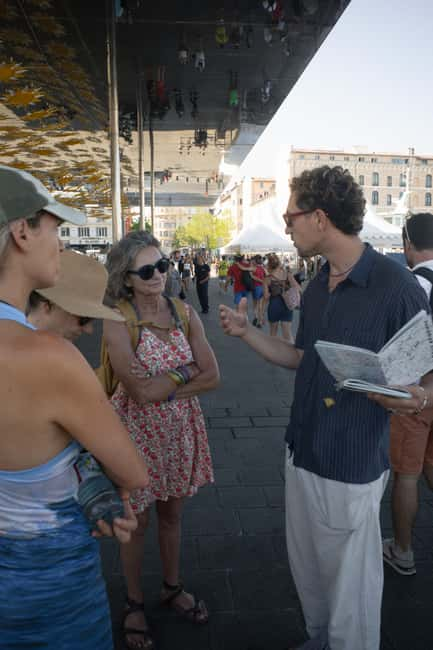
The meeting point is by the Vieux-Port metro exit, near the fish market. Louis can be identified by his navy blue hat. This is a practical place to begin because the Old Port gives you an immediate sense of Marseille’s position and shape.
The route includes the Old Port and La Canebière, one of the city’s best-known streets. Rather than treating the harbor as a single postcard view, the walk uses it as a place to consider movement, trade, public life, and the way the city has grown around the water.
The exact stop sequence includes several walks of about 20 minutes, with pauses for discussion and reading. You should expect a moving conversation rather than a long talk delivered from one fixed spot.
The Old Port is also where the activity’s method becomes clear. You are encouraged to study what is in front of you, then compare it with a past image or a written account. That makes the port feel less like a finished attraction and more like a place still being shaped.
From the ancient port to City Hall
An early part of the route brings you toward the Port Antique and City Hall. These stops connect Marseille’s very old beginnings with the city’s civic center.
The Port Antique gives the walk a chance to consider how the city’s earliest urban traces relate to the present streets. You will not simply receive a general account of Marseille’s past. The focus is on reading physical evidence and seeing how later construction sits over, around, or beside earlier layers.
At City Hall, the emphasis shifts toward public power and the way important buildings organize the waterfront. The selected text and image provide a prompt for discussion, while the architecture gives you something solid to inspect.
I find this kind of stop especially useful early in a city visit. It helps you understand why Marseille can feel so varied from one block to the next. The point is not that every old building looks untouched. The point is to notice how different periods remain visible together.
Saint-Laurent Church and Fort Saint-Jean
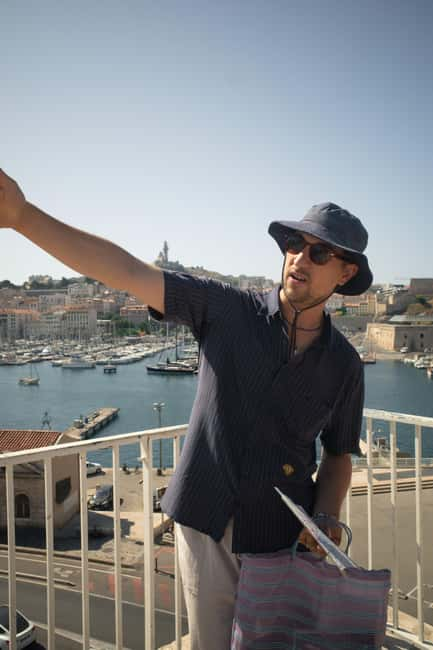
The route continues to Saint-Laurent Church and Fort Saint-Jean. These sites offer a strong link between religious buildings, defensive structures, and Marseille’s position beside the sea.
Here, look for the clues Louis draws out through architectural detail and surrounding views. The fort and church are not presented as isolated monuments. They help explain how the waterfront has been used and understood over time.
This section should appeal to you if you like cities where military, religious, and civic structures sit close together. The reading material adds another layer by giving the places a social and literary voice, not just a formal architectural description.
The walk remains accessible, but the route includes several outdoor stops and periods of walking. If you use a wheelchair, the activity is listed as wheelchair accessible, though you may still want to confirm the exact route conditions when booking, particularly for the individual streets and stops.
Same city, a completely different century:
- Train Exp. through the Alps (Royal Baroque Route from Nice)
★ 5.0 · 682 reviews - Paris: Splendors of the Baroque at the Jacquemart-André Museum – Entry Ticket
★ 4.5 · 99 reviews - Reims Art Deco guided tour
★ 4.5 · 26 reviews - Guided Tour of Nancy, French Capital of Art Nouveau
★ 5.0 · 18 reviews
Marseille Cathedral and the Vieille Major
Marseille Cathedral, known as La Vieille Major, is one of the route’s major visual points. Its scale and form give Louis plenty to discuss, but the value of the stop is not limited to admiring the building.
The cathedral sits within a part of Marseille where old and newer construction meet. That makes it a good place to look at how architecture creates identity. The size, materials, and position of a building can tell you something about the ambitions of the city that built it.
The walk’s use of old photographs is helpful here. A past view can show how much of the surrounding setting has changed, or how a familiar building was framed before nearby streets and structures took their current form.
You will probably spend more time looking than taking notes. The illustrated booklet helps you follow the route and gives the discussion a visual thread. It is a useful extra for anyone who wants to remember the walk later or continue comparing Marseille’s streets on their own.
La Vieille Charité and the Panier neighborhood
The route then reaches La Vieille Charité and Le Panier. These are among the most rewarding parts of the walk for anyone interested in how a neighborhood changes without losing every trace of its earlier character.
La Vieille Charité provides a clear example of architecture serving different purposes over time. The building is also a way into a larger discussion about the people and institutions that shaped this part of Marseille.
In Le Panier, the walk becomes more street-based. You will look at the neighborhood’s layout, details, and relationship to the surrounding city. This is where a trained architect’s eye can be particularly useful. A narrow street, a building edge, or a change in level can reveal how the neighborhood developed.
There is a 20-minute break in Le Panier. The pause breaks up the three-hour route and gives you a little breathing room before the final section. Because the walk combines frequent stops with steady movement, this break is welcome.
Do not expect a shopping or food tour here. The focus stays on urban form, texts, photographs, and the clues built into the streets. If you want a meal or a long café stop, plan that separately.
Rue de la République and the city’s changing scale
After Le Panier, the route continues through Rue de la République. This street helps show how large urban projects can alter the scale and character of an older city.
Here, Louis looks at the details that point to Marseille’s evolution. The contrast between broad planned streets and older, tighter urban areas gives you a useful way to think about redevelopment. The walk does not freeze Marseille in one ideal period. Instead, it asks you to notice both past changes and changes still taking place.
This is one of the tour’s strongest ideas. Many city walks treat change as a simple story of progress. This route leaves more room for questions. What was removed? What was added? Who used the street before, and who uses it now? How does a new street affect the areas around it?
The archive images make those questions easier to grasp. A photograph from another period can show a street as more than a collection of facades. It can reveal how the whole public space was arranged and experienced.
Finishing at Cours Belsunce
The walk ends at Cours Belsunce. This gives the route a useful final stop because the area brings together movement, architecture, and the changing shape of central Marseille.
By this point, you should have a practical method for looking at the city. Study the street line. Compare the buildings around you. Look at what has been preserved, replaced, or adapted. Notice how the surrounding view changes as you move through the center.
Cours Belsunce also provides a fitting close because the walk has moved across several different kinds of urban space: harbor, civic center, religious and defensive sites, historic neighborhood, planned street, and central boulevard.
The ending is not built around a grand final attraction. Instead, it completes the central idea of the tour: Marseille makes more sense when you connect its parts.
Why the small group matters
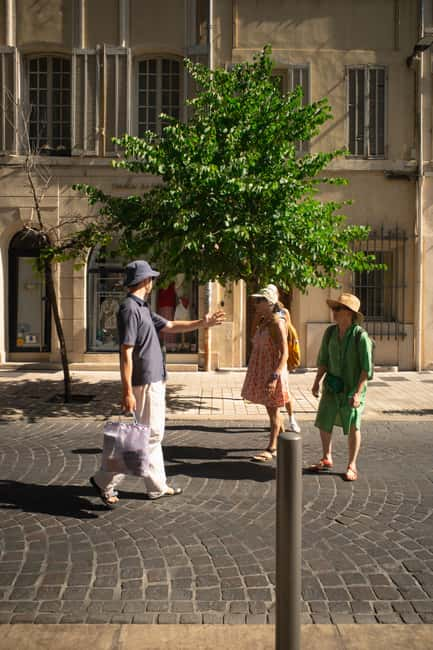
The group is limited to eight people. That matters on a tour built around questions and close observation. In a large group, it can be hard to see a photograph, hear a reading, or ask why one detail matters. A small group gives you more room to follow your own curiosity.
The activity is offered in French, English, and Italian. Some material is shown in its original language, so you may encounter texts or images in their first form. The guide’s role is important here, particularly when a passage depends on context or a specific word.
Louis Leroy’s style, based on the information available, is interactive rather than rigid. He has adapted explanations to the group’s curiosity and answered questions along the route. That makes this a better choice for you if you prefer conversation over a memorized speech.
You should still know what this tour is not. It is not designed as a fast introduction to every major attraction in Marseille. It does not promise entry to museums or monuments. The value is in the interpretation of public spaces and the material used to read them.
Is $76 a fair price?
At $76 per person, this is more expensive than a basic group walking tour. The price makes more sense if you value a specialist guide, a maximum group of eight, and the illustrated booklet included with the experience.
You are paying for three hours with an architect who has a long-term connection to Marseille, plus a prepared set of texts, archive material, and images. The format is more like a guided urban study than a standard sightseeing loop.
The value depends on your interests. If you want a simple route to the Old Port, Cathedral, and Le Panier, you may find less costly options that cover the same broad areas. If you want to understand how those places connect and change, the extra cost is easier to justify.
I would especially consider booking early in a Marseille visit. The walk can give you a better way to read the city during the rest of your stay. You may also appreciate it more after seeing a few of the central areas first, since you will have your own impressions to compare with the guide’s images and texts.
Who will enjoy this Marseille walk?
This experience suits you if you like architecture, urban planning, photography, literature, or the social stories behind buildings. It also works well for repeat visitors who have already seen the Old Port and Le Panier but want a different way to understand them.
It may appeal to students, design professionals, photographers, and curious walkers. You do not need architectural training. The format is based on observation, and Louis explains the clues as the group moves through the city.
Families with older children may enjoy the image comparisons and short readings, though the experience is clearly built for people willing to spend three hours walking and discussing. The small group is also useful for solo visitors who want a more personal introduction without joining a large crowd.
I would skip it if your main goal is food tasting, shopping, museum entry, or a quick list of photo stops. This is a thinking walk. Marseille is the subject, but the method matters just as much as the route.
Practical details before you book
Plan for three hours and wear comfortable shoes. The itinerary includes repeated walks of about 20 minutes between stops, followed by pauses to examine material and talk.
Meet at the Vieux-Port metro exit by the platform, near the fish market. Look for Louis’s navy blue hat. The tour finishes at Cours Belsunce, so you will not return to the meeting point.
The activity is wheelchair accessible and available in French, English, or Italian. You can cancel up to 24 hours ahead for a full refund, and the reserve-now, pay-later option lets you hold a place without paying immediately.
Should you book Marseille Belvedere?
Book this walk if you want Marseille to become more legible, not simply more familiar. Louis Leroy’s use of old postcards, selected texts, and architectural details gives you a clear way to connect the Old Port, Le Panier, the cathedral, Rue de la République, and Cours Belsunce.
The best reason to choose it is the unusual mix of urban observation and archive material. The main caution is that the tour asks for attention and walking time. If that sounds appealing, the $76 price buys a focused, small-group look at Marseille that you are unlikely to get from a basic monument tour.
FAQ
How long does the Marseille Belvedere tour last?
The activity lasts three hours.
What is the price per person?
The listed price is $76 per person.
Who leads the tour?
The experience is led by Louis Leroy, a trained architect who has lived in Marseille for several years.
What languages are available?
The tour is available in French, English, and Italian. Some content is shown in its original language.
Where does the tour meet?
Meet at the Vieux-Port metro exit by the platform, near the fish market. Louis wears a navy blue hat.
Where does the tour finish?
The walk finishes at Cours Belsunce.
Is the tour wheelchair accessible?
Yes, the activity is listed as wheelchair accessible.
Just added around France
- Architectural Strasbourg: Private Tour with a Local Expert★ 5.0 · 2 reviews
- Neoclassical Paris Architecture 2-Hour Private Walking Tour★ 5.0 · 7 reviews
- Gothic Paris – Castles & Cathedrals (Marais History Walk-Small Group Tour)★ 5.0 · 3 reviews
- Architectural Bourgeois Paris 19th Century★ 4.0 · 4 reviews
- Architectural Paris: Private Tour with a Local Expert★ 5.0 · 2 reviews
- Paris Art Nouveau Private Tour★ 5.0 · 7 reviews
- Art Nouveau visit to Nancy★ 5.0 · 13 reviews
- Dijon Signature Walk: Gothic Landmarks & Ducal Grandeur★ 4.5 · 9 reviews
France Architecture Tours, compared.
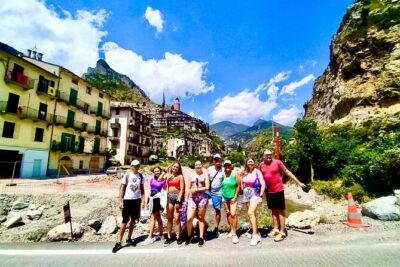
Train Exp. through the Alps (Royal Baroque Route from Nice)
Read our review →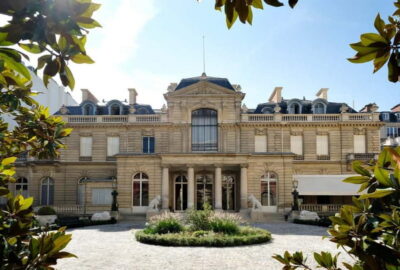
Paris: Splendors of the Baroque at the Jacquemart-André Museum – Entry Ticket
Read our review →
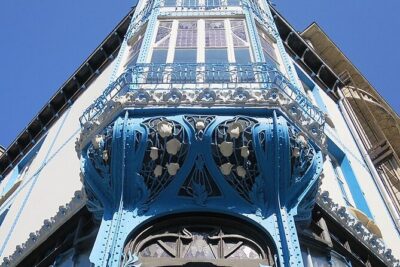
Guided Tour of Nancy, French Capital of Art Nouveau
Read our review →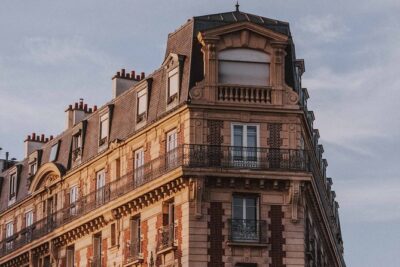
Bastille’s Architecture & Artisans Self-Guided Walking Tour
Read our review →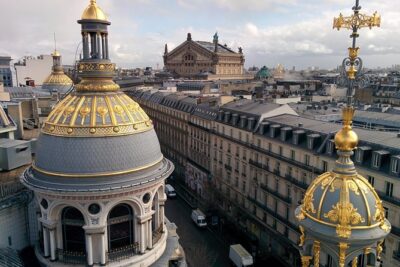
Private Art Nouveau and Art Deco tour near Opera
Read our review →
Paris – Private Guided Tour with Art nouveau Theme
Read our review →Browse the lists this tour appears in