
Review · LOS ANGELES
Los Angeles: Downtown History & Architecture Walking Tour
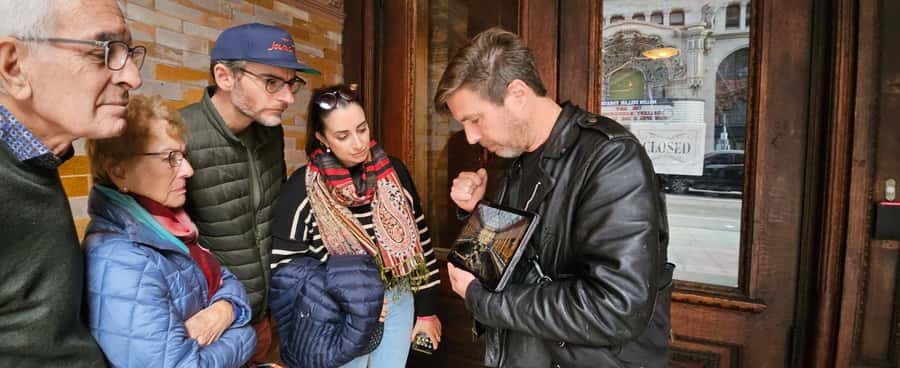
Downtown Los Angeles becomes far more interesting when you read it as a city built in layers. This 150-minute walk links movie palaces, Art Deco facades, Bunker Hill, and modern urban renewal, with Belgian guide Mark explaining how architecture, politics, film, and daily life shaped DTLA. The movie history is only part of the story.
I like the conversational format, which gives you room to ask about city planning, public space, or the forces behind downtown’s changes. I also like the guide’s European point of view, which adds a useful comparison to American city life. The Bradbury Building and Last Bookstore provide especially good photo stops.
The main consideration is the walking. You need comfortable shoes, water, sun protection, and enough mobility for a two-and-a-half-hour route. The meeting point can vary by booking, and the tour is not suitable for children under six, wheelchair users, or people with mobility impairments.
Key points at a glance
- A 150-minute walk through DTLA: The route covers Bunker Hill, Broadway, Angels Flight, Grand Central Market, the Bradbury Building, and the Last Bookstore.
- Mark’s global point of view: The Belgian guide connects local buildings with wider ideas about city design, politics, and culture.
- Movie history in the streets: Broadway’s theater district helps explain Los Angeles as a center of cinema and popular culture.
- Strong architecture focus: You’ll see Art Deco, Beaux-Arts, and Modernist work, not just famous facades.
- A discussion rather than a lecture: Your questions and interests can shape the conversation, with private groups available.
- Good public transport access: The tour begins near the Central Library and the 7th Street Metro station, depending on the option selected.
Why DTLA works best on foot
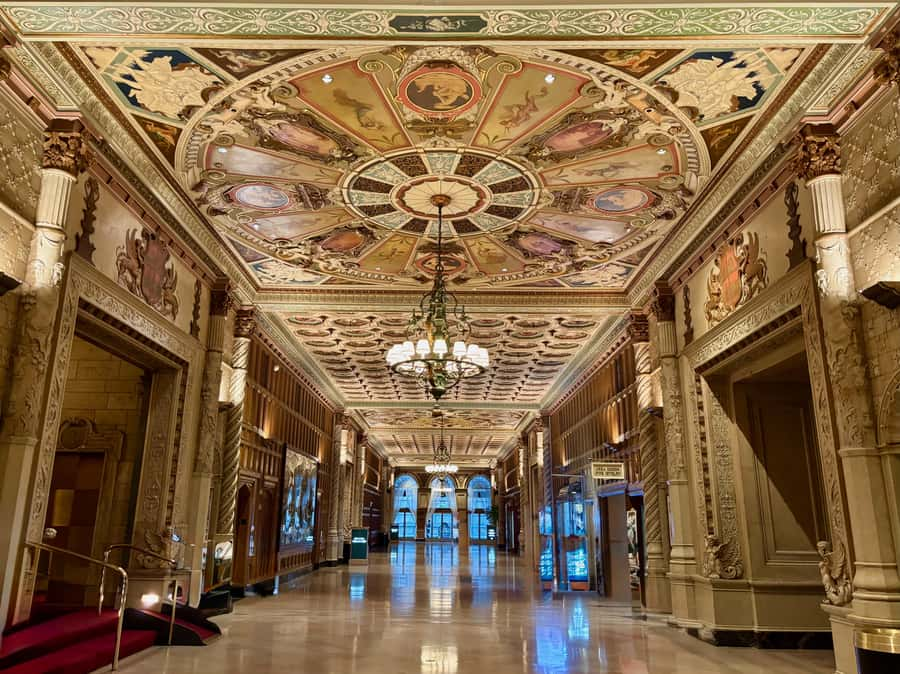
Downtown Los Angeles can feel scattered when you see it from a car. On foot, the connections become clearer. A grand theater facade leads to a story about old commerce. A steep hill points to a vanished residential district. A polished new business space sits beside a building that has survived decades of change.
That is the strength of this tour. It does not treat downtown as a string of isolated photo stops. It explains how the area changed from an early business center to a district shaped by cinema, finance, public transit, redevelopment, and new creative uses.
The guide’s role matters here. Mark is a Belgian resident of DTLA who also hosts a podcast about the area. His perspective is local, but not narrowly local. You can expect comparisons between Los Angeles and European cities, along with questions about why American downtowns look and function differently.
I would choose this walk early in a Los Angeles visit if you want a better sense of place. It gives you names, dates, buildings, and themes that can make later sightseeing more meaningful.
More architecture walks in the USA:
- The Official Art Deco Walking Tour by The Miami Design Preservation League
★ 5.0 · 1,580 reviews - Chicago in a Day: Food, History & Architecture Walking Tour
★ 5.0 · 1,153 reviews - Miami South Beach Art Deco Walking Tour
★ 5.0 · 1,039 reviews
Starting near the Central Library and Grand Central Market
There are two possible starting locations: the Los Angeles Central Library or the Grand Central Market parking garage. The exact meeting point depends on the option you book, so check it before leaving your hotel.
The Central Library is next to the 7th Street Metro station, which makes this a practical starting area if you are using public transit. It also puts you close to one of the tour’s major architecture themes. The library itself represents the mixture of Art Deco and Beaux-Arts influences found across DTLA.
If your route begins at Grand Central Market, you start closer to one of downtown’s best-known public gathering places. The market is not just a food stop in this context. It helps show how downtown serves different generations and income groups, with older commercial traditions meeting newer urban habits.
The first part of the walk is about orientation. You will learn how the district fits together, then move through its streets rather than simply viewing it from a bus window. That matters in Los Angeles, where distances can look small on a map but feel very different once hills, crossings, and busy roads enter the picture.
Angels Flight and the rise of Bunker Hill
Angels Flight Railway offers one of the route’s most recognizable downtown sights. The short funicular links the lower part of downtown with Bunker Hill, and its presence helps explain the district’s steep terrain and changing use.
Bunker Hill was once an affluent residential area. Its later transformation into a modern urban center reflects the larger story of Los Angeles: older neighborhoods were removed or reshaped, large civic and business projects arrived, and the city kept reinventing its center.
This is where the tour moves beyond attractive architecture. You can discuss who benefits from redevelopment, how public decisions change neighborhoods, and what gets lost when a city modernizes. The guide’s conversational style is particularly useful here, since these are questions without one simple answer.
Do not expect Angels Flight to be the entire focus of the visit. It functions more as a place marker and a doorway into Bunker Hill’s story. The real value is the explanation of how a small railway connects the city’s topography with its social and architectural past.
Grand Central Market and downtown city life
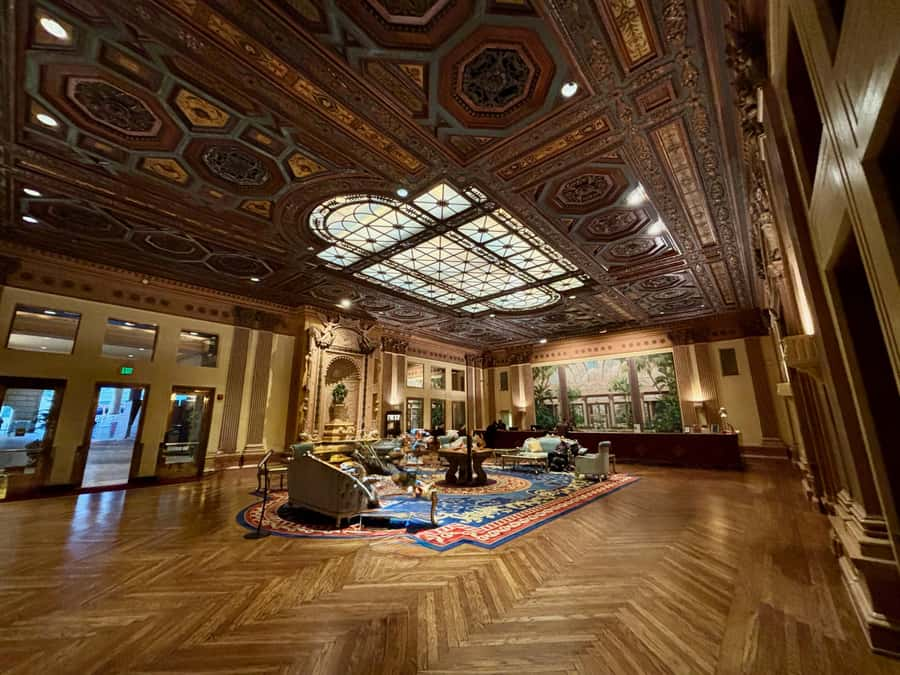
A stop at Grand Central Market adds a human scale to the building-focused route. The itinerary allows about 10 minutes here, so think of it as a short guided visit rather than a full meal break.
The market helps balance the grand theaters and office buildings. It gives you a chance to see downtown as a place where people eat, meet, shop, and pass through, not merely as a collection of landmarks. If you want to buy food, your time may be limited, so plan on returning later if the market interests you.
This stop also supports one of the tour’s central ideas: cities are shaped by ordinary routines as much as by famous buildings. You may hear how commercial spaces, public gathering places, and changing neighborhoods influence the feel of DTLA.
I like this pause because it breaks up the architecture discussion. Two and a half hours of facades and dates could become tiring. Grand Central Market gives your eyes and mind a different kind of material before the route continues toward Broadway and the Bradbury Building.
More history tours in the USA:
- Charleston’s Best Highlights: History, Culture & Architecture
★ 5.0 · 422 reviews - Palm Springs Modernism Architecture & History Bike Tour
★ 5.0 · 359 reviews - Charleston: History and Architecture Guided Walking Tour
★ 4.8 · 349 reviews - Historic Georgetown: History, Gossip, & Architecture Walking Tour
★ 5.0 · 321 reviews
Broadway’s movie palaces and old commercial power
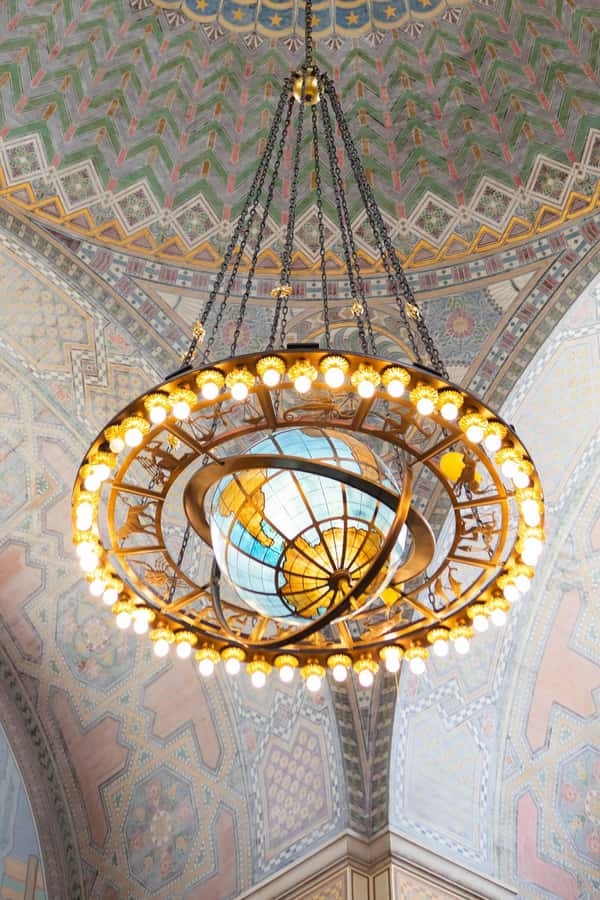
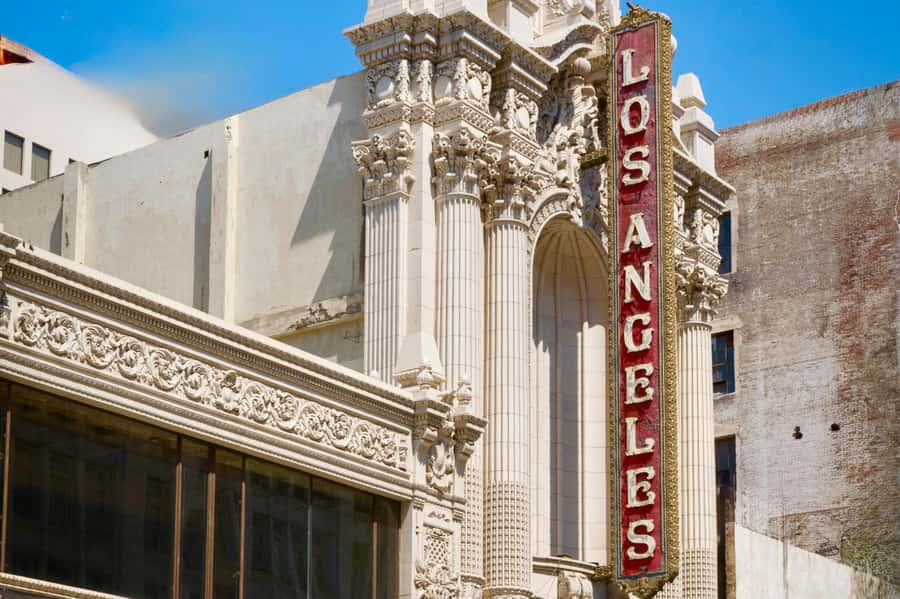
The Broadway Theater District is one of the tour’s strongest sections. It has the world’s highest concentration of movie palaces, and its buildings preserve the glamour of Los Angeles during cinema’s golden age.
You will not simply hear that old theaters existed here. The guide uses the buildings to explain how entertainment, commerce, and city identity grew together. Broadway was also a major business hub, with grand storefronts and upper floors built for a city that expected downtown to be the center of daily life.
This is an excellent place for film fans, but you do not need to be a cinema expert. The stories connect with wider subjects, including celebrity culture, changing technology, and the way movies have shaped how the world imagines Los Angeles.
The route also brings in famous names linked to the city, including Charlie Chaplin, John F. Kennedy, Michael Jackson, Taylor Swift, and Jisoo. These references add a pop-culture thread without replacing the architectural focus. You are walking through places connected to the city’s public image, not just checking off celebrity associations.
Bring your camera here, but keep it ready throughout the tour. Broadway’s facades, signs, entrances, and details reward close attention. The guide’s commentary helps you notice elements you might otherwise pass without a second look.
The Bradbury Building in 20 minutes
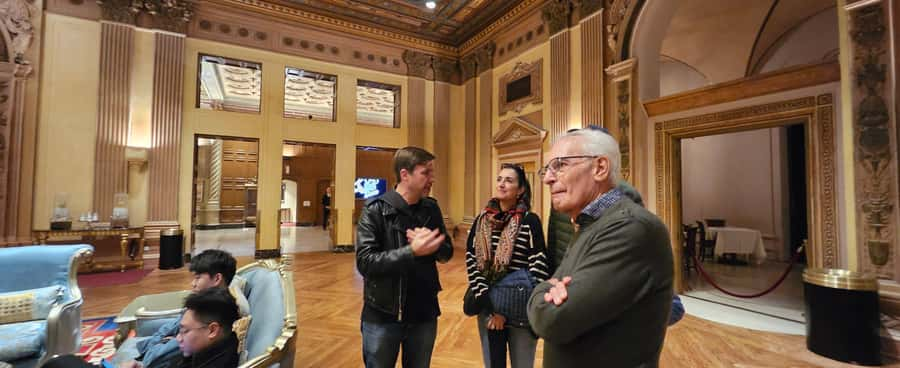
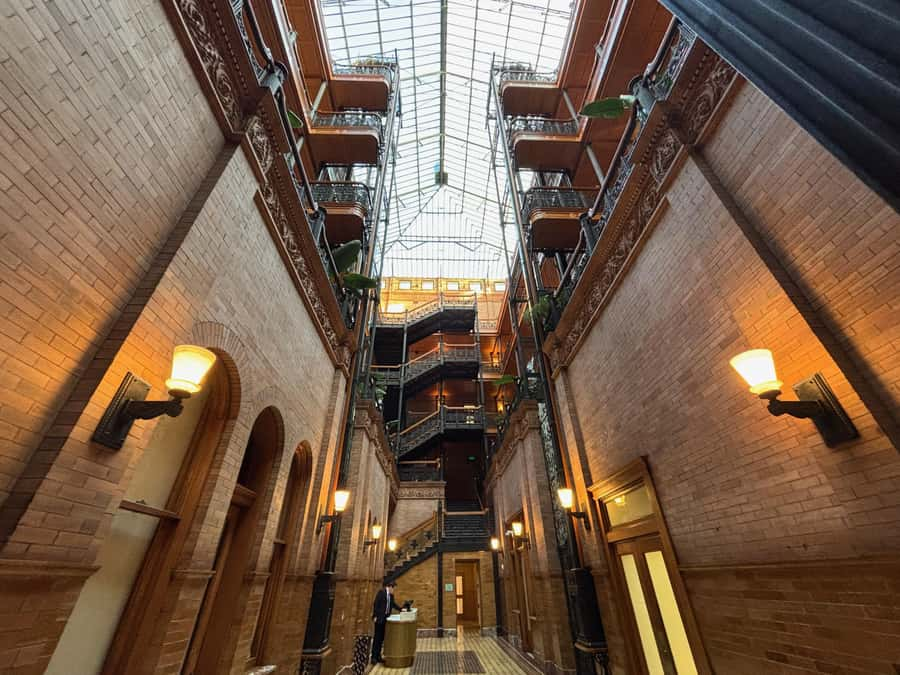
The Bradbury Building is the visual high point for many people. The tour allows about 20 minutes here, enough time to study its famous interior details and hear why the building matters.
Its design brings together the sense of spectacle often associated with Los Angeles and the craft of older architectural traditions. You can expect discussion of its style, history, and place in film culture. The building has appeared in screen stories, which makes it a natural stop on a tour that links architecture with cinema.
This is one of the places where the guide’s ability to connect facts matters. You are not only looking at an ornate interior. You are considering why certain spaces become symbols, why filmmakers return to them, and how a building can acquire a second life through popular culture.
The stop is also practical. Indoor architecture gives you a break from the sun, though you should still dress for the weather because most of the experience takes place outside. A hat, sunscreen, water, and comfortable shoes are sensible choices.
The Last Bookstore and the creative side of DTLA
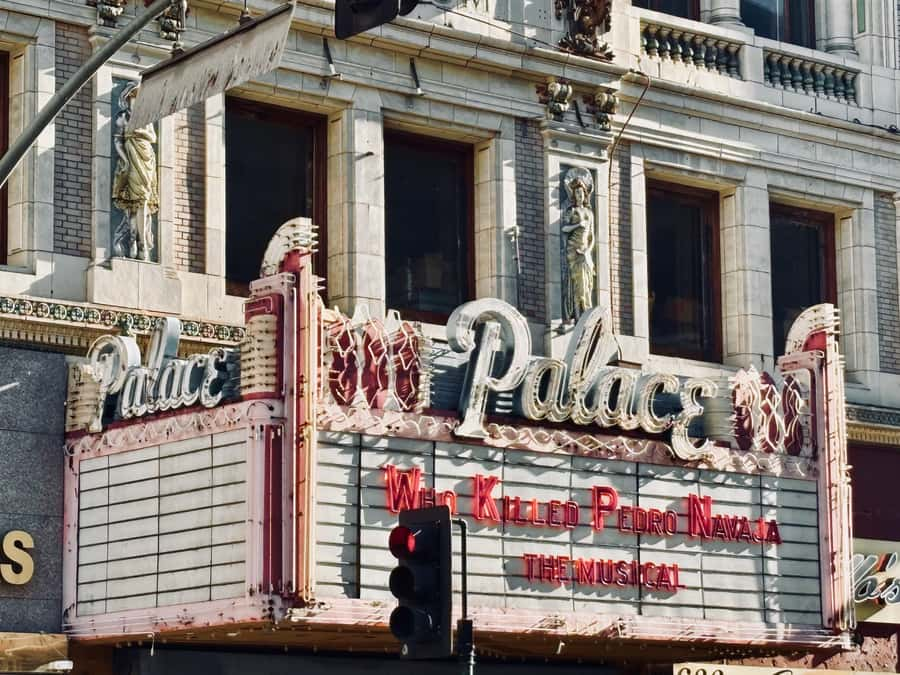
The Last Bookstore provides a different kind of landmark. Its appeal is less about monumental civic design and more about the way an older downtown building can support a contemporary cultural scene.
The tour allows about 20 minutes here. That gives you time to look around and photograph the store’s distinctive interior, though it is not presented as a long shopping visit. It works as a modern counterpoint to the theaters, libraries, and commercial facades seen earlier.
The stop also shows how DTLA has changed without erasing every trace of its past. Older structures can take on new uses, and bookstores, markets, hotels, restaurants, and creative spaces can alter how people experience the center of a city.
If you enjoy architecture but also want a sense of current city life, this stop adds needed variety. It is quirky, photogenic, and more informal than the Bradbury Building. I would not choose the tour solely for the bookstore, but it helps keep the route from feeling like a museum lesson.
Architecture, politics, and the questions between the stops
The most useful parts of the tour may happen while you are walking between major locations. Mark discusses urban design, politics, public spaces, and the social forces that shape buildings.
That approach suited an architect who joined the tour and found the discussion of social factors especially useful. You do not need a professional background, though. The subjects are presented through visible places, so you can follow the conversation by looking at the street around you.
You might discuss why a grand building survives while a neighborhood changes, how downtown projects affect public life, or why Los Angeles developed in a different way from European cities. The tour does not promise a neutral list of dates. It encourages conversation, and that means your experience can change depending on your questions and interests.
This is also why private groups may be worth considering for families of adults, friends, or architecture students. A private format can make it easier to tailor the discussion. For a solo booking or a small shared group, the guide can still adjust the conversation, but the exact level of customization will depend on who attends.
Timing, walking effort, and practical value
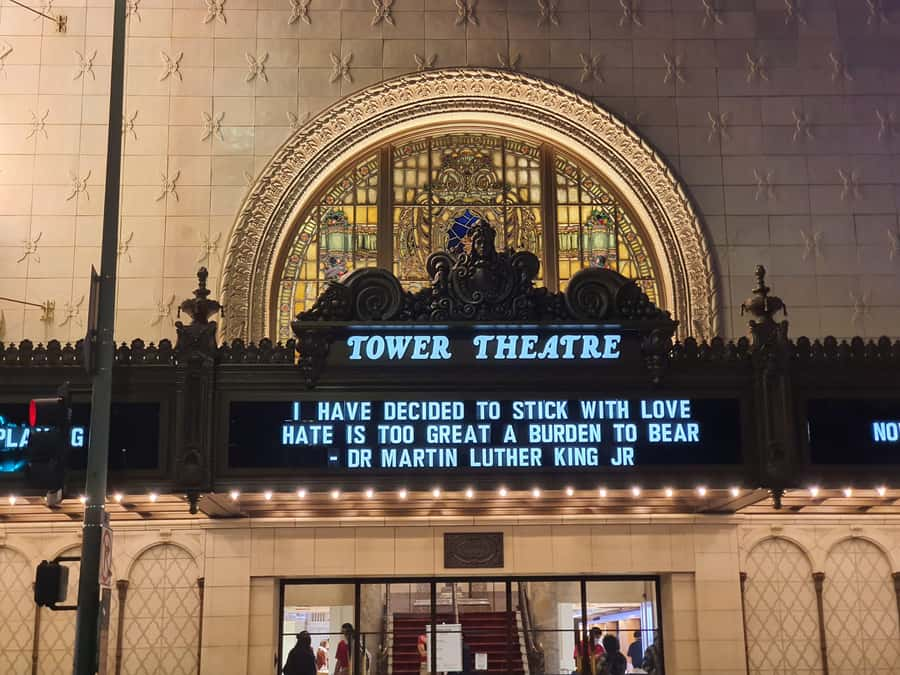
The advertised duration is 150 minutes, though the walk can run longer. That may be welcome if you enjoy a generous explanation, but it matters if you have a tight schedule afterward. Leave some room before your next appointment.
At $30 per person, the price is reasonable for a two-and-a-half-hour guided walk in a major city, especially since the value comes from interpretation rather than admission-heavy sightseeing. You are paying for a local guide who can connect several districts and themes in one route.
The price is less attractive if you want to enter every landmark or spend a long time shopping and eating. This is primarily a walking and storytelling experience. Its value rises if you care about architecture, film, city planning, or understanding why downtown looks the way it does.
Wear walking shoes with good support. Bring water, sunscreen, a hat, and a camera. Check the weather and dress accordingly, since much of the route is outdoors. The nearby Metro station makes the start convenient, but confirm the precise meeting point because it can vary.
English and French are available. Cancellation is free up to 24 hours before the tour, and you can reserve now and pay later, which helps if your Los Angeles schedule is still shifting.
Who should book this DTLA walk
I would recommend it most strongly to adults interested in architecture, film history, urban change, or local stories that do not fit neatly into a standard sightseeing route. It also suits people who want a first orientation to downtown before exploring it independently.
The tour can work well for Los Angeles residents, too. One participant who grew up in California found the route changed their view of the city, which makes sense: local familiarity does not always reveal the forces behind a neighborhood’s design.
It is less suitable if you dislike walking, need step-free access, or want a fast list of photo stops with little discussion. Children under six are not permitted, and the experience is not suitable for wheelchair users or people with mobility impairments.
Should you book it?
Book this tour if you want DTLA explained rather than merely photographed. The best reasons are Mark’s personal connection to the area, his Belgian and international perspective, the strong architecture focus, and the way film history is tied to real streets and buildings.
Skip it if your schedule cannot absorb at least 150 minutes, or if walking in the sun is a problem. For everyone else, $30 buys a thoughtful introduction to a part of Los Angeles that is often misunderstood. You should finish with better photos, more useful context, and a clearer idea of how the city’s past continues to shape its present.
FAQ
How long does the Downtown Los Angeles walking tour last?
The tour lasts 150 minutes, or two and a half hours. It may run longer, so leave some flexibility in your schedule.
Where does the tour begin?
There are two possible starting locations: the Los Angeles Central Library and the Grand Central Market parking garage. The meeting point depends on the option you book.
Where does the tour finish?
The available drop-off locations are the Central Library and Hotel Per La, Autograph Collection.
Which languages are available?
The tour is offered in English and French.
Is the tour private?
A private group option is available. The standard booking details may vary depending on the option selected.
What should I bring?
Bring comfortable shoes, a hat, sunscreen, water, and a camera. Check the weather forecast and dress appropriately.
Can children or wheelchair users join?
The tour is not suitable for children under six, people with mobility impairments, or wheelchair users.
Just added around the USA
- Wilmington History and Architecture Tour★ 4.8 · 18 reviews
- Washington, DC: Georgetown Architecture Walking Tour★ 5.0 · 8 reviews
- New Orleans : Garden District Architecture Walking tour★ 4.8 · 5 reviews
- Washington DC: Dupont Circle & Embassy Row Architecture Tour★ 5.0 · 6 reviews
- Tulsa: Art Deco Walking Tour of Tulsa★ 5.0 · 8 reviews
- Castle to Capitol: Museums of the National Mall Architecture Tour★ 4.5 · 9 reviews
- Private Colonial Williamsburg Architectural Tour★ 5.0 · 5 reviews
- Iconic Capitol Hill Architectural Walking Tour★ 5.0 · 21 reviews
Walking Tours, compared.
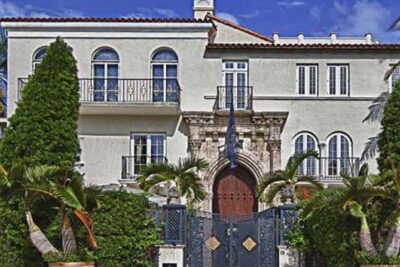
The Official Art Deco Walking Tour by The Miami Design Preservation League
Read our review →
Barcelona: Gothic Quarter Ghosts and Legends Walking Tour
Read our review →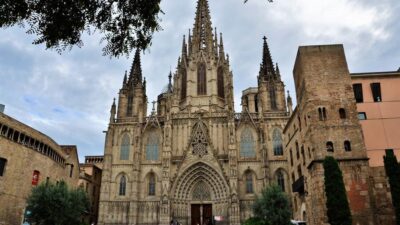
Barcelona: Old Town and Gothic Quarter Walking Tour
Read our review →
Lecce: Baroque Architecture and Underground Walking Tour
Read our review →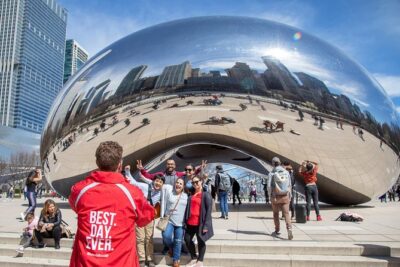
Chicago in a Day: Food, History & Architecture Walking Tour
Read our review →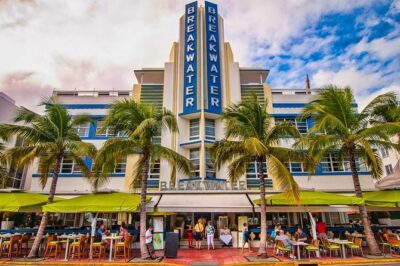
Ramblas, Old Town, Gothic and Gaudi Architecture Walking Tour
Read our review →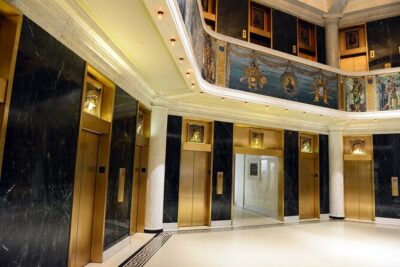
Chicago’s Secret Interiors Architectural Walking Tour
Read our review →Browse the lists this tour appears in