

Review · THE USA
Denver: History and Architecture Walking Tours
Denver’s past is easiest to grasp when you can point to the actual buildings that survived it. On this 90-minute walk, you trace the city’s rise from a rough settlement to a railroad hub, then follow the fortunes of its wealthy families and the citizens who fought to save old blocks from decay.
I like the small groups of up to 10, which leave room for questions, and I like the choice of four routes: LoDo, Capitol Hill, Quality Hill, and Larimer Square. The main caution is that the quality of the guiding may vary. Lois is praised for adding period details and context, while one lower-rated experience found a guide too dependent on notes.
Key points at a glance
- Four distinct routes: Choose between railroad-era LoDo, mansion-filled Capitol Hill, Quality Hill, or historic Larimer Square.
- Union Station starting point: The LoDo route begins at Denver’s landmark railroad station and follows the district’s surprising rise and fall.
- Molly Brown House meeting point: The Capitol Hill walk starts outside one of Denver’s best-known historic homes.
- Small-group format: No more than 10 people join each tour, making questions easier than on a large city walk.
- Strong historical focus: Guides connect buildings with the people, families, and civic efforts behind them.
- Simple $20 value: For 90 minutes of local history and architecture, the price is modest, though food and drinks are not included.
Four ways to read Denver’s past

This is not one fixed route with a few interchangeable stops. You choose a neighborhood, and each option gives you a different picture of Denver.
The Lower Downtown Walking Tour, usually called LoDo, begins at the flagpole in front of Union Station. The setting tells you something right away: rail travel helped turn Denver from a small grouping of tents into a major city. From there, the tour follows LoDo through several stages of its past, including its time as a railroad hub, its decline into skid row, and its later revival as an urban hot spot.
That arc gives the LoDo route a useful sense of change. You are not simply looking at old façades. You are learning how a district can gain importance, lose it, and then find a new purpose. If you want a broad introduction to Denver’s growth and changing fortunes, I would choose this route.
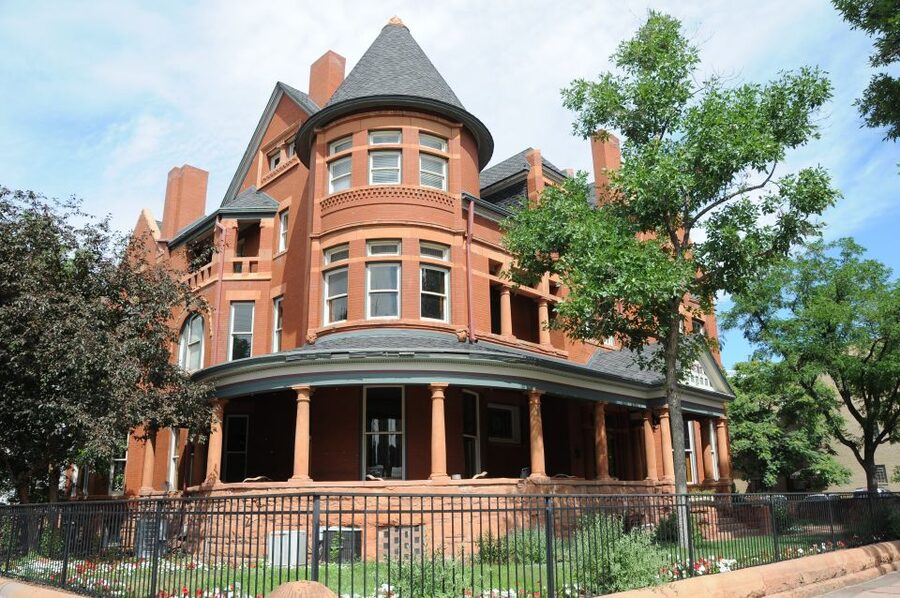
The Capitol Hill Walking Tour begins outside the Molly Brown House Museum. It focuses on historic mansions and the families who lived in them at the end of the 19th century. The appeal here is personal scale. Instead of concentrating mainly on commerce and transportation, you learn how prominent Denver families lived and what their homes reveal about the period.
The Mansion of Quality Hill Tour centers on some of Denver’s most notable residences, including the Governor’s Mansion, Malo Mansion, and Zang Mansion. The route looks at the people behind these homes and the mark they left on the city. This is the best fit if grand residences and the stories of their owners interest you more than railroad history.
The Larimer Square Tour explores Denver’s oldest block. Its most interesting subject is not just the buildings, but the local campaign that saved the block from ruin and helped create Denver’s first historic district. That makes this route a good choice if you want to understand preservation as well as architecture.
Because the routes cover different parts of town, check the selected tour carefully when booking. The meeting point supplied for the activity is the Union Station flagpole, but the Capitol Hill route begins outside the Molly Brown House Museum. The exact starting place depends on the route you choose.
More architecture walks in the USA:
- The Official Art Deco Walking Tour by The Miami Design Preservation League
★ 5.0 · 1,580 reviews - Chicago in a Day: Food, History & Architecture Walking Tour
★ 5.0 · 1,153 reviews - Miami South Beach Art Deco Walking Tour
★ 5.0 · 1,039 reviews
What makes the architecture worth your time
The tour is built around notable buildings, but the buildings are only half the story. A façade can tell you about wealth, taste, and building materials. The guide adds the human part: who commissioned the home, who lived there, and how that person fit into Denver’s growth.
That approach received some of the strongest praise. A good guide does not stop at dates and names. The best explanations place the buildings in their period and explain what else was happening in Denver at the time. Lois, one of the guides, is specifically praised for adding details about both the homes and the wider era.
You may also see pictures used during the explanations. That matters on a walking tour because historic buildings often look different from the way they did when first built. Visual material can help you connect the present structure with its earlier appearance.
The route also gives you a chance to ask questions. One highly rated experience was valued for its explanations, pictures, and answers to questions, which helped make the early story of Denver easier to understand. I would use the small group to ask about a building that catches your eye or about the people linked to a particular address.
There is one balance to keep in mind. One lower-rated experience found the guide too reliant on a notebook and the presentation dull. Another rating asked for more facts. The lesson is simple: the experience depends heavily on the individual guide. The strongest guides make the material conversational and relatable. A less polished presentation may feel more like a prepared reading.
LoDo, from Union Station to urban revival
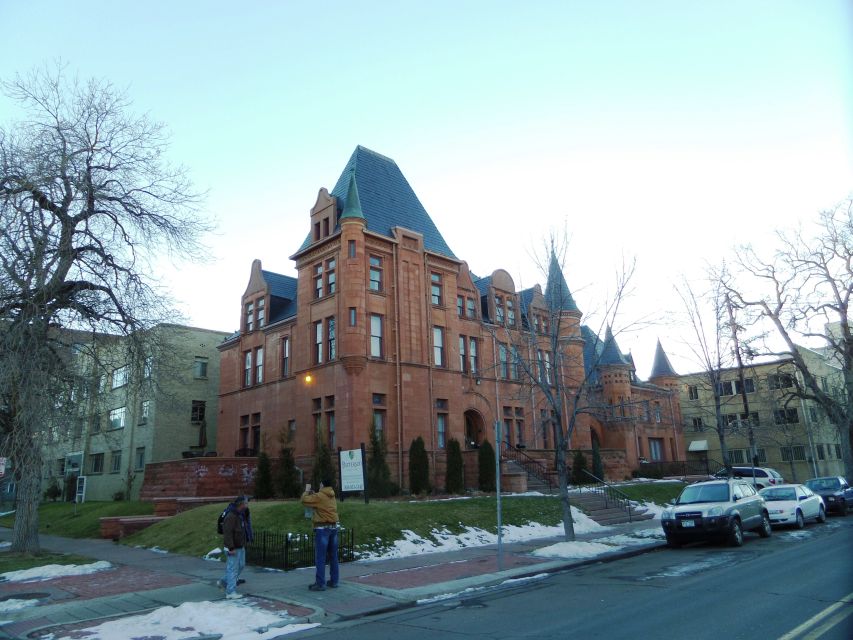
The LoDo route has the clearest citywide story. Begin at Union Station, where the railroad connection frames Denver’s growth. From there, the walk examines how a small settlement became a major transportation center.
The route then follows LoDo through a less glamorous period. The district later became associated with skid row, a reminder that old buildings do not automatically make a neighborhood desirable or prosperous. Understanding that decline helps you see the district’s later renewal in a more grounded way.
The final part of the story is LoDo as an urban hot spot. Rather than presenting redevelopment as a simple success story, the tour gives you a sequence of changes. Denver grew, declined, and changed direction again.
I like this route for first-time visitors because it gives you a useful framework for the city. You leave with more than a collection of building names. You understand why this part of Denver mattered and how its role shifted.
Capitol Hill and the Molly Brown House starting point
Capitol Hill offers a different mood. The walk begins outside the Molly Brown House Museum and moves through historic mansions connected with families who lived in Denver at the end of the 19th century.
The focus is on homes and people rather than a single commercial district. You learn what the residences meant, who occupied them, and how their owners fit into the city’s social and economic life. For anyone interested in domestic architecture, old family fortunes, or the personalities behind Denver’s grand homes, this is a natural pick.
The route is also a good choice if you prefer a neighborhood walk with a strong sense of place. The mansions provide a visual thread, while the guide’s stories add the context that a self-guided stroll can miss.
The limitation is that the route may feel less useful if your main interest is Denver’s earliest settlement or its railroad development. In that case, LoDo or Larimer Square should give you a better match.
More history tours in the USA:
- Charleston’s Best Highlights: History, Culture & Architecture
★ 5.0 · 422 reviews - Palm Springs Modernism Architecture & History Bike Tour
★ 5.0 · 359 reviews - Charleston: History and Architecture Guided Walking Tour
★ 4.8 · 349 reviews - Historic Georgetown: History, Gossip, & Architecture Walking Tour
★ 5.0 · 321 reviews
Quality Hill’s prominent residences
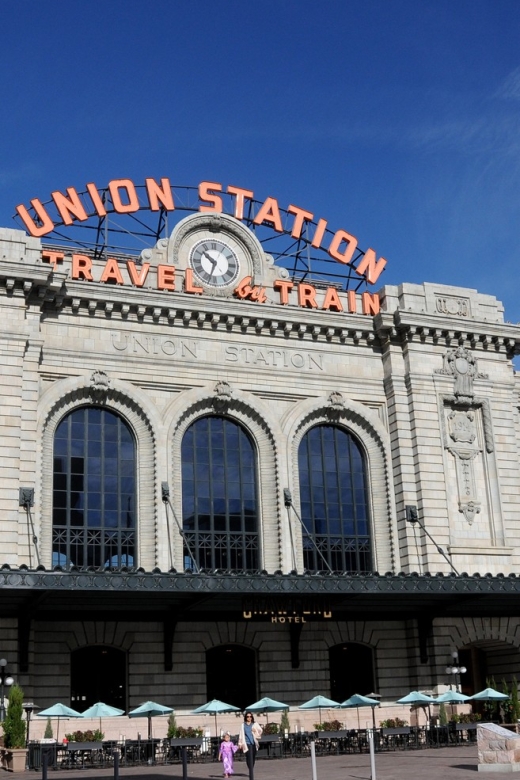
Quality Hill concentrates on major homes, including the Governor’s Mansion, Malo Mansion, and Zang Mansion. The route asks you to look beyond appearance and consider the people who commissioned these residences and the legacy they left in Denver.
This is the most focused architecture option of the four. You get a closer look at grand houses and the people associated with them, rather than a broad tour through several phases of city development.
I would choose Quality Hill if you enjoy comparing residences and hearing how civic influence, wealth, and personal ambition shaped Denver. It should also suit repeat visitors who have already seen the central downtown area and want a more specialized subject.
Keep your expectations practical. The tour lasts 90 minutes, so the guide cannot provide an exhaustive account of every owner or architectural detail. The value comes from a clear selection of homes and stories, not from covering every historic residence in the neighborhood.
Larimer Square and the fight to save an old block
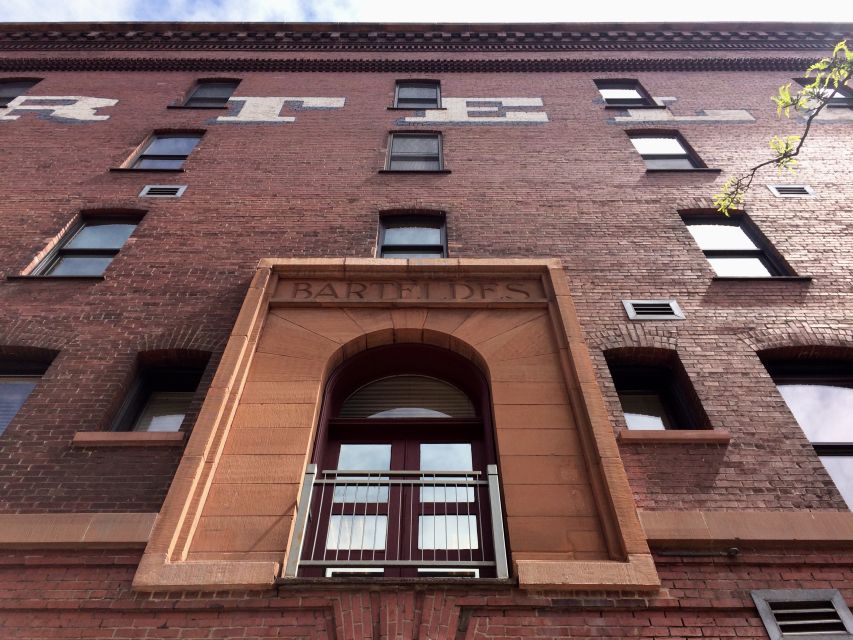
Larimer Square has a particularly useful preservation story. The tour explores Denver’s oldest block and explains how local citizens helped save it from ruin and dilapidation.
That civic effort gives this route more tension than a simple architecture walk. You are not just looking at old buildings that happened to survive. You are learning that preservation required people to recognize the value of the block and act before it disappeared.
The story also helps explain why historic districts matter. A collection of older buildings can provide a sense of continuity, but only if a city chooses to protect it. If you care about urban preservation, Larimer Square may be the most rewarding route.
This option works well for a short introduction to Denver because it combines architecture, local action, and the city’s oldest block in one compact walk. It may be less satisfying if you want a wide survey of many neighborhoods.
A $20 tour with a useful small-group advantage
At $20 per person, this is a reasonable price for 90 minutes with a live English-speaking guide. You are paying for interpretation, not transport, food, or entrance tickets. Since the tour is built around outdoor buildings and streets, the guide’s ability to connect facts and people is the main value.
The group limit of 10 is important. A small group makes it easier to hear the guide, stay together on city sidewalks, and ask questions without holding up a large crowd. It also suits people who prefer a quieter walk to a big, fast-moving city tour.
The price is strongest for visitors who would otherwise wander through these districts without knowing what they are seeing. If you already have a strong background in Denver architecture, you may find the material less necessary, particularly if you want a highly detailed architectural lecture.
There is no food or drink included. Bring water, especially if you are walking in strong sun, and do not treat the $20 price as covering a café stop or museum admission.
Timing, weather, and what to bring

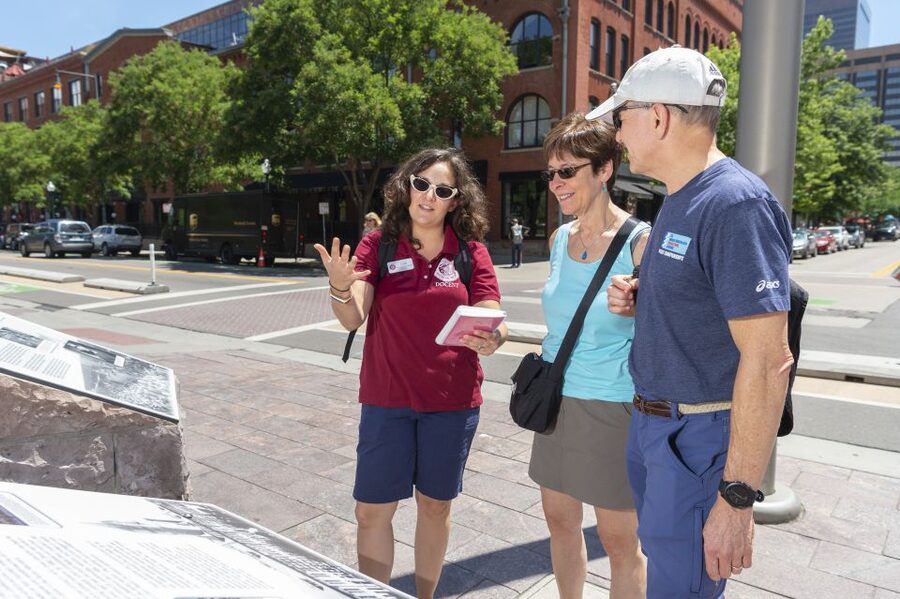
The activity lasts 90 minutes, with starting times varying by availability. Arrive at the meeting point 10 minutes early. At Union Station, look for the flagpole and a guide wearing a maroon polo shirt marked Historic Denver.
All tours operate in rain or shine. That makes clothing a practical concern, not an afterthought. Wear comfortable shoes, bring sunscreen and water, and dress for the weather. A short city walk can feel very different in bright sun, rain, or cold conditions.
The tour is in English. It is also described as wheelchair accessible, but the information separately says it is not suitable for people with mobility impairments. That is an important inconsistency. If you use a wheelchair, walker, or have difficulty with extended walking, contact the provider before booking and ask about the exact route, surfaces, and seating.
Who will get the most from this walk
I would recommend the tour to first-time visitors who want Denver’s story explained through real streets and buildings. It also fits anyone who enjoys architecture but wants the human stories behind the façades.
Families with older children may find the short length manageable, though the appeal depends on how much the children enjoy history and walking. The small group helps if you have questions or prefer not to be lost in a crowd.
Business visitors can also make good use of it. One participant used the tour during a business trip and found it a good way to spend time in Denver while learning about architecture, history, and local people. The 90-minute format fits neatly into a free morning or afternoon.
I would be more cautious if you dislike walking outdoors, need a highly polished theatrical presentation, or want a long technical study of architecture. The guide makes a major difference, and the experience can be more fact-focused or more conversational depending on who leads it.
Should you book the Historic Denver walk?
Book it if you want a reasonably priced, small-group introduction to Denver’s old buildings and the people connected with them. I especially like the choice of four routes. LoDo gives you the broadest story, Capitol Hill focuses on historic families and mansions, Quality Hill concentrates on prominent residences, and Larimer Square explains preservation through one important block.
For the best chance of a satisfying outing, choose the neighborhood that matches your interests and arrive ready to ask questions. The strongest guiding is detailed, visual, and connected to the period. At $20, that makes this a good value for curious visitors who want more than a quick look at old buildings.
FAQ
How long is the Denver history and architecture walking tour?
The tour lasts 90 minutes.
How much does the tour cost?
The price is $20 per person.
Which neighborhoods can I choose?
You can choose the Lower Downtown Walking Tour in LoDo, the Capitol Hill Walking Tour, the Mansion of Quality Hill Tour, or the Larimer Square Tour.
Where does the LoDo tour meet?
The guide meets you at the flagpole in front of Union Station.
Where does the Capitol Hill tour begin?
The Capitol Hill route begins outside the Molly Brown House Museum.
How do I identify the guide?
Guides wear maroon polo shirts marked Historic Denver.
What language is the tour offered in?
The tour is conducted in English.
How large is the group?
The group is limited to 10 participants.
Does the tour operate in bad weather?
Yes. All tours operate in rain or shine, so bring weather-appropriate clothing.
What should I bring?
Bring comfortable shoes, sunscreen, water, and clothing suited to the weather. Food and drinks are not included.
Can I cancel the booking?
You can cancel up to 24 hours in advance for a full refund. You can also reserve now and pay later.
Just added around the USA
- Wilmington History and Architecture Tour★ 4.8 · 18 reviews
- Washington, DC: Georgetown Architecture Walking Tour★ 5.0 · 8 reviews
- New Orleans : Garden District Architecture Walking tour★ 4.8 · 5 reviews
- Washington DC: Dupont Circle & Embassy Row Architecture Tour★ 5.0 · 6 reviews
- Tulsa: Art Deco Walking Tour of Tulsa★ 5.0 · 8 reviews
- Castle to Capitol: Museums of the National Mall Architecture Tour★ 4.5 · 9 reviews
- Private Colonial Williamsburg Architectural Tour★ 5.0 · 5 reviews
- Iconic Capitol Hill Architectural Walking Tour★ 5.0 · 21 reviews
Walking Tours, compared.

The Official Art Deco Walking Tour by The Miami Design Preservation League
Read our review →
Barcelona: Gothic Quarter Ghosts and Legends Walking Tour
Read our review →
Barcelona: Old Town and Gothic Quarter Walking Tour
Read our review →
Lecce: Baroque Architecture and Underground Walking Tour
Read our review →
Chicago in a Day: Food, History & Architecture Walking Tour
Read our review →

Ramblas, Old Town, Gothic and Gaudi Architecture Walking Tour
Read our review →
Chicago’s Secret Interiors Architectural Walking Tour
Read our review →Browse the lists this tour appears in