
Review · COPENHAGEN
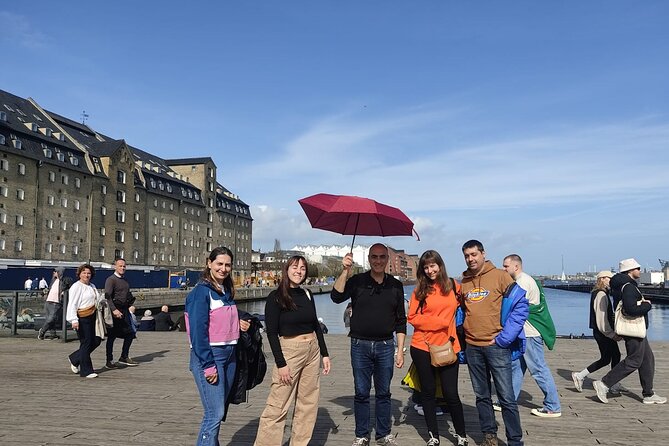
Copenhagen: Harbor Architecture Private Walking Tour
Copenhagen’s harbor is where old port buildings meet bold new design. This private two-hour walk takes you from the colorful canal houses of Nyhavn toward modern waterfront landmarks, including Circle Bridge, the Royal Library, and the Danish Architecture Centre. It is a useful way to see why Copenhagen was named World Capital of Architecture in 2023.
I like the private format, since you can focus on design details that interest you instead of following a large group. I also like the mix of historic streets, converted industrial space, bridges, and public buildings. The main drawback is the price: at $394 for up to two people, this makes the most sense for couples or friends who place a high value on personal guiding. The route also takes place rain or shine and is not suitable for wheelchair users or people with mobility impairments.
Key points to know before you book
- A private walk for up to two people: The $394 group price works out to $197 per person when two people share it.
- Six timed stops: The route includes Ofelia Plads, Nyhavn, Krøyers Plads, Circle Bridge, the Royal Library, and the Danish Architecture Centre.
- A strong old-to-new contrast: You move from 17th-century Nyhavn to recent waterfront architecture and public spaces.
- English or Spanish guiding: You can choose between the two listed tour languages.
- Guide Dalit has earned special praise: Her enthusiasm helped make Copenhagen’s architecture feel more engaging and memorable.
- A one-way city walk: The tour begins near Scandic Hotel on Ofelia Plads and finishes at Islands Brygge, so plan your next stop from there.
Why Copenhagen’s harbor makes a good architecture walk
Copenhagen’s waterfront gives you a clear lesson in how a city can reuse its edge. Old port districts sit beside cultural buildings, footbridges, public squares, and former industrial sites. You do not need to be an architecture specialist to enjoy the route. The interest comes from seeing how buildings affect daily city life.
This tour is especially useful because the guide connects separate sights into one story. Nyhavn shows Copenhagen’s maritime past. Papiroen, mentioned as part of the harbor experience, represents the conversion of former industrial land into a new urban area. The Opera House adds a major cultural building, while Circle Bridge shows how a small piece of infrastructure can become a public attraction.
The route is also a good match for anyone who wants more than postcard views. You will get time to look at façades, bridges, waterfront planning, and the relationship between old and new buildings. The two-hour length keeps the experience manageable, although it also means each stop receives roughly 15 minutes.
More architecture walks in the world:
- Lecce: Baroque Architecture and Underground Walking Tour
★ 4.6 · 1,248 reviews - Chicago in a Day: Food, History & Architecture Walking Tour
★ 5.0 · 1,153 reviews - Ramblas, Old Town, Gothic and Gaudi Architecture Walking Tour
★ 5.0 · 723 reviews
Starting at Ofelia Plads beside Nyhavn
Meet in front of the Scandic Hotel at Sankt Annæ Plads 21, directly on Ofelia Plads. This is a practical starting point because you are already close to Nyhavn, one of Copenhagen’s most recognizable waterfront areas.
Ofelia Plads is a public space beside the harbor, and the opening 15 minutes are designed to set the scene. Your guide introduces the waterfront and begins explaining how Copenhagen uses public space along the water. It is a strong place to begin because you can see the harbor as both a working part of the city and a setting for culture and leisure.
You should arrive ready to walk rather than expecting a formal indoor presentation. Bring water and wear comfortable clothing. The tour is outdoors, and the operator confirms that it runs in all weather, so a rain jacket is a sensible addition even if the forecast looks kind.
Nyhavn: colorful houses with a working-port past
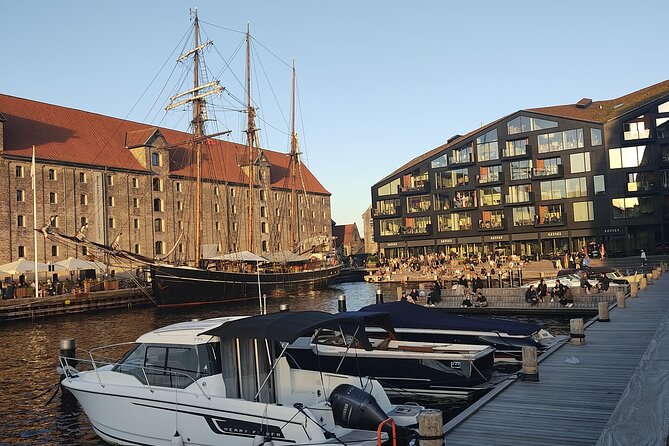
The next 15-minute stop is Nyhavn. Its bright façades and canal-side restaurants make it one of Copenhagen’s easiest places to photograph, but the guide adds useful context beyond the familiar view.
Nyhavn began as a 17th-century waterfront district and served as a busy port. You will hear about its former working life and about artists and writers who lived in the area. That background helps you see the canal as more than a row of colorful buildings. The houses reflect a neighborhood shaped by trade, sailors, restaurants, and changing city life.
The short time here is enough for an overview, not a long historical walk. If you want detailed stories about individual buildings, ask your guide early. On a private tour, you have a better chance of shaping the conversation around architecture, local history, or photography.
Nyhavn can also be crowded and lively, particularly around the restaurants. That is part of its appeal, but it may make careful façade study harder than at the quieter stops. Keep your attention on the upper floors, rooflines, and the way the canal frames the buildings.
Krøyers Plads and the new harbor edge
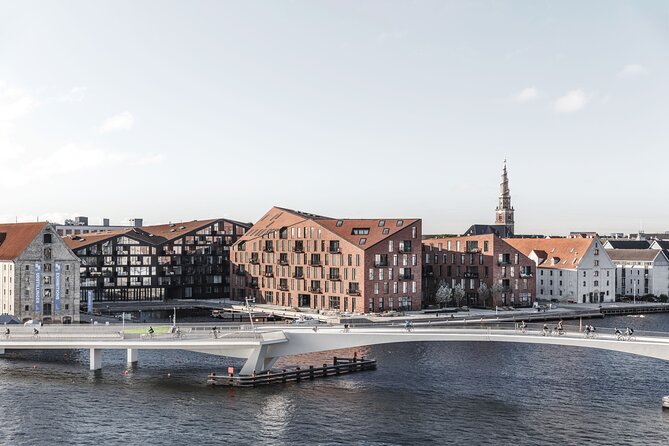
From Nyhavn, the walk continues to Krøyers Plads for another 15-minute guided stop. This section shifts the focus toward newer development and the way Copenhagen has built around the harbor without losing its older scale.
The supplied route places Krøyers Plads between Nyhavn and Circle Bridge, making it a useful transition point. You are no longer looking only at historic canal houses. Instead, the guide can show how new buildings, open spaces, and the water work together.
This is one of the places where a private guide adds value. Architecture can be easy to reduce to labels such as old or modern. A good explanation helps you notice proportions, materials, public access, and the way buildings shape your view of the harbor. You can also ask how the newer area relates to Copenhagen’s older waterfront districts.
The route description also highlights Papiroen, a former paper mill transformed into a new neighborhood and public gathering area. The area is presented as a way to preserve industrial character while creating a modern urban setting. If Papiroen is included in your specific walk, ask the guide how its past influenced the new development, since the timed itinerary lists Krøyers Plads rather than Papiroen as a separate stop.
More private architecture tours in the world:
- Best of Chicago: Architecture & Highlights City Private Tour
★ 5.0 · 94 reviews - Private Harajuku Omotesando Architecture Walking Tour
★ 5.0 · 67 reviews - Private Santa Barbara History and Architecture Walking Tour
★ 5.0 · 56 reviews - Private Barcelona Modernism and Gaudí Walking Tour
★ 4.7 · 54 reviews
Operaen and the harbor’s cultural identity
Operaen, Copenhagen’s Opera House, is another major architectural feature described as part of the harbor experience. The building was completed in 2005 and quickly became an important cultural landmark.
Its waterfront position matters. The Opera House was designed in relation to the harbor and Denmark’s cultural identity, so it is not simply a large performance venue placed beside the water. From outside, you can consider how its broad form and location create a visual counterpoint to the older districts across the harbor.
The detailed stop list does not assign Operaen its own 15-minute segment, so you should treat it as a view or discussion point rather than assume an interior visit. The tour includes walking and guiding only. Food, drinks, hotel pickup, and hotel drop-off are not included.
For architecture fans, the Opera House can be one of the most rewarding subjects on the route. For casual visitors, it is also an easy way to understand Copenhagen’s modern cultural ambitions without committing to a performance.
Circle Bridge: a small bridge with a big presence
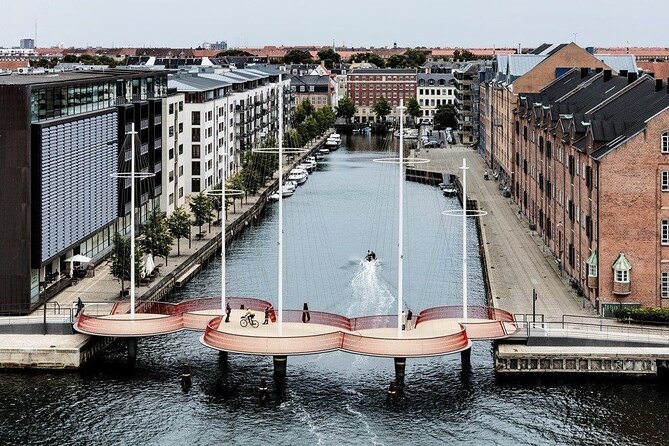
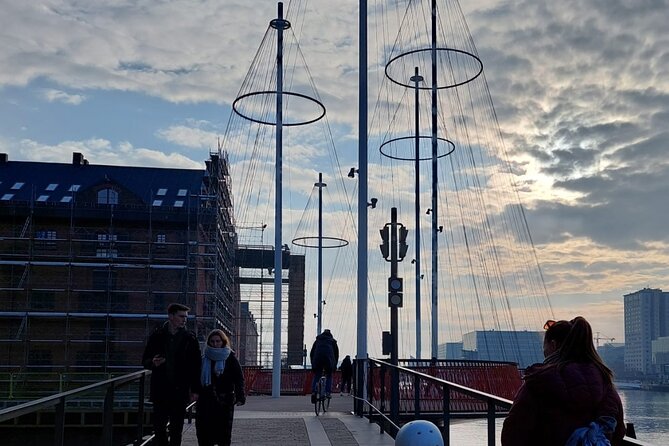
Circle Bridge receives its own 15-minute guided stop. This pedestrian bridge is designed around a series of circular forms, with the concept linked to the circles of life. It connects the two sides of the harbor while giving pedestrians a distinct architectural experience.
I like this stop because it shows that good city design is not limited to museums or monumental buildings. A bridge must work. It must carry people across the water. Circle Bridge also adds shape, rhythm, and a reason to pause.
Your guide can explain the bridge’s design and how it functions as part of the waterfront. You will have time for photographs and for noticing how people use the crossing. The bridge is also a nice change of scale after larger buildings such as the Opera House.
The route is a walking tour, so the bridge may require some care if the weather is wet. The operator specifically says the experience is not suitable for wheelchair users or people with mobility impairments. If you have concerns about steps, surfaces, or walking distance, ask before booking.
The Royal Library: a worthwhile photo stop
The Royal Library of Denmark is listed as a 15-minute photo stop. This is different from the guided stops, so you should not expect a full museum visit or an extended interior tour.
The library gives the walk another architectural contrast. After the canal houses, public squares, and bridge, you reach a major national cultural building by the water. A photo stop lets you pause, take in the exterior, and use the harbor as part of the composition.
This is also a good point to ask questions about the role of public buildings in Copenhagen. The route is not only about attractive façades. It shows how libraries, cultural venues, bridges, and former industrial areas all help shape the waterfront.
Bring a phone or camera if photography matters to you. The tour promises plenty of opportunities for photographs, but the guide’s attention is shared across the whole route. A private group gives you a better chance to pause briefly for a picture than a large scheduled group would.
Danish Architecture Centre and the walk to Islands Brygge
The final guided stop is the Danish Architecture Centre, often called DAC, at the waterfront. The tour ends at Islands Brygge 4, 2300 Copenhagen, Denmark.
The Danish Architecture Centre is a fitting final subject because it focuses directly on architecture and city development. You can use the final section of the walk to bring together the ideas introduced earlier: historic port districts, new housing and public spaces, cultural buildings, bridges, and the reuse of industrial areas.
The itinerary describes DAC as a guided tour stop, but the activity is sold as a walking tour and does not list admission tickets. Do not assume that an indoor exhibition visit is included unless the operator confirms it. The safest expectation is an exterior or area-based discussion connected to the center.
Ending at Islands Brygge is useful if you plan to continue exploring Copenhagen’s waterfront. It is less convenient if your next stop is back near Nyhavn, since the tour is one-way. You may need public transportation or another walk afterward, although transport is not included.
What the private format is worth
The price is $394 per group of up to two people. If two people share the booking, that is $197 each. This is a high cost for a two-hour walking tour, so the value depends on how much you want personal attention.
You are paying for a private guide rather than a ticketed attraction. That matters most if you have a particular interest in modern architecture, urban planning, photography, or Copenhagen’s harbor redevelopment. You can ask questions, spend more time at the buildings that interest you, and avoid being tied to a large group’s pace.
The value is less convincing if you simply want a general introduction to Copenhagen. Much of the route can be viewed independently, and the activity does not include food, drinks, transport, hotel pickup, or admission. In that case, compare the price with a standard city walk or a self-guided harbor visit.
The small group size also makes the tour more personal. Guide Dalit received especially warm praise for her enthusiasm, while another booking described the guide as exceptionally well informed. Guide assignments can change, so treat Dalit’s involvement as a possibility rather than a guarantee.
Who should book this harbor walk
I would recommend this tour to couples, friends, and architecture-minded visitors who want a focused introduction to Copenhagen’s waterfront. It is also a good choice early in your stay, since you will see several areas that may help you decide where to return later.
You will get the most from it if you enjoy asking questions. The route covers a lot in two hours, and the private setting gives you the chance to steer the discussion toward design, history, public spaces, or photography.
This is not the best fit if you need a seated experience, have limited mobility, or want extensive time inside museums. It is also not ideal for anyone hoping for a bargain. The walk is outdoors in all weather, and each main stop has a short time allotment.
The tour is available in English and Spanish. Cancellation is free up to 24 hours before the start, and you can reserve now and pay later, which helps if your Copenhagen plans are still shifting.
Should you book the Copenhagen harbor architecture tour?
Book it if you want a private, guide-led look at how Copenhagen’s waterfront has changed from port district to modern cultural center. The best parts are the old-to-new progression, Circle Bridge, the public-space focus, and the chance to ask direct questions.
Skip it if $394 feels too steep for two hours, if you want indoor attractions, or if the one-way route and all-weather walking do not suit your plans. For the right audience, though, this is a focused and thoughtful way to see Copenhagen’s harbor beyond the usual postcard view.
FAQ
How long is the Copenhagen Harbor Architecture Private Walking Tour?
The tour lasts two hours.
Where does the tour begin?
It begins in front of the Scandic Hotel on Ofelia Plads, at Sankt Annæ Plads 21.
Where does the tour finish?
The walk finishes at Islands Brygge 4, 2300 Copenhagen, Denmark.
What places are included on the route?
The route includes Ofelia Plads, Nyhavn, Krøyers Plads, Circle Bridge, the Royal Library of Denmark, and the Danish Architecture Centre.
Is the tour private?
Yes. It is a private group tour for up to two people.
What languages are available?
The live guide is available in English or Spanish.
Is hotel pickup included?
No. Hotel pickup and drop-off are not included.
What should I bring?
Bring water and wear comfortable clothing. The tour takes place rain or shine.
Is the tour suitable for wheelchair users?
No. The activity is not suitable for wheelchair users or people with mobility impairments.
Just added around the world
- Wilmington History and Architecture Tour★ 4.8 · 18 reviews
- Washington, DC: Georgetown Architecture Walking Tour★ 5.0 · 8 reviews
- New Orleans : Garden District Architecture Walking tour★ 4.8 · 5 reviews
- Washington DC: Dupont Circle & Embassy Row Architecture Tour★ 5.0 · 6 reviews
- Vicenza: discovering the city of Palladio by e-bike★ 5.0 · 4 reviews
- Vicenza: Palladian Architecture Private Walking Tour★ 3.3 · 3 reviews
- Walk & Discover KL’s Architectural and Heritage Gems★ 5.0 · 7 reviews
- Unveiling Brno: History, Culture & Architectural Delights★ 5.0 · 2 reviews
Walking Tours, compared.

The Official Art Deco Walking Tour by The Miami Design Preservation League
Read our review →
Barcelona: Gothic Quarter Ghosts and Legends Walking Tour
Read our review →
Barcelona: Old Town and Gothic Quarter Walking Tour
Read our review →
Lecce: Baroque Architecture and Underground Walking Tour
Read our review →
Chicago in a Day: Food, History & Architecture Walking Tour
Read our review →

Ramblas, Old Town, Gothic and Gaudi Architecture Walking Tour
Read our review →
Chicago’s Secret Interiors Architectural Walking Tour
Read our review →Browse the lists this tour appears in