
Review · THE USA
Boston: Freedom Trail History and Architecture Walking Tour
Boston’s past is packed into a short downtown walk, and this tour gives you the basic map fast. In 70 minutes, you’ll follow the Freedom Trail from Faneuil Hall toward Boston Common, passing churches, meeting houses, cemeteries, civic buildings, and a schoolhouse site along the way. The changing architecture is as important as the famous events.
I like the clear point-to-point route, and I like the local storytelling, especially when a guide such as Allan takes time to answer questions. The main consideration is speed: many important sites appear in a short session, so you get a useful introduction rather than a full visit inside each place. Strong English skills help, since the tour is offered in English only.
Key points of the Freedom Trail walk
- Faneuil Hall to Boston Common: Follow a central stretch of the Freedom Trail on foot, ending near one of Boston’s best-known public spaces.
- Several landmark exteriors and sites: See the Old and New State House, King’s Chapel, the Old South Meeting House, and the Old Granary Cemetery.
- Architecture across different eras: Compare colonial religious buildings, civic structures, old commercial spaces, and newer city additions.
- Stories beyond the headline events: The route includes the Boston Massacre Site, the First Schoolhouse Site, the Irish Famine Memorial, and other smaller markers.
- A guide-led introduction: A local English-speaking guide provides the context that helps you understand how downtown Boston developed.
- Low-risk booking: The $30 price includes the professional guide, with cancellation available up to 24 hours before the tour.
Why this short Boston tour works
The Freedom Trail can look simple on a map: a marked path through downtown, linking famous locations. In practice, the city’s streets turn the route into a series of historical layers. A church may sit beside a modern office building. A cemetery can appear in the middle of the business district. A small plaque may mark an event that changed the course of American history.
That is where this tour earns its keep. You are not just walking from one red-brick building to another. You are being shown how Boston’s political, religious, commercial, and civic life developed in a tight urban area. The guide helps connect the pieces, which matters when you have only a morning or limited time in the city.
At $30 per person, the tour is priced as a short orientation rather than an all-day historical program. I consider that fair if you want a quick introduction before exploring on your own. The value comes from the guide’s explanations and the efficient route, not from entry to a long list of interiors. The supplied details identify a professional local guide, but they do not promise admission into every building.
More architecture walks in the USA:
- The Official Art Deco Walking Tour by The Miami Design Preservation League
★ 5.0 · 1,580 reviews - Chicago in a Day: Food, History & Architecture Walking Tour
★ 5.0 · 1,153 reviews - Miami South Beach Art Deco Walking Tour
★ 5.0 · 1,039 reviews
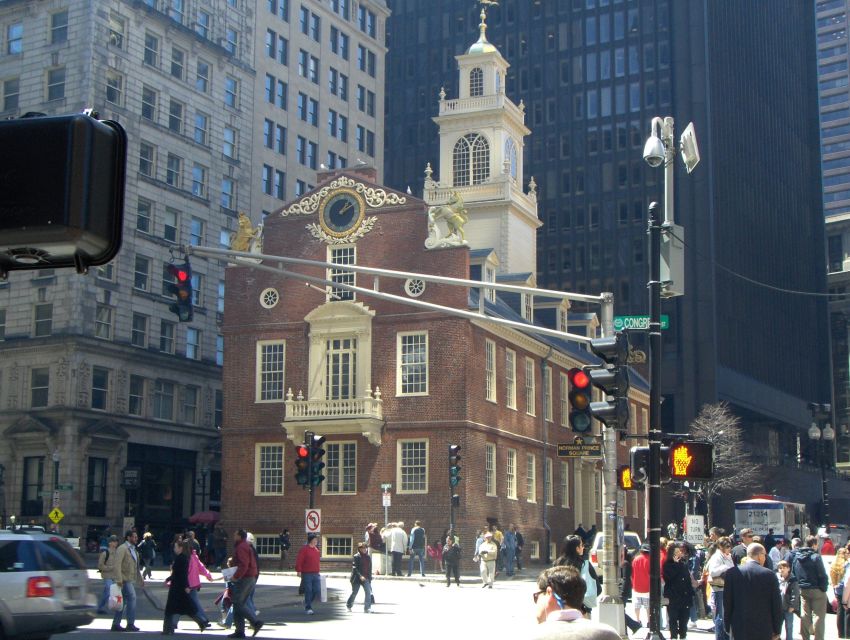
Starting outside the Old State House
The meeting point is the northwest corner of State and Congress Streets, outside 28 State Street, near Citizens Bank and across from the Old State House. This is a practical downtown location, but you should allow a few minutes to find the exact corner. The Old State House is a useful visual landmark.
The Old State House is one of the key places on the route because it represents Boston’s colonial government and public life. Across from it, the Boston Massacre Site brings the city’s revolutionary tension into focus. These are close together, yet they tell different parts of the story: one concerns government and authority, while the other points to public conflict and the events that helped push the colonies toward independence.
You will likely begin with context about how Boston was first settled and how the downtown area changed over time. That opening matters. Without it, the trail can feel like a string of unrelated stops. With it, the buildings and markers begin to fit into a larger timeline.
Faneuil Hall and the city’s public voice
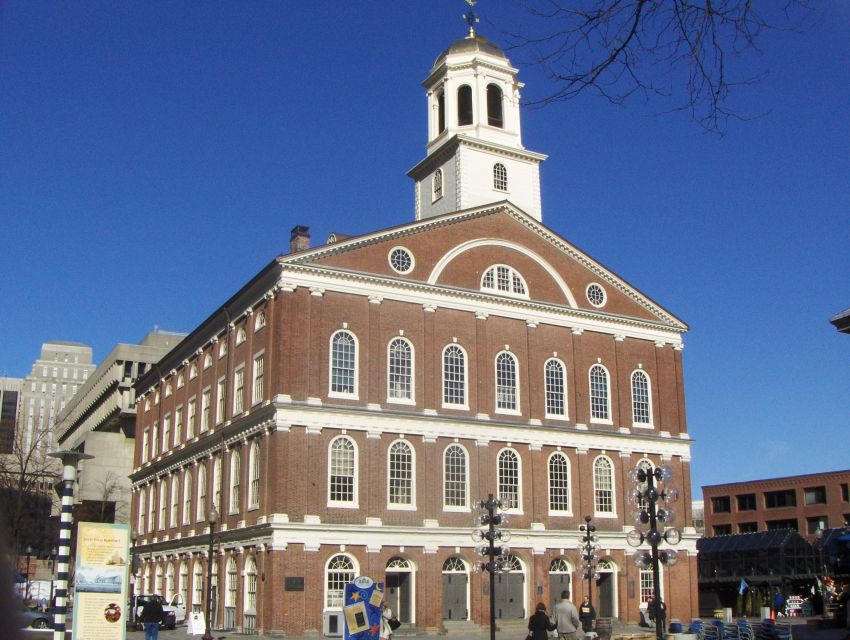
Faneuil Hall is among the best-known stops on the walk. Its importance is not only architectural. It is tied to public debate, trade, speeches, and the political life of Boston.
From here, the tour uses the nearby streets to show how the old city meets the present-day downtown. You’ll pass through an area where historic facades and modern commercial life share the same blocks. That contrast is one of the most useful parts of the experience for first-time visitors.
I like this section because it gives you a quick sense of Boston as a working city, not just a museum. The Freedom Trail runs through places where people still shop, work, commute, and eat. You get historical context without being cut off from modern Boston.
Faneuil Hall can also be busy, and the downtown setting may make it harder to hear at moments. Since the walk is short, a large amount of information may come quickly. If you prefer slow, detailed interpretation at every stop, you may want to return later with extra time.
The Old and New State Houses
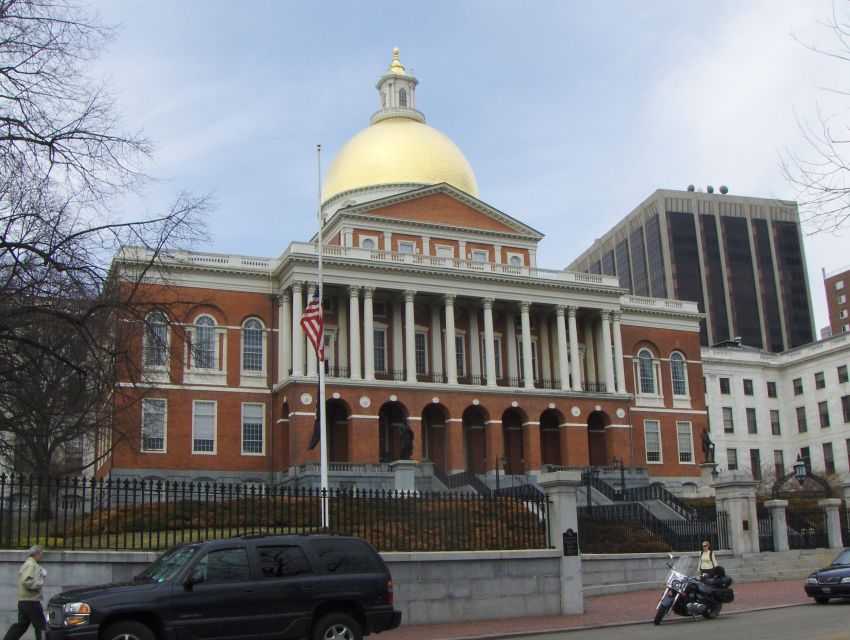
The Old State House helps explain Boston’s colonial government. The New State House shows a later stage in the city’s civic development. Seeing both on the same walk gives you a simple way to track political change through buildings.
The point is not just that one structure is older than the other. Their presence on the route helps show how Boston’s government grew and changed as the city moved from colonial rule into the American republic and later civic life.
The tour’s architecture focus is useful here. You can look at scale, materials, decorative details, and the way each building relates to the surrounding streets. You do not need a background in architecture to benefit. The guide’s job is to point out what you might otherwise walk past.
Because the entire experience lasts only 70 minutes, expect an overview rather than a technical building study. You’ll get the broad meaning of these structures and their place in Boston’s story, but you will not have time for a long examination of every design feature.
More history tours in the USA:
- Charleston’s Best Highlights: History, Culture & Architecture
★ 5.0 · 422 reviews - Palm Springs Modernism Architecture & History Bike Tour
★ 5.0 · 359 reviews - Charleston: History and Architecture Guided Walking Tour
★ 4.8 · 349 reviews - Historic Georgetown: History, Gossip, & Architecture Walking Tour
★ 5.0 · 321 reviews
King’s Chapel and the Old South Meeting House
Religious buildings play a major role along this part of the Freedom Trail. King’s Chapel and the Old South Meeting House show how faith, public life, and politics were closely linked in early Boston.
King’s Chapel adds a different architectural note to the walk. Its setting helps you see how a formal religious institution fit into the older city. The Old South Meeting House, meanwhile, is tied to public gathering and political action. It is one of the places where the story of Boston’s revolutionary period becomes more immediate.
I find this pairing especially helpful because it prevents the tour from becoming only a list of military and political events. Boston’s development also depended on congregations, public meetings, education, trade, and everyday community life.
You should treat these locations as stops for explanation rather than assume the tour includes a full interior visit. The supplied details name them as places you encounter along the walk, but they do not state that admission is included. If entering the buildings is important to you, plan to check their opening arrangements separately.
Old Granary Cemetery and the First Schoolhouse Site
The Old Granary Cemetery is one of the route’s most striking urban contrasts. A burial ground in the middle of downtown reminds you how compact early Boston was. The city grew around older sites rather than clearing every trace of the past.
A guide can make a cemetery stop more meaningful by explaining who is connected to it and why the site matters. The tour description specifically includes Boston’s development from its earliest settlement through the present, so this is a natural place to connect personal stories with the city’s wider growth.
The First Schoolhouse Site adds another everyday piece of the story. It shifts attention from famous leaders and dramatic events to education and community institutions. Small markers like this can be easy to miss when you explore alone, particularly when you are focused on the major buildings.
The drawback is that short walking tours cannot give every minor site equal time. You may receive a concise explanation and then move on. I see that as a benefit if you want a broad introduction, but less so if you already know Boston and want detailed cemetery or genealogy information.
Old City Hall, Old Corner Bookstore, and the Irish Famine Memorial
The Old City Hall and Old Corner Bookstore widen the story beyond the colonial period. They show Boston as a city that kept changing after the Revolution, with new civic needs, commercial activity, publishing, and public institutions.
The Old Corner Bookstore is especially useful for understanding downtown as a center of books, ideas, and business. Its name points to a commercial past that is easy to overlook when the Freedom Trail is presented only as a Revolutionary War route.
The Irish Famine Memorial adds another perspective. It brings immigration and the experience of Irish communities into the walk, helping you see that Boston’s identity was shaped by more than its colonial founders. This is one of the details that makes the route feel connected to Boston’s wider culture rather than locked in the eighteenth century.
Together, these stops give the tour a wider time span. You move from early settlement and revolution into city government, business, immigration, and modern urban life. That range is one reason the walk can be useful even if you have already seen photographs of the main Revolutionary sites.
Finishing at Boston Common
The walk ends at Boston Common, a natural place to pause after a concentrated hour of history. The Common gives you room to think about the shift from narrow downtown streets to a large public green space.
Ending here also makes the tour practical for the rest of your day. You can continue exploring Boston on foot, use the Common as a reference point, or simply take a break. The tour does not need to end with a grand finale. Its strength is the way it leaves you oriented in the city.
You should expect a brisk pace, though the supplied information does not give a walking distance or accessibility description. Wear comfortable shoes, and avoid planning a tight appointment immediately afterward. Historic streets can slow a group down, and the guide may pause for questions.
The guide makes the difference
The strongest praise is aimed at the guide’s manner and ability to handle questions. Allan is specifically named as personable and well informed, and one family found the tour worked well for teenagers because the guide answered every kind of question with patience and politeness.
That point matters. A short history walk can feel dry if the guide simply recites dates. A patient guide can adjust explanations, keep younger people involved, and make room for questions without losing the group.
The tour is conducted in English, and one German-speaking participant found that strong English was important to avoid falling behind. That is useful advice, not a criticism of the route. If you are comfortable following spoken English for 70 minutes, you should be able to get much more from the explanations. If not, the rapid movement between sites and subjects may make the experience difficult.
The overall rating is 4.8 from 18 reviews, with several short but very positive comments and one more cautious comment about English comprehension and the number of subjects covered. I would read that pattern as a sign of a friendly, effective introduction, with the usual limits of a compact city walk.
Who should book this Freedom Trail walk?
I would choose this tour if you are visiting Boston for the first time, have only one morning, or want the downtown landmarks explained before exploring independently. It also suits families with older children or teenagers, especially if your group benefits from being able to ask questions.
It is a good fit for history beginners because the route gives you a framework. Afterward, you can decide which places deserve a longer visit. It also suits architecture fans who want to compare buildings from different periods without committing to a long specialist tour.
I would be more cautious if you want detailed interior visits, a slow photography walk, or an exhaustive account of Boston’s past. The 70-minute schedule covers many sites, so the experience favors breadth, clear orientation, and storytelling over extended time at any one building.
The price is reasonable for that purpose. You are paying $30 for a local guide and a compact route through some of central Boston’s most important sites. If you plan to explore the Freedom Trail alone anyway, the tour’s value depends on how much you want interpretation. If you want the context but not a full-day commitment, it makes sense.
Practical details before you go
The tour is offered in English with a live guide. The meeting point is outside 28 State Street at the northwest corner of State and Congress Streets, across from the Old State House. Use the Old State House as your visual check, but still confirm the exact corner before the start.
The duration is 70 minutes, and starting times vary, so check availability when booking. The price is $30 per person. You can reserve now and pay later, which is useful if your Boston plans are still shifting.
Cancellation is free up to 24 hours in advance for a full refund. That gives you some room to adjust around weather or a changing schedule, though the supplied details do not describe a weather policy.
Should you book it?
Book this walk if you want a short, guided introduction to Boston’s central history, with architecture and local culture included. It is especially useful at the start of a Boston visit, before you return to the Old State House, meeting houses, cemeteries, or Boston Common on your own.
Skip it if you want extensive time inside each landmark or need a tour in a language other than English. For most first-time visitors who value clear context, a friendly guide, and a manageable price, this 70-minute Freedom Trail walk is a practical way to get your bearings fast.
FAQ
How much does the Boston Freedom Trail walking tour cost?
The tour costs $30 per person and includes a professional local guide.
How long does the tour last?
The walking tour lasts 70 minutes.
What language is the tour conducted in?
The tour is conducted in English with a live English-speaking guide.
Where does the tour meet?
The meeting point is the northwest corner of State and Congress Streets, outside 28 State Street at Citizens Bank, across from the Old State House.
Where does the walking route go?
The route follows the Freedom Trail from the Faneuil Hall area toward Boston Common, passing major sites in downtown Boston.
Which landmarks can you see on the tour?
The route includes the Old and New State House, Faneuil Hall, the Boston Massacre Site, Park Street Church, King’s Chapel, the Old South Meeting House, the Old Granary Cemetery, Old City Hall, the First Schoolhouse Site, the Old Corner Bookstore, Boston Common, and the Irish Famine Memorial, among others.
Can you cancel for a refund?
Yes. You can cancel up to 24 hours in advance for a full refund.
Can you reserve the tour and pay later?
Yes. The booking option allows you to reserve your place and pay later.
Just added around the USA
- Wilmington History and Architecture Tour★ 4.8 · 18 reviews
- Washington, DC: Georgetown Architecture Walking Tour★ 5.0 · 8 reviews
- New Orleans : Garden District Architecture Walking tour★ 4.8 · 5 reviews
- Washington DC: Dupont Circle & Embassy Row Architecture Tour★ 5.0 · 6 reviews
- Tulsa: Art Deco Walking Tour of Tulsa★ 5.0 · 8 reviews
- Private Colonial Williamsburg Architectural Tour★ 5.0 · 5 reviews
- Castle to Capitol: Museums of the National Mall Architecture Tour★ 4.5 · 9 reviews
- Iconic Capitol Hill Architectural Walking Tour★ 5.0 · 21 reviews
Walking Tours, compared.

The Official Art Deco Walking Tour by The Miami Design Preservation League
Read our review →
Barcelona: Gothic Quarter Ghosts and Legends Walking Tour
Read our review →
Barcelona: Old Town and Gothic Quarter Walking Tour
Read our review →
Lecce: Baroque Architecture and Underground Walking Tour
Read our review →
Chicago in a Day: Food, History & Architecture Walking Tour
Read our review →

Ramblas, Old Town, Gothic and Gaudi Architecture Walking Tour
Read our review →
Chicago’s Secret Interiors Architectural Walking Tour
Read our review →Browse the lists this tour appears in