
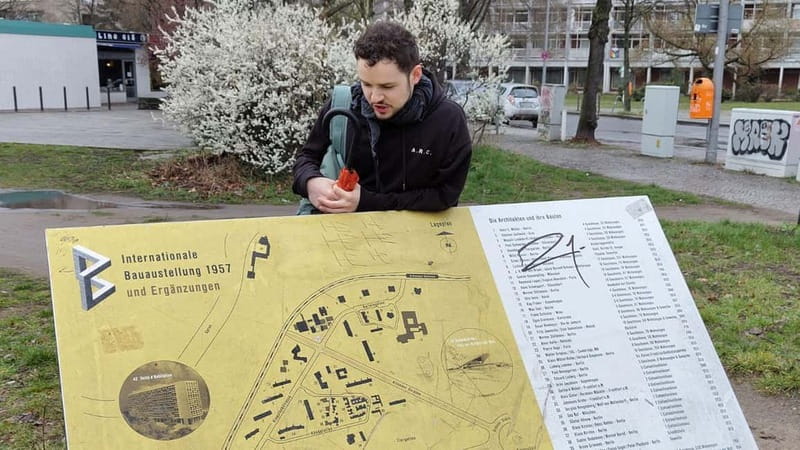
Review · BERLIN
Berlin: Hansaviertel Modernist Architecture Tour
Berlin’s Hansaviertel is where postwar architecture became Cold War politics. In two hours, you move from elegant 19th-century villas and riverside quiet to bold apartment blocks designed by Walter Gropius, Oscar Niemeyer, Alvar Aalto, and other major architects.
I like the tour’s unusual mix of Jewish history and modern design, and I like that it explains how buildings were meant to shape daily life, not just how they look. The main consideration is pace: you’ll spend about two hours walking and standing, with little reason to expect interior access to the homes.
I also appreciate the clear structure. The guide begins with Berlin’s past, then moves toward the 1957 Interbau housing exhibition, so the new buildings make sense rather than appearing as a row of disconnected oddities. Guides work in English or German, and one especially praised guide from Texas is noted for speaking excellent German.
Key points at a glance
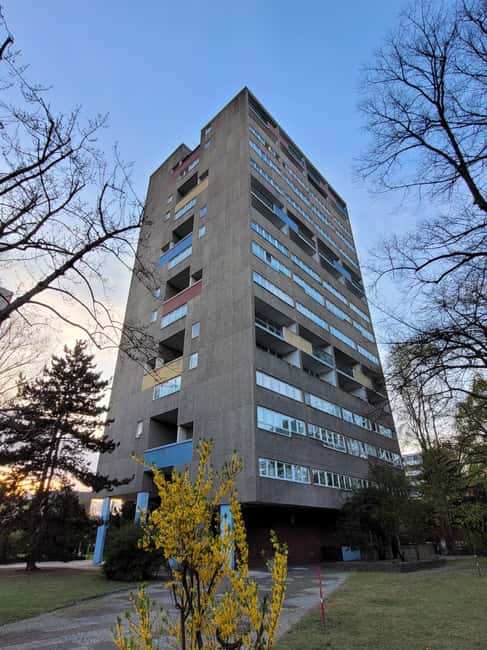
- Cold War architecture in real residential streets: See how West Berlin used modern housing to present a different future from East Berlin.
- A full neighborhood story: The walk connects 19th-century villas, Jewish life, Nazi persecution, wartime destruction, and postwar rebuilding.
- Major architects on one route: Look for work associated with Gropius, Niemeyer, Aalto, and other modernist figures.
- A quiet setting: Hansaviertel lies between the Spree and Tiergarten, far calmer than Berlin’s main sightseeing corridors.
- A good value at $29: The price covers a live two-hour guide, with no museum tickets or meals added.
- Best for older children and adults: The subject matter is serious, and the walk is recommended for ages 14 and up.
Starting beside the Tiergarten S-Bahn station
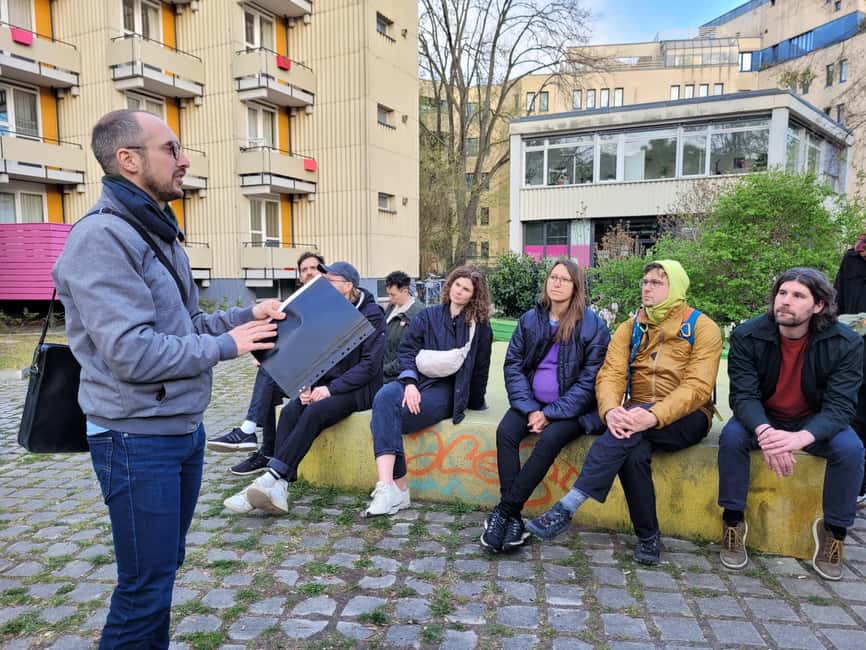
The tour begins in front of the Berlin-Tiergarten S-Bahn station, at the Siegmunds Hof and Bachstraße exit. Look for the guide with the orange umbrella, beside the beer garden called Biergarten der Tiergartenquelle.
That meeting point is useful because it places you directly at the edge of the district. You do not begin with a long transfer across Berlin or waste part of the paid time finding the neighborhood. Still, give yourself enough time to locate the correct station exit. Berlin has several large rail stations, and Tiergarten is not the same as the central Hauptbahnhof.
The beer garden gives you a simple landmark, but food and drinks are not included. I would arrive with water and comfortable shoes, especially in warm weather or if you plan to continue walking through the Tiergarten afterward.
From the first minutes, the guide sets up the main question of the tour: how does a neighborhood reflect the values of the society that built it? That question keeps the walk from becoming a parade of famous names. You are not simply told that a building belongs to Gropius or Niemeyer. You consider what its design promised to residents and how those promises fit postwar Berlin.
A few more architecture tours around Germany worth a look
- Munich 3-Hour Segway Tour: Nazi Munich & Royal Architecture
★ 4.9 · 194 reviews - Düsseldorf: Guided City Architecture Walking Tour
★ 4.6 · 61 reviews - Hidden Architectural Gems of Munich (Max. 16 guests)
★ 4.9 · 52 reviews
Hansaviertel before the war
Hansaviertel was not created as a blank modernist experiment. Its earlier identity reached back to the late 19th century, when Berlin’s population was growing quickly and new districts were being built for the middle and upper classes.
The first part of the walk explores that older character. Expect discussion of villas, gardens, elegant façades, and the people connected with the district. Rosa Luxemburg, Nelly Sachs, and Käthe Kollwitz are among the notable names linked to Hansaviertel.
This opening gives you a useful contrast. The prewar neighborhood represented a more traditional form of urban life, with individual homes, decorative architecture, and a social world shaped by Berlin’s expanding educated and professional classes. The postwar blocks that come later were not an extension of that style. They represented a deliberate break.
I like this part because it prevents a common mistake. It is easy to look at Hansaviertel and think the district has always been a planned modernist quarter. Instead, you see a place with more than one identity, and the destruction of the older one becomes part of the story.
The exact stops and amount of time at each building can vary with the guide and group. The main route is listed as about 1.5 hours within a two-hour experience, leaving time for introductions, transitions, and questions.
The memorial to Jewish life lost
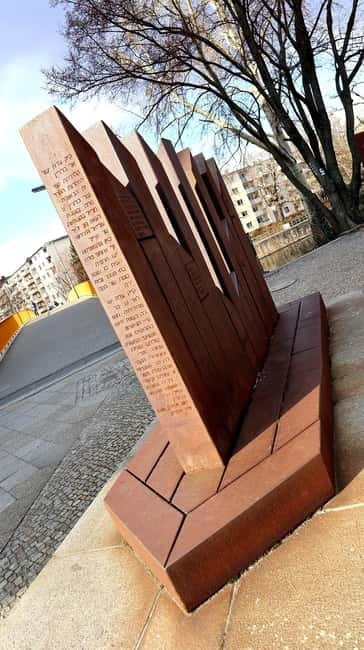
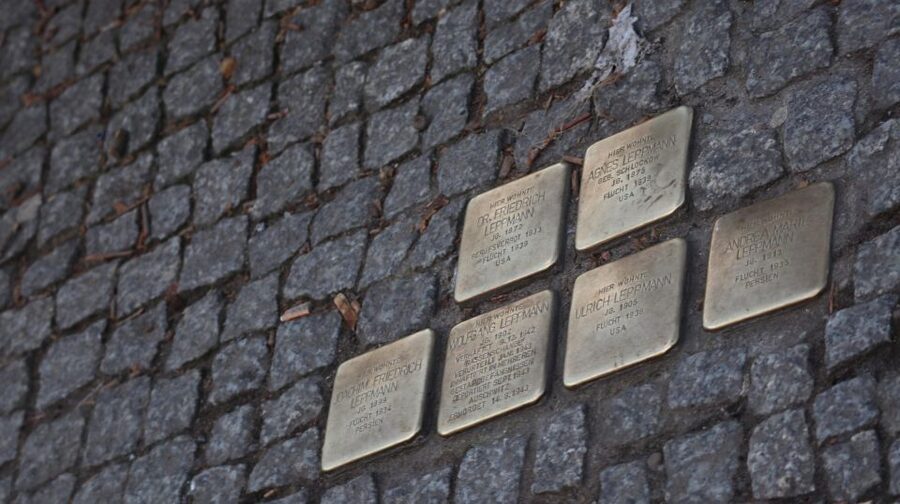
The walk also reaches a quiet memorial at the site of one of Berlin’s significant Jewish communities. This is not treated as a separate museum visit with an admission ticket. It is a stop within the neighborhood, using the site itself to explain what was destroyed.
The subject is difficult but important. Jewish life was attacked by the Nazi regime, and the physical neighborhood was later damaged or erased by Allied bombing. The tour links social destruction and wartime destruction instead of treating them as unrelated events.
That connection gives the Hansaviertel story moral weight. The modern buildings were constructed on ground shaped not only by bombs, but by persecution and the forced removal of people. When you later see the postwar vision of clean lines, open space, and new housing, you also understand what had vanished beneath it.
This is one reason the tour suits adults and older teenagers better than young children. The recommended age is 14 and up, and all minors must be with an adult. The historical material is not just a light introduction to architecture. It asks you to think about displacement, memory, and how cities decide what to preserve.
If you prefer a tour focused only on design, this section may feel heavier than expected. I see that as a strength, but it is worth knowing before you book.
Interbau 1957 and the Cold War contest
The main architectural story begins with Interbau 1957, an international building exhibition held in West Berlin. The event turned the damaged Hansaviertel into a public display of modern urban planning.
The timing mattered. Berlin was divided, and the city had become a front line in the political contest between East and West. Interbau offered West Berlin a chance to show a forward-looking alternative to older urban models and to the monumental planning associated with the Soviet bloc.
The rebuilt district was designed to communicate more than efficiency. It presented an idea of modern life based on light, open space, new materials, and carefully planned apartment living. The buildings were intended to offer residents a fresh start after the war, while also presenting West Berlin as experimental and internationally connected.
The guide explains how rubble became a Cold War showcase. That phrase is useful, but the walking experience makes the idea concrete. You see architecture being used as political language. A building can be a home, a design experiment, and a public statement at the same time.
I find this historical framing particularly helpful because modernist architecture can look cold or abstract when viewed without context. Once you understand the pressure of the 1950s, the designs become easier to read. Their unusual shapes and open settings were not random decoration. They were attempts to answer a serious question: how should people live after a destructive war?
Same city, a completely different century:
- Dresden: Tour of the Baroque Quarter with a Night Watchman
★ 4.7 · 681 reviews - Potsdam: Guided Walking Tour of UNESCO Site and Architecture
★ 4.7 · 49 reviews - Private Taxi Tour City East & West History and Architecture 3-4h
★ 5.0 · 42 reviews - Stuttgart city library – an architectural tour
★ 4.4 · 27 reviews
Meeting Gropius, Niemeyer, Aalto, and others
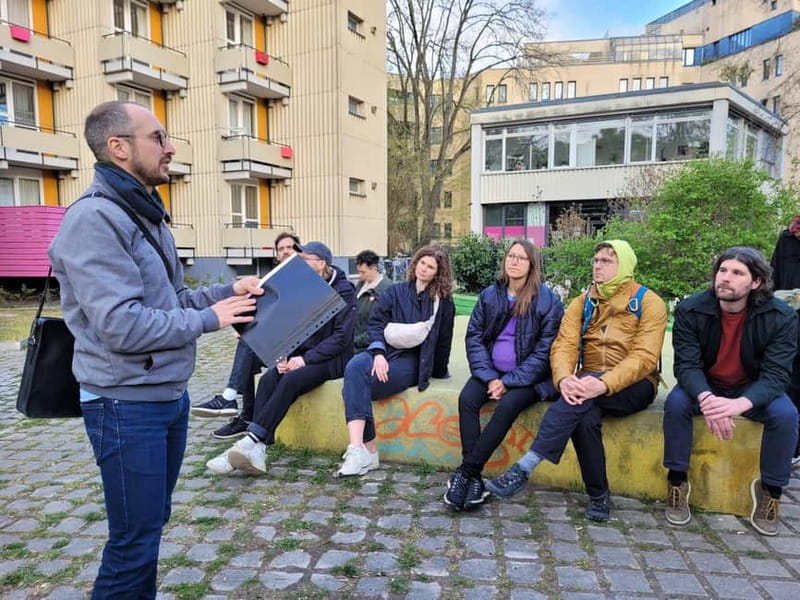
Hansaviertel gives the tour an unusually strong collection of modernist names. The route includes work connected with Walter Gropius, Oscar Niemeyer, Alvar Aalto, and other major architects of the 20th century.
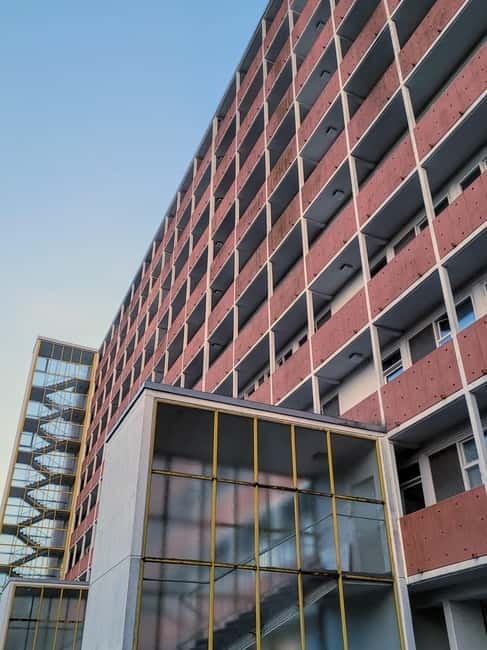
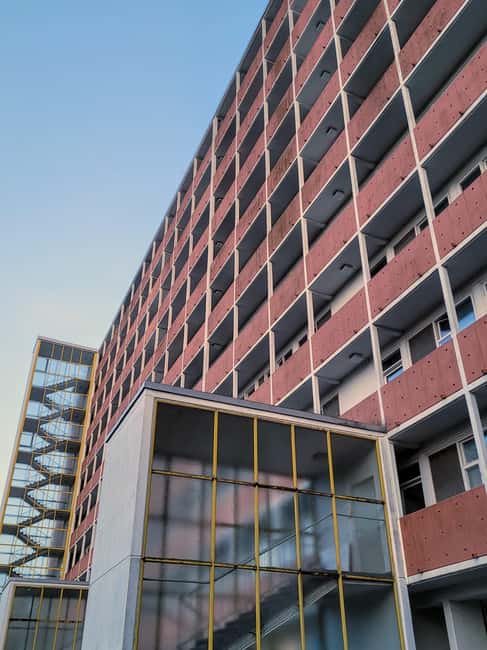
Each architect brought a different answer to the same problem. Modern architecture was not one neat style with one fixed rulebook. Some buildings emphasize clean geometry, others use curves, balconies, bold structural forms, or a close relationship between apartments and planted public space.
The guide’s job is to help you look past the surface. Notice how the buildings meet the street, how they sit apart from one another, and how their height and spacing differ from older Berlin blocks. Pay attention to the relationship between private apartments and shared open areas. These choices tell you what planners thought daily life should feel like.
The tour also asks a useful question: does the district still feel modern? The answer is not simple. Some buildings remain striking and experimental. Others may look more ordinary after decades of architectural change. That tension is part of the appeal. You are looking at a vision of the future from the 1950s, and the future has now become history.
One practical limitation is that this is an exterior walking tour. Entry to museums or monuments is not included, and the description does not promise access to private apartments. You should book it to understand the buildings from the street and public spaces, not to inspect their interiors.
What the buildings reveal about daily life
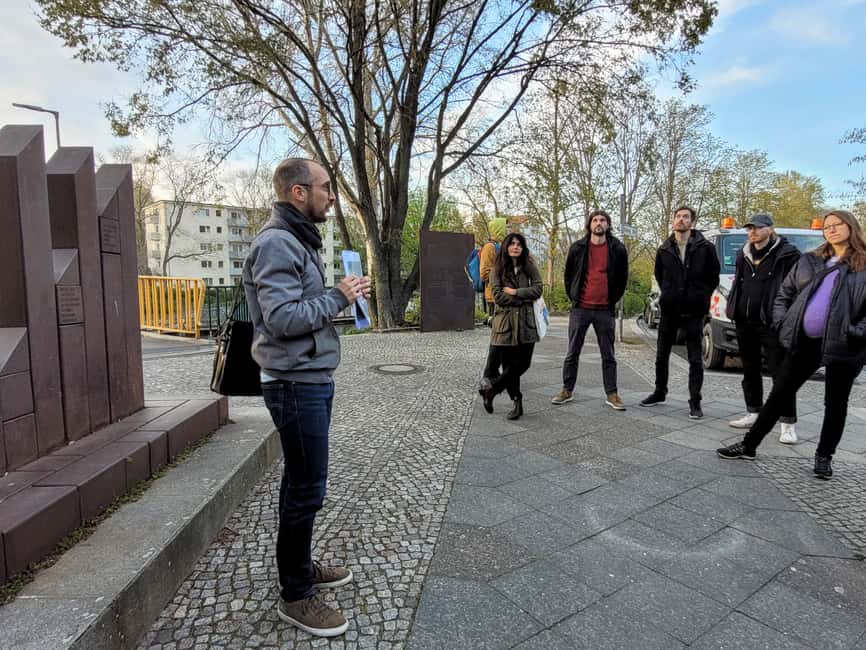
The strongest part of the experience is its attention to residents. The architecture is not presented as a contest among famous designers. You consider how ordinary people would use the apartments, paths, open areas, and shared spaces.
That makes the tour more useful for anyone interested in urban planning. The buildings were designed around ideas about sunlight, air, density, privacy, and community. Some modernist plans favored separation from the traditional street wall. Others offered a sense of order through repeated windows, balconies, and carefully placed blocks.
You will also hear about resistance and reinvention. Hansaviertel’s story is not simply one of destruction followed by construction. It includes the choices made by a city trying to rebuild its identity while living under political pressure.
The guide can add more than the scheduled time allows. One guide was described as well prepared and willing to stay afterward to answer questions. That is a useful sign if you like asking about design details or Berlin’s divided postwar history. Do not assume every tour will run long, but you can expect the subject to offer plenty of material for questions.
A calm walk between the Spree and Tiergarten

The setting helps the tour feel different from Berlin’s better-known sights. Hansaviertel sits between the Spree and the Tiergarten, so the walk includes a quieter side of central Berlin.
The district’s riverside position and greenery soften the hard lines of the buildings. You are not looking at modernist blocks in an empty architectural model. They exist among trees, paths, residential spaces, and the ordinary sounds of a city neighborhood.
That calm is a real benefit. After crowded sights such as the Brandenburg Gate or Museum Island, Hansaviertel offers room to look carefully. You can take in a façade, step back, and consider the whole building without fighting for a view.
The tradeoff is that the area may feel less immediately dramatic than Berlin’s major monuments. There is no single grand structure that explains the whole tour in one glance. The interest builds from several stops and from the guide’s interpretation.
The finish at Hansaplatz gives the route a clear endpoint. From there, you can continue exploring the district or use the surrounding transport connections, though the supplied information does not specify onward directions.
Price, time, and practical value
At $29 per person, the tour is fairly priced for a two-hour guided walk with a live English- or German-speaking guide. You are paying for interpretation and organization rather than admission to a major attraction.
That distinction matters. If you enjoy architecture but know little about Berlin’s postwar politics, the guide adds much more than a map or self-guided walk. The value comes from connecting the buildings to Jewish life, wartime destruction, Cold War rivalry, and changing ideas about housing.
The tour is also a good choice if you have already seen central Berlin’s headline sights. Hansaviertel is close to the city center but can feel like a different kind of visit. You get a focused neighborhood study rather than another march between famous monuments.
The walk lasts about two hours, with roughly 1.5 hours devoted to the Hansaviertel tour itself. You should be comfortable standing and walking for the full period. Wear supportive shoes and bring water. There is no food or drink included, and the experience does not list a scheduled interior break.
Free cancellation is available up to 24 hours before the tour for a full refund, and you can reserve while paying later. Those terms help if your Berlin schedule is still changing.
The tour is wheelchair accessible, which makes this architectural route available to more visitors. Since it is still a walking experience, you may want to confirm any personal mobility needs when booking.
Who should book this Hansaviertel walk?
I would choose this tour if you like buildings with a story behind them. It is especially well suited to people interested in modern architecture, urban planning, Berlin’s divided history, Jewish history, or the way politics shapes public space.
It also works for Berlin residents who want a neighborhood they may have passed without really seeing. The route offers enough detail to reward local curiosity, not only first-time sightseeing.
I would think twice if you want a fast photo stop or a tour built around interiors. The buildings are the subject, but the explanations matter just as much as the views. You need to listen, walk, and consider ideas that may not be immediately visible in the concrete and glass.
The age guidance is sensible. Teenagers 14 and older who enjoy history or design should find plenty to discuss, while younger children may struggle with the length and serious subject matter.
Should you book it?
Book this Hansaviertel tour if you want Berlin beyond its famous landmarks and prefer a thoughtful walk to a checklist of sights. The combination of prewar elegance, Jewish memory, wartime destruction, and Interbau 1957 gives the neighborhood a clear human story.
At $29, I consider it good value for a two-hour introduction led by a live guide. You will not enter a collection of museums or private apartments, but you will learn how a group of remarkable buildings was meant to change urban life and promote a political idea.
Bring water, wear good shoes, and arrive at the Tiergarten S-Bahn station’s Siegmunds Hof and Bachstraße exit. If the idea of seeing Gropius, Niemeyer, and Aalto in one residential district appeals to you, this is one of Berlin’s more rewarding specialist walks.
FAQ
Where does the Hansaviertel tour begin?
It begins in front of the Berlin-Tiergarten S-Bahn station at the Siegmunds Hof and Bachstraße exit, beside the Biergarten der Tiergartenquelle.
How do I find the guide?
Look for the guide with the orange umbrella near the beer garden.
Where does the tour finish?
The walk finishes at Hansaplatz.
How long does the experience last?
The full experience lasts two hours. The guided Hansaviertel portion is listed as approximately 1.5 hours.
What languages are available?
The tour is offered in English and German with a live guide.
Is the tour wheelchair accessible?
Yes, the activity is listed as wheelchair accessible.
Is the tour suitable for children?
The experience is recommended for ages 14 and up. All minors must be accompanied by an adult, and children under 14 are not considered suitable for the tour.
Are food and drinks included?
No. Food and drinks are not included, so bring water and make your own arrangements before or after the walk.
Can I cancel for a refund?
Yes. You can cancel up to 24 hours in advance for a full refund. You can also reserve now and pay later.
Just added around Germany
- Beautiful Baroque Potsdam: A Self-Guided Audio Tour★ 4.5 · 4 reviews
- Munich Your Way: Private Tour with Architect & Guide★ 5.0 · 2 reviews
- Private Munich Tour for History Buffs with Architectural Gems and WWII sites★ 5.0 · 3 reviews
- Art Nouveau Meets Street Art in Munich (Max. 12 guests)★ 5.0 · 3 reviews
- Hidden Architectural Gems of Munich (Max. 16 guests)★ 5.0 · 2 reviews
- Architectural Frankfurt: Private Tour with a Local Expert★ 5.0 · 2 reviews
- Private Taxi Tour of City East History and Architecture 2-3h★ 5.0 · 2 reviews
- Berlin Architecture/River Spree Full Day Photography Tour★ 5.0 · 2 reviews
Berlin Architecture Tours, compared.
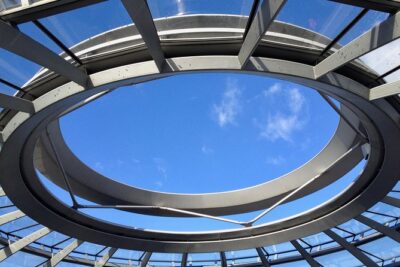
Private Taxi Tour City East & West History and Architecture 3-4h
Read our review →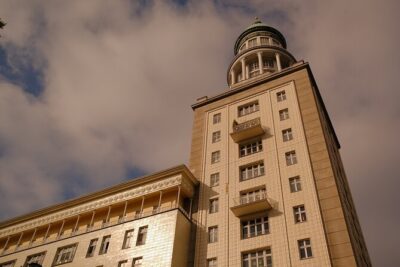
Karl-Marx-Allee Tour: Life and Architecture in East Berlin
Read our review →

Berlin: Karl-Marx-Allee Tour of Life and Architecture in GDR
Read our review →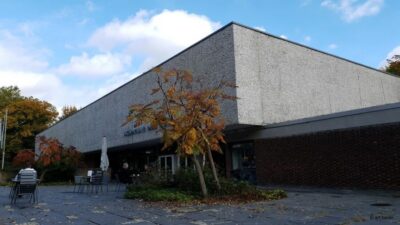
Berlin: Guided Architectural Walking Tour of Hansaviertel
Read our review →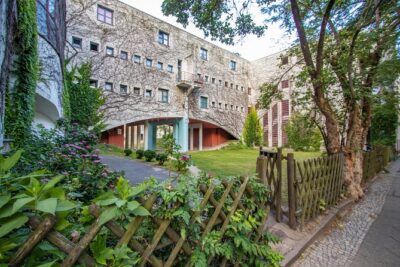
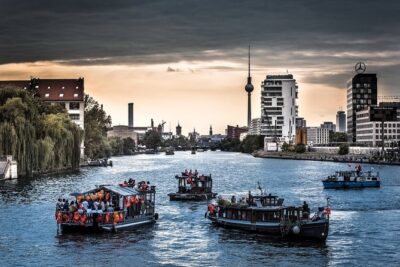
Berlin Architecture/River Spree Full Day Photography Tour
Read our review →
Private Taxi Tour of City East History and Architecture 2-3h
Read our review →Browse the lists this tour appears in