
Review · BERLIN
Private walking Tour: Berlin Architecture Tour
Berlin’s buildings tell its political story better than any timeline. On this private tour, you move from imperial domes and neoclassical squares to communist apartment blocks, rebuilt cultural centers, and glass towers rising where the Berlin Wall once cut the city in two.
I like the private format, since your guide can adjust the route to your interests. I also like the mix of famous sights and less obvious design details, especially at Gendarmenmarkt, the Kulturforum, and Hackescher Höfe. The catch is the price: at $191.87 per person, this makes the most sense for a small group that values focused guidance.
Key points at a glance
- A four-hour architectural story: See how Berlin’s buildings reflect monarchy, war, division, reunification, and modern urban planning.
- Private and adaptable: Your guide can tailor the visit to architecture, political history, design, photography, or a blend of all four.
- A wide city route: The stops range from Museum Island and the Reichstag to Kreuzberg, Friedrichshain, and Hackescher Höfe.
- On foot or by bike: You can choose the format that best suits your group and the pace you want.
- Hotel pickup and drop-off: The tour begins and ends at your central Berlin hotel, according to the stated arrangements.
- Strong guide reputation: Guides including Sara, Thomas, Tom, Daniel, Heiko, Tarek Ibrahim, and Ariel have been praised for clear explanations, warmth, and flexibility.
Berlin’s political story told through buildings
The best part of this tour is the way it treats architecture as evidence. Berlin is not a tidy city with one dominant style. Its buildings show the competing ideas that shaped the city: imperial grandeur, modernist experimentation, National Socialist destruction, socialist planning, West Berlin cultural renewal, and reunified Germany’s cautious return to the center.
You will compare the former East and West Berlin directly. Communist-era apartment blocks present a practical, repetitive style, while western districts often reveal the bold experiments of a divided city trying to build a new identity. Your guide can explain why a building looks the way it does, not just point out its date and architect.
That makes this more useful than a standard sightseeing walk if you want to understand Berlin’s design choices. One especially helpful feature is the private setting. You can ask why a square was rebuilt, how a concert hall works, or what happened to a building during the war without waiting for a large group to catch up.
The tour is offered in English and lasts about four hours. Pickup is available, and the tour ends with hotel drop-off. You can also request a bike-based version rather than walking, which may help with the broad route.
More architecture walks in Germany:
- Düsseldorf: Guided City Architecture Walking Tour
★ 4.6 · 61 reviews - Potsdam: Guided Walking Tour of UNESCO Site and Architecture
★ 4.7 · 49 reviews - Lübeck: Private Historical and Architectural Walking Tour
★ 4.5 · 6 reviews
Museum Island: a concentrated lesson in European architecture
Museum Island gives you a strong opening because several major styles sit close together. The Altes Museum presents a formal neoclassical face, with grand columns and a broad portico. It was designed to look authoritative and orderly, exactly the effect such a museum needed in the nineteenth century.
The Pergamon Museum adds monumental classical references, while the Bode Museum brings a large dome and softer curves to the group. The Neues Museum offers a different lesson. Its restoration combines surviving historic elements with newer work, making the building useful for discussing how a damaged monument can be repaired without pretending that the war never happened.
The Berliner Dom adds another visual anchor, with its immense dome, symmetrical design, stone decoration, and Renaissance Revival and Baroque influences. From the Spree, you can frame several buildings at once, so this stop works well for photographs.
The planned time here is about 20 minutes. That is enough for an exterior overview and a few good questions, but not enough for a museum visit. Admission to the listed stops is not included because this is primarily an architectural walk, not an interior tour.
Gendarmenmarkt and the art of a balanced square
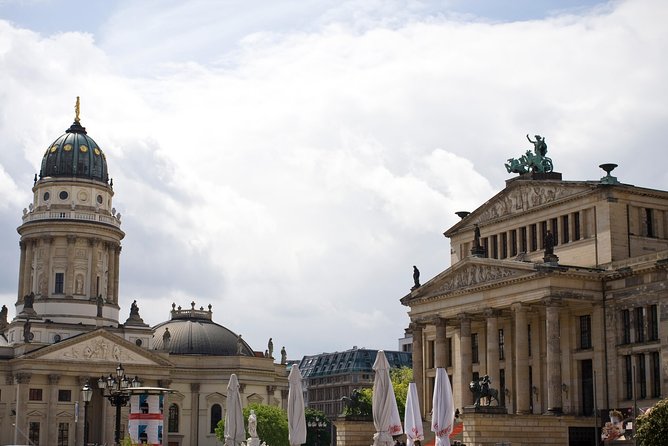
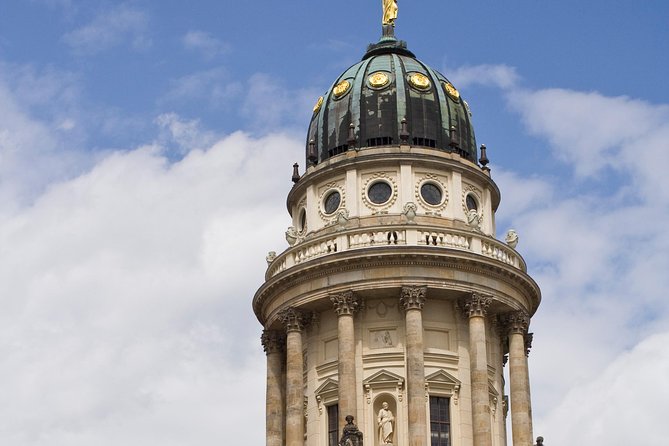
Gendarmenmarkt is one of the tour’s most satisfying stops. Three major buildings create the ensemble: the Französischer Dom, the Deutscher Dom, and Schinkel’s Konzerthaus. The two cathedrals frame the square with matching domes, while the concert hall provides a classical center.
The symmetry is easy to admire, but your guide can take you further by explaining how the buildings relate to one another and how the square changed over time. At the center, a statue of Friedrich Schiller adds another layer, tying the setting to German literary culture.
You get about 15 minutes here, so expect a focused explanation and photographs rather than a long visit. If you enjoy urban design, pay attention to the spaces between the buildings. The square works because the buildings are not isolated attractions. They were arranged to create a single visual composition.
Friedrichstrasse and the changing center of Berlin
Friedrichstrasse brings the discussion into the commercial heart of the city. It combines memories of Berlin’s Golden Twenties with newer office buildings, cafés, shops, restaurants, boutiques, and department stores.
Galeries Lafayette is a useful point of reference for the modern side of the street. The area also lets your guide discuss urban renewal, an important part of Berlin’s post-reunification story. The city had to rebuild central districts while deciding how much historic character to restore and how much new construction to allow.
This is where the tour can feel less like a parade of monuments and more like a lesson in city planning. Berlin’s center is not simply old or new. It is a negotiated mixture, shaped by commerce, memory, and the desire to make the city center function again.
Because the route is private, ask your guide to focus on the details that interest you most. Architecture students, designers, and photographers may want to spend more time on materials and proportions. First-time visitors may prefer the political story and a quick orientation to central Berlin.
More private architecture tours in Germany:
- Private Taxi Tour City East & West History and Architecture 3-4h
★ 5.0 · 42 reviews - Lübeck: Architecture and Local Craft Private Guided Tour
★ 4.0 · 6 reviews - Private Munich Tour for History Buffs with Architectural Gems and WWII sites
★ 5.0 · 3 reviews - Architectural Berlin: Private Tour with a Local Expert
★ 4.0 · 3 reviews
The Philharmonie and Kulturforum’s West Berlin response
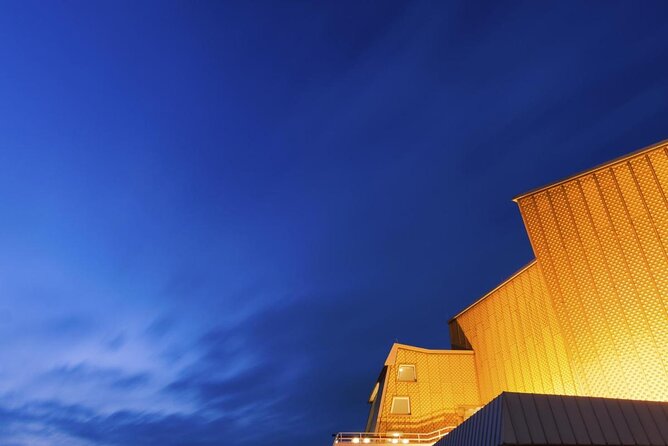
The Berliner Philharmonie is one of the clearest architectural symbols of postwar West Berlin. Its tent-like, asymmetrical form rejects the old idea that a concert hall must look like a classical temple. Inside, the audience surrounds the musicians, creating a more connected arrangement and helping produce its celebrated acoustics.
You are scheduled for about 15 minutes here, mainly to view the building and take photographs. The exterior is especially striking, with angular forms that look very different from the domes and columns seen earlier.
The wider Kulturforum matters just as much. Its museums, libraries, concert halls, and cultural institutes were developed in the 1950s and 1960s, after major cultural collections had ended up on the other side of the Berlin Wall. West Berlin needed its own cultural center, and the result was a group of modern buildings at the edge of the divided city.
This stop helps explain why Berlin’s architecture cannot be separated from Cold War politics. Buildings were not only designed for practical use. They also carried a message about which kind of society they represented.
Reichstag and Pariser Platz: old symbols, new meaning
The Reichstag gives you one of Berlin’s sharpest contrasts. The original building has a formal nineteenth-century façade, complete with columns and sculptural detail. Its glass dome, designed by Norman Foster during the post-reunification renovation, changes the building’s meaning and appearance.
The dome is intended to suggest openness and democratic transparency. It also introduces light, reflection, and movement into a structure that once represented imperial government. The tour includes about 10 minutes at the Reichstag, so do not expect a full interior visit or a long dome experience as part of the standard schedule.
Nearby Pariser Platz brings several architectural ideas together. The Brandenburg Gate is the dominant neoclassical landmark, while the Hotel Adlon, French Embassy, and American Embassy add formal buildings around the square. The DZ Bank building, designed by Frank Gehry, introduces a more sculptural modern note, and the Academy of Arts adds further variety.
You can see how strict design rules around the square aim to preserve a historic setting while still allowing modern architecture. That tension is central to Berlin. The city wants to remember what stood here, but it also has to build for the present.
Potsdamer Platz and the city rebuilt from a blank space
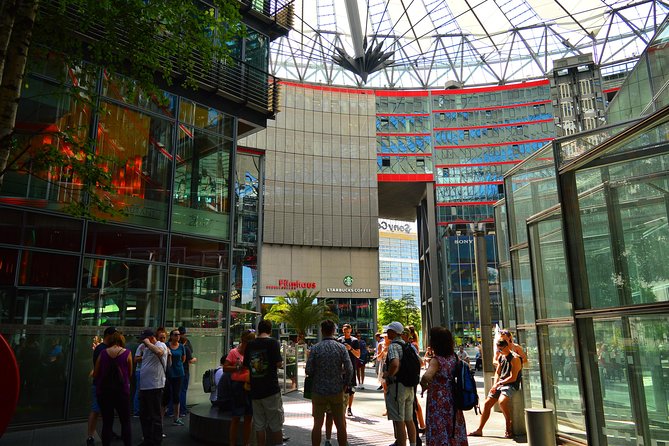
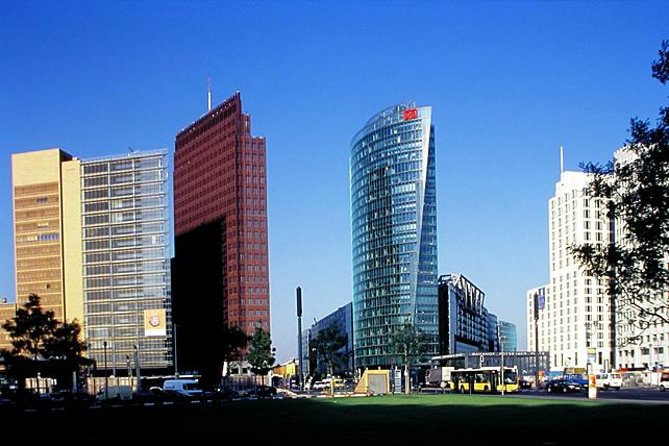
Potsdamer Platz is the tour’s clearest lesson in urban reconstruction. Before World War II, it was a busy center. After wartime destruction and Cold War division, it became part of a scarred border zone beside the Berlin Wall.
Today, glass office buildings, public spaces, and large contemporary developments fill the area. The Sony Center is known for its sweeping glass roof, while the DB Tower presents a sleek glass-clad profile. The Panoramapunkt offers city views, though the listed tour stop is an exterior visit and does not include an admission ticket.
You get about 20 minutes here. That is enough to discuss the development and photograph the modern skyline, but the scale of Potsdamer Platz can make a short visit feel brisk. The value comes from the explanation. Without context, it is simply a collection of shiny towers. With context, it becomes a dramatic example of how reunified Berlin tried to reconnect its divided center.
Kreuzberg, Friedrichshain, and the Berlin Wall’s everyday side
The route then reaches two neighborhoods where the architectural story becomes more lived-in. Kreuzberg mixes nineteenth-century Altbau apartment buildings, industrial conversions, contemporary construction, and alternative cultural traditions.
The Oberbaum Bridge is a highlight. Its red brick towers and Gothic-inspired arches connect Kreuzberg with Friedrichshain across the Spree. It is a strong photo stop and a good reminder that bridges can carry political meaning as well as traffic.
Friedrichshain adds prewar Altbau buildings with ornate façades, high ceilings, and large windows. Restored apartments now share streets with cafés, shops, and newer projects. The district also includes the East Side Gallery, where murals cover a remaining section of the Berlin Wall.
The planned time for each neighborhood is about 30 minutes. That gives you a useful overview, not a full neighborhood walk. If your main goal is street life, cafés, or the complete East Side Gallery, you will need to return later on your own.
These districts are valuable because they move the tour away from official monuments. You see how Berlin’s architectural past continues to shape ordinary streets, housing, businesses, and public art.
Hackescher Höfe and the beauty of useful design
Hackescher Höfe closes the architectural circuit with a more intimate setting. This group of eight connected courtyards was built in 1906 and is associated with architect August Endell. Its art nouveau details include colorful ceramic tiles, ironwork, curved lines, and carefully arranged façades.
Each courtyard has its own character. The complex is not only decorative. It was designed to combine commercial, residential, and practical urban uses, showing how beauty could be built into an active city block.
You get about 20 minutes here. Look closely at the contrast between the ornate surfaces and the functional layout. This is a good final stop because it reminds you that architecture is not only about grand public buildings. Courtyards, apartment blocks, shops, and passageways also reveal how a city imagines daily life.
What $191.87 per person buys you
At $191.87 per person, this is a premium outing. You are not paying for museum admission, food, or a large-group transfer. You are paying for a private guide, hotel pickup and drop-off, route planning, and the ability to shape four hours around your interests.
The value improves if you are traveling with several people and can use the group discount. It also improves if you want an architectural explanation rather than a basic list of landmarks. A guide who can connect the Philharmonie to Cold War politics, or Potsdamer Platz to reunification, adds something difficult to get from a guidebook alone.
The price is harder to justify if you only want photographs of major sights. Many of the exterior locations can be visited independently by public transport. You should also remember that the route covers a lot of ground, so some stops are brief.
The strongest praise has gone to the guides’ clear explanations, warmth, and flexibility. Sara, described as an architect, helped a design-focused group connect architecture with Berlin’s history. Thomas was praised for explaining what architects were trying to achieve. Tom was described as an engaging historian, while Heiko helped a first-day visitor get a useful geographic and political orientation.
Guide assignments can change, so request a specific guide if one is available, but do not assume that person is guaranteed.
Practical details before you book
The tour is private, and only your group participates. It is offered in English, with mobile ticketing and hotel pickup and drop-off. The tour can be taken on foot or by bike, but confirm the format you want when arranging it.
The route is extensive for four hours. The listed stop times add up to a little over three hours, leaving time for movement and conversation. You will see many areas, but you will not have time to explore every building inside.
Food and drinks are not included. Most people can participate, and service animals are allowed. The tour is near public transportation, which helps if you want to continue sightseeing afterward.
Free cancellation is available up to 24 hours before the start time. Changes or cancellations inside that window are not accepted for a refund.
Who should book this Berlin architecture tour?
I would recommend it most to visitors who want Berlin explained, not simply photographed. It suits architecture students, designers, history fans, photographers, and first-time visitors who want a strong introduction before exploring the city independently.
It is also a good choice for families or friends who want to set their own pace. A private guide can make the discussion accessible to a teenager, or technical enough for a professional group.
I would think twice if your budget is tight, if you dislike walking or cycling across a broad route, or if your main goal is to enter museums and monuments. In those cases, a shorter neighborhood walk or a self-guided route may give you better value.
For everyone else, the tour earns its price through context. Berlin’s architecture is most interesting when you understand why a glass dome, a socialist apartment block, a concert hall, or a rebuilt square appears where it does. This experience gives you that framework in one concentrated morning or afternoon.
FAQ
How long does the Berlin architecture tour last?
The tour lasts approximately four hours.
Is the tour private?
Yes. Only your group participates in the activity.
Is hotel pickup included?
Yes. Hotel pickup and drop-off are included in the tour.
Can I take the tour by bike instead of walking?
Yes. You can choose to do the tour on foot or by bike.
What language is the tour offered in?
The tour is offered in English.
Which Berlin areas are included?
The route includes Museum Island, Gendarmenmarkt, the Berliner Philharmonie, the Reichstag, Potsdamer Platz, Berliner Dom, Kreuzberg, Friedrichshain, Pariser Platz, and Hackescher Markt.
Are museum or attraction admission tickets included?
The listed itinerary provides free admission at the stops, and the tour does not include food or drinks. It is primarily an exterior architecture experience, so confirm any desired interior visits with the guide.
Can I request specific sights or interests?
Yes. The experience is customized, so you should discuss specific attractions or interests with your guide.
How much does the tour cost?
The listed price is $191.87 per person. Group discounts are available.
What is the cancellation policy?
You can cancel up to 24 hours before the experience begins for a full refund. Cancellations or changes made less than 24 hours before the start time are not accepted for a refund.
Just added around Germany
- Beautiful Baroque Potsdam: A Self-Guided Audio Tour★ 4.5 · 4 reviews
- Munich Your Way: Private Tour with Architect & Guide★ 5.0 · 2 reviews
- Private Munich Tour for History Buffs with Architectural Gems and WWII sites★ 5.0 · 3 reviews
- Art Nouveau Meets Street Art in Munich (Max. 12 guests)★ 5.0 · 3 reviews
- Hidden Architectural Gems of Munich (Max. 16 guests)★ 5.0 · 2 reviews
- Architectural Frankfurt: Private Tour with a Local Expert★ 5.0 · 2 reviews
- Private Taxi Tour of City East History and Architecture 2-3h★ 5.0 · 2 reviews
- Architectural Berlin: Private Tour with a Local Expert★ 4.0 · 3 reviews
Walking Tours, compared.
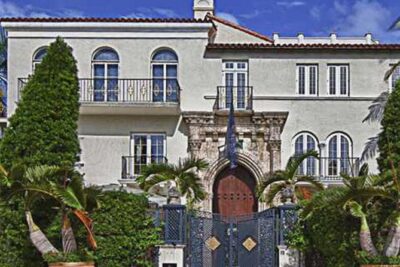
The Official Art Deco Walking Tour by The Miami Design Preservation League
Read our review →
Barcelona: Gothic Quarter Ghosts and Legends Walking Tour
Read our review →
Barcelona: Old Town and Gothic Quarter Walking Tour
Read our review →
Lecce: Baroque Architecture and Underground Walking Tour
Read our review →
Chicago in a Day: Food, History & Architecture Walking Tour
Read our review →
Ramblas, Old Town, Gothic and Gaudi Architecture Walking Tour
Read our review →
Chicago’s Secret Interiors Architectural Walking Tour
Read our review →Browse the lists this tour appears in