
Review · BERLIN
Berlin: Karl-Marx-Allee Tour of Life and Architecture in GDR
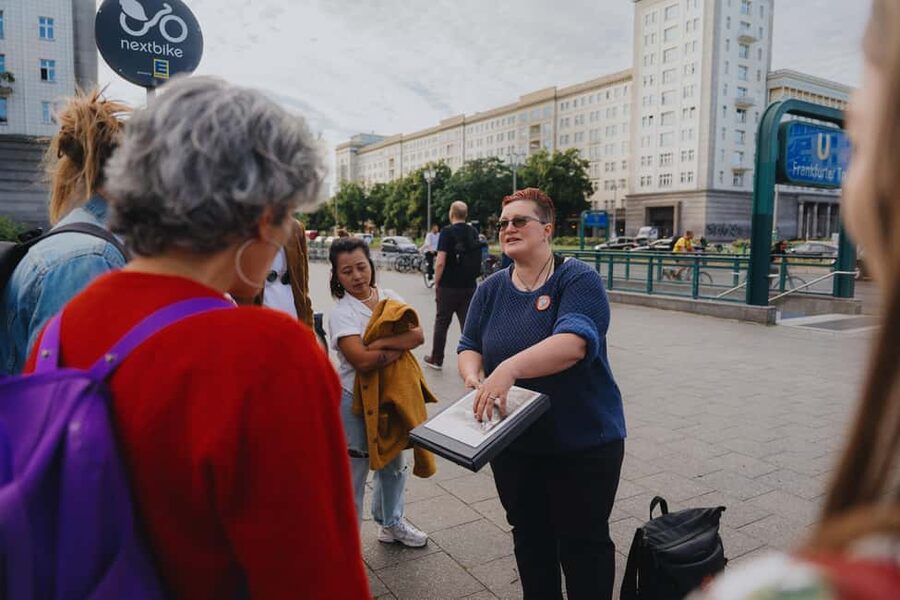
Karl-Marx-Allee is not just a grand boulevard. It is East Germany’s political story written in stone, from postwar rebuilding and socialist ambition to worker revolt, secret-police surveillance, and today’s housing protests. I like that this walk treats the buildings as evidence, not decoration, and connects architecture to ordinary life behind the polished facades.
I especially like the contrast between the monumental 1950s blocks and the earlier modernist buildings that were later hidden by poplar trees. I also like the careful attention to the 1953 uprising and the Stasi’s listening posts, subjects that can be easy to miss on a casual walk. The main consideration is that two hours on a broad urban avenue calls for comfortable shoes, and children under 10 cannot join.
Key points to know before you go
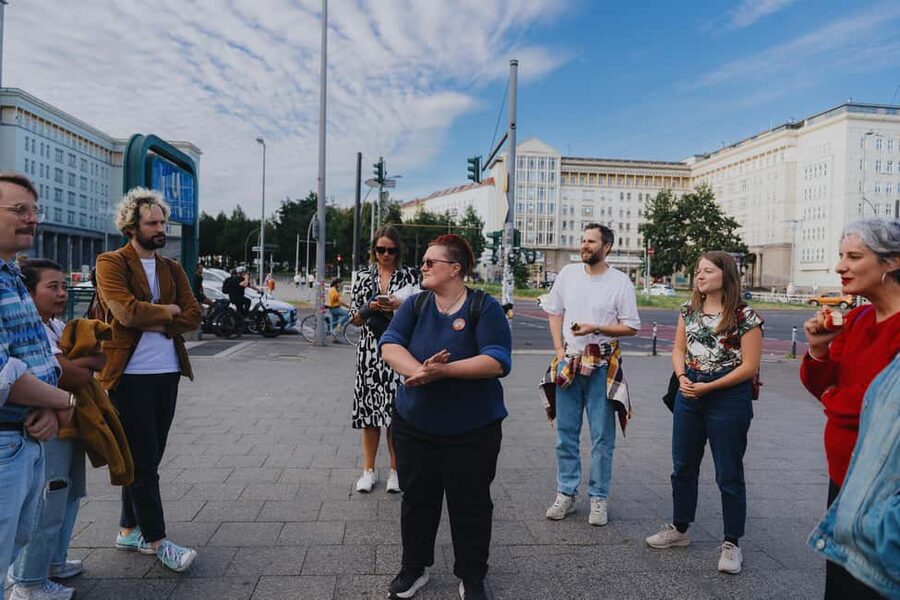
- Start at Frankfurter Tor: Meet outside the U-Bahn station by the southern tower, at the corner of Warschauer Straße and Karl-Marx-Allee.
- Read the architecture as politics: The grand socialist-classicist blocks were meant to display the promise of East German socialism.
- Hear the 1953 uprising in its original setting: The boulevard’s construction helped trigger a worker revolt that nearly brought down the young government.
- Look past the perfect facade: Cafes, shops, and handsome flats presented an image of comfort while Stasi surveillance operated out of sight.
- See a changing Berlin: The former Stalinallee now appears in arguments over rising rents, gentrification, and the future of local housing.
- Allow the full two hours: The guided walk along Karl-Marx-Allee lasts about 1.5 hours, with the activity listed at two hours overall.
Why Karl-Marx-Allee tells Berlin’s Cold War story so well
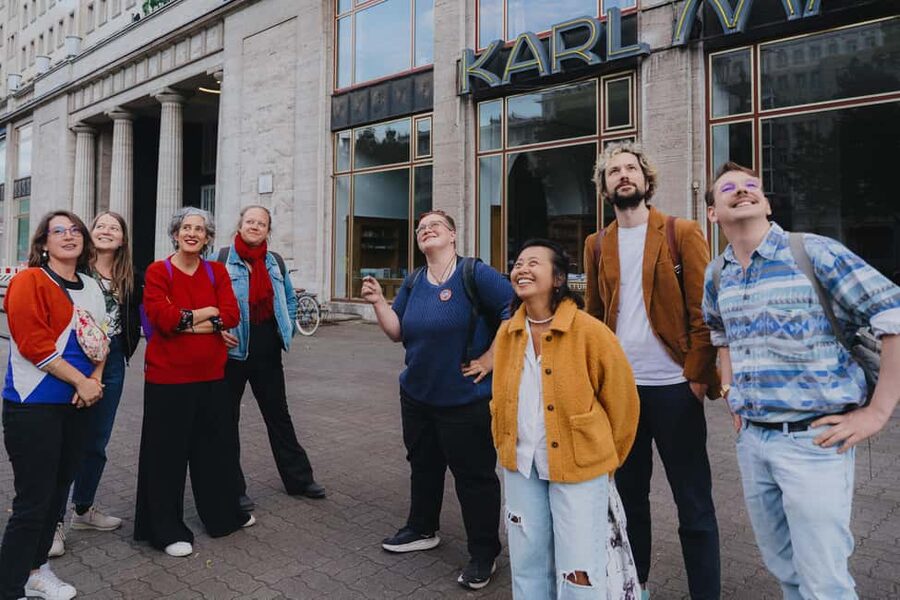
Many Berlin walks focus on the Wall, checkpoints, and grand state buildings. Karl-Marx-Allee gives you a different view of the Cold War: the city as a housing project, a propaganda stage, and a place where people had to live with the results.
The boulevard began as part of East Germany’s national rebuilding program after the Second World War. Berlin lay in ruins, and the new socialist government needed more than apartments. It needed proof that its system could restore the city and provide a better life.
The answer was a huge avenue lined with imposing apartment blocks. The buildings were designed in a style known as socialist classicism, with a scale and form meant to suggest order, strength, and progress. Walking beside them, you cannot help but feel small. That feeling was part of the point.
Thousands of volunteers worked day and night to help build the street. Yet the project created serious pressure on workers, and in June 1953 disgruntled laborers began a mass uprising. What began as a dispute over work demands grew into a direct challenge to the socialist government.
That contradiction makes the walk especially useful. The avenue was supposed to show a successful new society, but its construction helped expose the gap between official promises and daily reality. You get architecture, political history, and human conflict in the same setting.
A few more architecture tours around Germany worth a look
- Munich 3-Hour Segway Tour: Nazi Munich & Royal Architecture
★ 4.9 · 194 reviews - Düsseldorf: Guided City Architecture Walking Tour
★ 4.6 · 61 reviews - Hidden Architectural Gems of Munich (Max. 16 guests)
★ 4.9 · 52 reviews
Meeting your guide at the southern tower of Frankfurter Tor
The tour begins outside the U-Bahn station at Frankfurter Tor. Look for the southern tower on the corner of Warschauer Straße and Karl-Marx-Allee, where the guide carries an orange umbrella.
That meeting point is practical because Frankfurter Tor is one of the most recognizable parts of the boulevard. The towers frame the avenue and give you an immediate sense of its scale before the walking tour even begins.
Guides lead the experience in English or German. Martina is one guide named in the feedback, and her style comes through as attentive and flexible. She was praised for responding to curious questions instead of simply repeating a fixed speech. That matters here, because Karl-Marx-Allee can raise questions about architecture, politics, housing, and memory all at once.
One German-language comment described the information as lively and well considered. Another person called the tour intimate and informative, with strong storytelling. Those details suggest a smaller, conversational feel rather than a loud, formal group lecture, though an exact group size is not provided.
The walk is wheelchair accessible. You should still wear comfortable shoes, since the central activity is a substantial outdoor walk along the avenue.
The grand 1950s blocks and the idea of socialist living
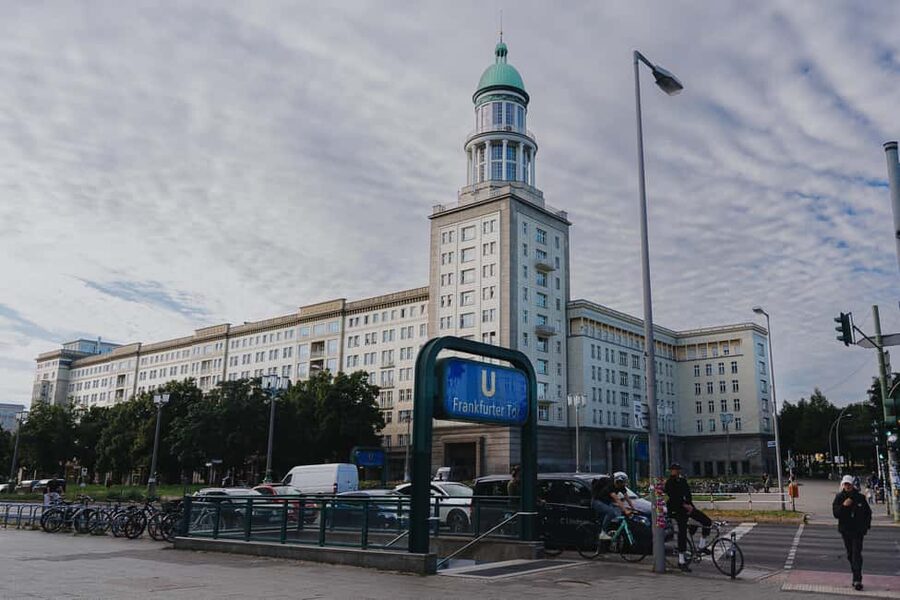
The first major impression is the scale of the housing blocks. These were not designed to blend quietly into old Berlin. They were meant to announce a new beginning after the war.
The socialist-classicist style used monumental forms and decorative details to create a formal, official appearance. The architecture was not merely a choice of taste. It was a statement about what the new state wanted people to believe: that socialism could deliver modern housing, civic pride, and a better standard of living.
The avenue also offered some of East Berlin’s best cafes, restaurants, and shops. The public image was one of comfort and plenty. Residents could point to clean, impressive surroundings and a boulevard designed for a modern urban life.
I like this part of the tour because it avoids the lazy idea that everything in East Germany was simply gray and miserable. The street was intended to offer real housing and real amenities. Its buildings were ambitious, and the government understood that daily surroundings could shape public support.
At the same time, you are encouraged to look at the limits of that image. A well-stocked shop or handsome apartment block did not erase political control. The architecture communicated confidence, but the state still depended on surveillance and suppression.
That tension is one reason the boulevard works so well as a place of study. You can see the promise and the pressure without needing to leave the street.
The earlier modernist buildings behind the poplars
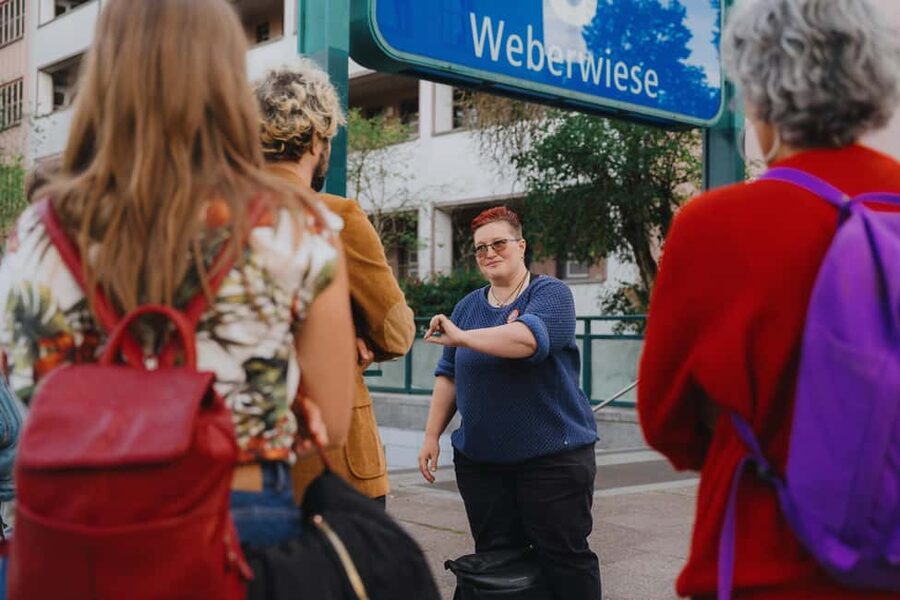
Karl-Marx-Allee’s story reaches back before its most famous buildings. The immediate postwar years produced modernist architecture shaped by utopian ideas about how a destroyed city could be rebuilt.
These earlier buildings expressed a different view of the future. Their modernist forms were less tied to monumental socialist classicism and more connected to the planning ideas that emerged from Berlin’s ruins.
Later, the East German regime rejected that style and promoted a different vision of socialist living. Fast-growing poplar trees were planted to hide some of the earlier buildings from passersby. That detail gives the boulevard an extra layer: even the views along the street were managed.
As you walk, look beyond the broad avenue and the grand facades. The older structures and the trees help show that East Berlin was not built according to one fixed plan from the start. Its architecture changed as the political leadership changed its idea of what socialism should look like.
This is an easy detail to miss if you only photograph the most imposing blocks. The guide’s job is to point out the pieces that do not fit the official picture. I find those details more revealing than a simple list of building dates.
Same city, a completely different century:
- Dresden: Tour of the Baroque Quarter with a Night Watchman
★ 4.7 · 681 reviews - Potsdam: Guided Walking Tour of UNESCO Site and Architecture
★ 4.7 · 49 reviews - Private Taxi Tour City East & West History and Architecture 3-4h
★ 5.0 · 42 reviews - Stuttgart city library – an architectural tour
★ 4.4 · 27 reviews
The 1953 uprising and the danger behind the building program

The June 1953 uprising is the sharpest political turn in the walk. The new housing program depended on workers, but workers were also the people most affected by demanding production targets and government decisions.
Disgruntled workers began a mass protest that grew into a wider uprising. The movement nearly toppled the East German government. On a boulevard intended to symbolize socialist success, that history gives the buildings a darker foundation.
This part is valuable because it links construction with power. The avenue was not built in a calm period of steady progress. It emerged from a damaged city during a tense political experiment, and its creation carried a human cost.
You may find that the setting makes the story easier to understand than a museum display would. The broad scale of the street helps you picture why the government wanted this project to succeed and why a dispute among workers could become a threat to the entire state.
The tour does not treat the uprising as an isolated event. It fits the revolt into the larger history of the boulevard, showing how the government’s public image and its private fears developed side by side.
Stasi surveillance behind the polished facade
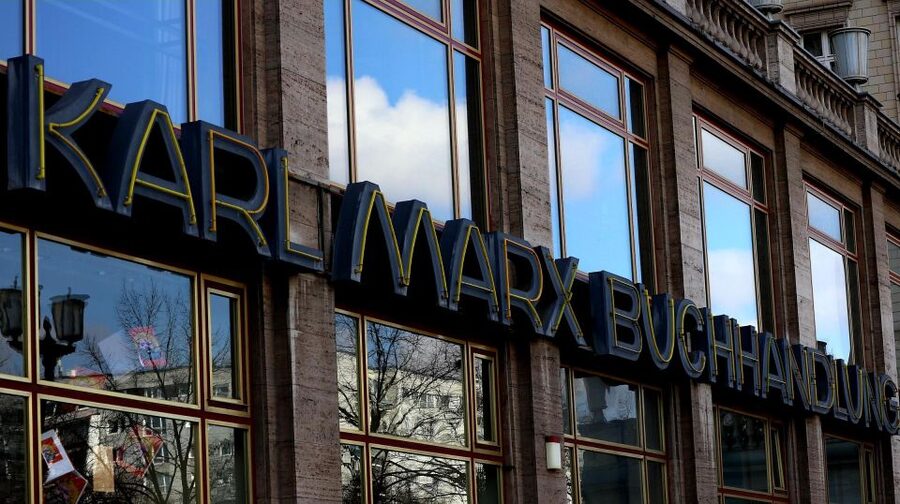
The avenue’s public face was designed to reassure people. The private reality included wiretaps in apartments and listening stations in attics used by the East German secret police, known as the Stasi.
These surveillance systems were not meant to be visible. That is what makes the architectural discussion so effective. A building could look open, modern, and welcoming while its rooms and roof spaces formed part of a system of control.
You will not simply be shown a grand facade and told that life was good or bad. Instead, the walk asks you to consider how the state managed appearances. Cafes and shops helped create an image of normal life, while the Stasi watched from spaces residents were not meant to notice.
I appreciate this balance. It gives you a clearer picture of East Germany than a one-note story about oppression. People lived in these buildings, enjoyed the shops, and built everyday routines. They also had to consider what could be overheard and who might be reporting on them.
The Stasi section is likely to be especially interesting if you have seen The Lives of Others. The tour includes filming locations connected with that film, allowing you to compare the cinematic version of surveillance with the real setting that inspired its mood.
From Stalinallee to film locations in modern Berlin
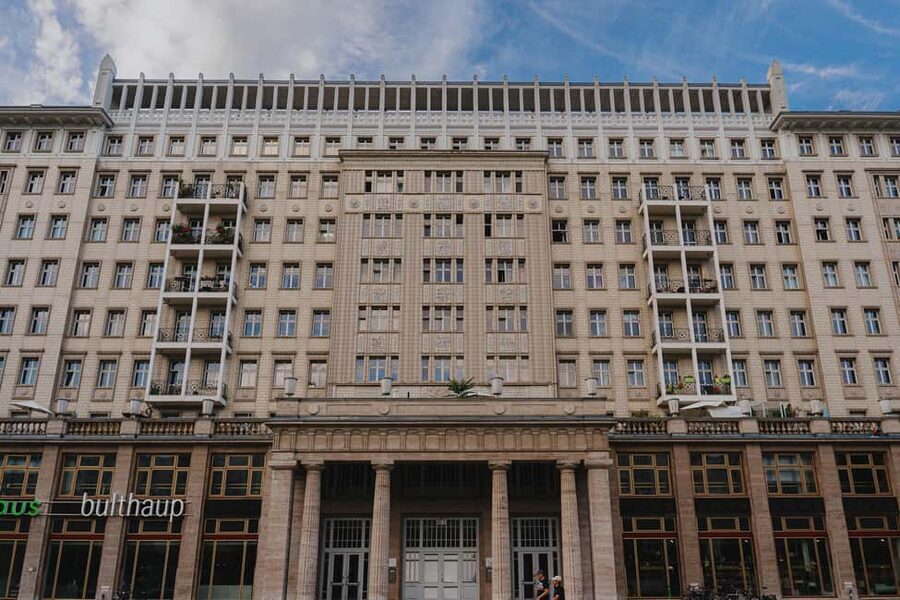
The boulevard was formerly called Stalinallee, a name that reflected the close political relationship between East Germany and the Soviet Union. Its later name, Karl-Marx-Allee, marks a different phase of the country’s political identity.
The street also appears in screen history. Along with locations from The Lives of Others, the walk includes places seen in The Queen’s Gambit. These references add a lighter, more visual layer to a subject that can otherwise feel heavy.
The film connections are not the main reason to book the tour, but they help you notice how adaptable the avenue is. The same blocks can function as propaganda architecture, a real neighborhood, a Cold War setting, or a backdrop for a television drama.
If you have watched either production, you may enjoy recognizing the locations. If you have not, the architectural and political material still carries the tour.
After the Wall: neglect, real estate, and housing protests

After the Berlin Wall fell, Karl-Marx-Allee entered a quieter phase. The buildings fell into disrepair, and the boulevard began to look like an awkward leftover from an earlier political age.
Berlin’s housing shortage changed its fortunes. Real estate interest returned, and the street became valuable again. Its current story is no longer about socialist parades. It is about who can afford to live in central Berlin and what happens when older housing becomes attractive to investors and new residents.
Local protests over gentrification and rising living costs now give Karl-Marx-Allee another political role. The street remains a place where public space, housing, and government policy meet.
I like ending the walk with this present-day connection. It keeps the tour from turning East Germany into a sealed historical box. Berlin changes quickly, but older arguments about housing, fairness, and who controls the city keep returning in new forms.
You may leave with the sense that Karl-Marx-Allee is not only a record of the past. It is still part of a living neighborhood and a current dispute.
Is $29 a fair price for two hours?

At $29 per person, this tour offers good value if you want focused historical interpretation rather than a general city walk. You are paying for a live guide, a carefully chosen route, and connections among architecture, the 1953 uprising, Stasi surveillance, film history, and current housing issues.
The value depends on your interests. If you only want photographs of monumental buildings, you can see the avenue without booking a tour. The fee makes more sense if you want someone to explain why the buildings look as they do and what was happening behind them.
The walk lasts about 1.5 hours, while the activity is listed as two hours overall. Plan your schedule around the full two-hour window so you are not rushing to the next appointment.
Free cancellation is available up to 24 hours before the start, and you can reserve now and pay later. Those options help if your Berlin plans are still shifting.
Who will enjoy this walk most?
I would recommend Karl-Marx-Allee to you if you enjoy architecture with a political story attached. It also suits anyone who wants to understand East Berlin beyond the Wall, Checkpoint Charlie, and the usual Cold War landmarks.
The tour is a good fit for people interested in:
- Socialist architecture and city planning
- The history of East Germany
- The 1953 workers’ uprising
- Stasi surveillance and everyday life under state control
- Film locations from The Lives of Others and The Queen’s Gambit
- Berlin’s current debate over rents and gentrification
It is less suitable for young children, since children under 10 are not allowed. The subject matter and walking format are better for older children, teenagers, and adults who can follow a historical discussion.
Bring comfortable shoes. The route is wheelchair accessible, but you should still allow enough time for a steady outdoor walk along the avenue.
Should you book the Karl-Marx-Allee tour?
Book it if you want Berlin history that takes place in a real neighborhood rather than inside a museum. The best part is the way the tour links grand buildings with worker unrest, hidden surveillance, film history, and today’s housing pressure.
I would skip it only if your schedule is too tight for a two-hour walking experience or if architecture and political history are not high on your list. For everyone else, $29 buys a focused look at one of East Berlin’s most revealing streets.
Meet at Frankfurter Tor, find the guide with the orange umbrella, and pay attention to the details that the boulevard was designed to hide.
FAQ
Where does the Karl-Marx-Allee tour start?
Meet outside the Frankfurter Tor underground station, by the southern tower at the corner of Warschauer Straße and Karl-Marx-Allee. Look for the guide holding an orange umbrella.
Where does the tour finish?
The walk finishes at the U Strausberger Platz station.
How long does the tour last?
The activity lasts two hours overall. The guided walk along Karl-Marx-Allee takes about 1.5 hours.
What languages are available?
The tour is offered with a live guide in English or German.
Is the tour wheelchair accessible?
Yes, the tour is wheelchair accessible.
Can children join the tour?
Children under 10 are not permitted to join.
Just added around Germany
- Beautiful Baroque Potsdam: A Self-Guided Audio Tour★ 4.5 · 4 reviews
- Munich Your Way: Private Tour with Architect & Guide★ 5.0 · 2 reviews
- Private Munich Tour for History Buffs with Architectural Gems and WWII sites★ 5.0 · 3 reviews
- Art Nouveau Meets Street Art in Munich (Max. 12 guests)★ 5.0 · 3 reviews
- Hidden Architectural Gems of Munich (Max. 16 guests)★ 5.0 · 2 reviews
- Architectural Frankfurt: Private Tour with a Local Expert★ 5.0 · 2 reviews
- Private Taxi Tour of City East History and Architecture 2-3h★ 5.0 · 2 reviews
- Architectural Berlin: Private Tour with a Local Expert★ 4.0 · 3 reviews
Berlin Architecture Tours, compared.
Private Taxi Tour City East & West History and Architecture 3-4h
Read our review →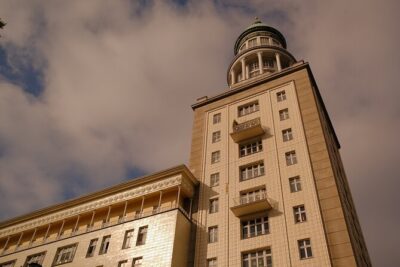
Karl-Marx-Allee Tour: Life and Architecture in East Berlin
Read our review →
Berlin: Hansaviertel Modernist Architecture Tour
Read our review →
Berlin: Guided Architectural Walking Tour of Hansaviertel
Read our review →
Berlin Architecture/River Spree Full Day Photography Tour
Read our review →
Private Taxi Tour of City East History and Architecture 2-3h
Read our review →Browse the lists this tour appears in