
Review · MUNICH
Art Nouveau Meets Street Art in Munich (Max. 12 guests)
Munich’s artistic story takes an unusual turn on this small-group walking and spray-painting tour. You begin among Schwabing’s elegant Jugendstil façades, then use those floral lines and bold shapes as templates for your own postcard designs inside a heated shipping container.
I like the clear connection between looking and making. I also like the personal scale: Philipp leads a maximum of 12 people, and he brings both architectural context and practical help to the creative session. The main consideration is that public transportation costs an extra €4.10 per person, and the tour’s appeal depends on enjoying both a walking tour and hands-on art.
Key points to know before booking
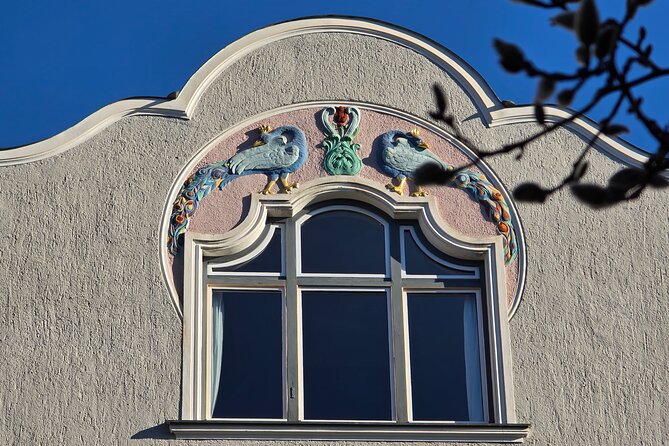
- Four façades become four postcards: You study selected Jugendstil details in Schwabing, then turn those impressions into take-home art.
- Philipp leads the experience: He is an architect and official tour guide who explains Munich’s Art Nouveau story in English and German.
- The group is capped at 12 people: That keeps the walking portion manageable and gives you room to work during the spray-painting session.
- The route links old and new Munich: Schwabing supplies the historic architecture, while the later art stop uses a contemporary setting on a former castle-yard site.
- The activity lasts about two and a half hours: Around one hour is spent discovering Schwabing before the subway ride and creative finale.
- Bring €4.10 for transit: Public transportation is not included, although the tour starts and ends at the same Munich meeting point.
Why the Art Nouveau and spray-paint combination works
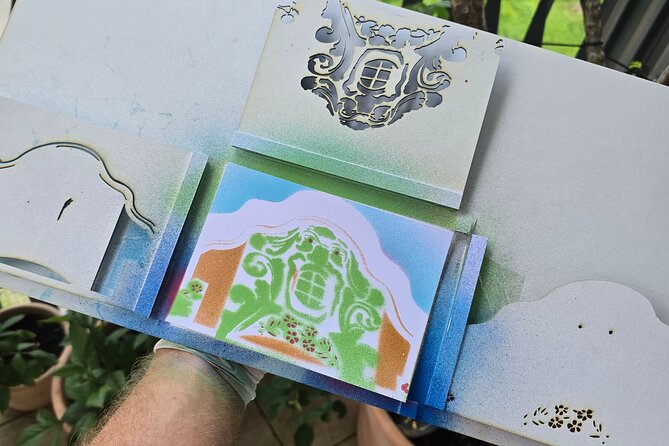
Many art walks ask you to look up at façades, listen to a few names, and move on. This one gives you a second way to remember what you saw. After studying four Jugendstil buildings, you use stencils based on their details to create four postcards.
That shift matters. You are not simply collecting facts about Munich architecture. You are paying attention to the curve of a floral motif, the shape of a window frame, or the way a decorative line is arranged. Then you test what you noticed with spray paint.
I like the idea because it suits curious people who do not consider themselves artists. The supplied equipment includes spray paint, stencils, envelopes, postcards, safety glasses, protective gloves, masks, and clothing covers. You do not need to arrive with art supplies or a finished plan.
The creative session is designed for beginners. Philipp helps make the process approachable, and the small group means you are not lost in a large workshop. One useful detail is that the activity takes place inside a heated shipping container, which gives the finale a practical, modern setting rather than a formal art-school feel.
More Art Nouveau tours in Germany:
- Art Nouveau Meets Street Art in Munich (Max. 12 guests)
★ 5.0 · 4 reviews - Riga: Old Town Walking Tour with Art Nouveau Highlights
★ 4.7 · 332 reviews - Brussels 3-Hour Guided Art Nouveau Tour
★ 4.0 · 282 reviews
Schwabing, where Munich’s Jugendstil story begins
The tour starts at lh medical management on Georgenstraße 7 at 10:45 am. From there, Philipp leads you through Schwabing, Munich’s historic bohemian quarter and the birthplace of German Art Nouveau, also known locally as Jugendstil.
The neighborhood is important because Jugendstil is not just a museum subject here. Its ideas appear on the buildings themselves. Look for decorative façades, plant-inspired patterns, and design choices that break from plain historic building styles.
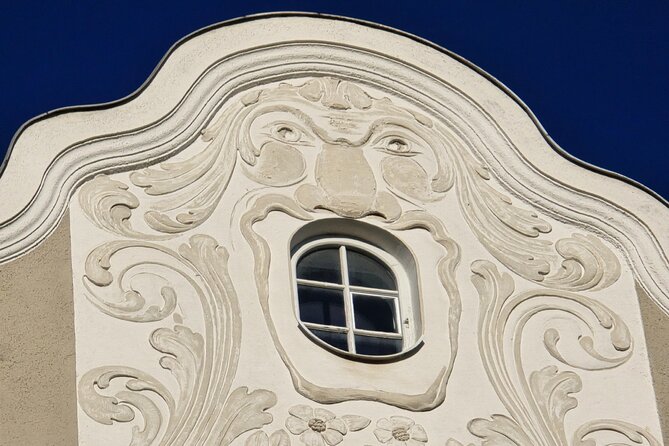
Philipp focuses the walk on four especially notable façades. The tour does not treat them as quick photo stops. You observe and frame their details so they can later guide your postcard designs.
That framing exercise gives the first hour a clear purpose. You are encouraged to notice composition, not just decoration. A façade can be read like an oversized artwork: the entrance creates a base, windows form a rhythm, and ornament draws the eye across the wall.
You will also hear about major figures linked with Munich’s artistic world, including Wassily Kandinsky and Paul Klee. Their names help place Schwabing within a larger story of modern art and creative experimentation.
The supplied information does not promise entry into private buildings or museums, so expect an outdoor architectural walk rather than an indoor gallery visit. Comfortable walking shoes make sense, and you should dress for Munich’s weather before the move to the later workshop.
Four façades, four visual starting points
The most useful part of the architecture walk is its narrow focus. Instead of trying to cover every attractive building in Schwabing, you study four façades closely enough to use them as working material.
That approach can change how you see Jugendstil. At first, the buildings may register as pretty or ornate. With guidance, you begin to separate the parts: floral motifs, geometric framing, curves, surface decoration, and the relationship between older Baroque influence and newer design ideas.
One part of the experience is comparing different building styles. The architectural details are not all identical. Some façades combine Art Nouveau ideas with Baroque influence, while others feel more modern. That contrast gives the walk variety and keeps it from becoming a single-style checklist.
I would pay close attention during this section, even if architecture is not your main interest. The better you understand the patterns and shapes, the more satisfying the spray-painting session becomes. Your postcards are meant to grow out of the walk, not arrive as an unrelated craft project.
The pace also leaves room for ordinary travel needs. A break for coffee and a toilet stop is possible during the experience, and you can carry your coffee to the final activity. That is a small but welcome touch during a morning that combines walking, transit, and creative work.
From Schwabing to the contemporary art stop

After roughly an hour of exploring Schwabing, the group travels by subway to the next area. The public transportation fare is €4.10 per person and is not included in the tour price.
The transfer is part of the concept. You leave the historic façades behind and move to a contemporary artistic district on a former castle-yard site. The change in setting reinforces the tour’s central idea: Munich’s art story includes both carefully designed old buildings and newer, more experimental forms of making.
The destination is identified as the English Garden stop in the supplied route details, while the workshop itself is described as being in a contemporary district on a former castle-yard site. Use the meeting instructions provided at booking, and keep the transit fare ready.
The tour ends back at the original meeting point. That makes the experience easier to fit into a day of Munich sightseeing, since you are not left at an unfamiliar final location. Still, the return journey and subway transfer form part of the approximate two-and-a-half-hour schedule, so do not plan a tightly timed appointment immediately afterward.
A few more architecture tours around Germany worth a look
- Rione Sanità tour among baroque, revival, street art & food
★ 4.8 · 59 reviews - Walking Tour of Houston: History, Architecture, Street Art
★ 5.0 · 59 reviews - Rione Sanità Tour among Baroque, Revival, Street Art & Food
★ 5.0 · 48 reviews - Tirana: Street Art & Modern Architecture Walking Tour
★ 4.9 · 31 reviews
Spray-painting inside a heated shipping container
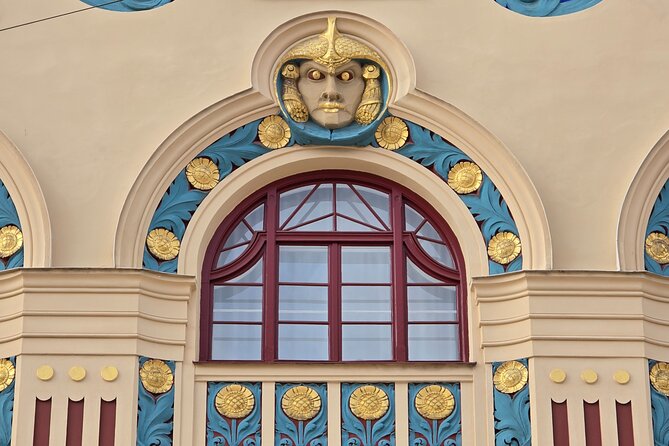
The creative finale takes place in a heated shipping container. That setting is one of the tour’s most distinctive details. It is practical, informal, and far removed from the polished façades you studied earlier.
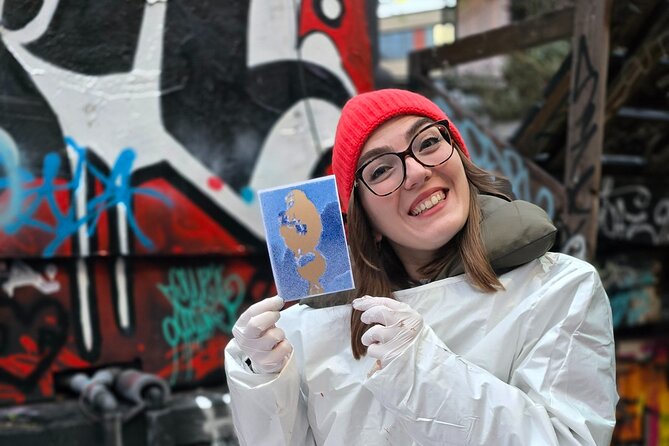
You make four postcards using stencils inspired by the Art Nouveau details from Schwabing. Envelopes are included, so the finished pieces are ready to keep or send.
The equipment list covers the messy and safety-related parts of the activity. You receive protective clothing covers, masks, gloves, and safety glasses, along with the spray paint and materials. That means you can take part without worrying about bringing special clothing or supplies.
If you feel nervous about spray painting, that is understandable. It is an unfamiliar technique for many people, and the first attempt may feel less controlled than drawing with a pencil. Philipp’s role is important here. He keeps the activity relaxed and helps beginners understand how to use the stencils and paint.
Do not expect a fine-art class with a long technical lesson. The point is to try the process, respond to the shapes you saw earlier, and leave with four personal designs. The result may be uneven in places, but that is part of its charm. You are making souvenirs with a direct connection to the morning’s architecture.
The activity also gives families a useful way to share the experience. Children and adults can take part at the same general level, and nobody needs prior art training. Adults who prefer a traditional architecture lecture, however, may find the hands-on ending less appealing.
What the small group changes
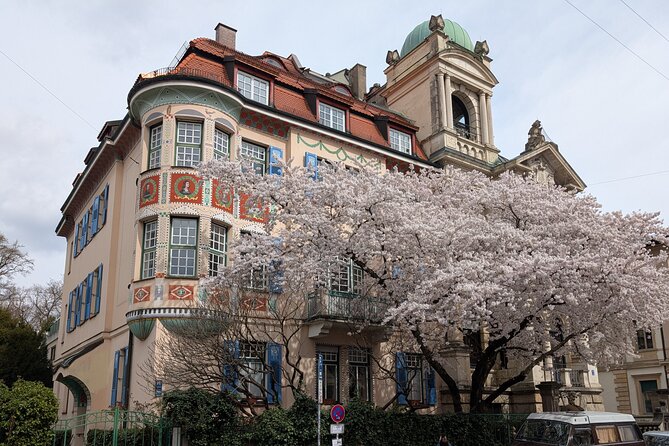
The maximum of 12 participants is a good fit for this kind of tour. On a street walk, a smaller group makes it easier to gather around a façade without blocking the explanation or losing sight of the guide.
It matters even more in the shipping container. Spray painting requires room for movement, equipment, and individual attention. A group of 12 still feels social, but it is far more workable than a large coach group arriving for a quick craft demonstration.
The bilingual format is another factor to consider. The experience is offered in English and German. If you are comfortable with both languages, you may appreciate the natural exchange. If you want a strictly English-only tour, confirm the language arrangement before booking, since the description presents it as bilingual.
Philipp’s background as an architect and official tour guide suits the format. You get a guide who can explain why buildings look the way they do, then connect those observations to a visual activity. That is more useful than having separate people handle the walking and workshop portions without a shared theme.
Price, time, and what you take home
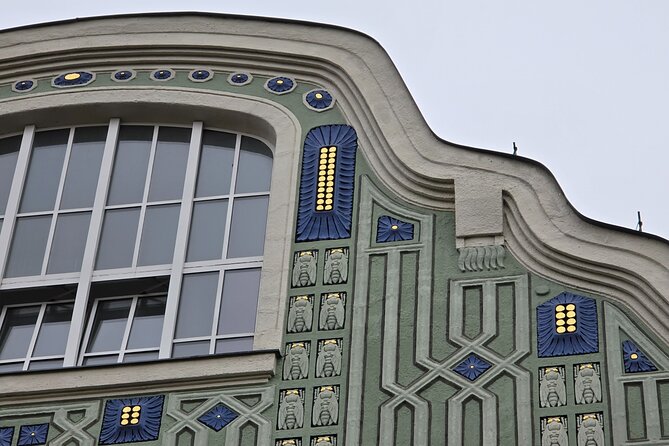
At $43.53 per person, the price is reasonable if you value both parts of the experience. You are paying for about two and a half hours with a small group, a guided Schwabing walk, art instruction, protective equipment, spray paint, stencils, four postcards, and envelopes.
The price is less compelling if you only want a short architecture tour. Much of the value comes from the creative finale, so you should be willing to spend time making rather than simply seeing.
The extra €4.10 subway fare is easy to overlook. Add it to your budget, along with any coffee you choose to buy. Since the tour is often booked around 15 days in advance, it is sensible to reserve ahead if the 10:45 am start and small group matter to your plans.
The four postcards are a stronger souvenir than a standard tour photograph. They are not professionally printed copies, and your results will depend on how you use the stencils. That is exactly why they can feel personal. Each one records what you noticed and how you handled the spray paint.
Free cancellation is available when you cancel at least 24 hours before the start time. Changes or cancellations made less than 24 hours before the experience are not accepted for a refund.
Who will enjoy this Munich art tour most
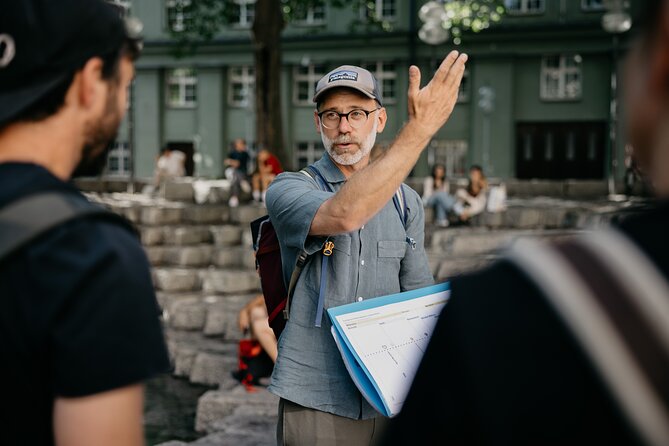
I would recommend this experience to several kinds of visitors:
- Art and design fans who want to see Jugendstil details in their original setting.
- Families looking for an activity that mixes sightseeing with making something.
- First-time creative participants who want a guided introduction to spray painting.
- Repeat Munich visitors who have already covered the major central sights and want a more local neighborhood focus.
- Small groups of friends who like a relaxed activity with a souvenir at the end.
It is also a good option if you find standard walking tours too passive. You spend the first part listening and observing, then the second part doing. That change of pace helps the tour feel distinct from a typical architectural stroll.
I would hesitate if you have limited mobility, since the experience includes walking through Schwabing and a subway transfer, and the supplied information does not provide detailed accessibility specifications. Most people can participate, but you should confirm any specific access needs before booking.
I would also think twice if your Munich schedule is tight. The duration is approximate, and public transportation is part of the route. Leave enough time after the stated end rather than trying to connect immediately to another timed attraction.
Should you book Art Nouveau Meets Street Art in Munich?
Book it if you want more than a list of buildings. The strongest reason to choose this tour is the connection between four real Jugendstil façades and four handmade postcards. You see the design, study the design, and then use it yourself.
Philipp’s mix of architectural guidance and beginner-friendly spray painting gives the experience a clear personality. The small group, protective equipment, coffee break option, and take-home artwork add practical value.
Skip it if you want a fast, traditional city walk, a museum-heavy art tour, or a strictly lecture-based experience. For everyone else, especially families, art lovers, and curious beginners, this is a smart way to meet Munich’s creative side without taking itself too seriously.
FAQ
How long does the tour last?
The experience lasts approximately two hours and 30 minutes.
Where does the tour start?
It starts at lh medical management, Georgenstraße 7, 80799 München, Germany, at 10:45 am.
Where does the tour end?
The activity ends back at the original meeting point.
Is public transportation included?
No. The subway fare costs €4.10 per person and is not included in the tour price.
Is the tour offered in English?
The tour is bilingual in English and German. The listed offering is English.
What is included in the spray-painting activity?
Spray paint, stencils, envelopes, postcards, safety glasses, protective gloves, masks, and clothing covers are included.
Just added around Germany
- Beautiful Baroque Potsdam: A Self-Guided Audio Tour★ 4.5 · 4 reviews
- Munich Your Way: Private Tour with Architect & Guide★ 5.0 · 2 reviews
- Private Munich Tour for History Buffs with Architectural Gems and WWII sites★ 5.0 · 3 reviews
- Hidden Architectural Gems of Munich (Max. 16 guests)★ 5.0 · 2 reviews
- Architectural Frankfurt: Private Tour with a Local Expert★ 5.0 · 2 reviews
- Private Taxi Tour of City East History and Architecture 2-3h★ 5.0 · 2 reviews
- Architectural Berlin: Private Tour with a Local Expert★ 4.0 · 3 reviews
- Berlin Architecture/River Spree Full Day Photography Tour★ 5.0 · 2 reviews
Art Nouveau Tours, compared.
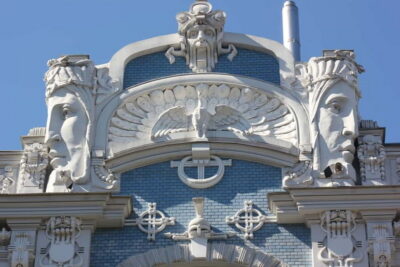
Riga: Old Town Walking Tour with Art Nouveau Highlights
Read our review →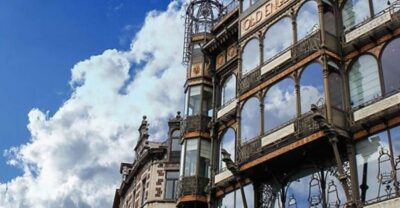
Riga: 2-Hour History of Art Nouveau Walking Tour
Read our review →
Brussels: Art Nouveau Pass – Entry to Three Locations
Read our review →
Small Group Tour in Ålesund: Art Nouveau, Sea Views & Insider Tips
Read our review →
Browse the lists this tour appears in