
Review · WASHINGTON DC
Historic Georgetown Architectural Walking Tour
Georgetown’s best stories are tucked behind quiet streets, old brick homes, and the C&O Canal, not just along its polished shopping blocks. This two-hour walk connects the canal, historic houses, Georgetown University, the Exorcist Steps, and the Potomac waterfront in one well-planned route.
I like the small-group format, capped at 20 people, and the way the tour mixes famous names with less obvious stops such as Pomander Walk, the Yellow Tavern, and Volta Laboratory. The main drawback is that this is more a history walk with architecture than a technical architecture tour, and the two miles include cobblestones and stairs.
I also like the 10am start. You get a useful introduction to Georgetown before spending the rest of the day exploring on your own. Guides named in past outings include Brian, Kim, Caroline, Sam, Christine, and Ellery, though your guide will depend on the date.
Key points at a glance
- Start at Baked & Wired: Meet outside a popular Georgetown coffee and dessert shop at 10am.
- Follow the C&O Canal: Learn how Georgetown once connected Potomac communities with trade and supplies.
- See more than grand houses: The route includes the Old Stone House, Lydia English Seminary, Pomander Walk, and the Yellow Tavern.
- Reach Georgetown University: Healy Hall, the university library, The Tombs, and the Car Barn add a student and civic side to the tour.
- Finish by the Potomac: The route ends at Georgetown Waterfront Park, a handy spot for lunch or a riverfront stroll.
- Plan for moderate walking: Expect about two miles in two hours, with cobblestones and the Exorcist Steps along the way.
Why this Georgetown walk works so well
Georgetown can be confusing on a first visit. The streets bend, the oldest buildings sit away from the busiest shops, and the neighborhood’s story stretches from colonial trade to elite schools, presidents, inventors, and university life.
This tour gives you an orderly route through that mix. You begin near Thomas Jefferson Street, walk toward the canal, cross through historic residential blocks, continue toward the university, and end at the river. You are not simply shown a series of pretty façades. You learn how the neighborhood changed and why these places mattered.
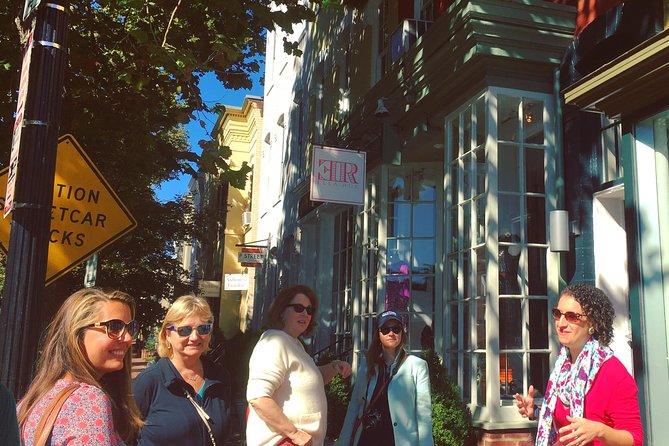
The guide does the heavy lifting. The tour is fully narrated, so you are not left to decode dates from plaques or guess which house belonged to whom. Past guides have included Brian, Kim, Caroline, Sam, Christine, and Ellery. The strongest descriptions of their work point to clear storytelling, humor, patience, and an ability to answer questions without rushing the group.
At $48 per person, this is not the cheapest way to see Georgetown. The value comes from the route and the local context. If you only want to stroll and take photos, you can do that for free. If you want the stories behind the houses, canal, university, and waterfront, two hours with a guide can make the neighborhood much easier to understand.
More architecture walks in the USA:
- The Official Art Deco Walking Tour by The Miami Design Preservation League
★ 5.0 · 1,580 reviews - Chicago in a Day: Food, History & Architecture Walking Tour
★ 5.0 · 1,153 reviews - Miami South Beach Art Deco Walking Tour
★ 5.0 · 1,039 reviews
Starting at Baked & Wired and the C&O Canal
Meet outside Baked & Wired at 1052 Thomas Jefferson Street NW for the 10am start. The meeting point is practical: you can grab coffee or a dessert before setting out, though the tour itself includes only the local guide.
The first focus is the Chesapeake & Ohio Canal. Today, parts of the canal feel quiet and removed from city traffic. Its original purpose was far more practical. It connected communities along the Potomac with markets and goods, helping Georgetown function as a working port and commercial center.
This opening gives you a useful frame for the rest of the walk. Georgetown was not built only as a fashionable address. Its location by the river and canal shaped its trade, streets, and fortunes. I appreciate that the tour begins with this working side of the neighborhood before moving into mansions and famous residents.
The canal area is also a good place to get your bearings. You begin to see how close the commercial center, residential streets, university, and riverfront really are. That is one reason the route works well for a first Georgetown visit.
The Old Stone House and Georgetown’s quieter streets
The Old Stone House is one of the clearest early highlights. It is described as the oldest building in Washington, DC, and the group gets a brief look inside before leaving the main commercial street.
The stop is short, about five minutes, but it gives the tour a strong physical link to Georgetown’s early years. Instead of viewing the neighborhood as a collection of later mansions, you see an older structure that helps anchor the story.
From here, the route moves into quieter residential streets. This is where the walk becomes more than a quick overview of M Street and its shops. You pass homes connected with prominent Washington figures, including Jackie Kennedy and Ben Bradlee, while your guide explains the people and events tied to the neighborhood.
Expect a mix of imposing homes, churches, and smaller details that are easy to miss when walking alone. The pace is described as leisurely, but you are still covering about two miles, so comfortable shoes matter.
Houses, schools, churches, and old Georgetown stories
The middle portion brings together some of the most varied stops on the route. You hear about the Laird-Dunlop House and Newton D. Baker House, then pass the former Lydia English Seminary School for Girls.
The seminary was a boarding school for upper-class girls. That detail adds a social layer to the walk. Georgetown was not just home to merchants and government figures. It also served as a place where affluent families sent daughters for education and social preparation.
The Grafton Tyler Double House offers another angle. Rather than focusing only on isolated mansions, the tour points out a shared or divided residential form. Details like this help you notice how Georgetown’s buildings reflect different ways of living, not just different levels of wealth.
Christ Episcopal Church and Hyde-Addison School show how community institutions shaped the neighborhood. Churches and schools are easy to pass without a second thought, but they reveal how families lived, worshipped, and educated their children over time.
The route also includes the Yellow Tavern, sometimes called the White Horse Tavern. Its former reputation gives the walk a little edge. Georgetown’s past was not all polished brick and respectable names, and this stop helps keep the story from becoming too tidy.
More history tours in the USA:
- Charleston’s Best Highlights: History, Culture & Architecture
★ 5.0 · 422 reviews - Palm Springs Modernism Architecture & History Bike Tour
★ 5.0 · 359 reviews - Charleston: History and Architecture Guided Walking Tour
★ 4.8 · 349 reviews - Historic Georgetown: History, Gossip, & Architecture Walking Tour
★ 5.0 · 321 reviews
Pomander Walk and Volta Laboratory
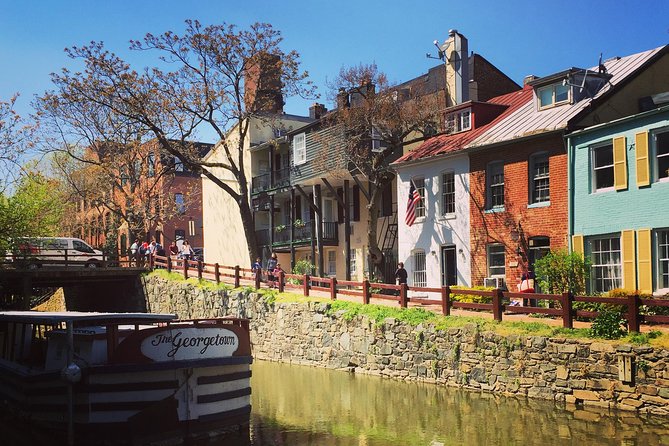
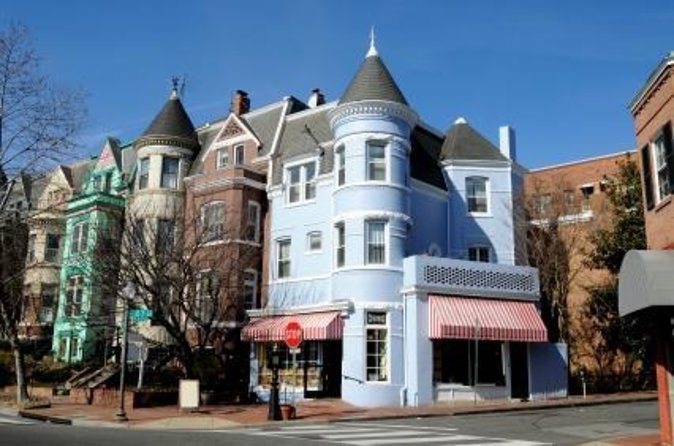
Pomander Walk is one of the more visually distinctive parts of the route. The passage is lined with tiny, pastel-colored row houses, a sharp contrast to Georgetown’s larger homes and formal streets.
This is the sort of place that makes a guided walk worthwhile. You might notice the color and compact design on your own, but the story and setting give it more meaning. It also offers a pleasant change of scale after the grander houses earlier in the walk.
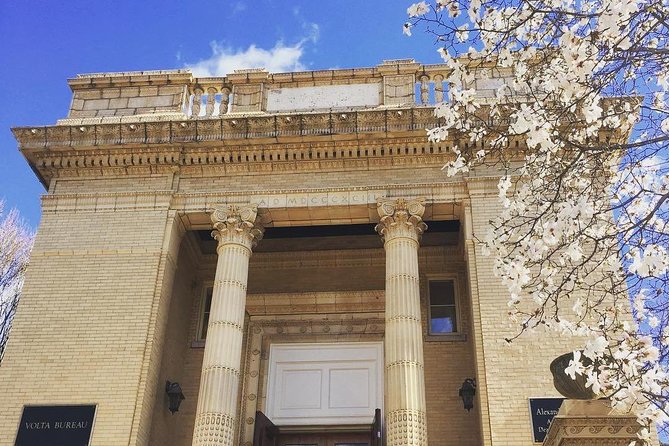
The tour then turns to Volta Laboratory, where Alexander Graham Bell founded a laboratory. The site connects Georgetown to the history of invention and scientific work, adding another layer to a neighborhood often associated mainly with politics, wealth, and university life.
I like this range. In a single walk, you move from canal commerce to elite education, from church life to scandal, and from residential architecture to experimental technology. The topics do not all receive equal time, but the variety keeps the tour moving.
Georgetown University, Healy Hall, and the Exorcist Steps
Georgetown University gives the route a change in mood. The tour includes Georgetown Preparatory School, Healy Hall, and the university library, along with a look at The Tombs, a well-known spot connected with campus nightlife.
Healy Hall is among the more recognizable sights on the route, while the library and preparatory school broaden the picture of education in the area. You are not only looking at one campus landmark. You are seeing how schools became part of Georgetown’s identity.
The Tombs adds a lighter, more current note after so much history. It gives you a glimpse of the student side of Georgetown, rather than treating the university as a set of formal buildings.
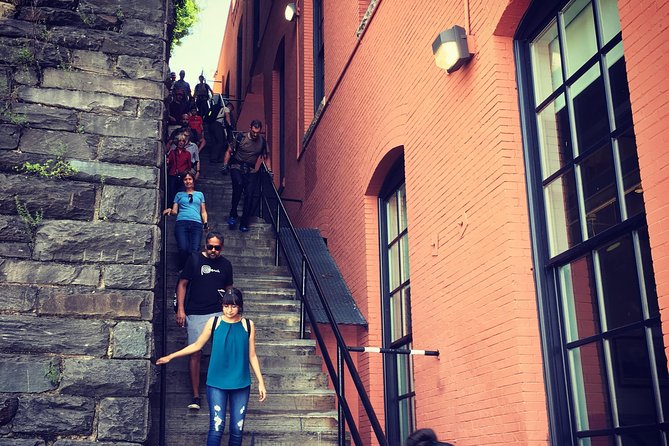
The route also includes the Exorcist Steps. This is a practical point to note before booking. The walk is labeled moderate, and stairs add effort beyond the stated two miles. Anyone who prefers completely flat routes should take this into account.
The university section is one of the reasons the tour suits families with older children and teenagers. A past family outing specifically appreciated the mix of Georgetown’s formation, the C&O Canal, the university, Alexander Graham Bell’s laboratory, and the Exorcist connection. The guide’s stories can make the history easier for middle-school students and older children to follow.
The Car Barn, Cady’s Alley, and the river
Near the end, you see the Georgetown Car Barn, a former streetcar depot that has been renovated. The building helps explain the neighborhood’s transportation history and shows how older structures can take on new uses.
Cady’s Alley brings the route back toward the area’s modern commercial side. By this point, you have seen Georgetown as a canal port, residential enclave, school district, university setting, and transportation hub. Cady’s Alley adds a contemporary finish without turning the tour into a shopping walk.
The tour then reaches the Francis Scott Key Memorial and Georgetown Waterfront Park. The memorial connects the riverfront with an important American literary and national figure, while the park provides an open ending after the close streets and buildings.
The official endpoint is Georgetown Waterfront Park at 3303 Water Street NW. This is useful planning information. You do not finish back at Baked & Wired, so arrange your next stop from the waterfront rather than assuming a return to the starting point.
What the $48 price buys you
The $48 price is reasonable if you want a guided introduction and plan to use the rest of your day independently. You get two hours of narration, a route that covers several parts of Georgetown, and a small group with a maximum of 20 people.
The strongest value is the number of subjects packed into a short walk. You see the canal, Old Stone House, historic residences, a former school, church, tavern, colorful row houses, laboratory, university buildings, streetcar depot, memorial, and waterfront.
Still, keep expectations in check. This is not a private tour, and the group may include up to 20 people. It is not a specialist course in architectural styles, either. The focus leans toward people, events, local stories, and the way Georgetown developed.
The tour is offered in English and uses a mobile ticket. Confirmation is provided when you book. It runs for about two hours and is normally scheduled 12 days in advance, so last-minute space may not be available.
Who should book this walk
I would choose this tour for a first visit to Georgetown, especially if you want a clear orientation before exploring on your own. It also suits history fans, families with older children, and visitors who enjoy hearing the stories behind buildings rather than simply photographing them.
It is a good fit for solo visitors and couples who want company without committing to a full-day group outing. The two-hour length leaves plenty of time for lunch, museums, shopping, or a riverfront walk afterward.
The tour may be less suitable if you have limited walking ability. You should be comfortable with about two miles, cobblestone streets, and the Exorcist Steps. Service animals are allowed, and the meeting area is near public transportation, but no claim is made that every part of the route is step-free.
The 97 percent recommendation rate and 4.9 rating from 77 ratings suggest a consistently strong experience, with special praise for guides who are friendly, engaging, professional, and well informed. Christine has also been helpful with nearby ice cream suggestions, which is a useful bonus after a warm-weather walk.
Practical details before you go
The tour begins at 10am outside Baked & Wired, 1052 Thomas Jefferson Street NW. It ends at Georgetown Waterfront Park, 3303 Water Street NW.
Wear shoes suited to about two miles of walking. The route includes historic streets, cobblestones, and stairs, and the pace is leisurely rather than rushed.
The activity requires a moderate level of physical fitness. It is offered in English, uses a mobile ticket, allows service animals, and accepts a maximum of 20 participants.
Free cancellation is available if you cancel at least 24 hours before the start time. Changes or cancellations made less than 24 hours ahead are not accepted for a refund. If the minimum number of participants is not met and the tour is canceled, you can receive a different date or experience, or a full refund.
Should you book the Historic Georgetown Architectural Walking Tour?
Book it if you want Georgetown explained rather than simply viewed. The route covers the canal, old houses, schools, university buildings, local oddities, and waterfront in a sensible two-hour loop, and the guides appear to be the main strength.
Skip it if you want a strictly technical architecture tour, a private guide, or a flat route with no stairs. For most first-time visitors who can manage moderate walking, $48 is a fair price for a lively introduction to one of Washington’s most layered neighborhoods.
FAQ
Where does the tour begin?
The tour begins outside Baked & Wired at 1052 Thomas Jefferson Street NW, Washington, DC 20007.
What time does the tour start?
The tour starts at 10am.
Where does the tour end?
The tour ends at Georgetown Waterfront Park at 3303 Water Street NW, Washington, DC 20007.
How long is the tour?
The walking tour lasts about two hours.
How far do you walk?
You should plan to walk about two miles, or 3.2 kilometers.
Is the tour offered in English?
Yes. The tour is offered in English.
Can I cancel for a full refund?
Yes, if you cancel at least 24 hours before the scheduled start time. Cancellations or changes made less than 24 hours before the tour are not accepted for a refund.
Just added around the USA
- Wilmington History and Architecture Tour★ 4.8 · 18 reviews
- Washington, DC: Georgetown Architecture Walking Tour★ 5.0 · 8 reviews
- New Orleans : Garden District Architecture Walking tour★ 4.8 · 5 reviews
- Washington DC: Dupont Circle & Embassy Row Architecture Tour★ 5.0 · 6 reviews
- Tulsa: Art Deco Walking Tour of Tulsa★ 5.0 · 8 reviews
- Castle to Capitol: Museums of the National Mall Architecture Tour★ 4.5 · 9 reviews
- Private Colonial Williamsburg Architectural Tour★ 5.0 · 5 reviews
- Iconic Capitol Hill Architectural Walking Tour★ 5.0 · 21 reviews
Walking Tours, compared.
The Official Art Deco Walking Tour by The Miami Design Preservation League
Read our review →
Barcelona: Gothic Quarter Ghosts and Legends Walking Tour
Read our review →
Barcelona: Old Town and Gothic Quarter Walking Tour
Read our review →
Lecce: Baroque Architecture and Underground Walking Tour
Read our review →
Chicago in a Day: Food, History & Architecture Walking Tour
Read our review →

Ramblas, Old Town, Gothic and Gaudi Architecture Walking Tour
Read our review →
Chicago’s Secret Interiors Architectural Walking Tour
Read our review →Browse the lists this tour appears in