
Review · ITALY
Turin, Art Nouveau walking tour and coffee break
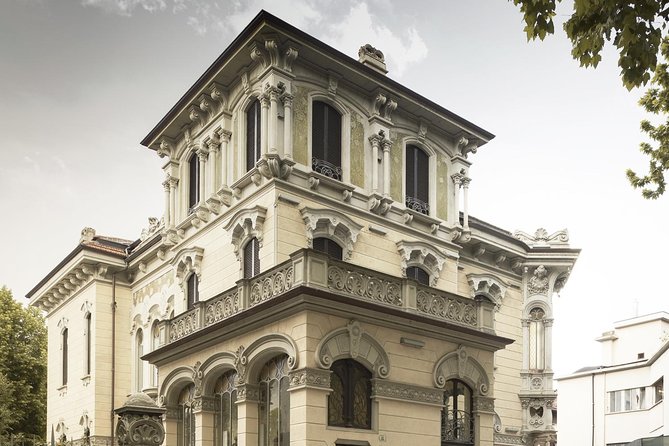
Turin’s Liberty architecture rewards people who look up. On this two-hour walk, you move beyond the grand central squares to fanciful facades, curling iron balconies, colored glass, and carved details that are easy to miss on your own. Casa Fenoglio, known as La Fleur, and the dragon-decorated Casa della Vittoria are the main visual treats.
I like the small group of no more than nine, which should make it easier to ask about architects and details. I also like the coffee break in a bar with Liberty decor, since it gives the walk a natural pause rather than turning the whole experience into a fast march through residential streets.
The main consideration is price: at $82.26 per person, this is a serious charge for two hours, especially since no admission tickets are included. You are paying for focused interpretation, local knowledge, and a sociable group rather than entry to an indoor museum.
Key points to know before you book
- Look closely at Casa Fenoglio: Floral friezes, wrought iron, and polychrome glass make this one of the prettiest facades on the route.
- Expect four architectural stops: Casa Fenoglio, Casa della Vittoria, Villino Raby, and Chiesa Gesù Nazareno each receive about 20 minutes.
- The group is capped at nine: This keeps the walk more personal than a large city tour.
- A coffee break is built in: You stop at a bar noted for its Art Nouveau decoration.
- Guides bring local character: Marco, Francesca, and Simone have been praised for clear explanations, warmth, and strong knowledge of Turin’s Liberty style.
- Allow for an outdoor tour: The experience requires good weather and ends where it begins at Principi d’Acaja.
Why Turin’s Liberty streets deserve two hours
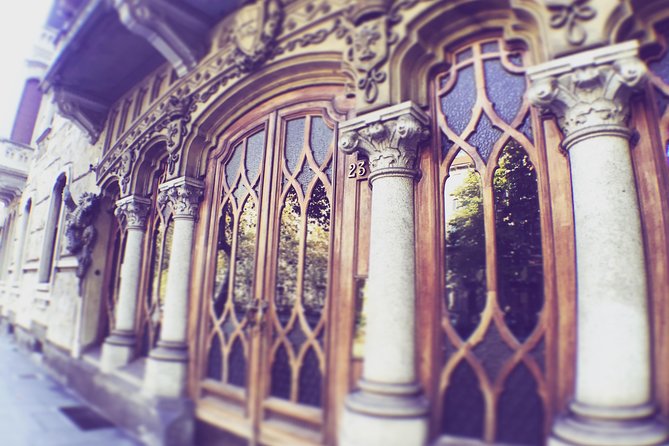
Most first-time visits to Turin focus on the city center, royal residences, arcades, museums, and grand Baroque squares. Those sights matter, but Turin has another face in its residential districts. Around Principi d’Acaja, architecture becomes more playful and personal.
Italian Art Nouveau is usually called Stile Liberty. The name refers to the Liberty department store in London, whose decorative style helped spread this new fashion across Europe. In Turin, local architects mixed floral decoration with ironwork, colored glass, stone carving, and older Gothic or French influences.
That combination is what makes this walk useful. You are not simply looking at attractive buildings. You are learning to spot the repeated language of Liberty architecture: plant forms, curved lines, asymmetrical details, bow-windows, decorative entrances, and metalwork designed as carefully as the stone facade.
The route gives you time at four buildings, with about 20 minutes at each. That pace is generous enough for a guide to explain what you are seeing, but it still keeps the experience compact. If you have only a short stay in Turin, this can work well as a focused architectural introduction.
The walk is also a good choice if you have already seen the central city. It takes you into a neighborhood where the buildings themselves provide the main story. You should expect an outdoor experience rather than a tour of lavish interiors. The listed stops do not include admission tickets, and the appeal lies mainly in the exterior details.
More Art Nouveau tours in Italy:
- Turin: Art Nouveau Walking Tour with Coffee
★ 5.0 · 11 reviews - Art Nouveau Rome: Villa Torlonia & Coppedé Private Tour
★ 5.0 · 5 reviews - Riga: Old Town Walking Tour with Art Nouveau Highlights
★ 4.7 · 332 reviews
Casa Fenoglio, where the flowers set the tone
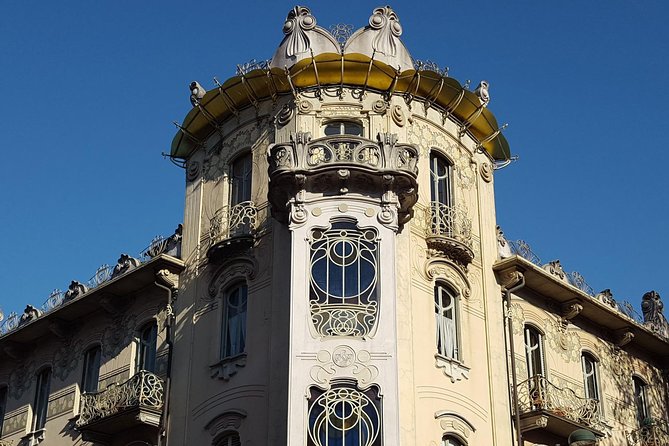
Casa Fenoglio is also called Casa La Fleur, and it gives the tour an immediately decorative opening. The facade is covered with floral friezes, so this is a place to examine the building from top to bottom rather than take one quick photograph.
The wrought iron balconies are another strong feature. Liberty architects treated iron as more than a practical material. Railings could echo stems, leaves, and curling branches, helping the balconies become part of the overall design.
The polychrome glass adds color to the facade. From the street, you can look for the way colored glass works with the iron and stone. This is exactly the kind of detail that can disappear during an ordinary walk, especially when you are concentrating on directions or trying to see several sights in one morning.
A guide can also help you separate the original architectural idea from the broad label of Art Nouveau. The best part of a specialist walk is not simply being told that a building is Liberty. It is having someone point out how the decoration is arranged and why certain features matter.
You spend about 20 minutes here. That is enough for a close look, though anyone who loves architectural photography may wish the schedule allowed more time. The tour has several stops, so the guide must keep the group moving.
Casa della Vittoria and its dragon details
Casa della Vittoria is known as the House of Dragons, and the name gives you a clue about its personality. Compared with a purely floral facade, this palace brings a more dramatic, almost storybook quality to the route.
Its design mixes French neo-Gothic elements with the Liberty style that became fashionable in Turin at the turn of the twentieth century. This blend is important. Art Nouveau did not arrive as a single strict formula. Architects borrowed from older Gothic forms, local traditions, and newer decorative ideas.
Look for how the building’s Gothic character works with the softer curves and ornament associated with Liberty. The contrast helps explain why the building is regarded as one of Turin’s important examples of this period. It is not just decorated. It shows two design impulses meeting in one structure.
The 20-minute stop should suit most people who want a clear introduction to the building. If you already have a strong background in European architecture, you may wish for more technical discussion about the architect and construction. Still, the walk’s strength is its readable approach. You get enough context to notice the details without turning a short city walk into a lecture.
Villino Raby and the work of Pietro Fenoglio
Villino Raby brings the name Pietro Fenoglio back into focus. Fenoglio was one of the important architects connected with Turin’s Liberty buildings, and this villa is presented as one of his major works.
The wrought iron railings lead your eye toward the building’s rooms and large bow-window. That curved window gives the facade a more fluid shape than a plain rectangular opening. It is a useful feature to study because it shows how Liberty architecture could affect the form of a building, not just its surface decoration.
The decorations by Domenico Smeriglio add another layer. Here, the architect and decorator’s work meet. You can look at the relationship between the structural parts, such as the window and railings, and the ornamental parts, such as the precious decorative work.
This stop is likely to appeal most to anyone who enjoys the connection between architecture and craftsmanship. You are seeing a building where metalwork, glass, windows, and surface decoration were planned as a whole.
Again, the scheduled time is about 20 minutes. That gives you a solid look at the exterior, but it does not promise a full study of every feature. Since no interior admission is included, set your expectations accordingly.
More architecture walks in Italy:
- Lecce: Baroque Architecture and Underground Walking Tour
★ 4.6 · 1,248 reviews - Experience Florence’s Art and Architecture on a Walking Tour
★ 5.0 · 318 reviews - Guided Walking Tour of Rome: Top Sights & Baroque Treasures
★ 5.0 · 155 reviews - Palermo: Art and Architecture Walking Tour
★ 4.7 · 136 reviews
Chiesa Gesù Nazareno adds a religious dimension
The final architectural stop is Chiesa di Gesù Nazareno, built between 1904 and 1913 to a design by Giuseppe Gallo. Its main style is neo-Gothic, with Liberty influences, so it continues the tour’s theme of styles meeting rather than sitting in separate boxes.
The church has a Latin cross plan and a high bell tower. Its facade is richly decorated, making it a suitable ending for a route centered on exterior design. The tower gives the building a strong vertical presence, while the decorative facade rewards a slower look at the lower details.
This stop broadens the experience. The other buildings are residential or palace architecture, while the church shows how Liberty ideas could be used in a religious setting. You can compare the way ornament works on a private house with the way it works on a church facade.
The 20-minute visit is enough to understand the building’s place on the route. As with the other stops, the supplied details do not promise an interior visit. You should treat it as an architectural viewing stop from the outside.
The coffee break is more than a pause
A coffee stop in a bar known for its Art Nouveau decor is a smart part of this experience. Turin has a strong cafe culture, and taking a break in a setting that matches the subject gives the walk a pleasant sense of continuity.
The coffee break also affects the pace. Two hours of standing and walking while looking closely at buildings can feel more tiring than the distance suggests. A short stop lets you sit down, collect your thoughts, and continue the conversation with the guide.
The exact bar and the length of the break are not specified, so do not plan around a particular drink or pastry. The important point is that the pause is part of the experience, not an optional extra you must arrange yourself.
I would especially value this feature on a morning or afternoon when you want an activity with some social time. It makes the walk feel less like a checklist of facades and more like a small neighborhood outing.
What the guide adds to the buildings
Architecture walks depend heavily on the person leading them. Here, the available guide names include Marco, Francesca, and Simone. Francesca has been described as passionate and well informed, while Marco is praised for his explanations of Turin’s history and architecture. Simone is noted for being prepared and helpful.
One particularly useful detail is that at least one guide grew up in the neighborhood. That kind of local connection can give the walk a more personal feel. It may also help you understand the area as a lived-in part of Turin, not just an outdoor gallery.
The small group limit matters here. With nine people or fewer, you should have a better chance of hearing the guide beside a facade and asking a question without competing with a crowd. A small group also makes it easier to keep the walk sociable.
The guide’s role is most valuable when the buildings are occupied or viewed from public streets. You cannot depend on entering every structure, so clear explanations help turn exterior viewing into a worthwhile experience.
Is $82.26 a fair price?
At $82.26 per person, this is not a budget walking tour. Two hours of sightseeing can cost much less if you simply follow a map and view the buildings independently.
The value comes from the concentration. You are being taken directly to several of Turin’s notable Liberty examples, with a guide explaining floral decoration, Gothic influence, ironwork, glass, bow-windows, and the architects connected with the buildings. The coffee stop and small group also add something beyond a self-guided route.
For an architecture enthusiast, the price may be reasonable because it saves research time and helps you see details you might otherwise pass. It is also more appealing if you want company and prefer asking questions as you walk.
For a casual visitor who only wants a general introduction to Turin, the cost may feel high. You could see attractive buildings without paying for a specialist tour, though you would lose the focused context. Group discounts may improve the value if you are booking with others.
The experience is often booked about 31 days ahead, so planning early is sensible if your dates are fixed. You receive confirmation when booking, and a mobile ticket is available.
Timing, meeting point, and practical planning
The walk begins at Principi d’Acaja, 10138 Turin, and returns to the same meeting point. It is near public transportation, which makes the start relatively practical for a city visit, though the supplied details do not specify the exact transit line or walking time from your accommodation.
The stated duration is about two hours. Plan for an outdoor walk with several standing stops and a coffee break. Wear shoes you can comfortably use on city streets, and check the forecast before setting out because the activity requires good weather.
Most people can take part, according to the supplied participation information. No special physical requirement is listed. Still, anyone who finds two hours of walking or standing difficult should confirm details with the provider before booking.
Free cancellation is available up to 24 hours before the start time for a full refund. Changes or cancellations inside that window are not accepted for a refund. If poor weather cancels the walk, you are offered another date or a full refund. The same applies if the minimum number required to operate the experience is not reached.
Who will enjoy this Liberty walk most?
I would choose this tour if you enjoy architecture but do not want to spend a full day in museums. It also suits repeat visitors who have already covered Turin’s best-known central sights and want a different part of the city.
It is a strong match for photographers, design students, and anyone curious about how European Art Nouveau changed from one building to the next. The route has enough variety to show floral ornament, Gothic references, religious architecture, ironwork, stained glass, and curved windows.
It may be less suitable if you want to enter historic buildings, see furnished rooms, or move at your own pace. The listed stops are exterior-focused, and the group schedule means you cannot linger indefinitely at one facade.
The walk also works well for people who prefer a social experience. The nine-person limit is small enough for conversation, and the coffee break gives you a natural moment to connect with the guide and the rest of the group.
Should you book it?
Book this Turin Liberty walk if you want someone to point out the details that make Casa Fenoglio, Casa della Vittoria, Villino Raby, and Chiesa Gesù Nazareno special. The strongest reasons are the focused route, the small group, and guides such as Marco, Francesca, and Simone, who bring strong subject knowledge and local warmth.
Skip it if $82.26 feels too high for a two-hour exterior walk, or if your main goal is indoor access. You can explore the neighborhood independently, but you will need to do your own research and identify the buildings yourself.
For the right visitor, this is a compact way to see a less obvious side of Turin. It gives you four distinctive facades, a coffee in a matching Art Nouveau setting, and a better eye for the city’s decorative details.
FAQ
How long does the Turin Art Nouveau walking tour last?
The tour lasts approximately two hours.
What is the price per person?
The listed price is $82.26 per person.
How many people can join the tour?
The group is capped at a maximum of nine participants.
Where does the tour begin?
The meeting point is Principi d’Acaja, 10138 Turin, in the Metropolitan City of Turin.
Where does the tour finish?
The activity ends back at the meeting point.
Which buildings are visited?
The route includes Casa Fenoglio, also called Casa La Fleur, Casa della Vittoria, Villino Raby, and Chiesa Gesù Nazareno.
Is a coffee break included?
Yes. The tour includes a coffee break in a bar known for its Art Nouveau decor.
Are admission tickets included?
No. Admission tickets are not included at the listed stops.
Can I cancel for a full refund?
Yes. You can cancel at least 24 hours before the experience start time for a full refund.
What happens if the weather is poor?
If bad weather causes the tour to be canceled, you are offered a different date or a full refund.
More Coffee Experiences in Italy
- Coffee, History, and Architecture of the French Quarter
★ 4.9 · 71 reviews - Coffee and Art Tour walking Gothic Quarter, Official Guide
★ 5.0 · 2 reviews
Just added around Italy
- Vicenza: Palladian Architecture Private Walking Tour★ 3.3 · 3 reviews
- Vicenza: discovering the city of Palladio by e-bike★ 5.0 · 4 reviews
- Turin: Art Nouveau Walking Tour with Coffee★ 5.0 · 11 reviews
- Vatican: Exclusive Baroque Evening With Aperitivo & Dinner★ 3.1 · 2 reviews
- Venice Music Project – Baroque Autumn – Season 2025★ 4.5 · 7 reviews
- Walking tour in Venice with an architect★ 5.0 · 16 reviews
- Palladio. A wonderful live tale through time&soul, from Ve/Pd/Vr★ 5.0 · 7 reviews
- Private One Day Tour of Montalbano and the Baroque Ibleo★ 4.5 · 2 reviews
Art Nouveau Tours, compared.
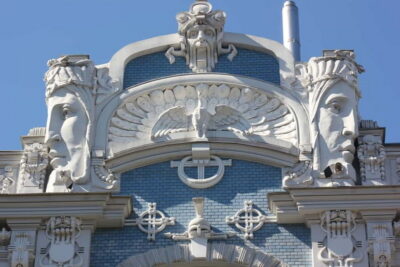
Riga: Old Town Walking Tour with Art Nouveau Highlights
Read our review →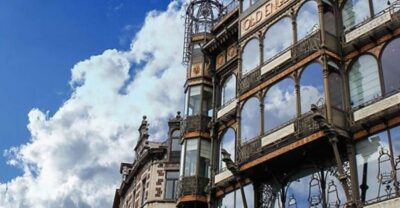
Riga: 2-Hour History of Art Nouveau Walking Tour
Read our review →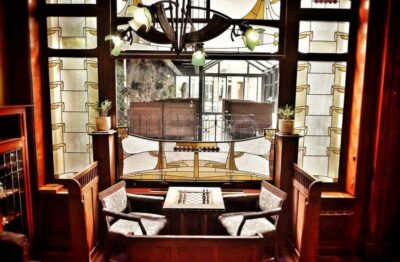
Brussels: Art Nouveau Pass – Entry to Three Locations
Read our review →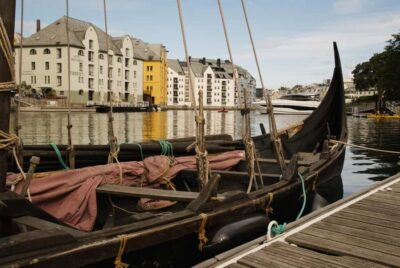
Small Group Tour in Ålesund: Art Nouveau, Sea Views & Insider Tips
Read our review →
Browse the lists this tour appears in