
Review · ROME
Art Nouveau Rome: Villa Torlonia & Coppedé Private Tour
Rome has no shortage of grand palaces, but Villa Torlonia offers something different: a country-style retreat shaped by wealth, politics, private taste, and odd architectural ideas. You’ll see the Casino Nobile, Mussolini’s former rooms, underground shelters, and the marvelous House of the Owls before walking into Coppedè’s theatrical residential quarter.
I like the mix of political history and decorative art. I also like the private format, which lets you set the pace and ask questions instead of being pushed along with a large crowd. The main drawback is simple: three hours includes a fair amount of walking, and the $362.51 per-person price makes the tour best suited to visitors who care deeply about architecture and want a guide’s close attention.
Key points to know before you book
- Villa Torlonia reveals Mussolini’s Rome home, including his former bedroom and Rachele’s separate room in the Villino Nobile.
- The House of the Owls is the visual star, with stained glass, carved details, inlaid wood, and a playful mix of architectural styles.
- Piazza Mincio feels unlike central Rome, with Gino Coppedè’s fantastical buildings arranged around a theatrical square.
- Guide Marco brings academic depth, with a background as a history and archaeology professor at Sapienza University.
- The private format suits curious, flexible visitors, since the pace and focus can be adjusted to your interests.
- Expect substantial walking, even though Villa Torlonia is only about 10 minutes by taxi from central Rome.
Why Villa Torlonia makes a fine change from central Rome
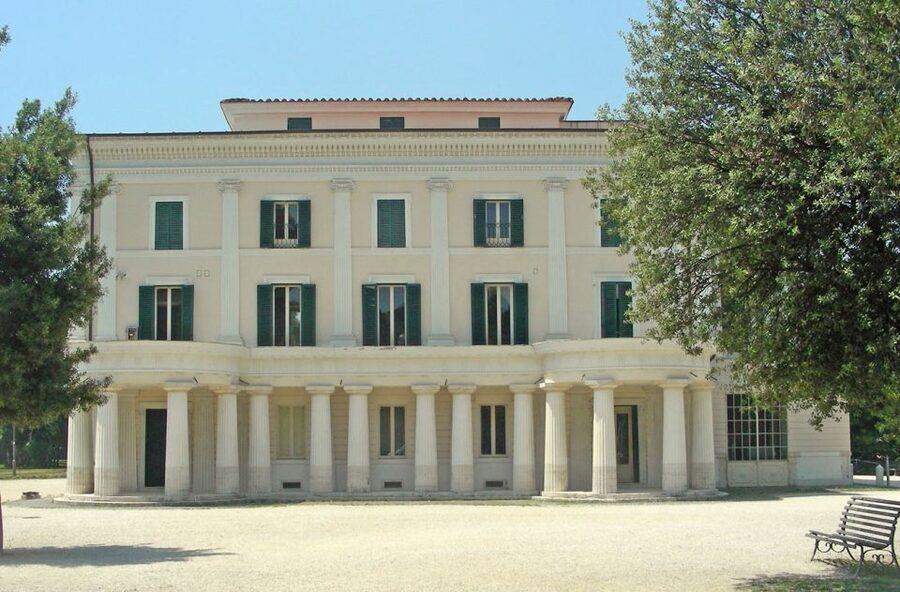
Villa Torlonia sits on Via Nomentana, about 10 minutes by taxi from Rome’s city center. That short ride takes you away from the Colosseum and the crowded historic core and into a quieter setting connected to one of Rome’s wealthiest families.
The Torlonias began as bankers and gained noble status after a member of the family was made a prince by the pope. The villa reflects that rise. It was not designed as a modest country house. It was built to announce wealth, taste, and social ambition.
Your guide begins with the estate’s main buildings and explains how the family used the property. The Casino Nobile was created for a prince of the Torlonia family, and its formal role helps you understand why the smaller buildings around the park feel so different. The main residence was meant to impress. Other structures offered privacy, leisure, or personal escape.
I would not treat this as just another grand-house visit. The appeal is the contrast between public status and private life. You see the world the family wanted to display, then move toward the more personal spaces that reveal their habits and preferences.
The three-hour schedule gives you about 90 minutes at Villa Torlonia, followed by 45 minutes at the House of the Owls and 45 minutes in Quartiere Coppedè. Those time blocks are useful because they prevent the tour from becoming a rushed march through every corner of the park. If you want to linger, tell your guide. The tour can be adjusted to see fewer sites at a slower pace.
More Art Nouveau tours in Rome:
- Riga: Old Town Walking Tour with Art Nouveau Highlights
★ 4.7 · 332 reviews - Brussels 3-Hour Guided Art Nouveau Tour
★ 4.0 · 282 reviews - Riga: 2-Hour History of Art Nouveau Walking Tour
★ 4.8 · 118 reviews
Casino Nobile and the Torlonia family story
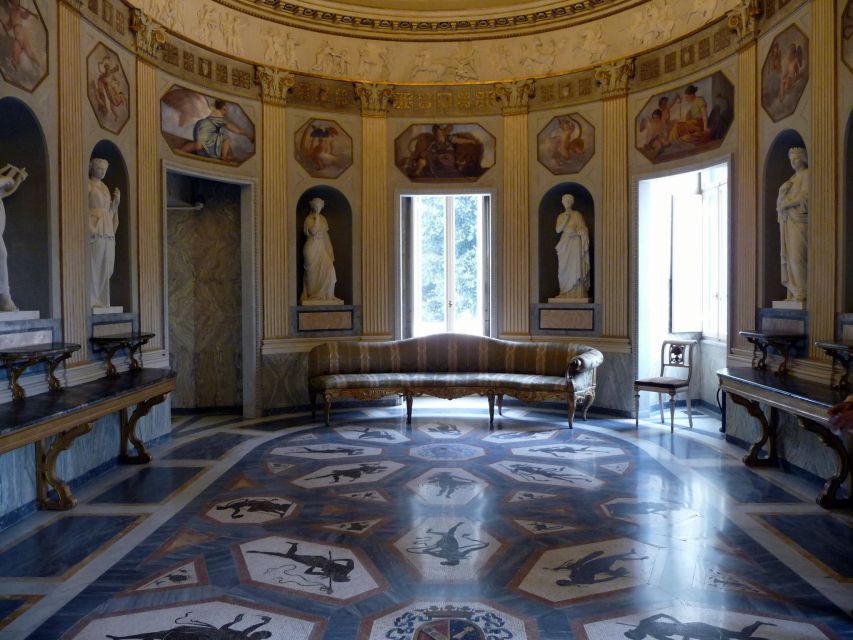
The Casino Nobile is the formal heart of the visit. It was built for a Torlonia prince, and the building helps explain the family’s place in 19th-century Rome. Here, architecture is tied closely to money and status rather than only to beauty.
A good guide can turn rooms and façades into a social story. Marco, one of the guides associated with this experience, is a history and archaeology professor at Sapienza University. His background is especially useful here because the villa’s interest comes from several directions at once: architecture, Roman society, politics, decorative arts, and literature.
You can expect close attention to details that are easy to miss when visiting alone. The guide may connect a decorative feature to the family’s ambitions, explain the role of a particular building, or place the villa within Rome’s changing political life.
The Casino Nobile is also a good place to notice how the estate differs from the later Coppedè quarter. At Villa Torlonia, the architecture belongs to a private aristocratic world. In Coppedè, the buildings were designed as a residential district, but they still carry a strong personal signature.
Mussolini’s former rooms and the two bunkers
Villa Torlonia became the home of Benito Mussolini in the 1930s. That fact changes the tone of the visit. The estate is not only a wealthy family’s country retreat. It also became part of Italy’s 20th-century political story.
Mussolini and his wife, Rachele, used separate bedrooms on the upper floor of the Villino Nobile. The original furniture is gone, so you should not expect a fully furnished domestic time capsule. The value lies in the setting and the historical explanation rather than in a preserved bedroom interior.
The basement adds a more unsettling layer. It provided access to two bunkers built by Mussolini, one intended as a bomb shelter and the other as a gas shelter. These spaces bring the anxieties of wartime Rome into a place that began as a display of privilege.
I like this part because it complicates the villa. You move from banking wealth and princely display to dictatorship and wartime fear. The story is not presented as one smooth tale of beauty. It has uncomfortable turns, and a good guide helps you hold those different pieces together.
Visitors interested only in ornamental rooms may find the bunker section less polished than the decorative buildings. If you are interested in how Rome’s grand properties were used during the 20th century, it adds real weight to the visit.
The House of the Owls and its stained glass
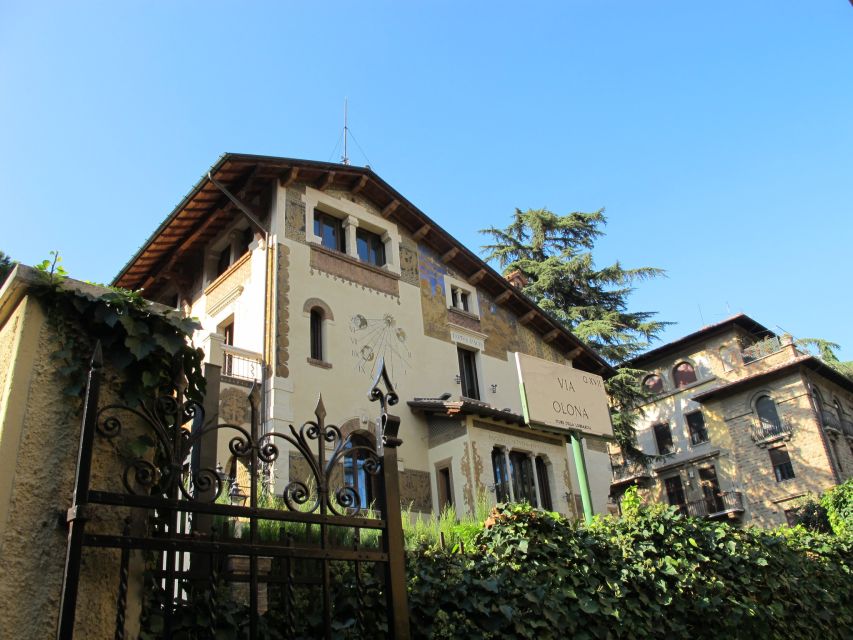
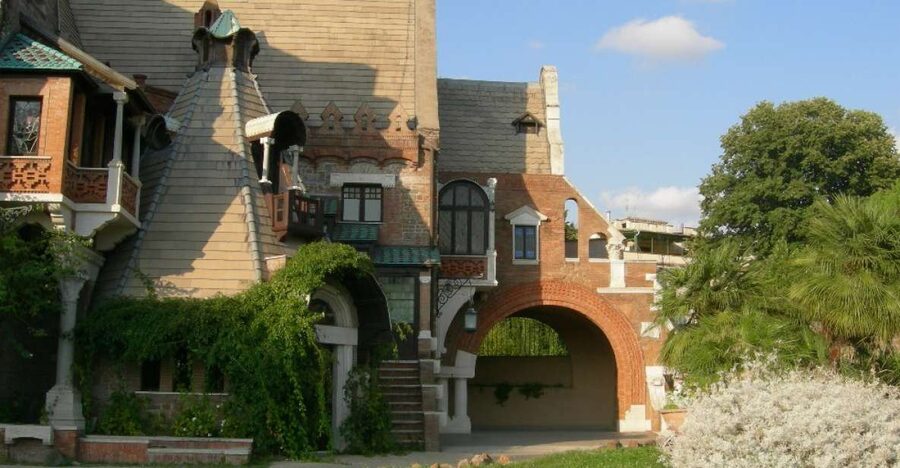
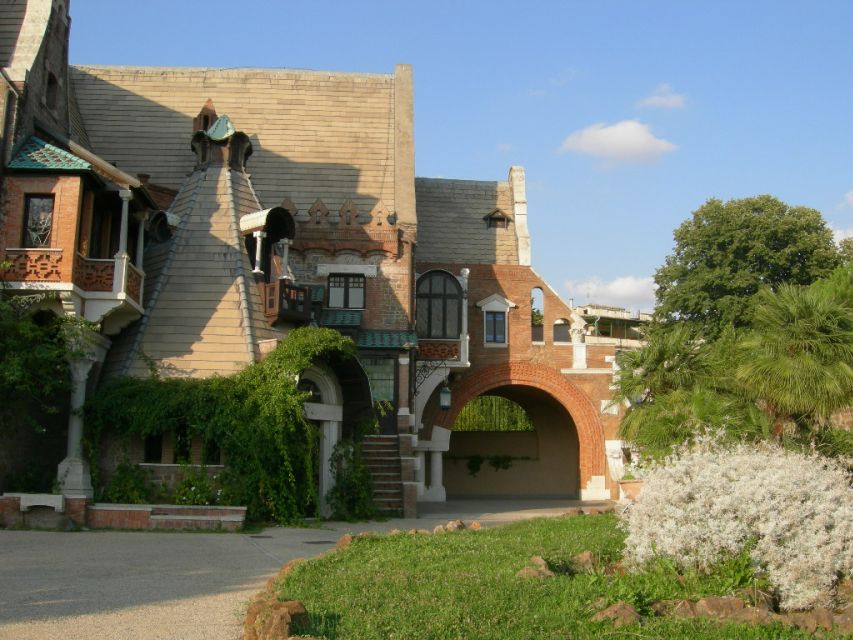
Casina delle Civette, commonly called the House of the Owls, is the most distinctive stop on the tour. It sits at the edge of the park in a more private position, away from the formality of the main residence.
Prince Giovanni Torlonia the Younger lived there until his death in 1938. The building was meant as a refuge from the formal world of the main villa, and its character is much more playful. It developed through several transformations and additions by different architects, using both artisanal and industrial materials.
The result is not a single neat architectural style. You may see elements that feel medieval, decorative, rustic, and Art Nouveau at the same time. The building’s changing design is part of its charm, but it can also make the place feel visually busy. This is a building to study slowly rather than understand at one glance.
The stained glass is the main reason to take your time. The House of the Owls contains some of Rome’s finest local examples, along with inlaid wood and decorative work made by Roman workshops. Light, color, carved surfaces, and painted effects give the interior a different mood from the grand Casino Nobile.
The name is not a minor detail. Owls appear in the building’s decorative language, and the house’s story helps explain why Prince Giovanni chose such an unusual retreat. It feels personal rather than ceremonial.
Your guide can also explain the furniture and sculptures, including the pictorial effects used across the two interior levels. Since the house combines architecture, stained glass, woodwork, and sculpture, this is the part of the tour where a specialist guide earns the fee. Without context, you might admire the colors and move on. With context, you can compare the work of different makers and see how the building changed over time.
For photographers, the House of the Owls is likely the strongest stop. The interiors offer more visual variety than the formal rooms of the main villa. Photography conditions can vary, so I would bring patience rather than expect every detail to be easy to capture.
More private architecture tours in Rome:
- City Walk with Architect: Private walking tour of Rome
★ 5.0 · 22 reviews - Rome: Caravaggio and Baroque Art Private Guided Tour
★ 4.4 · 11 reviews - Rome Baroque: Fountains and Squares Private Walking Tour
★ 5.0 · 7 reviews - Borghese Gallery Private Tour: The Greatest Baroque Masterpieces
★ 5.0 · 6 reviews
Walking into Gino Coppedè’s unusual quarter
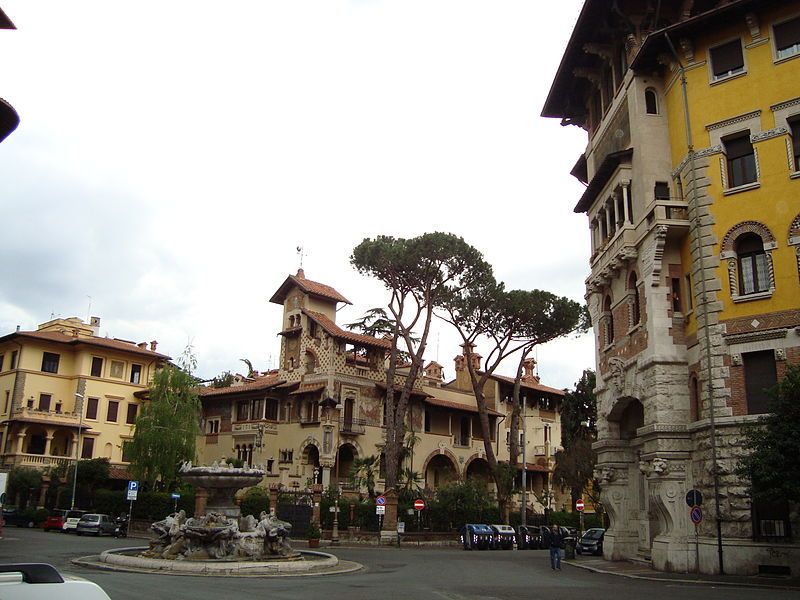
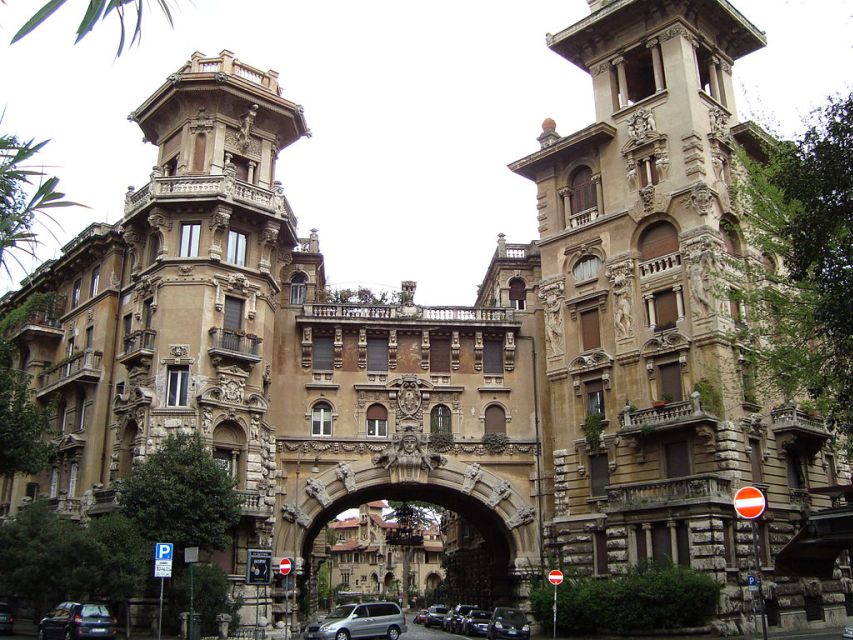
The final 45 minutes take you to Quartiere Coppedè, an unusual residential area associated with architect Gino Coppedè. The neighborhood centers on Piazza Mincio, which feels almost like a stage set compared with Rome’s usual streets and piazzas.
Coppedè designed a collection of buildings with imaginative arches, towers, ornamental details, and mixed historical references. The area is residential, not a museum complex, so the experience is different from Villa Torlonia. You are walking through a functioning neighborhood while looking closely at its architecture.
That distinction matters. You should be respectful of residents and expect to view the buildings from public spaces. The quarter’s appeal is not a single famous monument. It is the way several buildings work together to create a strange, theatrical setting.
I like ending here because it widens the tour’s scope. Villa Torlonia shows how a powerful family used architecture for private life and public image. Coppedè shows an architect applying imagination to an entire residential district. The two places are connected by ornament and individuality, but they serve different purposes.
Piazza Mincio is the focal point. The square gives you a chance to see how Coppedè arranged buildings around a shared space rather than treating each house as an isolated design. Your guide can point out the details that make the quarter feel magical without asking you to accept it as a conventional historic center.
Do not expect the same density of famous monuments you find around the Pantheon or Piazza Navona. This is a neighborhood walk for people who enjoy unusual façades, urban design, and architectural puzzles.
Why a private guide changes the experience
A private tour costs $362.51 per person, which is a serious price. Its value depends on your group size, your interest in the subject, and how much you want to ask along the way.
If you are traveling alone or as a couple, the cost may feel high compared with a standard group visit. If you are sharing the tour with several people, the private format becomes easier to justify. You are paying for a Blue Badge guide, museum admission, a three-hour walking experience, and the freedom to adjust the pace.
The strongest reason to pay more is the subject matter. Villa Torlonia and Coppedè are not places where a quick photograph tells the whole story. The architecture is unusual, and the political background adds layers. A guide with Marco’s academic background can connect the buildings to art, literature, archaeology, and Rome’s social history.
The private format also helps if your group has mixed interests. You can ask for more attention to stained glass, Mussolini’s use of the villa, the Torlonia family, or Coppedè’s design. You can also ask to see fewer sites if you prefer a slower visit.
The downside is that the tour does not offer much empty time by default. The schedule covers three major sections in three hours. If you like lingering over every window or taking many photographs, speak up early. The experience is designed to be adapted, but you need to tell the guide what you want.
Walking, access, and practical planning
The meeting point is at the entrance of Villa Torlonia on Via Nomentana 70, near the ticket office. The tour ends at the same place. Since the experience starts and finishes there, plan your onward transportation rather than assuming the guide will escort you back to central Rome.
The tour is wheelchair accessible, but it still involves a fair amount of walking. Mobility needs should be shared in advance because the route may need modification. That flexibility is helpful, but you should not assume every part of the standard visit will work in exactly the same way for every visitor.
Comfortable shoes matter. The route includes the villa grounds, interior visits, and the walk through Quartiere Coppedè. The three-hour duration sounds modest, but the time passes on foot.
Starting times vary, so check availability before building the rest of your day around it. The tour is available in English, Italian, French, and Spanish. It is also possible to reserve now and pay later, and cancellation is allowed up to 24 hours before the tour for a full refund.
Families should note that anyone under 18 must be accompanied by at least one adult. The private setting can work well for a family group, particularly if children enjoy unusual buildings more than long museum visits, but the walking and historical discussion may not suit every child.
Who will enjoy this Rome tour most
I would recommend this experience to you if you have already seen Rome’s major ancient and Baroque sights and want a different side of the city. It also suits architecture students, decorative-arts fans, photographers, and visitors who enjoy political history presented through buildings.
The tour is particularly good for anyone who finds standard sightseeing too predictable. The House of the Owls and Coppedè quarter are not the usual first-day stops, and they reward curiosity.
It may not be the best choice if you want only ancient ruins, famous paintings, or a relaxed ride between landmarks. It also may not suit you if you dislike walking or prefer to explore at your own pace without a guide.
Marco received especially strong praise for being punctual, kind, and able to range from art to literature while explaining the sites in detail. That combination matters here. The buildings are unusual enough that a guide who can move between subjects adds much more than simple directions.
Should you book it?
Book this tour if you want to see an eccentric, less familiar Rome and value a guide who can explain why the buildings look the way they do. The House of the Owls alone is a strong reason to go, while the Mussolini connection and Coppedè quarter give the three hours a useful range.
Think carefully about the price and the walking. At $362.51 per person, this is not a casual add-on. It makes the most sense for a small group with a serious interest in architecture, art, or Rome’s political past.
If that sounds like you, the private format is the point. You get time for questions, a flexible pace, and a guide such as Marco who can turn a curious collection of buildings into a clear story.
FAQ
Where does the tour begin?
Meet your guide at the entrance of Villa Torlonia at Via Nomentana 70, near the ticket office.
Where does the tour end?
The tour ends back at the Villa Torlonia meeting point.
How long does the tour last?
The private tour lasts three hours.
Which sites are included?
The tour includes Villa Torlonia, the Casino Nobile, the Casina delle Civette or House of the Owls, and Quartiere Coppedè.
What languages are available?
The live guide is available in English, Italian, French, and Spanish.
Is the tour wheelchair accessible?
Yes, the activity is wheelchair accessible. Tell the provider about mobility issues in advance because the route may need to be modified.
Can I cancel or pay later?
You can cancel up to 24 hours in advance for a full refund. You can also reserve now and pay later.
Just added around Rome
- Vatican: Exclusive Baroque Evening With Aperitivo & Dinner★ 3.1 · 2 reviews
- Rome Pantheon Highlights From Ancient Rome to Baroque★ 5.0 · 5 reviews
- Borghese Gallery Private Tour: The Greatest Baroque Masterpieces★ 5.0 · 6 reviews
- Private Baroque Tour: Discover Bernini & Caravaggio’s Best Works★ 5.0 · 3 reviews
- Private Personalized Architecture Tour of Rome with an Architect★ 5.0 · 5 reviews
- New Year’s Baroque Concert at Doria Pamphilj Palace★ 5.0 · 2 reviews
- Rome Baroque: Fountains and Squares Private Walking Tour★ 5.0 · 7 reviews
- Renaissance Rome and Baroque Rome★ 5.0 · 19 reviews
Art Nouveau Tours, compared.
Riga: Old Town Walking Tour with Art Nouveau Highlights
Read our review →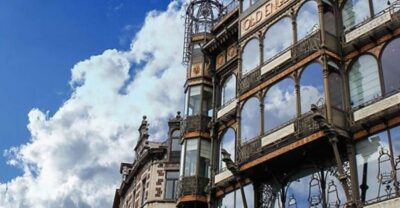
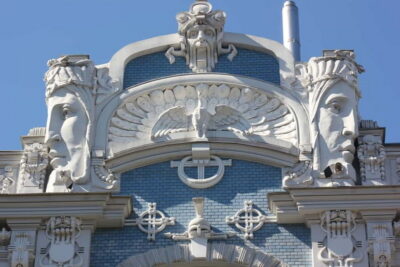
Riga: 2-Hour History of Art Nouveau Walking Tour
Read our review →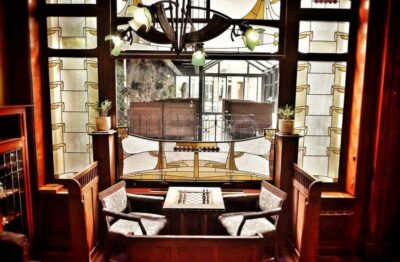
Brussels: Art Nouveau Pass – Entry to Three Locations
Read our review →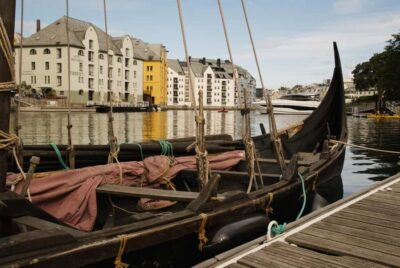
Small Group Tour in Ålesund: Art Nouveau, Sea Views & Insider Tips
Read our review →
Browse the lists this tour appears in