
Review · BARCELONA
Coffee and Art Tour walking Gothic Quarter, Official Guide
Barcelona’s art story begins in an unexpected place: the coffeehouse. This 2.5-hour walk connects Picasso’s first Barcelona exhibition in a café with old artisan streets, Gothic landmarks, Sala Pares, and a modern creative workspace. Guide Silvana brings the city’s art past and present into the same conversation.
I like the route’s mix of historic neighborhoods and working creative spaces, rather than a walk that only points at monuments. I also like the small group limit of 15, which should make it easier to ask questions and keep pace in narrow old-town streets. The main consideration is that the tour is more about art, neighborhoods, and ideas than about a formal coffee tasting.
Key points at a glance
- Picasso’s coffeehouse connection: Learn how Barcelona’s cafés helped shape the city’s artistic life, including the setting of Picasso’s first exhibition in the city.
- Three old-town districts in one walk: Move through Ribera, the Gothic Quarter, and Las Ramblas while tracing Barcelona’s changing identity.
- Sala Pares visit: Enter one of Barcelona’s best-known art galleries, with Catalan painters such as Miró connected to its story.
- A second, smaller gallery: See contemporary work in a tiny gallery hosted by a local artist.
- A modern ending: Finish inside Imagin Café, where artists, entrepreneurs, and gamers use a coffee-coworking space.
- Small-group format: The tour accepts a maximum of 15 people and runs about two and a half hours.
From Plaça del Rei into Barcelona’s old quarters
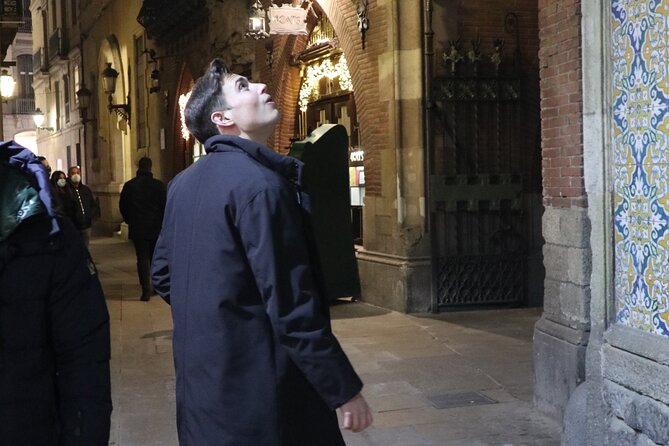
The meeting point is Plaça del Rei in Ciutat Vella, a fitting place to begin a tour about Barcelona’s layers. From here, the walk heads into the Ribera quarter, where the focus shifts away from grand royal settings and toward the craftspeople who have worked by hand in this part of the city since the Middle Ages.
That starting point gives the tour a useful angle. You are not simply looking at old walls and checking off famous sights. You are being asked to consider how neighborhoods shaped the work of artisans, painters, and makers. The city’s artistic life did not appear only inside museums. It grew through workshops, cafés, galleries, and the daily routines of people making things.
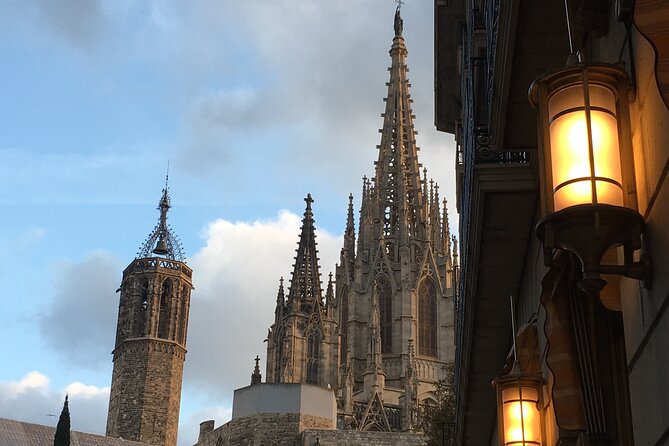
The route then continues into the Gothic Quarter, described as the origin of the city. This is where the art discussion connects with Barcelona’s older urban fabric. Gothic streets and squares provide the setting for a story that later moves toward modernism, Picasso, and contemporary art.
Expect a walking tour rather than a seated lecture. The old center can be busy, and the streets are not always broad or smooth. Comfortable shoes are a sensible choice. Since the experience lasts about 2 hours and 30 minutes, you will want to arrive ready to keep moving, with water and a phone charged for the mobile ticket.
More Gothic quarter walks in Barcelona:
- Barcelona all included: Sagrada, Park Güell, Montjuic & Gothic
★ 5.0 · 2,169 reviews - Barcelona Gothic Quarter Tapas & Taverns Food & Wine Tour
★ 5.0 · 1,470 reviews - Barcelona: Old Town and Gothic Quarter Walking Tour
★ 4.8 · 1,393 reviews
Why coffee matters to Barcelona’s artists
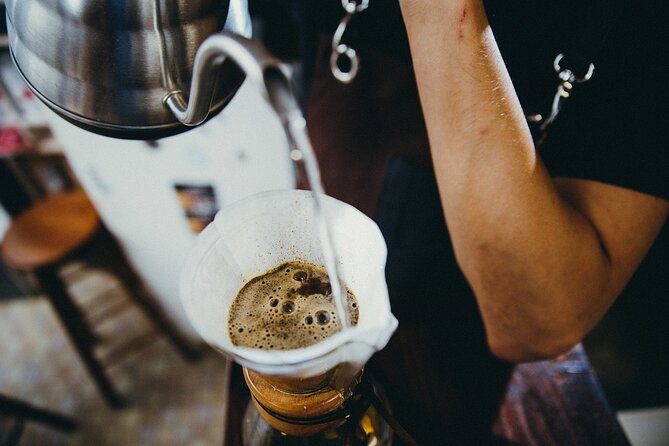
The coffee theme is not just a way to add a drink to an art walk. Here, coffeehouses are presented as places where artists met, showed work, developed ideas, and helped shape the city’s cultural life.
One of the most interesting details is that Picasso held his first exhibition in Barcelona in a coffeehouse. That fact gives the tour a memorable human scale. Instead of treating art as something that happened only in grand institutions, the walk shows how ordinary social spaces could become stages for new work.
Coffee also connects several periods of Catalan art, from modernism to modern art. The drink itself became part of the city’s artistic culture, but the larger point is about gathering places. A café could serve as a meeting room, gallery, workplace, and informal salon all at once.
I like this framing because it gives you a way to understand Barcelona without relying only on famous buildings. You can look at the old streets and ask who used them, where artists met, and how creative work moved from private studios into public life.
One practical note: the supplied details do not say that a coffee drink is included in the price. The tour ends in a coffee-coworking space, but you should not assume that a beverage or food purchase is part of the booking.
Ribera, the Gothic Quarter, and Las Ramblas
The walk covers several parts of the old city, each with a different role in the story.
Ribera is introduced as a district associated with handcraft and artisan work. That makes it especially useful early in the tour, before the focus turns more directly to galleries and painters. You get a sense of Barcelona as a city made by working people, not only by architects and celebrated artists.
The Gothic Quarter then supplies the older historical setting. Its importance here is not simply visual. It represents the city’s origins and the older Barcelona that later artists drew on, reinterpreted, or pushed against. The tour uses the district as a bridge between the medieval city and the artistic movements that followed.
Las Ramblas provides another change of pace. This well-known boulevard is part of the route, placing the art story beside one of Barcelona’s most recognizable public spaces. The walk does not treat Las Ramblas as the whole city, which is a welcome choice. It appears as one part of a larger route that also includes smaller streets, galleries, and a local creative venue.
Because the itinerary covers several districts, the walk can help you connect places that you might otherwise visit separately. It also means the tour’s value depends partly on your interest in moving through the city rather than spending a long time at one single attraction.
Sala Pares and Barcelona’s gallery tradition
The first gallery visit is Sala Pares, described as Barcelona’s most emblematic art gallery. A visit here adds an indoor art stop to the street-based route and gives the discussion a more formal setting.
Sala Pares is connected with prestigious Catalan painters, including Miró. That detail gives the gallery a place in the wider story of Catalan art, rather than making it feel like a random commercial stop. The gallery helps show how artists moved from cafés and workshops into established exhibition spaces.
The included admission matters when you assess the $56.68 price. You are paying for a guided walk, the guide’s interpretation, and access to two different gallery settings, not just a route through public streets. Still, the tour is not a museum ticket package. It does not promise entry to major institutions such as the Picasso Museum or the Museu Nacional d’Art de Catalunya, so you should book it for its focused local angle.
The gallery visit is listed as taking about 25 minutes. That is enough time to get a clear introduction, see the setting, and connect the art to the walk, but it is not an extended gallery study. If you want long periods with individual works, you may prefer a full museum visit on another part of your schedule.
More architecture walks in Barcelona:
- Ramblas, Old Town, Gothic and Gaudi Architecture Walking Tour
★ 5.0 · 723 reviews - Kids and Family Gothic Quarter Walking Tour in Barcelona
★ 5.0 · 465 reviews - Barcelona Gothic Quarter Walking Tour
★ 4.5 · 456 reviews - Barcelona: Gothic Quarter Walking Tour
★ 4.9 · 383 reviews
A tiny modern gallery with a local point of view
The second gallery is much smaller and is hosted by a local artist. This contrast with Sala Pares is one of the strongest parts of the experience.
At Sala Pares, you encounter an established gallery with a significant place in Barcelona’s art story. At the smaller gallery, you get a closer look at the city’s current creative life. The scale changes from a recognized institution to a personal, local setting.
That difference helps the tour avoid becoming a simple march through famous names. It shows two ways art reaches the public: through a long-running gallery and through an artist’s own space. You may find the second visit more intimate, though its small size also means the experience could depend on what is being shown when you visit.
The supplied details do not provide the local artist’s name or the specific works on display. That is worth keeping in mind when deciding how much certainty you want before booking. The appeal is the format and local connection, not a promised list of particular artworks.
Ending at Imagin Café
The tour ends at Imagin Café on Carrer de Pelai, 11, in the Eixample. The venue is presented as a blend of art and coffee, with space used by entrepreneurs, artists, and gamers.
This ending gives the tour a clear present-day note. After walking through medieval quarters and discussing historic artists, you finish in a place connected to the city’s current cultural and working life. The point is not simply to admire Barcelona’s past. It is to see how people continue to use cafés and shared spaces to build new projects and communities.
I find this a smart place to end because it returns to the coffee theme. The tour begins with the role of coffeehouses in Picasso’s era and closes with a modern coffee workspace. The setting shows how the basic idea of a café as a creative meeting place has changed without disappearing.
The end point is in Eixample, at Carrer de Pelai, 11, rather than back at Plaça del Rei. That matters for planning. You will need to arrange your next activity from the Eixample side of the old center, not from the original meeting point.
What Silvana adds to the walk
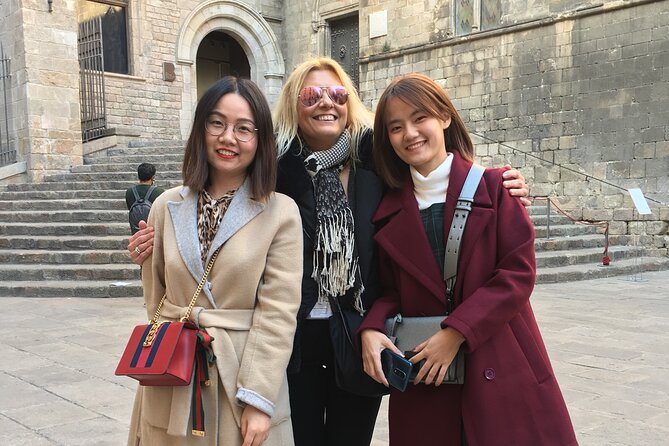
Guide Silvana receives the strongest praise in the supplied feedback. One person specifically points to her art-history information and to the way she connects Gothic art with art being made today. Another thanks her for making the tour different from other Barcelona experiences and for presenting information in an exciting way.
That gives you a useful idea of what to expect from the guide’s role. This is not just a route where someone names buildings and points down streets. Silvana is expected to connect periods, places, and artistic practices.
The tour also suits people who want more context after moving to Barcelona. One person took it while beginning to learn about the city after relocating there. You do not need to be an art specialist, though the experience will probably appeal most if you enjoy asking how a city’s culture changes over time.
The guide’s name appears as Silvanna in one place and Silvana in another, but Silvana is the spelling used in the direct feedback. If the guide matters to your booking decision, confirm the day’s guide when you reserve.
Price, group size, and overall value
At $56.68 per person, this is not the cheapest way to walk through the Gothic Quarter. You can explore the streets on your own for nothing, and many public sights can be seen without a guide.
The value comes from the combination of interpretation and access. You get a 2.5-hour route through Ribera, the Gothic Quarter, and Las Ramblas, a visit to Sala Pares, a second gallery stop, and an ending at Imagin Café. The small-group limit of 15 also gives the experience a more personal scale than a large city walk.
The price makes the most sense if you want a focused art theme and do not want to build the route yourself. It makes less sense if your main goal is a general introduction to Barcelona’s monuments, a food tour, or a formal coffee tasting.
The tour is booked on average seven days in advance, so it is sensible to reserve before your arrival if the schedule matters. Confirmation is provided at booking, and the mobile ticket makes it easy to keep the details on your phone.
Free cancellation is available up to 24 hours before the start time. A cancellation inside that window is not refundable, and changes are not accepted. The experience also requires a minimum number of participants. If that minimum is not met, you are offered another date or experience, or a full refund.
Who should book this Barcelona walk
I would recommend this tour to you if you:
- Like art but want to see it connected to ordinary city life.
- Prefer a small group to a large sightseeing crowd.
- Want a guide to link medieval Barcelona, Picasso, Catalan painters, and current creative spaces.
- Have already seen the main landmarks and want a different angle on the old center.
- Are new to Barcelona and want an introduction that goes beyond the standard postcard route.
You may want to skip it if you want a long museum visit, a food-focused experience, or a coffee tasting with guaranteed drinks. The tour’s strength is its story and its range of settings, not a deep study of one collection.
Final call: book it for the art connections
Book this walking tour if the idea of following Barcelona’s art life from artisan streets to coffeehouses, galleries, and a modern coworking café appeals to you. The route has a clear theme, guide Silvana brings strong art context, and the two gallery visits give the walk more substance than a standard neighborhood stroll.
I would place it early in a Barcelona visit if you want help understanding how the old city connects with modern creative life. Just plan for a one-way walk, remember that a coffee purchase is not confirmed as included, and choose another experience if your priority is a major museum or a conventional city highlights tour.
FAQ
How long does the Coffee and Art Tour last?
The tour lasts approximately 2 hours and 30 minutes.
Where does the tour begin?
It begins at Plaça del Rei, in Ciutat Vella, Barcelona.
Where does the tour end?
The tour ends at Carrer de Pelai, 11, in the Eixample, at Imagin Café.
What neighborhoods does the walking route cover?
The route includes the Ribera quarter, the Gothic Quarter, and Las Ramblas.
Does the tour include art galleries?
Yes. The tour includes visits to Sala Pares and a small modern art gallery hosted by a local artist.
Is admission to Sala Pares included?
Yes. Admission to Sala Pares is included.
How many people can join the tour?
The maximum group size is 15 people.
Is the tour suitable for most participants?
The tour information states that most people can participate and that the experience is near public transportation.
What is the cancellation policy?
You can cancel up to 24 hours before the start time for a full refund. Cancellations or changes made less than 24 hours before the start time are not accepted for a refund.
More Coffee Experiences in Barcelona
- Coffee, History, and Architecture of the French Quarter
★ 4.9 · 71 reviews - Turin: Art Nouveau Walking Tour with Coffee
★ 5.0 · 11 reviews - Turin, Art Nouveau walking tour and coffee break
★ 4.0 · 7 reviews
Just added around Barcelona
- Love in the Gothic Quarter Barcelona: Self-Guided Romantic Walk★ 4.5 · 9 reviews
- Walking tour of the Gothic Quarter of Barcelona + Cathedral★ 5.0 · 8 reviews
- Wine tasting with a view of the Sagrada Familia★ 4.5 · 13 reviews
- Visit to the Modernist houses of the Americans★ 5.0 · 2 reviews
- Barcelona Jewish & Gothic Tour★ 5.0 · 18 reviews
- Roman & Gotic & Gaudi in Barcelona: private walking tour★ 4.5 · 2 reviews
- Self-Guided Audio Tour-The Surrealist Barcelona of Dalí and Gaudí★ 3.5 · 8 reviews
- Barcelona Gaudi Tour: Sagrada Familia, Casa Batllo & Casa Mila★ 5.0 · 4 reviews
Gothic Quarter Tours, compared.
Barcelona all included: Sagrada, Park Güell, Montjuic & Gothic
Read our review →
Barcelona Gothic Quarter Tapas & Taverns Food & Wine Tour
Read our review →
Barcelona: Gothic Quarter Ghosts and Legends Walking Tour
Read our review →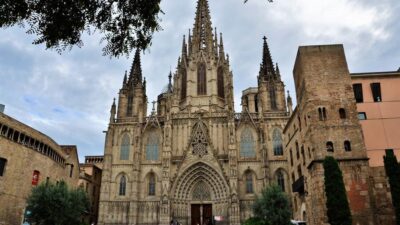
Barcelona: Old Town and Gothic Quarter Walking Tour
Read our review →
Barcelona Old Town & Gothic Quarter Small Group Tour
Read our review →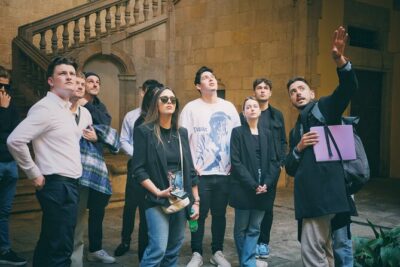
Ramblas, Old Town, Gothic and Gaudi Architecture Walking Tour
Read our review →
Barcelona: El Born and Gothic Quarter Wine & Tapas Bar Tour
Read our review →
Kids and Family Gothic Quarter Walking Tour in Barcelona
Read our review →Browse the lists this tour appears in