
Review · THE USA
Private Philadelphia French/English Historical and Architectural Walking Tour
Philadelphia’s past comes alive best on foot, and this private tour gives you more than the usual Liberty Bell stop. Patrick connects the city’s colonial beginnings with its grand civic buildings, early skyscrapers, alleys, murals, and markets, explaining how Philadelphia grew instead of simply reciting dates. His background in art and architecture adds a useful extra layer.
I like the custom route and the personal format. You can focus on the Revolution, historic houses, architecture, street art, or a mix of all four. I also like that the walk can work for first-time visitors and longtime locals. The main consideration is timing: the full list of stops would take longer than the advertised two to four hours, so you need to agree on priorities before setting out.
Key points to know before booking
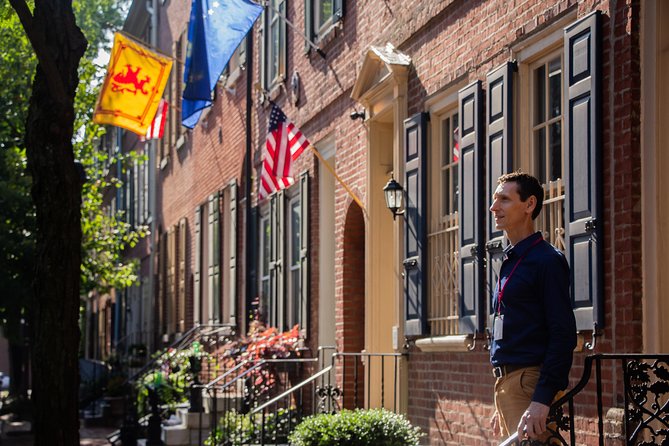
- Patrick guides in French and English, with an easygoing style and strong knowledge of Philadelphia’s art and architecture.
- The route is private and flexible, so your group can spend more time on colonial landmarks, old neighborhoods, murals, or grand commercial buildings.
- Independence National Historical Park is the anchor, with the Liberty Bell, Independence Hall, Washington’s former house site, and several nearby historic buildings.
- Society Hill and Washington Square add atmosphere, with colonial and Federal homes, narrow lanes, pedestrian alleys, and public art.
- Reading Terminal Market and Macy’s Philadelphia bring the tour into the present, with Amish foods, old department-store history, and the famous Wanamaker organ.
- The $450 price is per group of up to eight, making the value much better for a full small group than for one or two people.
Why this private Philadelphia walk feels different
A standard sightseeing walk often moves from one famous marker to the next. This experience has a broader idea of Philadelphia. You look at the city as a built place, where political ideals, commerce, religion, immigration, art, and transportation all left marks on the streets.
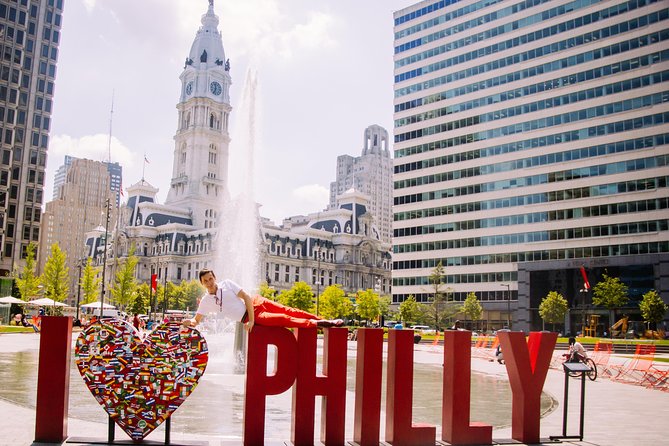
That approach matters because Philadelphia can seem like two different cities at first. Independence Hall and the Liberty Bell tell the familiar national story. Society Hill shows how early domestic architecture has survived. City Hall and the buildings around it reveal a later age of confidence, when Philadelphia reached for monumental public spaces and tall commercial structures.
Patrick’s particular strength is joining those pieces. He is described as an expert in art and architecture, and his explanations include anecdotes rather than only textbook facts. That makes the walk a good fit if you want to understand why a building looks the way it does, not just learn its construction date.
The private format also changes the pace. You can ask about a doorway, a mural, a church, or a street plan without holding up a large group. If you already know the Liberty Bell story, you can spend more time on less familiar corners. If Philadelphia is new to you, you can use the first part of the walk to get your bearings.
More architecture walks in the USA:
- The Official Art Deco Walking Tour by The Miami Design Preservation League
★ 5.0 · 1,580 reviews - Chicago in a Day: Food, History & Architecture Walking Tour
★ 5.0 · 1,153 reviews - Miami South Beach Art Deco Walking Tour
★ 5.0 · 1,039 reviews
Independence National Historical Park and the city’s founding story
The walk begins at 525 Market Street, close to Independence National Historical Park. This is the natural starting point for a first visit because several major sites sit close together, and the area supplies the basic framework for Philadelphia’s early story.
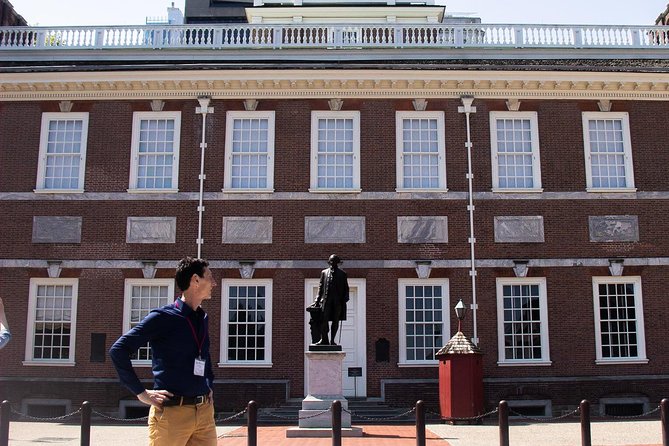
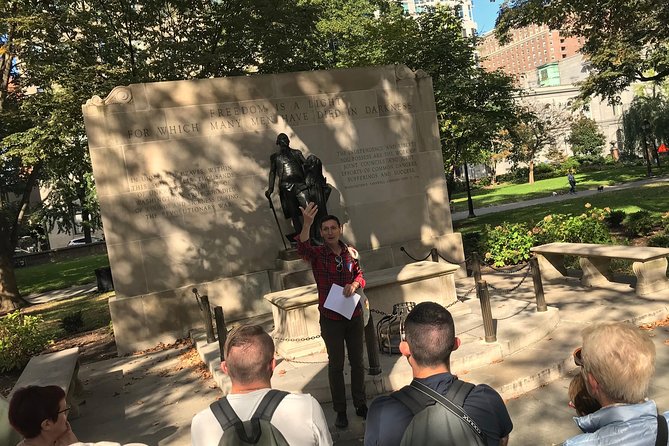
You may see the Liberty Bell and Independence Hall, along with the site of George Washington’s house. Depending on the theme and length you choose, the route can also include Washington Square, Carpenters’ Hall, the First Bank, and the Second Bank.
The important point is that these places are not isolated attractions. Together, they show how Philadelphia functioned as a political and financial center. Independence Hall carries the national story, while the banks and meeting halls point to the practical work of building a new country.
The listed time here is about two hours, but the exact experience depends on what you select. Admission is listed as free, though that does not mean every site operates with identical entry procedures or access. If entering a building is important to you, ask Patrick what can be visited during your chosen time.
I like this part for a first-time visitor because it gives you a strong foundation. I would not expect a long, detailed treatment of every landmark on a short tour, though. A two-hour walk can cover the district well, but it cannot give equal attention to every building and story.
Society Hill’s colonial and Federal streets
From the national park, the route can move into Society Hill, one of Philadelphia’s most picturesque residential areas. Here, the focus shifts from public events to the ordinary shape of an older city: brick houses, modest lanes, restored facades, and streets that still feel made for walking.
The neighborhood contains an impressive group of colonial and Federal-era houses. This is where architectural guidance pays off. A quick glance may show only rows of old homes, but a careful eye can notice changes in proportions, doorways, window placement, materials, and the way buildings meet the pavement.
Society Hill is also useful for understanding scale. Independence Hall can feel monumental, but these residential blocks show the city at human height. You can picture how people lived, worked, and moved through Philadelphia rather than seeing the past only through famous public buildings.
The planned time is about an hour. That makes it a strong choice if you enjoy streets and buildings more than formal museum interiors. It is less useful if you want a long stop at every major landmark. Tell Patrick if you prefer quiet residential lanes, architectural detail, or political history, since the private format allows him to adjust the emphasis.
Washington Square, murals, and overlooked corners
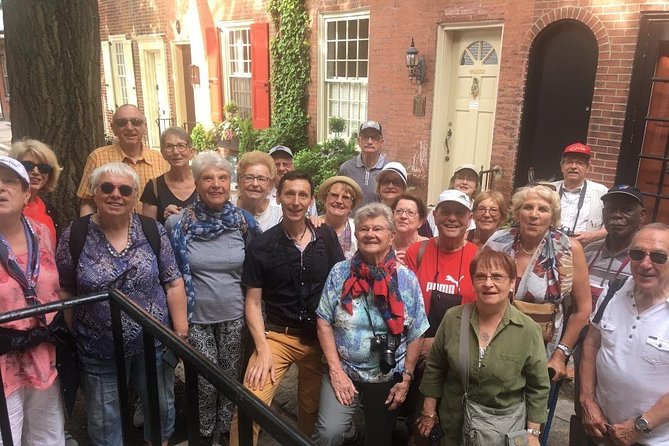
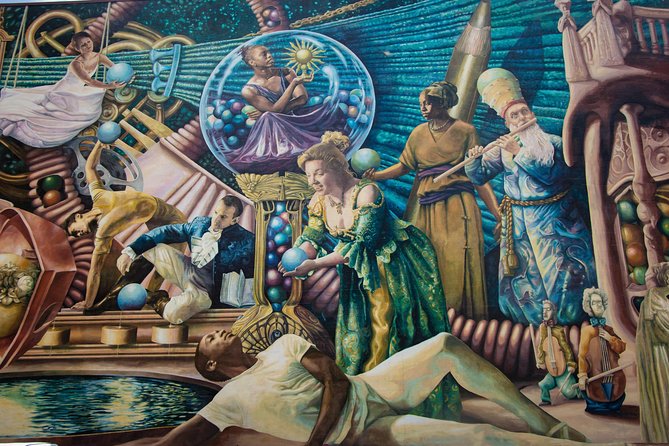
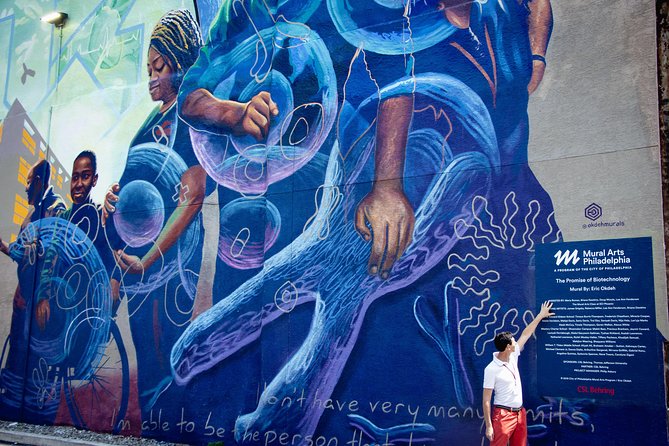
Washington Square adds another layer to the walk. The area combines residential streets, historic surroundings, and public art. The tour description also points to Philadelphia’s murals and pedestrian alleys, including attractive lanes that are easy to miss if you follow only the main roads.
This is one of the places where a private guide can earn the fee. A map can show you Washington Square, but it cannot easily explain why a particular alley matters, how a mural fits into the neighborhood, or what architectural detail deserves a closer look.
Patrick’s approach seems especially suited to this part of the city. His tours have included historic architecture and graffiti, and he has a clear interest in showing less familiar places. You can ask for an art-focused walk, a history-focused walk, or a balance of both.
The area is described as residential and lively, but the exact selection of streets depends on your route. Do not assume the tour includes every mural or every alley. Think of this stop as a chance to see Philadelphia through a wider lens, beyond the standard Revolutionary landmarks.
More history tours in the USA:
- Charleston’s Best Highlights: History, Culture & Architecture
★ 5.0 · 422 reviews - Palm Springs Modernism Architecture & History Bike Tour
★ 5.0 · 359 reviews - Charleston: History and Architecture Guided Walking Tour
★ 4.8 · 349 reviews - Historic Georgetown: History, Gossip, & Architecture Walking Tour
★ 5.0 · 321 reviews
City Hall and Philadelphia’s early skyscrapers
The route may continue toward the City Hall Visitor Center at 1400 John F. Kennedy Boulevard. This is the geographic center of modern Philadelphia and a sharp contrast to the low brick streets of Old City and Society Hill.
City Hall itself is the main visual event. Its scale and elaborate style can be overwhelming, especially after walking through smaller historic neighborhoods. The tour uses that contrast well, showing how Philadelphia changed from a colonial city into a major commercial center.
Around City Hall, you may examine early skyscrapers and important twentieth-century buildings. The suggested examples include the PSFS building, Girard Trust Company, Wanamaker Department Store, and Reading Terminal Train Station. Each points to a different side of urban growth: banking, retail, rail travel, and office culture.
This section suits you if you like architecture with a strong sense of place. It also helps explain why Philadelphia’s center is not simply a collection of old buildings. The city’s identity comes from the conversation between eighteenth-century streets and later towers, department stores, and transportation hubs.
The main drawback is distance and time. City Hall is farther from the first stops, and the full route cannot be covered in detail during every two-hour booking. If the architectural portion matters most to you, ask for a route that gives City Hall and the surrounding buildings enough attention.
Reading Terminal Market and an edible pause
Reading Terminal Market is one of the most practical stops because it gives you a chance to see Philadelphia as a working city, not only as an architectural exhibit. The indoor market has operated since 1893 and occupies the ground floor beneath the former train station.
More than 80 merchants operate there, including an important Amish section selling products and specialties from Lancaster County. The market offers color, movement, food, and a clear link between the city and the surrounding region.
Snacks are not included, so budget separately if you want to eat or buy something. That is not a flaw, but it is worth knowing. The market works best as a flexible stop: you can learn about its role, browse the stalls, and decide for yourself how much time to spend.
The listed visit lasts about an hour. If you are hungry, that hour may pass quickly. If food is not a priority, you may prefer to shorten the stop and use the time for architecture or historic streets. Tell Patrick in advance, since the route is designed to change around your interests.
Macy’s Philadelphia and the Wanamaker organ
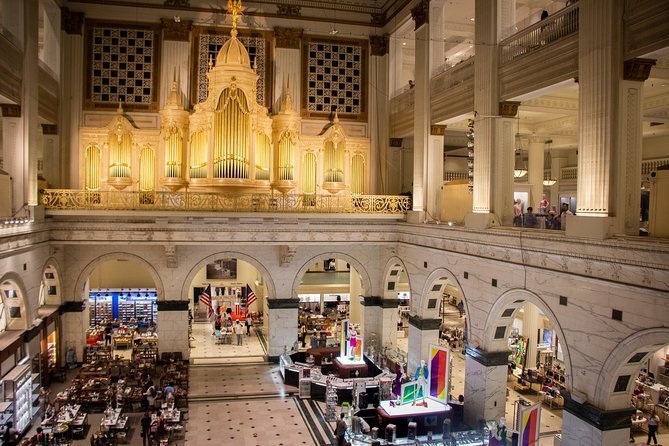
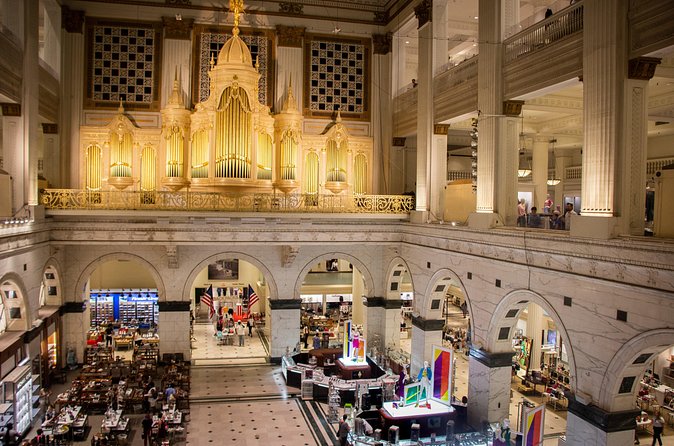
The final suggested stop is Macy’s Philadelphia, historically known as Wanamaker. The building is on the National Register of Historic Places and is described as America’s second-oldest department store.
The main attraction is the Wanamaker organ, identified as the largest operating organ in the world. Even if department stores are not your usual sightseeing choice, the building shows how retail once served as a civic experience. A major store could be a destination, an architectural statement, and a place for public spectacle.
The planned stop is about 30 minutes, which makes sense as a focused architectural visit rather than a long shopping break. You can look at the building’s history and organ without giving up too much of your walking time.
This stop also works well at the end because it connects the older city to Philadelphia’s commercial age. You begin with independence and civic institutions, then finish with a grand example of American retail culture.
How the timing really works
The experience is advertised as lasting about two to four hours, while the individual stop estimates add up to much more if taken in full. That is not necessarily a contradiction. The tour is private and customizable, so the stop list functions as a menu rather than a promise that every location receives its full stated duration.
For two hours, I would choose one main theme. A good short route could focus on Independence National Historical Park and Society Hill, or City Hall, Reading Terminal Market, and Macy’s. Four hours gives you room to connect Old City with the central business district, though you will still need to keep moving.
The tour runs daily from 8:30 AM to 7:00 PM. Pickup may be available from your hotel or rental if it is conveniently located in relation to the route. Otherwise, you will arrange an easy meeting point.
You should expect a moderate amount of walking. Comfortable shoes matter, and you should consider the time of day, weather, and your own pace. Service animals are allowed, and the route is near public transportation.
Is $450 good value?
The price is $450 per group of up to eight people. For one or two people, that is a premium price compared with a large group walk. For six to eight people, the cost works out much better per person, especially if you want a private guide and a route built around your interests.
The value comes from flexibility and access to Patrick’s attention, not from included admissions or food. The listed stops have no admission ticket cost, and snacks and tips are extra. You are paying for the guide’s time, interpretation, planning, and ability to adjust the walk.
I would consider it a strong value for a family group, a small group of friends, or Philadelphia residents hosting out-of-town relatives. It is also a good choice if you have already seen the basic attractions and want art, architecture, alleys, and less obvious details.
For a solo visitor or couple on a tight budget, the price may be harder to justify. In that case, choose this experience only if a private, custom route is more important to you than finding the lowest-cost introduction to the city.
Who should book this walk?
I would recommend it to you if you enjoy buildings, street plans, public art, and stories about how a city changes. It also suits visitors who want to avoid a rushed checklist and ask plenty of questions along the way.
Patrick’s experience works particularly well for people who have visited Philadelphia before. He can move beyond the Liberty Bell and explain details you may have missed, including lesser-known alleys and architectural features. The tour can also surprise longtime residents, which says something about the depth of the route.
French-speaking visitors should confirm language arrangements when booking. The guide is described as working in French and English, while the general tour information lists English as the offered language. That small check will help set the right expectation.
You should skip it if you want a fixed, fully scripted schedule with guaranteed interior access at every site. You should also think twice if your group dislikes walking or wants a food tour rather than a history and architecture tour.
Practical details before you go
Confirmation is sent within 48 hours of booking, subject to availability. The meeting point is listed as 525 Market Street, with pickup possible from a conveniently located hotel or rental. The end point is generally Philadelphia City Hall, though it can change according to the route length, group size, and tour theme.
Tips are not included. Free cancellation is available if you cancel at least 24 hours before the start time. Cancellations or changes made inside that window are not refunded or accepted.
I would contact the provider before the day of the walk to settle three things: your main interest, the exact start and end points, and whether you want the tour in French or English. That short conversation can prevent the biggest problem with a flexible tour, trying to cover too much.
Should you book the Philadelphia French and English walking tour?
Book it if you want Philadelphia explained by someone who sees the city through history, architecture, art, and local detail. Patrick’s personal, adaptable approach is the central reason to choose it, especially for repeat visitors, architecture fans, French-speaking groups, and families who want a private pace.
The best value comes with a group of several people and a clear plan. Pick two or three priorities rather than demanding every stop in one afternoon. If you do that, the tour can give you both the famous Philadelphia and the quieter city of alleys, old houses, murals, markets, and grand commercial buildings.
FAQ
How much does the private Philadelphia walking tour cost?
The tour costs $450 per group, with up to eight people included.
How long does the tour last?
The experience lasts approximately two to four hours. The exact route and length can change based on the group size, tour theme, and selected stops.
Is the tour private?
Yes. Only your group participates in the activity.
Is the tour offered in French?
The guide, Patrick, is described as working in French and English. The general tour information lists English as the offered language, so confirm your preferred language when booking.
Where does the tour start?
The listed starting point is 525 Market Street, Philadelphia, Pennsylvania 19106. Pickup may be possible from your hotel or rental if it is conveniently located along the route.
Where does the tour end?
The listed endpoint is Philadelphia City Hall at 1400 John F. Kennedy Boulevard. The ending location may change based on the tour length, group size, and chosen route.
Are food and tips included?
No. Snacks and tips are not included in the tour price.
Can I cancel for a full refund?
Yes, if you cancel at least 24 hours before the experience start time. Cancellations made less than 24 hours in advance are not refunded, and changes inside that period are not accepted.
Just added around the USA
- Wilmington History and Architecture Tour★ 4.8 · 18 reviews
- Washington, DC: Georgetown Architecture Walking Tour★ 5.0 · 8 reviews
- New Orleans : Garden District Architecture Walking tour★ 4.8 · 5 reviews
- Washington DC: Dupont Circle & Embassy Row Architecture Tour★ 5.0 · 6 reviews
- Tulsa: Art Deco Walking Tour of Tulsa★ 5.0 · 8 reviews
- Private Colonial Williamsburg Architectural Tour★ 5.0 · 5 reviews
- Castle to Capitol: Museums of the National Mall Architecture Tour★ 4.5 · 9 reviews
- Iconic Capitol Hill Architectural Walking Tour★ 5.0 · 21 reviews
Walking Tours, compared.
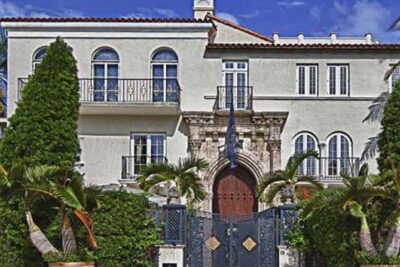
The Official Art Deco Walking Tour by The Miami Design Preservation League
Read our review →
Barcelona: Gothic Quarter Ghosts and Legends Walking Tour
Read our review →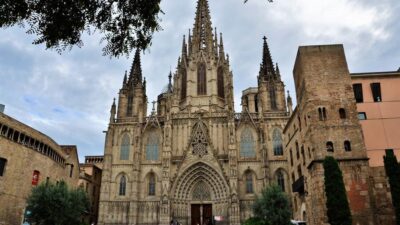
Barcelona: Old Town and Gothic Quarter Walking Tour
Read our review →
Lecce: Baroque Architecture and Underground Walking Tour
Read our review →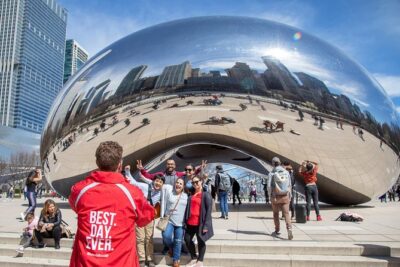
Chicago in a Day: Food, History & Architecture Walking Tour
Read our review →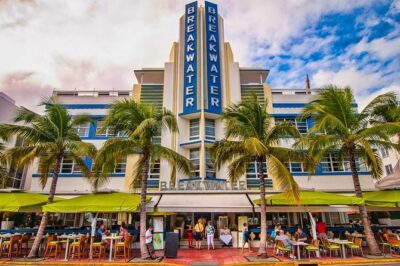
Ramblas, Old Town, Gothic and Gaudi Architecture Walking Tour
Read our review →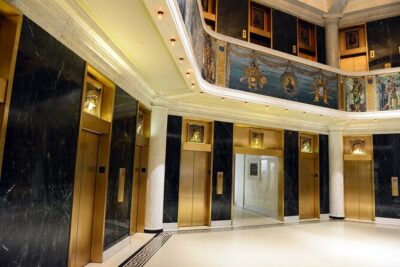
Chicago’s Secret Interiors Architectural Walking Tour
Read our review →Browse the lists this tour appears in