
Review · THE USA
Walking Tour of Houston: History, Architecture, Street Art
Houston’s downtown tells its story in layers: Market Square recalls the city’s beginnings, Art Deco towers mark its oil-era rise, and murals add a lively modern note. This two-hour walking tour connects those pieces with local guide John Gu, giving you a useful first look at Houston without the cost or pace of a full-day excursion.
I like the strong architecture focus, especially the Gulf Building, Niels Esperson Building, City Hall, and Harris County Courthouse. I also like the practical orientation: the tour ends near Lynn Wyatt Square in the Theater District, so you can continue exploring or stop for food right away.
The main consideration is Houston’s weather. You will be outside for roughly two hours, and the route offers no included snacks or bottled water. A short break is possible, but you should bring your own drink and plan for heat or rain.
Key points at a glance
- Seven downtown stops: The route links Market Square, major skyscrapers, City Hall, Tranquility Park, the courthouse, and the Theater District.
- John Gu leads in English: He explains the city, important figures, architecture, and mural artists, and has been praised for speaking clearly and answering questions.
- A strong first-day orientation: You get a useful map in your head before exploring Houston on your own.
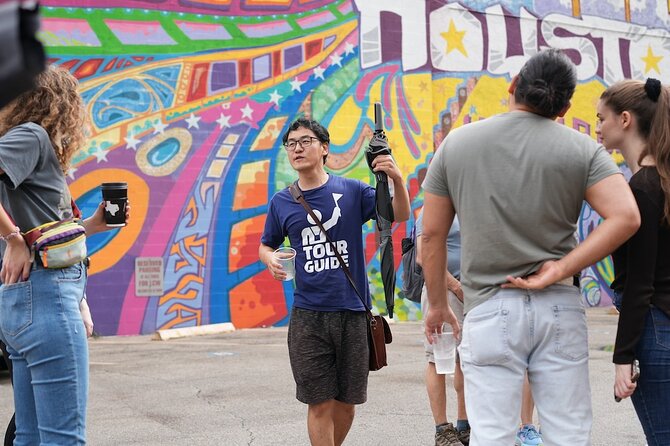
- Street art with local context: The Houston is inspired mural provides a popular photo stop, while the guide adds background on mural artists.
- Easy logistics: Meet at Lyric Market, near public transportation, and finish at Lynn Wyatt Square.
- Good value at $25: You get a small slice of downtown history, architecture, and civic life without paying for museum admissions or transportation.
Why this walk works as a Houston introduction

Houston can feel spread out and hard to read at first. This tour keeps the focus on downtown, where several periods of the city’s story sit close together. In about two hours, you move from the city’s early trading center to skyscrapers, government buildings, the arts district, and the space program.
That variety is the real strength. You are not spending the entire walk on one architectural style or one narrow subject. Instead, the route shows how Houston shifted from a young Gulf Coast city to an oil and business center, then built a civic and cultural identity around theater, art, and NASA.
The format also suits a first morning in town. John Gu offers the kind of broad city introduction that helps you decide what deserves more time later. You might return to the Theater District for a performance, seek out more murals, or explore additional downtown buildings after learning their place in Houston’s story.
The group can reach a maximum of 25 people. That is not an intimate private walk, but it is still small enough for a guide-led street tour rather than a large bus-style experience. One useful detail from the feedback is that John spoke loudly enough for a group of about 20, which matters when you are standing beside traffic or in an open plaza.
More architecture walks in the USA:
- The Official Art Deco Walking Tour by The Miami Design Preservation League
★ 5.0 · 1,580 reviews - Chicago in a Day: Food, History & Architecture Walking Tour
★ 5.0 · 1,153 reviews - Miami South Beach Art Deco Walking Tour
★ 5.0 · 1,039 reviews
Market Square and the Houston is inspired mural
The walk begins at Lyric Market and quickly reaches the Downtown Historic District and Market Square. This is the right place to begin because it connects the modern business center with Houston’s early roots.
Here, John talks about the city’s origins as you pass some of its oldest buildings. The stop is brief, about five minutes, so do not expect a long historical lecture or time to inspect every building. Instead, think of it as a compact introduction that gives the rest of the route a starting point.
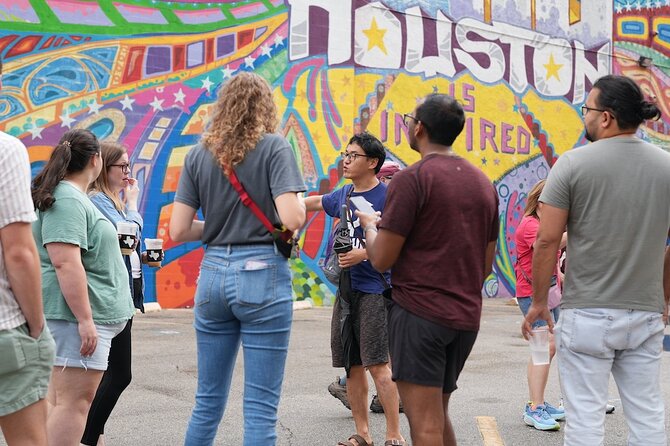
The Houston is inspired mural is a useful photo stop. It is described as the city’s most popular Instagram photo, so you can expect this part to be geared partly toward a quick picture. That may feel a little social-media focused if you prefer quiet historical sites, but the mural also brings color and a modern voice to a route otherwise weighted toward stone, marble, and formal civic buildings.
The starting point at Lyric Market adds a practical benefit. You can arrive early, find the meeting place, and have access to food nearby before the walk begins. Since food and drinks are not included, this is a sensible place to buy water or a snack.
The Gulf Building and Houston’s Art Deco era
The Gulf Building is one of the most rewarding stops for anyone who likes architecture. Completed in 1929, it rises 37 stories and reflects the confidence of Houston’s early skyscraper period.
Look for the stepped form, marble details, and the glowing crown at the top. The building was once Houston’s tallest, and its upper section was designed to catch attention after dark. During the tour, you learn how its height, decoration, and materials helped mark a new era for the city.
The lobby is covered with murals, adding another layer to the building’s appeal. The itinerary allows about five minutes here, so you should treat the stop as an exterior and visual overview rather than a full architectural inspection. Access to interior areas is not promised.
I like this stop because it gives you something concrete to watch for later. Once you understand the setbacks, crown, and decorative style, you can spot similar design choices in other downtown buildings. It also gives the tour a clear sense of time: Houston’s growth was not only about oil and commerce, but also about making a strong visual statement.
The Theater District’s bold contrast

The Theater District shifts the mood. Instead of focusing only on old office towers and government buildings, the walk introduces Houston as a performing-arts center.
The route highlights the Alley Theatre and Jones Hall. The Alley is known here for its bold Brutalist design and productions, while Jones Hall is described through its marble interior and concert acoustics. You will hear how the area supports theater, music, and other performances, giving downtown a cultural purpose beyond office hours.
This is another short stop, so you should not expect admission to either venue or a behind-the-scenes visit. The value comes from seeing how the buildings relate to the district and learning what to return for if you have an evening free.
The tour concludes near Lynn Wyatt Square, in the heart of this district. That makes the Theater District more than a passing sight. You finish with an easy choice: find a nearby cafe, walk back toward the starting point, or continue looking around downtown.
A few more architecture tours around the USA worth a look
- Rione Sanità tour among baroque, revival, street art & food
★ 4.8 · 59 reviews - Rione Sanità Tour among Baroque, Revival, Street Art & Food
★ 5.0 · 48 reviews - Tirana: Street Art & Modern Architecture Walking Tour
★ 4.9 · 31 reviews - Tirana: Street Art & Modern Architecture Tour
★ 5.0 · 18 reviews
City Hall and Hermann Square
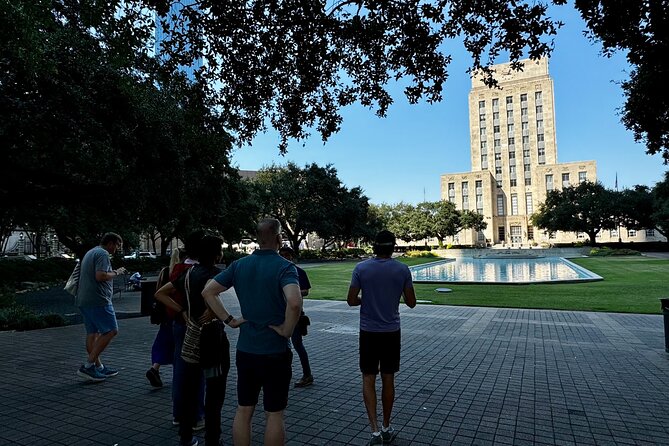
Houston City Hall provides a lesson in civic architecture. Completed in 1939, the limestone-clad building uses Art Deco forms, geometric decoration, and carved friezes to project order and authority.
The building sits in Hermann Square, giving you room to take in its front elevation. John explains the stories connected with Houston’s government, so this stop adds political and civic context to the architectural theme.
Again, five minutes is enough to understand the building’s role and take photographs, but not enough for a detailed tour of the interior. If grand public buildings are your main interest, you may wish the stop were longer. Still, placing City Hall between the Theater District and Tranquility Park helps you see downtown as a working civic center, not simply a collection of old façades.
This is also a good point to listen for the guide’s style. The strongest comments about John describe him as clear, funny, patient, and willing to answer questions. Those traits matter on a route with several short stops because the guide has to keep the story moving without losing the people who want details.
Tranquility Park and Houston’s NASA connection
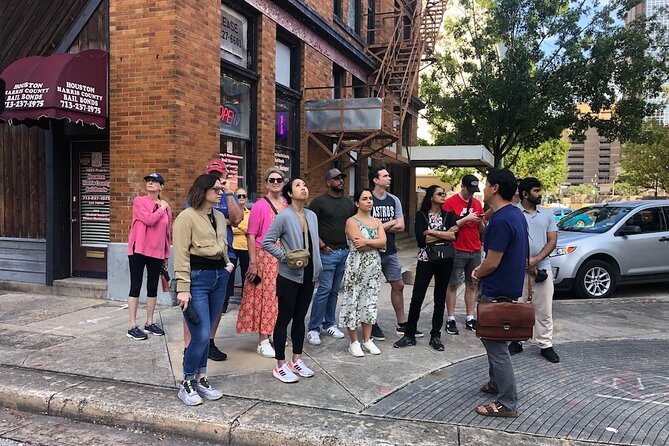
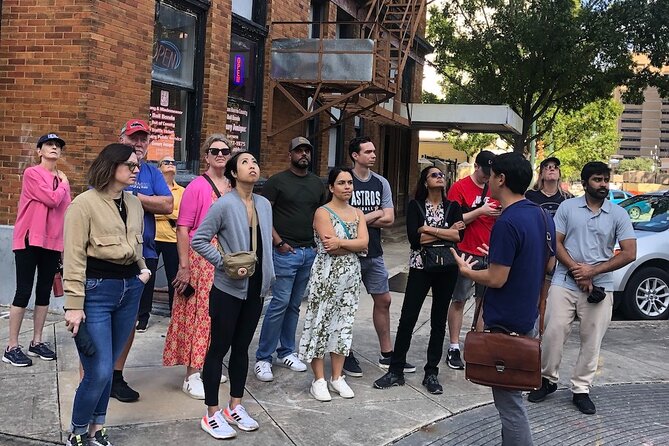
Tranquility Park offers a change from buildings and streets. Here, the focus turns to Houston’s relationship with NASA and the park’s connection to the space program.
The stop is brief, but the subject gives the tour a wider reach. Houston’s identity is not only downtown architecture or business. The city is also linked to one of the best-known chapters in American science and exploration.
You should not expect a visit to a NASA facility on this walk. The information provided describes a park stop and an explanation of its space-program connection, not an attraction admission. If NASA is your main reason for visiting Houston, use this as an introduction, then plan a separate visit to the city’s space-related sites.
For a general city tour, though, the stop works well. It breaks up the architectural sightseeing and shows how a major national program became part of Houston’s public identity.
The Niels Esperson Building and early skyscraper style
The Niels Esperson Building is another major architectural highlight. Completed in 1927, it was built by Mellie Esperson in tribute to real estate figure Niels Esperson.
The design draws on Italian Renaissance ideas, with terracotta decoration, grand columns, and a temple-like crown. It contrasts nicely with the Gulf Building. The Gulf Building gives you Art Deco setbacks and a modern 1920s silhouette, while the Esperson Building looks more formal and historicist.
This comparison is one of the tour’s best teaching moments. You see that Houston’s early skyscrapers did not all speak the same architectural language. Developers and designers used different styles to express prestige, ambition, and permanence.
The stop lasts about five minutes, so the guide’s explanation is important. Without context, the building might simply look ornate. With the story of Mellie Esperson and the building’s design, it becomes easier to understand why this structure remains memorable in a city known for newer towers.
The 1910 Harris County Courthouse
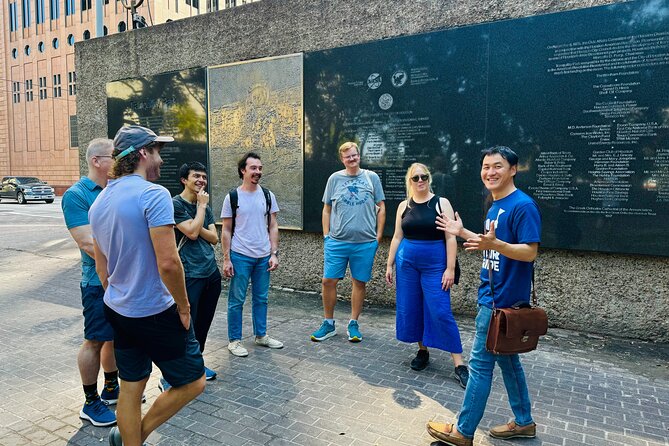
The final listed landmark is the 1910 Harris County Courthouse, a major civic building from Houston’s early 20th-century peak.
It is presented as a high point of civic architecture, and its placement near the end of the route makes sense. By this point, you have seen commercial skyscrapers, a city hall, a cultural district, and a space-program park. The courthouse brings the discussion back to public institutions and the formal side of Houston’s past.
Expect a short exterior-focused stop rather than an extended courthouse visit. The building is best understood as part of the city’s architectural story, showing how Houston expressed the importance of law and government through monumental design.
If you enjoy taking photographs, this is another place where the full façade and surrounding streets matter more than a quick close-up. The guide can point out features that are easy to miss when you pass by alone.
What John Gu adds to the route
A walking tour is only as useful as the person leading it. John Gu’s role appears especially important here because the route covers many subjects in a short time.
He explains Houston’s history, important people, architectural styles, and mural artists. He is also described as speaking clearly, keeping a group engaged with humor, and responding patiently to questions. One particularly useful detail is that he took time during a roughly 20-minute restroom, snack, and beverage break to include a solo participant in conversation. That suggests a guide who pays attention to the people in the group, not only the schedule.
The feedback also includes praise in Spanish, with John described as clear and patient. The tour itself is offered in English, so you should book it only if you are comfortable following an English-language explanation. His ability to answer questions is a plus if you want more than memorized facts.
The advertised duration is about two hours, while one participant described spending two and a half hours on the experience. Build in a little flexibility, especially if the group takes a break or asks plenty of questions.
Price, pace, and practical comfort
At $25 per person, this is a fair price for a guided downtown orientation. You are paying for a local guide and a structured route through seven notable areas, while the admission charge at each stop is free.
The value is strongest if you are new to Houston, have a short stay, or want help deciding what to explore next. It is less useful if you already know downtown well or want long visits inside museums and historic buildings. This is a walking overview, not a series of interior tours.
The pace should be manageable for most people because the listed stops are close enough to connect on foot and the activity is described as suitable for most participants. The tour is stroller accessible, and service animals are welcome. A maximum group size of 25 keeps the walk organized, though it may feel less personal than a private tour.
Wear comfortable shoes and bring water. Snacks and drinks are not included, and Houston’s weather can change the feel of an outdoor walk quickly. Rain does not necessarily ruin the experience: one group completed the tour on a rainy day and still found John’s explanations clear and enjoyable. Still, a light rain layer is sensible.
The route is near public transportation. The starting point is Lyric Market at 411 Smith Street, and the end point is listed as 601 Capitol Street, at Lynn Wyatt Square in the Theater District. The two locations are close enough that returning to the start on foot is an option.
Who should book this Houston walk?
I would recommend it to first-time visitors who want a quick sense of downtown before choosing their next stops. It also suits people with a free morning, business visitors with a few hours between meetings, solo visitors who prefer a guide, and anyone who likes architecture but does not want a full museum program.
Families may appreciate the stroller access, and the short stop format can be easier than one long lecture. Art fans will like the mural discussion, while history fans get a useful sweep from Houston’s beginnings through its skyscraper era and civic growth.
You may want something else if your priority is NASA itself, extensive street art, or interior access to historic buildings. This tour introduces those subjects but does not replace dedicated visits. It also gives each landmark only a few minutes, so people who study architectural details may wish for more time afterward.
Should you book it?
Book this tour if you want a friendly, affordable downtown orientation with a clear mix of history, architecture, civic life, space-program links, and street art. John Gu’s clear delivery and willingness to answer questions add real value, especially for a first visit.
Skip it if you dislike outdoor walking, need extensive time inside each building, or already know Houston’s center well. For most first-time visitors, $25 is a sensible way to get your bearings, learn which buildings deserve a second look, and finish near restaurants and the Theater District.
FAQ
How long does the Walking Tour of Houston last?
The advertised duration is approximately two hours. One participant described spending about two and a half hours on the experience, so allow some extra time for questions and a possible break.
How much does the tour cost?
The price is $25 per person.
Who leads the tour?
The tour is provided by John Gu. He leads the experience in English and explains Houston’s history, architecture, important people, and mural artists.
Where does the tour begin?
The meeting point is Lyric Market, 411 Smith Street, Houston, Texas 77002.
Where does the tour end?
The tour concludes at Lynn Wyatt Square in the Theater District, at 601 Capitol Street, Houston, Texas 77002.
What landmarks are included?
The route includes Downtown Historic District Market Square, the Gulf Building, the Theater District, City Hall, Tranquility Park, the Niels Esperson Building, and the 1910 Harris County Courthouse.
Is food or bottled water included?
No. Snacks, bottled water, and the cost of food and drinks are not included.
Is the tour accessible for strollers and service animals?
The tour is stroller accessible, and service animals are welcome.
Can I cancel for a full refund?
Yes. You can cancel at least 24 hours before the experience start time for a full refund. Cancellations or changes made less than 24 hours before the start time are not accepted for a refund.
More History Tours in the USA
- Charleston’s Best Highlights: History, Culture & Architecture
★ 5.0 · 422 reviews - Palm Springs Modernism Architecture & History Bike Tour
★ 5.0 · 359 reviews - Charleston: History and Architecture Guided Walking Tour
★ 4.8 · 349 reviews - Historic Georgetown: History, Gossip, & Architecture Walking Tour
★ 5.0 · 321 reviews
Just added around the USA
- Wilmington History and Architecture Tour★ 4.8 · 18 reviews
- Washington, DC: Georgetown Architecture Walking Tour★ 5.0 · 8 reviews
- New Orleans : Garden District Architecture Walking tour★ 4.8 · 5 reviews
- Washington DC: Dupont Circle & Embassy Row Architecture Tour★ 5.0 · 6 reviews
- Tulsa: Art Deco Walking Tour of Tulsa★ 5.0 · 8 reviews
- Castle to Capitol: Museums of the National Mall Architecture Tour★ 4.5 · 9 reviews
- Private Colonial Williamsburg Architectural Tour★ 5.0 · 5 reviews
- Iconic Capitol Hill Architectural Walking Tour★ 5.0 · 21 reviews
Walking Tours, compared.
The Official Art Deco Walking Tour by The Miami Design Preservation League
Read our review →
Barcelona: Gothic Quarter Ghosts and Legends Walking Tour
Read our review →
Barcelona: Old Town and Gothic Quarter Walking Tour
Read our review →
Lecce: Baroque Architecture and Underground Walking Tour
Read our review →
Chicago in a Day: Food, History & Architecture Walking Tour
Read our review →
Ramblas, Old Town, Gothic and Gaudi Architecture Walking Tour
Read our review →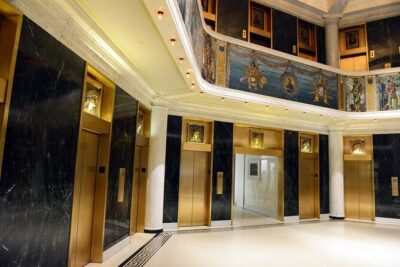
Chicago’s Secret Interiors Architectural Walking Tour
Read our review →Browse the lists this tour appears in